





Published Tuesday, August 18, 2026 by Pilesgrove Pups in New Puppy
Behind every Pilesgrove Pups puppy is a breeder who was there long before the first photograph appeared online. They cared for the parent dogs. They prepared for the litter. They watched the mother through pregnancy and stayed close during those delicate first days after birth. They recorded tiny changes in weight, kept feeding and health routines on schedule, cleaned more bedding than anyone could reasonably count, and noticed when one puppy needed a little extra attention.
They were also there for the moments that make raising puppies such joyful work. The first pair of eyes opening. The first wobbly steps. The puppy who discovers toys before the rest of the litter and immediately considers themselves an expert. The quiet little one who studies every new experience before deciding it is safe to join.
These moments require patience, knowledge, consistency, and a genuine love for dogs. The breeders we work with bring those qualities to every litter.
Their care is also supported by something larger: a structured framework that covers parent health, breeding decisions, veterinary involvement, pregnancy and neonatal care, preventive health, puppy development, documentation, and readiness for placement.
The breeders provide the skilled daily care. Pilesgrove Pups is part of the standards that guide the process, follows the health and development information, and assumes responsibility for the final review and preparation before each puppy goes home.
Table of Contents
- Who Are the Breeders Behind Pilesgrove Pups?
- A Love for Dogs Is Where the Work Begins
- Choosing Parent Dogs Is a Health Decision
- The Parent Dogs Matter as Individuals
- The Mother Deserves Special Care
- Newborn Care Is Quiet, Detailed Work
- Each Puppy’s Growth Is Followed
- Preventive Health Care Begins Early
- Nutrition Is Part of Healthy Development
- Development Is Guided With Intention
- The Breeders Watch How Each Puppy Responds
- Socialisation Happens Through Daily Care
- Routine Handling Prepares Puppies for Real Life
- Veterinary Professionals Support the Breeders’ Work
- Accurate Records Are Part of Responsible Care
- The Code of Ethics Guides Difficult Decisions
- Puppies Stay With Their Mother Through an Important Stage
- The Breeder’s Work Connects to Final Preparation
- We Get to Know the Puppy the Breeder Has Raised
- What We Ask of the Breeders We Work With
- What Makes a Pilesgrove Pups Breeder Special?
- Our Responsibility Is Shared, but It Is Never Distant
- From the Breeder’s Care to the Family’s Arms
Who Are the Breeders Behind Pilesgrove Pups?
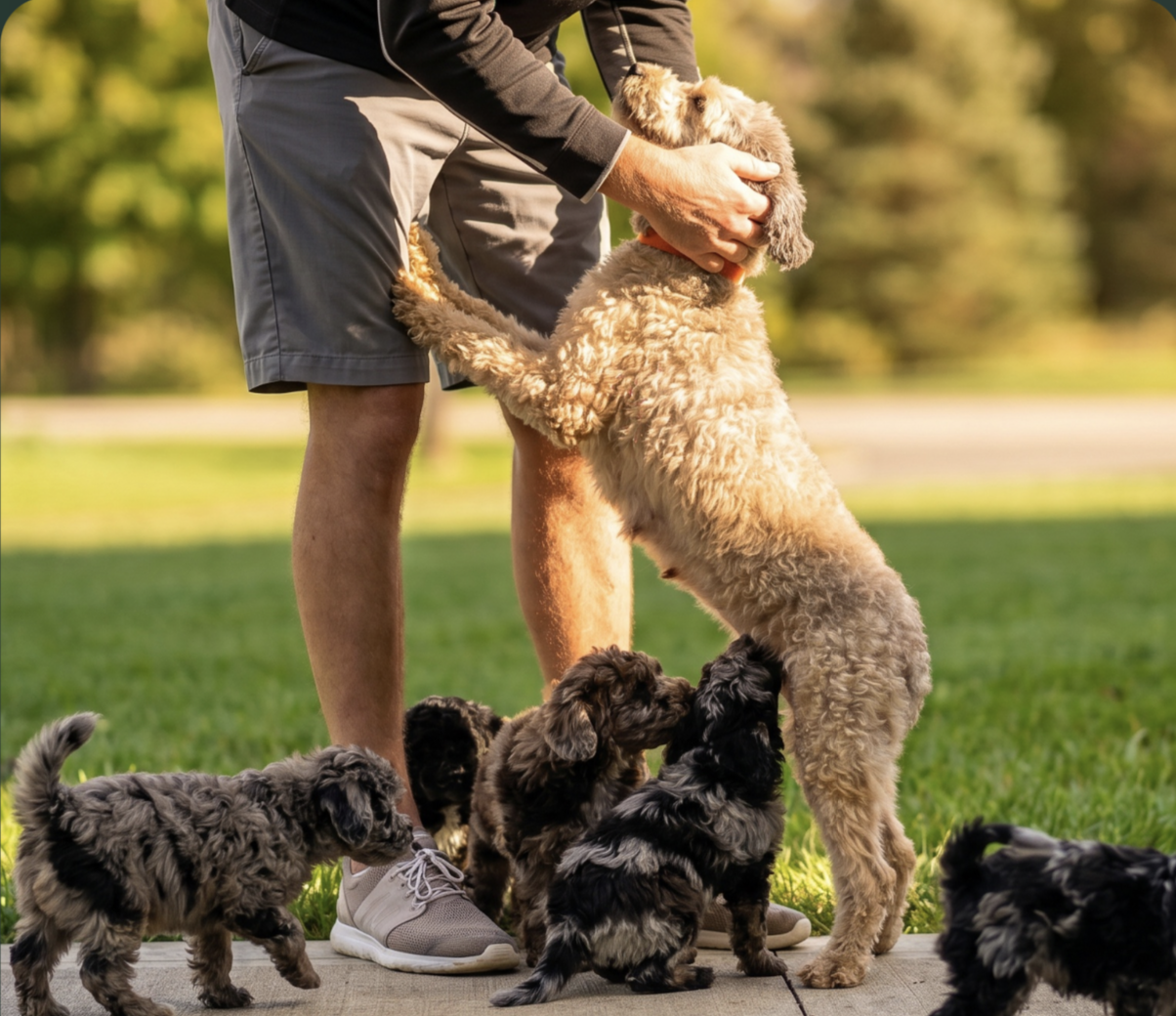
The breeders we work with are experienced dog people who take pride in raising healthy, well-prepared puppies. Many have spent years—and in some cases decades—developing their knowledge of dogs, breeding, maternal care, and early puppy development. Raising puppies is woven into their daily lives and supported by a strong work ethic, close attention to detail, and the joy of watching each litter grow.
They know that raising puppies is about far more than putting two dogs together and waiting eight weeks. A breeder must understand the parent dogs, recognise the changes that come with pregnancy, prepare properly for delivery, support a nursing mother, monitor newborn puppies, follow preventive health schedules, maintain accurate records, and introduce developmentally appropriate experiences at the right time.
They must be prepared for long nights, early mornings, interrupted routines, and the occasional puppy who seems determined to sit directly in the clean area while the bedding is being changed.
Good breeders learn the rhythm of the work. They know when a litter is peaceful and settled. They notice when a puppy’s normal behaviour changes. They understand that a small detail—such as slower weight gain or a change in nursing—may deserve attention before it becomes a larger concern. That kind of awareness comes from experience and daily involvement.
Explore the Standards, Health & Oversight at Pilesgrove Pups
A Love for Dogs Is Where the Work Begins
We want the breeders behind our puppies to genuinely love dogs and enjoy the work they do. Dogs respond to the way people handle them, speak to them, and care for them. Puppies benefit from calm, attentive human interaction. Mother dogs deserve patience and affection through pregnancy, delivery, nursing, and recovery.
But loving dogs, by itself, is not enough. Many people love puppies. Responsible breeding also requires knowledge, organisation, veterinary collaboration, accurate records, and the willingness to make decisions based on the dog’s needs rather than convenience.
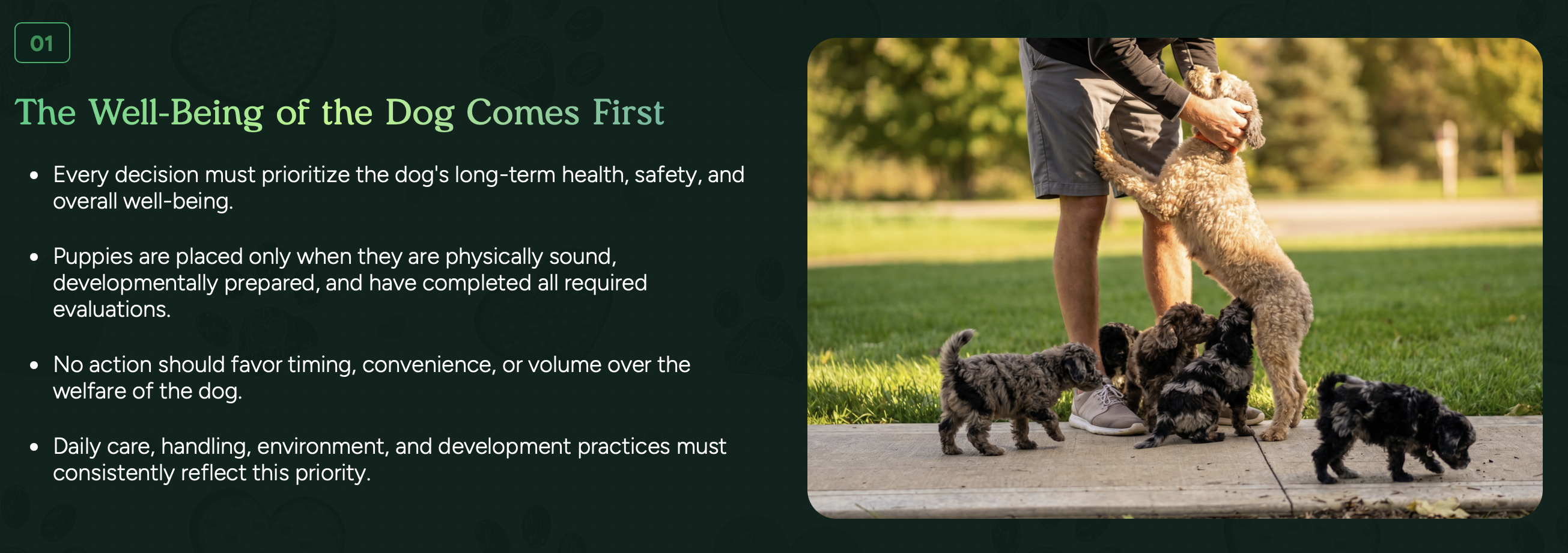
Our Code of Ethics is built for the dog’s long-term health. Safety, and well-being must come first. Timing, volume, or convenience cannot take priority over the welfare of the dog. Puppies are placed only after they are physically sound, developmentally prepared, and have completed the required evaluations. These principles guide the breeders’ daily work and the broader process around them.
Affection gives the work its heart. Standards give it consistency.
Choosing Parent Dogs Is a Health Decision
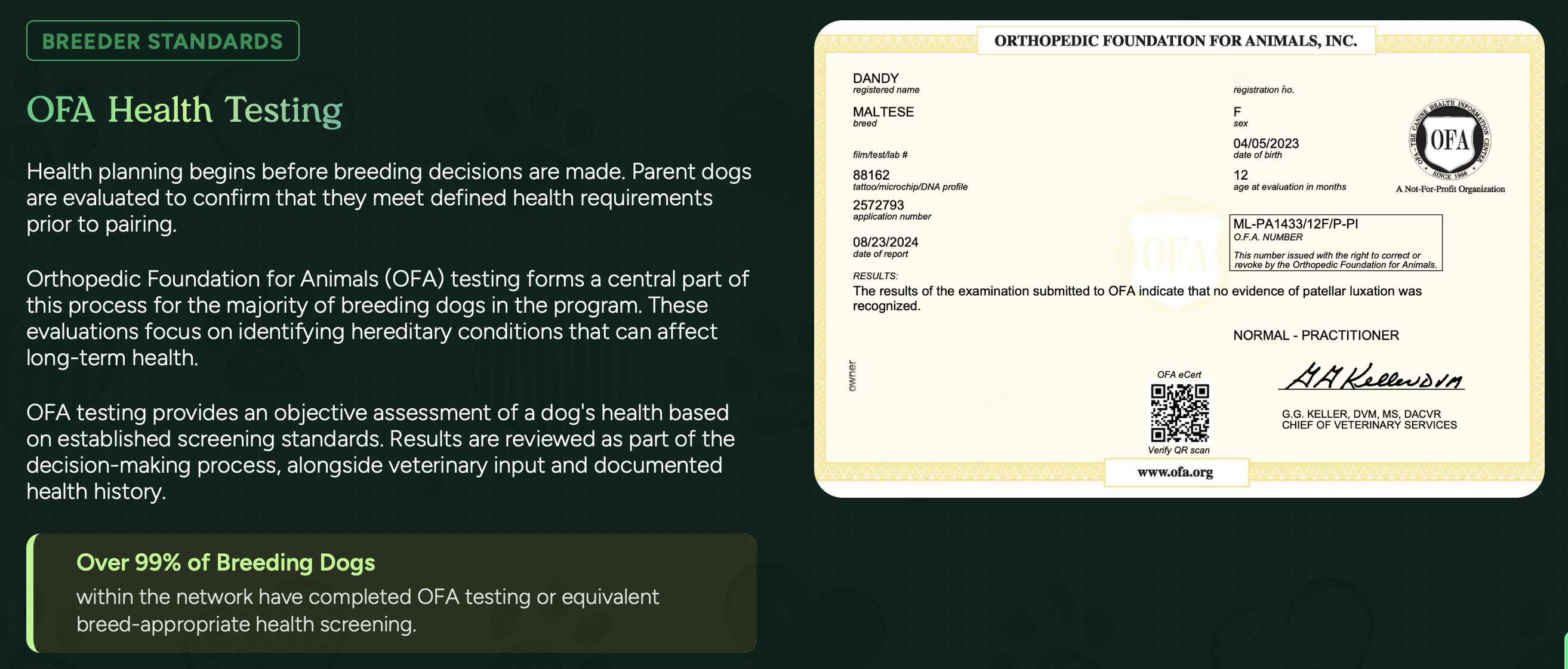
The breeders’ responsibility begins before a litter is conceived. Parent dogs must reach appropriate maturity and receive veterinary clearance before breeding decisions are confirmed. Breed-appropriate health evaluations are completed, including OFA testing where applicable and other screening relevant to the individual breed. Health history, veterinary input, and overall compatibility also form part of the decision.
This is important because a puppy’s health cannot be evaluated only at the end of the first eight weeks. The foundation begins with the mother and father.
Health testing can help identify known hereditary risks and guide better decisions. It cannot promise that every future puppy will remain free of every medical condition. No responsible breeder or veterinary professional can make that promise. Testing provides valuable information before a pairing moves forward.
The breeders also consider the whole dog. Temperament, physical condition, maturity, movement, structure, compatibility, expected size, coat traits, and breed characteristics can all influence a pairing.
Appearance may be the first thing a future family notices. But the breeder must think beyond the photograph. A puppy’s family will live with their temperament, energy, physical needs, and personality for many years. Those qualities deserve careful thought before the litter even begins.
Explore the Breeder Standards at Pilesgrove Pups
The Parent Dogs Matter as Individuals
Responsible breeders do not see parent dogs only as a means of producing puppies. They know their personalities, habits, strengths, and needs.
One dog may be outgoing and delighted by every person they meet. Another may be gentler and more observant. One may hear a treat bag open from three rooms away. Another has probably claimed a favourite resting place and sees no reason to negotiate. These individual qualities help breeders understand the dogs behind each litter.
The parent dogs’ health, physical condition, maturity, breeding fitness, and general well-being are evaluated within the larger health framework. Veterinarians help assess whether a dog is physically suitable for breeding and whether any medical concern should prevent a pairing.
The Code of Ethics also requires daily care to include appropriate nutrition, clean water, safe conditions, humane handling, comfort, and attention to stress or changes in health. The health of the puppies begins with the health and dignity of their parents. That is why the mother and father remain important long after a family begins looking at puppy profiles.
30 Most Asked Questions About Pilesgrove Pups Answered
The Mother Deserves Special Care
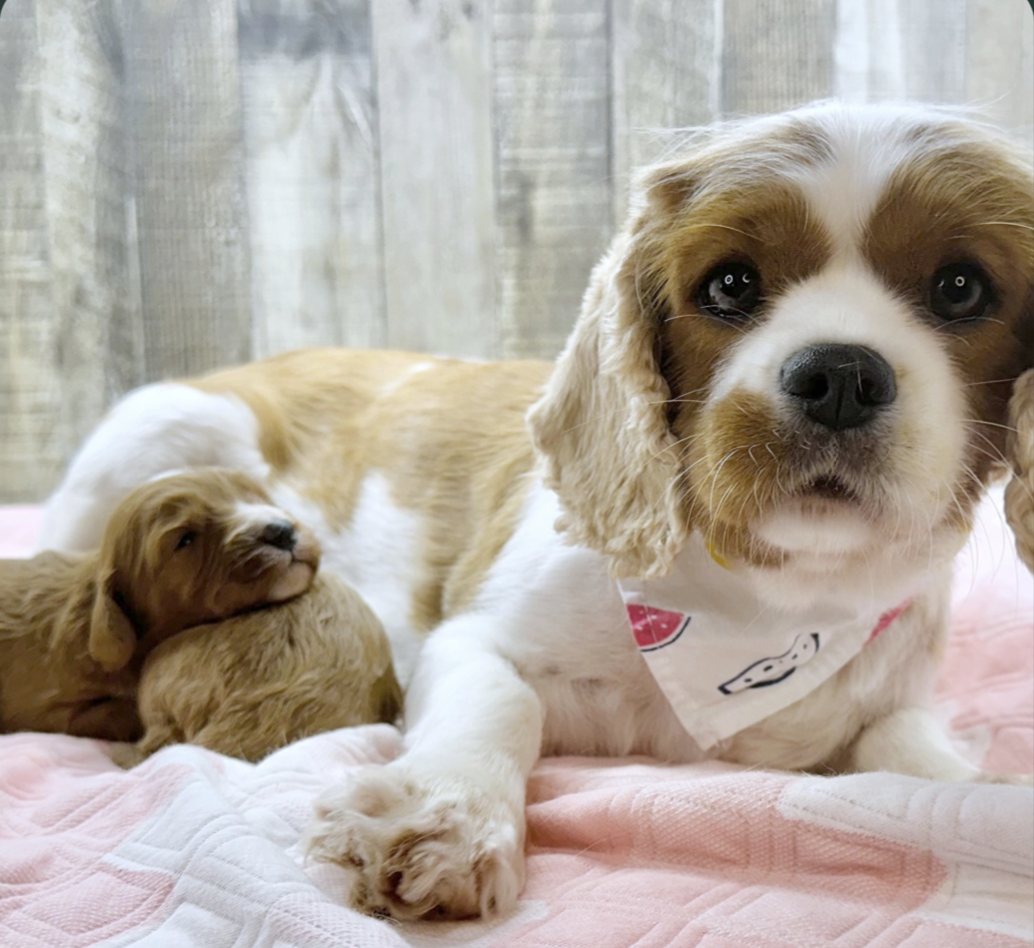
A mother dog gives an extraordinary amount of herself to her puppies. During pregnancy, her body changes. Her appetite, energy, comfort, and nutritional needs may change too. As delivery approaches, she needs people who understand her normal behavior and recognise when something may require veterinary input.
The Pilesgrove Pups health framework includes pregnancy wellness planning, maternal health monitoring, veterinary guidance, preventive care, and preparation for delivery. Vaccination and parasite-control protocols are coordinated to support the mother and contribute to the early protection her puppies receive.
After the puppies arrive, she becomes the centre of their world. She feeds them, cleans them, keeps them warm, comforts them, and eventually begins teaching them how to interact with other dogs.
The breeder supports her through that work. That means paying attention to her appetite and recovery, providing appropriate nutrition, keeping her area clean and comfortable, monitoring her condition, and making sure she has opportunities to rest.
There are moments when she may want human affection. There are moments when she may prefer peace and quiet. And there are moments when she appears to look at the person caring for her as if to say that several hungry puppies have once again failed to respect personal space. The breeder learns what she needs and responds accordingly. Caring for the litter begins with caring well for her.
Is Pilesgrove Pups a Puppy Mill? 35 Reasons Why We Are Not
Newborn Care Is Quiet, Detailed Work
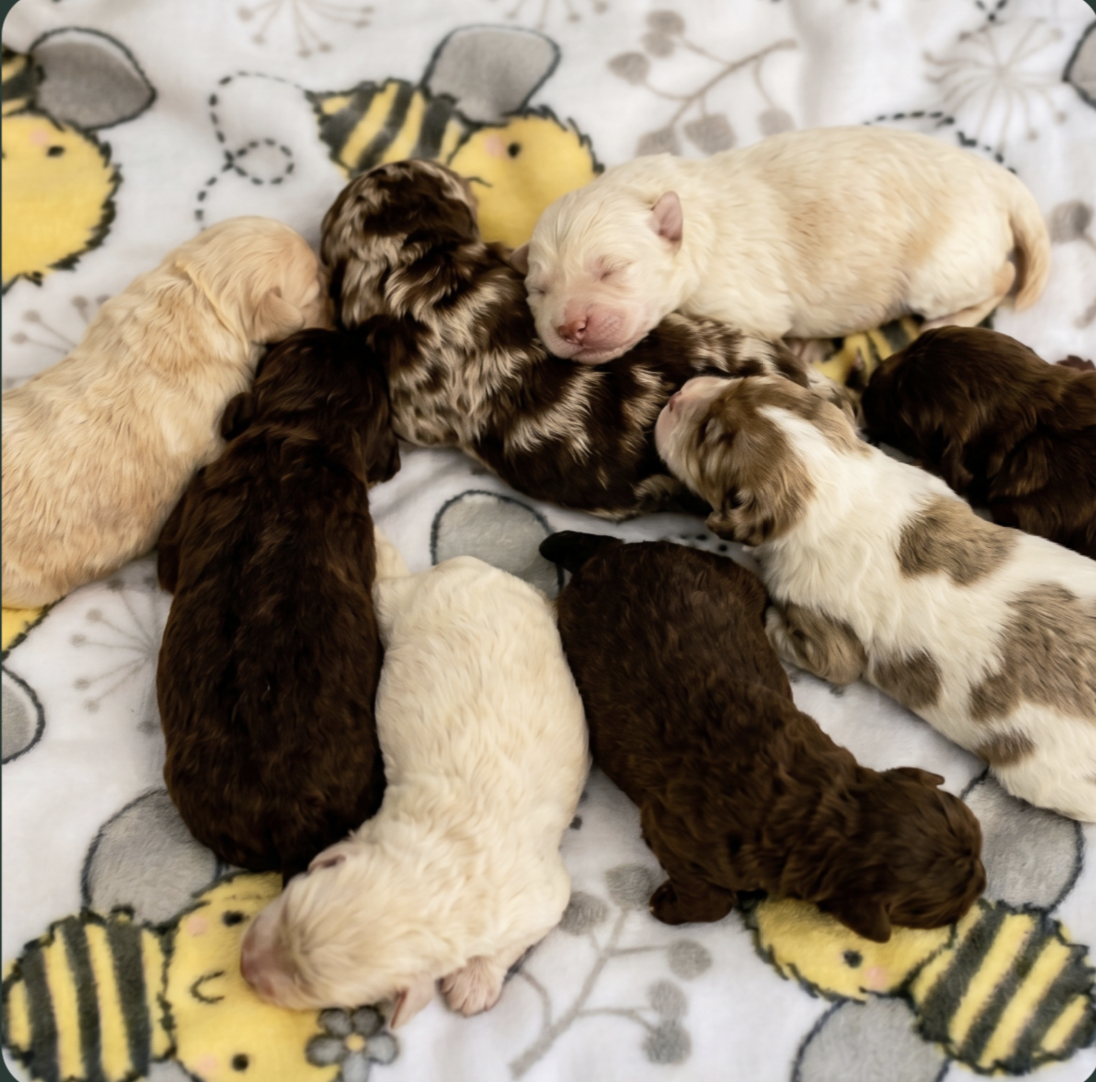
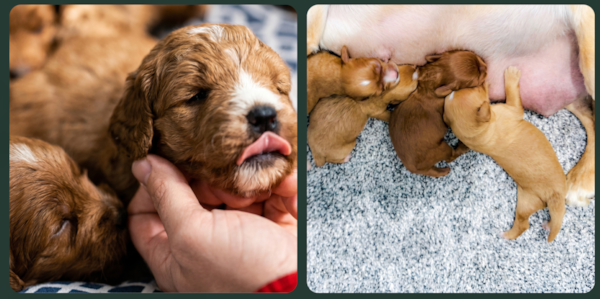
Newborn puppies do not need a busy social calendar. They need stability. During the first two weeks, puppies are fully dependent on their mother. The breeder’s attention centres on nursing, warmth, cleanliness, weight progression, physical condition, and the overall stability of the mother and litter. Human handling stays gentle, purposeful, and appropriate for such a delicate stage.
Much of this work is quiet. It is watching to make sure each puppy nurses. It is recording weight and recognising whether the individual puppy is progressing normally. It is maintaining clean bedding and a comfortable environment. It is noticing which puppy consistently finds a good nursing position and which one may need a little help reaching mom when the rest of the litter has formed a determined wall of tiny bodies.
These details may not look dramatic from the outside. For a newborn puppy, they are enormously important. The breeders’ experience helps them understand what is normal, what deserves closer observation, and when veterinary guidance may be needed.
Is Pilesgrove Pups Safe? How We Protect Puppies and Families
Each Puppy’s Growth Is Followed
Puppies in the same litter do not always develop in exactly the same way. One may be naturally larger. Another may grow more gradually. Some become physically adventurous the moment their legs begin cooperating. Others take a thoughtful approach and prefer to master standing before attempting anything more ambitious.
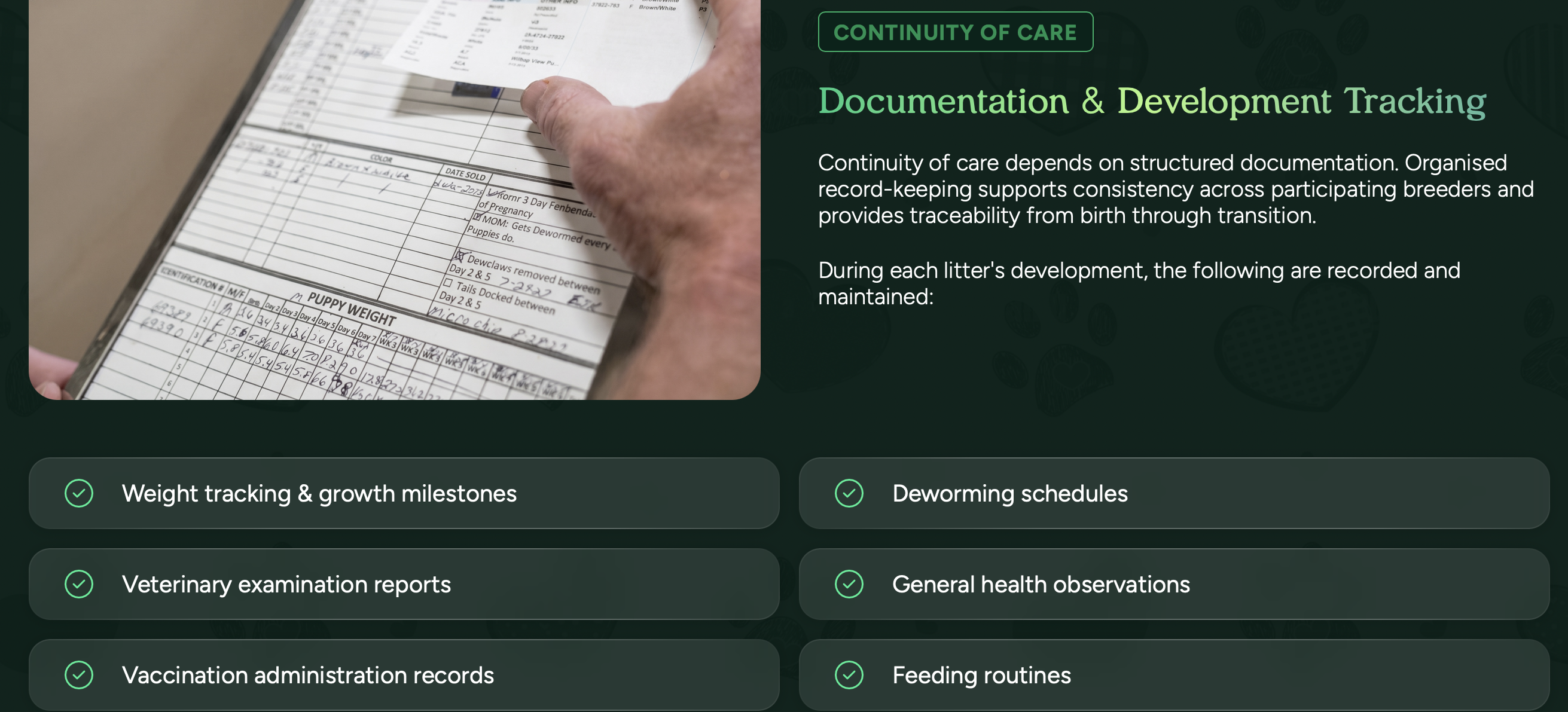
That individual variation is why structured records matter.
Throughout a litter’s development, breeders keep track of information related to:
- Weight and growth
- Feeding routines
- Deworming schedules
- Vaccination administration
- Veterinary examinations
- General health observations
- Developmental progress
These records support continuity from birth through the puppy’s transition into Pilesgrove Pups’ care. They also allow health and development to be understood as an ongoing story rather than a single snapshot taken before homecoming.
A final veterinary nose-to-tail inspection can tell us something important about a puppy on one particular day. It cannot replace the weeks of information that came before it.
Explore the Puppy Development Plan at Pilesgrove Pups
Preventive Health Care Begins Early
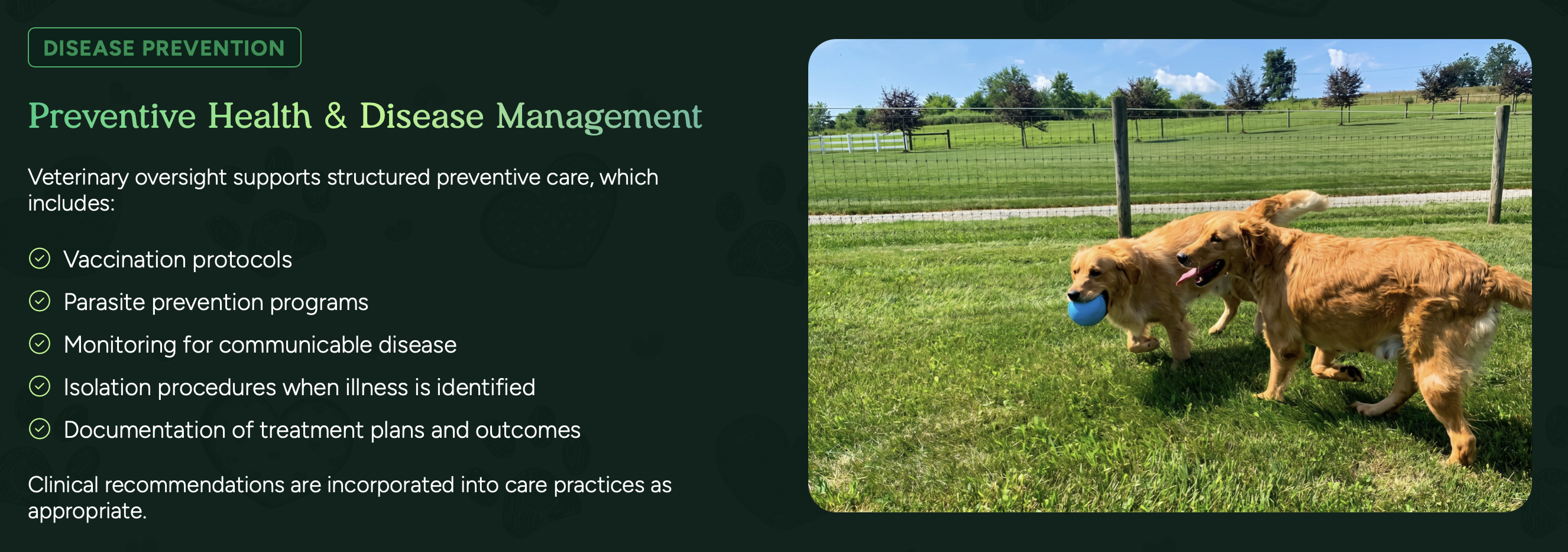
The breeders follow a defined preventive-care schedule as the puppies grow.
Parasite control begins at approximately two weeks of age, with treatment continuing at regular two-week intervals while the puppies remain in breeder care. Age-appropriate vaccinations begin at approximately eight weeks, with further vaccinations continuing at appropriate intervals when puppies remain in care longer.
These schedules are not chosen casually. Veterinary professionals guide vaccination timing, parasite prevention, neonatal health, and any clinical response needed when illness or injury appears. Participating breeders maintain an active relationship with a licensed veterinarian, whose role can include preventive-care planning, reproductive health, maternal monitoring, litter evaluation, nutrition guidance, and treatment.
The breeder’s role is to apply those protocols consistently and document what has been completed. They also continue observing the puppy between veterinary appointments.
Medicine and daily care work together. The veterinarian may provide the clinical plan. The breeder is the person who sees whether the puppy eats normally at the next meal, stays active, gains weight, and responds as expected.
Learn about Puppy Health at Pilesgrove Pups
Nutrition Is Part of Healthy Development
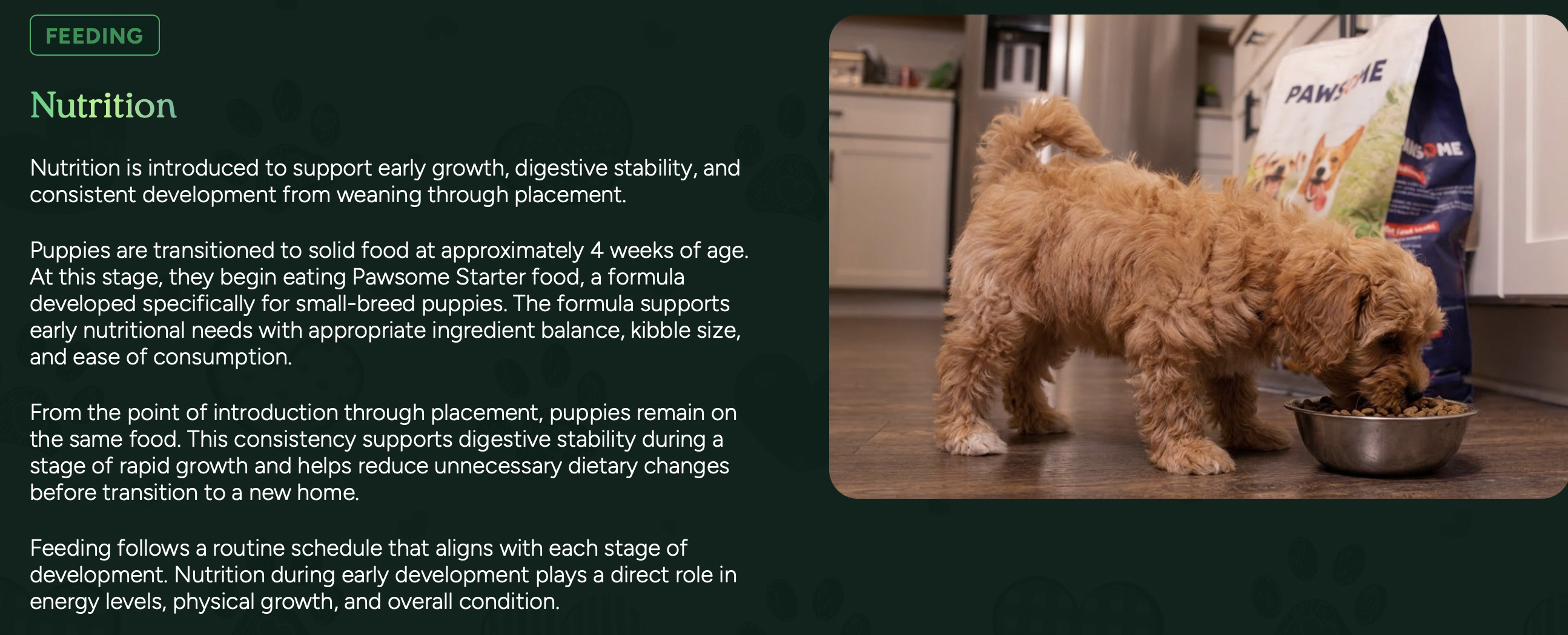
Feeding puppies is not simply a matter of filling a bowl. Their needs change quickly during the first weeks.
The mother provides their earliest nutrition through nursing. As the puppies approach weaning, solid food is introduced gradually at approximately four weeks. A consistent food and feeding routine then supports digestive stability and physical growth through placement.
The breeders monitor how the puppies respond. They notice who approaches the food confidently, who is still learning, and whether every puppy is eating enough.
There is often at least one puppy who seems personally concerned that meals could disappear if they are not handled with sufficient enthusiasm. There may also be a smaller or more reserved puppy who needs a calmer position at the bowl. Good breeders do not simply feed the litter as a group and assume everyone received the same amount. They pay attention to the individuals within it.
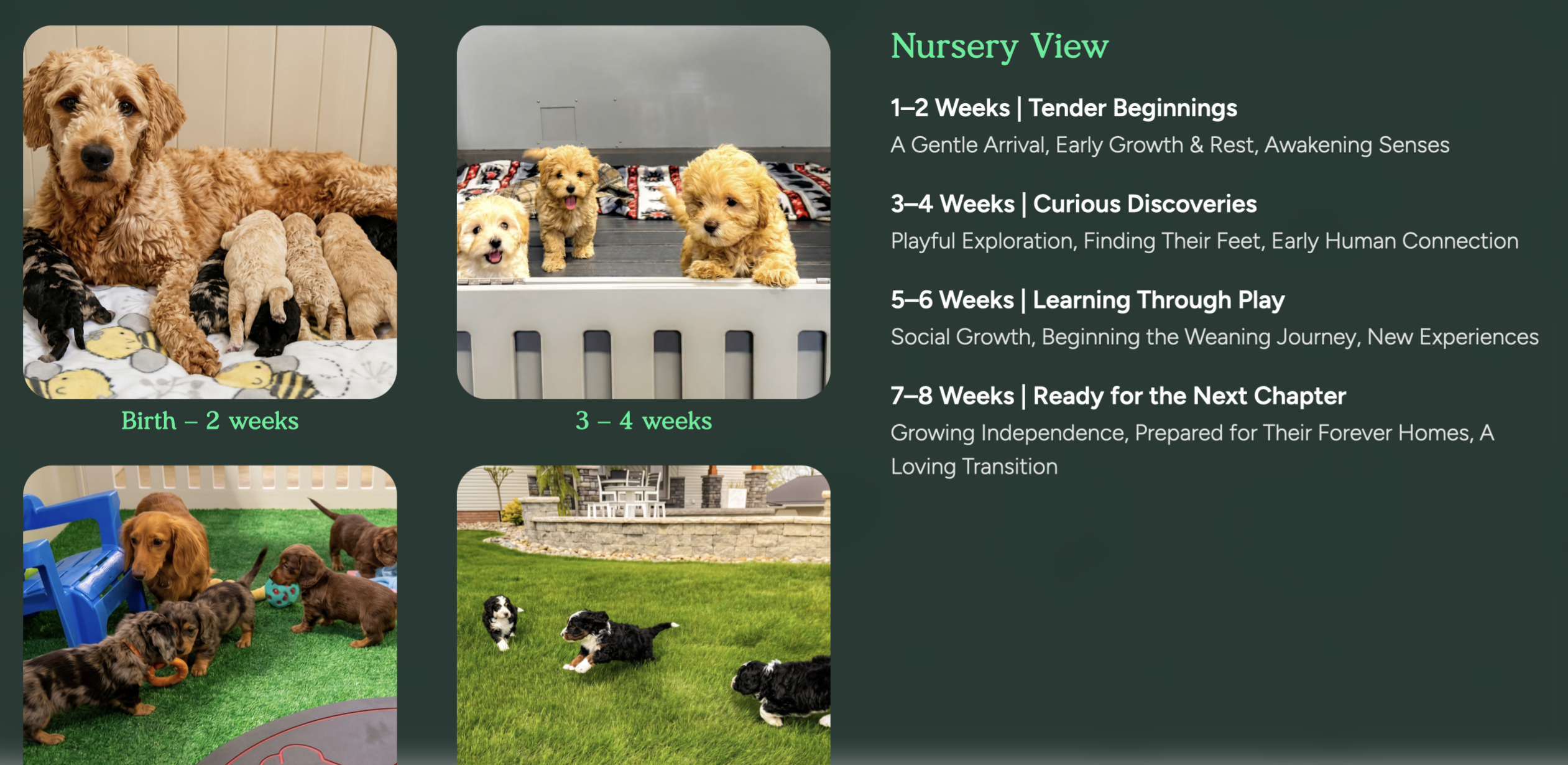
A Puppy’s First 8 Weeks at Pilesgrove Pups
Development Is Guided With Intention
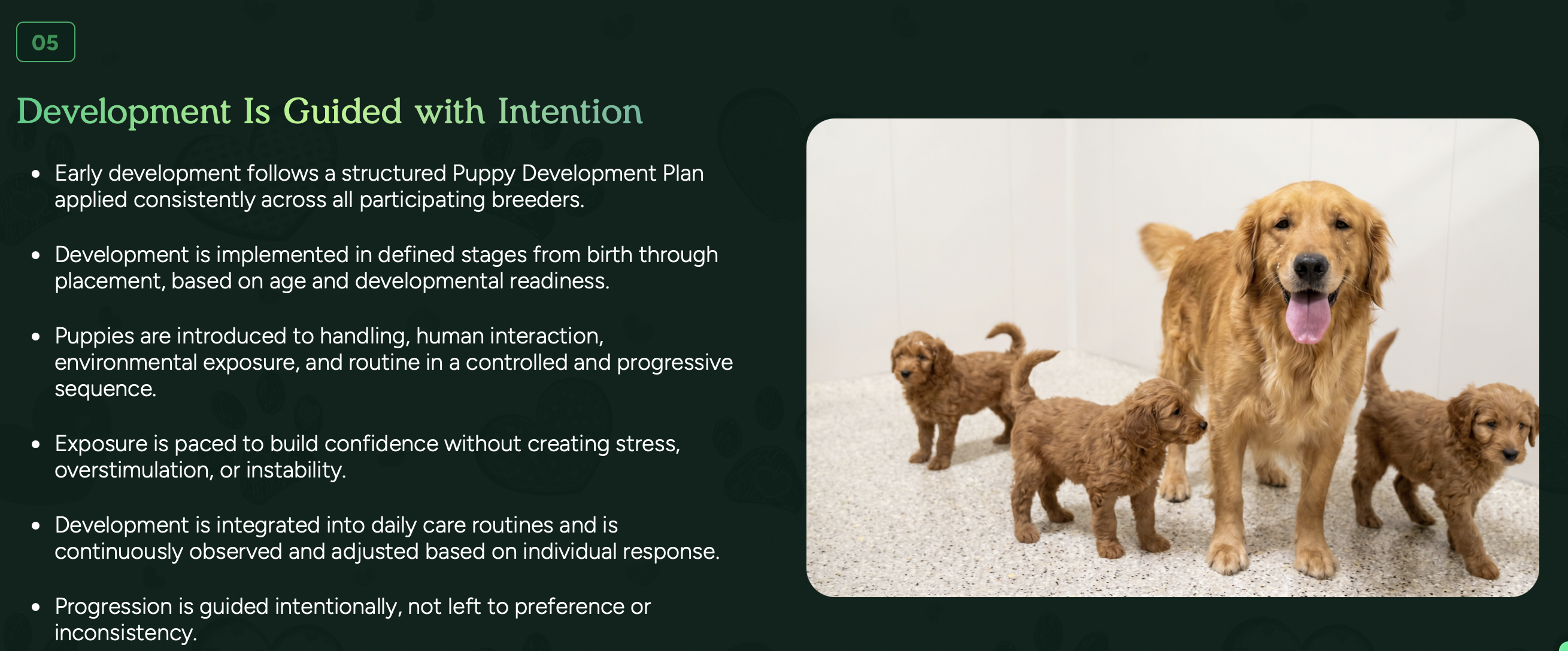
Puppies do not become confident family companions by accident. Genetics and maternal care provide part of the foundation. Early experience matters too.
The breeders follow the Puppy Development Plan, which introduces handling, social interaction, environmental variation, enrichment, routine preparation, and everyday care in a progressive sequence based on age and developmental readiness. The experiences are built into daily life.
Development does not happen only during a formal session with a toy and a checklist. It happens while puppies are fed, weighed, cleaned, handled, observed, groomed, and given individual attention. New experiences are layered onto the stability established during the previous stage.
The breeder may introduce:
- Gentle handling
- Human voices and interaction
- Safe changes in light and sound
- Different walking surfaces
- New rooms or controlled spaces
- Grooming-style touch
- Simple toys and enrichment
- Short periods of individual attention
- Feeding and rest routines
- Early potty foundations
- Positive carrier introductions
These experiences are introduced carefully. The purpose is not to expose puppies to as much as possible as quickly as possible, but to help them become familiar with new things without overwhelming them.
Is Pilesgrove Pups a Puppy Broker? How Our Puppy Placement Process Works
The Breeders Watch How Each Puppy Responds
A structured development plan does not mean every puppy must behave exactly the same way. The sequence stays consistent, but the pace can be adjusted according to the individual puppy’s comfort, response, and recovery.
One puppy may walk directly toward a new toy and begin investigating. Another may sit back and watch. The cautious puppy is not failing the exercise. They are gathering information.
A thoughtful breeder notices the difference. They do not force the hesitant puppy into the centre of the activity or interpret every pause as a problem. They give the puppy space, repeat the experience when appropriate, and look for signs that confidence is beginning to grow.
The same attention applies to handling. Some puppies relax immediately when held. Others need shorter sessions before they feel comfortable. One may enjoy having their paws touched. Another may stare at the breeder with the expression of someone reviewing a questionable contract. The goal is to help every puppy build a useful foundation for life with people.
Socialisation Happens Through Daily Care
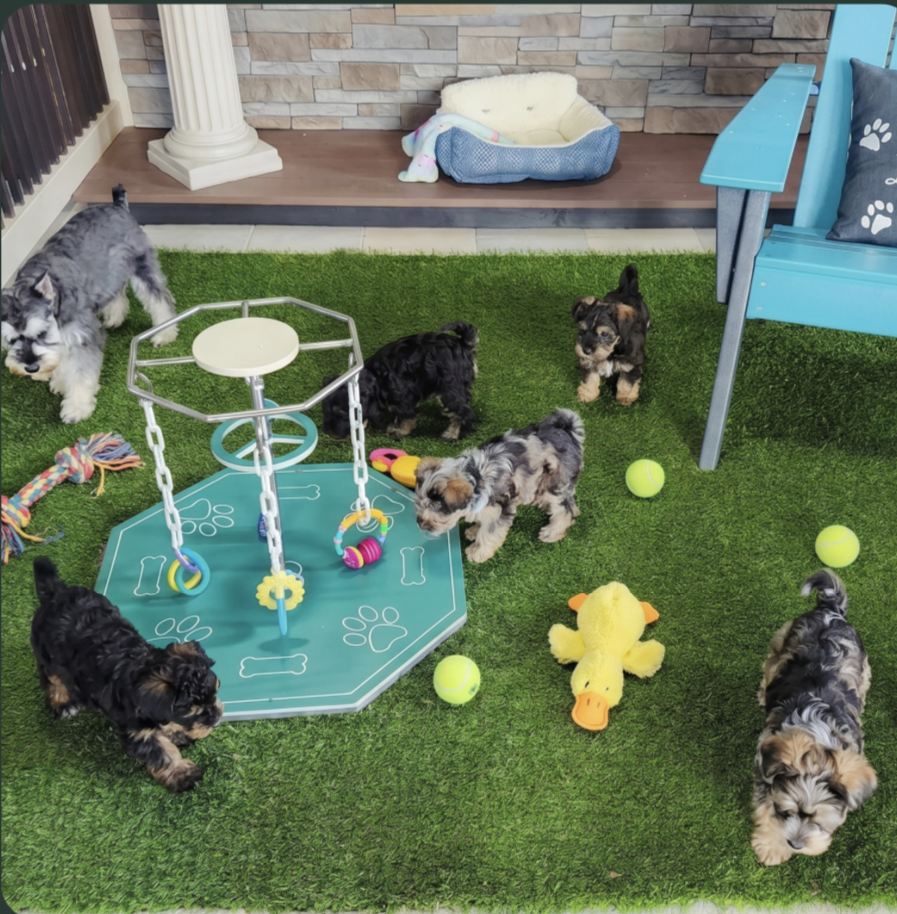
The word socialisation can sound as though puppies attend a series of organised classes. At this age, it is much more natural than that. Socialisation grows through repeated, positive interactions woven into normal care.
The puppies hear human voices. They experience gentle touch. They play with littermates, encounter safe surroundings, receive individual attention, and become familiar with ordinary routines.
As they grow, these experiences expand in a controlled way. The breeders observe whether puppies stay comfortable, recover well from novelty, and continue showing stable behaviour as the environment becomes more interesting.
Littermate play is also valuable. Puppies learn that biting too hard may end a game. They learn to communicate, share space, respond to correction, and recover from small frustrations.
Their mother contributes lessons no human can fully recreate. The breeder supports this process without rushing puppies away from mom or expecting adult behaviour from very young dogs.
Routine Handling Prepares Puppies for Real Life
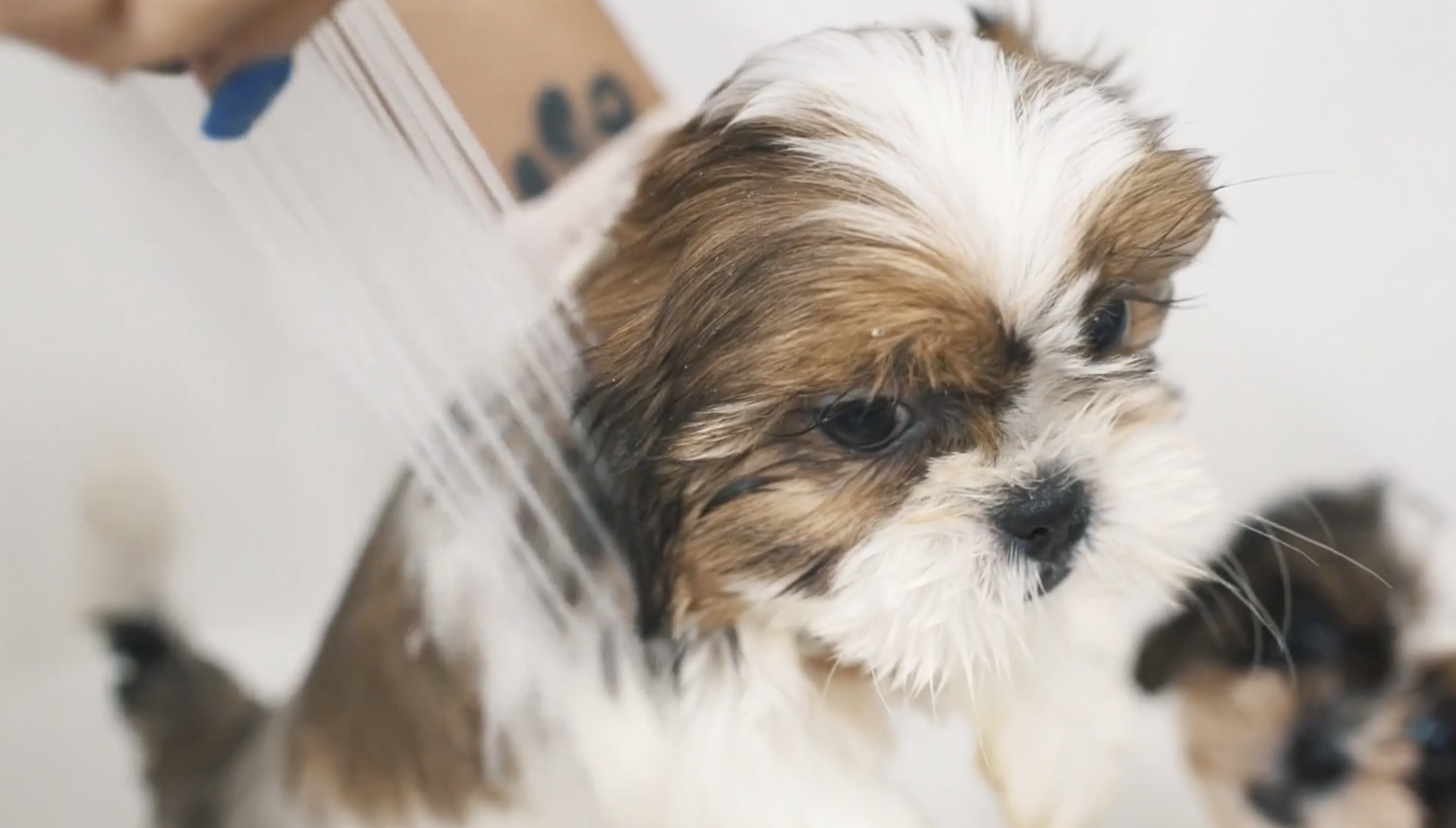
Every family puppy will need to be examined, groomed, weighed, carried, and handled throughout life.
The breeders begin introducing those experiences gently.
Ear care begins at approximately four weeks. Bathing and nail trimming are introduced at around six weeks or as needed. These routines support hygiene while helping puppies become more familiar with touch, movement, and ordinary care.
The goal is not to claim that an eight-week-old puppy will arrive perfectly behaved for every bath or nail trim. Puppies continue to be puppies. One may relax during grooming. Another may believe that holding one paw for three seconds constitutes an outrageous restriction of personal freedom. What matters is that the experience is not completely unfamiliar. The family can then continue building on that foundation patiently.
Veterinary Professionals Support the Breeders’ Work
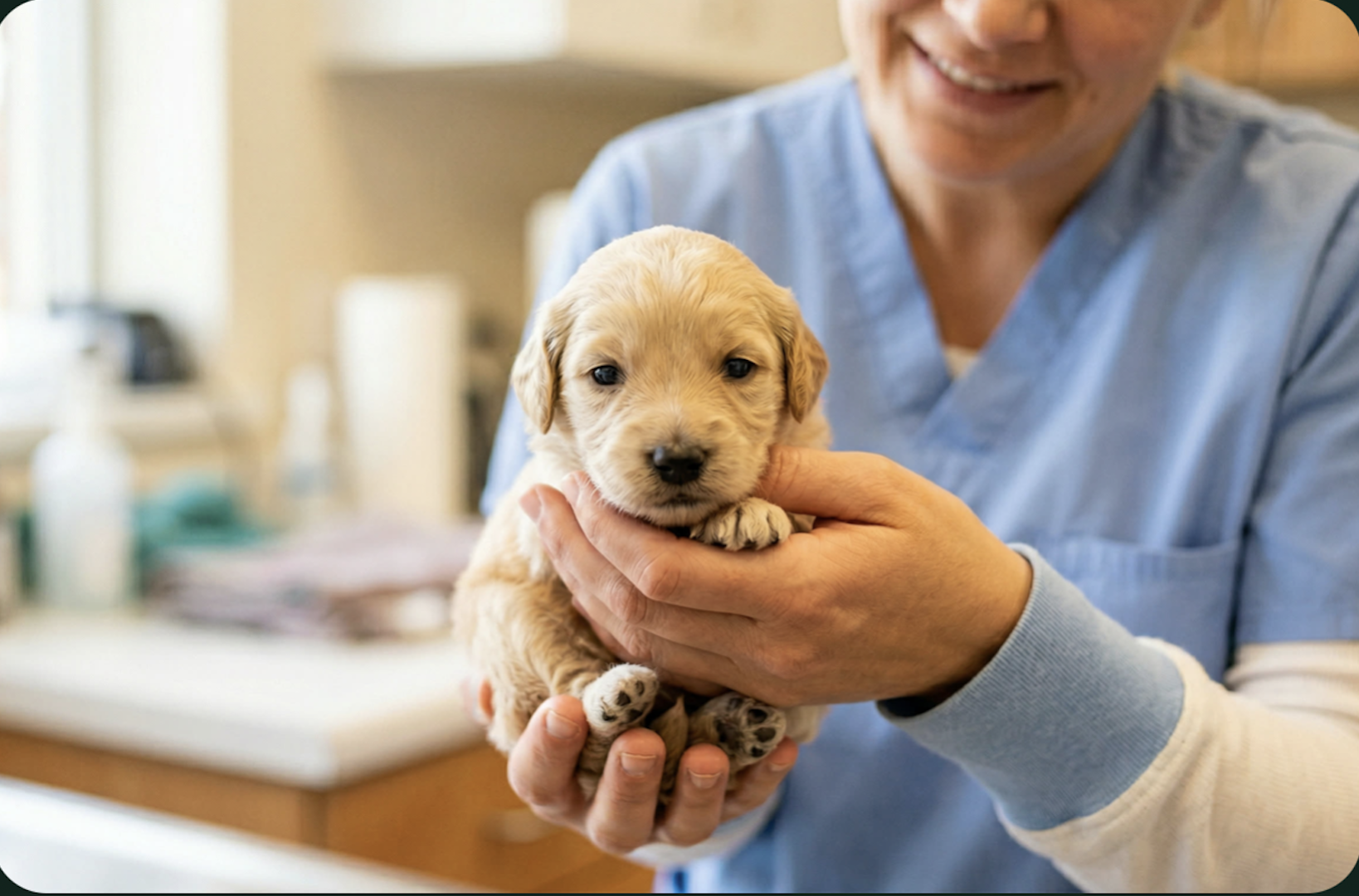
The breeders we work with bring practical experience and close knowledge of the dogs. Veterinarians bring medical expertise. Both are important.
Licensed veterinarians are involved throughout the breeding and early-development process. Their role can include pre-breeding evaluations, pregnancy wellness planning, neonatal health monitoring, vaccination schedules, parasite prevention, developmental assessment, and treatment when a concern appears.
This means veterinary care is not treated as one final appointment arranged solely to obtain a health certificate. It forms part of a continuing process.
The breeder sees the dogs and puppies in daily life. They can report changes in appetite, growth, energy, nursing, movement, or behaviour. The veterinarian evaluates those concerns clinically and provides guidance based on medical findings. This collaboration helps health decisions rest on both daily observation and professional veterinary judgment.
Is Pilesgrove Pups Legit? How to Verify Us
Accurate Records Are Part of Responsible Care
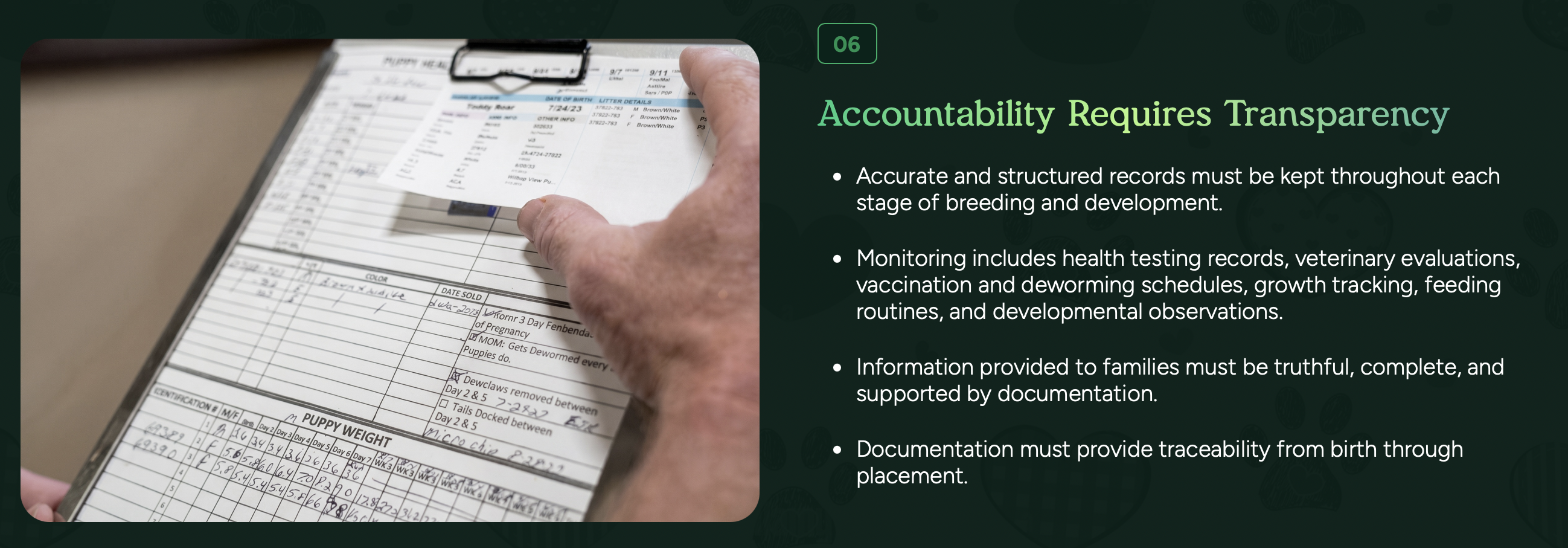
The breeders’ work includes a significant amount of documentation. That may not be the part of puppy raising that appears in adorable photographs, but it is essential.
Accurate records provide traceability from birth through placement. They help show which health evaluations were completed, when preventive care occurred, how the puppy grew, and whether any concern required treatment or follow-up.
The Pilesgrove Pups standards require information provided to families to be truthful, complete, and supported by documentation. This creates accountability.
A statement such as “the puppy has been dewormed” should be supported by a schedule. A parent-health claim should be supported by the relevant evaluation. A veterinary concern should be reflected in the puppy’s medical information.
Responsible breeders understand that records are not separate from care. They are evidence of the care that occurred.
Learn about Advanced Blood Evaluation
The Code of Ethics Guides Difficult Decisions
Ethics matter most when the easiest decision is not necessarily the right one.
A puppy may need additional time. A breeding dog may not receive clearance. A health concern may require treatment, monitoring, or a change in the expected homecoming plan.
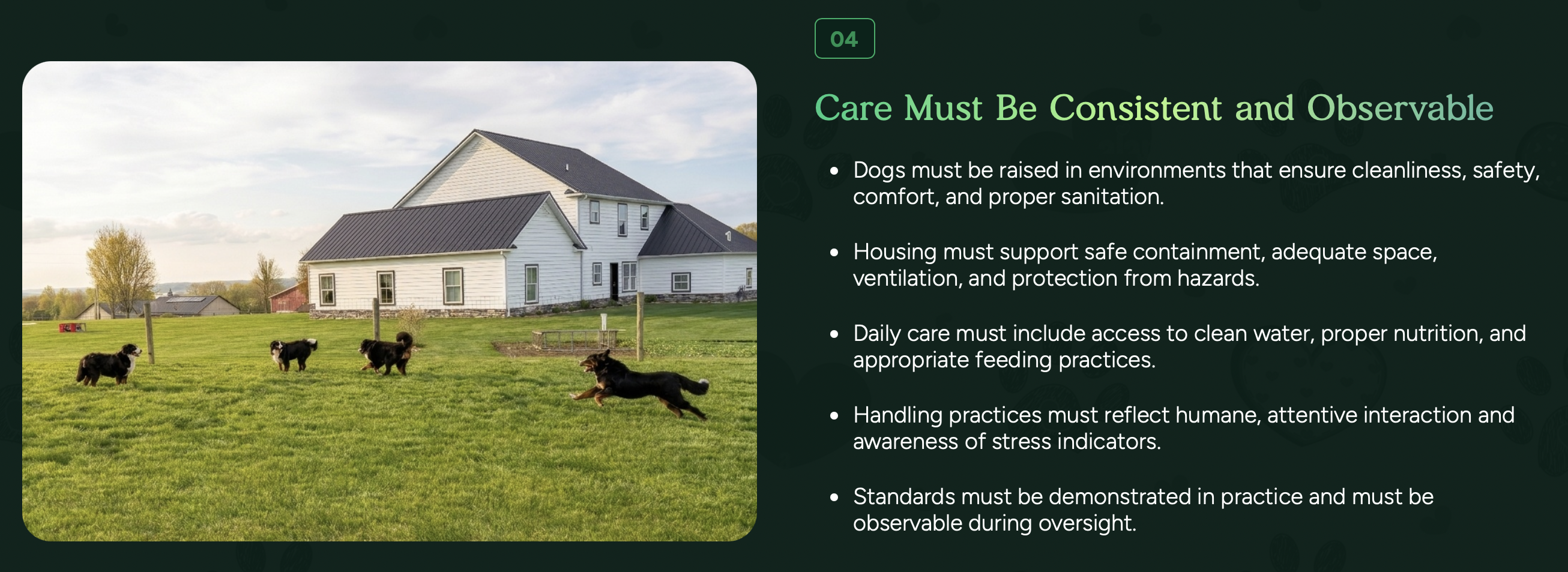
The Pilesgrove Pups Code of Ethics requires health to be verified rather than assumed, care to remain consistent and observable, development to be guided intentionally, and animal well-being to take priority over timing or convenience.
This means the puppy’s needs guide the next step. A family may already be excited. Travel plans may have been discussed. A bed and personalised blanket may be waiting. Still, readiness cannot be decided by the calendar alone. The breeders’ observations, veterinary findings, health records, eating progress, growth, and development all contribute to the decision.
Puppies Stay With Their Mother Through an Important Stage
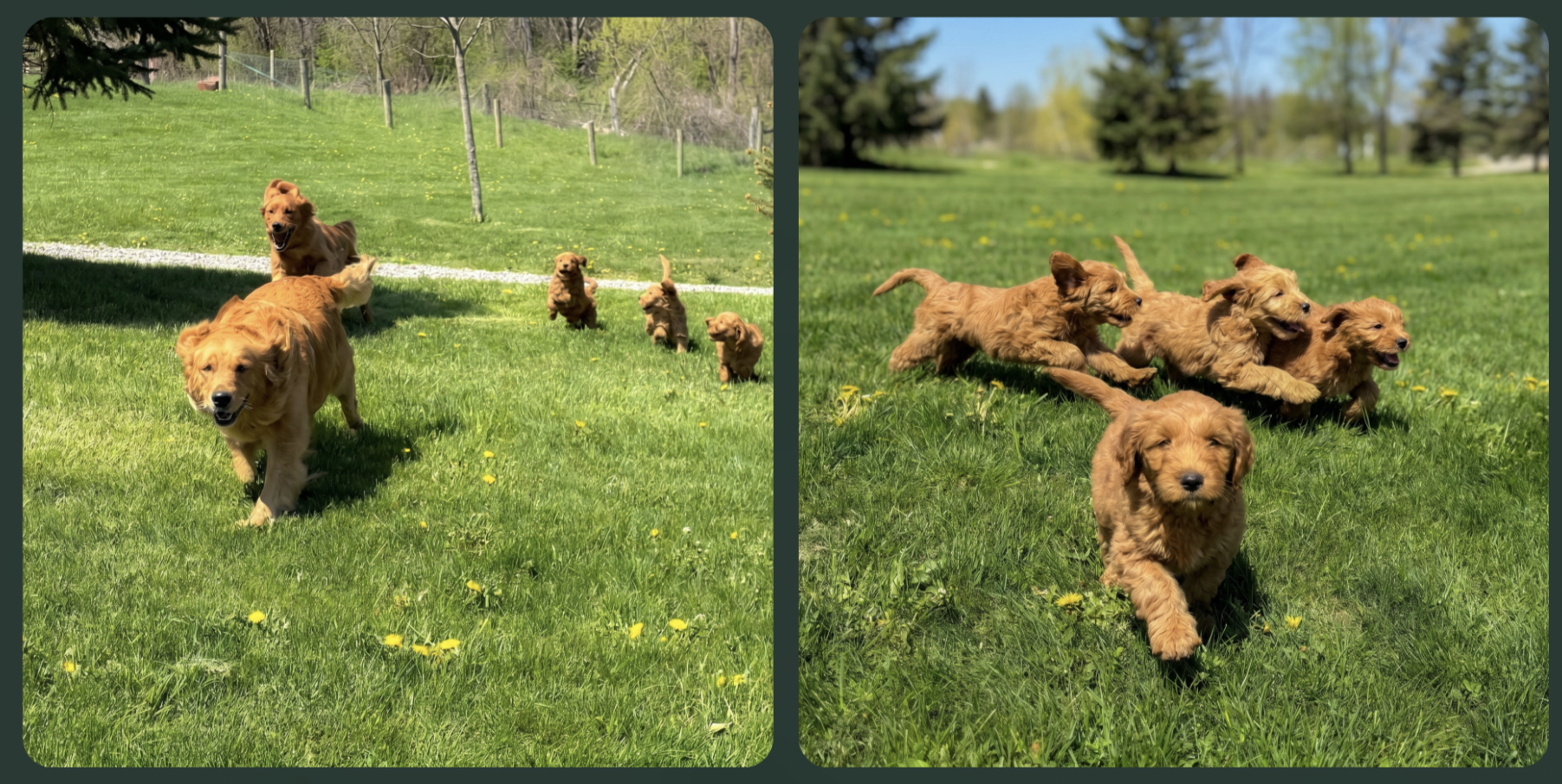
The breeders care for puppies alongside their mother and littermates during the early weeks when they are learning, growing, and becoming more independent.
This time is valuable.
The mother provides nutrition and comfort during the earliest stage. Later, she begins teaching boundaries and communication. Littermates contribute lessons through play and everyday interaction.
Puppies should not lose that experience simply because someone is eager for them to go home.
The Pilesgrove Pups process requires puppies to reach the appropriate developmental stage before placement preparation is completed. Their condition, health information, and readiness are reviewed before the transition continues.
The breeder’s job is not to make the puppies leave as quickly as possible. It is to help them be ready.
The Breeder’s Work Connects to Final Preparation
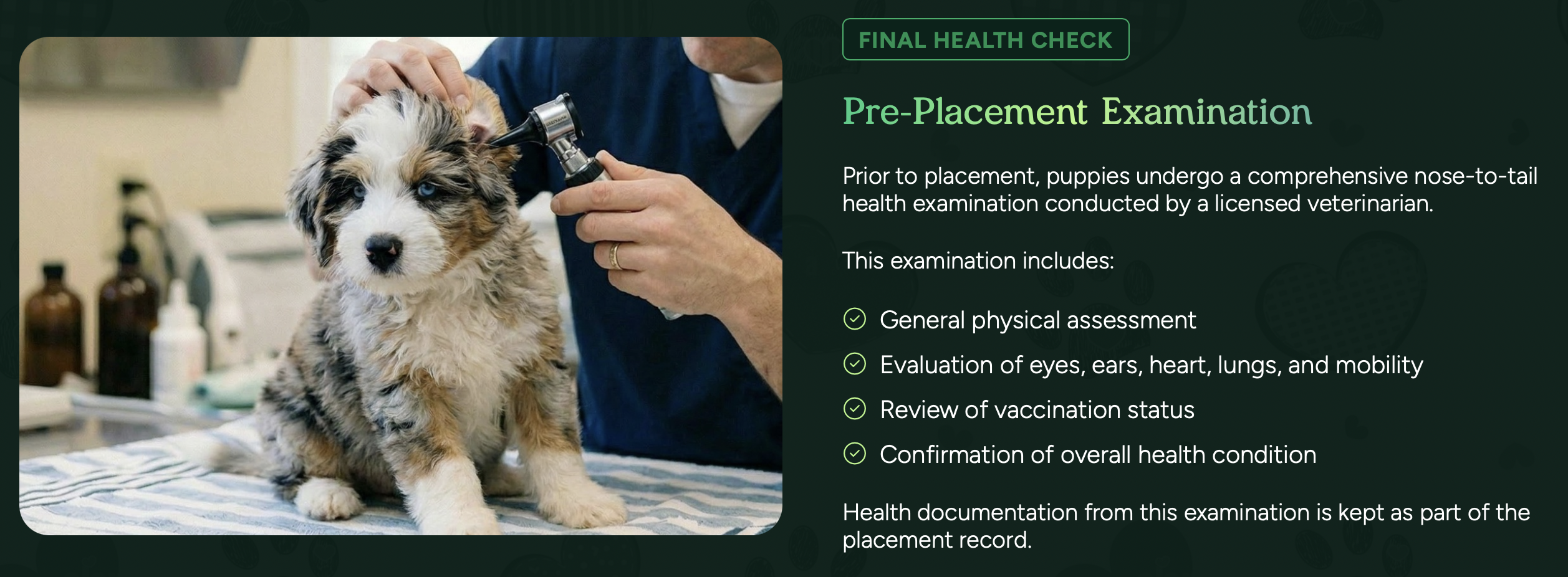
As puppies approach homecoming, the responsibility does not pass directly from the breeder to the family. The puppies enter final preparation and review.
During this stage:
- Health and development documentation is reviewed
- General condition and readiness are assessed
- Age-appropriate interaction continues
- A licensed veterinarian completes a nose-to-tail examination
- VetScan Imagyst fecal screening is performed
- An optional pre-placement blood evaluation is available
- Grooming and homecoming preparation are completed
- Medical and care information is organised for the family
Placement happens only after the required review process has been completed. This final stage does not replace the breeder’s earlier work. It builds on it.
The records tell us how the puppy developed. The health history shows what care has occurred. Our direct time with the puppy allows us to observe the individual, continue their care, and prepare them for the transition ahead.
Learn About VeSscan Imagyst at Pilesgrove Pups
We Get to Know the Puppy the Breeder Has Raised
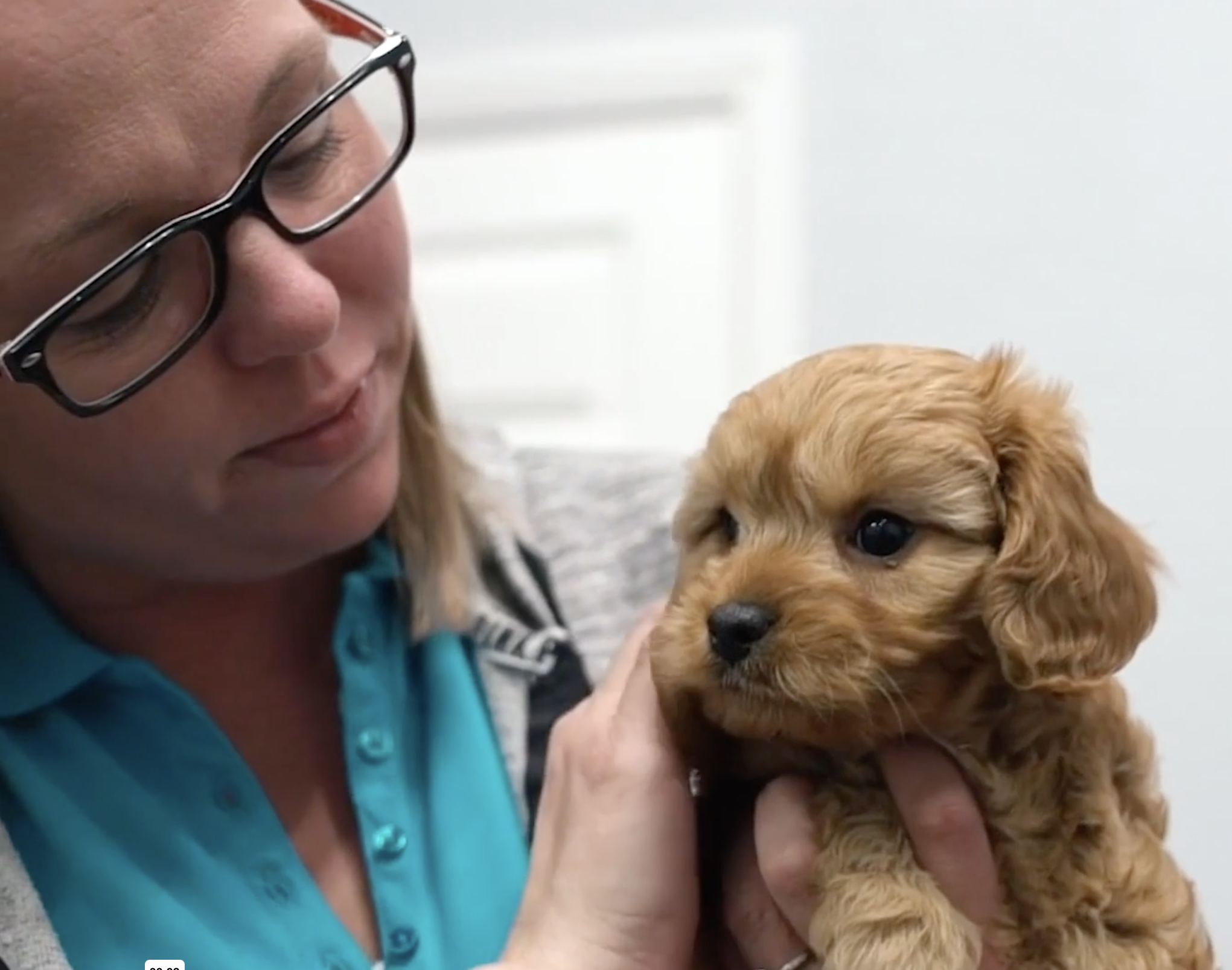
By the time a puppy enters our direct care, a great deal of their early story has already been written. The breeder has watched the puppy move from complete dependence to active exploration. They know who was first to investigate the food bowl, who enjoyed individual attention, who approached new experiences carefully, and who seemed to assume every person arrived for the sole purpose of providing affection.
Our team then begins learning the puppy too. We observe how they eat, move, rest, interact, and respond to care. We review the information that came with them and continue the routines that support a steady transition.
This creates continuity between the people who raised the litter and the team preparing the puppy for homecoming.
What We Ask of the Breeders We Work With
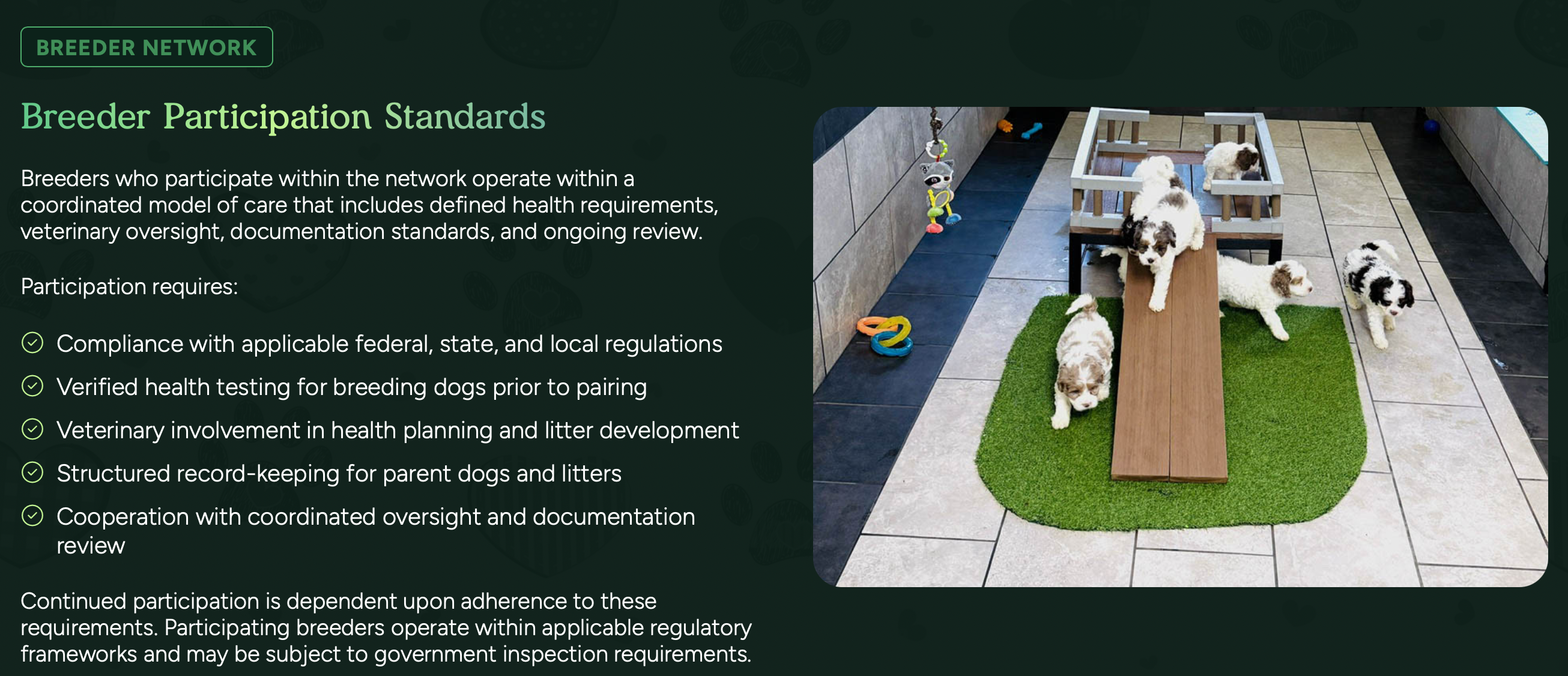
The requirements are detailed, but their purpose is straightforward.
We ask participating breeders to:
- Place the dogs’ well-being first - Health, safety, comfort, and appropriate care must come before timing or convenience.
- Complete appropriate parent-health evaluations - Breeding decisions require maturity, veterinary clearance, and breed-relevant screening.
- Work with licensed veterinary professionals - Veterinary input supports breeding fitness, pregnancy, neonatal care, preventive health, development, and treatment.
- Follow structured preventive-care protocols - Vaccination, deworming, nutrition, hygiene, and health observation follow defined schedules.
- Keep accurate records - Parent health, litter growth, feeding, veterinary reports, vaccinations, deworming, and observations must be documented.
- Follow the Puppy Development Plan - Handling, socialisation, enrichment, environmental exposure, and routine preparation are introduced progressively.
- Observe the individual puppy - Development may follow one structure, but the pace should reflect the puppy’s response and readiness.
- Provide attentive daily care - Cleanliness, nutrition, water, safe surroundings, humane handling, and observation remain everyday responsibilities.
- Communicate health and development information honestly - Information must be complete, accurate, and supported by records.
- Be accountable to the shared standards - Continued participation depends on following the requirements that connect their care to the Pilesgrove Pups process.
These expectations help transform good intentions into a consistent program.
What Makes a Pilesgrove Pups Breeder Special?
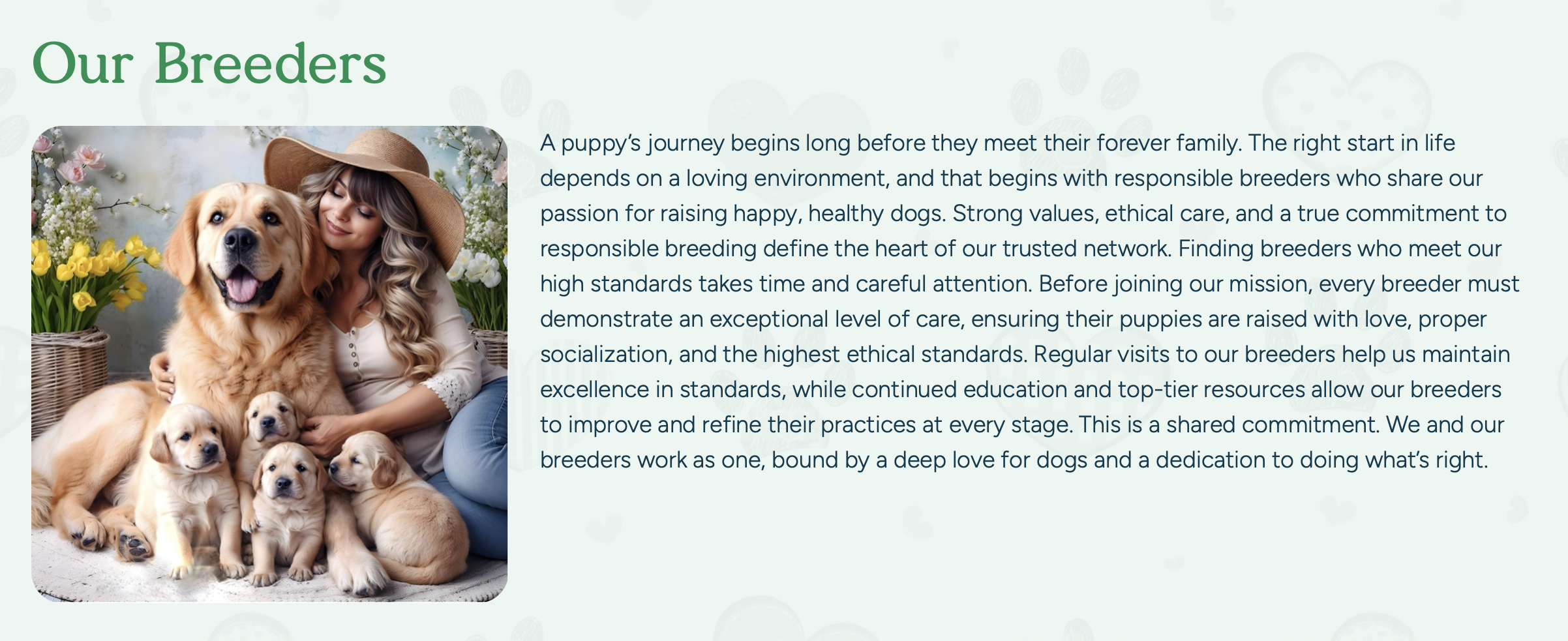
There is no single personality type behind every good breeder. Some are naturally quiet and observant. Others can talk about dogs for hours and happily will, given the slightest encouragement. Some have spent decades learning the work. Others bring a newer energy supported by clear standards, veterinary relationships, and a willingness to keep learning.
What they share is responsibility. They understand that breeding decisions affect living dogs and the families who will eventually love their puppies. They pay attention to details other people may never see: the mother’s appetite, the newborn’s weight, the first solid meals, the vaccination record, and the puppy who needs one more gentle introduction before feeling comfortable.
They also share the joy. They watch puppies discover movement, play, food, toys, and people. They see personalities unfold day by day.
Raising puppies requires plenty of cleaning, careful recordkeeping, and lost sleep. It also provides daily giggles that most families never get to witness. That combination of hard work and genuine delight is reflected in the puppies they raise.
Learn about The Pilesgrove Pups Experience
Our Responsibility Is Shared, but It Is Never Distant
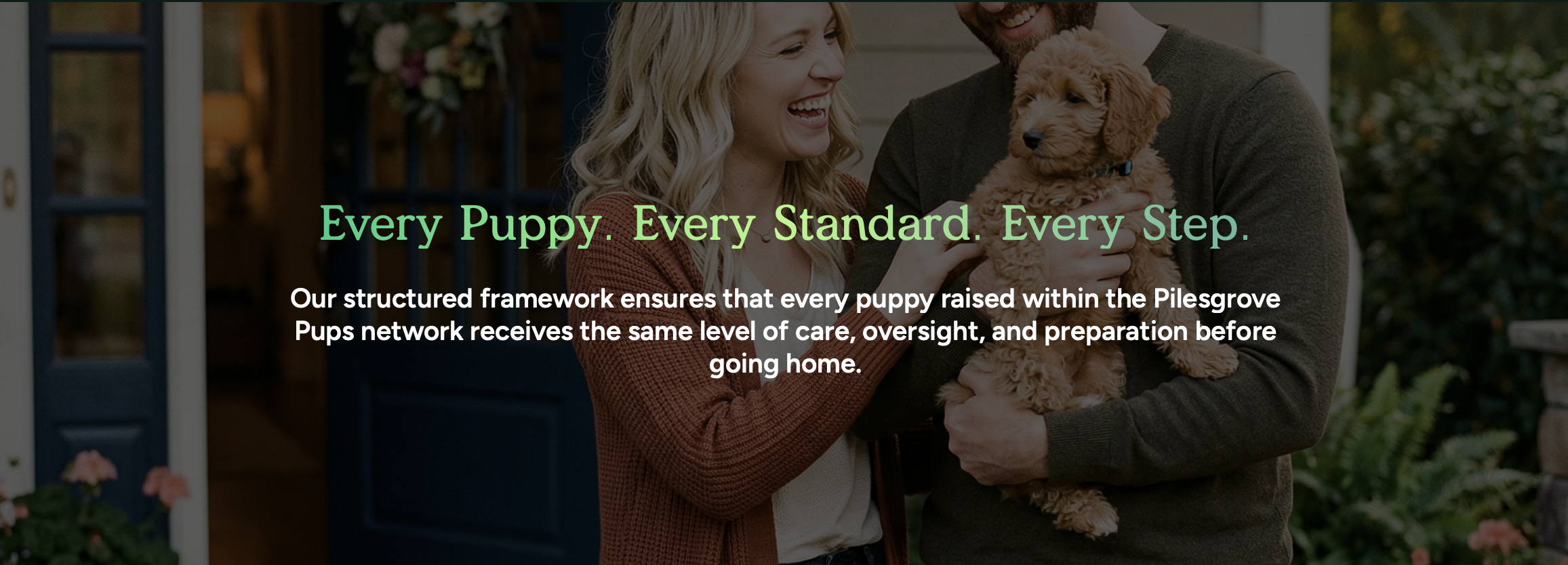
The breeders play an essential role in the first part of each puppy’s life.
Pilesgrove Pups stays involved through the standards, health framework, veterinary coordination, documentation requirements, development process, final preparation, and long-term accountability surrounding that work.
This is not a loose introduction between a breeder and a future owner. It is a coordinated relationship in which every participant has a defined responsibility.
The breeder raises and observes the litter. Veterinary professionals guide and evaluate health. Pilesgrove Pups is part of the standards, follows the information, cares for the puppy directly before homecoming, and supports the family afterward.
Each part matters. Together, they create the full process behind the puppy.
Learn about the 10-Year Health Guarantee at Pilesgrove Pups
From the Breeder’s Care to the Family’s Arms
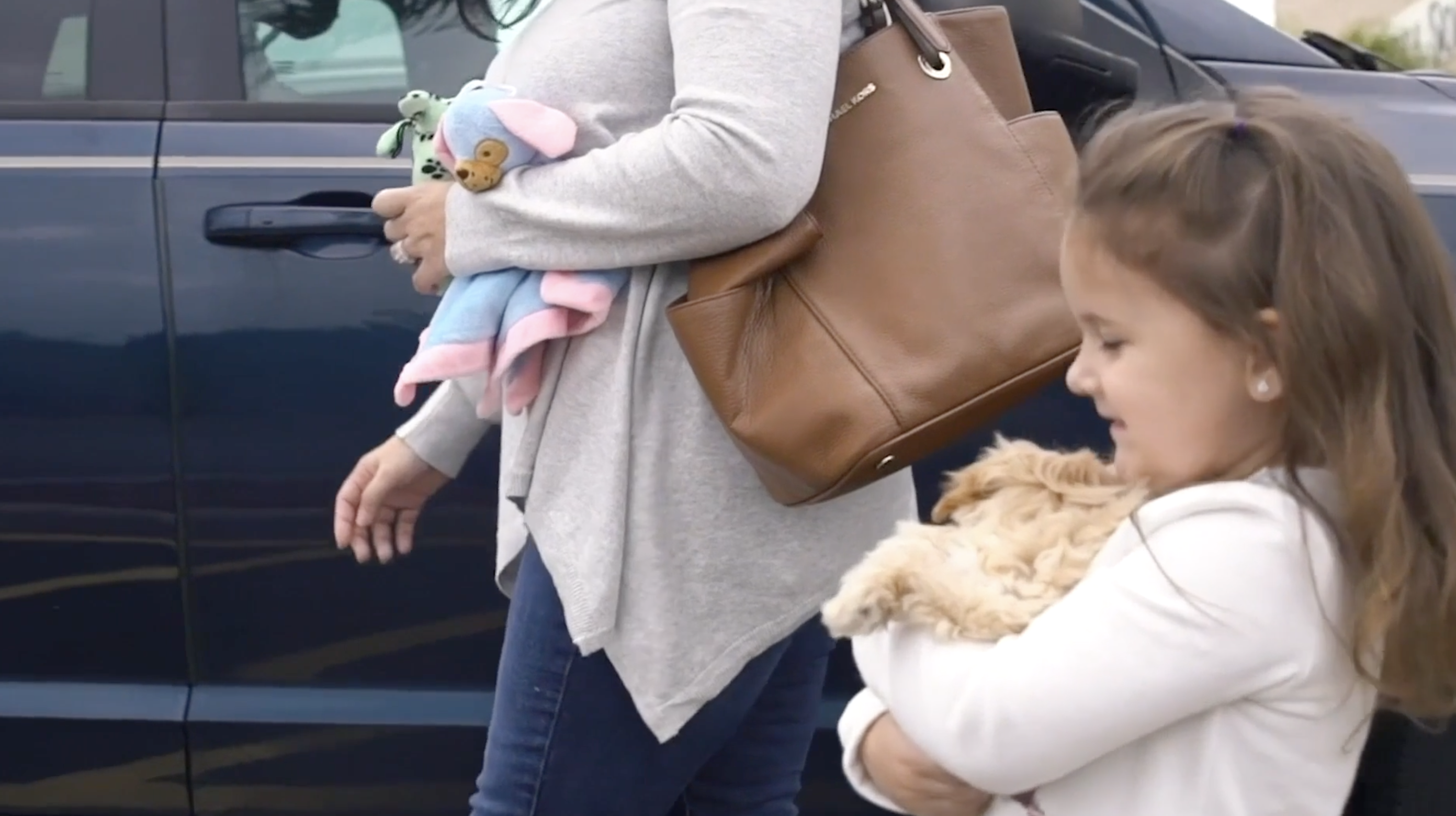
The breeder’s work begins before birth and continues through some of the fastest-changing weeks of a dog’s life. They watch a helpless newborn become a playful, curious puppy. They care for the mother who makes that transformation possible. They follow the health schedules, keep the records, introduce new experiences, and learn the individual personalities within every litter.
Then the puppy moves into our direct care. We review, observe, test, examine, groom, prepare, and get ready for the moment the family has been waiting for.
By homecoming, many people have contributed to that little dog’s beginning.
There are breeders, veterinarians, puppy care specialists, and team members behind the scenes. There are also countless quiet moments that will never appear on a medical record: a puppy sleeping in the breeder’s hands, a mother finally settling after her babies have finished nursing, the first determined attempt to climb out of a comfortable space, followed by the immediate realisation that getting back in may be more difficult. These moments are part of raising puppies too.
The breeders we work with know that the job carries real responsibility. They also know how lucky they are to witness the beginning of so many lives. And we feel the same way. By the time a family holds their puppy for the first time, a great deal of love, skill, veterinary guidance, structure, and everyday care has already brought them to that moment.
That is the work of the breeders behind Pilesgrove Pups. And we are proud to work alongside them.
What To Read Next
30 Most Asked Questions About Pilesgrove Pups Answered
Questions are welcome at Pilesgrove Pups. In fact, some of our favorite conversations begin with a long list of them. Families want to know where puppies are raised, how the parent dogs are chosen, what veterinary care puppies receive, whether they can visit us,... Read More
How Is Pilesgrove Pups Different From Other Puppy Sources?
There are many ways to find a puppy. You can contact an independent breeder, browse a puppy-listing website, respond to a classified ad, join a local social-media group, or work with a company that connects families with puppies from several breeders.
Wonderful... Read More
Frequently Asked Questions
Who breeds the puppies available through Pilesgrove Pups? Pilesgrove Pups works with experienced breeders who care for parent dogs and raise puppies under defined requirements for health testing, veterinary involvement, preventive care, documentation, development, and readiness for placement.
Are Pilesgrove Pups breeders professional breeders? The breeders we work with bring practical experience, knowledge of dogs, and a strong commitment to puppy care. Many have spent years or decades developing their breeding and care practices. Their work must also follow the structured standards that Pilesgrove Pups is part of.
How involved is Pilesgrove Pups with its breeders? Pilesgrove Pups helps coordinate the health, development, documentation, veterinary, and placement requirements that participating breeders follow. Puppies later transition into Pilesgrove Pups’ direct care for final review, veterinary examination, and homecoming preparation.
What health testing is required for parent dogs? Parent dogs must reach appropriate maturity and receive veterinary clearance before breeding. They undergo breed-appropriate health evaluations, including OFA testing where applicable and other screening relevant to the breed. Health history, veterinary input, and compatibility are also considered.
Do the breeders work with veterinarians? Yes. Licensed veterinarians support pre-breeding evaluations, pregnancy wellness, maternal and neonatal health, vaccination schedules, parasite prevention, developmental assessments, and treatment when medical concerns arise.
How are newborn Pilesgrove Pups puppies cared for? Early care focuses on the mother-puppy bond, nursing, warmth, cleanliness, physical stability, weight progression, and daily observation. Human handling is gentle and appropriate for the puppies’ age.
How do breeders track each puppy’s health? Breeders keep records covering weight and growth, feeding routines, deworming, vaccinations, veterinary examinations, general health observations, and developmental progress.
How are Pilesgrove Pups puppies socialised? Breeders follow the Puppy Development Plan Pilesgrove Pups upholds. Puppies are introduced gradually to handling, human interaction, safe environmental changes, littermate play, enrichment, grooming-style touch, routines, and early homecoming preparation.
Does every puppy follow development at the same pace? The development structure is consistent, but the pace can be adjusted according to the individual puppy’s comfort and response. Puppies are observed as experiences expand, and exposures can be repeated or slowed when needed.
Do puppies go directly from the breeder to their new family? No. Puppies transition to Pilesgrove Pups for final preparation before placement. Health records are reviewed, readiness is assessed, and puppies receive a licensed veterinary examination, continued care, grooming, and homecoming preparation.
What standards must Pilesgrove Pups breeders follow? The requirements cover regulatory compliance, parent health testing, veterinary involvement, preventive care, accurate records, development tracking, humane daily care, transparency, and continued adherence to the Pilesgrove Pups Code of Ethics.
What happens if a puppy needs additional time or care? The puppy’s health and readiness take priority over timing. Veterinary findings, growth, eating, development, and overall condition are considered before placement proceeds. A puppy who needs more time receives it.