





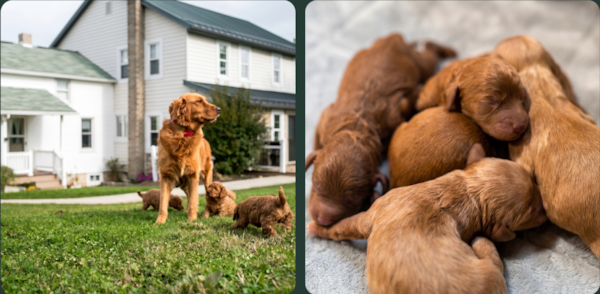
Published Wednesday, August 12, 2026 by Pilesgrove Pups in New Puppy, Dog Care & Safety
Eight weeks does not sound like a very long time. Then you watch a newborn puppy spend those weeks becoming an entirely different little dog.
At birth, puppies are tiny, delicate, and completely dependent on their mother. Their world is warmth, milk, familiar scents, and the soft pile of siblings beside them. By eight weeks, those same puppies are walking, playing, eating solid food, recognizing people, investigating new spaces, and displaying personalities that are very much their own.
One is usually first to explore. Another prefers to watch everyone else test the situation before joining. There is a puppy who believes every meal is several minutes late, one who can sleep through almost anything, and one who discovers their own tail and briefly considers it a personal rival.
The change is remarkable. It is also carefully supported.
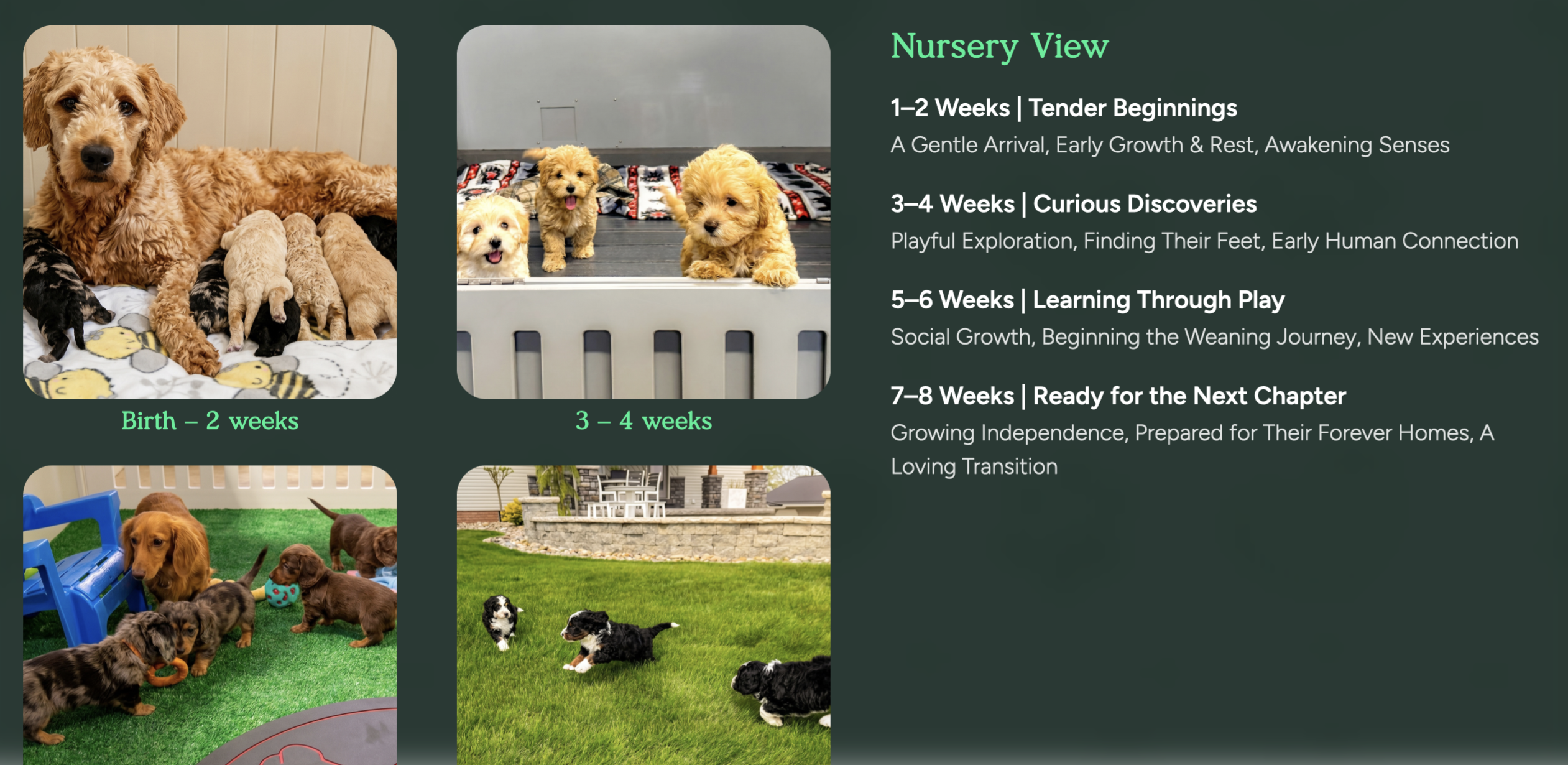
Our puppies spend their earliest weeks with their mothers and littermates in the care of participating breeders. Each breeder follows one coordinated health and Puppy Development Plan, which guides maternal care, neonatal monitoring, handling, nutrition, preventive care, socialization, records, and preparation for homecoming.
As the puppies approach placement, they transition into our direct care at Pilesgrove Pups. Their records are reviewed, their health and readiness are assessed, and they complete their final veterinary, grooming, and homecoming preparation before joining their families.
Those eight weeks are not simply time we wait out before a puppy can leave. They are full of quiet work, important milestones, and hundreds of small experiences that help shape how a puppy meets the world.
Here is what that journey looks like.
Table of Contents
- A Healthy Beginning Starts Before Birth
- Week 1: Warmth, Nursing, and a Very Small World
- Week 2: Growing Stronger One Day at a Time
- Week 3: Eyes Open and the World Gets Bigger
- Week 4: Walking, Exploring, and Discovering Food
- Week 5: Play, Socialization, and Growing Confidence
- Week 6: Individual Attention and Tiny Opinions
- Week 7: Building Familiar Routines
- Week 8: Health Checks and Homecoming Preparation
- The Final Nose-to-Tail Veterinary Examination
- VetScan Imagyst Fecal Screening
- Optional Advanced Blood Evaluation
- Eight Weeks Is a Minimum, Not a Deadline
- The First Eight Weeks at a Glance
- What Families See During These Eight Weeks
- Preparing for the Journey Home
- Eight Weeks of Care, One New Beginning
A Healthy Beginning Starts Before Birth

A puppy’s first week may begin on the day they are born, but their care begins much earlier.
Parent dogs complete breed-appropriate health evaluations before breeding decisions are confirmed. Veterinary findings, documented health history, maturity, physical condition, and compatibility all form part of the process. Licensed veterinarians also stay involved through pregnancy wellness, neonatal health, vaccinations, preventive care, and developmental evaluations.
The mother receives special attention throughout pregnancy. Her nutrition, comfort, preventive care, physical condition, and veterinary needs matter deeply. She is preparing to carry, deliver, nurse, warm, clean, and teach an entire litter. That is an enormous job for one dog, and we believe she deserves to be cared for with a great deal of tenderness.
As delivery approaches, her environment is prepared to give her a clean, comfortable, and peaceful place to welcome her puppies. Once they arrive, the attention stays on her too. We make sure she is eating, resting, recovering, and receiving the support she needs while she cares for her babies.
She may occasionally want affection. She may want quiet. She may simply want five minutes without several tiny puppies climbing over one another in search of the same spot.
We respect all three.
Maternal vaccination and preventive-care protocols are coordinated to support the mother’s health and contribute to the early protection puppies receive during their first weeks. Preventive parasite treatment is also completed in preparation for delivery.
See Pilesgrove Pups’ Standards, Health & Oversight
Week 1: Warmth, Nursing, and a Very Small World
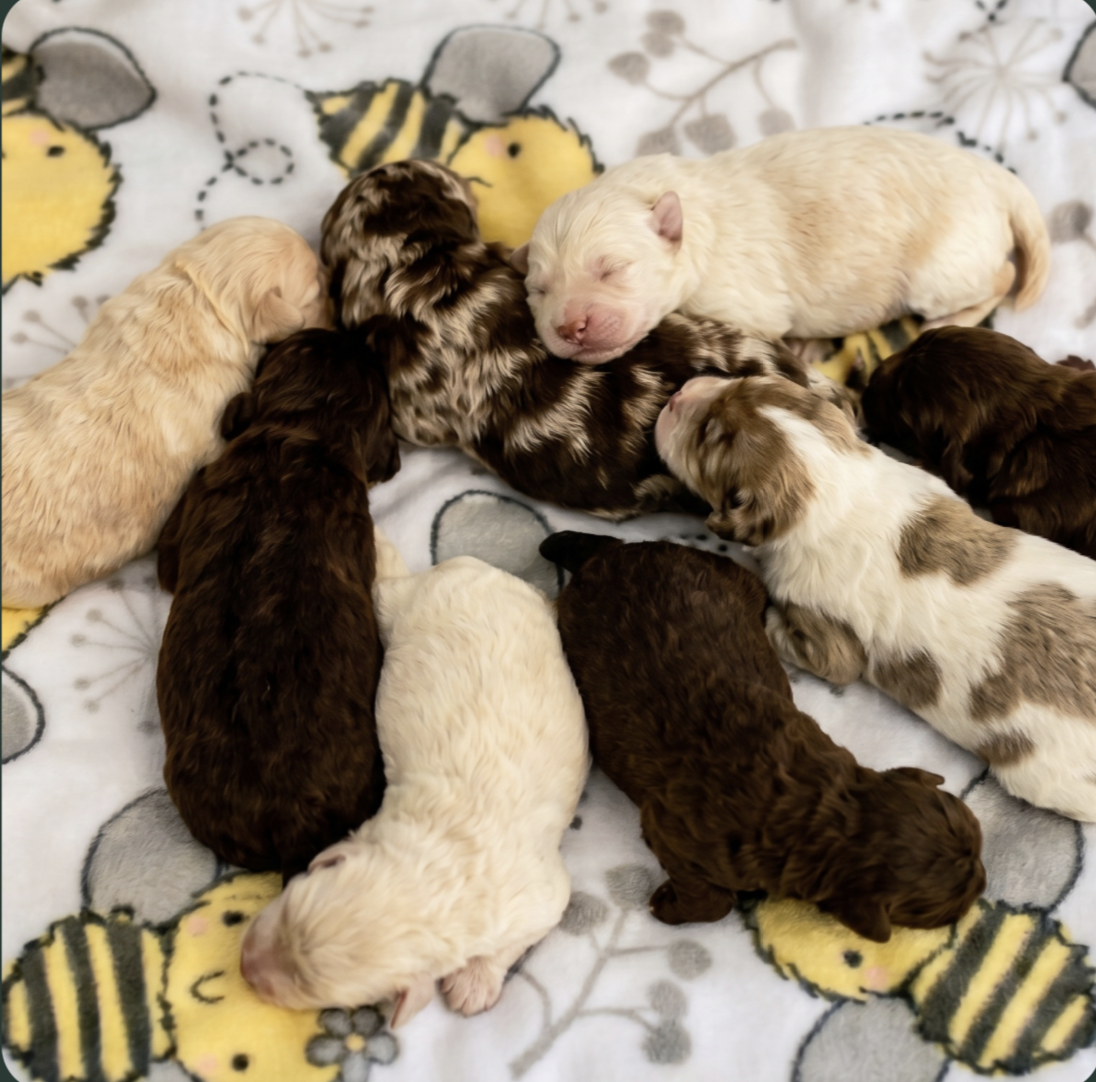
During the first week, a puppy’s needs are wonderfully simple and incredibly important.
They need their mother. They need warmth, milk, clean bedding, sleep, and careful observation from people who understand how quickly a newborn puppy’s condition can change.
The puppies stay close together and spend much of their time nursing or sleeping. Their mother keeps them warm, cleans them, and provides the comfort and nutrition on which they depend.
Our focus during this first stage is stability.
Caregivers observe:
- Nursing behavior
- Weight progression
- Warmth and physical stability
- Cleanliness
- General condition
- The comfort of the mother and litter
Human handling is limited, calm, and purposeful. A newborn puppy does not need a busy schedule of social activities. They need routine care and gentle contact without unnecessary stimulation or disruption to the mother-puppy bond.
This is not the loudest or most visibly exciting stage of puppyhood. The milestones can be measured in tiny things. A good nursing session. A steady increase in weight. A puppy settling comfortably against mom. An entire litter sleeping peacefully with full little bellies.
At this age, those are very big accomplishments.
Week 2: Growing Stronger One Day at a Time
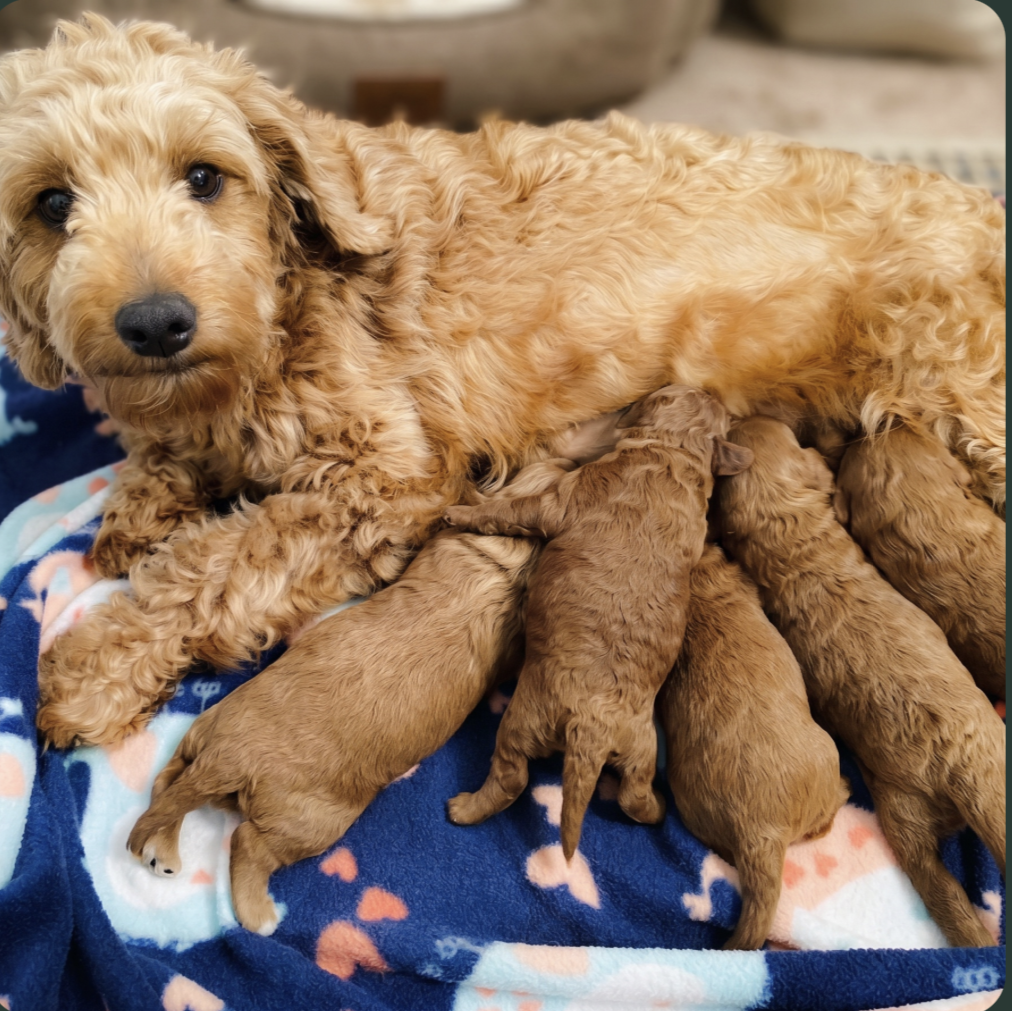
The second week continues the focus on physical stability, nursing, warmth, and growth.
Puppies are still fully dependent on their mother, but the changes begin accumulating. They become a little stronger. Their movement becomes more purposeful. Their bodies grow, and those tiny weekly weigh-ins begin telling the story of how well each puppy is progressing.
Weight is tracked because puppies in the same litter do not always grow at exactly the same pace. One may be naturally smaller. Another may be a particularly determined eater. A quieter puppy may need a little help finding a comfortable nursing position when several enthusiastic siblings have already claimed the best spots.
The point is not to compare puppies as though they are competing. It is to know each puppy’s normal progress well enough to notice when someone may need extra attention.
At approximately two weeks, puppies begin receiving Pyrantel Pamoate deworming treatment. This preventive schedule continues at regular two-week intervals while puppies stay in breeder care. Early parasite control helps address common intestinal parasites during a stage when puppies are still growing rapidly and relying heavily on good nutrition.
Toward the end of this stage and into the next, the puppies begin moving from complete dependence toward a new awareness of the world around them. The quiet little pile is about to become much more interesting.
See Breeder Standards at Pilesgrove Pups
Week 3: Eyes Open and the World Gets Bigger
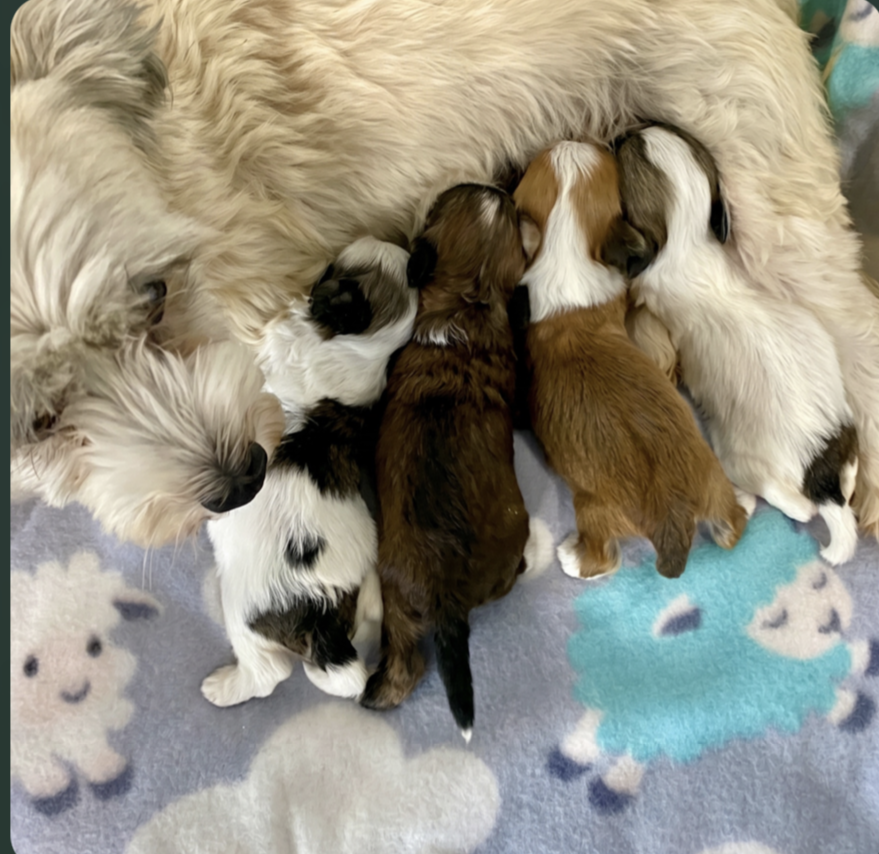
Between two and three weeks, puppies begin noticing that the world contains more than warmth, milk, and siblings. Their eyes and ears begin opening. Mobility increases. Light, sound, touch, scent, and human presence become more meaningful. It is a beautiful stage because awareness arrives gradually.
A puppy may respond to a nearby voice. Another may begin moving toward a familiar scent. They become more conscious of gentle touch and slightly more capable of exploring the space around them.
Their world is still carefully controlled. Puppies are introduced to mild changes in light and sound, short human interactions, and slightly longer handling sessions as their tolerance grows. Each experience stays limited in duration and intensity. Complex environments, loud stimulation, and several new experiences at once would be too much at this age.
We watch how the puppies respond. Do they remain comfortable during gentle handling? How quickly do they settle afterward? Are they becoming more responsive to movement, sound, or touch?
There is no need to rush. A puppy who needs another day before becoming comfortable with something new receives another day. Development is not a race to see who can become the bravest puppy first. The goal is to build familiarity without creating stress.
Learn about Puppy Health at Pilesgrove Pups
Week 4: Walking, Exploring, and Discovering Food
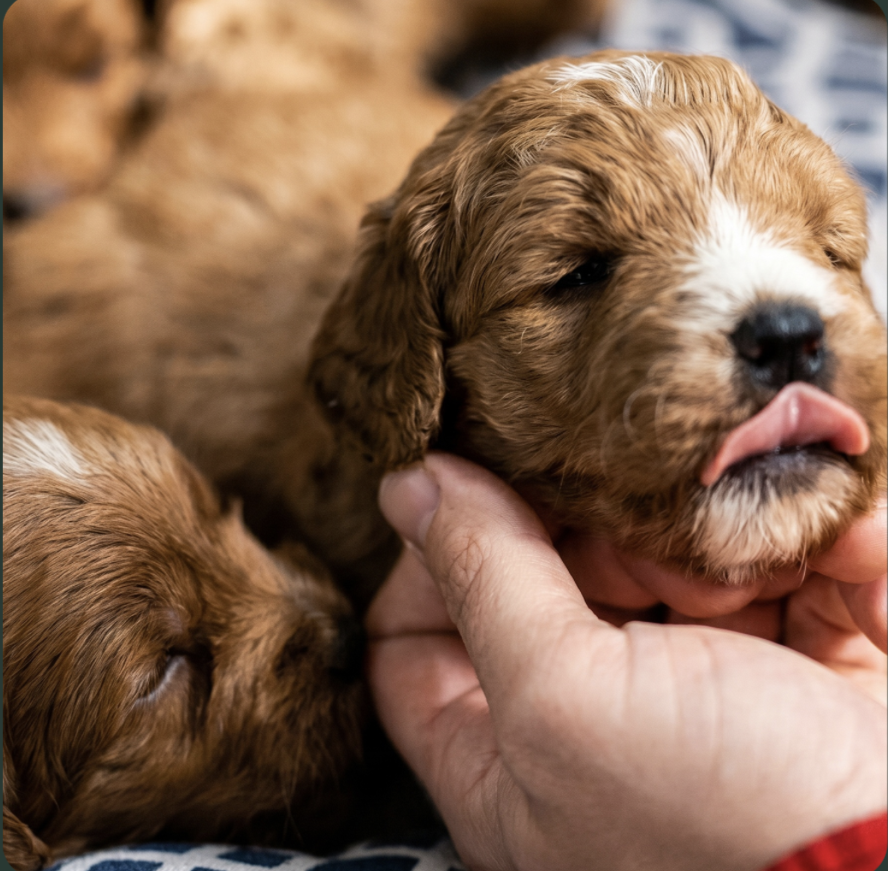
By the fourth week, puppyhood becomes considerably busier. Puppies are more mobile and alert. Their interest in people, objects, siblings, and the surrounding environment begins to grow. Wobbly movement becomes more coordinated, and the litter starts spending more time playing, exploring, and interacting.
This is also when personalities begin making themselves known. The bold puppy may lead an expedition across the bedding. The thoughtful one may sit at the edge, study the entire operation, and decide whether joining seems worth the effort. One puppy will probably discover that a sibling’s ear is an excellent plaything. The sibling may disagree.
These interactions are part of normal litter life. Puppies begin learning how their movements affect others and how other puppies communicate during play.
Human interaction also becomes more frequent. Puppies experience gentle touch around their paws, ears, coats, and bodies. They are gradually introduced to normal household sounds, safe surfaces, and manageable changes in their surroundings.
Around four weeks, the gradual transition to solid food begins. Puppies are introduced to Pawsome Starter food while they continue nursing and learning to eat independently. Keeping the food consistent through placement helps support digestive stability during a period of rapid growth.
Early ear care also begins at approximately four weeks.
These routines serve two purposes. They support hygiene, and they help puppies become familiar with the kind of gentle handling that will continue throughout their lives.
An ear check, paw touch, or brief examination should not arrive as a complete surprise during the puppy’s first veterinary or grooming visit after homecoming.
Explore the Puppy Development Plan
Week 5: Play, Socialization, and Growing Confidence
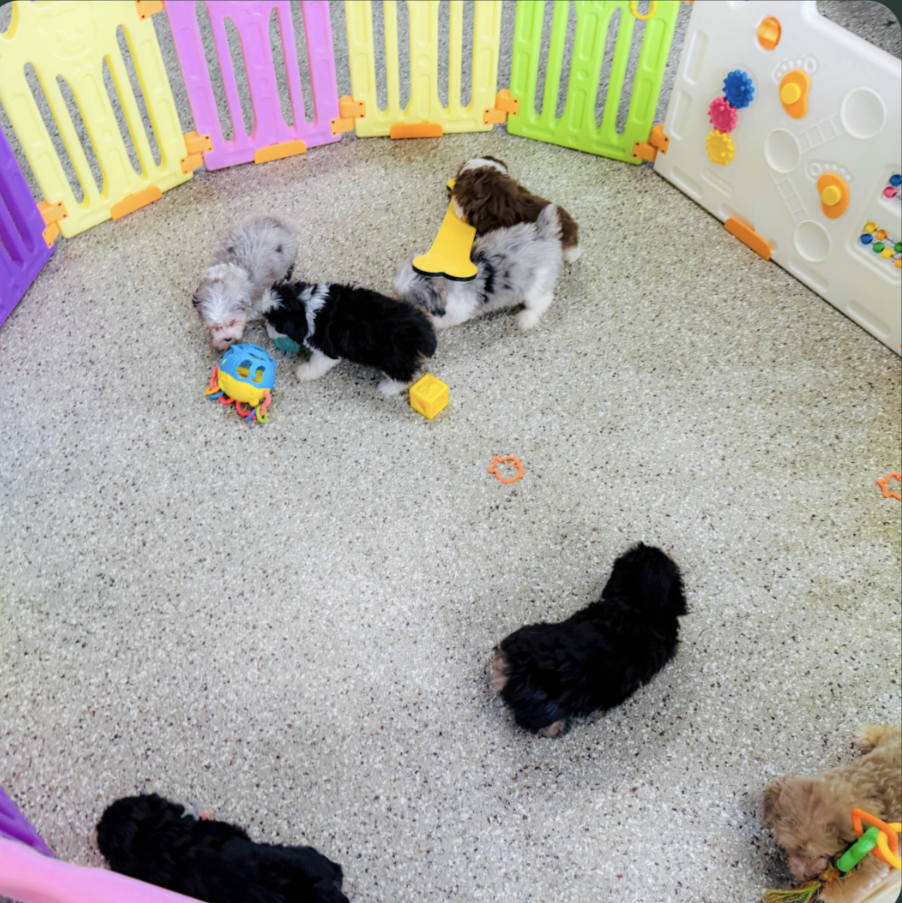
By five weeks, puppies are usually much more active and engaged. They play more intentionally with their littermates. They interact more with caregivers. They explore different surfaces and safe spaces, encounter normal household activity, and become increasingly interested in toys and simple enrichment.
Puppies do not experience socialization as one formal lesson that happens at a certain hour. It is built into daily life. Human interaction occurs during feeding, cleaning, weighing, observation, play, and routine care. Environmental changes are introduced in manageable ways throughout the day so they become familiar rather than overwhelming.
This can include:
- Gentle handling by familiar people
- Interaction with people of different ages
- Age-appropriate contact with children
- Normal household voices and sounds
- Different safe walking surfaces
- New rooms or controlled spaces
- Toys that encourage exploration
- Continued play with littermates
- Grooming-style touch
- Calm individual attention
The goal is not to expose a five-week-old puppy to every possible experience they may encounter during life. That would be neither realistic nor kind. We want puppies to begin learning that new things can be approached, investigated, and understood without everything feeling frightening.
We also observe recovery. A confident response does not always mean charging forward immediately. A puppy may hesitate, look to a caregiver, approach slowly, and then relax. That is confidence developing too.
30 Most Asked Questions About Pilesgrove Pups Answered
Week 6: Individual Attention and Tiny Opinions
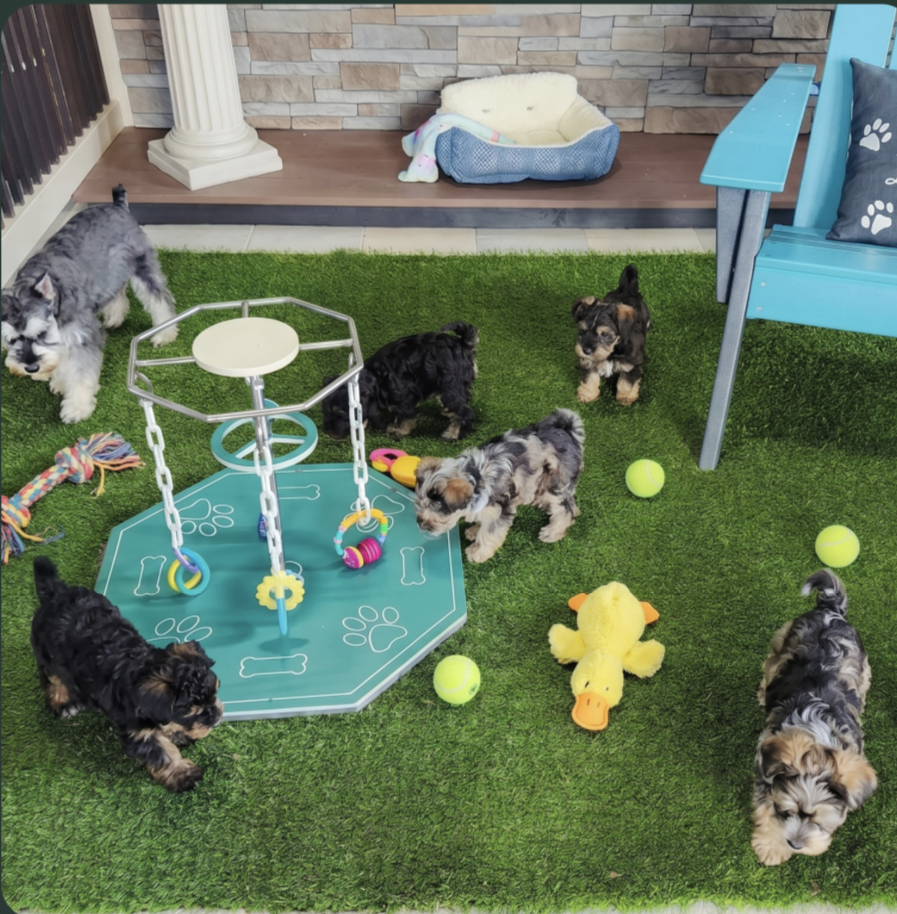
At five to six weeks, puppies become better able to focus on people and engage outside the full litter. Short one-on-one sessions begin taking on more meaning. A puppy may spend a little time with a caregiver, interact with a simple toy, respond to gentle praise, follow food or a reward, or become familiar with their name.
These sessions are brief and comfortable. Puppies are not separated from their littermates for long periods or expected to behave like trained adult dogs. The goal is to introduce the idea that individual time with a person can feel safe, interesting, and rewarding.
This is also when we begin seeing more of the puppy beneath the litter dynamics. A puppy who seems quiet within the group may become playful during individual attention. The energetic wrestling champion may reveal a surprisingly cuddly side when the room becomes calm. Then there is usually one who has already developed several firm opinions about how everyone should spend their time.
They may not be able to explain those opinions yet, but the little face is doing an admirable job.
Around six weeks, bathing and nail trimming are introduced or continued as needed. Puppies receive gentle grooming care suited to their young skin, coats, and developing comfort with handling.
Brief examination-style handling and regular weighing continue as well.
These ordinary routines prepare puppies for grooming, veterinary exams, and everyday care without turning any one experience into a stressful event.
Is Pilesgrove Pups Safe? How We Protect Puppies and Families
Week 7: Building Familiar Routines

Between six and eight weeks, development shifts toward preparing puppies for the transition into a family home. The focus is not on filling every day with completely new experiences. Instead, familiar experiences are repeated with greater consistency.
Puppies begin noticing patterns around feeding, rest, activity, interaction, and potty behavior. Short individual sessions continue. Human contact, household sounds, different surfaces, and gentle handling remain part of daily life.
Puppies may also receive a positive introduction to a carrier or travel crate.
These sessions are brief and low pressure, often using familiar bedding so the space feels safe rather than isolating. The goal is not to claim that a seven-week-old puppy has completed crate training. They have not. We are giving the puppy a first experience that the family can build on after homecoming.
The same applies to potty routines. Puppies begin experiencing more predictable patterns and early foundations, but they are still babies with small bladders and limited control. Families will need to continue the work patiently after arrival.
A puppy may understand the routine beautifully at 2 p.m. and forget every part of it at 2:07. That is puppyhood, not rebellion.
During this stage, we continue watching how each puppy responds to change, individual interaction, handling, and short periods away from the full litter. A puppy who needs more repetition receives it.
Is Pilesgrove Pups a Puppy Broker? How Our Puppy Placement Process Works
Week 8: Health Checks and Homecoming Preparation

By approximately eight weeks, puppies are more responsive to routine, more comfortable with people, and better able to handle small changes in their surroundings.
They have spent important time with their mother and littermates. They have begun eating solid food, experienced daily handling, encountered ordinary sounds and surfaces, and started developing the patterns that will help them adjust to family life.
Age-appropriate vaccinations begin at around eight weeks. The schedule includes a five-way vaccine covering distemper, adenovirus, parainfluenza, and parvovirus, along with a Bordetella vaccine. When a puppy stays in care longer, vaccinations continue at appropriate intervals.
At the appropriate developmental point, puppies are ready for their final preparation period. This is an important part of the process. Puppies do not move directly from a participating breeder to the family.
During final preparation:
- Health and development records are reviewed
- Overall condition and readiness are assessed
- Daily care and age-appropriate interaction continue
- A licensed veterinarian performs a nose-to-tail examination
- VetScan Imagyst fecal screening is completed
- An optional advanced blood evaluation is available
- Grooming and homecoming preparation are completed
- Medical and care information is organized for the family
Placement occurs only after this review is complete.
Is Pilesgrove Pups a Puppy Mill? 35 Reasons Why We Are Not
The Final Nose-to-Tail Veterinary Examination
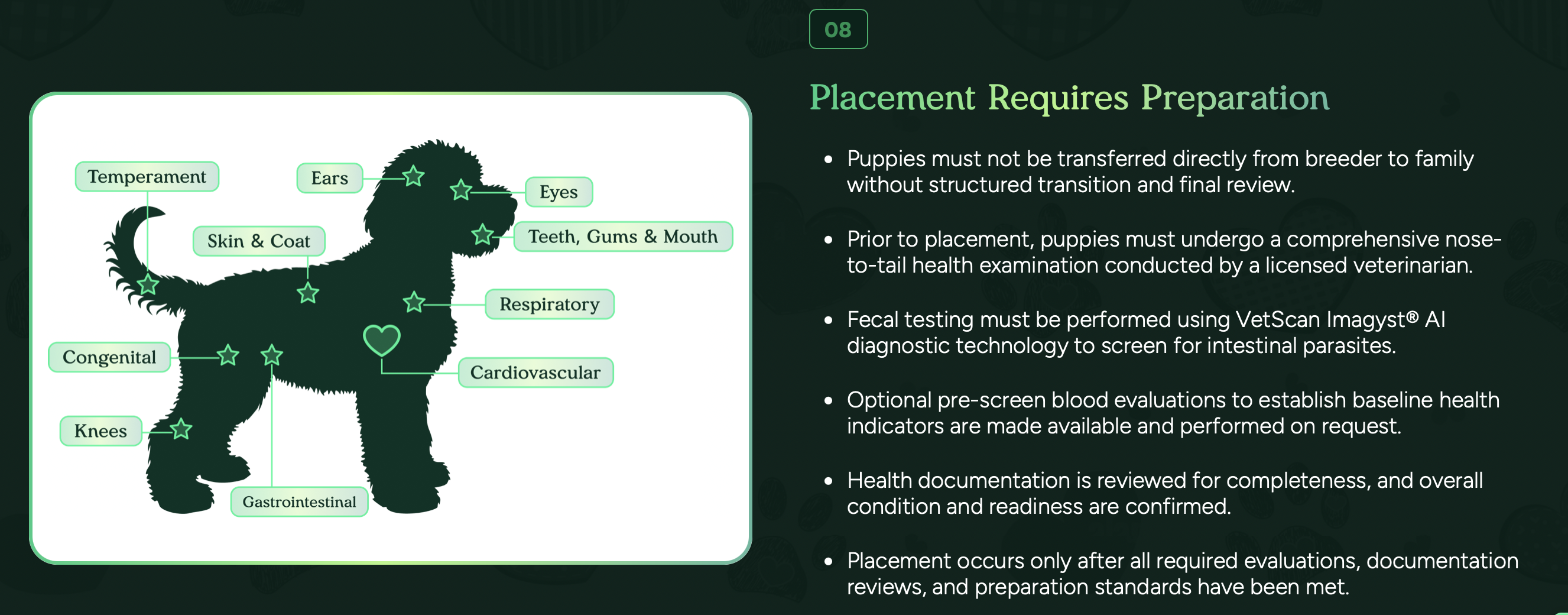
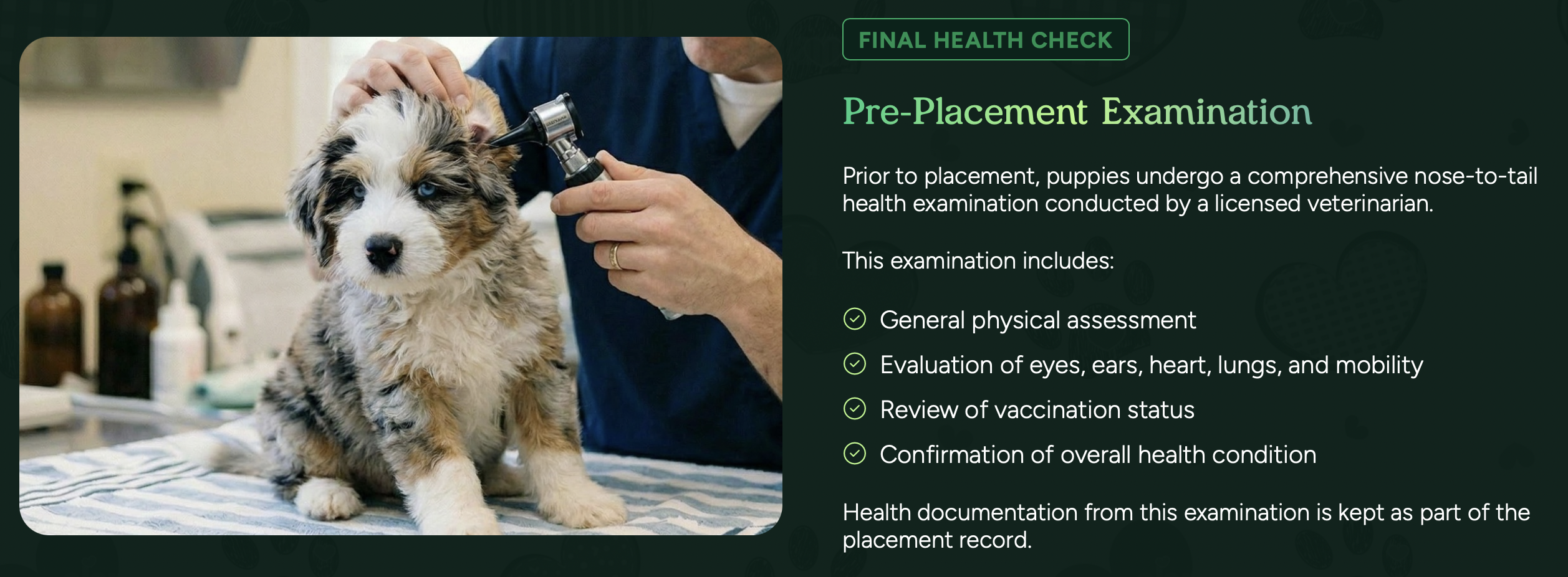
Before homecoming, every puppy is examined by a licensed veterinarian.
The examination includes:
- Heart and lung function
- Eyes and ears
- Mouth and oral health
- Skin and coat condition
- Mobility and physical structure
- Body condition
- Overall development
The veterinarian also reviews relevant health, vaccination, and preventive-care information. This examination provides an independent medical assessment of the puppy’s observable condition near the time of placement.
Our team may know that a particular puppy usually finishes breakfast first or has perfected a tiny bounce whenever someone enters the room. Those observations are meaningful. They do not replace veterinary judgment. The veterinarian adds another trained, independent perspective before the puppy goes home.
Learn about the 10 Year Health Guarantee at Pilesgrove Pups
VetScan Imagyst Fecal Screening
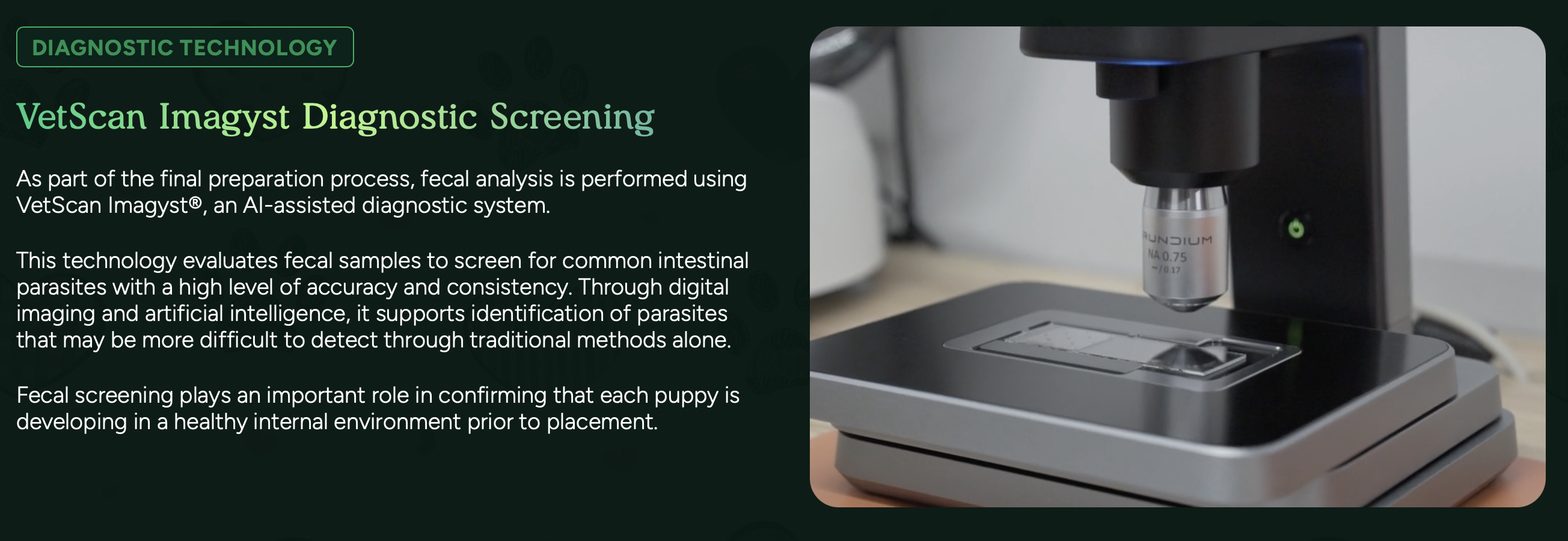
Young puppies can carry intestinal parasites even when they appear bright, playful, and healthy. That is why every puppy receives fecal screening with VetScan Imagyst before leaving our care.
A fecal sample is prepared and digitally scanned. Artificial intelligence analyzes the images to help identify common intestinal parasites, including Giardia, coccidia, hookworms, roundworms, whipworms, and tapeworms. The results allow timely action when treatment is needed.
A happy expression can tell us that a puppy is enjoying the moment. It cannot tell us everything happening internally. Diagnostic screening gives us information that ordinary observation cannot.
Optional Advanced Blood Evaluation
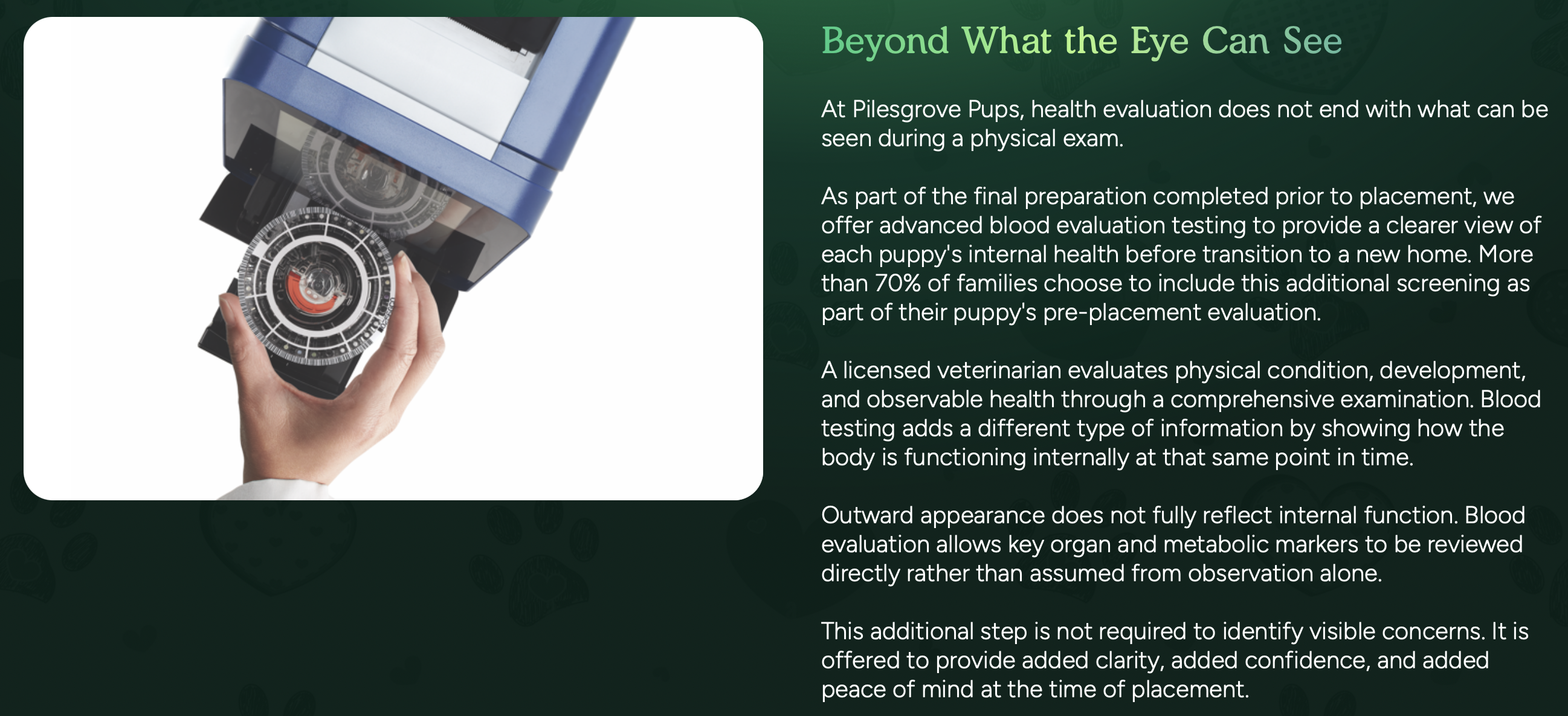
Families may also choose an advanced blood evaluation performed under licensed veterinary oversight. A physical examination tells us a great deal about what can be observed from the outside.
Bloodwork provides information about internal markers related to:
- Liver function
- Kidney function
- Glucose balance
- Protein levels
- Hydration
- General physiological stability
More than 70% of families choose this added evaluation. The results can provide a useful health baseline near the time of placement and information that may be helpful to the family’s veterinarian after homecoming.
The test is not a promise that a puppy will never develop a medical concern. No responsible test can offer that. It is another layer of objective information at an important moment in the puppy’s life.
Eight Weeks Is a Minimum, Not a Deadline
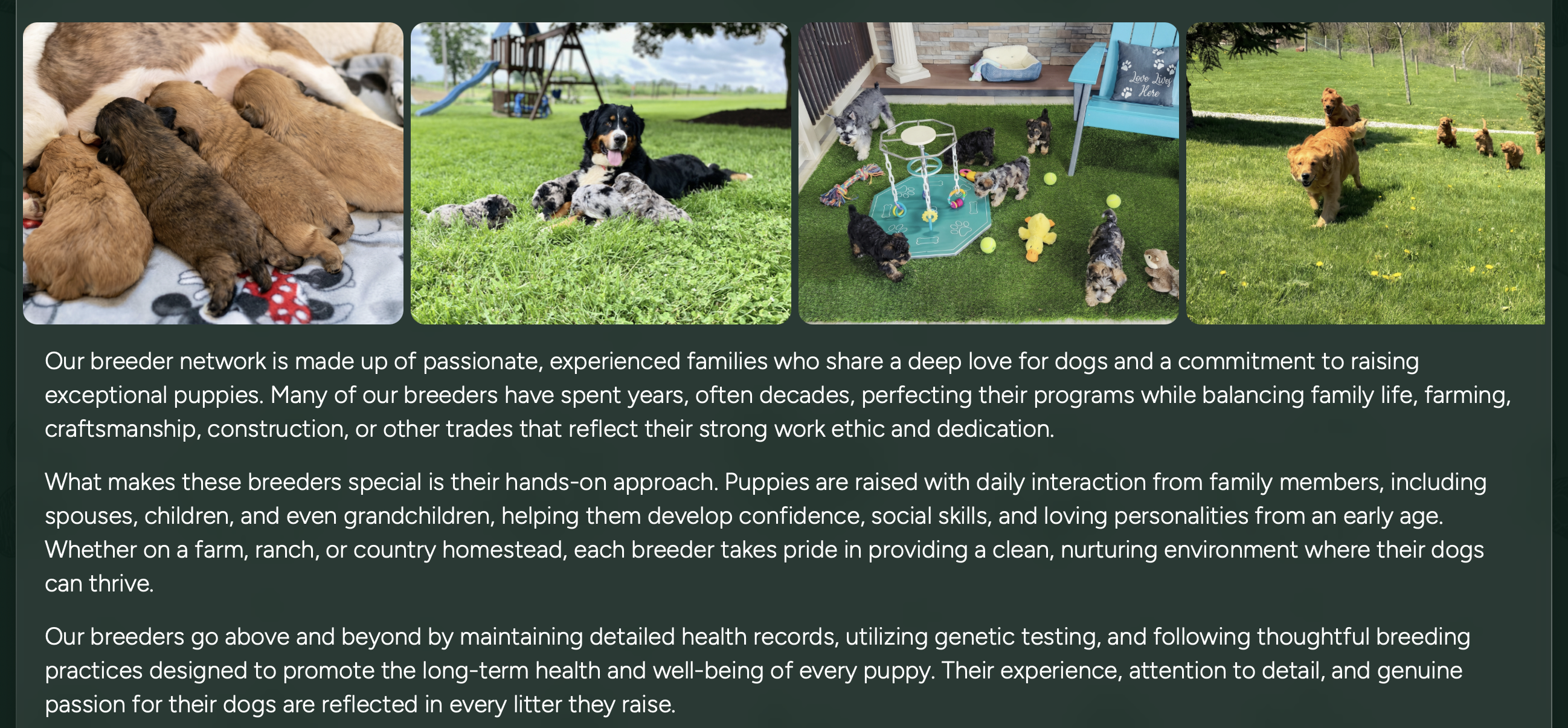
Puppies stay with their mother and littermates until they are at least eight weeks old. Those weeks give them time to nurse, build eating habits, play, communicate with other puppies, gain confidence, and learn behaviors from their mother that people cannot fully teach.
Still, turning eight weeks old does not automatically mean a puppy must leave that day. Readiness depends on the whole puppy. Their health, growth, eating, development, response to care, and final veterinary review all matter. Placement happens after the required preparation has been completed and readiness has been confirmed.
A puppy who needs extra time receives extra time. The family may be counting the days. The bed may be ready. The puppy’s name may already appear on a personalized blanket that is much too nice for what will eventually happen to it.
We understand the excitement. We also know that a few extra days can matter to a young puppy. Their needs make the final decision.
See the Pilesgrove Pups Experience
The First Eight Weeks at a Glance
| Puppy’s Age | Main Focus | What Is Happening |
| Week 1 | Stability and maternal care | Nursing, warmth, sleep, weight monitoring, cleanliness, and quiet observation |
| Week 2 | Continued growth | Physical stability, weight progression, gentle handling, and the beginning of scheduled deworming |
| Week 3 | Early awareness | Eyes and ears begin opening, movement increases, and mild light, sound, touch, and human contact are introduced |
| Week 4 | Exploration and weaning | More movement, littermate interaction, household sounds, safe surfaces, solid-food introduction, and early ear care |
| Week 5 | Social development | More frequent human contact, active play, environmental exploration, handling, and simple enrichment |
| Week 6 | Individual engagement | Short one-on-one interaction, reward-based attention, weighing, grooming, bathing, nail care, and examination-style touch |
| Week 7 | Routine preparation | Feeding and rest patterns, potty foundations, carrier introduction, individual time, and repeated familiar experiences |
| Week 8 | Readiness and transition | Age-appropriate vaccinations, record review, final veterinary examination, fecal screening, optional bloodwork, grooming, and homecoming preparation |
Development does not happen according to a stopwatch. These age ranges guide the process, but the pace is adjusted according to the puppy’s comfort, condition, and response.
What Families See During These Eight Weeks
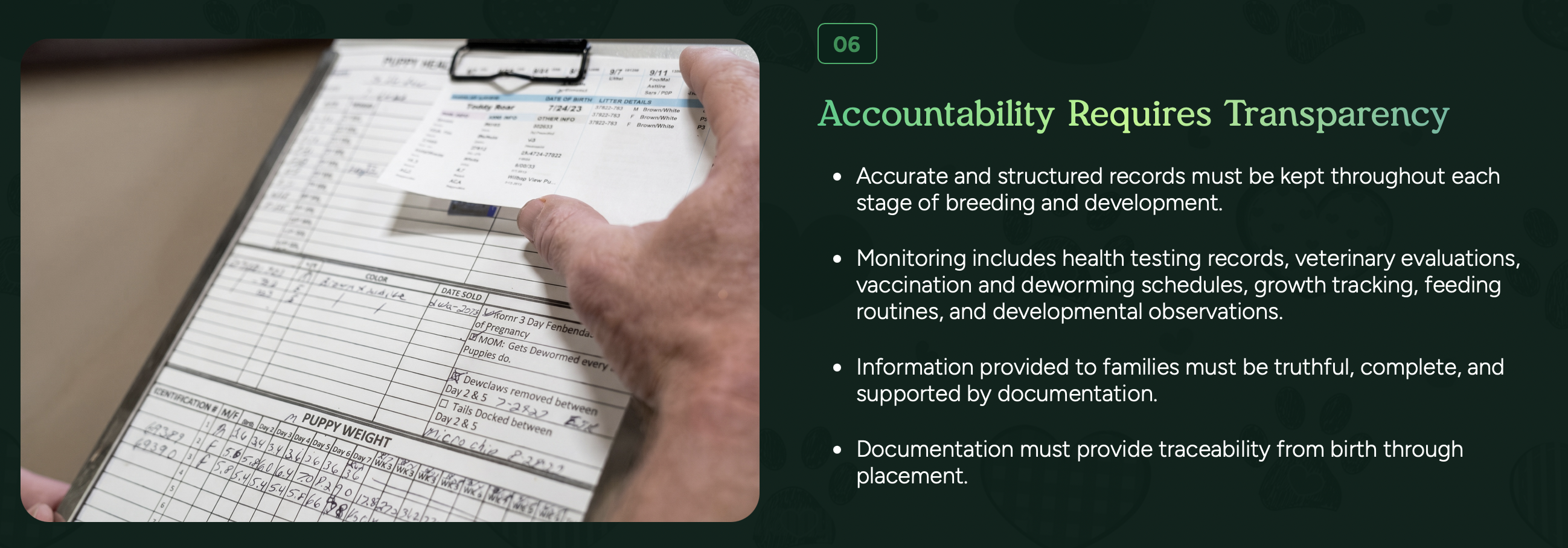
A family may first meet their puppy through an individual profile. Profiles include available photographs, videos, parent details, expected size, home-ready timing, health records, socialization information, and pricing. Families may speak with a Puppy Specialist and request available additional information about the puppy or parents.
After reservation, the puppy continues growing and receiving care until the home-ready stage.
Families may request a photograph or video update during the wait. We know those updates matter more than they might seem. Once a puppy has a name, eight weeks feels much longer than eight weeks. The family begins checking the calendar, preparing the house, and discussing whether one puppy truly needs six different toys that all make nearly the same squeaking sound. A new photo becomes everyone’s favorite message of the day.
Meanwhile, the puppy is still doing important work. They are staying with mom. Learning from siblings. Growing. Eating. Receiving preventive care. Meeting milestones. And perhaps sleeping peacefully through all the excitement happening in the home waiting for them.
See Pilesgrove Pups Customer Reviews
Preparing for the Journey Home
When the puppy is cleared for homecoming, families may pick up at the Pilesgrove location by appointment or choose a coordinated delivery option.
Puppies leave with a medical file, vaccination and deworming information, microchip details, a care schedule, and transition guidance. Families also receive information designed to help them continue feeding, routines, veterinary care, and gradual exposure at home.
The development plan does not end because a puppy changes homes. The family simply takes over the next chapter. The first days should remain calm and predictable. Puppies need time to learn the new people, rooms, sounds, sleeping spaces, and routines around them.
See Pick Up and Delivery Options at Pilesgrove Pups
Eight Weeks of Care, One New Beginning

A puppy’s first eight weeks are filled with changes most families never get to witness in full. The newborn who once needed help reaching mom turns into the puppy who runs toward a familiar voice. The tiny body weighed so carefully begins climbing over littermates, exploring toys, and developing very clear preferences. The puppy who knew one small, warm world becomes ready to meet a family and begin discovering a much larger one.
Behind that transformation is the mother who gives so much of herself. There are breeders providing daily care, licensed veterinarians guiding health decisions, records tracking growth, and our Pilesgrove Pups team preparing each puppy for the transition ahead.
There are also countless moments that never appear in a health file. The puppy who falls asleep during a nail trim. The litter that wakes at once and turns a quiet room into joyful chaos. The careful little explorer who finally decides the new toy can be trusted. The confident puppy who never doubted it for a second.
We get to see those moments, and to be honest, they are part of why we believe we have one of the best jobs in the world.
But the joy never makes us forget the responsibility. These puppies are preparing to become someone’s companion, shadow, playmate, comfort, and family member.
Eight weeks gives us time to protect their health, support their development, learn who they are, and prepare them for the people already waiting to love them.
Then comes homecoming. For the family, it feels like the beginning. For the puppies, it is the beginning of a new chapter built on everything that came before.
What To Read Next
Is Pilesgrove Pups Legit? How to Verify Us
Yes, Pilesgrove Pups is legitimate. We are a real team of dog lovers working from a physical location in Pilesgrove, New Jersey. We work closely with reputable breeders, licensed veterinarians, puppy care specialists, reservation agents, and delivery professionals... Read More
Is Pilesgrove Pups Safe? How We Protect Puppies and Families
Is Pilesgrove Pups safe? Yes. Pilesgrove Pups has a structured program designed to protect puppies and help families reserve with clear information, professional guidance, and meaningful support.
Still, we do not think a question this important deserves... Read More
Frequently Asked Questions
Where do Pilesgrove Pups puppies spend their first eight weeks? Puppies spend their earliest weeks with their mothers and littermates in the care of participating breeders. The breeders follow the coordinated health and development framework. Puppies later transition into Pilesgrove Pups’ direct care for final veterinary review, grooming, and homecoming preparation.
Why do puppies stay with their mother for at least eight weeks? The first eight weeks give puppies time to nurse, develop healthy eating habits, interact with littermates, build confidence, and learn behaviors from their mother. Puppies stay longer when their health, growth, development, or veterinary guidance indicates that more time is needed.
What is the Pilesgrove Pups Puppy Development Plan? It is a structured framework followed across participating breeders from birth through placement. It guides maternal support, daily handling, environmental exposure, socialization, enrichment, routines, development tracking, and preparation for the transition home.
When do puppies begin eating solid food? Solid food is gradually introduced at approximately four weeks of age. Puppies begin eating Pawsome Starter food while continuing the weaning process. The same food is used through placement to support digestive consistency.
When are Pilesgrove Pups puppies dewormed? Puppies begin receiving Pyrantel Pamoate at approximately two weeks old. Deworming continues at regular two-week intervals while the puppies stay in breeder care.
When do puppies receive their first vaccinations? Age-appropriate vaccinations begin at approximately eight weeks. If a puppy stays in care longer, vaccines continue at the intervals appropriate for the puppy’s age and health plan.
How are Pilesgrove Pups puppies socialized? Socialization is introduced gradually through daily human contact, littermate play, household sounds, different safe surfaces, interaction with people, individual attention, enrichment, grooming-style handling, and early routines. Experiences are adjusted according to each puppy’s comfort and developmental readiness.
Are all puppies expected to develop at the same pace? No. The structure of the development plan stays consistent, but the pace can be adjusted for the individual puppy. When a puppy shows hesitation or needs more repetition, exposure is reduced, repeated, or delayed until the puppy is comfortable.
What health checks happen before homecoming? Every puppy receives a licensed nose-to-tail veterinary examination and VetScan Imagyst fecal screening before placement. Health and development records are reviewed, and families may choose an optional advanced blood evaluation.
Can families receive updates before the puppy comes home? Yes. Families may request a photograph or video update while their puppy stays with mom, continues developing, and completes the final health and homecoming process.
Does every puppy go home exactly at eight weeks old? No. Eight weeks is the minimum home-ready age. Placement occurs only after the puppy’s health, development, records, and overall readiness have been reviewed. Puppies receive more time when they need it.