





Published Wednesday, August 5, 2026 by Pilesgrove Pups in Dog News
No, Pilesgrove Pups is not a puppy mill.
We are a close-knit team of dog lovers who happen to have one of the happiest jobs in the world. We care for puppies, work alongside devoted breeders and veterinarians, help families find the right companion, and get a front-row seat to the tiny milestones that make puppyhood so special.
There are the important moments everyone expects, like a puppy opening their eyes or meeting their family for the first time. Then there are the little moments most people never see. The sleepy puppy who falls face-first into the food bowl. The brave one who discovers a toy and proudly carries it three inches. The whole litter waking up at once and deciding the day should begin immediately.
Those daily giggles are part of our work. So are the late-night checks, health records, veterinary appointments, careful feeding schedules, phone calls, puppy baths, and countless decisions made quietly behind the scenes.
We take that responsibility seriously because every puppy is someone’s future best friend. Long before homecoming day, that puppy is already deeply important to us.
Table of Contents
What Is a Puppy Mill?
Animal welfare organizations generally describe a puppy mill as a high-volume breeding operation in which profit and production are placed ahead of the health and well-being of the dogs. Common concerns include poor living conditions, limited veterinary care, repeated breeding without proper recovery, little attention to temperament or inherited health, early separation from the mother, and minimal accountability once the puppy is sold.
Being able to find a puppy online does not make a business a puppy mill. A beautiful website does not prove responsible care either.
- What matters is everything behind the puppy’s photo:
- How are the parent dogs chosen and cared for?
- Is the mother supported throughout pregnancy and nursing?
- Are the puppies monitored from birth?
- Do licensed veterinarians participate in their care?
- Are health records kept and shared?
- Are puppies allowed to remain with their mother long enough?
- What happens if a puppy needs extra time?
- Does the company stay involved after homecoming?
At Pilesgrove Pups, we stand firmly against breeding practices that treat dogs as inventory. Our approach is built around the health of the parents, the comfort of the mother, the development of every puppy, meaningful veterinary oversight, clear information for families, and support that continues after a puppy leaves our care.
35 Reasons Why Pilesgrove Pups Is Not A Puppy Mill
1. We Are Dog Lovers First
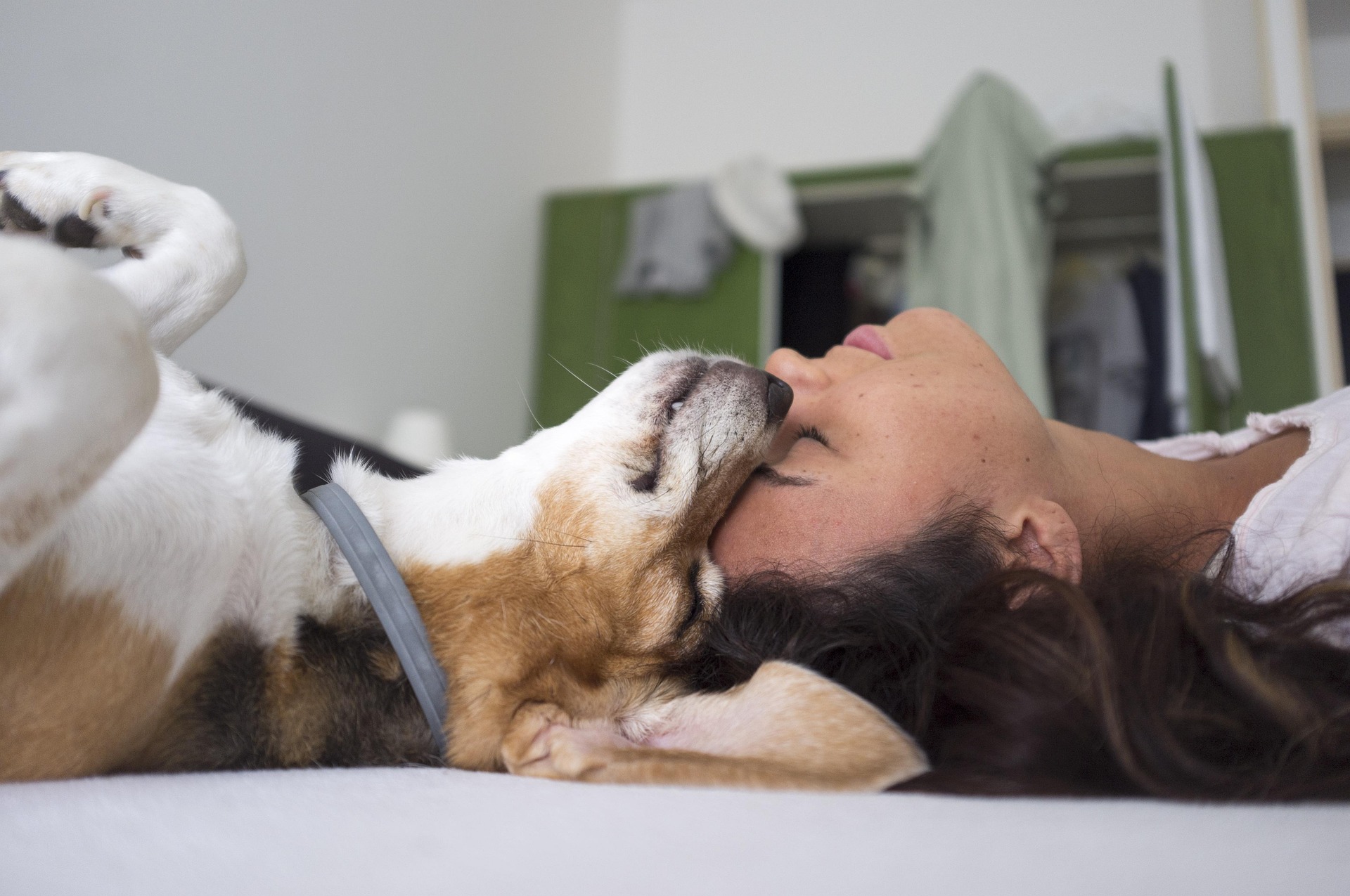
Pilesgrove Pups began with a deep love for dogs and a simple goal: help families connect with happy, well-raised puppies from people who care about doing things properly.
That love still shapes our days. We know the puppies as little personalities, not listing numbers. We notice who is bold, who is thoughtful, who wants to be held, and who believes shoelaces were invented specifically for them.
The paperwork, schedules, testing, and protocols matter enormously. Still, the heart behind all of it is quite simple. We love dogs, we enjoy being around them, and we want every puppy in our care to have a beginning filled with affection, attention, safety, and joy.
2. Our Team Brings Years of Hands-On Experience
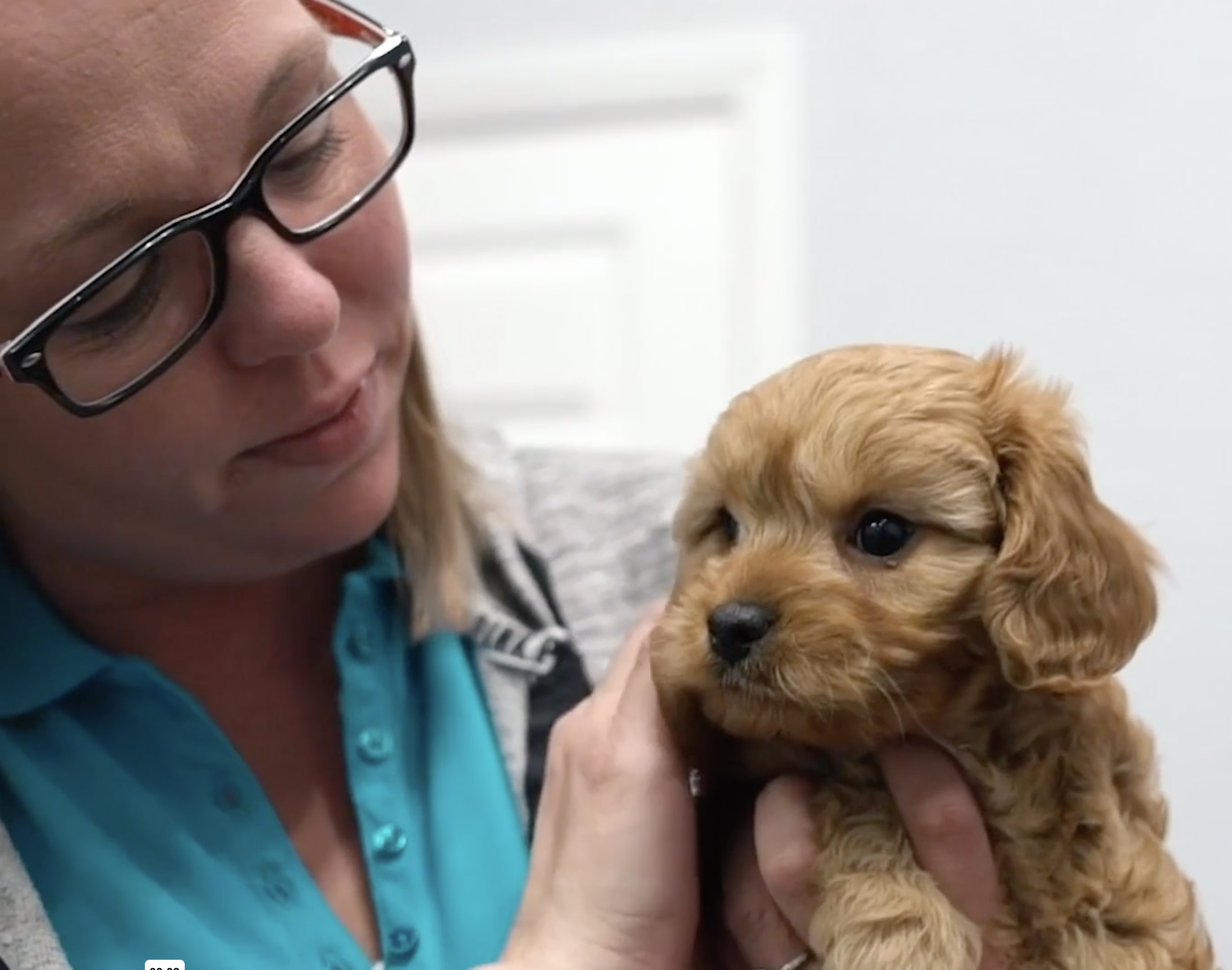
Caring for puppies well takes a bit more than good intentions. It requires experience, close observation, breed knowledge, veterinary guidance, patience, and the ability to recognize when something small deserves a second look.
Our team includes reservation specialists, puppy care staff, post-reservation support, delivery professionals, and veterinary experts. Dr. Gary Rybka, our veterinary advisor and pediatric specialist, brings more than 35 years of veterinary experience. Other team members contribute years of customer care, puppy handling, matching, and post-homecoming support.
3. The Pilesgrove Personal Touch Is Part of Every Reservation
Choosing a puppy can be exciting, emotional, and occasionally confusing. Two puppies may look similar in photos while having very different energy levels, confidence, or personalities.
Our reservation specialists take the time to answer questions and help families think beyond coat color or the cutest picture. We talk about breed traits, expected size, activity level, grooming, home life, children, other pets, and what kind of companion may fit naturally into the family.
We never want the reservation process to feel like adding an item to a shopping cart. There is a real puppy on one side and a real family on the other. Helping the two fit well is personal to us.
RELATED: Learn About The Pilesgrove Pups Experience
4. Parent Health Comes Before Breeding Decisions
Healthy puppies begin with thoughtful decisions made before a litter exists.
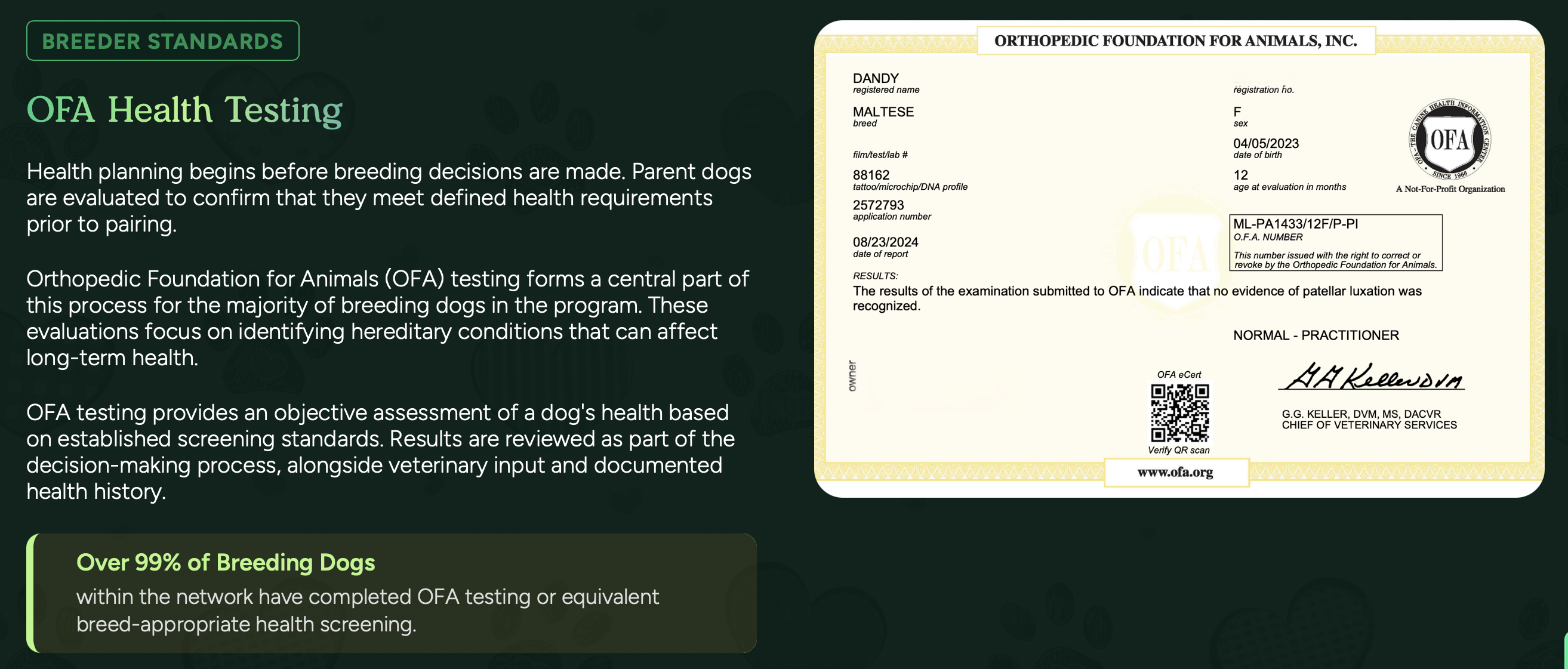
Our parent dogs complete breed-appropriate health evaluations before a pairing is confirmed. For most breeding dogs in the network, this includes OFA testing or equivalent screening based on the health concerns associated with that breed. Health histories and veterinary findings are reviewed as part of the decision.
Testing cannot remove every possible health risk. Biology has never been quite that cooperative. It does help us make better-informed choices and reduce preventable risks before they can affect another generation.
RELATED: Pilesgrove Pups Health Standards
5. We Look at the Whole Dog, Not One Attractive Trait
A beautiful coat can catch your eye, but responsible breeding cannot be built around appearance alone.
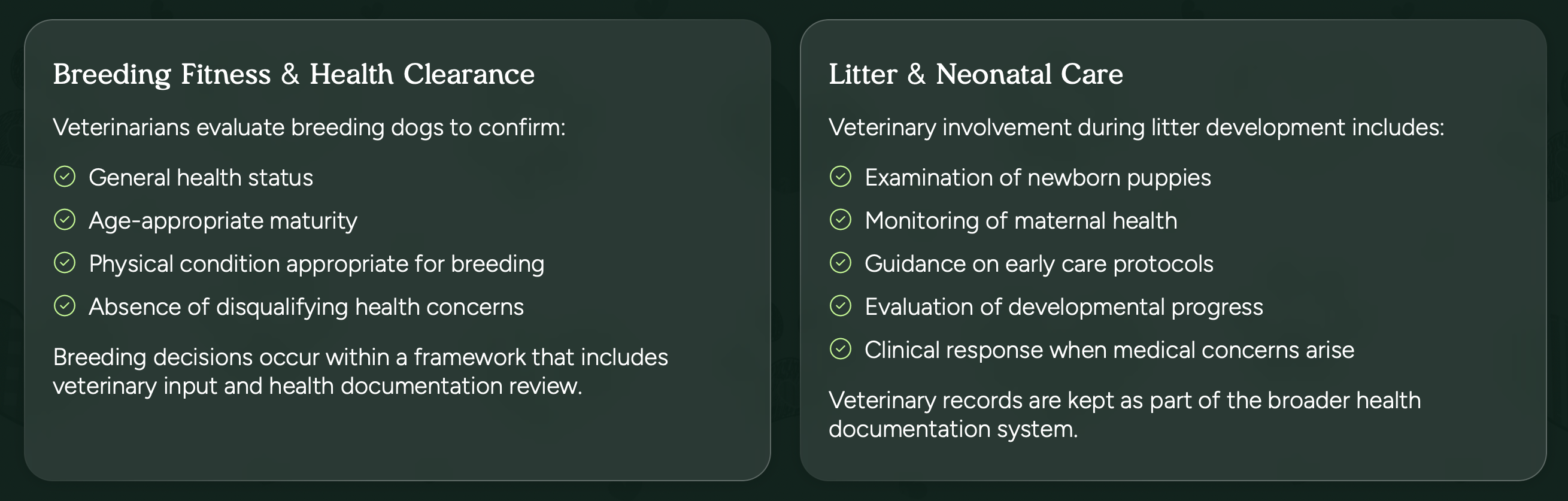
We look at health, temperament, maturity, structure, movement, body condition, coat quality, breed traits, and how two dogs may complement one another. Compatibility matters. A pairing should support the puppies’ overall health and temperament, not simply produce a fashionable color or a certain look.
Our goal is to raise companions who can thrive in family homes. That means placing just as much value on stability, friendliness, soundness, and well-being as we do on the lovely features families first notice in a photograph.
6. Parent Dogs Are Loved Members of Their Families
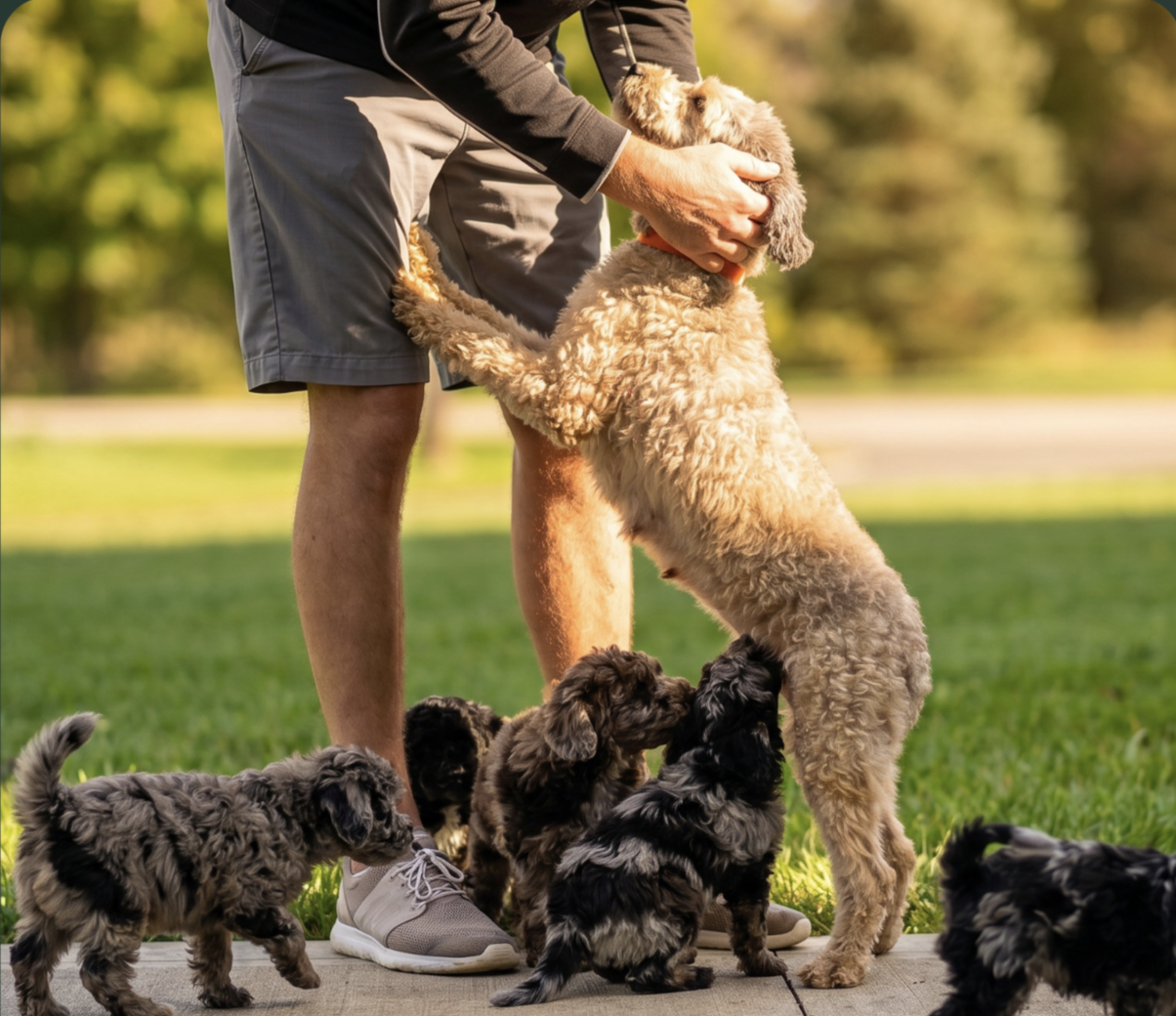
The parents behind our puppies are not invisible production animals.
They are cared for by experienced breeders in home, farm, ranch facility, and country-homestead settings. They know familiar voices, daily routines, favorite resting places, and the people who care for them. Many grow up around spouses, children, and grandchildren who take part in everyday life.
We believe a mother or father dog should be known, loved, handled gently, and cared for as an individual. Their value does not begin when they produce a litter, and it certainly does not end there.
7. Our Breeder Standards Are Clear and Non-Negotiable
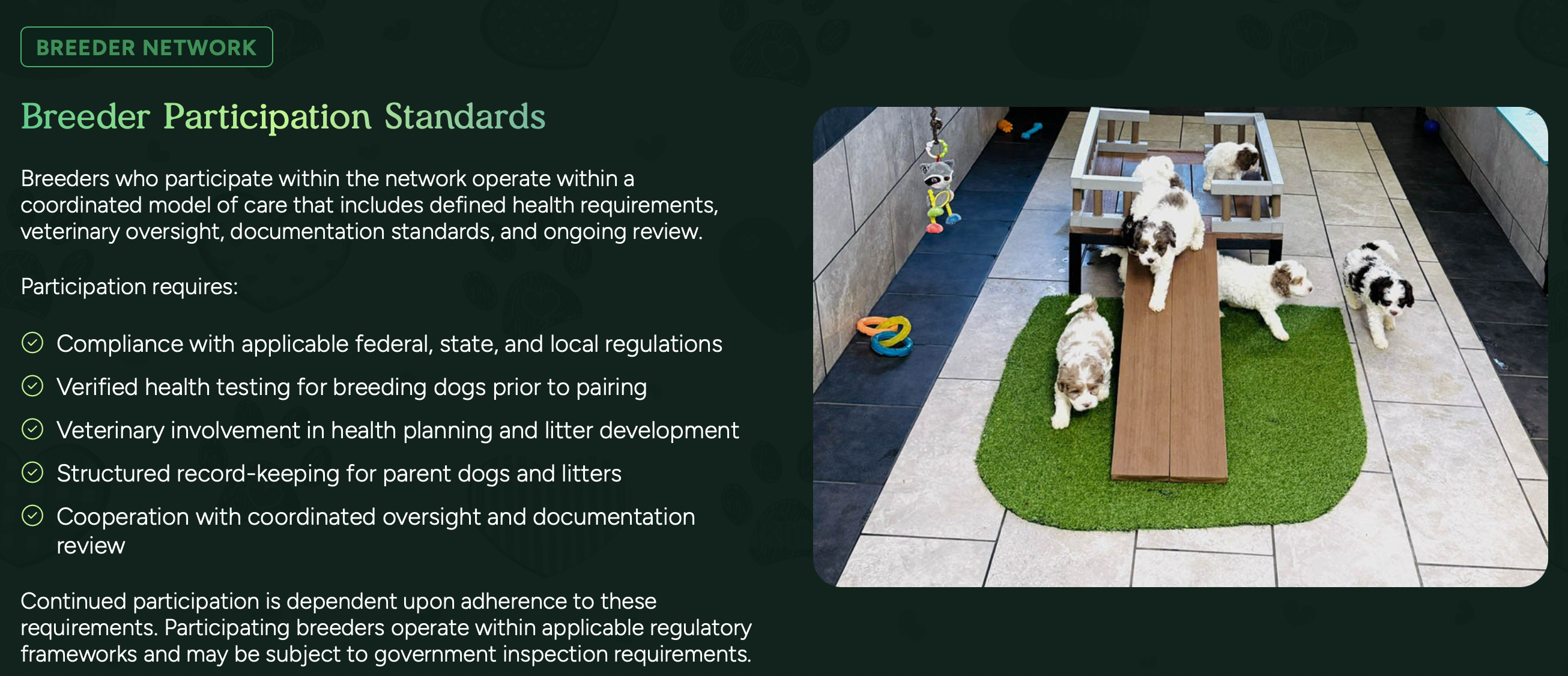
The breeders in the network are expected to follow defined requirements for health testing, veterinary care, documentation, puppy development, preventive treatment, and responsible placement.
Participation is not based on a friendly conversation and a handshake. Breeders must meet applicable regulatory requirements, provide health information, keep organized records, follow coordinated care protocols, and remain accountable to the standards of the network. We make sure every breeder working with us shares the same central belief: the dogs come first.
RELATED: Pilesgrove Pups Breeder Standards
8. Our Code of Ethics Turns Those Values Into Daily Practice
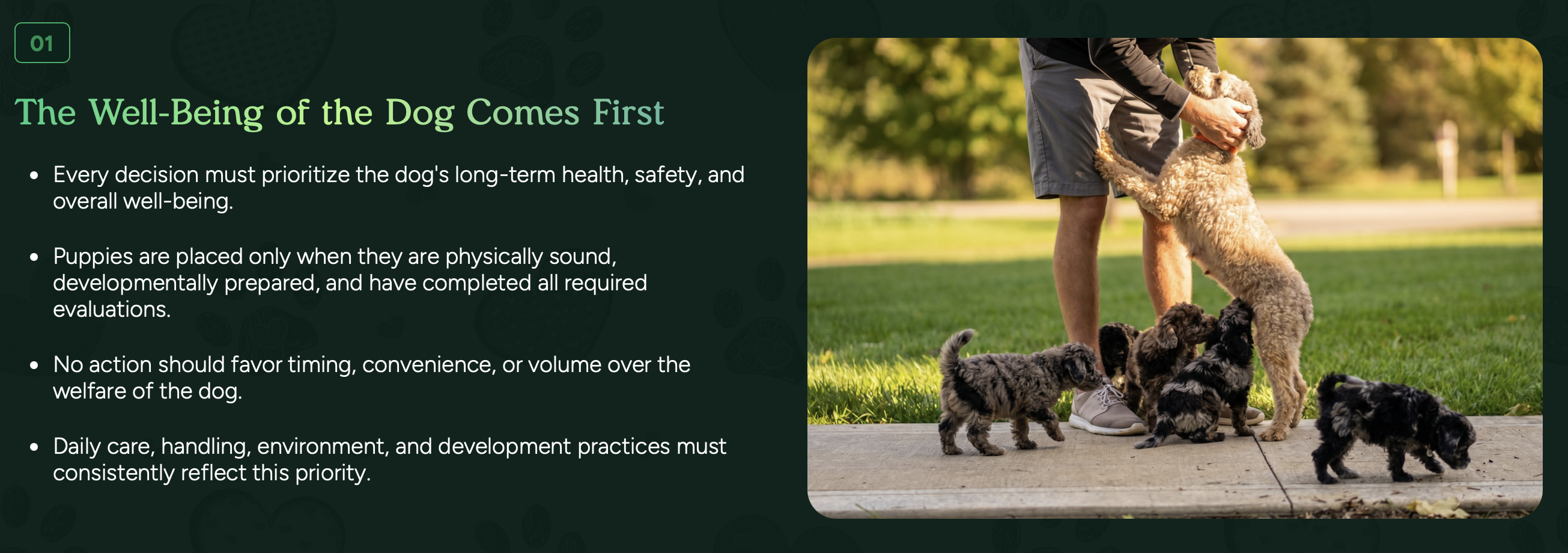
Our Code of Ethics sets operational expectations for everyone involved, including breeders, veterinary partners, team members, and associated professionals. The principles cover animal well-being, health verification, humane care, honest records, responsible placement, transparency, and continued responsibility after homecoming.
Care should not change depending on who is working that day. A shared code gives everyone the same foundation and makes our values something people are expected to practice, not simply admire.
9. We Monitor Pregnancy Closely
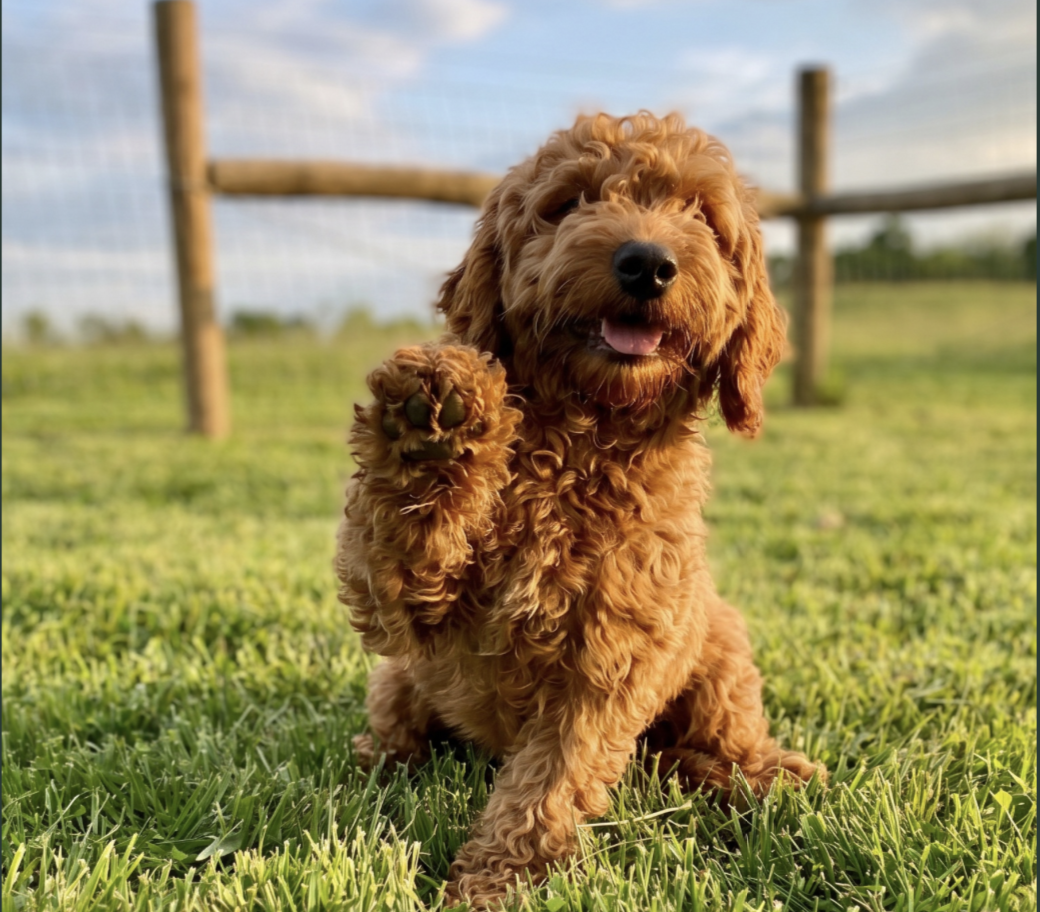
Pregnancy is not treated as a quiet gap between breeding and birth. Maternal health, nutrition, preventive care, physical condition, and veterinary guidance remain important throughout the pregnancy. Vaccinations and treatments are selected to support the mother while also helping provide early immune protection to her puppies.
We monitor the pregnancy with the understanding that the mother is doing something remarkable. She is growing an entire litter, and her comfort and health deserve our full attention through every stage.
10. We Dote on Our Mothers
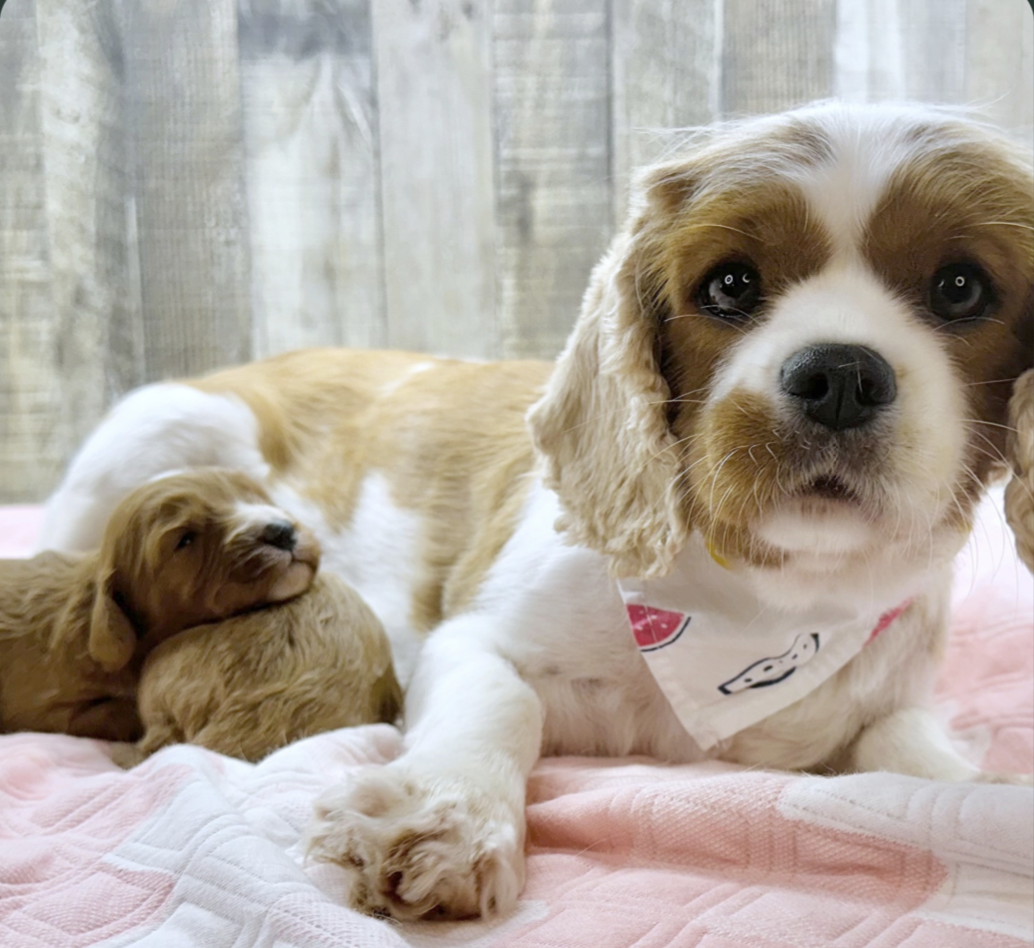
There is a special tenderness in caring for a mother dog. She needs a clean and comfortable place to rest, good food, fresh water, gentle attention, quiet when she wants it, and someone who notices when she seems tired or needs support. As her delivery approaches, those little details become even more important.
After the puppies arrive, the focus remains on her. We make sure she is comfortable, eating well, recovering properly, and able to care for her babies without unnecessary stress. She gives so much of herself during pregnancy and nursing. The least we can do is make sure she feels safe, cherished, and cared for through all of it.
11. Licensed Veterinarians Are Involved Throughout the Process
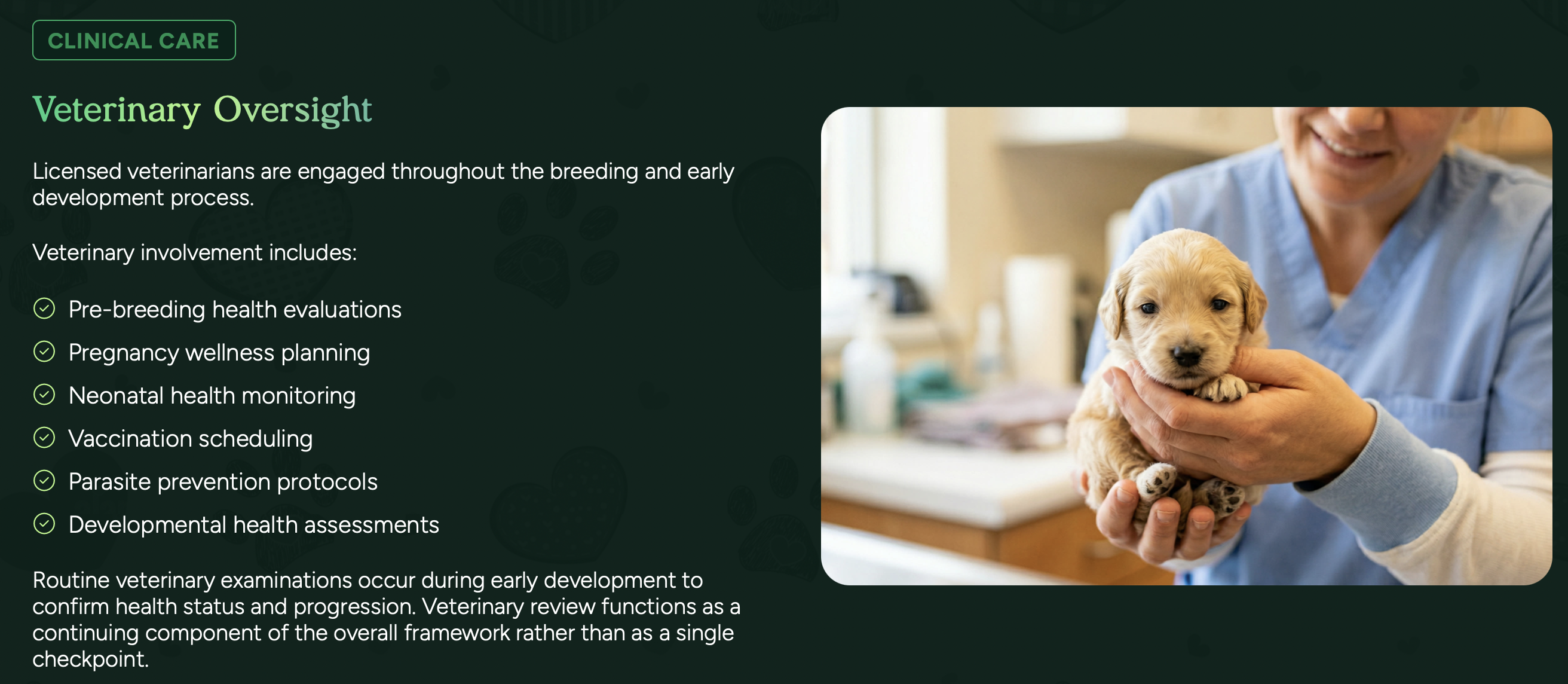
Veterinary oversight does not begin with one exam shortly before homecoming. Licensed veterinarians contribute to pre-breeding evaluations, pregnancy wellness, neonatal monitoring, preventive care, vaccination schedules, parasite control, developmental assessments, and final placement clearance.
This ongoing involvement gives us an independent medical perspective at several stages of the puppy’s journey. It also means decisions can be adjusted when an individual mother, litter, or puppy needs something different.
12. Neonatal Care Begins the Moment the Puppies Arrive
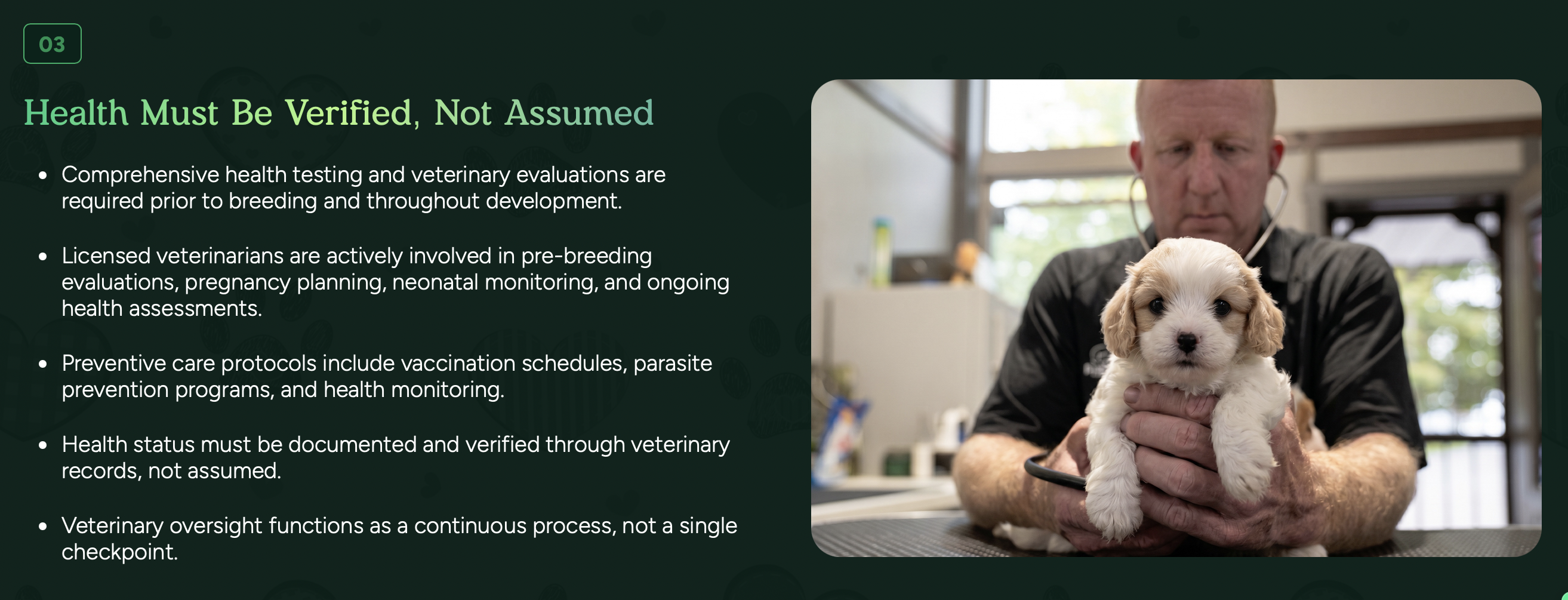
Newborn puppies are tiny, completely dependent, and changing almost by the hour. During the neonatal stage, we focus on warmth, nursing, cleanliness, weight progression, physical stability, and the comfort of the mother. Human contact is gentle and purposeful. The puppies are not passed around or overwhelmed when what they need most is sleep, milk, warmth, and mom.
We watch closely because early changes can be subtle. A puppy who nurses less eagerly, gains weight more slowly or feels cooler than the others may need attention before the difference becomes obvious.
13. Puppy Health Is Followed as a Continuous Story
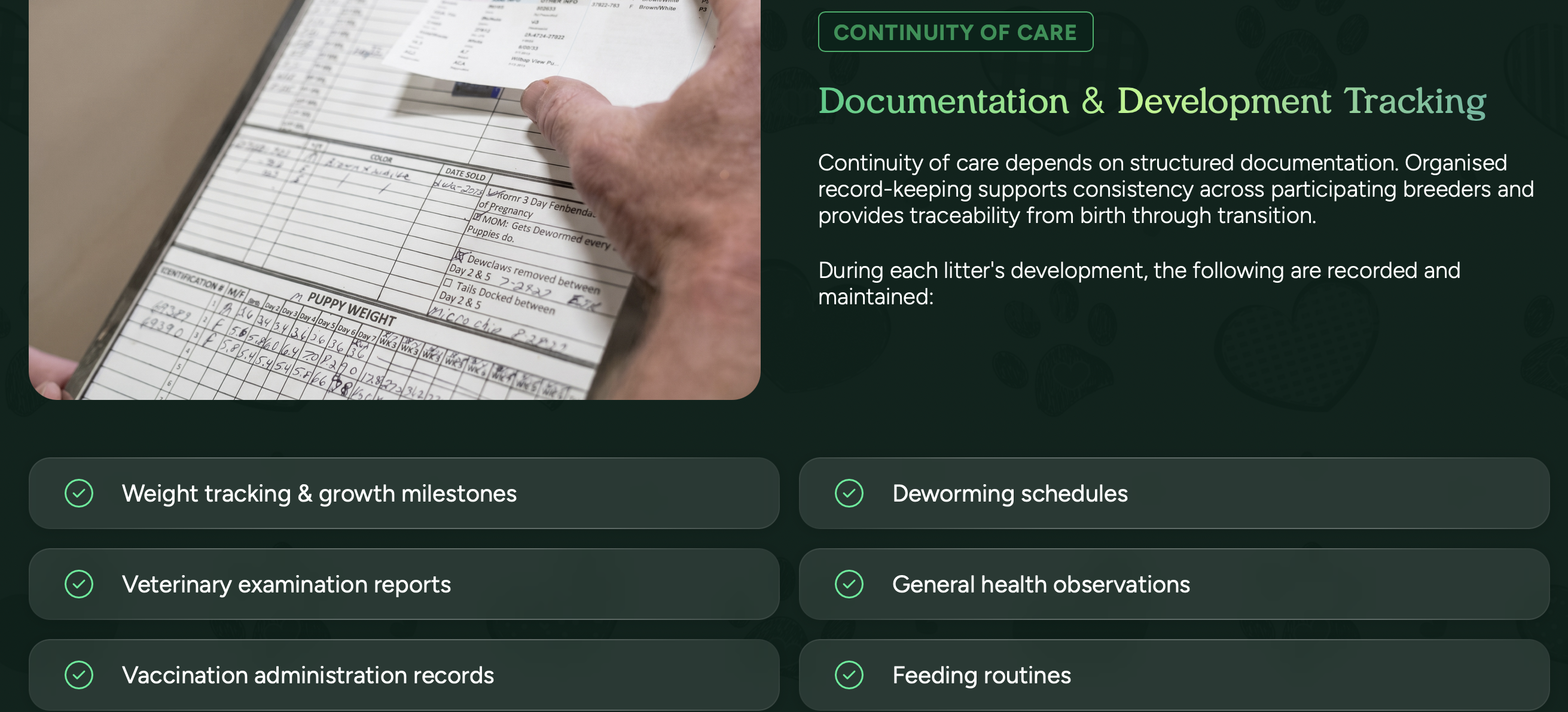
We do not think of puppy health as one appointment or one piece of paper. It begins with the parents, continues through pregnancy, and follows each puppy through birth, nursing, weaning, vaccination, deworming, nutrition, grooming, veterinary evaluation, diagnostic screening, and homecoming preparation.
Each stage adds another piece to the picture. That continuity helps us understand how the puppy has grown rather than judging readiness from a single moment near the end.
14. Puppies Follow a Structured Development Plan
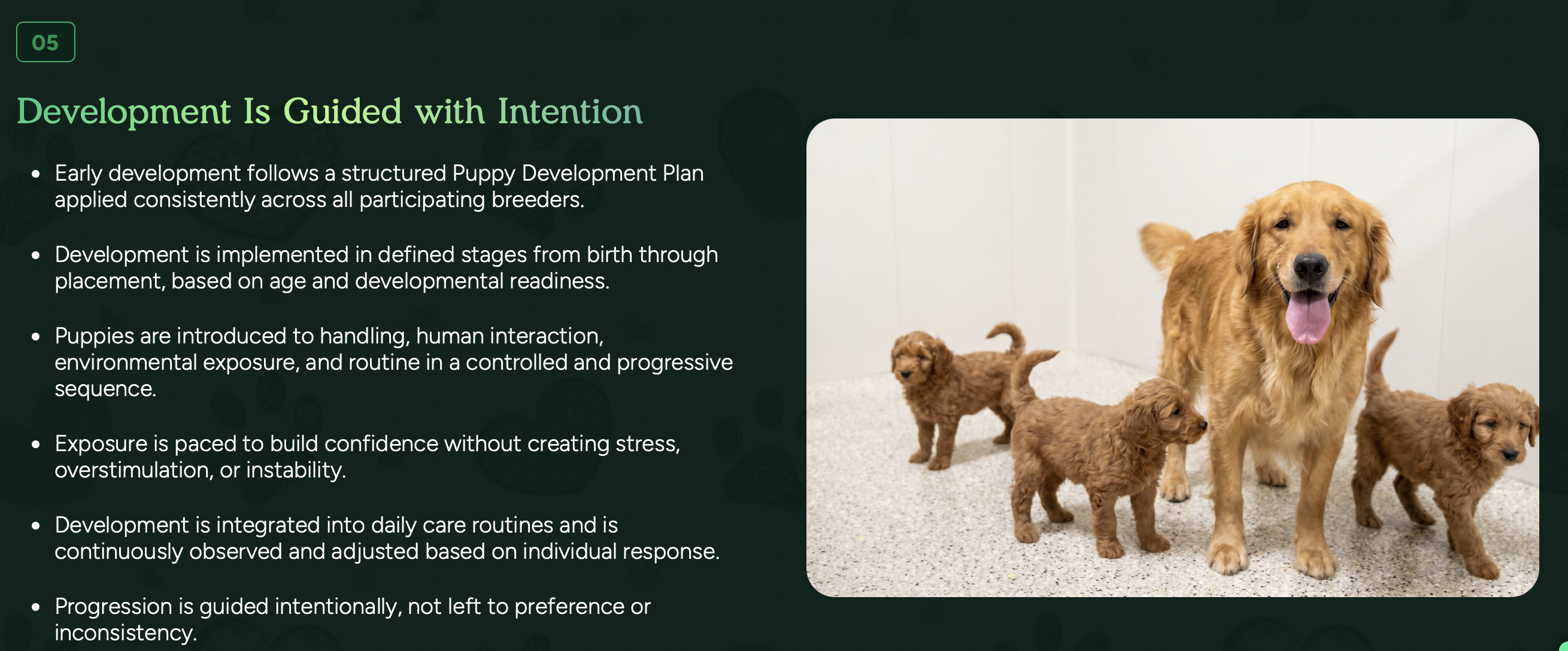
Early development is too important to leave to chance. Our Puppy Development Plan guides human contact, handling, socialization, environmental exposure, enrichment, routines, and preparation for the transition home. The experiences change as the puppy grows and becomes more aware of the world.
The structure stays consistent, but the pace can change for the individual puppy. Some race toward every new experience. Others prefer a thoughtful inspection first. We respect both.
15. We Pay Attention to Milestones Week by Week
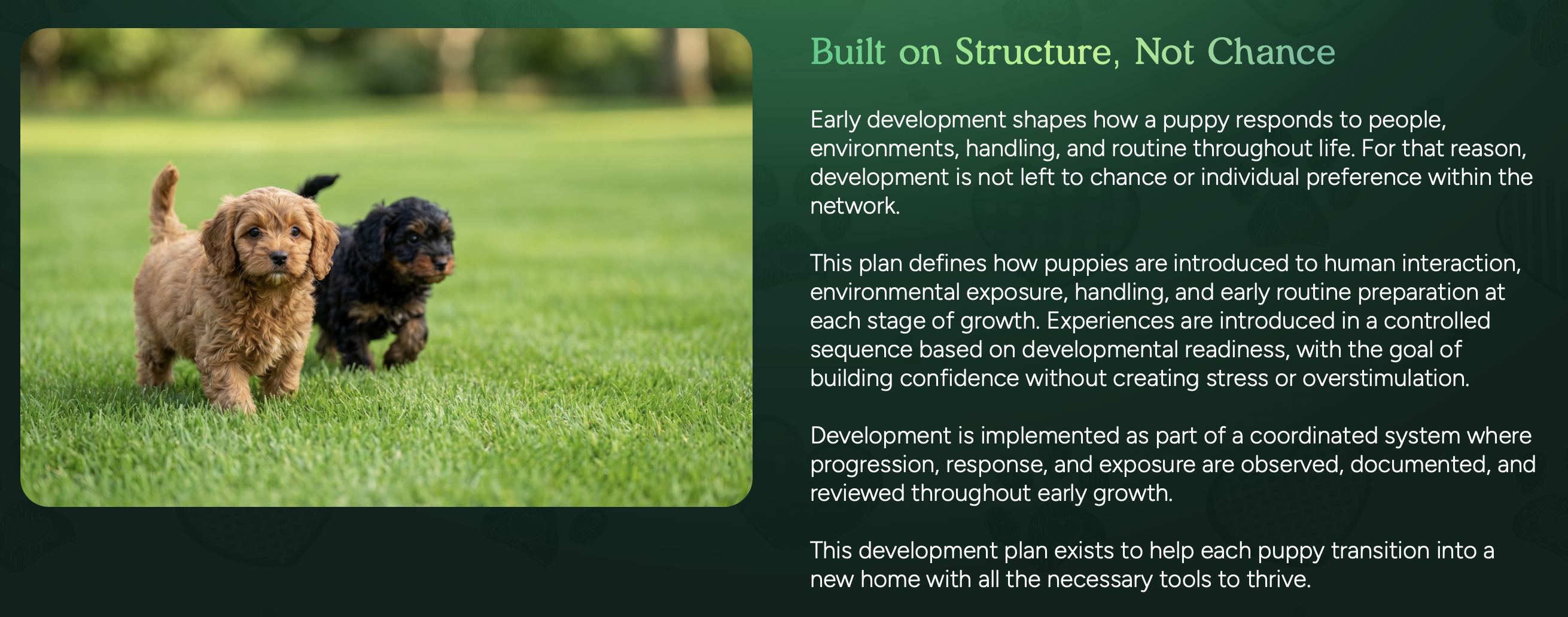
A puppy changes enormously during the first eight weeks.
During the first two weeks, the focus is stability, nursing, warmth, weight, and maternal care. Around two to three weeks, eyes and ears begin opening and awareness grows. Between three and five weeks, puppies become more mobile, curious, and socially engaged. Later, they begin enjoying individual attention, simple enrichment, new surfaces, household activity, and more predictable routines.
By six to eight weeks, we begin preparing them for the transition home with gentle carrier introductions, individual time, handling, feeding schedules, rest patterns, and early potty routines. Each stage builds on the one before it.
16. Puppies Stay With Their Mother for at Least Eight Weeks
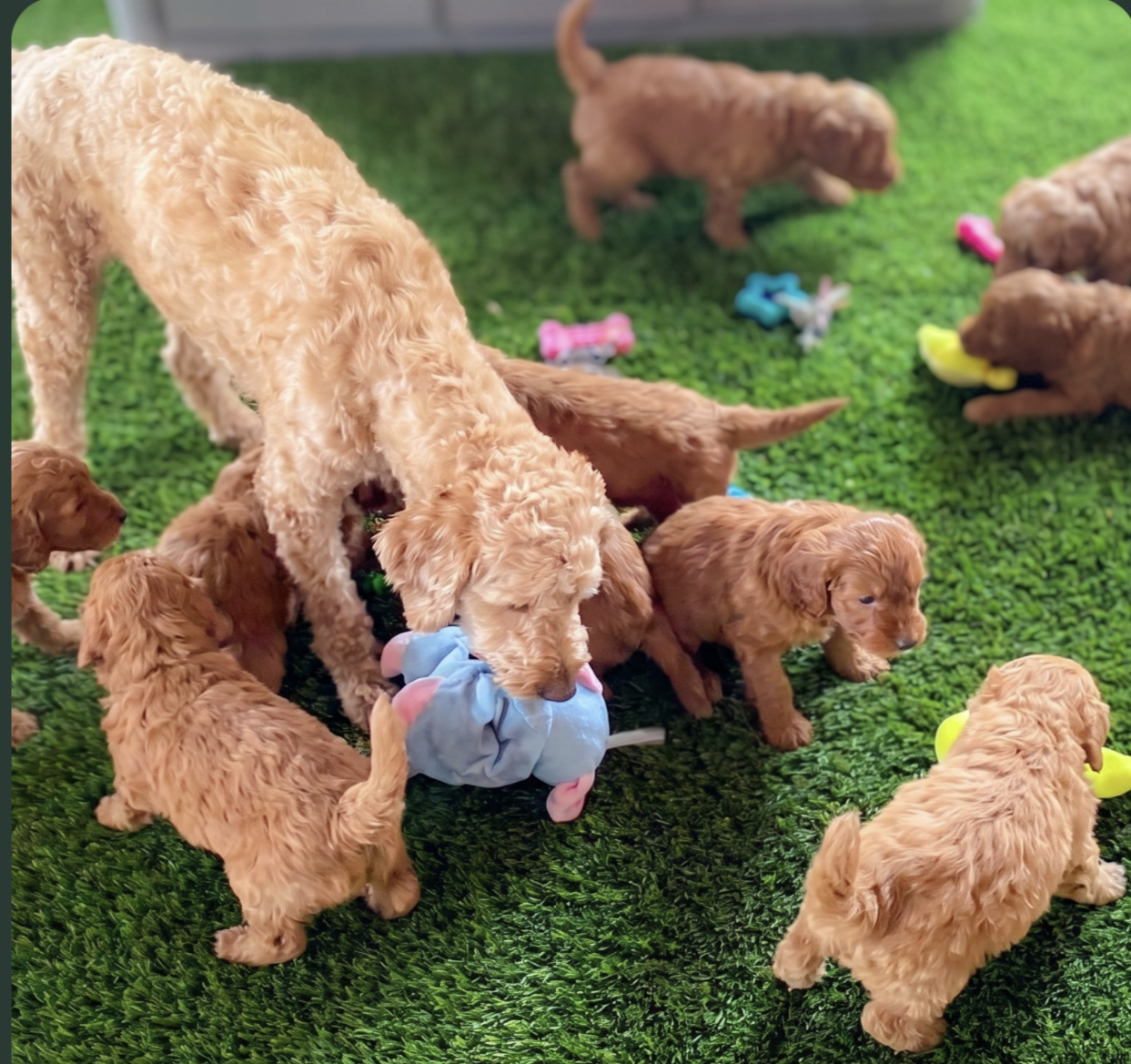
We do not separate puppies from their mother simply because they can eat solid food. They remain with her and their littermates until they are at least eight weeks old. During that time, they continue learning through nursing, play, correction, communication, and the quiet reassurance of being with the family they have always known.
Those lessons are difficult to reproduce later. Mom teaches things humans cannot, even when she occasionally looks like she would appreciate five peaceful minutes to herself.
17. Some Puppies Stay Longer When They Need More Time
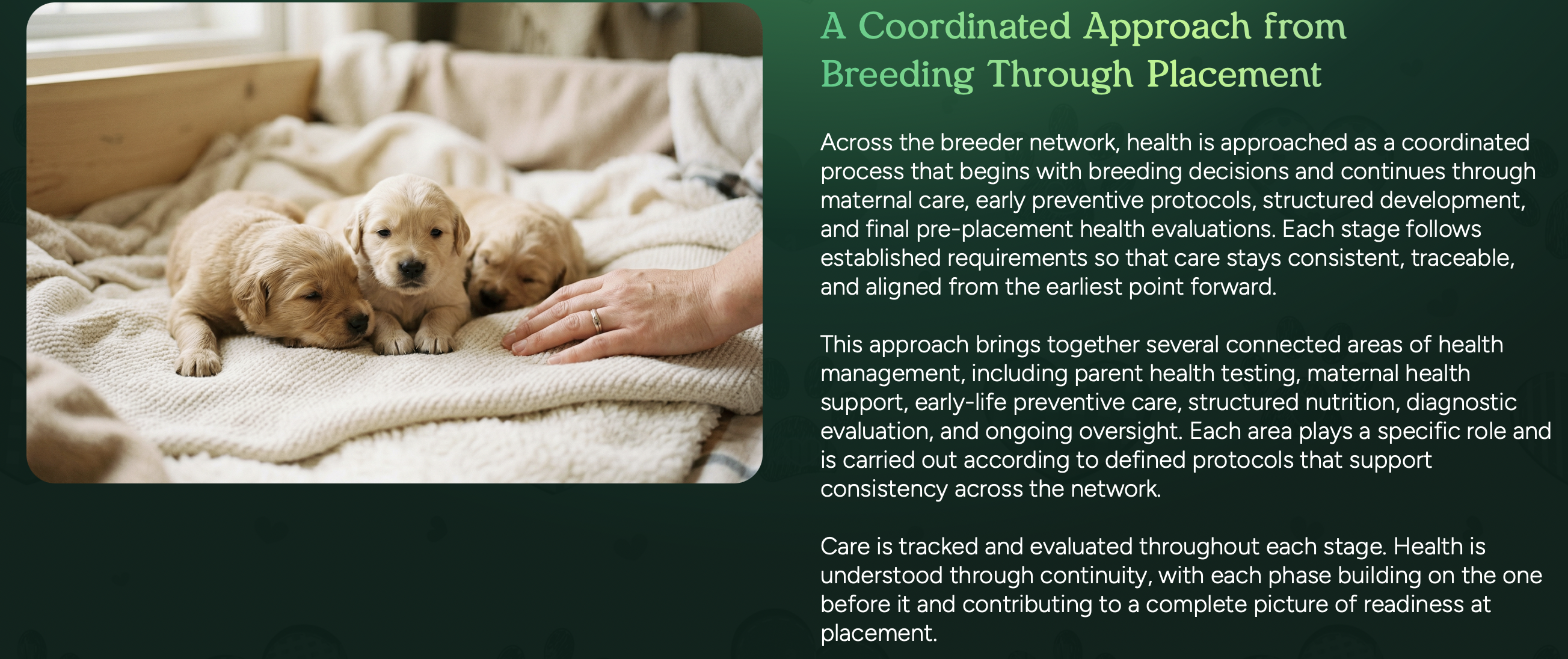
Eight weeks is a minimum, not a deadline we force on every puppy.
Smaller puppies, slower eaters, puppies still working through a health concern, or those who have not reached the appropriate developmental milestones may remain in care longer. Home-ready dates are estimates until health, eating, adjustment, and final veterinary readiness are confirmed.
We would rather disappoint a family with a short delay than send a puppy home before the puppy is truly ready. The puppy’s needs win that decision every time.
18. Puppies Are Checked Repeatedly Before They Are Listed
A puppy’s first meaningful health review should not happen after a family falls in love with a photograph. Puppies are observed daily, weighed, monitored through early development, and evaluated as their health and milestones progress. Routine veterinary examinations also take place during early development rather than care being reduced to one final visit.
Before a puppy is presented to families, we want a clear understanding of how that puppy is growing, eating, moving, interacting, and developing.
19. Vaccinations, Deworming, Nutrition, and Growth Are Documented
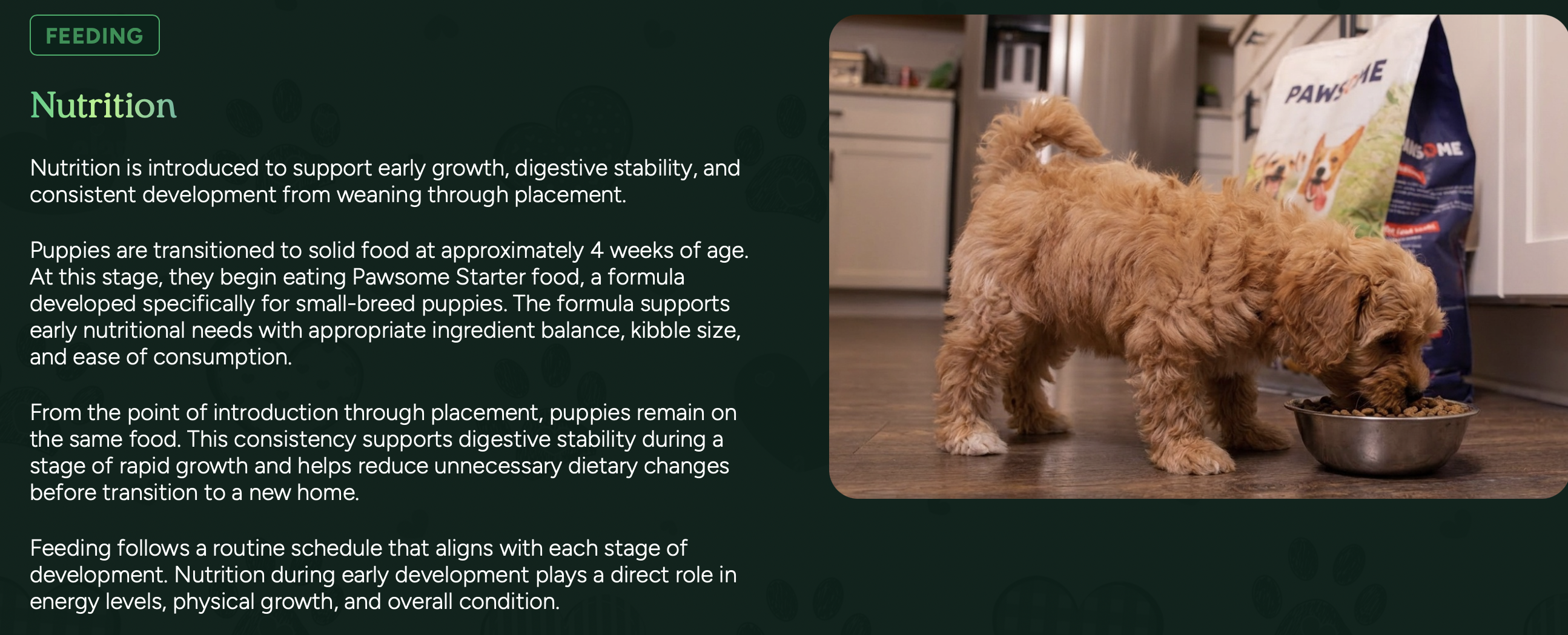
Each puppy’s care follows a schedule. Deworming begins early and continues at planned intervals. Age-appropriate vaccinations are administered as the puppy’s immune system develops. Feeding routines, weight changes, health observations, and veterinary information are recorded along the way.
These records follow the puppy through the process and help the new family’s veterinarian continue care without having to guess what happened during the first weeks.
20. Every Puppy Receives a Final Nose-to-Tail Veterinary Exam
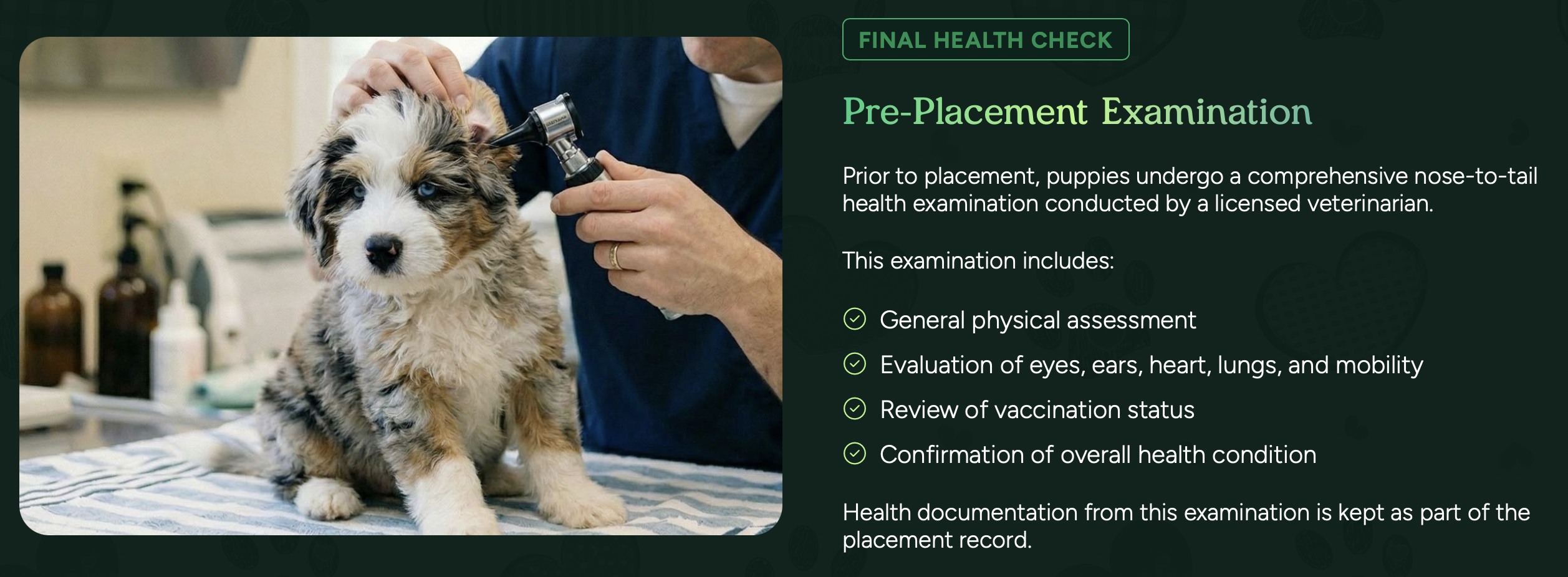
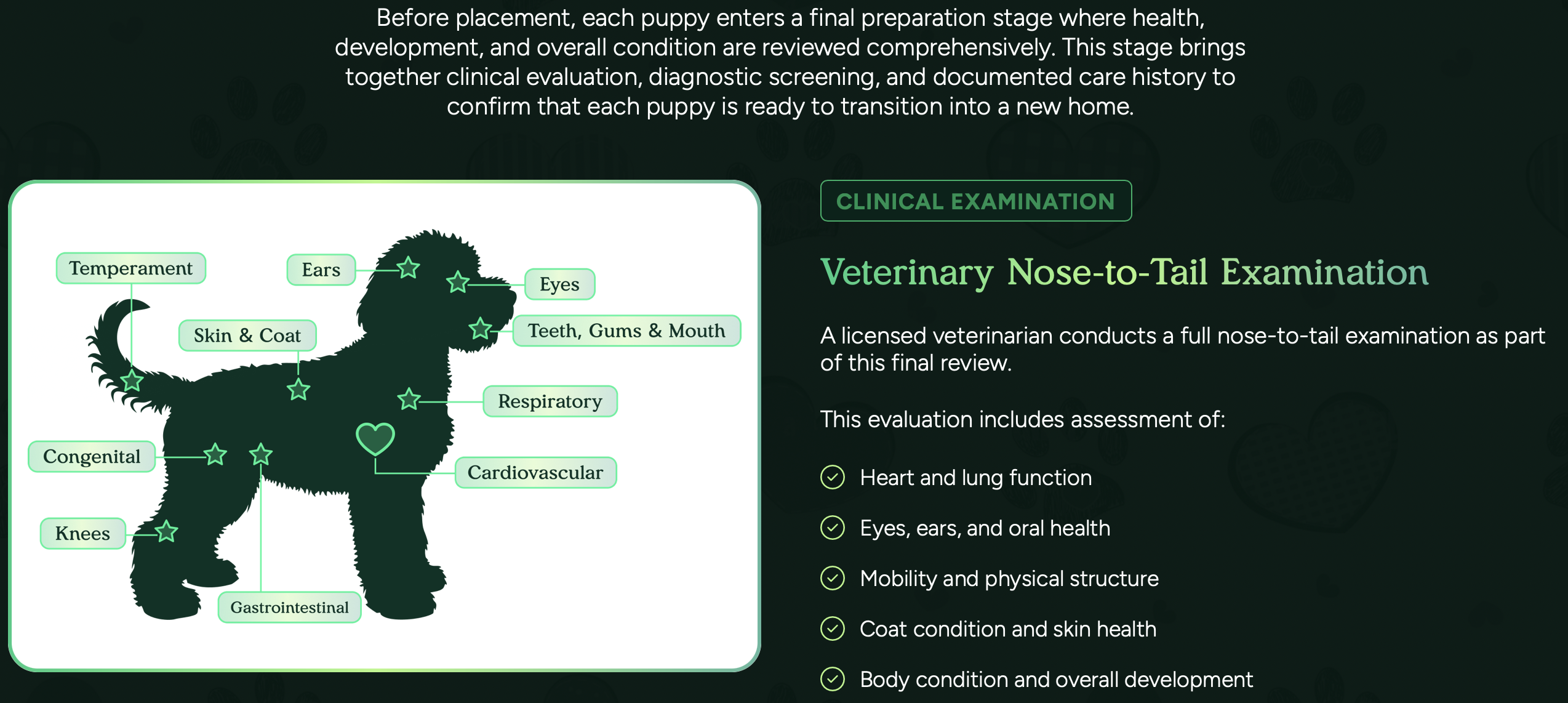
Before homecoming, every puppy receives a comprehensive examination from a licensed veterinarian. The exam includes the heart and lungs, eyes, ears, mouth, mobility, physical structure, skin, coat, body condition, and overall development. Vaccination status and health documentation are reviewed as well.
This is an independent medical evaluation of the puppy’s observable health and readiness. No exam can predict every future condition, but it provides an important final clinical checkpoint before the puppy joins a family.
21. We Use VetScan Imagyst Fecal Screening
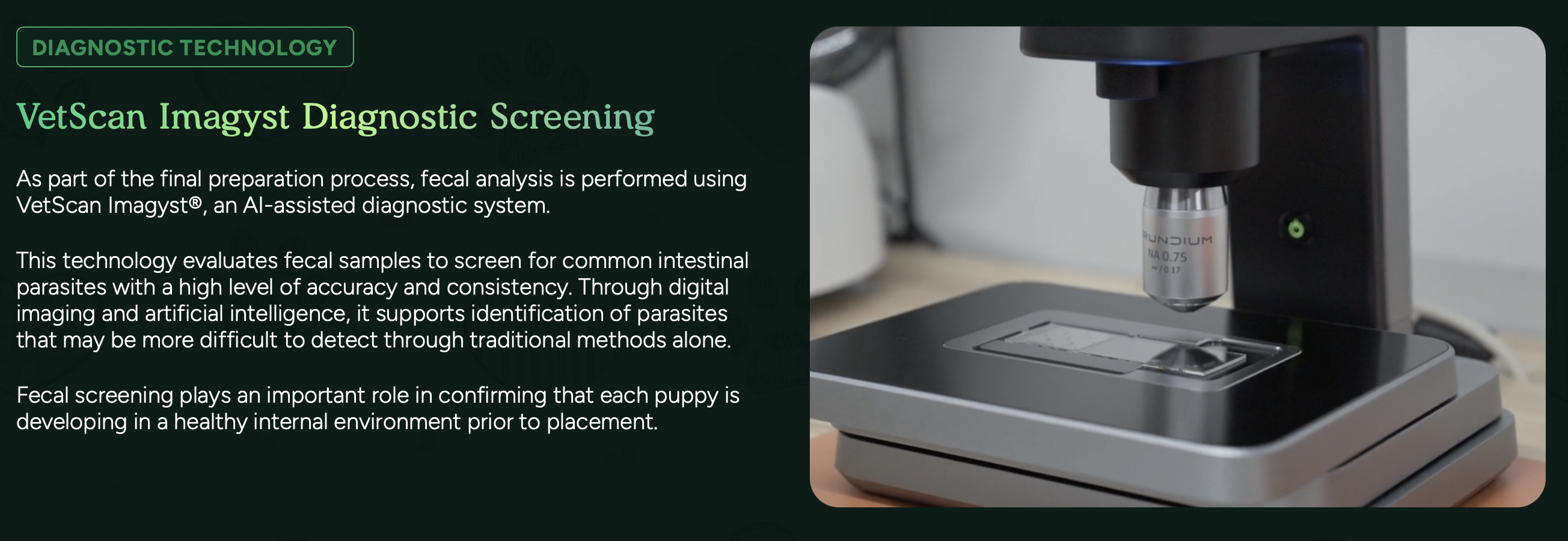
A puppy can look bright-eyed and playful while still carrying an intestinal parasite. Before placement, fecal samples are screened using VetScan Imagyst, an AI-assisted diagnostic system that combines digital imaging and advanced analysis. It helps identify common intestinal parasites, including organisms that may be difficult to detect through appearance or routine observation alone.
When something is identified, it can be treated and followed rather than left for the family to discover after homecoming.
22. Families Can Choose an Advanced Blood Evaluation
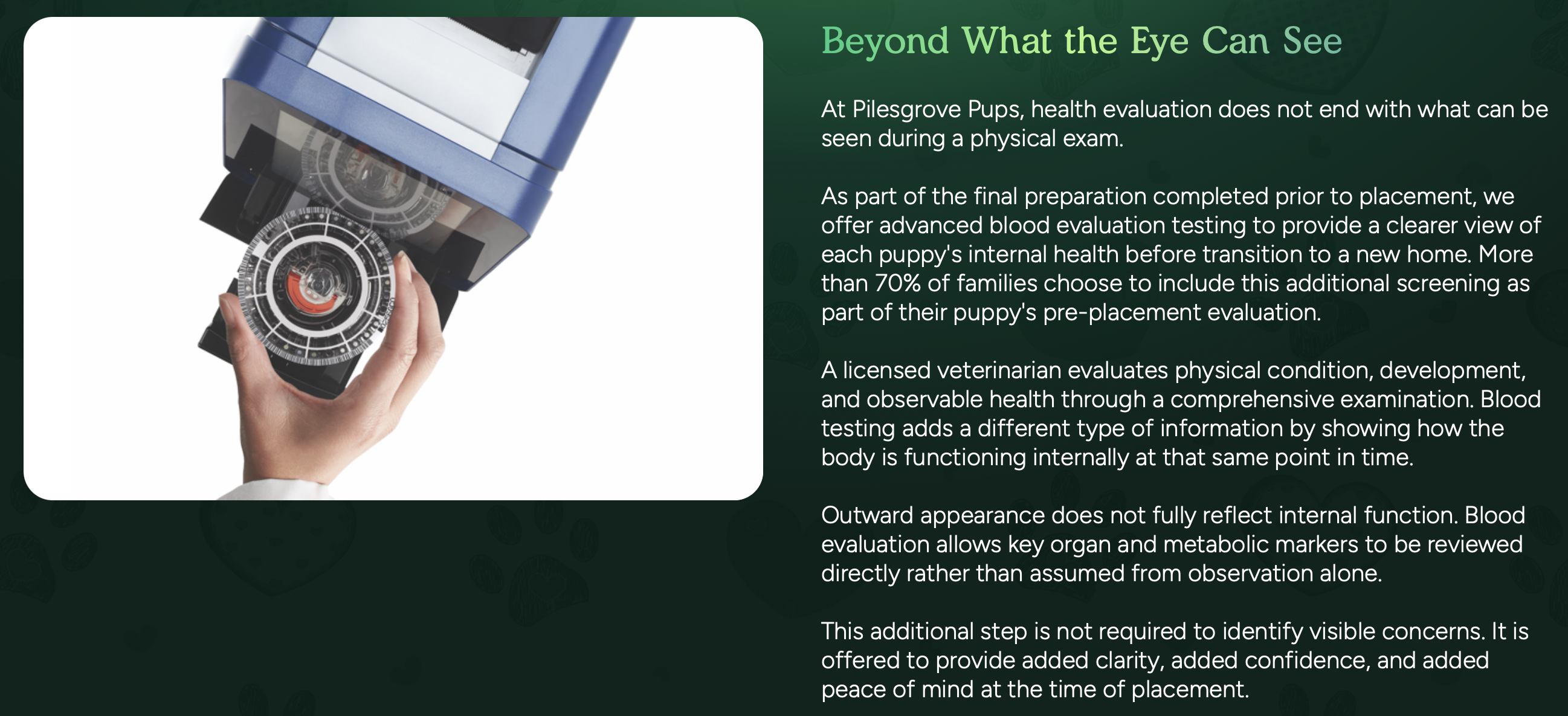
We also offer an optional pre-placement blood evaluation under licensed veterinary oversight.
This testing provides information about internal health markers related to liver and kidney function, glucose balance, protein levels, hydration, blood cells, and overall physiological stability. More than 70% of families choose to add this screening because the blood evaluation provides another layer of information and a useful baseline near the time of placement.
23. Puppies Are Groomed Before They Go Home
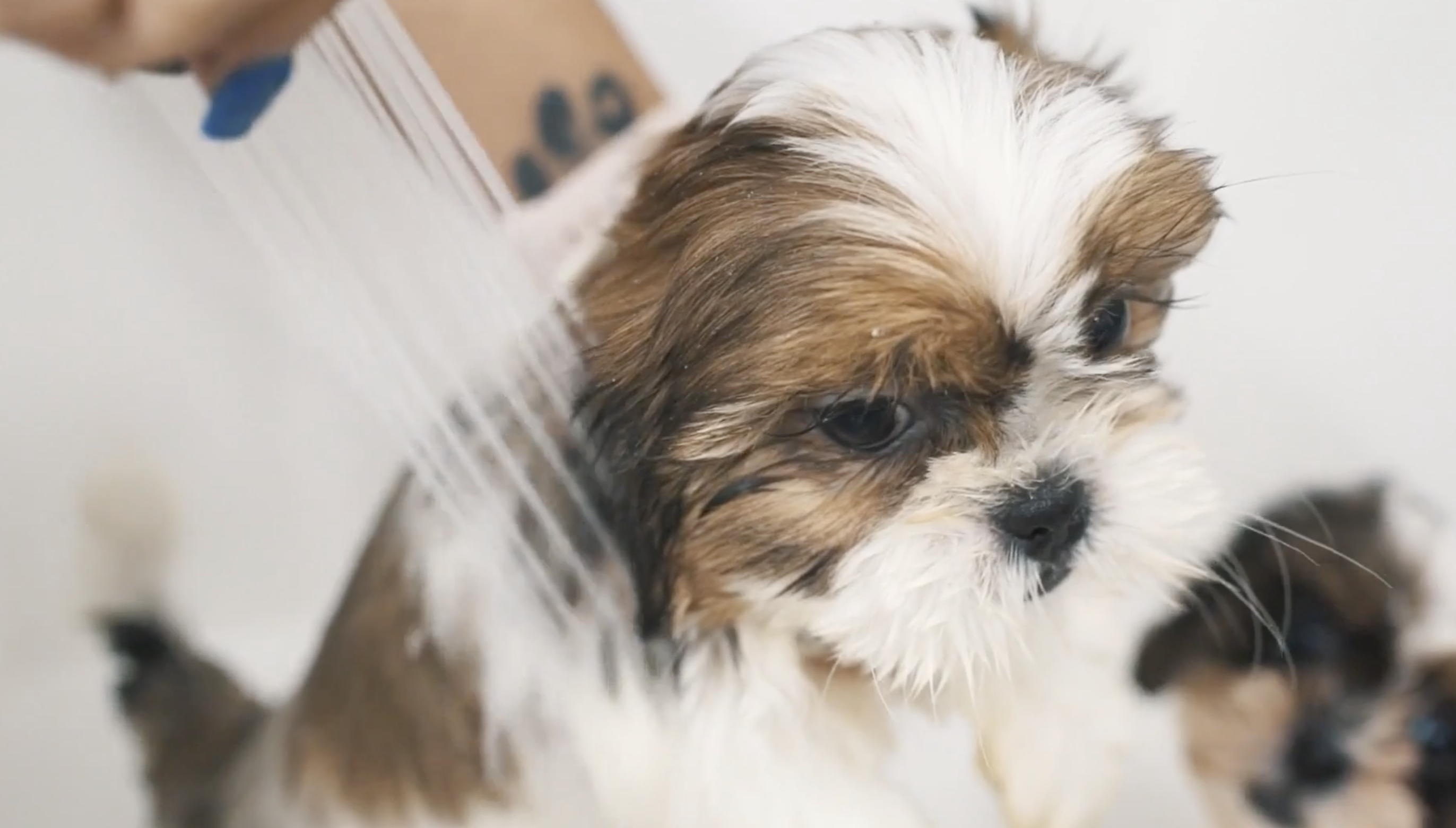
Health and comfort also live in the small daily routines. Puppies are gradually introduced to ear care, bathing, nail trimming, brushing, and gentle handling as they grow. Bathing generally begins around six weeks or as needed, and nail care is introduced at a similar stage.
Before homecoming, we want each puppy clean, comfortable, and familiar with the basic touch that will become part of normal grooming and veterinary care. They may not sit like tiny salon professionals just yet, but the introduction has begun.
24. Every Puppy Has an Individual Profile
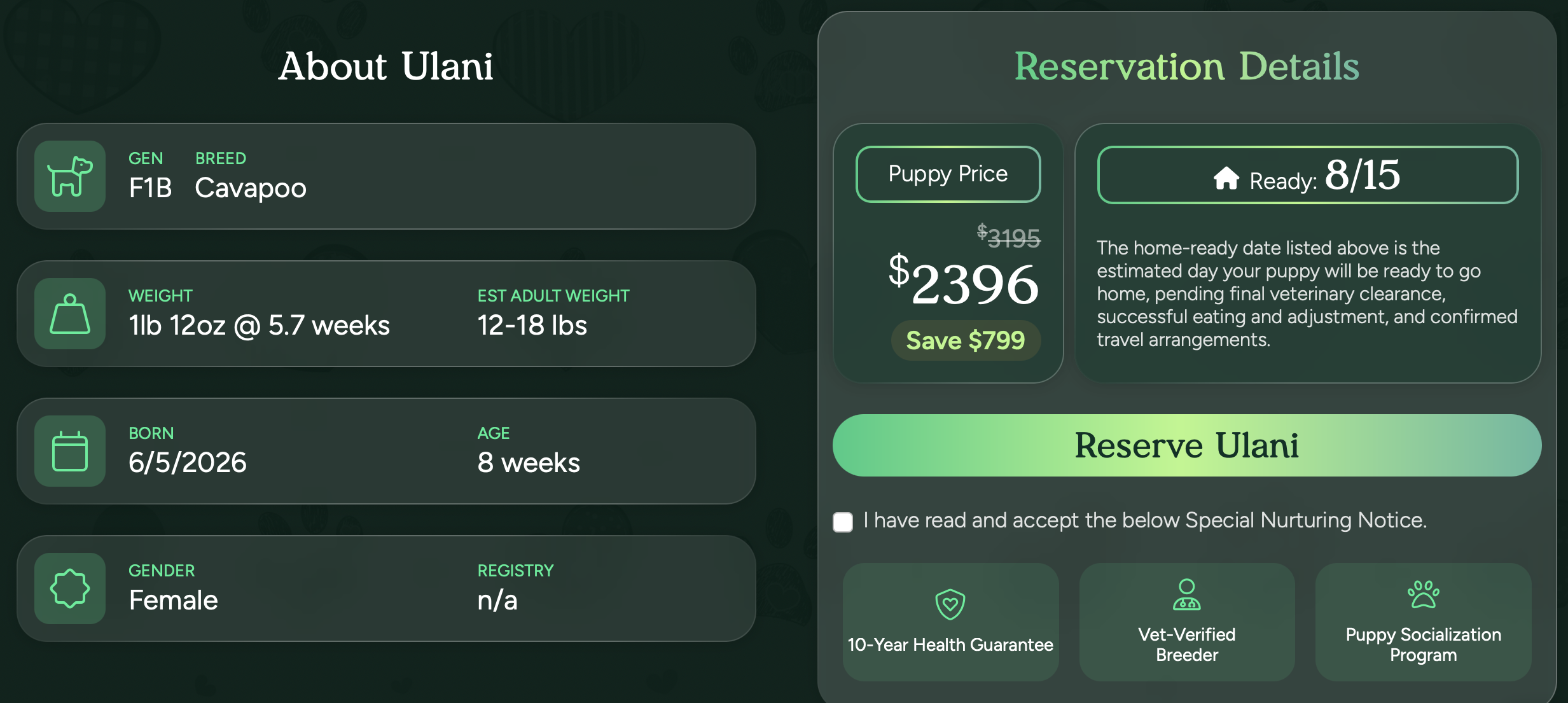
Our puppy profiles are designed to give families more than a name and a cute picture. Depending on the puppy and stage of development, profiles may include photos, video, breed, gender, age, date of birth, current weight, estimated adult size, parent details, home-ready timing, socialization information, vaccination and deworming records, veterinary checkpoints, and pricing.
We want families to make decisions with useful information in front of them.
25. We Share Puppy-Specific Health Updates and Notes
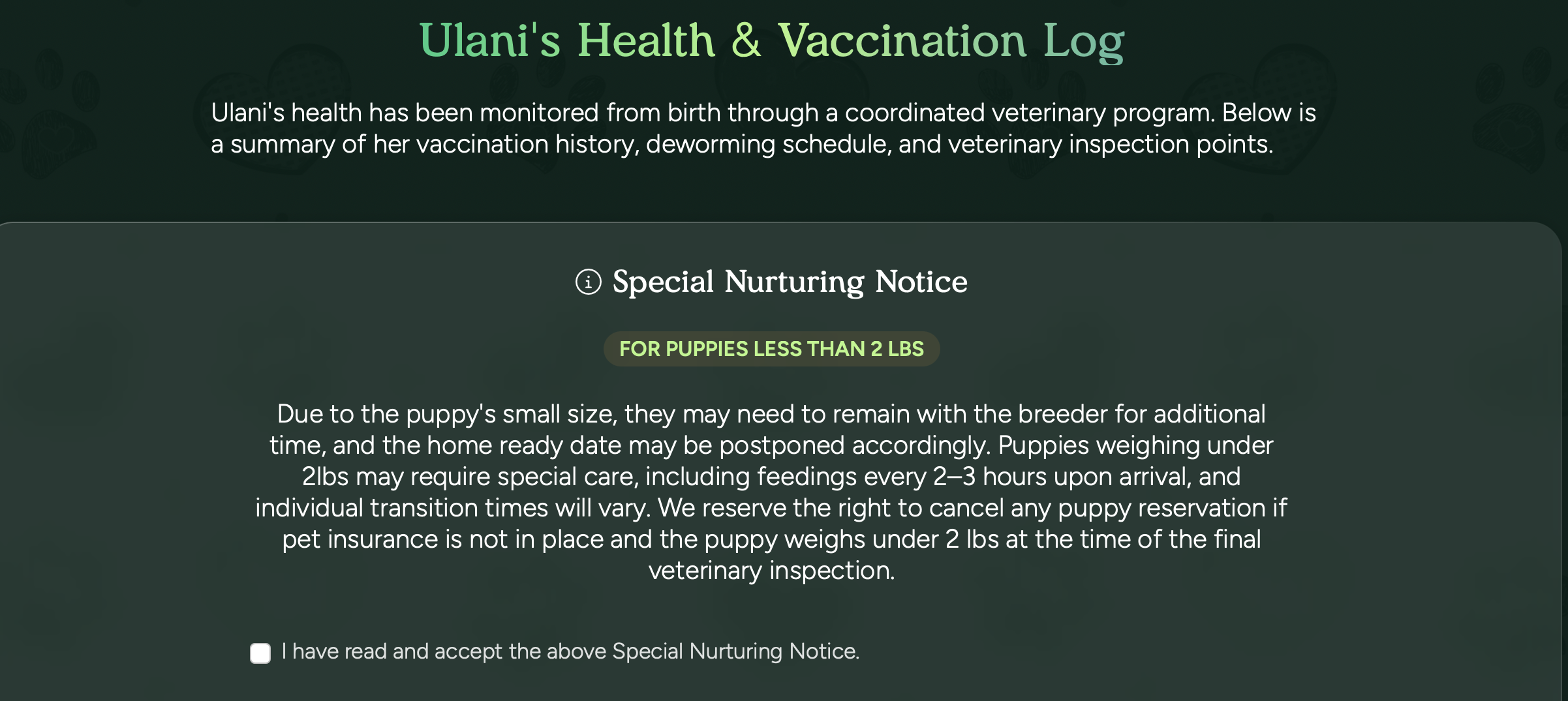
Every puppy is different, so health information should not exist only on a general company page. Completed treatments, scheduled vaccinations, veterinary checkpoints, readiness conditions, and other puppy-specific updates are displayed with the individual puppy whenever that information is available. If there is a health note or a change that affects the puppy, we believe it belongs with that puppy’s information.
Transparency matters most when the information is specific enough to help a family make a real decision.
26. Parent Photos and Birth Information Are Available on Request
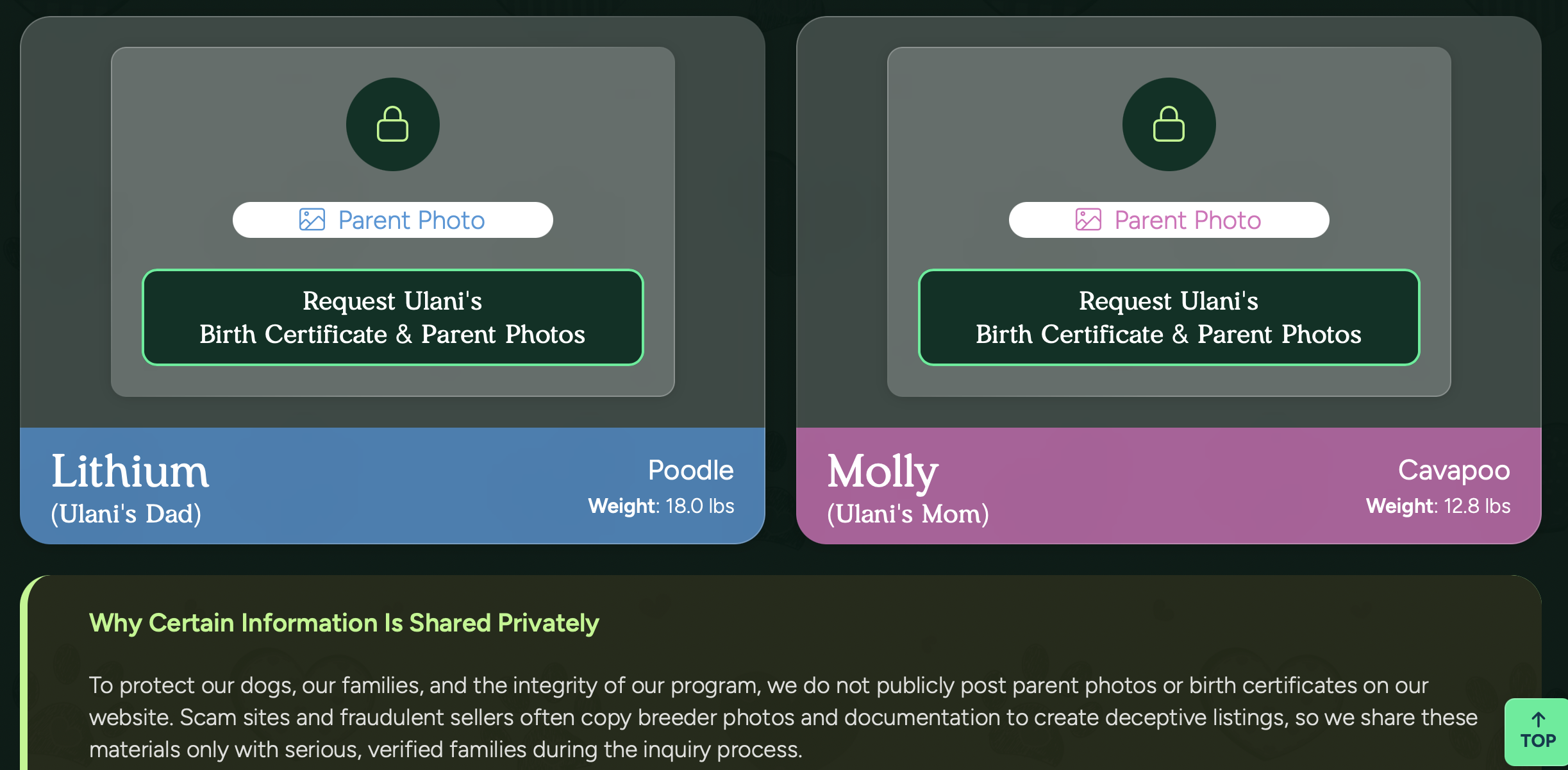
Families can request parent photos and birth documentation directly from an individual puppy’s profile. We share some of this information privately rather than posting every document publicly. Puppy and parent photos, birth records, and breeder materials are frequently copied by fraudulent websites, so controlled access helps protect the dogs, breeders, and genuine families interested in a puppy.
The information is still available. We simply try to share it responsibly rather than making it easy for scammers to build a convincing fake listing.
27. Families Can Receive Updates Between Reservation and Homecoming
Waiting for homecoming can feel impossibly long once you have chosen your puppy. During that stretch, families can request photo or video updates. We want you to see how your puppy is growing and enjoy a little piece of those weeks, even while the puppy is still learning from mom and getting ready for the transition.
Many customers have told us how much those updates meant. A new picture may not make the calendar move faster, sadly, but it certainly makes the waiting sweeter.
28. Families Can Visit Us by Appointment
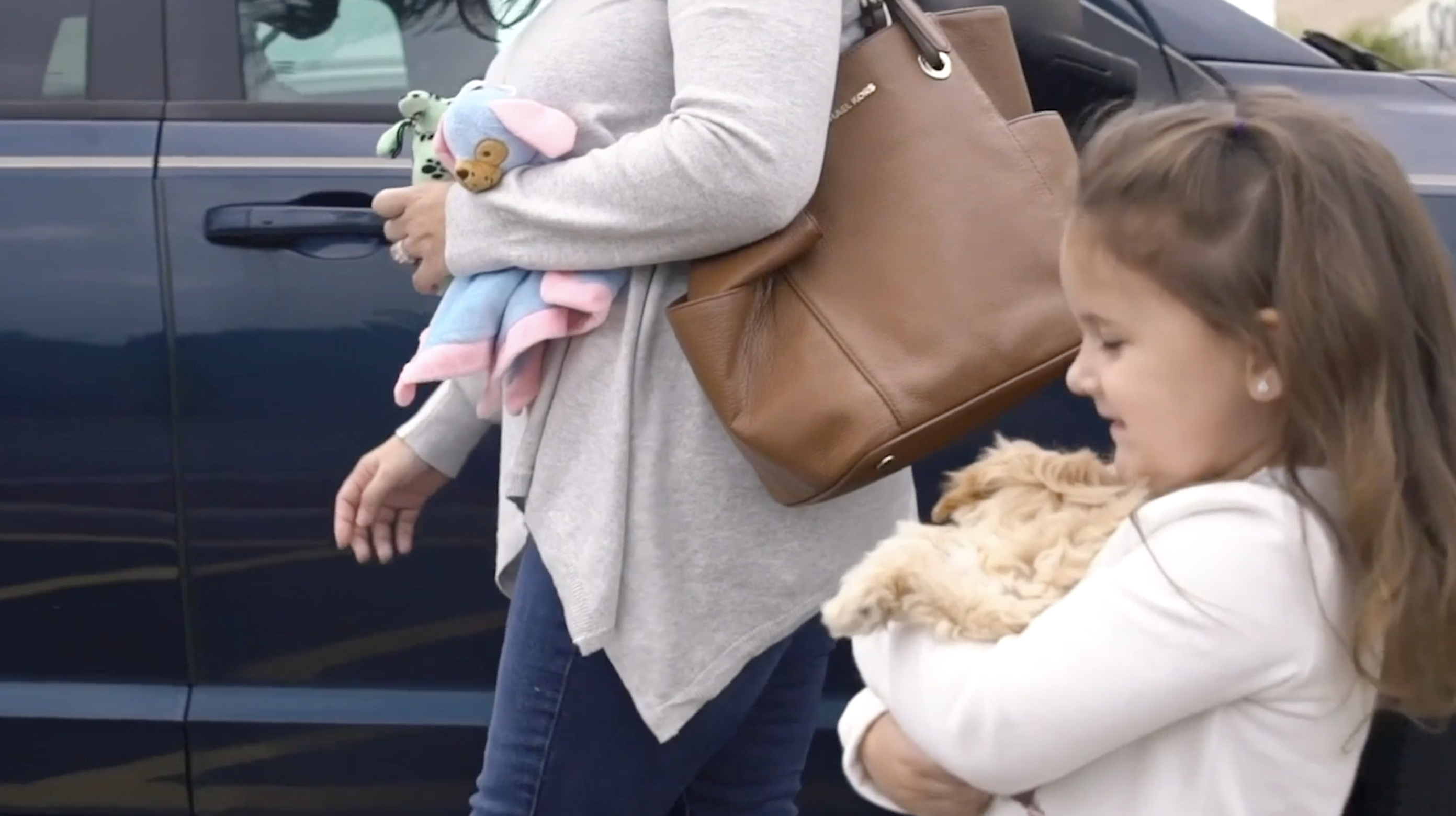
We welcome local families to meet puppies and speak with our team by appointment.
Appointments help us create a calm experience and protect the health of the puppies in our care. Young puppies have developing immune systems, so we limit unnecessary traffic and ask visitors to follow sanitation precautions.
This is not a pet-store environment where anyone can walk past rows of puppies throughout the day. Visits are personal, planned, and focused on helping families meet suitable puppies safely.
29. We Help Families Choose With Knowledge, Not Pressure
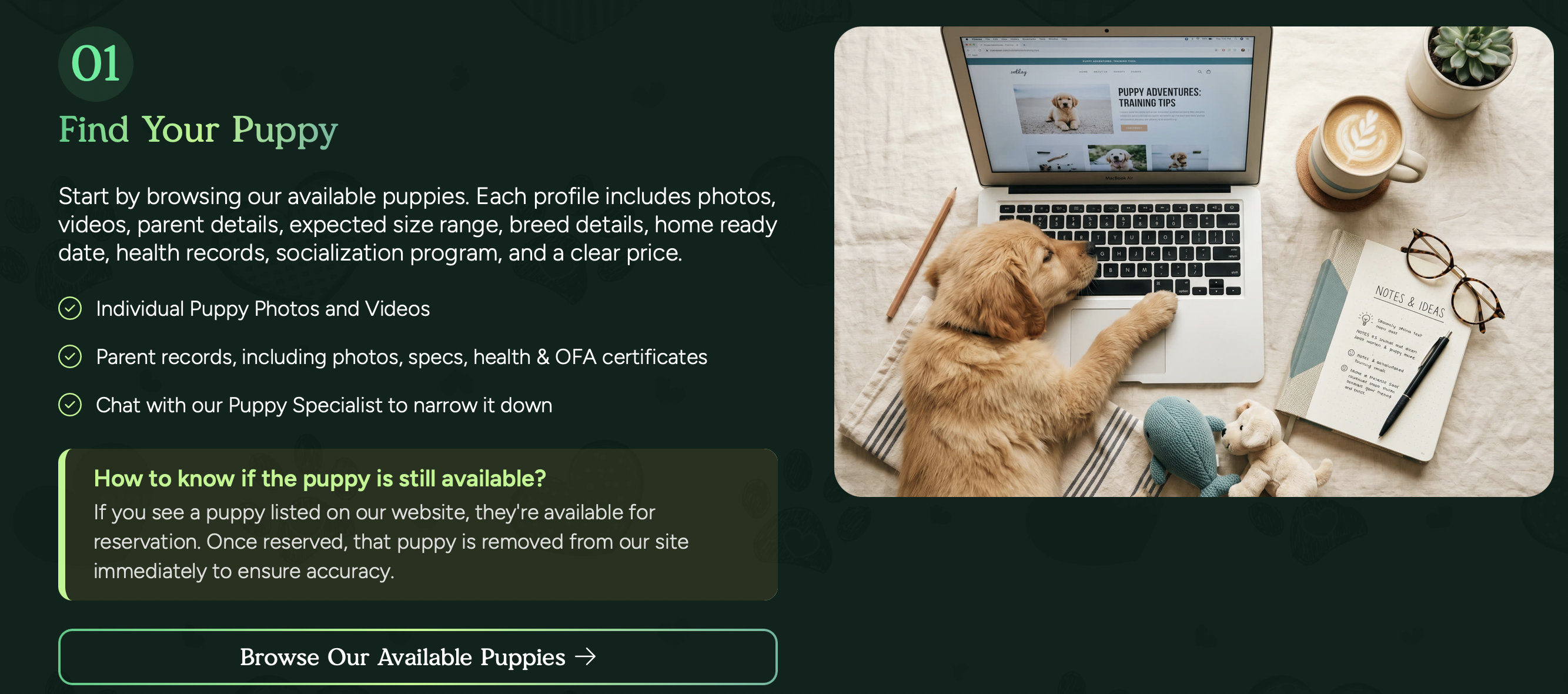
Questions are welcome here. Our team can explain breed characteristics, expected adult size, coat care, activity needs, delivery timing, health information, and what life with a young puppy may realistically look like. We also have a large library of breed information articles for families who want to research before making a decision.
A good match is more important than a quick reservation. We would much rather help someone think carefully than encourage a choice that does not fit their home.
30. Pickup and Nationwide Delivery Options Are Available
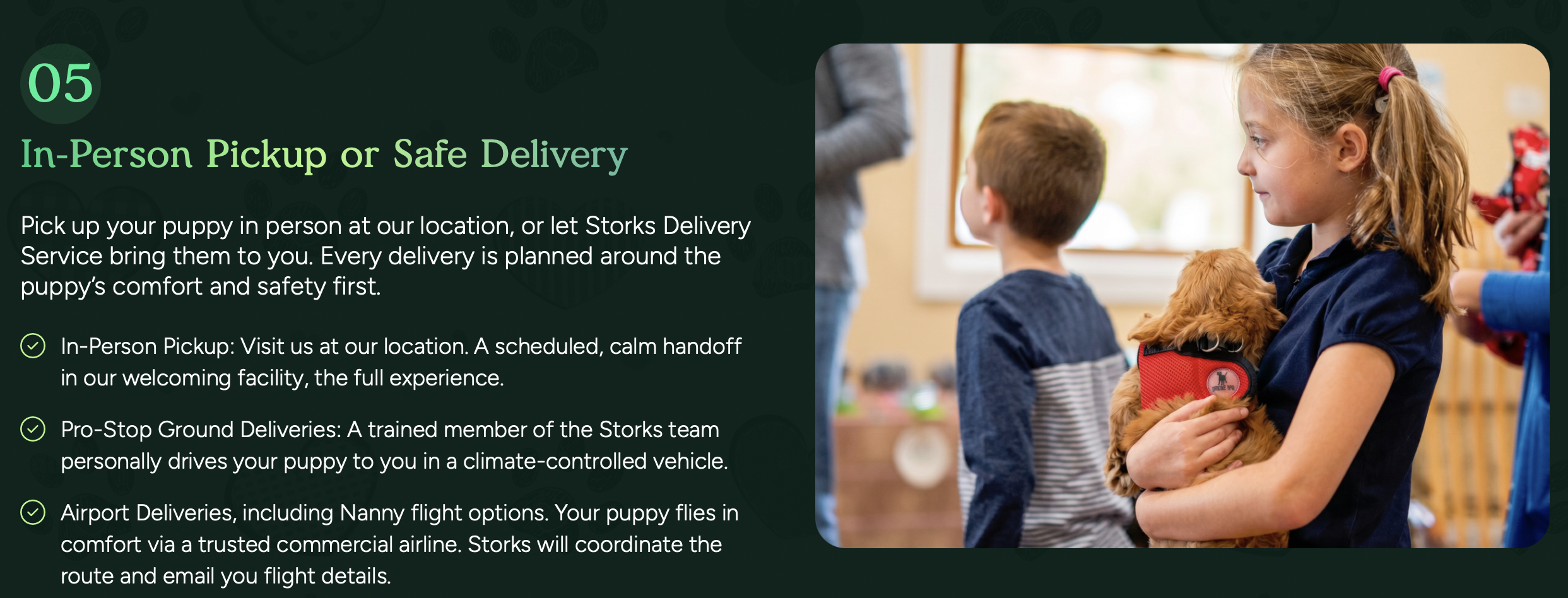
Families can collect their puppy in person at our Pilesgrove location or choose coordinated delivery.
Ground delivery is handled by trained staff in a climate-controlled vehicle. Airport options include coordinated commercial air travel and nanny-style services, depending on the destination and availability.
Every route is planned around the puppy’s safety and comfort. The goal is not simply to move a puppy from one point to another. It is to make the journey as calm, organized, and well-supported as possible.
RELATED: Learn More About Pilesgrove Pups Pick-Up and Delivery Options
31. Pet Insurance Is Built Into Our Health-Protection Approach
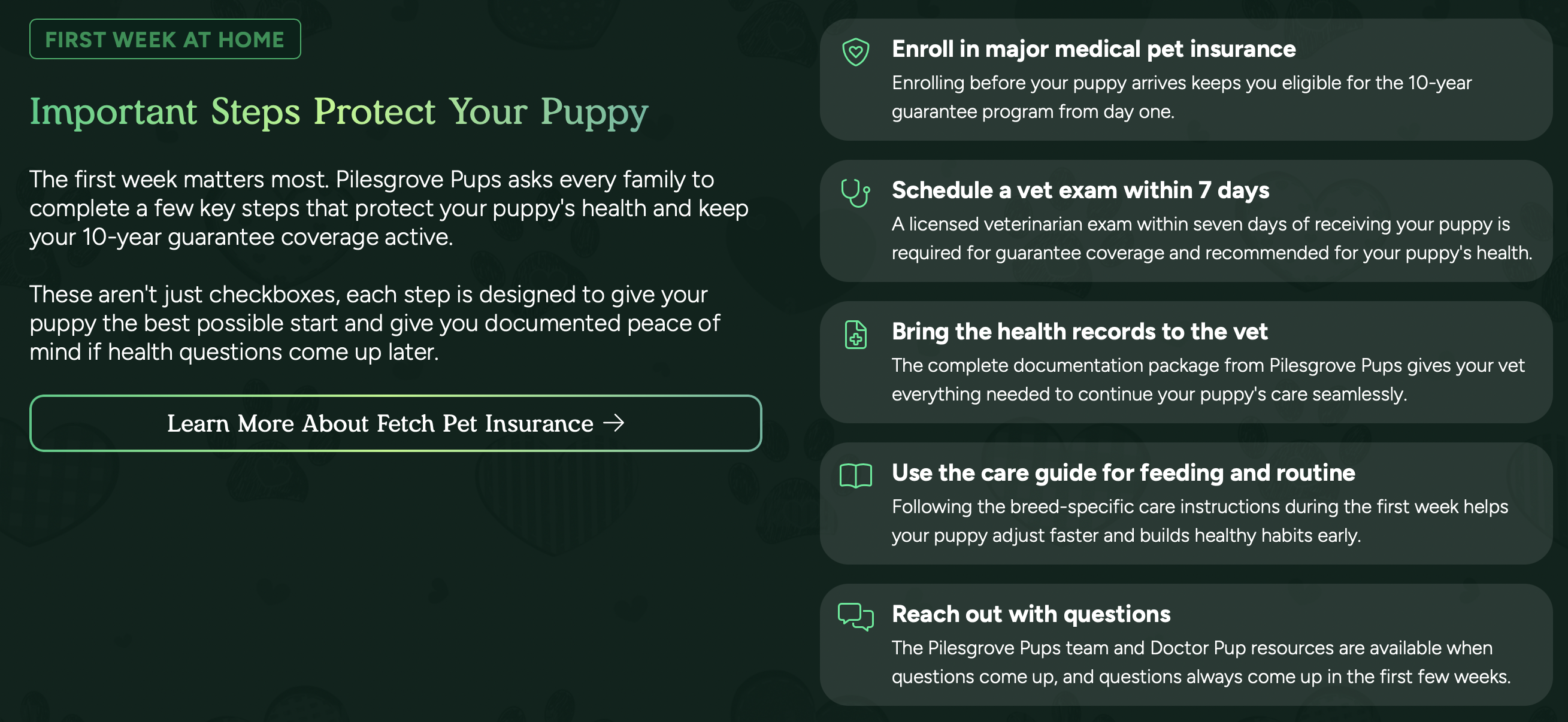
We encourage families to prepare for veterinary care before the puppy arrives, not after an unexpected bill appears.
Major medical pet insurance is also an important requirement within our health-guarantee programs. Coverage must be activated before arrival and kept for the periods stated in the guarantee terms. This protects the puppy by helping families seek appropriate veterinary care without delaying because of cost.
Insurance does not replace responsible breeding or preventive health care. It adds another layer of protection once the puppy is home.
32. Every Puppy Is Supported by Our 10-Year Health Guarantee
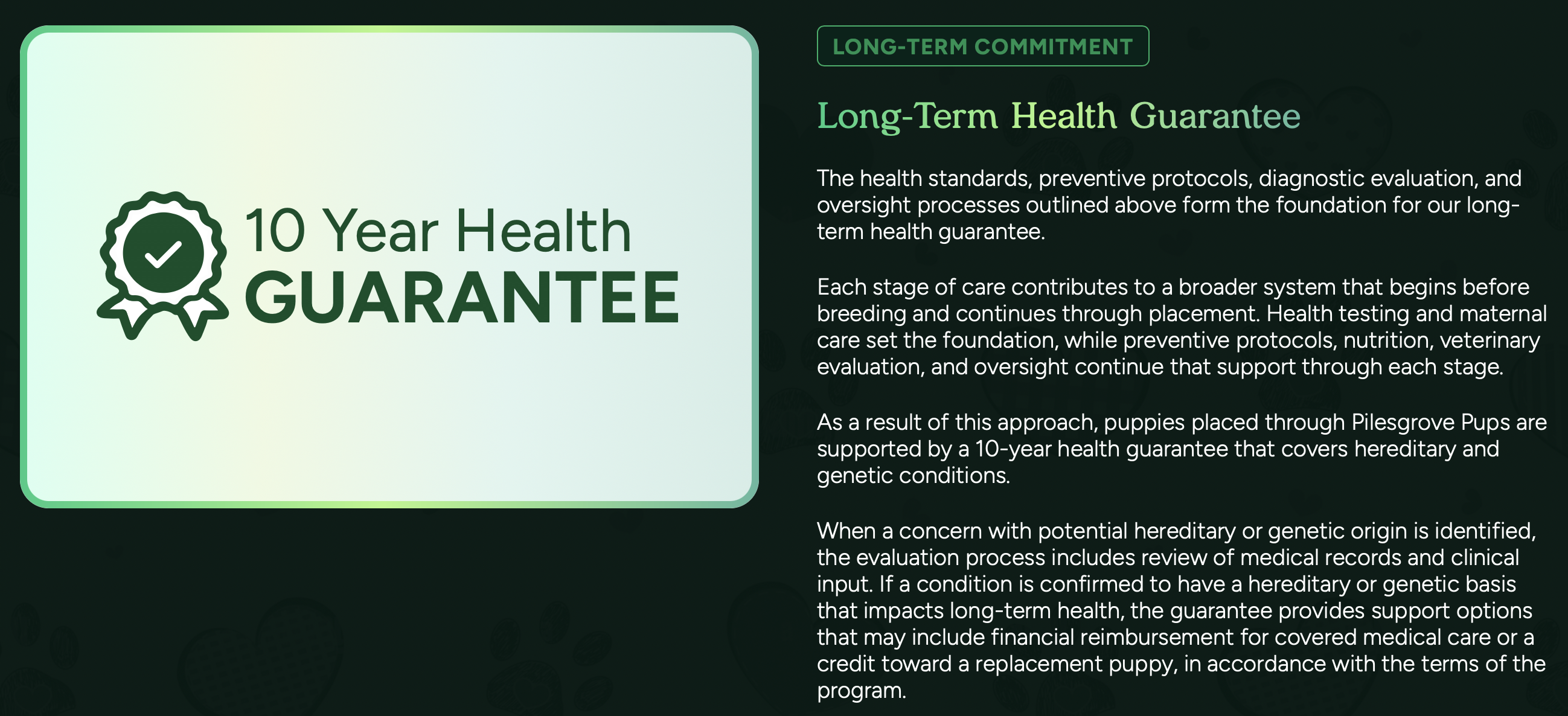
Our responsibility does not end on homecoming day. Our 10-year health guarantee includes a long-term replacement program for qualifying hereditary or congenital conditions, initial illness protection, medical reimbursement provisions, and additional assistance in certain serious situations. The program has clear eligibility rules, insurance requirements, notification deadlines, and veterinary documentation requirements.
We publish those terms because a guarantee should be understood before it is ever needed. It is not a promise that no puppy will experience a health problem. It is our commitment to remain accountable if a qualifying concern arises.
33. Support Continues After the Puppy Leaves
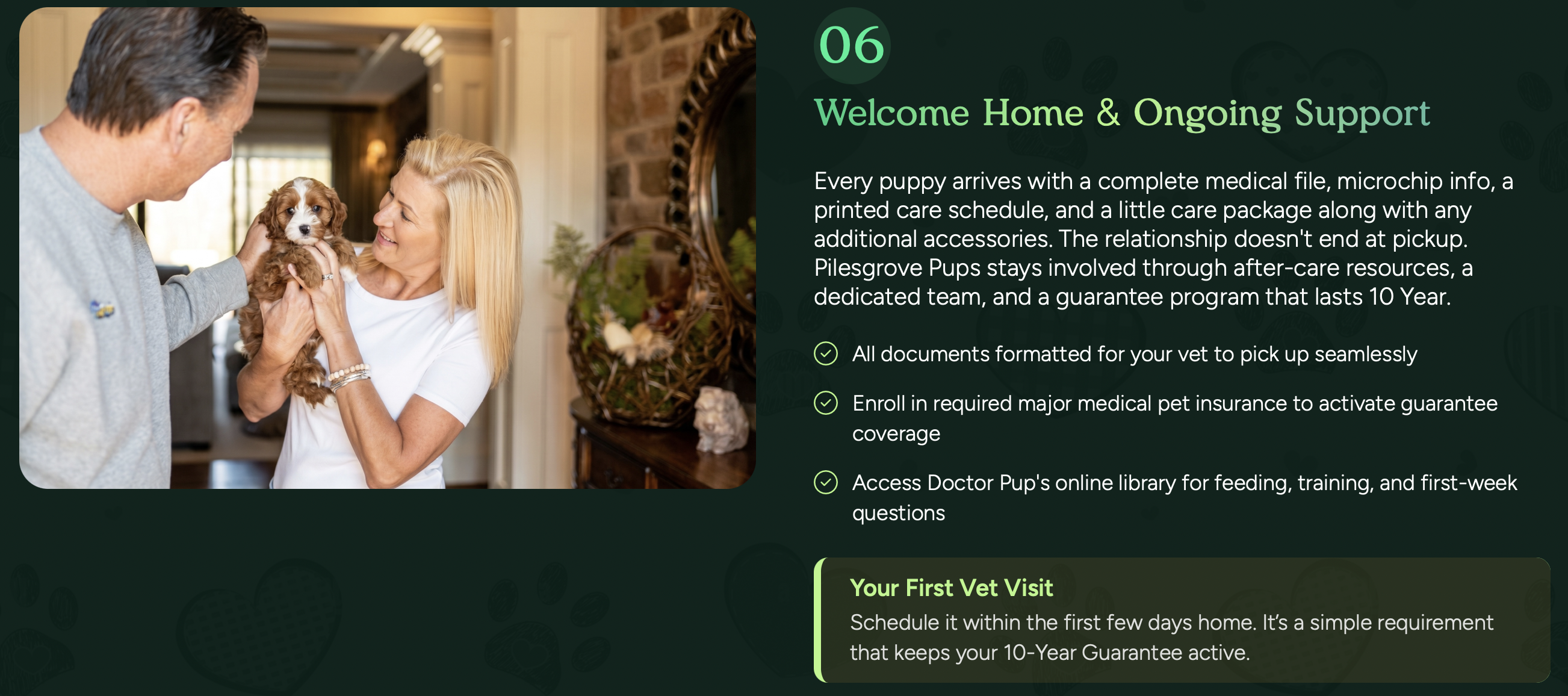
Homecoming is a wonderful day. It is also the beginning of disrupted sleep, potty questions, feeding worries, and the occasional moment when a perfectly innocent puppy seems determined to test every life choice you have ever made.
Our puppy care team stays available for feeding questions, transition concerns, training guidance, health-guarantee questions, and everyday support. Families also receive veterinary records, microchip information, a care schedule, and transition resources to help the first days feel more manageable.
We want you to feel that you have people to call when you need it.
34. We Make Follow-Up Calls and Provide Urgent Support
We check in after puppies go home because the first few days can tell us a lot.
Our puppy care agents make check calls and remain available for questions after placement. Customer reviews often mention these calls, follow-up messages, and the reassurance of having someone available during the adjustment period.
Puppies in our care are supported by on-site staff around the clock. Families also have access to a dedicated puppy health emergency number for urgent concerns, currently available daily from 7 a.m. to 11 p.m. Eastern Time.
35. We Choose Transparency, Education, and Real Customer Stories
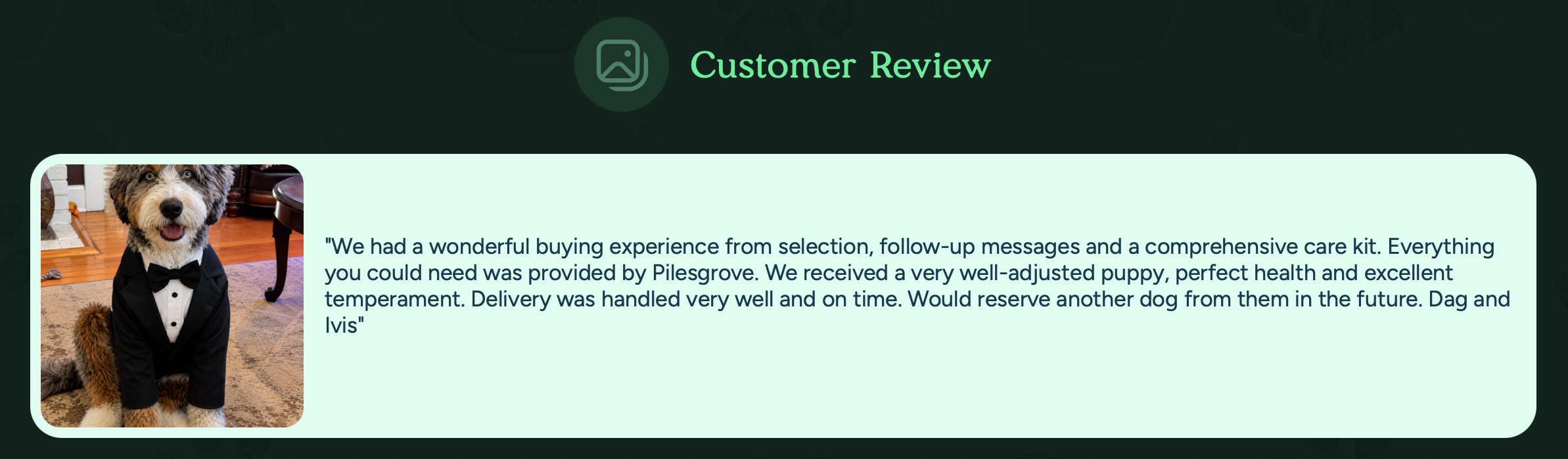
We publish our breeder standards, Code of Ethics, puppy health protocols, development plan, veterinary process, blood-evaluation information, VetScan Imagyst screening, guarantee terms, team profiles, breed guides, puppy profiles, customer photos, and verified customer reviews.
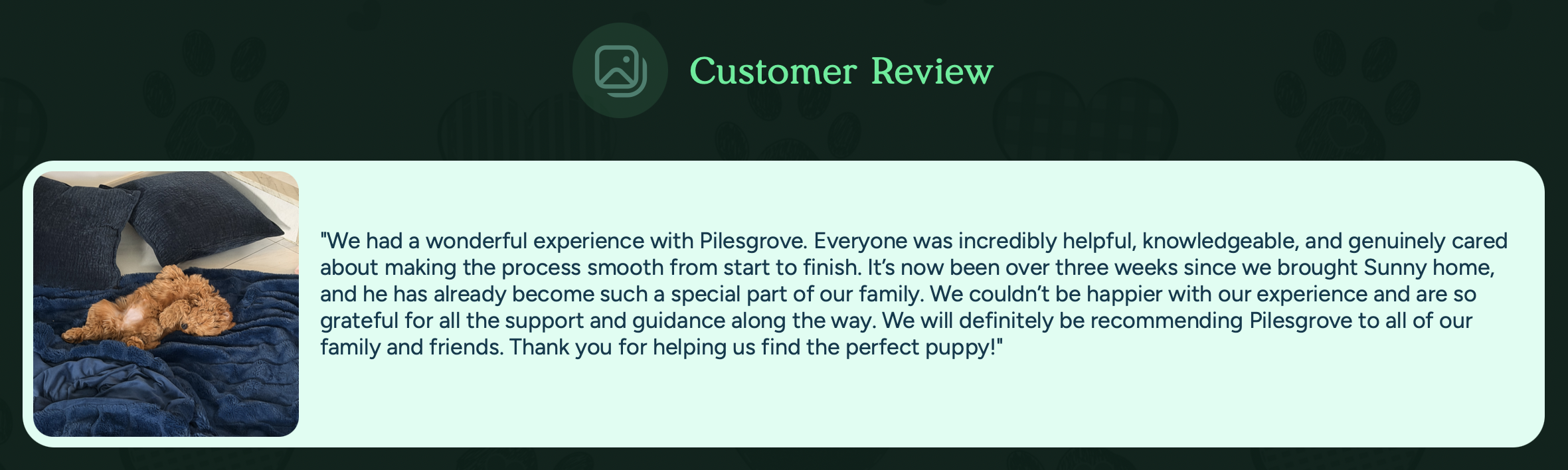
Every customer also receives complimentary access to DoctorPup, which includes puppy-care videos, educational articles, forum questions and answers, and practical guidance for life after homecoming.
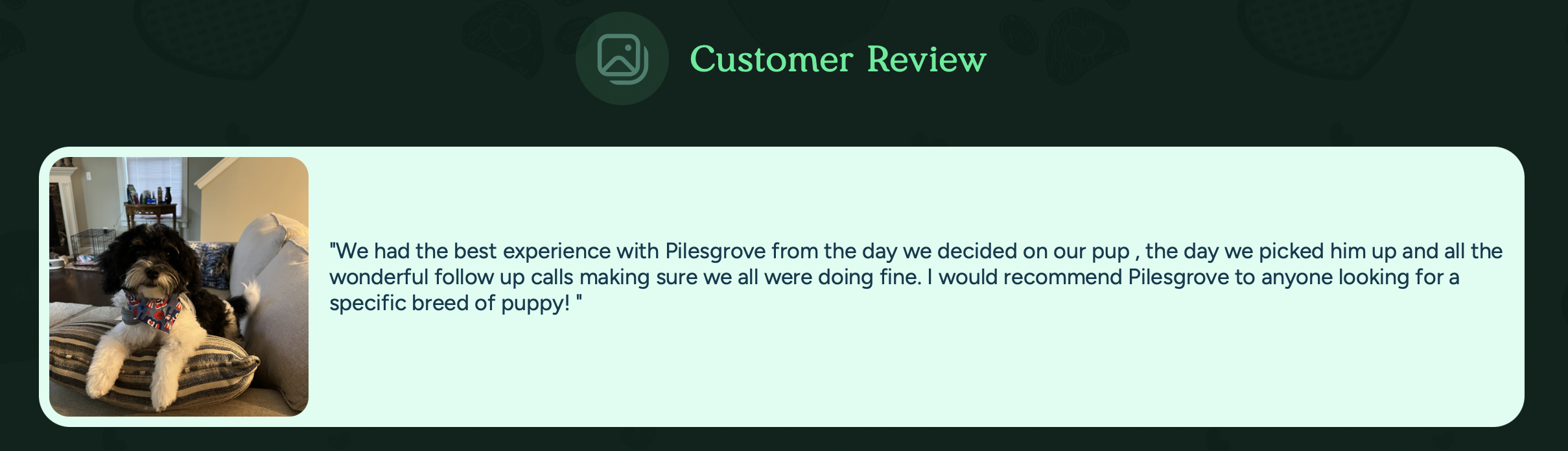
The stories families share mean a great deal to us because they show what happens after all the preparation. The puppy who was once weighed in ounces becomes someone’s shadow, playmate, comfort, and much-loved family member. That is the part of the story we work toward every day.
Pilesgrove Pups Vs a Puppy Mill
The term “puppy mill” is associated with breeding systems that prioritize volume and profit while neglecting the physical and emotional well-being of dogs. The clearest way to understand our position is to compare those commonly recognized patterns with how we approach care.
| Area | Common Puppy Mill Pattern | Pilesgrove Pups |
| Primary priority | Producing the largest number of puppies at the lowest cost | Protecting health, development, readiness, and long-term well-being |
| Parent selection | Pairings based largely onavailability or production | Breed-appropriate health screening, veterinary input, temperament, structure, coat quality, and compatibility |
| Life of parent dogs | Adult dogs may receive little personal attention and be valued mainly forbreeding | Parent dogs are cared for by breeders in home, farm facility, ranch, and homestead settings |
| Mother dogs | Repeated breeding with limited recovery or individualized care | Pregnancy wellness, preventive care, close observation, comfort, nutrition, and recovery are prioritized |
| Veterinary involvement | Limited care, often only when illness becomes severe | Veterinarians contribute from breeding decisions through pregnancy, development, and final placement |
| Neonatal care | Minimal tracking of individual puppies | Nursing, warmth, weight, condition, and development are monitored from birth |
| Early development | Little socialization or enrichment | A structured Puppy Development Plan guides handling, socialization, enrichment, and home preparation |
| Time with mom | Puppies may be separated early to speed up sales | Puppies remain with mom and littermates for at least eight weeks, and longer when needed |
| Health records | Incomplete or unavailable | Vaccinations, deworming, weight, milestones, exams, and treatment schedules are documented |
| Final health review | Puppy may be transferred with little independent evaluation | Licensed nose-to-tail exam, VetScan Imagyst screening, record review, and optional blood evaluation |
| Puppy information | Limited details and generic claims | Individual profiles include photos, videos, weight, birth date, parents, health records, milestones, and readiness information |
| Transparency | Parent information, records, and policies may be difficult to obtain | Standards, policies, health programs, profiles, reviews, parent photos, and birth information are available |
| Homecoming timing | Based on sale timing | Based on age, eating, development, health, and veterinary clearance |
| Customer relationship | Ends once payment is complete | Photo updates, pickup or delivery support, follow-up calls, care agents, emergency support, and post-reservation guidance |
| Long-term responsibility | Little or no meaningful protection | A published 10-year health guarantee with defined programs and requirements |
Why This Work Means So Much to Us
Pilesgrove Pups is not a puppy mill.
We are dog lovers, puppy caregivers, reservation specialists, veterinary professionals, educators, and support people working toward the same goal: giving every puppy the strongest beginning we can and helping each family feel prepared for the life they are about to share.
We care about the father dog whose temperament may live on in his puppies. We care about the mother who carries, delivers, nurses, cleans, teaches, and watches over her babies. We care about the smallest puppy in the litter who needs a few more days. We care about the family waiting by the phone for an update and the new owner wondering whether their puppy ate enough breakfast.
There is a great deal of serious work behind every placement.
There is also joy everywhere.
It is in the wagging tails at breakfast. The first clumsy run across the floor. The puppy who discovers their own reflection and has several strong opinions about it. The family that walks through our doors nervous and leaves carrying someone they already cannot imagine living without.
We really do have one of the best jobs in the world.
Our standards protect that joy. Our health protocols support it. Our transparency helps families trust it. And our love for the puppies is what makes every bit of the work worthwhile.
What To Read Next
30 Most Asked Questions About Pilesgrove Pups Answered
Questions are welcome at Pilesgrove Pups. In fact, some of our favorite conversations begin with a long list of them. Families want to know where puppies are raised, how the parent dogs are chosen, what veterinary care puppies receive, whether they can visit us,... Read More
Is Pilesgrove Pups Legit? How to Verify Us
Yes, Pilesgrove Pups is legitimate. We are a real team of dog lovers working from a physical location in Pilesgrove, New Jersey. We work closely with reputable breeders, licensed veterinarians, puppy care specialists, reservation agents, and delivery professionals... Read More
Frequently Asked Questions
Is Pilesgrove Pups a puppy mill? No. Pilesgrove Pups works with a network of breeders under defined health, care, documentation, veterinary, development, and ethical standards. Puppies receive structured early care, stay with their mothers for at least eight weeks, complete veterinary and diagnostic screening, and are supported by continued customer care and a 10-year health guarantee.
Where are Pilesgrove Pups puppies raised? Puppies are raised by participating breeders in home, farm, ranch facility, and country-homestead settings. They receive daily human interaction, maternal care, veterinary-guided health support, and age-appropriate socialization before transitioning to Pilesgrove Pups for final preparation.
Can I visit Pilesgrove Pups before reserving a puppy? Yes. Local puppy viewings and pickups are available by appointment. Appointments allow our team to prepare suitable puppies for your visit while keeping sanitation and limiting unnecessary exposure for young puppies with developing immune systems.
Can I see information about a puppy’s parents? Yes. Parent details are included on individual profiles, and families can request parent photos and birth documentation. Some records are shared privately to prevent puppy photos and breeder documents from being copied by fraudulent websites.
How old are Pilesgrove Pups puppies when they go home? Puppies stay with their mother and littermates until they are at least eight weeks old. A puppy may stay longer if the puppy is small, needs more time to eat independently, has not met a developmental milestone, or has not received final veterinary clearance.
What health checks do Pilesgrove Pups puppies receive? Health monitoring begins at birth and includes weight tracking, preventive deworming, age-appropriate vaccinations, veterinary examinations, and documented development. Before homecoming, puppies receive a final nose-to-tail veterinary examination and VetScan Imagyst fecal screening. An optional advanced blood evaluation is also available.
Does Pilesgrove Pups provide a health guarantee? Yes. Puppies are supported by a 10-year health guarantee with programs covering qualifying hereditary or congenital conditions, initial illness protection, and certain medical reimbursements. Families must follow the published insurance, veterinary-care, notification, and documentation requirements to maintain eligibility.
Does Pilesgrove Pups offer support after homecoming? Yes. Families receive transition instructions, medical records, microchip information, follow-up calls, access to puppy care agents, an urgent puppy health number, and complimentary DoctorPup educational resources. Our post-reservation support team can also help with feeding, training, care, and health-guarantee questions.