





Published Wednesday, August 19, 2026 by Pilesgrove Pups in New Puppy, Dog Care & Safety
When families ask whether Pilesgrove Pups are healthy, they are usually asking for more than the result of one veterinary exam. They want to know what happened before that final exam. They want to know how the parents were evaluated, how the mother was cared for, what happened during the puppy’s first weeks, which preventive treatments were given, whether growth was tracked, what screening was completed, and what information will follow the puppy home.
Those are exactly the questions we believe families should ask.
At Pilesgrove Pups, we work within a coordinated health program that follows puppies from the decisions made before breeding through pregnancy, birth, early development, veterinary care, pre-placement evaluation, and the transition into their new family. Health records, veterinary input, parent screening, preventive care, daily observation, diagnostic testing, and development all contribute to the picture we build around each puppy.
Our goal is to give each puppy a strong, carefully monitored start and to give families meaningful information about the puppy they are bringing home.
That work begins with the parents.
Table of Contents
- Healthy Puppies Start With Thoughtful Breeding Decisions
- The Mother’s Care Is Part of the Puppy’s Health Story
- The First Weeks Are Closely Followed
- Preventive Care Starts Early
- Nutrition, Growth, and Daily Care Work Together
- Development Gives Us More Information About the Whole Puppy
- Health Records Connect the Different Stages of Care
- Veterinary Care Runs Through the Process
- Every Puppy Receives a Nose-to-Tail Veterinary Examination
- VetScan Imagyst Looks Beyond What We Can See
- Families Can Add an Advanced Blood Evaluation
- What the Different Health Checks Tell Us
- A Puppy’s Readiness Is Based on the Whole Picture
- Families Receive a Health History, Not Just a Puppy
- Your Veterinarian Continues the Health Story
- The 10-Year Health Guarantee Extends Our Commitment
- What We Mean When We Talk About Healthy Puppies
Healthy Puppies Start With Thoughtful Breeding Decisions
A puppy’s health story starts long before there is a puppy profile to look at.
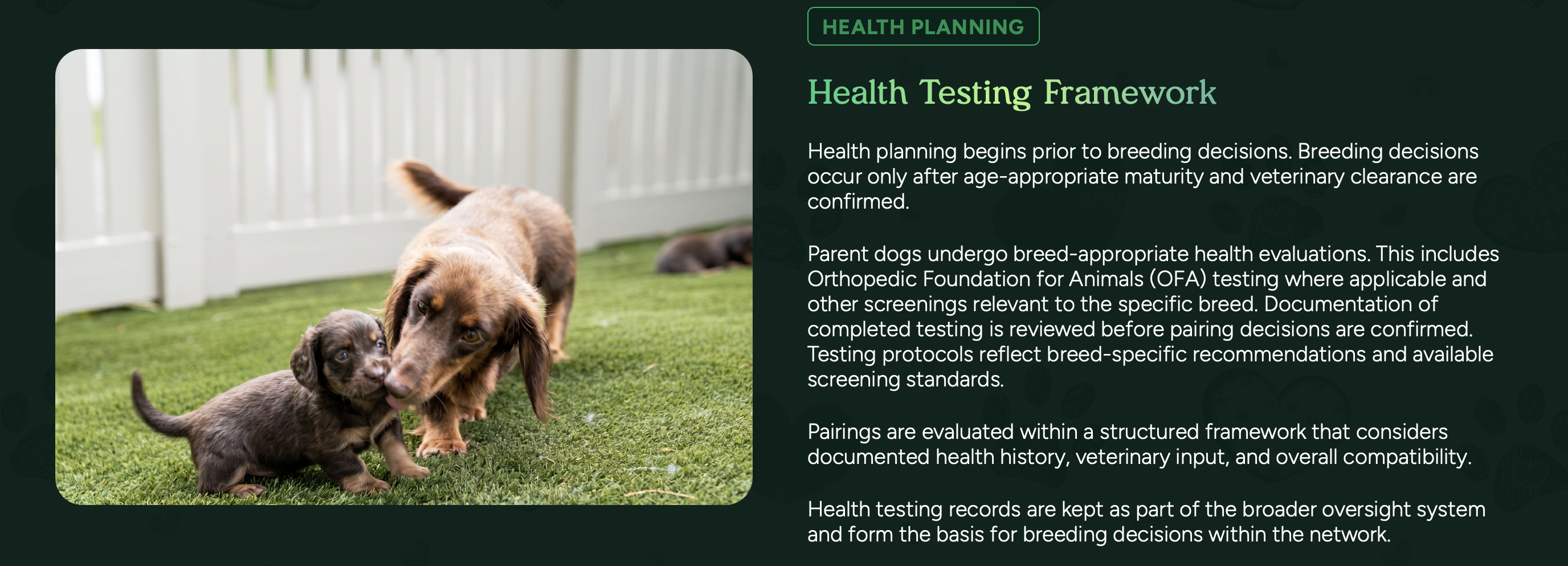
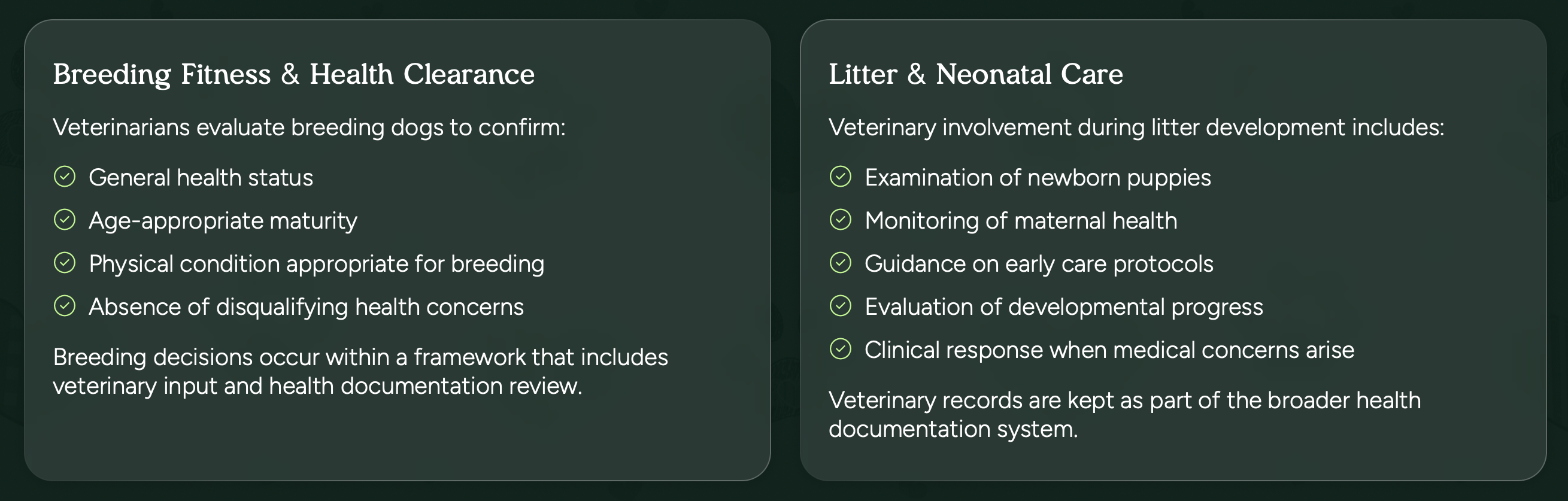
Before a pairing moves forward, parent dogs are evaluated for health, maturity, and breeding suitability. Breed-appropriate health screening forms part of that process, including Orthopedic Foundation for Animals testing where applicable or equivalent screening suited to the breed. Veterinary input and documented health history are reviewed alongside those results.
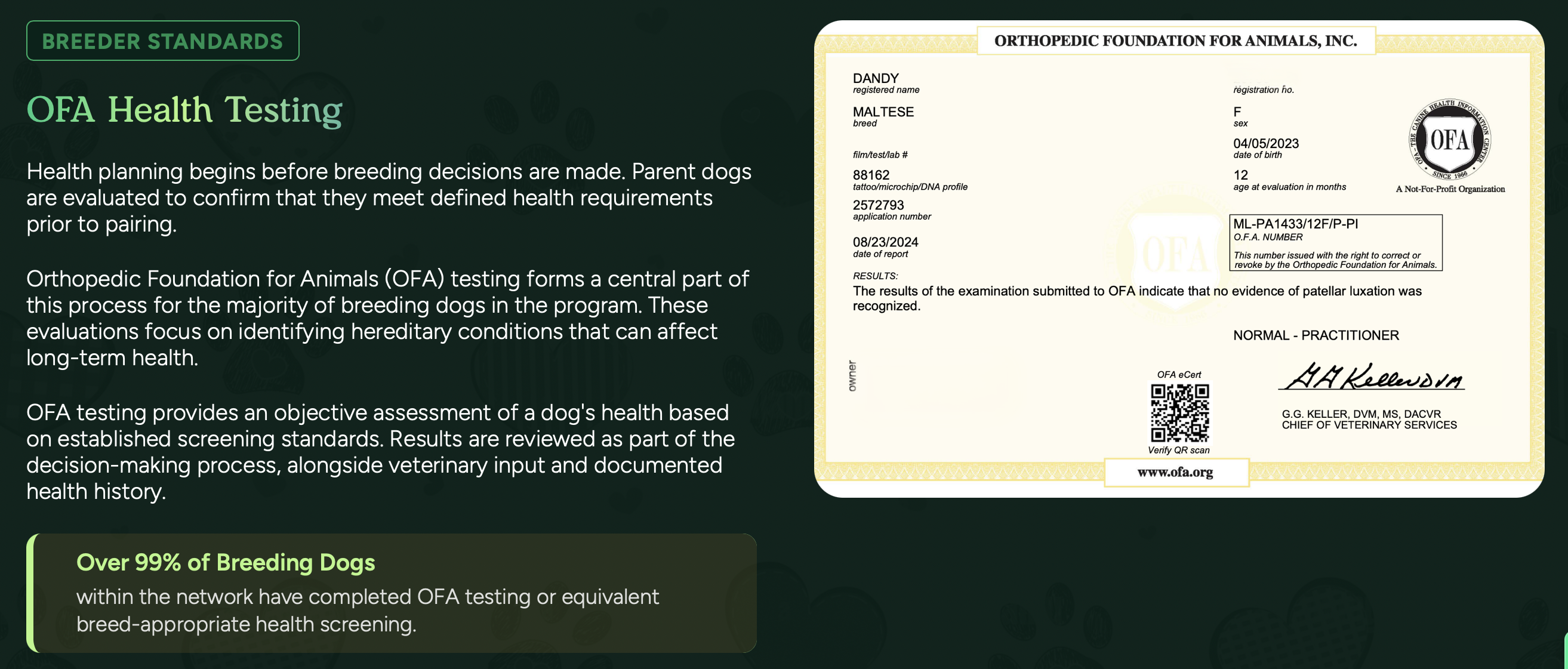
More than 99% of breeding dogs in the network have completed OFA testing or equivalent breed-appropriate health screening. And we use that information to guide breeding decisions rather than relying on appearance alone. A beautiful coat, appealing color, or desirable size can catch someone’s eye, but health planning has to look deeper. Parent history, physical condition, veterinary findings, temperament, structure, and compatibility all help shape the decision behind a litter.
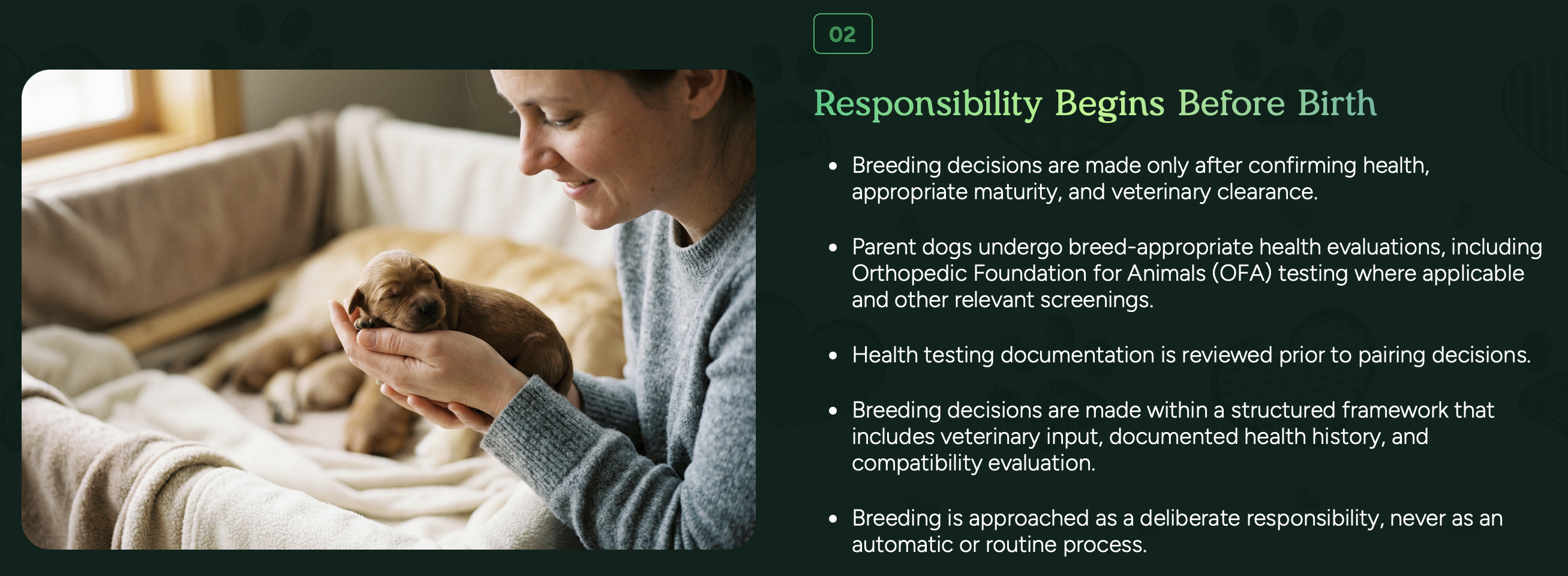
Health screening gives us useful information about risks that can sometimes be identified before breeding. Veterinary assessment adds another layer of clinical judgment, while documented history helps show how a dog has developed over time. Together, these pieces give the puppies a more informed starting point.
Learn about our Standards, Health & Oversight at Pilesgrove Pups
The Mother’s Care Is Part of the Puppy’s Health Story
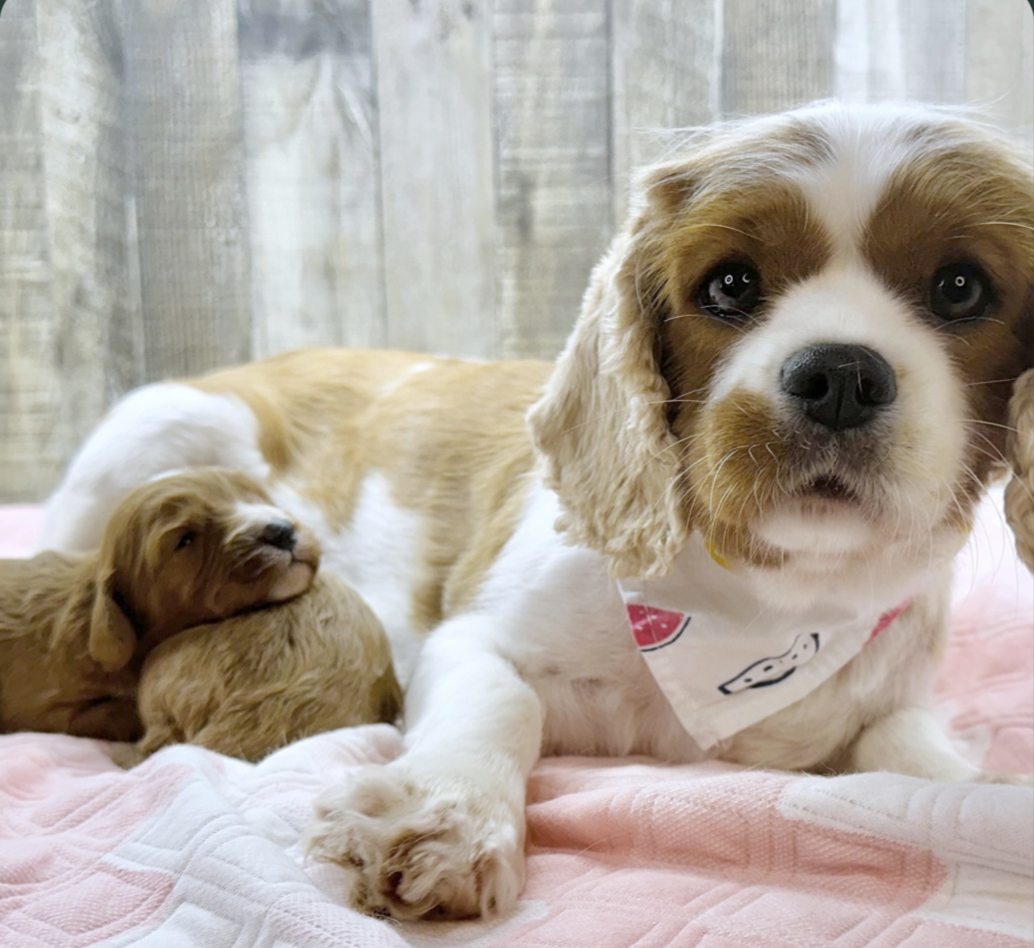
Once a pregnancy begins, attention shifts toward supporting both the mother and the developing litter.
Maternal care includes veterinary-guided vaccination and preventive protocols designed to support her health while also contributing to the early immune protection puppies receive through their mother. The approach includes an eight-way maternal vaccination schedule, rabies vaccination according to veterinary guidance, Bordetella protection, and a three-day Panacur deworming course in preparation for delivery.
Her everyday care runs alongside those medical protocols. Nutrition, fresh water, cleanliness, rest, comfort, and close observation support her through pregnancy, delivery, nursing, and recovery. The people caring for her know her normal appetite, behavior, energy, and routines, which helps changes stand out when closer attention or veterinary guidance is needed.
After delivery, the mother provides the puppies with warmth, nutrition, cleaning, comfort, and their earliest interaction with another dog. We support that relationship rather than trying to rush puppies through the newborn stage. Those first days are intentionally quiet.
Explore Breeder Standards at Pilesgrove Pups
The First Weeks Are Closely Followed
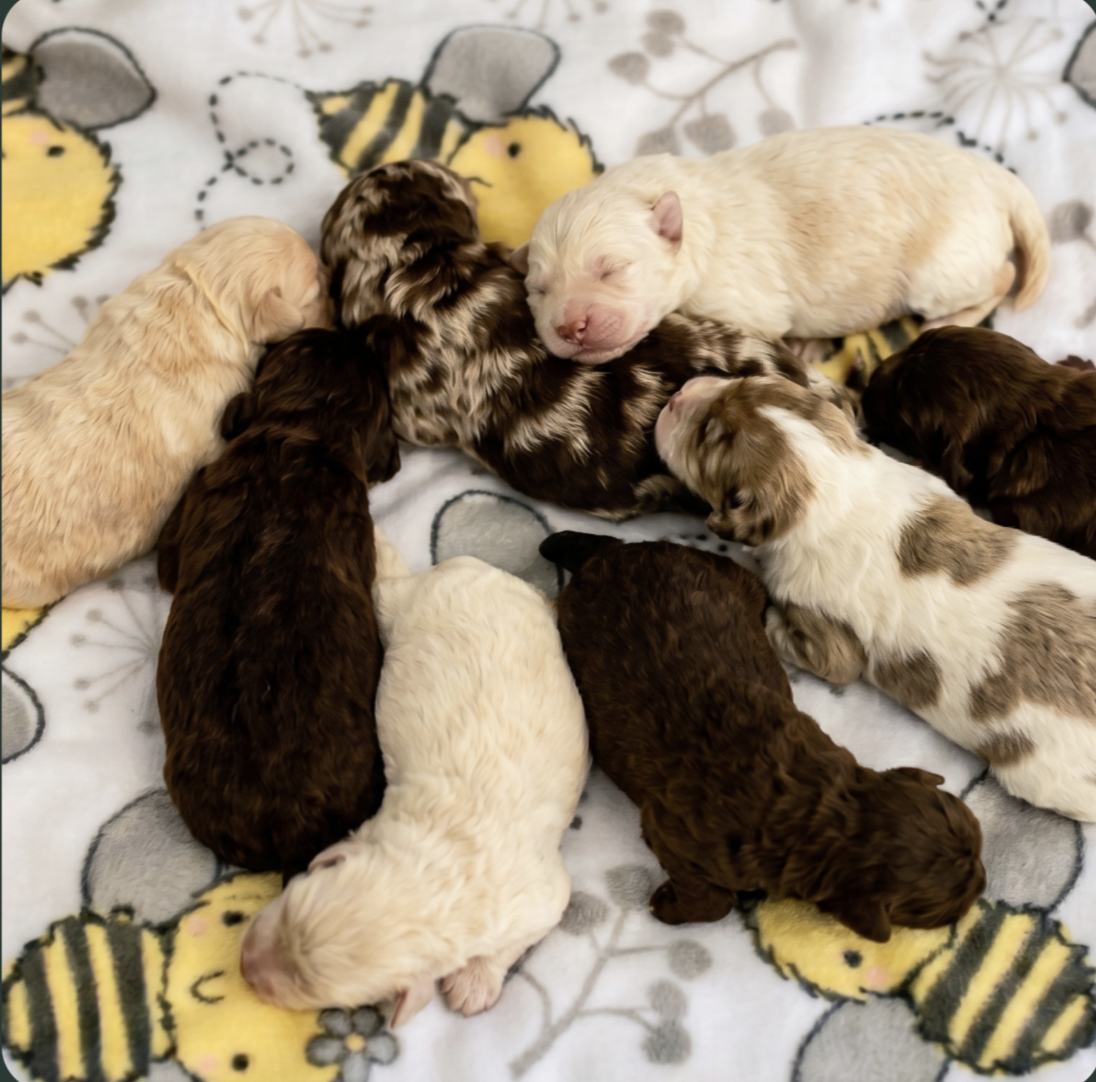
Newborn puppies spend most of their time nursing and sleeping, but a great deal is happening beneath that simple routine. We follow weight progression, nursing, general condition, warmth, cleanliness, and physical stability while the litter settles into its first stage of development. Gentle handling is introduced with care, while the mother-puppy bond is at the center of those early days.
Individual tracking helps us see the puppies as individuals rather than treating the entire litter as though everyone grows at the same pace. The do not. One puppy may naturally be smaller. Another may gain faster. A puppy who is progressing steadily along their own pattern may look different from a littermate without creating concern. Records give us context and make it easier to recognize a meaningful change.
That information follows the puppy through the weeks ahead.
A Puppy’s First 8 Weeks at Pilesgrove Pups
Preventive Care Starts Early
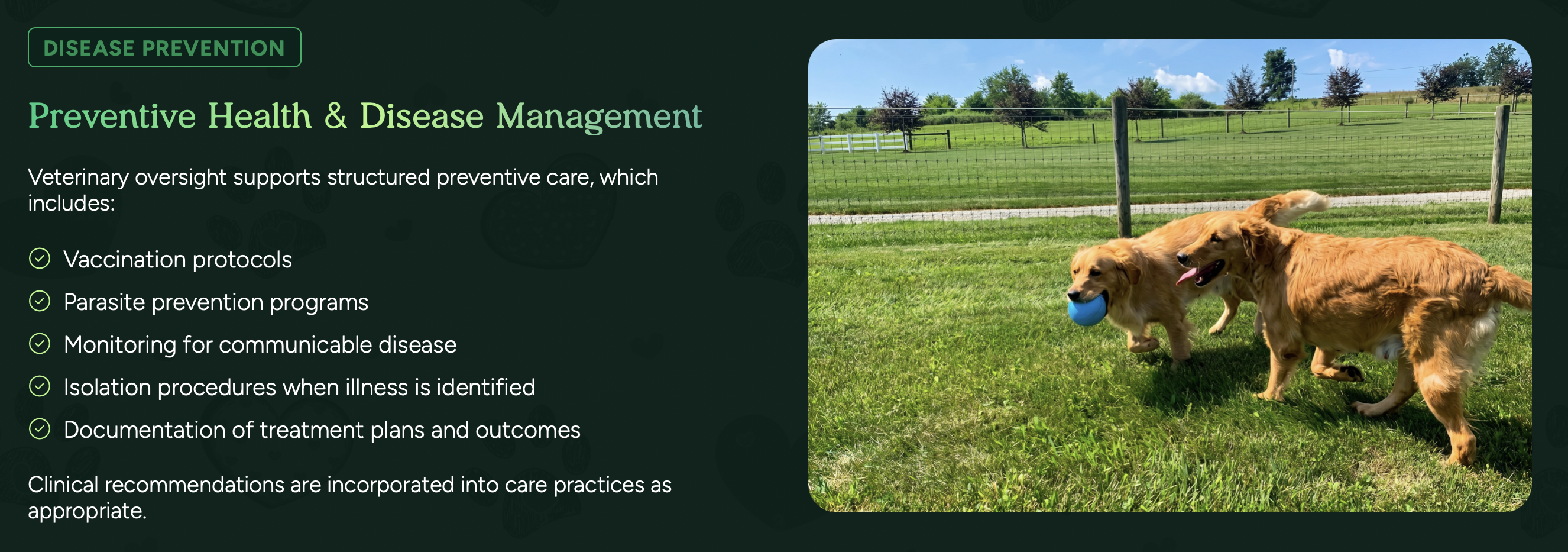
Parasite control begins at approximately two weeks of age. Puppies receive Pyrantel Pamoate at regular two-week intervals while they stay in breeder care. The protocol is designed to manage common intestinal parasites such as roundworms and hookworms during a period of rapid growth.
As puppies grow, preventive care expands with them. Age-appropriate vaccinations begin at approximately eight weeks. The current schedule includes a five-way vaccine that covers distemper, adenovirus types 1 and 2, parainfluenza, and parvovirus, along with Bordetella vaccination. Puppies who stay in care longer continue vaccinations at appropriate intervals as their immune development progresses.
These treatments are documented alongside the puppy’s other health information so that the care completed during the early weeks can be reviewed later.
Learn about Puppy Health at Pilesgrove Pups
Nutrition, Growth, and Daily Care Work Together
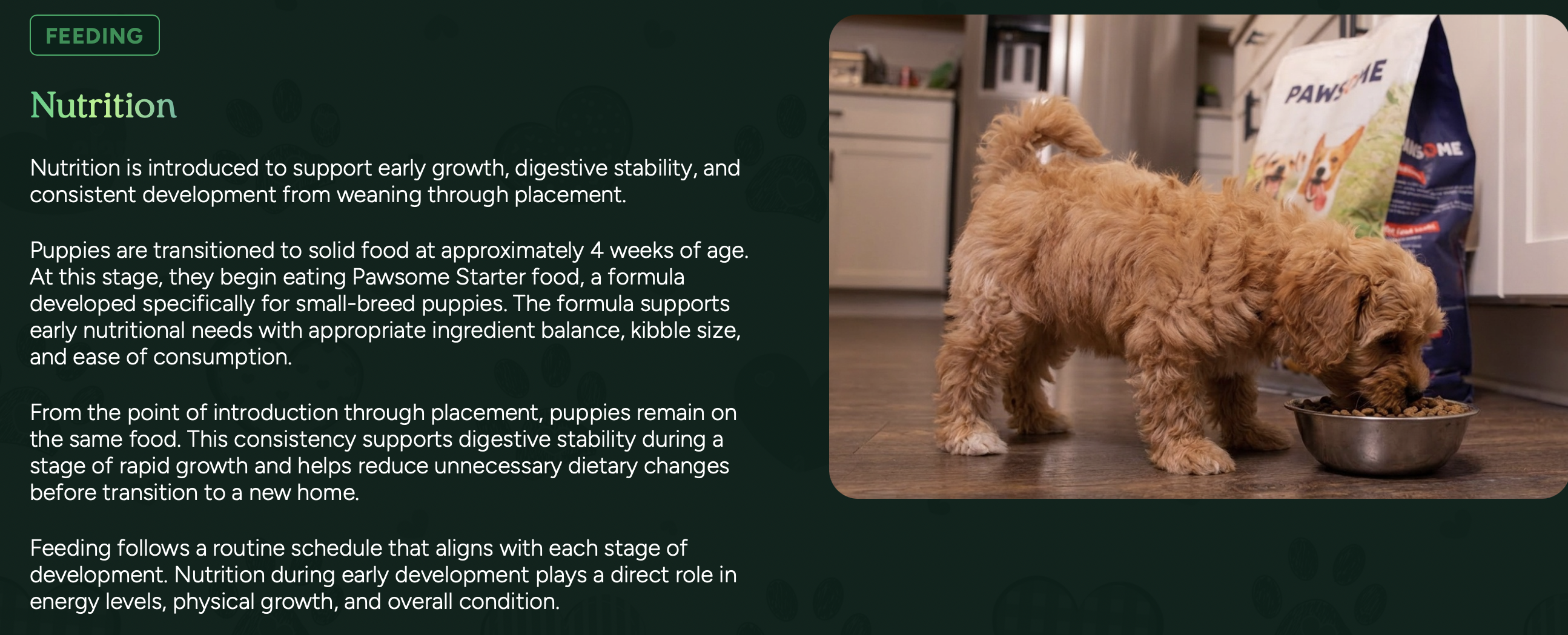
At around four weeks, puppies begin the gradual transition toward solid food. Pawsome Starter food is introduced during weaning and stays consistent through placement. Keeping the diet stable during this stage supports digestion while puppies are growing quickly and adjusting from nursing to independent eating.
Feeding also gives us another opportunity to observe the individual puppy. Appetite, weight, body condition, activity, and general development can be viewed together.

Routine grooming begins gradually as well. Ear care is introduced at approximately four weeks, with bathing and nail trimming beginning around six weeks or as needed. These routines support hygiene and give puppies early experience with the kind of handling they will encounter throughout life.
Health care during these weeks is often very ordinary. It is good nutrition, clean surroundings, preventive treatment, careful records, appropriate handling, and people paying attention day after day. This consistency gives the more technical medical evaluations something solid to build on.
See the Code of Ethics behind Pilesgrove Pups
Development Gives Us More Information About the Whole Puppy
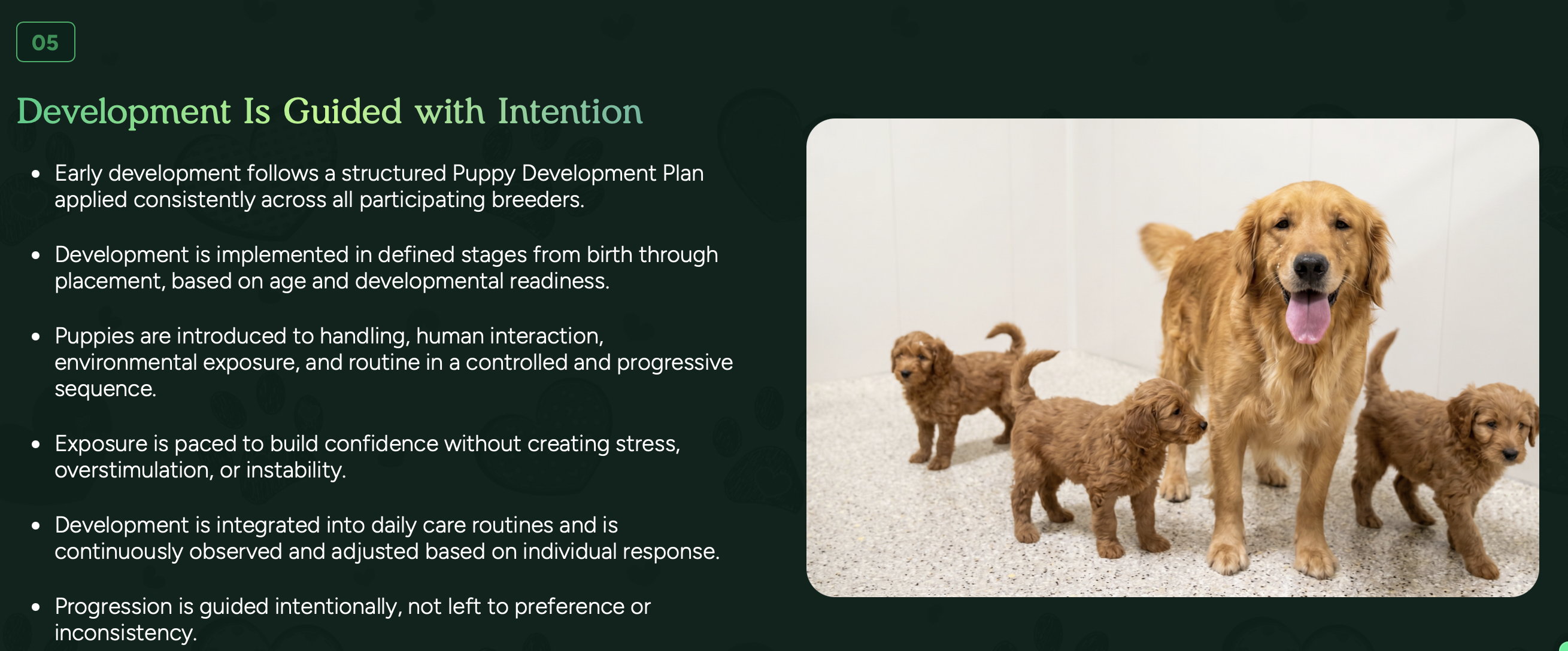
Physical health and development are followed together. The Puppy Development Plan guides puppies through age-appropriate stages of handling, social interaction, environmental exposure, enrichment, routines, and individual attention. Progress is observed and recorded as puppies grow from newborns into more active, responsive young dogs.
A puppy’s everyday behavior can add context to the health information already being collected. Comfortable movement, steady growth, appetite, energy, interaction, and response to handling all help build familiarity with that individual puppy.
These observations are not substitutes for veterinary medicine. They help us know the puppy well enough to recognize when something falls outside their usual pattern.
The structure stays consistent while the pace adjusts to the puppy. Some puppies approach a new experience quickly. Others prefer more time. We follow development with enough flexibility to let the puppy show us what they are ready for.
Explore the Puppy Development Plan at Pilesgrove Pups
Health Records Connect the Different Stages of Care
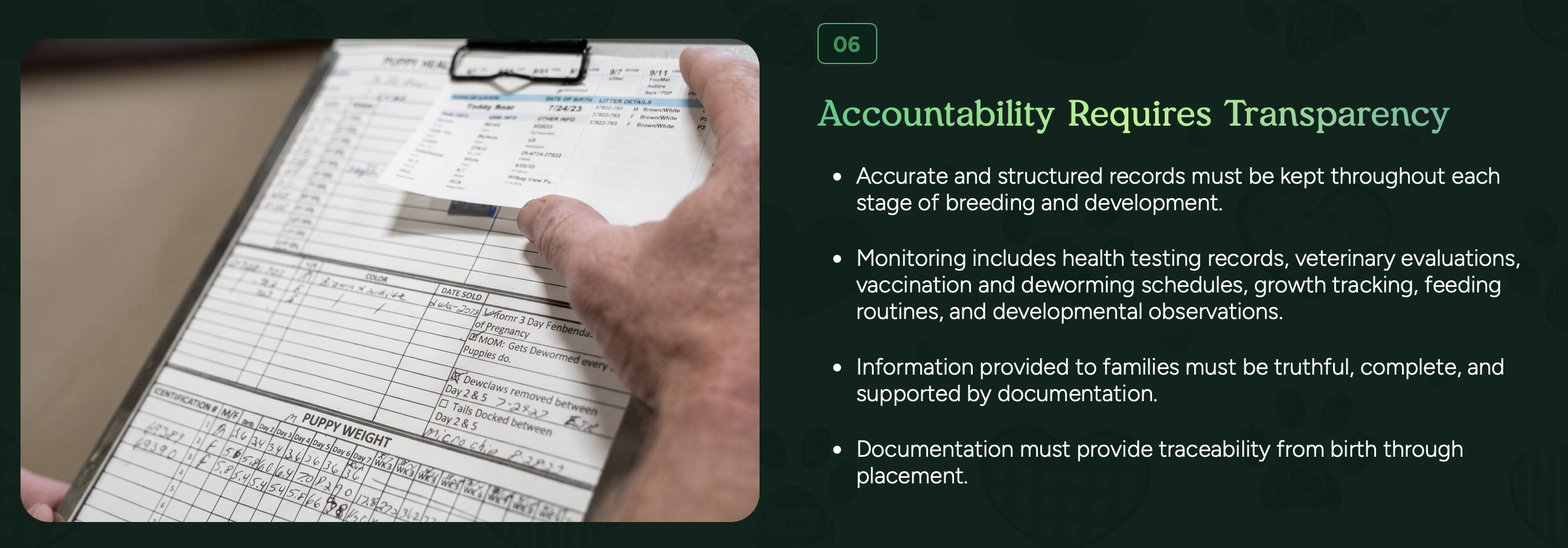
One of the strongest parts of our health process is continuity. Tracking during early development include areas such as weight and growth, feeding routines, deworming, vaccinations, veterinary reports, health observations, and development. These allow us to follow a puppy’s progress across time.
A single veterinary examination tells us how the puppy presents on one particular day. A history of growth, preventive care, observation, and veterinary findings gives that examination much more context. It also helps the next person involved in the puppy’s care understand what came before.
The early history, clinical information, final health review, and homecoming documentation are connected.
Is Pilesgrove Pups Safe? How We Protect Puppies and Families
Veterinary Care Runs Through the Process
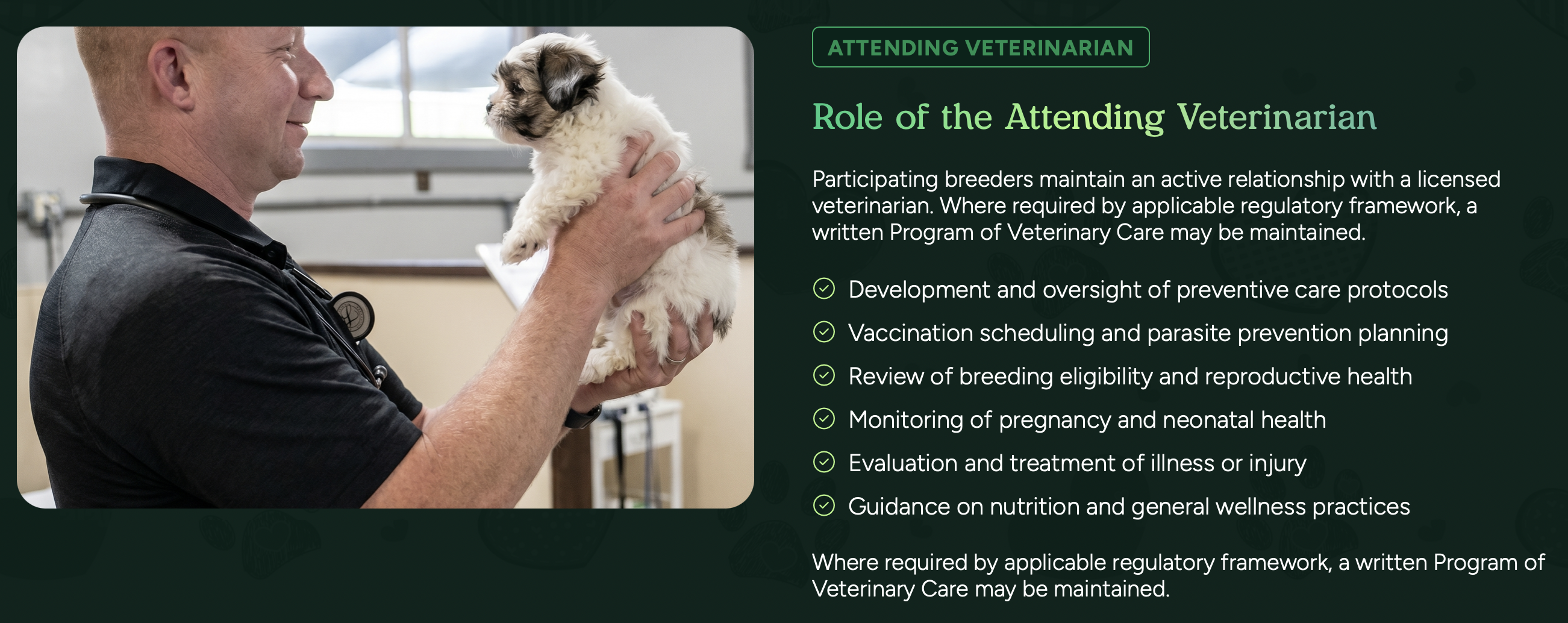
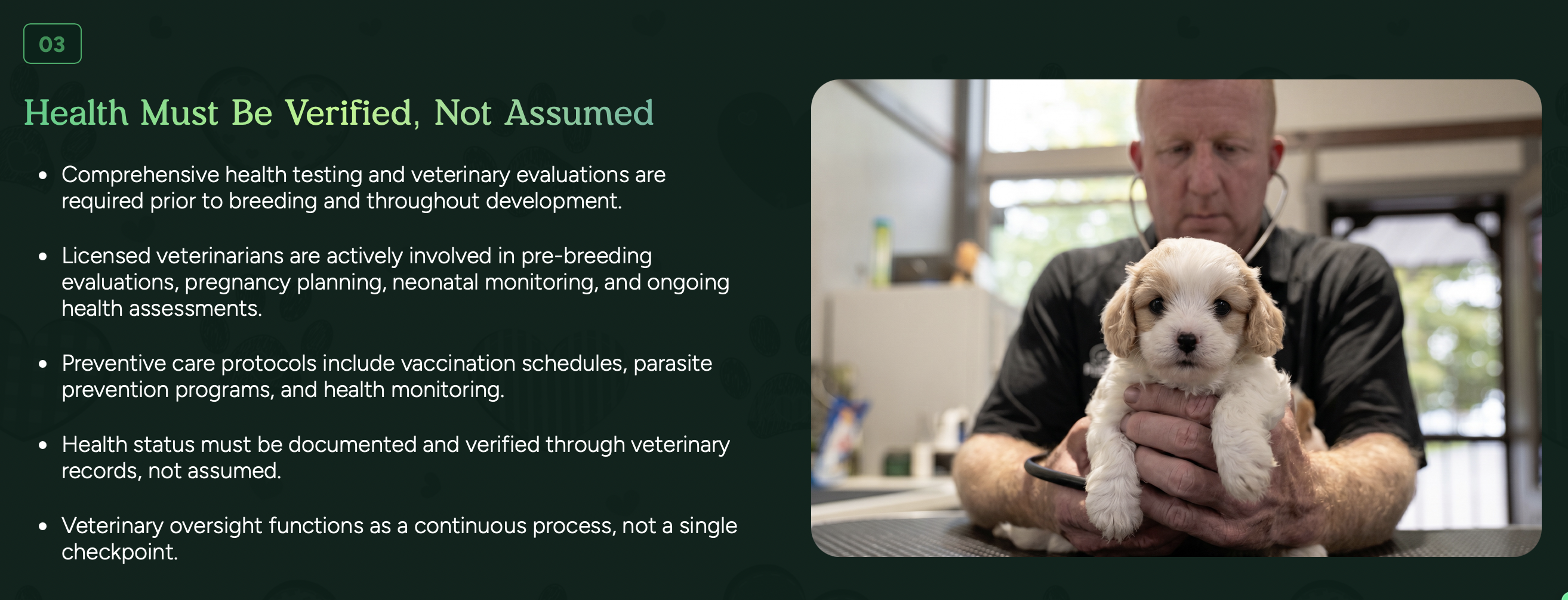
Licensed veterinarians contribute throughout the health program rather than appearing only at the end for one final pre-placement examination.
Veterinary involvement includes breeding evaluations, maternal health, neonatal development, preventive-care planning, vaccination and parasite-control protocols, clinical assessment, and treatment when a health concern requires medical attention. This partnership brings an independent medical perspective to the observations collected through daily care.
The people working with the dogs know their routines and history. Veterinary professionals bring clinical expertise, diagnostic tools, and medical judgment. When those two views are combined, health decisions can draw from both long-term observation and professional examination.
Dr. Gary Rybka, DVM, contributes more than 35 years of veterinary experience with a focus on pediatric health and early development, while Dr. Aaron J. Wise, DVM, brings expertise in reproductive health, population medicine, and breeding-program management. Registered Veterinary Technician Valerie Maurer also supports clinical processes, preventive-care protocols, documentation, and oversight. Their involvement supports the broader health process from breeding decisions through puppy development and preparation for placement.
30 Most Asked Questions About Pilesgrove Pups Answered
Every Puppy Receives a Nose-to-Tail Veterinary Examination
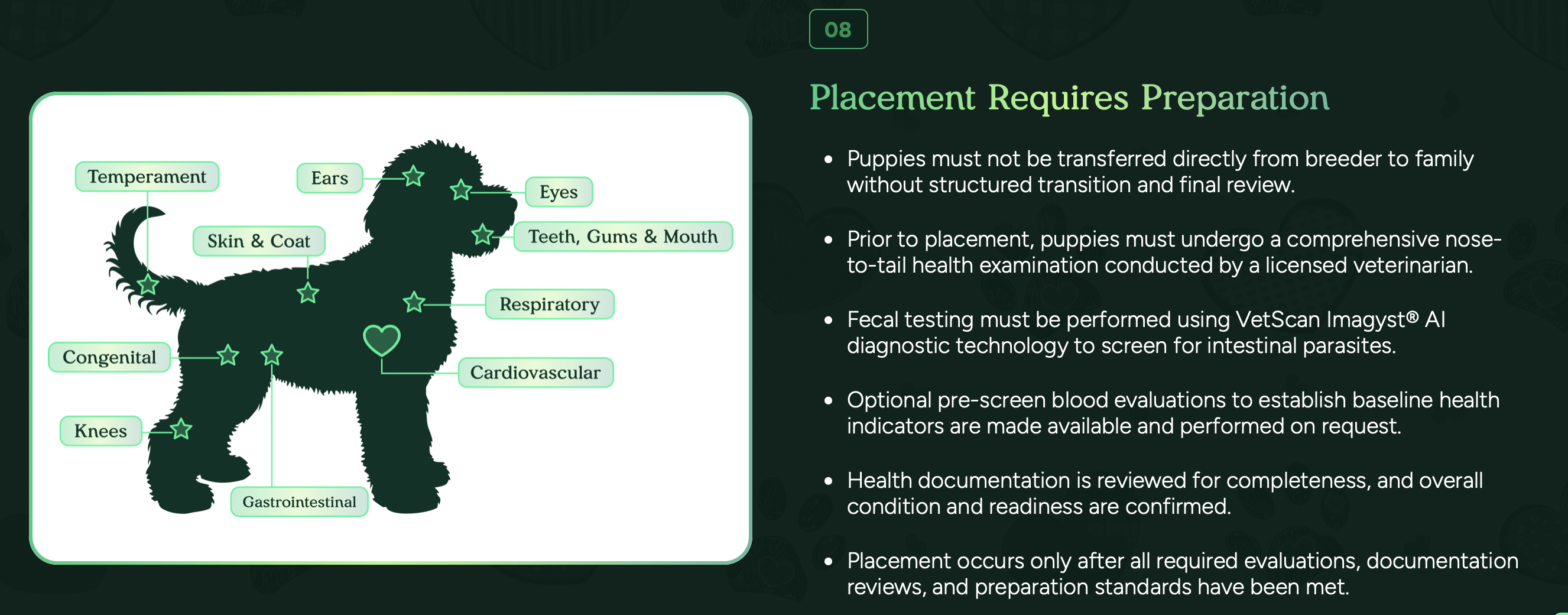
Before placement, each puppy receives a comprehensive physical examination from a licensed veterinarian. The examination includes the heart and lungs, eyes and ears, oral health, mobility and physical structure, skin and coat, body condition, and overall development. The veterinarian evaluates whether the puppy’s observable health and physical progress are consistent with age and expected development.
The examination also connects back to the records already gathered. Vaccinations, parasite prevention, growth, health observations, and previous veterinary information all help give the veterinarian a fuller picture of the puppy being examined.
Is Pilesgrove Pups a Puppy Mill? 35 Reasons Why We Are Not
VetScan Imagyst Looks Beyond What We Can See
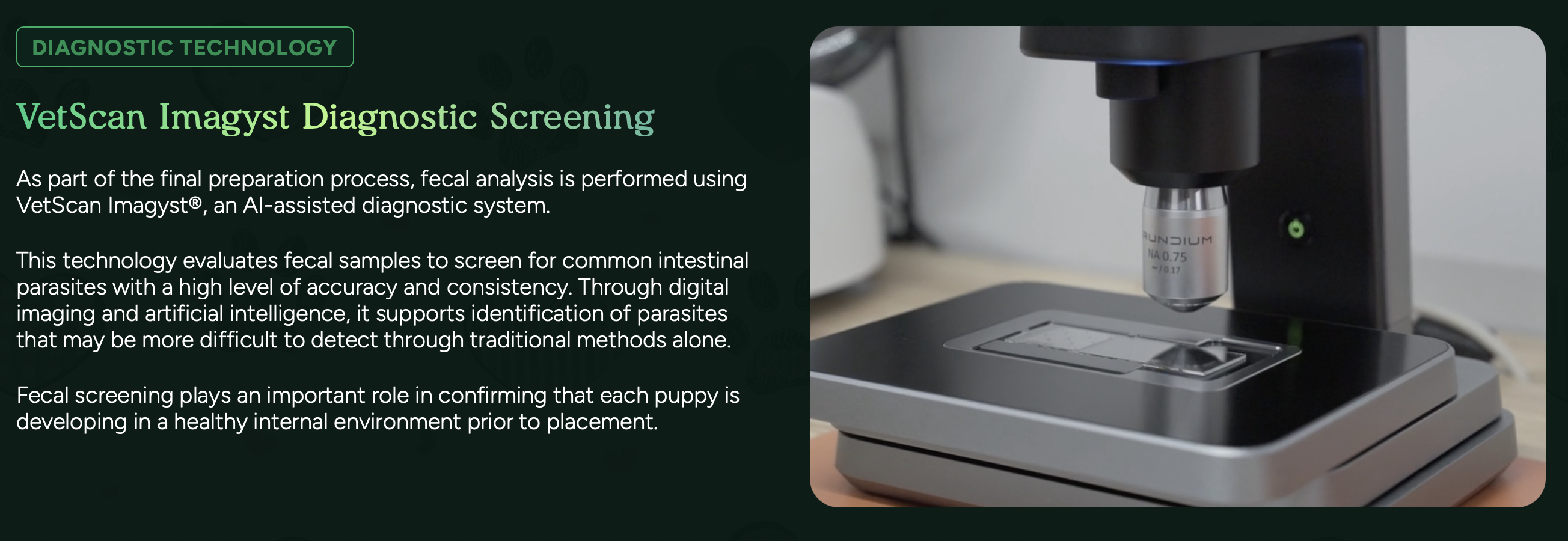
Fecal analysis using VetScan Imagyst is completed before placement.
VetScan Imagyst uses digital imaging and artificial intelligence to analyze fecal samples for common intestinal parasites. The technology can assist with the identification of parasites including Giardia, coccidia, hookworms, roundworms, whipworms, and tapeworms.
A puppy can look comfortable, energetic, and outwardly well while carrying an intestinal parasite, which is why diagnostic fecal screening adds useful information to the physical examination and deworming history.
When screening identifies a concern, that information can guide the appropriate response before placement. The value of VetScan Imagyst is straightforward: it helps us look for something ordinary observation cannot reliably show.
Learn about VetScan Imagyst Testing at Pilesgrove Pups
Families Can Add an Advanced Blood Evaluation
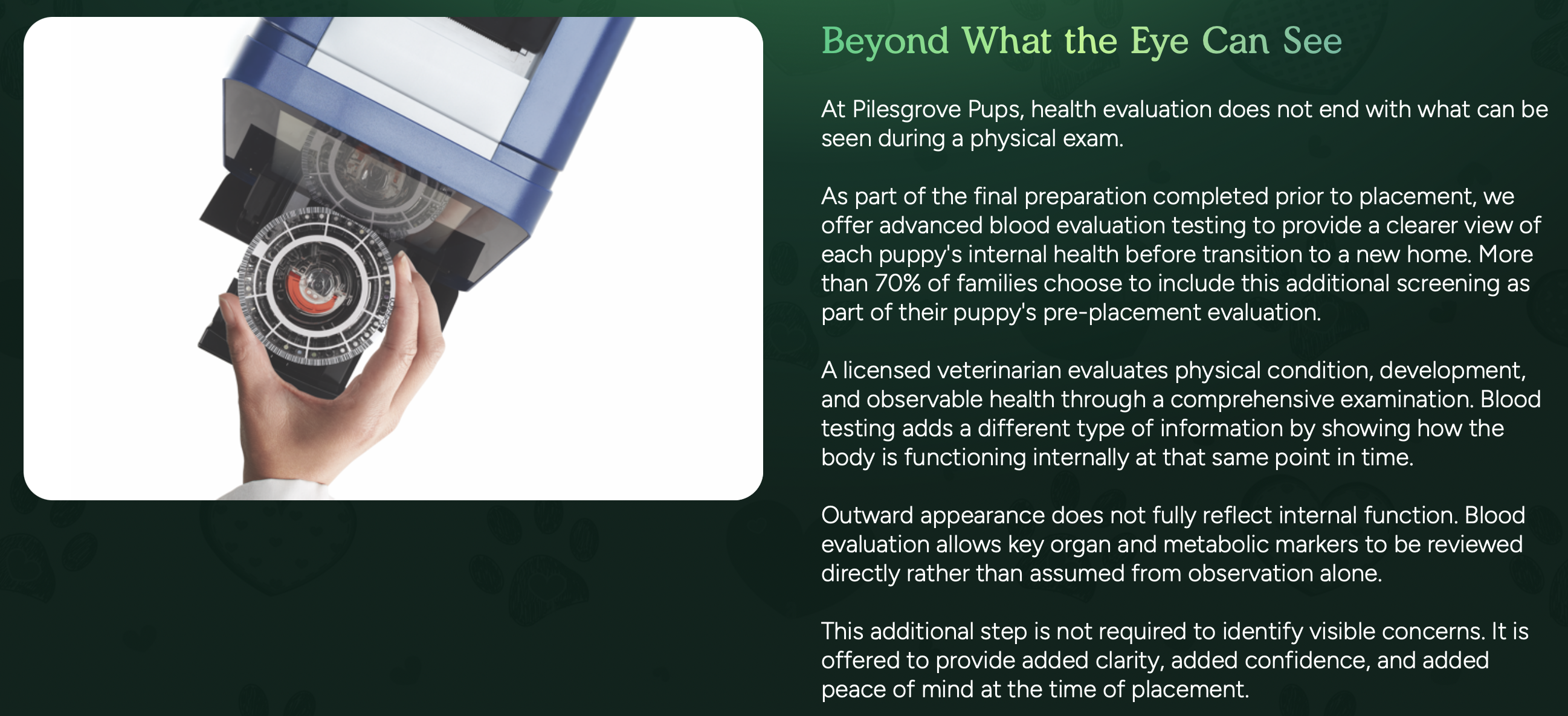
Families also have the option of adding an advanced blood evaluation before placement. The evaluation looks at markers related to liver function, kidney function, glucose balance, protein levels, hydration, and overall physiological stability. The chemistry profile includes values such as ALP, ALT, BUN, creatinine, glucose, and total protein. Additional testing may be used when a veterinarian needs more information.
The blood evaluation adds laboratory data to the information already available through health history and physical examination.
Its role is different from VetScan Imagyst. Fecal analysis screens for intestinal parasites, while blood testing offers a view of selected internal markers. The veterinary examination then evaluates the puppy clinically. Together, they answer different health questions.
Learn about Advanced Blood Testing Options at Pilesgrove Pups
What the Different Health Checks Tell Us
Families sometimes see words such as health tested, vet checked and screened used interchangeably. We prefer to explain what each part actually does.
| Health Step | What It Helps Us Understand |
| Parent health screening | Helps guide breeding decisions and identify breed-related or hereditary areas of concern |
| Veterinary breeding evaluation | Adds clinical input when considering breeding fitness and health history |
| Maternal care | Supports the mother through pregnancy and the puppies during their earliest stage |
| Growth and weight tracking | Shows how an individual puppy progresses over time |
| Parasite prevention | Helps manage common intestinal parasites during early development |
| Vaccination | Provides age-appropriate protection against selected infectious diseases |
| Daily health records | Connect appetite, growth, routine care, veterinary findings, and development |
| Nose-to-tail veterinary exam | Assesses observable physical health and development before placement |
| VetScan Imagyst | Screens fecal samples for common intestinal parasites |
| Optional blood evaluation | Adds laboratory information about selected internal health markers |
| First family veterinary visit | Gives the family’s veterinarian an independent starting point for continued care |
Each layer adds information. Parent screening speaks to the beginning of the health story. Daily records show progression. Veterinary examination gives a clinical assessment. Diagnostic screening can reveal concerns that are difficult to see from the outside.
Health is strongest when those pieces are read together.
How Is Pilesgrove Pups Different From Other Puppy Sources?
A Puppy’s Readiness Is Based on the Whole Picture
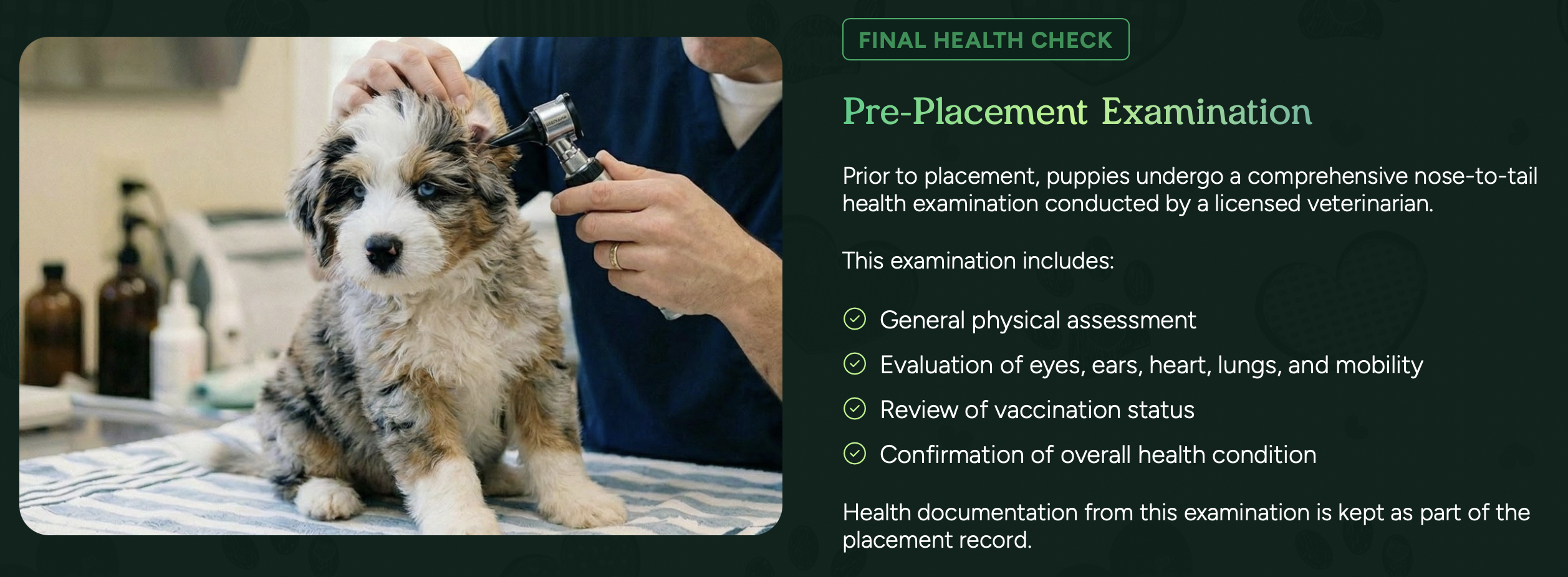
Homecoming is exciting, but the calendar is only one part of deciding when a puppy is ready. The process considers health, development, documented care, and the required evaluations before placement. Puppies spend their early weeks progressing through structured stages of growth and preparation.
When a health concern appears, veterinary evaluation and appropriate care guide what happens next. That may involve treatment, additional testing, observation, or an adjustment to the placement timeline depending on the individual situation.
Our focus stays on the puppy in front of us.
A family may already have the bed ready, the veterinarian chosen, and a name that has appeared on several personalized items. We share that excitement, while the puppy’s health and readiness continue to guide the final steps.
Is Pilesgrove Pups a Puppy Broker? How Our Puppy Placement Process Works
Families Receive a Health History, Not Just a Puppy
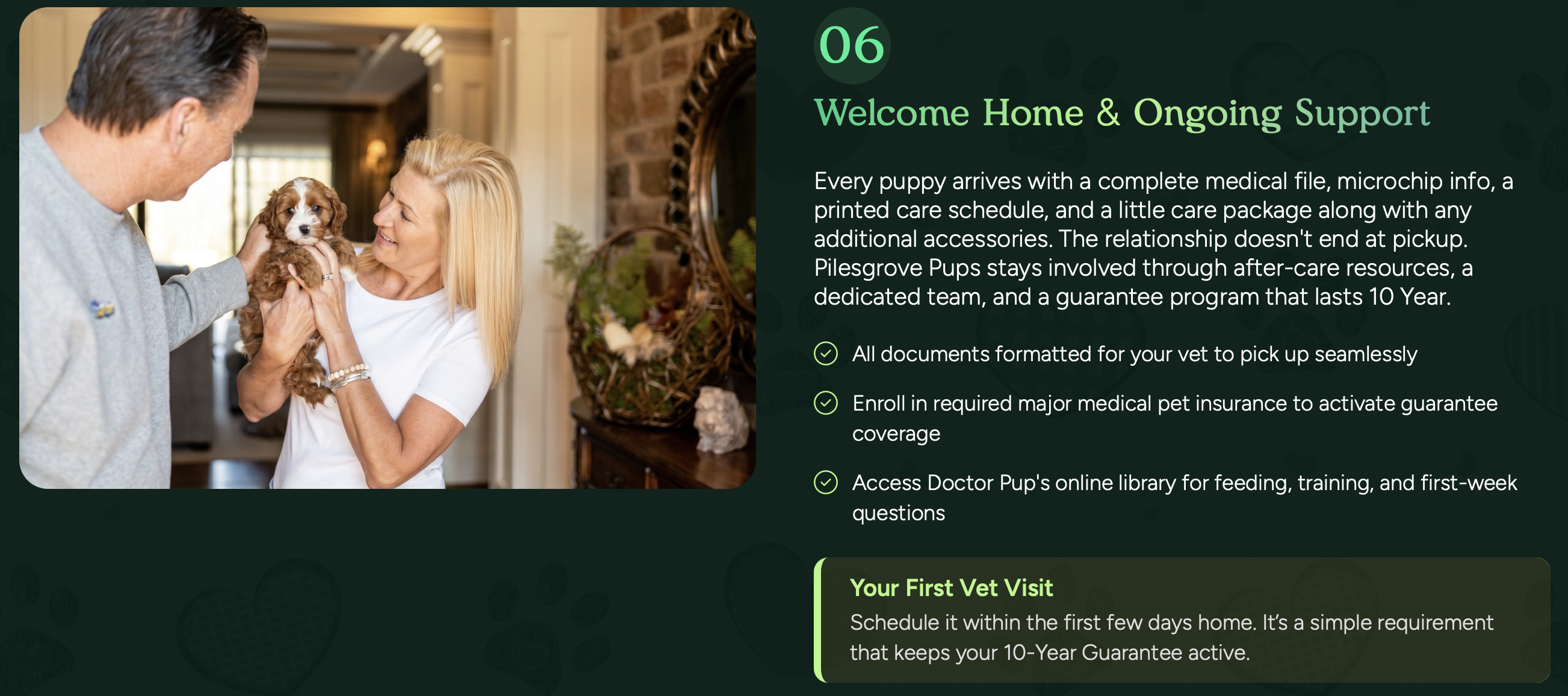
Homecoming also marks the transfer of useful health information. Families receive records that help their veterinarian understand the care completed before arrival and plan the next stage. The information includes vaccination and deworming history, veterinary documentation, microchip details, and care guidance.
We want the family’s veterinarian to have a clear starting point. The continuity reduces guesswork and helps the first appointment focus on the puppy’s current condition, future vaccination schedule, parasite prevention, nutrition, and long-term wellness.
The early health work is designed to travel forward with the puppy.
Is Pilesgrove Pups Legit? How to Verify Us
Your Veterinarian Continues the Health Story
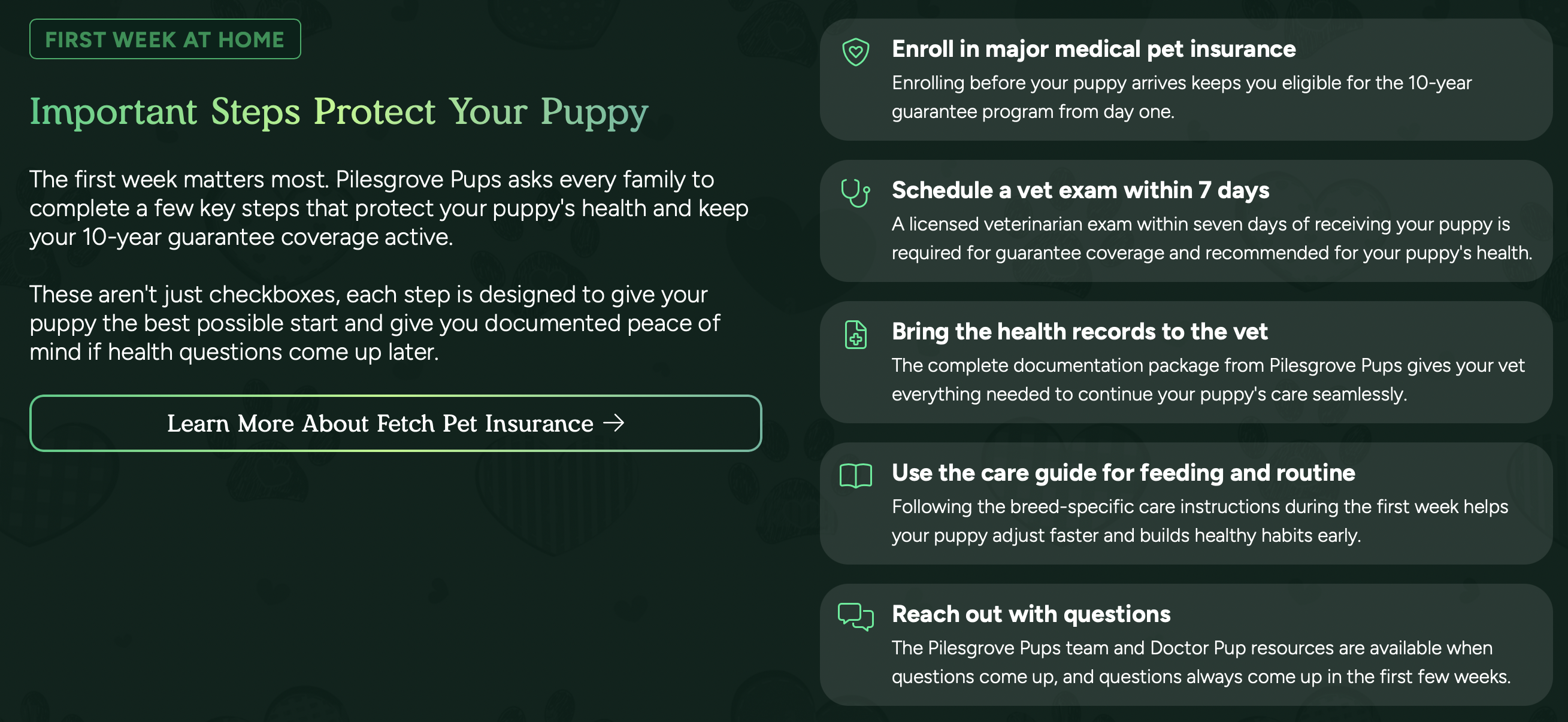
Families are asked to schedule a licensed veterinary examination within seven days of receiving the puppy as part of the requirements connected to the health guarantee. The puppy’s records should be brought to that visit so the veterinarian can review the history already provided.
We see that visit as the next step in the care process. Your veterinarian meets the puppy independently, reviews the records, establishes their own clinical baseline, and helps plan vaccinations, parasite prevention, nutrition, and routine care going forward.
Puppy health is a long-term responsibility. The first eight weeks create the foundation; the family and their veterinarian continue building on it throughout the dog’s life.
The Breeders Behind Pilesgrove Pups: Experience, Care & Standards
The 10-Year Health Guarantee Extends Our Commitment
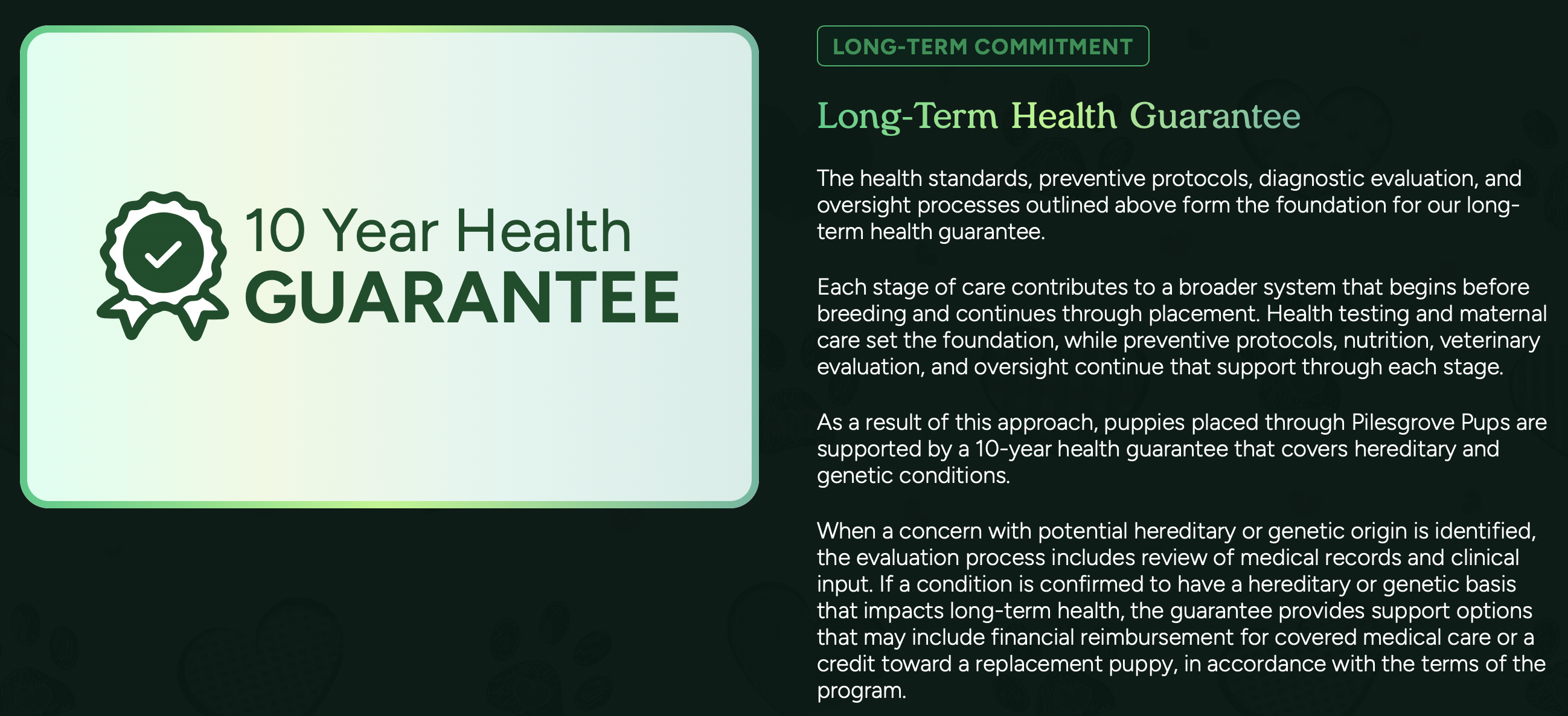
Pilesgrove Pups puppies are supported by a 10-year health guarantee with defined protection for qualifying hereditary and genetic conditions, along with additional support programs. Eligibility depends on requirements involving veterinary care, insurance, diagnosis, notification, and documentation.
The length of that commitment reflects the depth of the health process behind the puppies. Parent screening, maternal care, preventive protocols, development records, veterinary involvement, pre-placement evaluation, and diagnostic testing all contribute to the foundation that comes before the guarantee.
The guarantee then carries accountability forward after homecoming.
Families should read the complete terms carefully because each part of the coverage has specific requirements. We would rather families understand those details clearly from the beginning than discover them only when they have a health question later.
See Pilesgrove Pups’ 10-Year Health Guarantee
What We Mean When We Talk About Healthy Puppies
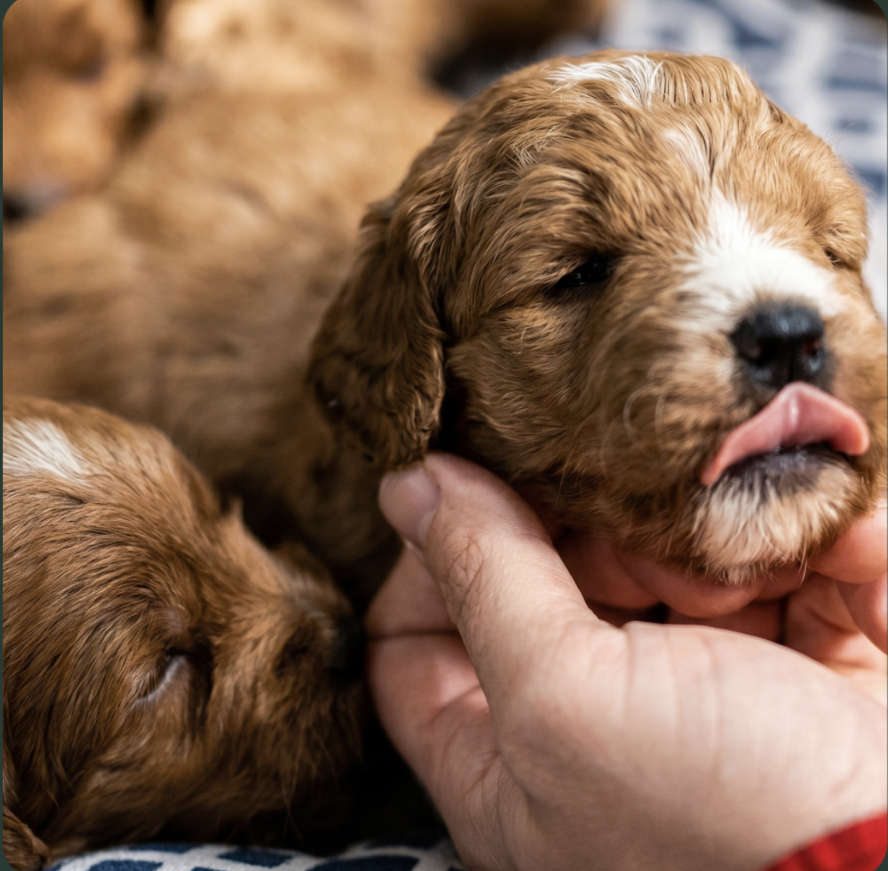
For us, puppy health is much bigger than a stamp of approval at eight weeks old.
It begins with parent dogs whose health information helps guide breeding decisions. It continues with the mother through pregnancy and with puppies through nursing, growth, deworming, vaccination, nutrition, grooming, handling, and development.
It is documented in weights, health observations, veterinary reports, and preventive-care records. It is reviewed clinically by licensed veterinarians. And Iit is supported before placement by a nose-to-tail examination and VetScan Imagyst fecal screening, with optional advanced blood evaluation available to families who want another layer of diagnostic information.
Then the puppy goes home with records that help the family’s veterinarian continue the work. That is the health story we want families to see when they look at one of our puppies.
What To Read Next
30 Most Asked Questions About Pilesgrove Pups Answered
Questions are welcome at Pilesgrove Pups. In fact, some of our favorite conversations begin with a long list of them. Families want to know where puppies are raised, how the parent dogs are chosen, what veterinary care puppies receive, whether they can visit us,... Read More
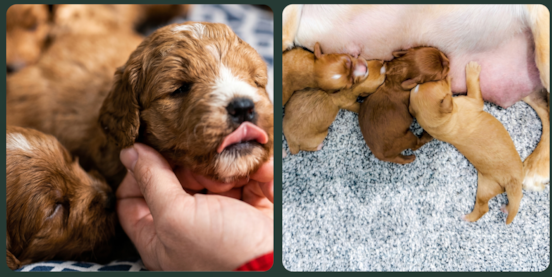
The Breeders Behind Pilesgrove Pups: Experience, Care & Standards
Behind every Pilesgrove Pups puppy is a breeder who was there long before the first photograph appeared online. They cared for the parent dogs. They prepared for the litter. They watched the mother through pregnancy and stayed close during those delicate first... Read More
Frequently Asked Questions
Are Pilesgrove Pups puppies healthy? Pilesgrove Pups puppies are supported by a coordinated health process that begins with parent health screening and continues through maternal care, preventive treatment, growth tracking, veterinary involvement, development, and pre-placement health evaluation. Each puppy is reviewed individually before homecoming.
Are the parent dogs health tested? Parent dogs receive breed-appropriate health evaluations before breeding decisions are confirmed. OFA testing is used where applicable, along with equivalent or additional screening relevant to the breed. Veterinary input and documented health history are also considered.
How early does puppy health care begin? Health care begins before birth with parent evaluations and maternal care. After birth, puppies are followed through nursing, weight progression, parasite prevention, nutrition, development, vaccinations, and veterinary care.
When are Pilesgrove Pups puppies dewormed? Puppies begin receiving Pyrantel Pamoate at approximately two weeks of age. Treatment continues at regular two-week intervals while they stay in breeder care.
When do puppies receive their first vaccinations? Age-appropriate vaccinations begin at approximately eight weeks. The current schedule includes a five-way vaccine covering distemper, adenovirus, parainfluenza, and parvovirus, along with Bordetella vaccination.
Does every puppy receive a veterinary examination before placement? Yes. A licensed veterinarian performs a nose-to-tail examination that evaluates the puppy’s heart and lungs, eyes and ears, mouth, mobility and structure, skin and coat, body condition, and overall development.
What is VetScan Imagyst? VetScan Imagyst is an AI-assisted diagnostic system used for fecal screening before placement. Digital imaging helps identify common intestinal parasites including Giardia, coccidia, roundworms, hookworms, whipworms, and tapeworms.
Is blood testing available for Pilesgrove Pups puppies? Yes. Families can choose an optional advanced blood evaluation before placement. The screening provides laboratory information related to areas including liver and kidney function, glucose balance, proteins, hydration, and overall physiological stability.
What health records come with the puppy? Families receive health documentation covering the puppy’s veterinary and preventive-care history, including vaccination and deworming information, along with microchip details and care guidance for the transition home.
Does my puppy need to see my veterinarian after homecoming? A licensed veterinary examination within seven days of receiving the puppy is required for eligibility under the health guarantee. Families should bring the puppy’s records so their veterinarian can review previous care and establish the next stage of the health plan.
Does Pilesgrove Pups provide a health guarantee? Yes. Pilesgrove Pups provides a 10-year health guarantee with defined protection for qualifying hereditary and genetic conditions. Coverage depends on the full veterinary, insurance, diagnosis, notification, and documentation requirements described in the guarantee.
What does puppy health screening tell families? Each type of screening provides different information. Parent evaluations help guide breeding decisions, veterinary exams assess current physical health, VetScan Imagyst screens for intestinal parasites, and optional blood testing adds laboratory information about selected internal health markers. Used together with health history and development records, they provide a broader view of the puppy’s early health.