


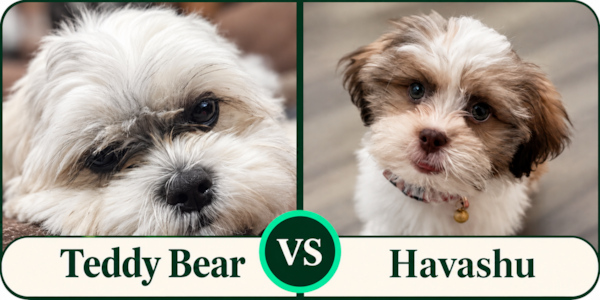
Published Thursday, October 29, 2026 by Pilesgrove Pups
The Teddy Bear vs Havashu comparison brings together small companion dogs that can look remarkably similar. Soft coats, dark expressive eyes, dropped ears, plumed tails, compact bodies, and rounded puppy cuts can make it difficult to tell them apart at first glance. Their lifestyles overlap just as much because both tend to thrive on family company rather than intense physical work.
There is still an important difference beneath the fluffy appearance. The Teddy Bear name commonly includes closely related companion crosses such as the Shichon and Malshi. These dogs share strong Shih Tzu influence and usually lean toward affectionate, adaptable companion life, with some variation in coat texture, adult size, and playfulness.
The Havashu combines the Havanese and Shih Tzu. That means it shares the Shih Tzu side that helps shape many Teddy Bear dogs, but the Havanese changes the other half of the equation. Havanese are lively, intelligent, sturdy little companions known for playful movement, social confidence, and a surprisingly capable body beneath their long soft coats.
That Havanese influence gives the Havashu a slightly different flavor. A Havashu can still be cuddly and content at home, but many bring more bounce, curiosity, and enthusiasm for interactive play than the softer Teddy Bear profile. They may seek a little more participation in whatever the family is doing.
The Teddy Bear generally leans further toward the classic lap companion experience. Many enjoy walks and games but place enormous value on physical closeness, comfortable routines, and simply staying near their people. Shichon Teddy Bears may show a little more playful energy, while Malshi Teddy Bears can sit toward the gentler end, but the overall companion style stays quite similar.
The choice is therefore subtle rather than dramatic. The Teddy Bear generally offers softer companion ease and a rounder teddy bear profile, while the Havashu adds more Havanese style playfulness, agility, and lively social engagement to the shared Shih Tzu foundation.
Table of Contents
- Teddy Bear vs Havashu at a Glance
- Teddy Bear and Havashu Overview and History
- Teddy Bear vs Havashu Appearance
- Teddy Bear vs Havashu Temperament
- Teddy Bear vs Havashu: Which One Should You Choose?
- Choose a Teddy Bear if You Want a Soft, Relaxed Companion
- Choose a Havashu if You Want a More Playful Companion
- Which Is Bigger: Teddy Bear or Havashu?
- Which Is Calmer: Teddy Bear or Havashu?
- Which Is More Energetic?
- Which Needs More Mental Stimulation?
- Which Is Easier to Train?
- Which Is Better for First Time Dog Owners?
- Which Is Better With Young Children?
- Which Is Better With Older Children?
- Which Is Better With Other Dogs?
- Which Is Better With Cats?
- Which Is More Affectionate?
- Which Is More Social With Strangers?
- Which Barks More?
- Which Sheds Less: Teddy Bear or Havashu?
- Which Needs More Grooming?
- Which Is Better for Allergies?
- Which Is Better for Apartment Living?
- Which Is Better for Seniors?
- Which Is Better for a Quieter Household?
- Which Is Better for an Active Small Dog Lifestyle?
- Which Is More Physically Sturdy?
- Which Handles Warm Weather Better?
- Which Has the More Predictable Adult Look?
- Teddy Bear vs Havashu: The Final Comparison
Teddy Bear vs Havashu at a Glance
| Trait | Teddy Bear | Havashu |
| General size | Toy to small | Toy to small |
| Type | Small companion, often Shichon or Malshi | Havanese × Shih Tzu |
| Common adult weight | Often about 6–18 pounds | Often about 7–16 pounds |
| Common adult height | Often about 8–12 inches | Often about 8–12 inches |
| Build | Compact, petite to sturdy | Compact, sturdy, often slightly longer bodied |
| Coat | Straight, wavy, fluffy, or loosely curled | Soft, long or medium, usually straight to wavy |
| Shedding | Usually low | Usually low |
| Grooming | Moderate to high | Moderate to high |
| Energy | Low moderate to moderate | Moderate |
| Mental stimulation | Moderate | Moderate |
| Trainability | Moderate to high | High |
| Playfulness | Moderate | Moderate to high |
| Companion focus | Very high | Very high |
| Broad sociability | High | High |
| Heat tolerance | Extra caution with shorter faces | Extra caution with shorter faces |
| Best fit | Someone wanting a soft, relaxed teddy bear companion | Someone wanting a playful, lively companion with strong family attachment |
The ranges overlap considerably. Neither the Teddy Bear category nor the Havashu has one formal breed standard, so adult size and coat can vary. The more useful differences appear in body style, activity, playfulness, and the way each dog interacts with family.
Teddy Bear and Havashu Overview and History
The Teddy Bear and Havashu belong to the same broad world of small companion dogs. Their histories do not point toward hunting fields, livestock work, guarding, or endurance sports. Human companionship sits at the center of both.
They also share an important connection through the Shih Tzu. Teddy Bear dogs commonly include Shih Tzu based crosses such as the Shichon and Malshi, while the Havashu combines the Shih Tzu with the Havanese.
That shared ancestry explains much of the overlap in temperament. Both can be affectionate, social, playful, adaptable, and happiest when family members are nearby. The differences come mainly from what sits alongside the Shih Tzu.
Teddy Bear s bring either Bichon Frise or Maltese influence into the picture. Both reinforce small companion traits. The Havashu instead adds the Havanese, another companion breed but one with its own lively movement, sturdy structure, and playful intelligence.
What Is a Teddy Bear Dog?
The term Teddy Bear dog does not refer to one officially standardized breed. It is commonly used for small companion crosses with soft coats, rounded faces, dark eyes, and the youthful appearance associated with a stuffed teddy bear.
Shichons and Malshis are two especially familiar examples. They look close enough and share enough temperament traits that discussing them together as Teddy Bear dogs is often more useful than separating them.
Both usually have compact bodies, dropped ears, expressive faces, low shedding coat potential, and strong family attachment. Both also carry Shih Tzu ancestry, which contributes a sturdy little frame, affectionate temperament, and a strong preference for close companionship.
The differences between Teddy Bear s create some range in adult weight and coat texture, but their everyday lifestyle is similar. They are small companion dogs that enjoy gentle activity, family involvement, and plenty of comfortable time indoors.
Teddy Bear Background
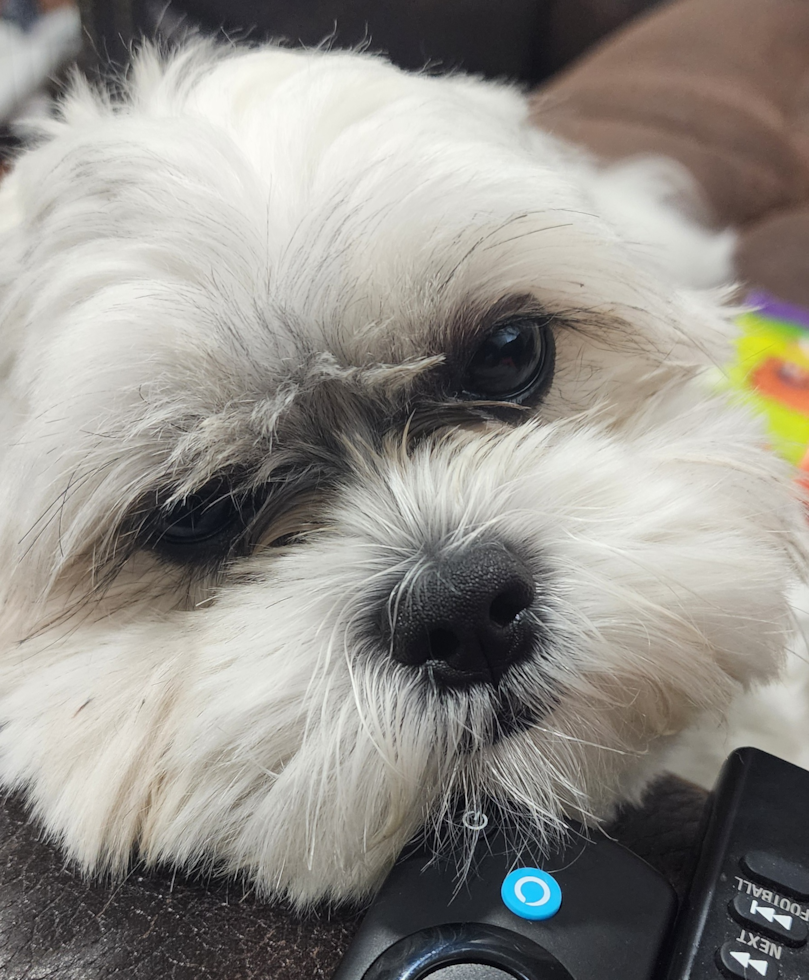
Teddy Bear dogs draw from companion breeds with long histories alongside people.
The Shih Tzu has centuries of history as a treasured companion in Chinese imperial households. Its modern temperament still reflects that purpose through affection, friendliness, and a strong interest in household life.
The other breeds commonly found behind Teddy Bears reinforce the same broad direction. Bichon Frises are cheerful, social little dogs with a history that includes royal courts and performance.
Maltese have an even older lapdog tradition and add tiny size, silky hair, and gentle liveliness.
This creates a companion rather than a dog driven by one strong working instinct. Teddy Bears may play enthusiastically, learn tricks, and enjoy outings, but their central motivation usually comes back to people.
That background explains why Teddy Bears fit so naturally into apartments, quieter households, and homes where the dog is expected to participate in daily family life without needing a demanding exercise program.
Havashu History and Background
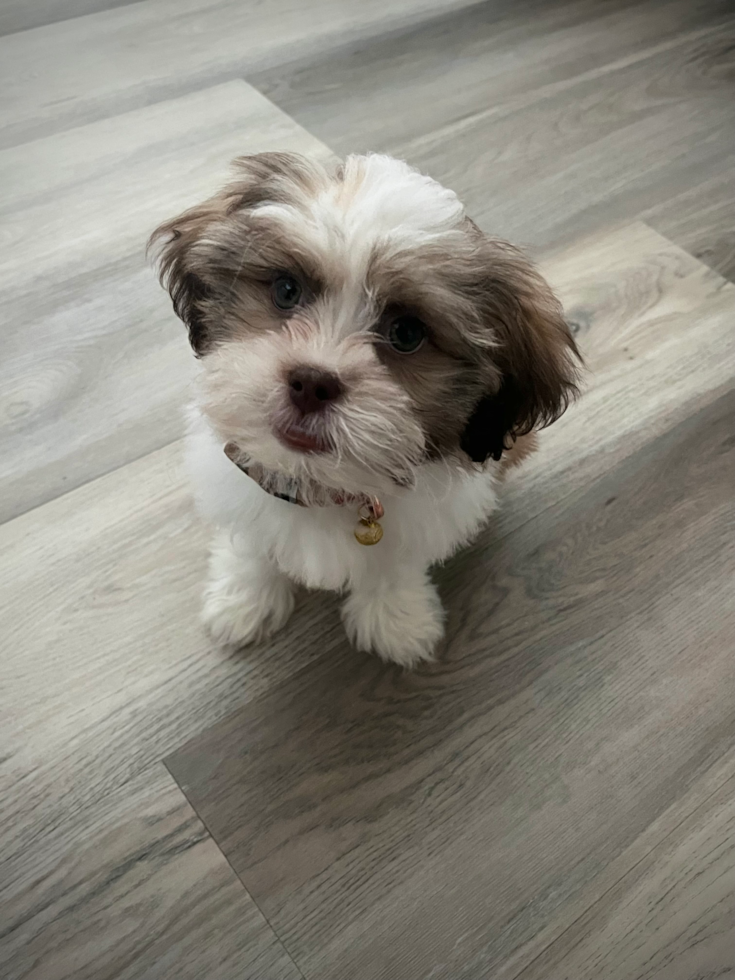
The Havashu combines the Havanese and Shih Tzu, two established Toy breeds with strong histories as human companions.
The Shih Tzu brings the same palace dog background that shapes many Teddy Bear dogs. Its role centered on close human company, and modern Shih Tzus are still playful, affectionate, outgoing companions.
The Havanese developed in Cuba from earlier bichon companion dogs. It became closely associated with Cuban households and developed into a distinct breed with a soft coat, sturdy little body, lively temperament, and characteristic springy movement.
The Havanese is especially useful for understanding the Havashu because it adds more than another lapdog personality. The breed is playful, intelligent, alert, and physically capable, with a natural enthusiasm for interaction.
When those Havanese traits meet the Shih Tzu, the Havashu usually stays firmly within companion dog territory but can gain a brighter, bouncier everyday style.
The Shared Shih Tzu Connection
The Shih Tzu helps explain why the Teddy Bear and Havashu can feel so similar.
Its influence contributes affection, compact size, a strong bond with people, dropped ears, a long coat, and a tendency to enjoy relaxed household life. It can also contribute shorter facial structure, which matters when considering exercise in hot weather.
Because Shih Tzu ancestry appears on both sides of this comparison, many of those traits should be treated as common ground rather than differences.
The real distinction lies in the other companion influence. Teddy Bears generally receive additional softness from closely related small companion breeds, while the Havashu gets the lively, agile Havanese.
This is why the Havashu may feel a little more animated without shifting into a genuinely high energy category.
Teddy Bear vs Havashu Appearance
The Teddy Bear and Havashu share many of the visual qualities people love in small companion dogs. Dark eyes, fluffy faces, dropped ears, plumed tails, and soft coats can give both the same youthful appearance.
A professional puppy cut can make the resemblance even stronger. Once the coat is shortened and rounded around the face, the two can look almost interchangeable in photographs.
The differences show more clearly in natural coat texture, body proportions, and movement. Teddy Bears frequently look compact and round, while Havashus can show a slightly longer body and lighter, springier movement through the Havanese side.
Teddy Bear Appearance
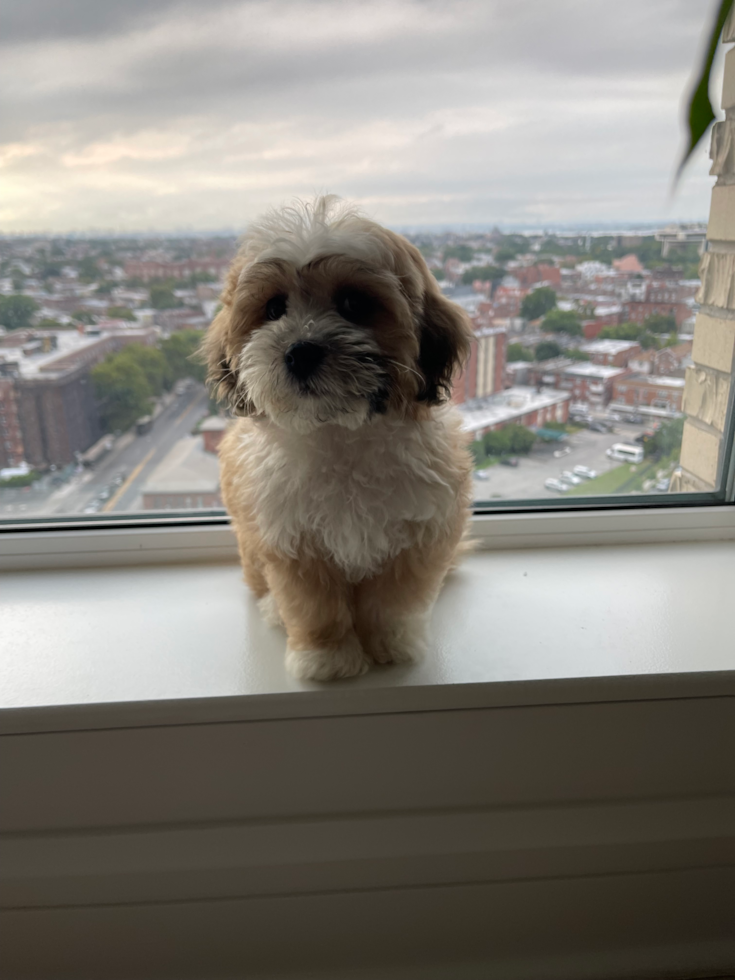
Teddy Bears usually stay firmly within the toy to small range. Many adults fall somewhere around 6 to 18 pounds and roughly 8 to 12 inches tall.
The body is generally compact. Some dogs sit toward a petite and finer boned end, while others have more substance through the chest and legs.
Despite that variation, the overall appearance tends to stay soft and rounded. Facial hair, dropped ears, and dark eyes contribute heavily to the teddy bear effect.
The coat can also add considerable visual size. A ten pound dog with a full fluffy coat may look much larger until the hair is trimmed short.
Teddy Bear Coat and Texture
Teddy Bear coats can range from straight and silky to fluffy, wavy, or loosely curled.
This variation is one of the category's defining features. Some coats fall naturally around the body, while others stand away from it and create a much rounder outline.
The common thread is softness. Long furnishings around the face, ears, legs, and tail give Teddy Bears their plush appearance even when the underlying texture is relatively straight.
Cottony coats can mat especially quickly because individual hairs grip one another. A coat that feels exceptionally soft can therefore require more work than its texture suggests.
Teddy Bear Colors and Markings
Teddy Bears come in a broad range of colors and patterns.
White, cream, gold, apricot, brown, black, gray, silver, tan, and mixed combinations can all appear. Some dogs have dark ears or masks, while others have large white areas or more evenly blended coloring.
Multicolor facial patterns can enhance the round teddy bear look because contrasting patches frame the eyes and muzzle.
Color can also change somewhat as the puppy coat matures. The final adult shade may look lighter or softer than the early puppy color.
Teddy Bear Eyes, Ears, and Facial Features
Teddy Bears commonly have large dark eyes, dropped ears, and rounded facial furnishings.
Muzzle length varies. Some have moderate facial projection, while others inherit a shorter Shih Tzu style face.
That variation matters because facial structure affects more than appearance. Shorter muzzled dogs may need more care during heat and strenuous activity.
The face is usually one of the strongest reasons people fall in love with Teddy Bears. A rounded haircut around the cheeks and muzzle can preserve a puppy like expression well into adulthood.
Teddy Bear Build and Size
Teddy Bears usually have compact bodies suited to companion life.
Some adults are very light and easy to carry, while others have sturdier little frames that feel surprisingly solid beneath the coat.
This range gives families options within the same broad , but it also means the Teddy Bear name alone does not predict one exact adult build.
Even sturdier examples are still small dogs. Careful handling matters around young children, large dogs, and high furniture.
Teddy Bear Shedding
Teddy Bears usually release little visible hair.
Their companion breed ancestry tends to produce coats that keep loose strands within the longer hair rather than scattering large amounts around the house.
This can make them appealing to people who strongly dislike hair on clothing and furniture.
The tradeoff is grooming. Loose strands that stay inside the coat need to come out through brushing before they contribute to tangles.
Teddy Bear Grooming Needs
Teddy Bears need regular coat care.
Longer coats require thorough brushing around the ears, legs, chest, underside, tail, and areas where collars or harnesses create friction.
Facial care also matters. Hair around the eyes and mouth can collect moisture and debris, particularly when the muzzle is short and facial furnishings are heavy.
Many families choose shorter teddy bear or puppy trims. These styles reduce daily maintenance while preserving the rounded appearance that gives the dogs their name.
Havashu Appearance
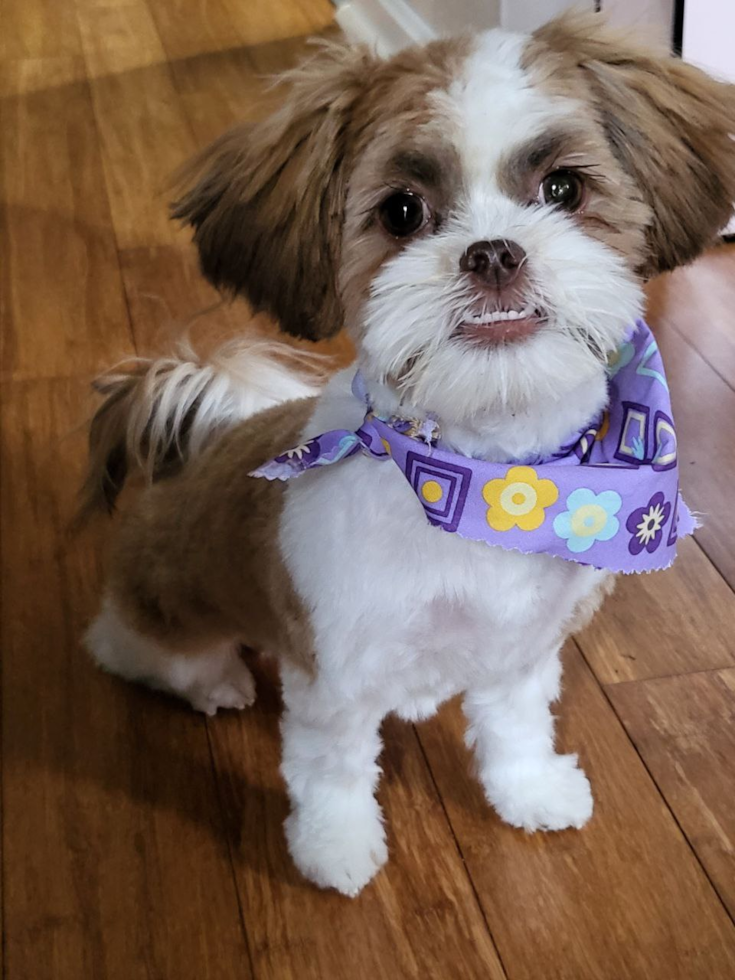
Havashus generally sit in a compact toy to small range, with many adults somewhere around 7 to 16 pounds and roughly 8 to 12 inches tall.
The Havanese and Shih Tzu both have sturdy little bodies, so the Havashu generally feels substantial enough for its size. It should not automatically be pictured as a fragile lapdog simply because it is small.
Havanese influence may add a slightly longer body and lighter movement, while the Shih Tzu can contribute greater width and a shorter legged appearance.
The finished dog often looks soft and rounded but carries a capable little frame underneath.
Havashu Coat and Texture
Havashu coats usually range from straight to wavy, with some dogs showing a fluffier or denser texture.
The Havanese contributes a long, soft, lightweight double coat with natural wave. The Shih Tzu contributes another long double coat with a heavier flowing appearance.
Together, these traits usually create softness without the strong curl seen in Poodle mixes. Gentle waves are especially characteristic of the overall look.
Some coats fall more smoothly along the sides, while others develop enough volume to create the same rounded teddy bear shape seen in Teddy Bear dogs.
Havashu Colors and Markings
Havashus can appear in many colors and combinations.
White, cream, gold, chocolate, black, sable, gray, silver, tan, and mixed patterns can all appear through the broad color possibilities of the Havanese and Shih Tzu.
Some dogs have bold patches around the eyes or ears. Others show blended colors through the body or a largely solid coat with smaller white markings.
This broad palette creates substantial overlap with Teddy Bears. Color alone is rarely useful for telling the two apart.
Havashu Eyes, Ears, and Facial Features
Havashus usually have expressive dark eyes and dropped ears covered in soft hair.
Facial structure can range between the Havanese's moderate muzzle and the Shih Tzu's shorter face. Some Havashus therefore have noticeably more muzzle projection than the roundest Teddy Bears, while others look strongly Shih Tzu influenced.
Havanese influence can also add a slightly more alert and mischievous expression. The face may still look soft without appearing quite as compact.
Short faced Havashus need the same practical heat awareness as other Shih Tzu mixes.
Havashu Build and Size
The Havashu is generally a sturdy small companion.
Havanese are known for good substance, muscle, and surprising physical ability for their size. Shih Tzus add another compact, solid frame.
This can create a dog that handles ordinary walks, play, and family activity comfortably while staying easy to lift and travel with.
Havanese influence may also produce a slightly longer than tall outline. That can give some Havashus a less square, less rounded silhouette than the typical Teddy Bear.
Havashu Shedding
Havashus generally shed little visibly.
Both Havanese and Shih Tzus tend to hold loose hair within their longer coats, so large amounts of hair around furniture are not usually the defining problem.
Loose hair still needs to be removed through brushing. A dog can leave very little on the sofa and still develop significant tangles when coat care is inconsistent.
Low shedding also does not guarantee allergy compatibility because allergens come from dander and saliva as well as hair.
Havashu Grooming Needs
The Havashu needs consistent grooming.
Long soft hair can tangle around the ears, legs, chest, belly, tail, and face. Wavy sections may knot especially quickly where the coat rubs against itself.
Dogs kept in full coats need frequent brushing and combing. Shorter companion trims can make maintenance much easier.
Facial grooming deserves attention as well, particularly when Shih Tzu influence creates a shorter muzzle and heavier hair around the eyes.
Teddy Bear vs Havashu Appearance Comparison: What Is the Difference?
The visual difference is subtle because the two occupy much of the same small companion space.
The Teddy Bear generally leans toward a rounder, plush toy like appearance. Compact bodies, rounded facial trims, and soft coats reinforce that youthful look.
The Havashu can look slightly more flowing and naturally athletic when Havanese traits show strongly. A longer body, moderate muzzle, soft waves, and lighter movement can separate it from the roundest Teddy Bear examples.
Coat texture overlaps heavily. Neither side is defined by tight Poodle style curls, and both can have long, soft hair with gentle waves.
If the classic rounded teddy bear face is the main visual priority, the Teddy Bear may have the advantage. If you like the same soft appearance with a little more Havanese style length and movement, the Havashu may appeal more.
Teddy Bear vs Havashu Temperament
Temperament is where this comparison gets more useful.
Both are affectionate small companions that usually enjoy close family involvement. Both can fit comfortably into homes where the dog spends substantial time around people rather than working independently.
The difference is mainly one of energy within companionship.
The Teddy Bear generally leans toward a softer, calmer relationship built heavily around closeness and comfort. The Havashu keeps that companion focus but adds more Havanese style playfulness, curiosity, and active social engagement.
Teddy Bear Temperament
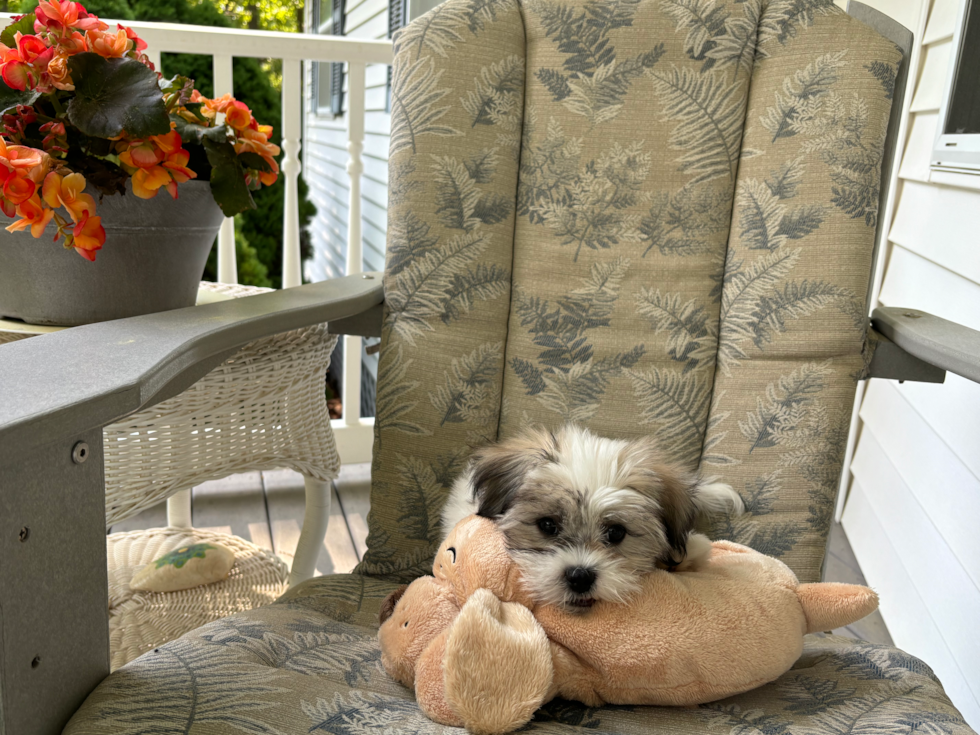
Teddy Bears tend to be cheerful, affectionate dogs that place family connection at the center of daily life.
They often enjoy following people from room to room, resting nearby, sitting on laps, and joining normal household routines. Many are happy to participate without needing a specific task.
They can still be playful. Short games, walks, toys, and bursts of activity give the dog useful outlets, particularly during puppyhood and adolescence.
The overall impression is a companion that likes interaction but does not usually need the day structured around activity.
Teddy Bear Intelligence and Training
Teddy Bears are intelligent and capable of learning household routines quickly.
Many respond well to food, praise, affection, and short playful training sessions. Their social attachment can make positive interaction a strong reward.
Some can show a little independence when exercises feel repetitive. A dog may understand the cue perfectly and simply find another option more interesting.
Consistency matters more than intensity. Clear routines and short training sessions usually work better than prolonged drilling.
Teddy Bear Energy Level
Teddy Bears generally have low moderate to moderate energy.
Daily walks, indoor play, and social interaction can satisfy many adults without requiring long periods of structured exercise.
Younger dogs can still show lively bursts, especially in the evening or when visitors arrive. Puppy energy should not automatically be treated as the permanent adult pace.
As adults, many Teddy Bears develop a comfortable balance between short activity and long stretches of relaxed companion time.
Teddy Bear Affection and Attachment
Affection is one of the Teddy Bear's strongest qualities.
These dogs often enjoy close physical contact and can spend substantial amounts of time near familiar people. Laps, couches, beds, and quiet shared time can all hold enormous appeal.
That closeness should be balanced with independence skills. A dog that always has access to people can struggle when normal life eventually requires some time alone.
Teaching comfortable separation early helps preserve the affectionate relationship without turning it into overdependence.
Teddy Bears With Children
Teddy Bears can make excellent companions for respectful children.
Their small size makes gentle handling important. Some Teddy Bears have sturdy little bodies, while others sit at a lighter and more delicate end of the range.
Older children may enjoy cuddling, short walks, basic tricks, and gentle games. Young children need supervision so excitement does not turn into rough handling.
The Teddy Bear's softer activity style can suit children who want a companion as much as a playmate.
Teddy Bears With Other Dogs and Pets
Teddy Bears generally have strong potential with other dogs.
Their companion ancestry tends to support social living rather than territorial or competitive behavior. Many enjoy having another small dog around, especially when play styles match.
Cats can also fit comfortably into the household. Persistent prey focused behavior is not a defining feature of the Teddy Bear profile.
A calmer Teddy Bear may pair especially well with older pets that do not appreciate relentless invitations to play.
Teddy Bear Barking and Alertness
Teddy Bears can alert to visitors, doorbells, hallway sounds, or activity outside.
The behavior generally reflects awareness and excitement rather than serious guarding. Some dogs may quickly announce a visitor and then become eager to greet them.
Repeated barking can grow into a habit when every sound gets a strong reaction from the household.
Quiet training works best when started early, particularly in apartments or busy neighborhoods.
Havashu Temperament
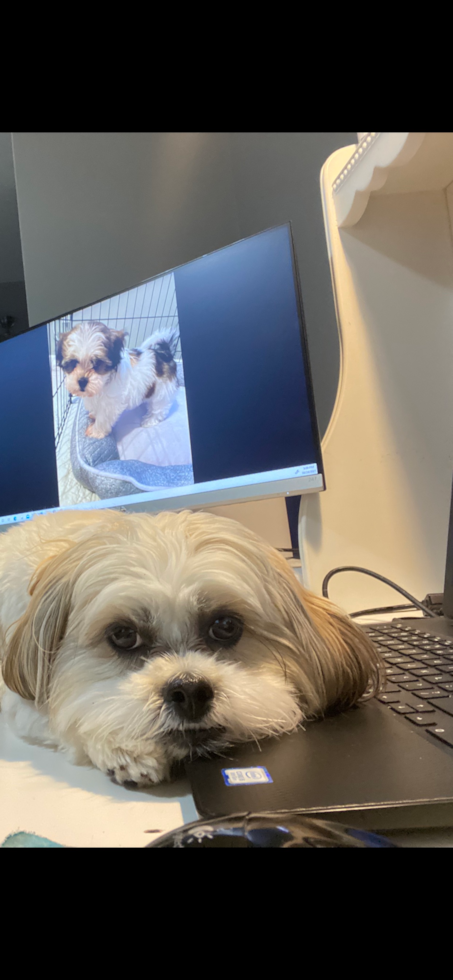
Havashus tend to be affectionate, cheerful, playful dogs that enjoy active involvement with their families.
The Shih Tzu contributes the same close companion foundation found in many Teddy Bears. The Havanese adds a lively, intelligent temperament with a reputation for playful social behavior.
This can create a dog that enjoys relaxing beside family but switches quickly into play mode when something interesting happens.
The Havashu therefore offers plenty of lapdog affection without feeling quite as soft or sedentary in its everyday style.
Havashu Intelligence and Training
Havashus usually have strong training potential.
Havanese are intelligent and responsive dogs that often enjoy learning, while Shih Tzus add cleverness with a slightly more independent companion style.
The combination can respond very well to positive reinforcement. Tricks, household skills, simple scent games, and playful exercises can all fit naturally into the relationship.
The Havashu may show more consistent enthusiasm for training than the average Teddy Bear, particularly when Havanese traits are strong.
Havashu Energy Level
Havashus generally have moderate energy.
They do not need strenuous exercise, but many enjoy regular walks, playful games, and active interaction through the day.
Havanese influence can add more spring and enthusiasm to movement. A Havashu may initiate play more frequently or stay interested in an outing a little longer than a softer Teddy Bear.
Adults can still settle comfortably indoors once their social and physical needs have been met.
Havashu Playfulness and Curiosity
Playfulness is one of the more useful Havashu distinctions.
Havanese are known for an animated, cheerful style and often keep a youthful personality well into adulthood. That influence can show in the Havashu through toy games, bursts of running, curiosity, and a desire to investigate household activity.
The dog does not need constant entertainment, but it may look for interaction more frequently.
For someone who wants a companion that feels lively without crossing into a demanding high energy category, this can be a particularly attractive balance.
Havashu Affection and Family Attachment
Havashus are highly affectionate and family focused.
Both parent breeds were shaped heavily around companionship, so the cross has a strong foundation for close human relationships.
The Havashu may express affection through both physical closeness and participation. It may curl up beside someone, then quickly join a game or follow when the family moves into another room.
Comfortable alone time still needs deliberate practice because companionship is such a strong part of the dog's temperament.
Havashus With Children
Havashus can make excellent family companions.
Both Havanese and Shih Tzus have sturdy little bodies, which gives the cross a useful amount of substance for its size.
The Havanese side can add extra playfulness, which may appeal to children who want to interact more actively with the dog.
The same small dog handling rules still apply. Children should sit calmly when lifting is unnecessary, respect sleeping and eating space, and avoid rough physical play.
Havashus With Other Dogs and Pets
Havashus generally have strong potential with other dogs.
Havanese tend to be social and playful, while Shih Tzus are companion dogs that can fit comfortably into multi pet homes.
A Havashu may enjoy more active canine play than a very calm Teddy Bear. Another playful small dog can therefore make an excellent match.
Cats can also share the home successfully. Neither parent breed adds a strong specialized prey or herding background.
Havashu Barking and Alertness
Havashus can be alert and vocal, especially when Havanese awareness combines with Shih Tzu attentiveness.
They may notice people outside, visitors, unusual household sounds, or another dog passing by.
Their social personality can make barking transition quickly into excitement once the person or situation is familiar.
Training a calm response to common triggers can keep alertness from developing into frequent household noise.
Teddy Bear vs Havashu Temperament Comparison: What Is the Real Difference?
The clearest temperament difference is soft companion ease versus playful companion engagement.
The Teddy Bear generally leans toward quieter physical closeness. These dogs often enjoy activity but place enormous value on comfortable routines, familiar people, and relaxed shared time.
The Havashu generally adds more playful curiosity through the Havanese side. It can enjoy the same closeness while seeking more games, movement, exploration, and active involvement.
Neither is a high energy working dog. The distinction sits inside the companion category rather than outside it.
A Teddy Bear may be especially satisfied by a walk followed by a long afternoon beside its person. A Havashu may enjoy the same walk and then decide that a short game sounds like an excellent next idea.
Teddy Bear vs Havashu: Which One Should You Choose?
The Teddy Bear and Havashu share enough qualities that either can suit someone looking for a small, affectionate household companion. Both can live comfortably in apartments, both have manageable exercise requirements, and both usually prefer family involvement over independence.
The deciding factors are more subtle: activity style, training enthusiasm, body structure, coat, heat tolerance, and how interactive you want daily companionship to feel.
Choose a Teddy Bear if You Want a Soft, Relaxed Companion
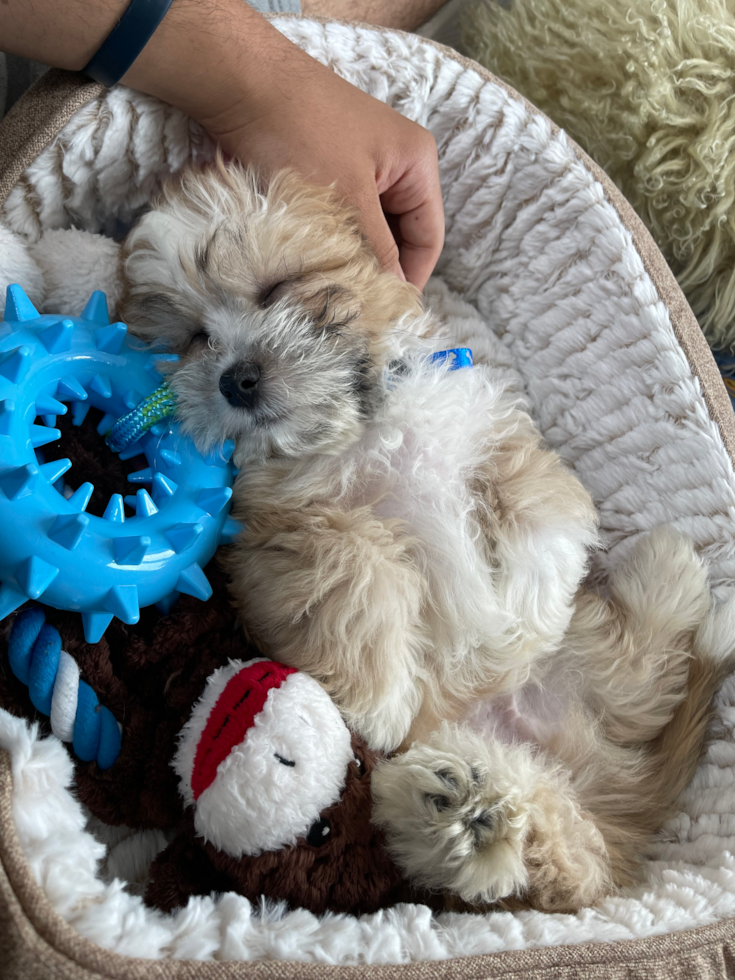
A Teddy Bear puppy may suit you better if you want the classic small companion experience centered on closeness, comfort, and manageable activity.
These dogs can enjoy walks, toys, and games while still fitting beautifully into quiet afternoons and gentle household routines.
Their soft rounded appearance is another major attraction. Teddy Bear cuts can preserve an especially youthful face throughout adulthood.
The tradeoffs are regular grooming, possible barking, and some variation in adult size and facial structure.
Choose a Havashu if You Want a More Playful Companion
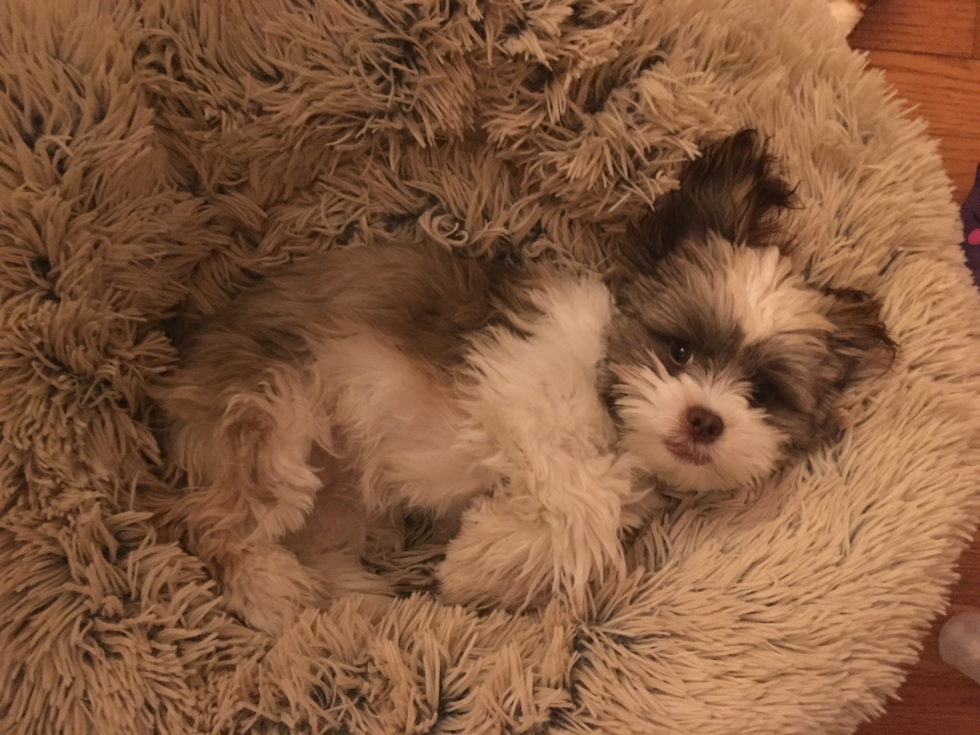
A Havashu puppy may suit you better if you want a cuddly small dog but prefer a little more animation in everyday life.
Havanese influence can add playful movement, curiosity, strong trainability, and greater enthusiasm for shared activities without pushing exercise requirements into demanding territory.
The Havashu still fits laps and quiet homes extremely well. It simply tends to offer a little more bounce within that companion lifestyle.
This balance can suit families that want one dog to cuddle on the sofa and enthusiastically join a game five minutes later.
Which Is Bigger: Teddy Bear or Havashu?
Their common size ranges overlap considerably.
Teddy Bears often fall around 6 to 18 pounds, while Havashus commonly sit around 7 to 16 pounds. Either can therefore be the larger individual dog.
The Teddy Bear category covers a wider range because it includes more than one closely related companion . Havashus usually cluster within the natural overlap of the Havanese and Shih Tzu.
Body style can create a difference even at similar weights. Havashus may have a slightly longer outline, while many Teddy Bears look more compact and rounded.
Which Is Calmer: Teddy Bear or Havashu?
The Teddy Bear generally has the calmer everyday profile.
Teddy Bear dogs tend to place strong value on relaxed companionship, and many settle readily once their walking, play, and social needs have been met.
Havashus can relax beautifully too, but Havanese influence may add more curiosity and a greater tendency to initiate another round of interaction.
Someone seeking the softer lap companion direction may therefore prefer the Teddy Bear.
Which Is More Energetic?
The Havashu generally has the slightly livelier activity style.
Havanese are playful and agile, and those traits can add more bounce to the shared Shih Tzu companion foundation. Havashus may enjoy longer play sessions, more frequent games, and a little more exploration.
Teddy Bears still need regular exercise and can be surprisingly playful. The difference is moderate rather than dramatic.
Neither dog needs long distance running or hours of strenuous daily exercise.
Which Needs More Mental Stimulation?
The Havashu may need slightly more deliberate mental engagement.
Havanese are intelligent dogs that often enjoy training, games, and figuring out simple challenges. That influence can make a Havashu especially responsive to interactive activities.
Teddy Bears also learn well and benefit from enrichment, but many are content with simpler routines built around walks, play, and family time.
If teaching tricks and games is part of the relationship you want, the Havashu may offer a little more enthusiasm.
Which Is Easier to Train?
The Havashu generally has the slight advantage for consistent training enthusiasm.
Havanese tend to enjoy working with people and respond well to upbeat positive training. Combined with the Shih Tzu, this can create a clever companion that learns household routines readily.
Teddy Bears can train very well too. Some may show a little more independence when exercises become repetitive.
For normal household manners, the difference is small. For someone who wants training to extend into tricks and regular interactive games, the Havashu may have the stronger fit.
Which Is Better for First Time Dog Owners?
Both can make excellent first dogs.
The Teddy Bear may suit a first time owner who wants a softer, lower key companion routine, while the Havashu may suit someone who is excited about training and playful interaction.
Grooming is the major practical responsibility on both sides. Long soft coats need far more care than the dogs' small size might suggest.
Breed specific customer reviews can help first time owners understand adult barking, grooming time, house training, energy, and comfortable alone time beyond puppyhood.
Which Is Better With Young Children?
Both can fit family life well when children understand how to treat small dogs.
A sturdy Teddy Bear can handle normal family activity comfortably, though very small individuals need more careful handling. Havashus generally have a solid small dog foundation through both Havanese and Shih Tzu ancestry.
The Havashu may have a small advantage for children who want more playful interaction, while a calm Teddy Bear may suit a gentler child beautifully.
Physical size and the child's behavior matter more than declaring one universal winner.
Which Is Better With Older Children?
Both can make excellent companions for older children.
A Teddy Bear may appeal to a child who enjoys cuddling, quiet companionship, short walks, and gentle games.
The Havashu may suit a child who wants more active interaction through tricks, toys, and play while still having a dog that enjoys close physical affection.
This is one of those categories where matching personalities matters more than choosing by name alone.
Which Is Better With Other Dogs?
Both generally have strong potential with other dogs.
Teddy Bears often fit comfortably with other small companions and may suit calmer dogs particularly well.
Havashus can show a little more playful enthusiasm through the Havanese side, which can make another lively small dog an excellent match.
For older or quiet canine companions, the Teddy Bear's softer rhythm may have a slight advantage. For playful multi dog households, the Havashu can be especially entertaining.
Which Is Better With Cats?
Both can fit cat households successfully.
Neither side carries strong specialized terrier, herding, or prey focused ancestry. Young dogs may still chase a moving cat because running is exciting, but persistent hunting behavior is not central to either .
A calmer Teddy Bear may blend into a quiet cat household particularly easily.
A well trained Havashu can be equally respectful and may simply show more interest in inviting the cat to play.
Which Is More Affectionate?
Both are deeply affectionate, so there is no useful winner.
The Teddy Bear may lean toward longer periods of quiet physical closeness. Sitting on a lap, curling up beside someone, or simply resting in the same room can occupy a large part of the day.
The Havashu often mixes affection with interaction. It may cuddle just as enthusiastically but respond more quickly when someone starts a game or moves around the house.
The choice is between two styles of affection rather than different amounts of it.
Which Is More Social With Strangers?
Both can be friendly and socially confident.
Teddy Bears generally come from strongly companion oriented backgrounds and can enjoy visitors once introductions are comfortable.
Havanese are known for friendly, playful social behavior, so Havashus may show especially obvious curiosity toward new people when that side comes through strongly.
The Havashu may have a slight advantage for households that regularly entertain guests, though individual confidence matters more than the cross name.
Which Barks More?
There is no strong universal winner.
Teddy Bears may bark at visitors, hallway activity, outside dogs, or exciting household events. Havashus can show similar alert behavior through both sides of their ancestry.
The Havashu's lively curiosity can add vocal excitement in some dogs, while a Teddy Bear may bark because a familiar sound has turned into a practiced routine.
Early quiet training matters much more than expecting either to stay naturally silent.
Which Sheds Less: Teddy Bear or Havashu?
Both generally have strong low shedding potential.
Teddy Bear coats tend to hold loose hair within their longer furnishings, and Havashus inherit similar coat behavior from Havanese and Shih Tzu ancestry.
Individual texture can affect how much hair appears around the home, but the difference is usually modest.
Neither should be considered completely non shedding or guaranteed suitable for allergies.
Which Needs More Grooming?
Both need regular grooming, and there is no easy winner.
Teddy Bears may have silky, cottony, wavy, or loosely curled coats that need thorough detangling. Havashus usually have soft straight to wavy hair that can knot around the ears, legs, chest, belly, and face.
Long coats on either dog require considerably more work than short puppy trims.
For most families, professional grooming combined with consistent home brushing offers the easiest practical routine.
Which Is Better for Allergies?
Neither dog can guarantee allergy compatibility.
Both tend to shed little visibly, which may reduce the amount of loose hair circulating through the home.
Allergens also come from skin and saliva, so low shedding does not automatically mean a person with dog allergies will tolerate the dog comfortably.
Personal tolerance matters more than choosing solely between Teddy Bear and Havashu.
Which Is Better for Apartment Living?
Both are excellent apartment candidates.
Their small size and manageable exercise needs fit compact homes naturally. The Teddy Bear may have a slight advantage for people who prefer a quieter physical routine.
The Havashu may ask for a little more play and interaction, but that activity is easy to provide indoors and through normal walks.
Barking and comfortable alone time are more important apartment considerations than square footage.
Which Is Better for Seniors?
Both can make wonderful senior companions.
The Teddy Bear may appeal to someone who prioritizes quiet physical closeness and modest exercise needs. Its softer rhythm fits relaxed household routines naturally.
The Havashu may suit an active senior who enjoys walks, games, tricks, and a little more playful interaction while still wanting a small dog that is easy to handle.
Grooming should factor into either choice. Shorter companion trims can simplify the daily routine substantially.
Which Is Better for a Quieter Household?
The Teddy Bear generally has the stronger fit for a quiet companion lifestyle.
These dogs often find simple family presence highly rewarding and may settle comfortably after moderate walks and play.
The Havashu can fit quiet homes too, but Havanese influence may inspire more frequent invitations to play or investigate something interesting.
For someone who wants a dog that happily shares long calm stretches of the day, the Teddy Bear may feel more natural.
Which Is Better for an Active Small Dog Lifestyle?
The Havashu generally has the advantage for a more active small dog lifestyle.
Havanese influence can add agility, playful movement, and enthusiasm for interactive activities. Walks, tricks, games, outings, and regular social experiences can all suit the cross very well.
Teddy Bears can enjoy active homes too, particularly when they have a playful personality, but they generally ask for less activity as part of everyday satisfaction.
The Havashu offers a nice middle ground for someone who wants an involved little companion without choosing a truly high energy breed.
Which Is More Physically Sturdy?
Both can have sturdy small dog bodies.
The Teddy Bear range is broader, with some dogs sitting at a lighter end and others carrying considerable substance. The name alone therefore tells you less about the finished frame.
The Havashu has sturdy influence from both Havanese and Shih Tzu ancestry. Havanese in particular are known for a capable, moderately boned body despite their Toy Group size.
This can give the Havashu a slight advantage for consistency in physical substance.
Which Handles Warm Weather Better?
This category depends heavily on facial structure.
Both Teddy Bears and Havashus can inherit short Shih Tzu influenced muzzles. Those dogs may have more difficulty cooling themselves efficiently during hot conditions or vigorous activity.
A Havashu with a more Havanese like moderate muzzle may handle warm weather activity more comfortably than a very short faced individual.
The same can be true for a Teddy Bear with more muzzle projection. Shade, water, indoor cooling, and cooler walking hours are sensible for either during summer.
Which Has the More Predictable Adult Look?
Neither has the predictability of an established purebred, but the Havashu describes one specific cross, while Teddy Bear covers a broader companion category.
That gives the Havashu a somewhat narrower genetic framework. Havanese and Shih Tzu traits still combine in different ways, but the breeds behind the cross stay the same.
Teddy Bears can draw from closely related but different companion combinations, which creates greater variation in coat texture, adult size, and body structure.
For someone who values a narrower general picture, the Havashu may offer a small advantage. For someone who mainly wants the classic Teddy Bear look and lifestyle, that broader range may not matter much.
Teddy Bear vs Havashu: The Final Comparison
Choosing between a Teddy Bear vs Havashu can be difficult because these dogs share so many qualities. Both are small, affectionate companions with soft coats, expressive faces, manageable exercise needs, and strong attachment to family life.
The Teddy Bear represents a broader small companion that often includes closely related dogs such as Shichons and Malshis. What unites them is a soft teddy bear appearance, strong Shih Tzu influence, low shedding coat potential, and a temperament built heavily around human companionship.
The Havashu offers a more specific combination. It pairs the Shih Tzu with the Havanese, a lively Cuban companion known for friendly intelligence, sturdy structure, playful movement, and social enthusiasm.
That difference shows most clearly in daily rhythm. The Teddy Bear generally leans toward softer, quieter companionship. It enjoys activity but may place a little more value on lap time, predictable routines, and relaxed family presence.
The Havashu can enjoy all of those things while adding more playful curiosity. Havanese influence can make games, training, exploration, and active family involvement a larger part of everyday life.
Their appearance overlaps considerably. Both can have soft straight to wavy coats, dropped ears, dark eyes, compact bodies, and the same rounded puppy cut style. The Havashu may show a slightly longer body and more naturally flowing movement, while the Teddy Bear often emphasizes the rounder plush look.
Grooming is substantial with both. Low visible shedding does not remove the need for regular brushing, facial care, professional trims, and attention to areas where soft hair tangles.
Heat tolerance also deserves thought because Shih Tzu ancestry sits on both sides. Shorter faced individuals may need additional caution during warm weather regardless of which one you choose.
If you want a soft, affectionate small companion with a classic teddy bear appearance, manageable energy, and a strong preference for relaxed family closeness, the Teddy Bear may fit your life better.
If you want a similarly affectionate companion with more playful energy, strong training potential, sturdy structure, and a livelier interactive style, the Havashu may make more sense.
Breed specific customer reviews can add useful real world perspective, especially when owners discuss adult energy, coat care, barking, children, other pets, heat tolerance, and what ordinary weekdays feel like after puppyhood.
The real choice is not between two completely different kinds of dogs. It is between soft Teddy Bear companionship and that same companion foundation with an extra dose of Havanese playfulness and lively engagement.
Frequently Asked Questions
What is the main difference between a Teddy Bear and Havashu? Teddy Bear is a broader companion-dog type that often includes closely related Shih Tzu-based crosses such as Shichons and Malshis. A Havashu is specifically a Havanese and Shih Tzu mix. Teddy Bears generally lean toward softer, calmer companion life, while Havashus often add more Havanese-style playfulness, agility, and interactive energy. Their size and appearance overlap considerably.
Which is bigger, a Teddy Bear or Havashu? Their ranges overlap too much for one universal winner. Teddy Bears often fall around 6 to 18 pounds, while Havashus commonly sit around 7 to 16 pounds. The Teddy Bear category covers a wider range of small companion types, while Havashus have a somewhat narrower genetic framework. Either can be the larger individual dog.
Which is calmer, a Teddy Bear or Havashu? The Teddy Bear generally has the calmer everyday companion style. Many enjoy walks and play but settle readily into long periods of close family time. Havashus also relax well, though Havanese influence may create more curiosity and more frequent interest in games or interaction. The difference is moderate rather than dramatic.
Which is easier to train, a Teddy Bear or Havashu? Both are intelligent and capable of learning household manners. The Havashu may have a slight advantage for owners who enjoy regular training because Havanese tend to be playful, responsive learners. Teddy Bears can also learn tricks and routines very successfully. Some may show a little more independence when practice gets repetitive, so short positive sessions tend to work best.
Which sheds less, a Teddy Bear or Havashu? Both generally have low visible shedding. Their long soft coats often hold loose strands until brushing removes them rather than releasing large amounts around the home. There is no dependable winner in this category. Coat texture and grooming routine usually matter more than choosing between the two names.
Which needs more grooming, a Teddy Bear or Havashu? Both need regular grooming and should be considered moderate-to-high maintenance when their coats are kept fluffy. Teddy Bear coats can range from silky to cottony or wavy, while Havashu coats usually fall within a soft straight-to-wavy range. Shorter puppy trims can make either much easier to maintain.
Is a Teddy Bear or Havashu better with children? Both can make excellent family companions with respectful children. Teddy Bears vary more in body size, while Havashus usually have a sturdy small-dog foundation through both Havanese and Shih Tzu ancestry. The Havashu may particularly appeal to children who enjoy games and active interaction. A calmer Teddy Bear can suit a child who prefers cuddling and gentle companionship.
Which barks more, a Teddy Bear or Havashu? Neither has a clear universal advantage. Both may bark at visitors, unusual sounds, other dogs, or exciting household activity. The Havashu can show lively alertness through the Havanese side, while Teddy Bears can develop strong barking habits when household sounds repeatedly trigger a reaction. Early quiet training matters with either.
Is a Teddy Bear or Havashu better for apartment living? Both are excellent apartment dogs because they are small and have manageable exercise needs. Teddy Bears may fit a quieter indoor routine slightly more naturally, while Havashus may appreciate more regular play and interaction. Barking, grooming, walks, and comfortable alone time matter much more than the size of the apartment.
Should I choose a Teddy Bear or Havashu? Choose a Teddy Bear if you want a soft, cuddly companion with a classic teddy bear appearance, manageable activity needs, and a strong preference for relaxed family closeness. Choose a Havashu if you want a similarly affectionate small dog with extra Havanese-style playfulness, sturdy structure, strong training potential, and a slightly livelier daily rhythm. Both are companion dogs at heart, but they express that companionship in subtly different ways.