


Published Thursday, October 29, 2026 by Pilesgrove Pups
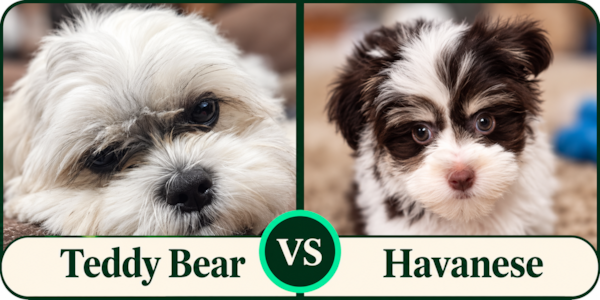
The Teddy Bear vs Havanese comparison is a little different from most breed matchups because the Teddy Bear is not one single cross. It includes both the Shichon, which combines the Shih Tzu and Bichon Frise, and the Malshi, which combines the Maltese and Shih Tzu. The Havanese, by contrast, is an established purebred with a defined size, structure, coat, and temperament.
That difference matters from the start. Teddy Bears share a strong companion-dog foundation, but their exact size, coat texture, facial structure, and temperament can shift depending on whether the dog is a Shichon or Malshi and which parent traits show more strongly. Havanese have their own range of individual personalities, but the breed offers a narrower and more predictable overall picture.
The dogs still have plenty in common. Both Teddy Bears and Havanese are small, affectionate companions that usually enjoy close family involvement. They can fit apartment life well, need regular coat care, and tend to form strong relationships with the people around them.
The biggest difference is the style of companion they offer. Teddy Bears draw heavily from Shih Tzu ancestry, which can add a sturdy little body, a softer pace, and a strong lapdog influence. Shichons add the cheerful sociability of the Bichon Frise, while Malshis add the tiny size and gentle intimacy of the Maltese.
The Havanese has a different feel. It is still very much a companion dog, but the breed is lively, intelligent, playful, and notably agile. A Havanese often enjoys learning, exploring, playing, and actively joining family routines rather than simply settling into them.
That creates the central choice in this comparison: Teddy Bear companion softness and variation versus Havanese predictability, liveliness, and playful intelligence.
Table of Contents
- Teddy Bear vs Havanese at a Glance
- Teddy Bear and Havanese Overview and History
- Teddy Bear vs Havanese Appearance
- Teddy Bear vs Havanese Temperament
- Teddy Bear vs Havanese: Which One Should You Choose?
- Choose a Teddy Bear if You Want a Soft Companion-Focused Lifestyle
- Choose a Havanese if You Want a Lively, Predictable Small Companion
- Which Is Bigger: Teddy Bear or Havanese?
- Which Is Calmer: Teddy Bear or Havanese?
- Which Is More Energetic?
- Which Needs More Mental Stimulation?
- Which Is Easier to Train?
- Which Is Better for First-Time Dog Owners?
- Which Is Better With Young Children?
- Which Is Better With Older Children?
- Which Is Better With Other Dogs?
- Which Is Better With Cats?
- Which Is More Affectionate?
- Which Is More Social With Strangers?
- Which Barks More?
- Which Sheds Less: Teddy Bear or Havanese?
- Which Needs More Grooming?
- Which Is Better for Allergies?
- Which Is Better for Apartment Living?
- Which Is Better for Seniors?
- Which Is Better for a Quieter Household?
- Which Is Better for an Active Small-Dog Lifestyle?
- Which Is More Physically Sturdy?
- Which Handles Warm Weather Better?
- Which Is More Predictable in Adult Size and Appearance?
- Teddy Bear vs Havanese: The Final Comparison
Teddy Bear vs Havanese at a Glance
| Trait | Teddy Bear | Havanese |
| Type | Shichon or Malshi | Purebred Toy breed |
| Ancestry | Shih Tzu × Bichon Frise or Shih Tzu × Maltese | Havanese |
| General size | Toy to small | Small |
| Common adult weight | Often about 6–18 pounds | About 7–13 pounds |
| Common adult height | Often about 8–12 inches | About 8.5–11.5 inches |
| Build | Petite to sturdy, depending on type | Small, sturdy, slightly longer than tall |
| Coat | Straight, wavy, fluffy, or loosely curled | Long, soft, silky, usually wavy |
| Shedding | Usually low | Usually low |
| Grooming | Moderate to high | High if kept long |
| Energy | Low-moderate to moderate | Moderate |
| Mental stimulation | Moderate | Moderate |
| Trainability | Moderate to high | High |
| Broad sociability | Usually high | High |
| Companion focus | Very high | Very high |
| Heat tolerance | Extra caution with short-faced Teddy Bears | Generally easier facial structure for warm-weather panting |
| Predictability | Broader range | More predictable |
| Best fit | Someone wanting a soft teddy bear companion with a calmer rhythm | Someone wanting a lively, social, trainable purebred companion |
The broad Teddy Bear range reflects the fact that two different crosses sit under the same category. Malshis usually occupy the smaller, finer end, while Shichons can carry more physical substance through the Bichon Frise.
Teddy Bear and Havanese Overview and History
Both sides of this comparison come from dogs with long histories of human companionship, which explains why the differences are subtler than they would be between a companion dog and a working breed.
The Teddy Bear category combines three small companion breeds: the Shih Tzu, Bichon Frise, and Maltese. Each was shaped heavily around living with people, but they bring different details to the finished dog.
The Shih Tzu contributes a sturdy body, outgoing temperament, long coat, and centuries of palace-companion history. The Bichon Frise adds buoyant sociability, playful performance history, and a compact but athletic body. The Maltese adds very small size, silky hair, gentleness, and one of the oldest lapdog traditions in the world.
The Havanese also belongs to the broader family of small bichon-type companion dogs, but it developed as its own distinct breed in Cuba. That gives it a useful combination of companion warmth, playful intelligence, and a consistent physical type that sets it apart from the broader Teddy Bear category.
What Does “Teddy Bear” Mean in This Comparison?
Teddy Bear refers to two crosses: the Shichon and the Malshi.
The Shichon combines a Shih Tzu with a Bichon Frise. This pairing usually leans toward a sturdy small body, fluffy or wavy coat, broad sociability, and playful companion behavior.
The Malshi combines a Maltese with a Shih Tzu. It usually leans smaller and lighter, with a softer or silkier coat and an especially close companion style.
The Shih Tzu is the common thread. That shared ancestry gives both Teddy Bear types strong lapdog influence, good physical substance relative to size, and the possibility of a shorter facial structure.
Because the other breed differs, “Teddy Bear” should not be treated as though every dog has one fixed weight, coat, or personality. The category describes a family of closely related companion crosses rather than one standardized breed.
Shichon Background
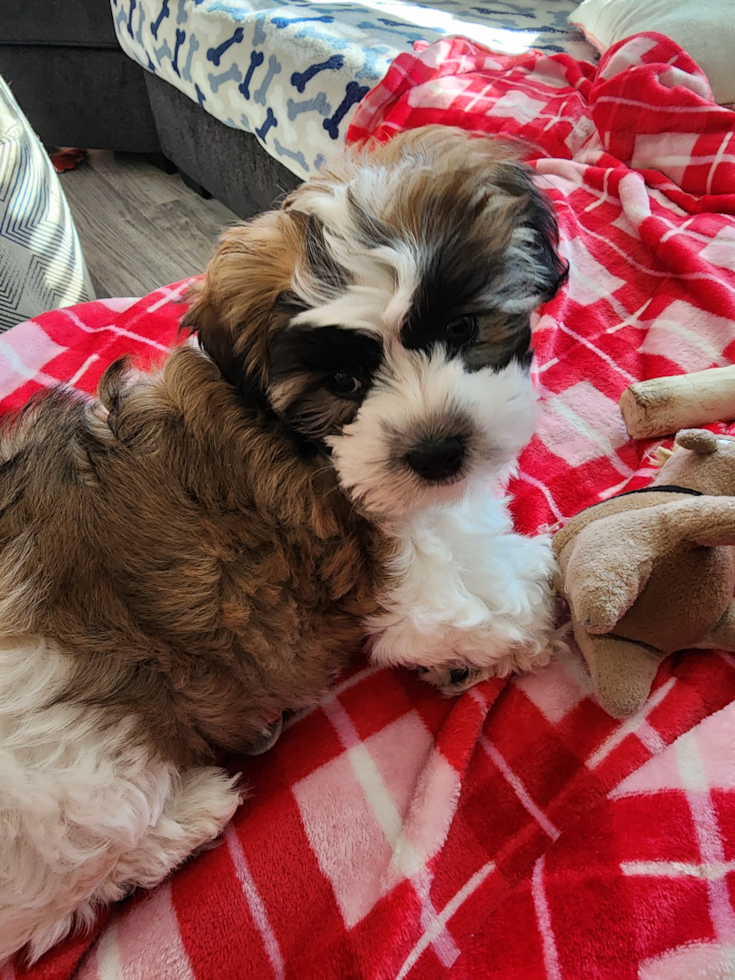
The Shichon, also called a Zuchon, combines the Shih Tzu and Bichon Frise.
The Shih Tzu brings centuries of close companion history. Its role centered on living with people, particularly in Chinese imperial households, and that strong companion focus still shapes the breed today.
The Bichon Frise comes from the Mediterranean family of small white companion dogs. Bichons gained popularity in European courts and later found success with street performers and circuses, where quick learning, confidence, and an engaging personality were genuinely useful.
That gives the Shichon an appealing balance. The Shih Tzu adds relaxed companionship and body substance, while the Bichon adds cheerful sociability and a livelier playful side.
Shichons often sit toward the larger end of the Teddy Bear category because the Bichon Frise usually carries more body than the Maltese.
Malshi Background
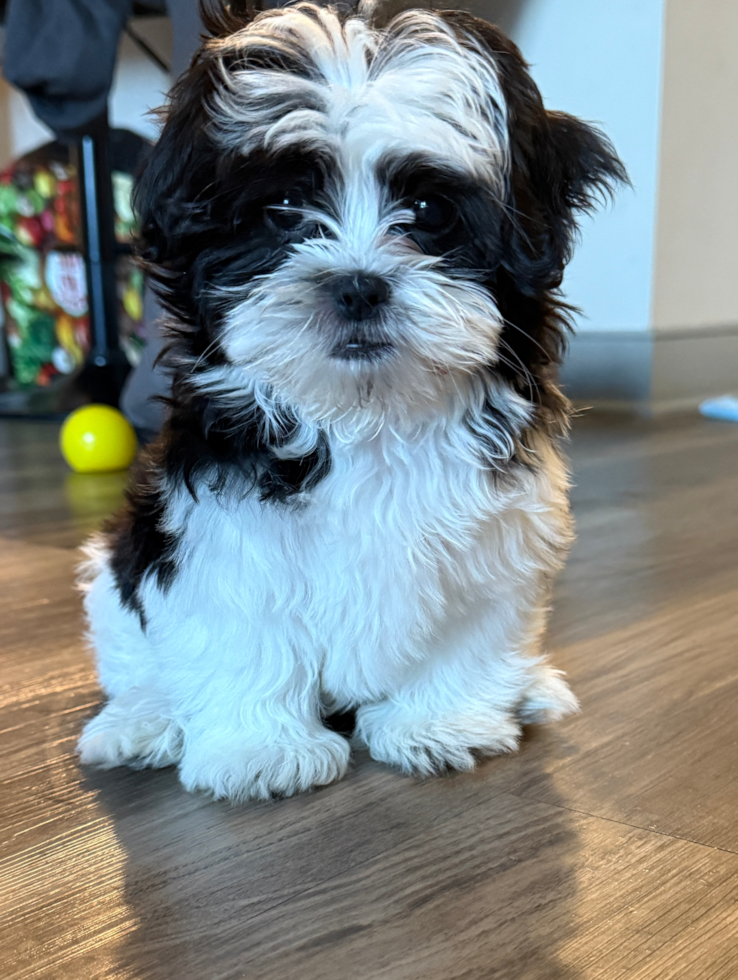
The Malshi combines the Maltese and Shih Tzu, two breeds with especially strong companion histories.
Maltese are tiny dogs, usually weighing under seven pounds. Their long silky white coats and gentle, lively temperaments have been associated with companion life for centuries.
The Shih Tzu adds more body substance, a broader color range, and a slightly calmer physical style. Both breeds bond strongly with people, so companionship sits at the center of the Malshi temperament.
Compared with the Shichon, the Malshi often feels more delicate and intimate. Maltese influence can reduce adult size and add a finer frame, while the Shih Tzu keeps enough physical sturdiness to prevent the cross from automatically feeling fragile.
The Malshi therefore represents the smaller and silkier side of the Teddy Bear category.
Havanese History and Background
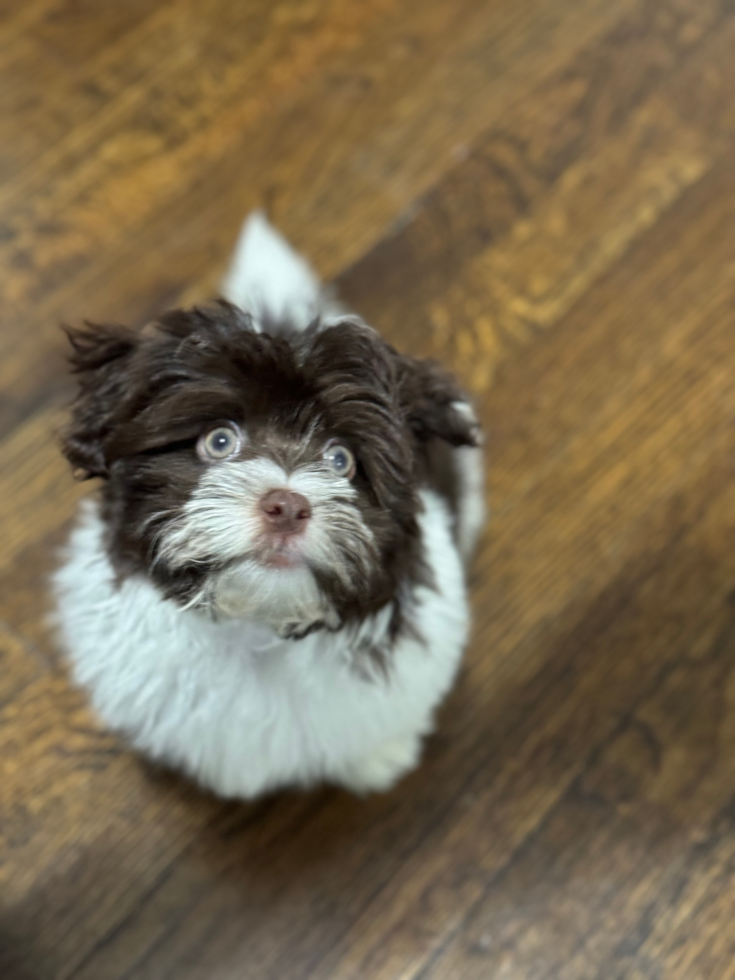
The Havanese is the national dog of Cuba and the only native Cuban dog breed recognized today.
Its ancestry connects to the same broad Mediterranean family of small bichon-type dogs that includes breeds such as the Bichon Frise and Maltese. Small companion dogs reached Cuba through
European trade and developed there into the Havanese.
For generations, Havanese were prized as household companions. Their role centered on family life, social charm, and close human relationships rather than specialized hunting or guarding.
The breed developed a distinct physical identity in Cuba. Havanese are sturdy, slightly longer than tall, and known for a long, soft coat with natural wave. Their springy movement is another defining feature.
That history creates an important distinction from the Teddy Bear. The Teddy Bear category combines traits from several breeds, while the Havanese has generations of selection behind one recognizable structure and temperament.
Teddy Bear vs Havanese Appearance
At first glance, these dogs can look very similar. Both may have dark expressive eyes, hanging ears, plumed tails, soft facial furnishings, and the rounded haircut commonly described as a teddy bear trim.
The differences are easier to see once you look past grooming.
Havanese have a defined rectangular outline, moderate bone, and a long coat that is naturally soft and often wavy. Teddy Bears cover more ground. A Shichon may look plush and compact, while a Malshi may have finer bone and straighter, silkier hair.
Facial shape also varies more on the Teddy Bear side because both Shichons and Malshis carry Shih Tzu ancestry.
Teddy Bear Appearance
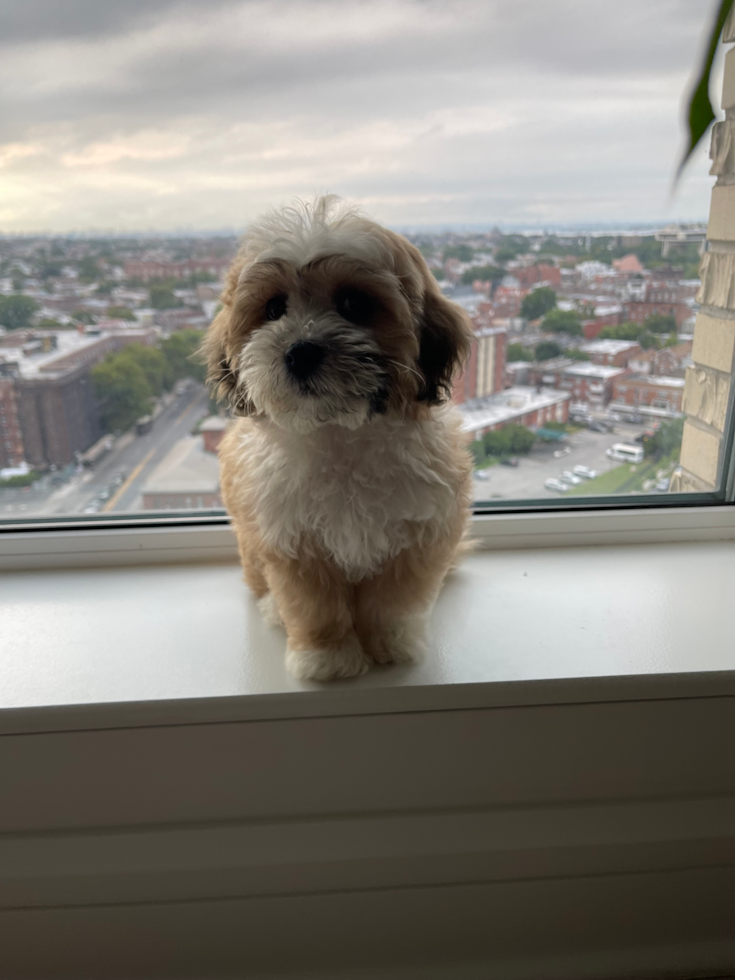
The Teddy Bear category usually covers small dogs somewhere around 6 to 18 pounds and roughly 8 to 12 inches tall, though individual dogs can fall outside that practical range.
Malshis frequently occupy the smaller end. Their Maltese ancestry can produce adults closer to true toy-dog dimensions, with lighter bone and a more delicate outline.
Shichons often carry more body. Bichon Frise influence can add width, muscle, and a sturdy little frame beneath the fluffy coat.
This creates more physical variation than you see within the Havanese breed.
Teddy Bear Coat Type and Texture
Teddy Bear coats can range from fairly straight to wavy or loosely curled.
The exact texture depends heavily on whether the dog is a Malshi or Shichon. Maltese contribute long, straight, silky hair, while Bichons contribute plush curls. The Shih Tzu contributes a long, dense coat that may have a slight wave.
A Malshi may therefore have soft, flowing hair with gentle waves. A Shichon may look much fluffier and show more obvious curl through the body and legs.
Both can develop soft cottony textures that mat easily despite feeling wonderfully smooth to the touch.
Teddy Bear Colors and Markings
Teddy Bears can appear in a very broad range of colors.
Shih Tzu ancestry contributes black, white, gold, cream, gray, brown, and numerous combinations. Bichons add a strong white or cream influence, while Maltese add white and pale shading.
A Shichon may have bold black-and-white or brown-and-white markings, while another is mostly cream or apricot. Malshis may appear white, cream, tan, black and white, brown and white, or in softer mixed patterns.
Facial markings can add heavily to the teddy bear look, especially when darker ears or patches frame large dark eyes.
Teddy Bear Eyes, Ears, and Facial Features
Large dark eyes and hanging ears are common throughout the Teddy Bear category.
The face is where Shih Tzu influence deserves attention. Some Teddy Bears inherit a moderate muzzle, while others have a visibly shorter, broader face.
Shichons may receive more muzzle length through the Bichon side. Malshis can also vary, with Maltese influence adding a finer, more projected muzzle.
A short face can make the dog look especially round and puppy-like, but it can also affect tolerance for heat and strenuous exercise.
Teddy Bear Build and Size
Teddy Bears usually have compact bodies, but the amount of physical substance varies.
A Shichon can feel quite sturdy because both the Shih Tzu and Bichon have solid small-dog frames. This can suit households that want a compact companion without choosing an especially delicate toy dog.
A Malshi may feel lighter and finer through the legs and chest. The Maltese weighs under seven pounds, so its influence can noticeably reduce body mass.
The practical result is that “Teddy Bear” alone tells you less about adult body type than “Havanese.”
Teddy Bear Shedding
Teddy Bears usually shed very little visibly.
Bichon Frise, Maltese, and Shih Tzu coats all tend to keep a significant amount of loose hair within the coat rather than dropping it freely around the home.
This can keep furniture and clothing relatively clean, but it does not eliminate hair loss. Loose strands still need to come out during brushing and grooming.
Low visible shedding also does not guarantee allergy compatibility. Dander and saliva still carry allergens.
Teddy Bear Grooming Needs
Teddy Bears require regular coat maintenance.
Malshi coats may tangle because fine silky hair rubs together around the ears, legs, chest, and harness areas. Shichon coats can mat through dense waves or curls, particularly close to the skin.
Facial care is also important because long hair grows around the eyes and mouth. Dogs with shorter Shih Tzu-like faces may collect more moisture around facial hair.
Shorter puppy trims can make everyday grooming much more manageable while preserving the round companion look.
Havanese Appearance
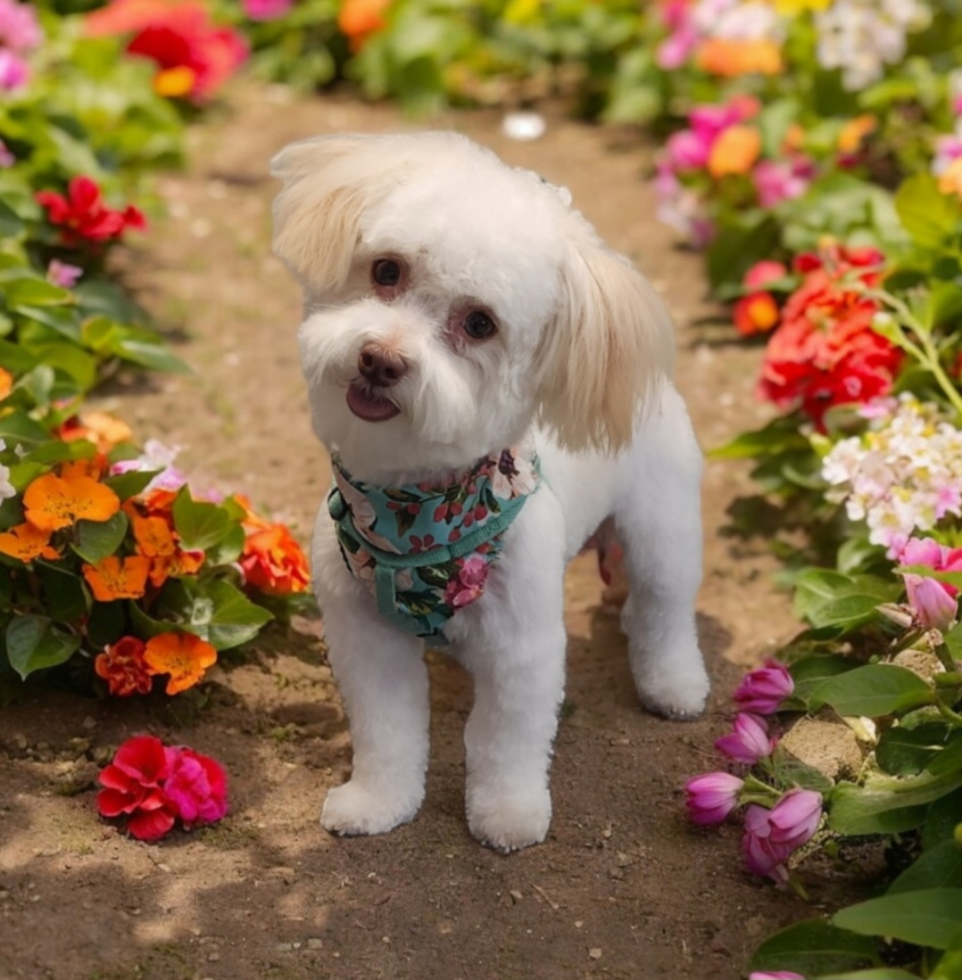
Havanese have a more predictable adult structure. They stand roughly 8.5 to 11.5 inches tall and usually weigh around 7 to 13 pounds.
The breed is slightly longer than tall, which creates a gentle rectangular outline. The body is sturdy and moderately boned without looking heavy or fragile.
A plumed tail curves over the back, and the dog's natural movement has a distinctive light, springy quality.
The Havanese may look extremely fluffy, but the coat should not hide a capable little body underneath.
Havanese Coat Type and Texture
The Havanese has a long, soft double coat.
Texture is usually silky and naturally wavy rather than tightly curled. Some coats lie flatter, while others develop stronger waves or soft cord-like sections.
The coat should feel light rather than heavy or woolly. It tends to move with the dog rather than creating the dense rounded outline of a Bichon-style coat.
This gives the Havanese a more flowing appearance than many Shichons and a fuller natural coat than the finer Malshi.
Havanese Colors and Markings
Havanese come in a wide variety of colors and patterns.
Black, white, cream, gold, chocolate, sable, silver, red-related shades, and combinations can all appear. Parti patterns and dark facial markings can create striking differences between individual dogs.
This means color alone will not separate a Havanese from a Teddy Bear. Both categories have broad palettes.
Coat texture and body outline provide more useful clues than color.
Havanese Eyes, Ears, and Facial Features
Havanese have large, dark, almond-shaped eyes with a soft and intelligent expression.
The ears hang beside the head and carry long hair. The muzzle is moderate and clearly projected rather than flat.
That facial structure provides one important practical difference from some Teddy Bears. Havanese do not have the same Shih Tzu-driven short-face tendency.
Their expression often looks alert and mischievous rather than especially round or baby-faced.
Havanese Build and Size
The Havanese is a sturdy little dog.
Its body should feel balanced and moderately boned rather than fragile. The slightly longer-than-tall shape also differs from the more variable Teddy Bear structure.
Havanese can enjoy active play, brisk walks, training, and family outings without needing the physical workload of a sporting breed.
Their narrow size range adds predictability. Most adults fit comfortably into the small companion category without stretching from tiny Malshi dimensions to larger Shichon proportions.
Havanese Shedding
Havanese generally release little visible hair.
Loose strands often stay caught in the long coat until brushing removes them, which can make the breed appealing to people who dislike hair around the home.
The coat still changes and sheds individual hairs. Low shedding does not mean hair stays permanently attached or that allergies are impossible.
The practical tradeoff is grooming. Hair that stays inside a long coat can contribute to tangles if it is not removed regularly.
Havanese Grooming Needs
A long Havanese coat requires consistent brushing and combing.
Fine hair can tangle behind the ears, beneath the legs, around the collar area, and anywhere the coat rubs during movement. The natural length also means there is simply a lot of hair to maintain.
Many companion Havanese wear shorter trims that reduce daily grooming while keeping the breed's soft appearance.
Regular face and ear care also support comfort, particularly in dogs with heavy furnishings.
Teddy Bear vs Havanese Appearance Comparison: What Is the Difference?
The strongest appearance distinction is greater Teddy Bear variation versus a more consistent Havanese type.
A Teddy Bear may lean toward the tiny, silky Malshi look or the sturdier, fluffier Shichon look. Face shape, adult weight, coat texture, and body proportions can all shift depending on which type the dog is and which traits show strongly.
The Havanese offers a narrower physical picture. Adults generally sit within a tighter size range, carry the same slightly rectangular outline, and grow a long, soft, naturally wavy coat.
Facial structure also separates them. Havanese have moderate muzzles, while Teddy Bears can inherit shorter Shih Tzu-like faces. This can affect both appearance and warm-weather comfort.
If you want the classic round teddy bear look with more variation in coat and body type, the Teddy Bear category offers several directions. If you value a more consistent adult structure with flowing waves and a lively expression, the Havanese may appeal more.
Teddy Bear vs Havanese Temperament
Both Teddy Bears and Havanese were shaped primarily around companionship, so the temperament difference is not dramatic independence versus attachment. Both generally want to share life closely with people.
The difference is more about rhythm and interaction style.
Teddy Bears often lean toward soft, close companionship through the Shih Tzu foundation. Shichons add more outgoing Bichon playfulness, while Malshis can feel particularly intimate and lap-oriented.
Havanese are also affectionate, but their personality often feels more animated. Intelligence, playfulness, sociability, and curiosity all play strong roles in the breed's everyday behavior.
Teddy Bear Temperament
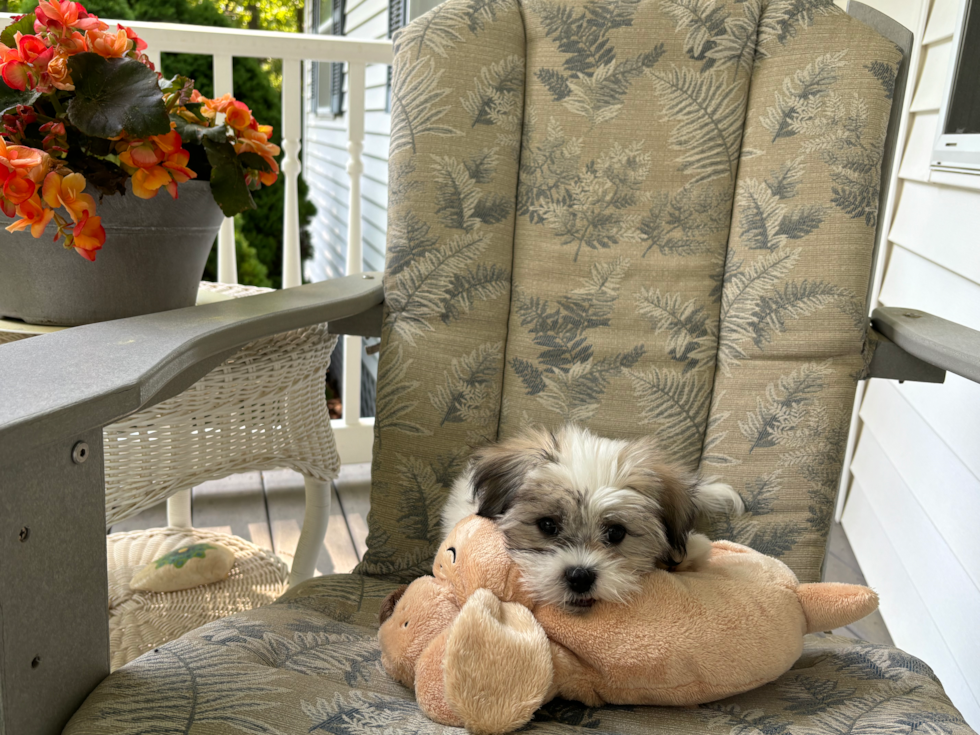
Teddy Bears tend to be affectionate, people-oriented dogs with strong companion instincts.
The Shih Tzu influence shared by Shichons and Malshis creates a dog that often enjoys close physical contact and relaxed time with family. Many are happiest when they can stay involved without needing a complicated activity.
The exact personality can differ between the two Teddy Bear types. Shichons often show more cheerful social energy through the Bichon side, while Malshis may lean toward a smaller emotional circle and especially close one-on-one attachment.
Both still fit the same broader picture: small companion dogs built around human company.
Teddy Bear Intelligence and Training
Teddy Bears are intelligent and capable learners.
Shichons gain additional performance-friendly intelligence through the Bichon Frise, which can make tricks and interactive training particularly enjoyable. Malshis combine two clever companion breeds but may show a little more independence during repetitive exercises.
Positive reinforcement suits both very well. Food, praise, affection, and short playful sessions can keep training productive.
They can learn household manners successfully without needing training to function as a major hobby.
Teddy Bear Energy Level
Teddy Bears usually have low-moderate to moderate energy.
Shichons may sit toward the more playful end because Bichons are lively and agile. Malshis usually fit a gentler physical routine, although Maltese can still show spirited bursts of activity.
Daily walks, indoor play, and family interaction can satisfy many adults.
The Teddy Bear category generally suits someone who wants a dog that enjoys activity without organizing the whole day around exercise.
Teddy Bear Companion Style
Close companionship is one of the strongest Teddy Bear traits.
Shih Tzus, Maltese, and Bichons all have deep histories as small dogs that lived closely with people. That creates a strong foundation for dogs that enjoy following family members, resting nearby, and sharing ordinary routines.
A Teddy Bear may not need a structured activity to feel included. Sitting beside someone during a quiet afternoon can carry real value.
This can make the category especially appealing to people who want a classic companion relationship rather than a dog that regularly asks for new jobs.
Teddy Bears With Children
Teddy Bears can make excellent family companions, but physical size varies enough that the type matters.
A Shichon usually has greater body substance through the Bichon side and can offer more physical margin around respectful children.
A small Malshi may need gentler handling because Maltese influence can reduce weight and bone.
Temperament is often affectionate and playful in both. The practical question is whether the child's style matches the dog's physical size.
Teddy Bears With Other Dogs and Pets
Teddy Bears generally have strong potential with other dogs.
The Bichon adds broad canine sociability to the Shichon, while Maltese and Shih Tzus can also share homes successfully with other companions.
Cats can fit well too because none of the breeds involved adds a strong terrier, herding, or prey-focused working background.
The Shichon may show more interest in active canine play, while a Malshi may prefer gentler interaction.
Teddy Bear Barking and Alertness
Teddy Bears can bark at visitors, hallway sounds, outdoor activity, or excitement.
Shih Tzus and Maltese can both act as attentive little household alarms, while Bichons also notice unusual activity despite their highly social nature.
The behavior often reflects alertness or excitement rather than serious guarding.
Quiet training is useful from puppyhood, especially in apartments where repeated sounds can give a small dog plenty of opportunities to practice barking.
Havanese Temperament
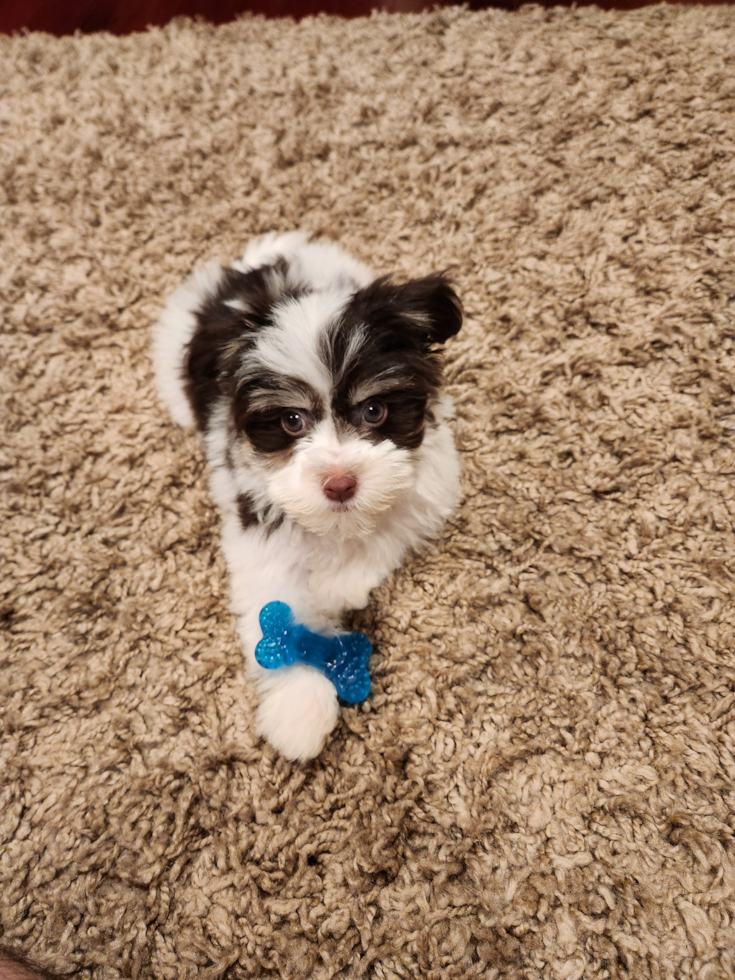
Havanese are friendly, intelligent, playful companions with a lively social style.
The breed is highly people-oriented but often brings more active curiosity into the relationship than a softer Teddy Bear type. A Havanese may want to follow family members, participate in games, investigate what is happening, and learn household routines quickly.
Their playful personality can continue well beyond puppyhood. Adults often keep an amusing, mischievous quality that gives the breed a lot of character.
This makes the Havanese feel companion-focused without feeling passive.
Havanese Intelligence and Training
Havanese generally have strong training potential.
They are intelligent, responsive dogs that enjoy interacting with people. Tricks, household manners, basic obedience, and small-dog activities can all suit the breed well.
Their social nature can make praise and interaction powerful rewards in addition to food.
Consistency still matters. A clever small dog can discover quickly which rules apply every day and which disappear when someone is busy.
Havanese Energy Level
Havanese generally have moderate energy.
They do not need strenuous daily exercise, but many enjoy more activity than people expect from a Toy breed. Walks, play, training, and family outings can all fit comfortably into their routine.
Their movement is lively and springy, which reflects the breed's playful temperament and physical structure.
A Havanese can enjoy a quiet day, but most appreciate regular opportunities to move, explore, and interact.
Havanese Playfulness and Social Style
Playfulness is one of the clearest Havanese traits.
The breed tends to approach family interaction with curiosity and humor. Toys, games, short bursts of running, training, and social attention can all attract interest.
Havanese are also broadly sociable. Many enjoy familiar visitors and adapt well to households where people regularly come and go.
Compared with the Teddy Bear category, the Havanese may feel slightly more animated and actively social rather than primarily lap-oriented.
Havanese Affection and Family Attachment
Havanese form very close family bonds.
They were bred as companions, and their social nature makes human contact central to daily life. Many follow family members around the home and prefer to spend much of the day near someone.
Their affection often combines closeness with interaction. A Havanese may rest beside a person and then quickly join a game or investigate when household activity changes.
Comfortable alone time still deserves practice because a dog that loves company needs to learn that ordinary separation is safe.
Havanese With Children
Havanese can make excellent family dogs.
The breed is small but sturdy, which gives it a useful balance for respectful children. Its playful temperament also creates plenty of opportunities for games and interaction.
Children should still understand how to handle a small dog properly. A seven-to-thirteen-pound companion can be injured through careless lifting or rough play.
Compared with the Teddy Bear category as a whole, the Havanese offers greater predictability in physical size, which can simplify the family decision.
Havanese With Other Dogs and Pets
Havanese generally have good potential with other dogs.
Their social temperament can work beautifully with another playful companion, and many enjoy canine interaction without the more specialized instincts seen in terriers or herding breeds.
Cats can also fit comfortably into the household. A young Havanese may invite play, but persistent prey-focused behavior is not central to the breed.
The breed's lively social style can suit another active small dog particularly well.
Havanese Barking and Watchfulness
Havanese are alert and can bark, but serious guarding is not the core of the breed.
They may notice visitors, outdoor movement, or unfamiliar sounds quickly. Their strong interest in family activity can also make them attentive to every change around the home.
Some dogs bark through excitement as much as alertness.
Clear household routines and early quiet training can keep their awareness useful without letting it dominate apartment life.
Teddy Bear vs Havanese Temperament Comparison: What Is the Real Difference?
The strongest temperament distinction is soft companion ease versus lively companion engagement.
The Teddy Bear generally leans toward a relaxed, physically close style. Shih Tzu influence sits at the heart of both Shichons and Malshis, so simple companionship can satisfy a large part of the dog's social needs.
The Havanese generally adds more playful curiosity and active participation. It can be equally affectionate while showing greater enthusiasm for games, learning, exploration, and family activity.
The Teddy Bear side also has more internal variation. A Shichon may feel buoyant and broadly social through its Bichon ancestry, while a Malshi can lean toward a gentler and more intimate style through the Maltese.
The Havanese gives the reader a more consistent overall temperament profile. It is usually the stronger fit for someone who wants a playful, trainable companion, while the Teddy Bear may suit someone who places relaxed closeness slightly higher.
Teddy Bear vs Havanese: Which One Should You Choose?
The Teddy Bear and Havanese both suit people looking for affectionate small companions. Neither needs extreme exercise, and both can fit apartments, families, seniors, and first-time ownership when grooming and social needs are understood.
The choice gets easier when you think about predictability, activity level, physical size, facial structure, coat style, and how you want the dog to interact with you during an ordinary day.
Choose a Teddy Bear if You Want a Soft Companion-Focused Lifestyle
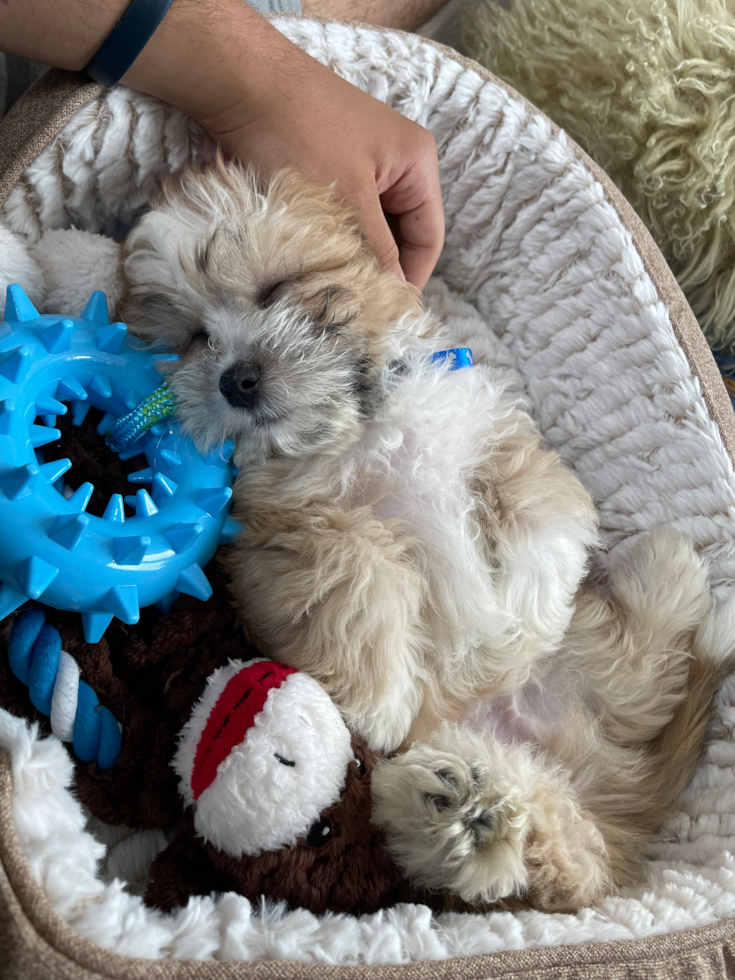
A Teddy Bear puppy may suit you better if your ideal small dog places close physical companionship at the center of daily life.
Both Shichons and Malshis carry Shih Tzu ancestry, which can add a softer pace and strong interest in simply staying near familiar people. Walks and play still matter, but structured activity does not need to occupy a large portion of the day.
The category also offers some choice within the same general companion style. A Shichon may appeal if you want more Bichon playfulness and a sturdier body, while a Malshi may suit someone who prefers a smaller, silkier companion.
The tradeoff is broader variation. The Teddy Bear label does not point to one exact adult size, coat texture, muzzle length, or body type.
Choose a Havanese if You Want a Lively, Predictable Small Companion
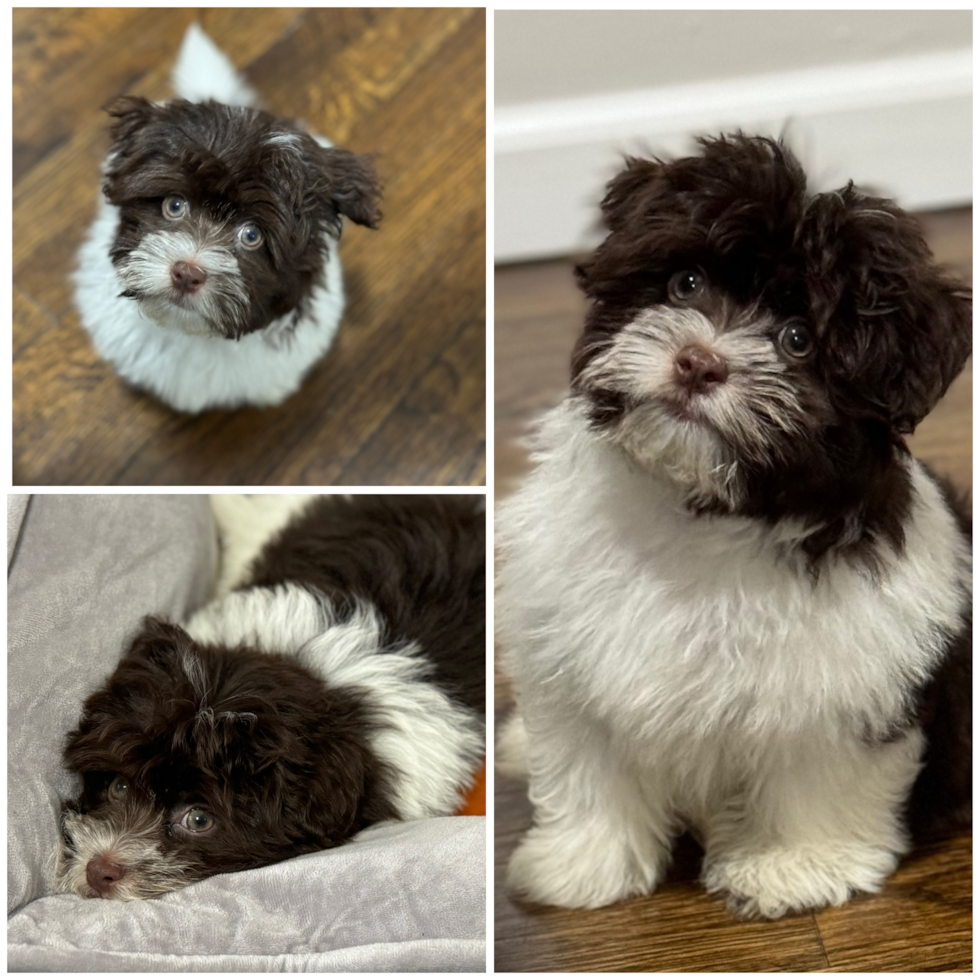
A Havanese puppy may suit you better if you want a small companion with a more predictable adult structure and a playful, interactive personality.
The breed combines sturdy Toy-dog dimensions with intelligence and plenty of social enthusiasm. Walks, tricks, games, outings, and family interaction can all fit naturally into the relationship.
The Havanese also offers greater consistency in muzzle shape and body type. Someone who wants a defined purebred profile rather than the wider variation of a cross may appreciate that predictability.
The tradeoff is coat care. A long Havanese coat can require substantial grooming even though visible shedding is low.
Which Is Bigger: Teddy Bear or Havanese?
The answer depends on which Teddy Bear type you compare.
Havanese usually weigh around 7 to 13 pounds and stand about 8.5 to 11.5 inches tall. That gives the breed a fairly narrow, predictable range.
Malshis can sit below that range or overlap with it, particularly when Maltese size shows strongly. Shichons can overlap completely and may reach higher weights through the Bichon side.
The Teddy Bear category therefore covers more physical variation, while the Havanese gives you a clearer picture of typical adult size.
Which Is Calmer: Teddy Bear or Havanese?
The Teddy Bear generally has the calmer companion profile, especially when Shih Tzu traits show strongly.
Both Shichons and Malshis can enjoy playful activity, but the shared Shih Tzu ancestry often supports a relaxed indoor rhythm once basic exercise needs are met.
Havanese also settle well, but their personality tends to feel livelier and more curious. They may look for more opportunities to play, follow activity, or interact.
For someone who wants the stronger lapdog direction, the Teddy Bear may have the advantage.
Which Is More Energetic?
The Havanese generally has the more active everyday style.
The breed is playful, agile, and interested in family activity. Regular walks, games, and exploration can all form an enjoyable part of the week.
Teddy Bears still need exercise, and Shichons can be especially playful through their Bichon side. Malshis often sit toward the gentler end of the energy range.
The difference is moderate rather than dramatic. Neither belongs in a high-endurance category, but the Havanese usually feels busier.
Which Needs More Mental Stimulation?
The Havanese may have a slight advantage for mental engagement needs.
Havanese are bright, trainable dogs that often enjoy tricks, learning, and interactive games. Their playful curiosity gives owners plenty of opportunities to use the dog's brain.
Teddy Bears learn well too, especially Shichons with strong Bichon influence. Malshis can be clever while placing less value on repeated exercises.
Someone who enjoys training regularly may find the Havanese a little more naturally responsive to that lifestyle.
Which Is Easier to Train?
The Havanese generally has the advantage for consistent training enthusiasm.
Its intelligence, sociability, and interest in interaction can make basic manners and tricks enjoyable to teach.
Teddy Bears can learn very successfully, but their training style is more variable. Shichons may show strong interactive learning through the Bichon side, while Malshis may bring more independent Shih Tzu or Maltese tendencies.
Positive reinforcement works beautifully for both sides of the comparison. The Havanese simply offers more predictability in how that learning style usually feels.
Which Is Better for First-Time Dog Owners?
Both can make excellent first dogs.
A Teddy Bear may suit a first-time owner who wants a soft companion routine with manageable exercise. The owner should be comfortable with grooming and understand that Shichons and Malshis can differ.
A Havanese may suit a first-time owner who values predictability and enjoys training. The breed is sociable, intelligent, and small enough to handle easily while still having good physical substance.
For either choice, adult-owner reviews can add useful perspective on house training, grooming, barking, alone time, and the mature dog's daily routine.
Which Is Better With Young Children?
This comparison depends partly on which Teddy Bear type is involved.
A Shichon can be an excellent family option because the Bichon and Shih Tzu both contribute sturdy small-dog bodies. A tiny Malshi may need more careful handling because Maltese influence can reduce size considerably.
The Havanese offers a useful middle ground. It is consistently small but sturdy and tends to have a playful, family-friendly temperament.
For households with young children, the Havanese may offer the more predictable physical profile, while a sturdy Shichon can match it very well.
Which Is Better With Older Children?
Both can work beautifully with older children.
Teddy Bears may appeal to children who want cuddling, gentle games, and a dog happy to stay nearby during quieter activities. Shichons can also bring plenty of playful energy.
Havanese may suit children who enjoy tricks, games, walks, and more active interaction. Their playful temperament gives children many constructive ways to share time with the dog.
The child's preferred style of companionship can matter more than small differences in breed traits.
Which Is Better With Other Dogs?
Both have strong potential in multi-dog homes.
Shichons often bring excellent canine sociability through the Bichon side, while Malshis can also enjoy companionship when introductions and play styles match.
Havanese are social and playful, which can make them an especially good fit with another dog that enjoys interaction.
For a very quiet or older canine companion, a softer Malshi may fit more easily. For an active small-dog household, a Shichon or Havanese may provide a better play match.
Which Is Better With Cats?
Both can live very successfully with cats.
The breeds involved in the Teddy Bear category are companion dogs rather than specialized hunters or herders. Havanese also lack strong prey-focused working ancestry.
Young dogs may still chase a running cat through excitement, but persistent prey behavior is not a central expectation on either side.
A calmer Teddy Bear may have a small advantage in a very quiet cat household, while a well-trained Havanese can be equally respectful.
Which Is More Affectionate?
Both are deeply affectionate, so the difference lies more in expression.
The Teddy Bear may lean toward prolonged physical closeness. Shih Tzu ancestry encourages a companion style centered on laps, sofas, following familiar people, and quiet shared time.
The Havanese often mixes affection with playful interaction. It may cuddle happily and then spring up when something interesting begins.
Neither gives less affection. The choice is between softer lapdog closeness and a more animated companion bond.
Which Is More Social With Strangers?
Both can be highly social.
Shichons may show especially broad friendliness through the Bichon Frise, while Malshis can range from immediately social to slightly more focused on familiar people.
Havanese are generally outgoing and curious. Their playful temperament can make visitors and new situations interesting rather than threatening.
The Havanese may offer a little more predictability here, while Teddy Bear sociability depends more on whether the dog leans toward Shichon or Malshi traits.
Which Barks More?
There is no dramatic winner.
Teddy Bears may bark at doors, outside noises, visitors, or excitement. Shih Tzu and Maltese influence can both add alert behavior, while Bichons are also capable little watchdogs.
Havanese are alert and may announce unfamiliar sounds, but their social temperament can help them settle once they understand the situation.
Training has a large influence on this category. Either dog can turn hallway noise into a daily habit if barking is constantly rehearsed.
Which Sheds Less: Teddy Bear or Havanese?
Both tend to release little visible hair.
The Teddy Bear category has strong low-shedding influence from Maltese, Bichon, and Shih Tzu ancestry. Shichons with dense curls may hold especially large amounts of loose hair inside the coat.
Havanese also tend to keep loose hair within their long coat rather than leaving much around the home.
The difference is small enough that grooming style matters more than choosing purely on shedding.
Which Needs More Grooming?
Both require serious grooming when the coat is kept long.
Teddy Bear grooming depends on type. Malshis may need frequent detangling through fine silky hair, while Shichons may need deeper combing through dense waves and curls.
Havanese need regular brushing through a long, soft coat that can tangle easily. A full natural coat can take significant time to maintain.
Shorter companion trims make either choice easier, but neither is a truly wash-and-go dog.
Which Is Better for Allergies?
Neither can guarantee compatibility with dog allergies.
Both Teddy Bears and Havanese often shed little visible hair, which can reduce loose coat around the home. That may appeal to people who strongly dislike shedding.
Dog allergens also come from saliva and skin, so coat type alone cannot predict an individual's reaction.
Personal tolerance is more useful than choosing one simply because it is described as low shedding.
Which Is Better for Apartment Living?
Both are excellent apartment candidates.
Teddy Bears need little physical space and often have manageable exercise requirements. The main apartment concerns are barking, coat care, and comfortable alone time.
Havanese fit small homes equally well but may appreciate a little more deliberate play and interaction during the day.
Neither needs a large yard. A good daily routine matters much more than home size.
Which Is Better for Seniors?
Both can make excellent companions for seniors.
The Teddy Bear may suit someone who prioritizes calm physical closeness and modest exercise needs. A Malshi can be especially light and portable, while a Shichon provides more sturdiness.
The Havanese may suit an active senior who wants a playful, trainable companion that enjoys walking, games, and social outings while staying within an easy-to-handle size.
Professional grooming can simplify ownership for either choice.
Which Is Better for a Quieter Household?
The Teddy Bear generally has the advantage for a quieter companion lifestyle.
Shih Tzu influence can make simple family presence deeply rewarding. Malshis in particular can fit beautifully into calm routines built around gentle walks and plenty of shared indoor time.
Havanese can certainly enjoy quiet households, but their playful curiosity may ask for more regular interaction.
For someone whose ideal day includes a lot of relaxed companionship, the Teddy Bear may feel more natural.
Which Is Better for an Active Small-Dog Lifestyle?
The Havanese generally has the advantage for a more active small-dog lifestyle.
The breed's lively movement, playful temperament, and trainability suit walks, tricks, games, outings, and regular social activity.
Shichons can also keep up nicely and may enjoy a fairly active routine. Malshis usually lean more strongly toward gentle companion life.
For someone who wants a small dog that participates enthusiastically in daily activities, the Havanese offers the more consistent fit.
Which Is More Physically Sturdy?
The answer depends on the Teddy Bear type.
Shichons can be very sturdy because Bichon Frise and Shih Tzu ancestry both add solid small-dog structure. Malshis can sit at a lighter and finer end because of the Maltese.
Havanese offer greater predictability. The breed is consistently small but moderately boned and should not look fragile.
For families that care strongly about physical substance, the Havanese or Shichon may offer the clearer direction over the smaller Malshi.
Which Handles Warm Weather Better?
The Havanese generally has the easier facial structure for warm weather.
Havanese have moderate muzzles that support normal panting, although their long coats still require sensible heat management.
Both Teddy Bear types carry Shih Tzu ancestry. A dog that inherits a noticeably short muzzle may have more difficulty cooling itself during hot weather or strenuous exercise.
Cooler walking hours, shade, fresh water, and indoor cooling matter for every small dog during hot conditions, but short-faced Teddy Bears deserve extra care.
Which Is More Predictable in Adult Size and Appearance?
The Havanese has the clear advantage for predictability.
It is an established purebred with a defined height range, recognizable rectangular structure, moderate muzzle, plumed tail, and long soft coat.
The Teddy Bear category covers two different crosses. A Malshi may grow into a tiny silky companion, while a Shichon may develop a sturdier body and curlier coat.
For someone who wants a clearer picture of the adult dog before choosing the general type, the Havanese offers greater consistency.
Teddy Bear vs Havanese: The Final Comparison
Choosing between a Teddy Bear vs Havanese requires a slightly different approach from choosing between two fixed breeds. The Teddy Bear represents both Shichons and Malshis, so it naturally covers a wider range of adult size, coat texture, body structure, and temperament.
What unites the Teddy Bear side is companionship. Shih Tzu ancestry sits behind both types and adds a strong preference for close family life. The Shichon reinforces that with the Bichon Frise's cheerful sociability and sturdy body, while the Malshi adds Maltese gentleness, silky hair, and smaller dimensions.
The Havanese offers a more consistent package. It is a purebred companion from Cuba with a defined small but sturdy structure, moderate muzzle, long soft coat, playful temperament, and lively social style.
Daily rhythm may make the decision easier. Teddy Bears generally lean toward softer companion life, especially when Shih Tzu or Maltese traits show strongly. Havanese usually bring more playful curiosity and a greater appetite for interaction.
Their exercise needs still overlap considerably. Neither needs hard physical work, and both can fit apartment or city life beautifully. The Havanese simply offers a more consistently animated version of small-dog companionship.
Coat care is substantial on both sides. Teddy Bears can have silky Malshi hair or denser Shichon waves and curls. Havanese have long, soft coats that require regular brushing when kept at natural length.
Facial structure deserves special attention in the practical comparison. Havanese have moderate muzzles, while either Teddy Bear type can inherit shorter Shih Tzu-like facial traits. This can give the Havanese an advantage for warm-weather comfort and sustained play.
If you want a soft, affectionate Teddy Bear companion with a calmer rhythm and enjoy the choice between the playful Shichon and smaller, silkier Malshi, the Teddy Bear may suit your household better.
If you want a predictable purebred companion with a sturdy small body, lively personality, playful intelligence, and consistent Havanese structure, the Havanese may make more sense.
Breed-specific customer reviews can add useful perspective, especially when owners discuss adult size, coat maintenance, barking, heat tolerance, children, other pets, and how active the dog feels after puppyhood.
The real choice is between the broader Teddy Bear family of soft companion crosses and the more predictable, lively Havanese companion type. Both are built around human connection, but they express that connection in noticeably different ways.
Frequently Asked Questions
What is a Teddy Bear dog in this comparison? The Teddy Bear category includes both the Shichon and Malshi. A Shichon combines a Shih Tzu with a Bichon Frise, while a Malshi combines a Shih Tzu with a Maltese. This means Teddy Bear does not describe one standardized cross with one exact size or coat. The category covers closely related small companion dogs that share Shih Tzu ancestry but can differ in body type, texture, and adult weight.
What is the main difference between a Teddy Bear and Havanese? The Havanese is an established purebred with a consistent small, sturdy structure and a lively, playful companion temperament. The Teddy Bear category includes two crosses and therefore offers more variation. Teddy Bears generally lean toward softer Shih Tzu-style companionship, while Havanese tend to offer more predictable size, more active playfulness, and a consistently moderate facial structure.
Which is bigger, a Teddy Bear or Havanese? The answer depends on whether the Teddy Bear is a Malshi or Shichon. Malshis can be smaller than a typical Havanese, while Shichons can overlap with or exceed Havanese weight. Havanese usually sit around 7 to 13 pounds and 8.5 to 11.5 inches tall. Their narrow breed range makes adult size easier to anticipate at the category level.
Which is calmer, a Teddy Bear or Havanese? The Teddy Bear generally has the calmer companion profile, especially when Shih Tzu traits are strong. Malshis often fit particularly well into gentle routines, while Shichons add more playful Bichon energy. Havanese are still manageable small companions, but their lively temperament often creates more interest in play, exploration, and interaction throughout the day.
Which is easier to train, a Teddy Bear or Havanese? The Havanese generally offers more predictable training enthusiasm. The breed is intelligent, playful, and responsive to people, which makes tricks and household skills rewarding to teach. Teddy Bears can also learn very well. Shichons may especially enjoy training through Bichon influence, while Malshis can show a slightly more independent companion style.
Which sheds less, a Teddy Bear or Havanese? Both generally release little visible hair. Shichons, Malshis, and Havanese all have coat types that tend to hold loose strands rather than leaving large amounts around the home. The grooming burden does not disappear with low shedding. Teddy Bear coats and Havanese coats can both mat when brushing is inconsistent.
Which needs more grooming, a Teddy Bear or Havanese? Both require regular grooming, and there is no clear low-maintenance winner. Teddy Bear grooming differs between the silkier Malshi and denser, fluffier Shichon. A long Havanese coat also requires frequent brushing and combing. Shorter companion trims can reduce the workload substantially on either side.
Is a Teddy Bear or Havanese better with children? Both can make excellent family companions. A Shichon or Havanese usually offers more physical sturdiness than a very small Malshi, which can matter around younger children. Older children can do very well with any of these dogs when they understand respectful handling. The Havanese may especially appeal to children who enjoy games and training, while Teddy Bears can offer a softer cuddling style.
Is a Teddy Bear or Havanese better for apartment living? Both are excellent apartment choices because they are small and need manageable amounts of exercise. Teddy Bears may fit quieter routines slightly more naturally, while Havanese may appreciate more deliberate play and interaction. Barking, grooming, daily walks, and comfortable alone time matter much more than floor space for either choice.
Should I choose a Teddy Bear or Havanese? Choose a Teddy Bear if you want a soft, affectionate companion and like the range offered by the playful, sturdier Shichon and the smaller, silkier Malshi. Teddy Bears generally fit a calm, close family lifestyle extremely well. Choose a Havanese if you want a more predictable small purebred with a sturdy body, lively social personality, strong training potential, and a playful everyday rhythm. Both choices prioritize companionship, but the Teddy Bear leans softer while the Havanese brings more consistent animation and structure.