


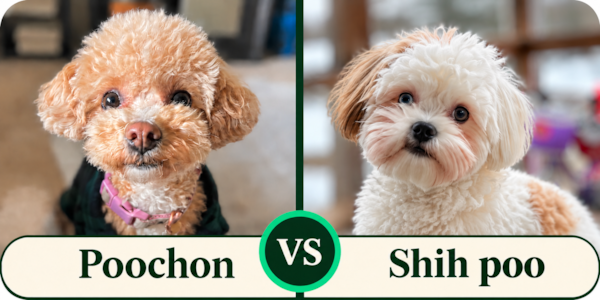
Published Wednesday, October 28, 2026 by Pilesgrove Pups
The Poochon vs Shih Poo comparison starts with a major similarity: both dogs share Poodle ancestry. That common foundation can give either cross a bright mind, strong training potential, athletic ability, close family attachment, and the possibility of a wavy or curly coat that releases little visible hair.
The difference comes from the other breed. A Poochon combines the Poodle with the Bichon Frise, while a Shih Poo combines the Poodle with the Shih Tzu. That gives us a useful way to compare them because the Poodle stays relatively constant while the Bichon and Shih Tzu pull the finished dog in different directions.
The Bichon Frise adds a cheerful, sturdy little companion with a long history of social charm, performance, and playful interaction. Bichons are compact but athletic, highly adaptable, and famously open to people. Added to the Poodle, those qualities can create a Poochon that feels lively, socially confident, and especially responsive to games and training.
The Shih Tzu adds a different kind of companion influence. It was shaped around close human company in Chinese imperial households, with a sturdy body, long flowing coat, affectionate temperament, and more relaxed approach to daily activity. Added to the Poodle, those traits can create a Shih Poo that is intelligent and playful but often a little softer, calmer, and more content with quiet companionship.
Their coats differ too. Poochons usually have a fairly strong foundation for waves or curls because both Bichons and Poodles contribute textured coats. Shih Poos can range more widely from loose waves to soft curls because the Shih Tzu brings a long, flowing double coat rather than a naturally curly one.
The better choice is not simply which dog is smarter or more affectionate. Both can excel in those areas. The useful question is whether you prefer the Bichon Frise’s buoyant sociability and playful athleticism or the Shih Tzu’s companion softness, sturdier body, and calmer everyday rhythm added to the same intelligent Poodle foundation.
Table of Contents
- Poochon vs Shih Poo at a Glance
- Poochon and Shih Poo Overview and History
- Poochon vs Shih Poo Appearance
- Poochon vs Shih Poo Temperament
- Poochon vs Shih Poo: Which One Should You Choose?
- Choose a Poochon if You Want a Social, Interactive Little Dog
- Choose a Shih Poo if You Want a Softer, More Relaxed Companion
- Which Is Bigger: Poochon or Shih Poo?
- Which Is Calmer: Poochon or Shih Poo?
- Which Is More Energetic?
- Which Needs More Mental Stimulation?
- Which Is Easier to Train?
- Which Is Better for First-Time Dog Owners?
- Which Is Better With Young Children?
- Which Is Better With Older Children?
- Which Is Better With Other Dogs?
- Which Is Better With Cats?
- Which Is More Affectionate?
- Which Is More Social With Strangers?
- Which Barks More?
- Which Sheds Less: Poochon or Shih Poo?
- Which Needs More Grooming?
- Which Is Better for Allergies?
- Which Is Better for Apartment Living?
- Which Is Better for Seniors?
- Which Is Better for a Quieter Household?
- Which Is Better for an Active Small-Dog Lifestyle?
- Which Is More Physically Sturdy?
- Which Handles Warm Weather Better?
- Which Has the More Predictable Coat Texture?
- Poochon vs Shih Poo: The Final Comparison
Poochon vs Shih Poo at a Glance
| Trait | Poochon | Shih Poo |
| Parent breeds | Bichon Frise × Toy or Miniature Poodle | Shih Tzu × Toy or Miniature Poodle |
| Other common names | Bichpoo, Bichonpoo | Shihpoo, Shih-Poo |
| General size | Small | Small |
| Common adult weight | Often about 6–17 pounds | Often about 7–18 pounds |
| Common adult height | Often about 9–15 inches | Often about 8–15 inches |
| Build | Compact, agile, sturdy | Compact, sturdy, sometimes shorter-legged |
| Coat | Usually wavy or curly | Straight, wavy, or curly |
| Shedding | Usually very low | Usually low |
| Grooming | High | Moderate to high |
| Common colors | White, cream, apricot, red, brown, black, gray and more | White, cream, gold, black, brown, gray, apricot, red and combinations |
| Energy | Moderate | Low-moderate to moderate |
| Mental stimulation | Moderate to high | Moderate |
| Trainability | High | Moderate to high |
| Broad sociability | Usually very high | High |
| Watchfulness | Moderate | Moderate |
| Heat tolerance | Typical small-dog caution | Extra caution if short-faced |
| Best fit | Someone wanting a bright, social, interactive companion | Someone wanting a softer, adaptable Poodle mix with a calmer rhythm |
Neither cross has an official breed standard, so these ranges should be treated as practical guides rather than guarantees. Toy or Miniature Poodle ancestry can also affect adult size, which explains why both crosses cover more ground than their purebred companion parent alone.
Poochon and Shih Poo Overview and History
The easiest way to understand this pairing is to begin with the breed they share. Poodles are intelligent, athletic dogs with water-retrieving history, strong responsiveness to training, and a natural ability to learn complex routines. Those traits give both the Poochon and Shih Poo more working intelligence than their teddy bear appearance may suggest.
The Bichon Frise and Shih Tzu then shape that Poodle foundation in different ways. Both are companion-oriented dogs, but they reached companion life through different histories and carry different physical and behavioral traits.
The Bichon has a particularly social and adaptable history. Small white dogs from the Mediterranean family gained popularity among European nobility, later worked with street entertainers and circuses, and built a reputation for cheerful performance and interaction. The Shih Tzu followed a more protected palace-companion path, with centuries of close association with Tibetan and Chinese court dogs.
The result is a subtle but meaningful difference. The Poochon combines Poodle intelligence with another lively, performance-friendly companion. The Shih Poo combines that same Poodle intelligence with a breed whose central purpose has long been comfortable human companionship.
The Poodle Foundation Both Dogs Share
Poodles come in three size varieties, but Toy and Miniature Poodles are the ones most relevant to these small crosses. Toy Poodles stand no more than about 10 inches and commonly weigh 4 to 6 pounds, while Miniature Poodles stand about 10 to 15 inches and commonly weigh around 10 to 15 pounds.
The Poodle’s elegant appearance can hide how athletic the breed actually is. Poodles developed around water retrieval and needed intelligence, swimming ability, responsiveness, and enough stamina to work effectively with people.
Those traits did not disappear as smaller Poodle varieties developed. Toy and Miniature Poodles still carry the same basic proportions, quick learning, alertness, and interest in interaction.
That shared Poodle influence is why both the Poochon and Shih Poo can learn quickly, enjoy tricks, notice household routines, and fit active companion life much better than their soft coats might suggest.
Poochon History and Background
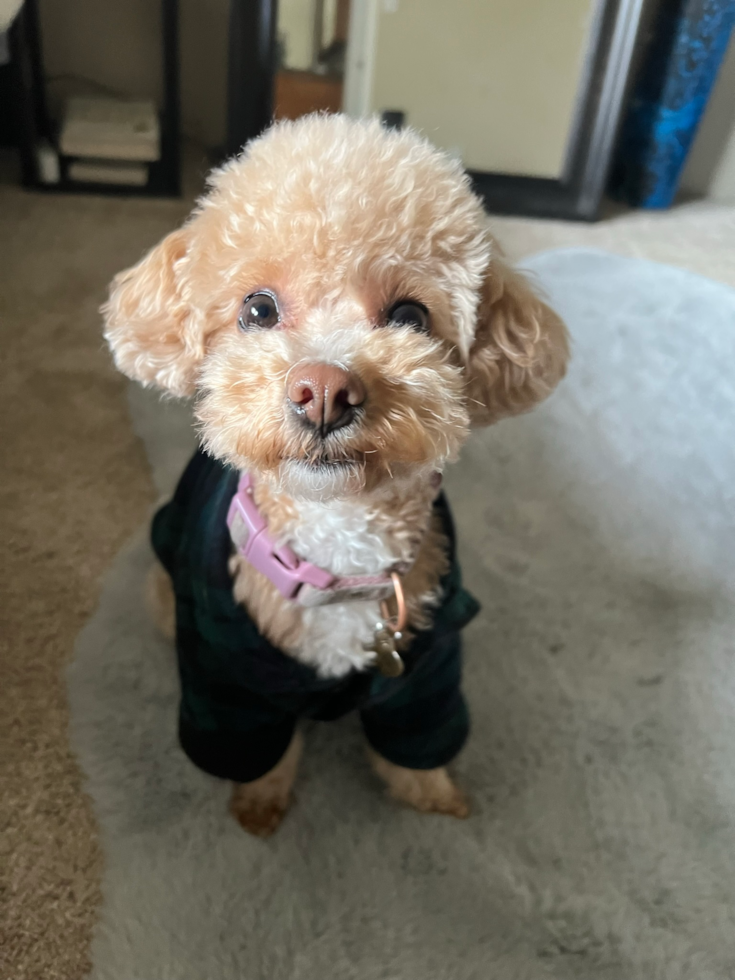
The Poochon, also called a Bichpoo or Bichonpoo, combines the Bichon Frise with a Toy or Miniature Poodle. There is no single well-documented origin story that reliably defines the first Poochon, so it is safer to focus on the established histories of the breeds behind the cross.
The Bichon Frise comes from the Mediterranean family of small companion dogs known historically as Barbichon-type dogs. Bichons later gained favor among European aristocrats, but their adaptability proved especially important when political and social changes pushed many dogs outside court life.
Their charm and intelligence helped them find new roles with street performers and circuses. That history matters because it rewarded more than a cute appearance. Dogs needed to engage with people, learn routines, and perform confidently in stimulating environments.
Modern Bichons are still compact, sturdy, playful dogs. Adults stand around 9.5 to 11.5 inches and commonly weigh 12 to 18 pounds, giving them more physical substance than their powder-puff appearance suggests.
Pairing the Bichon with a Poodle reinforces trainability, sociability, and low visible shedding. The Poochon can therefore feel like a companion dog with a strong performance streak, especially when the dog discovers that learning new things earns attention.
Shih Poo History and Background
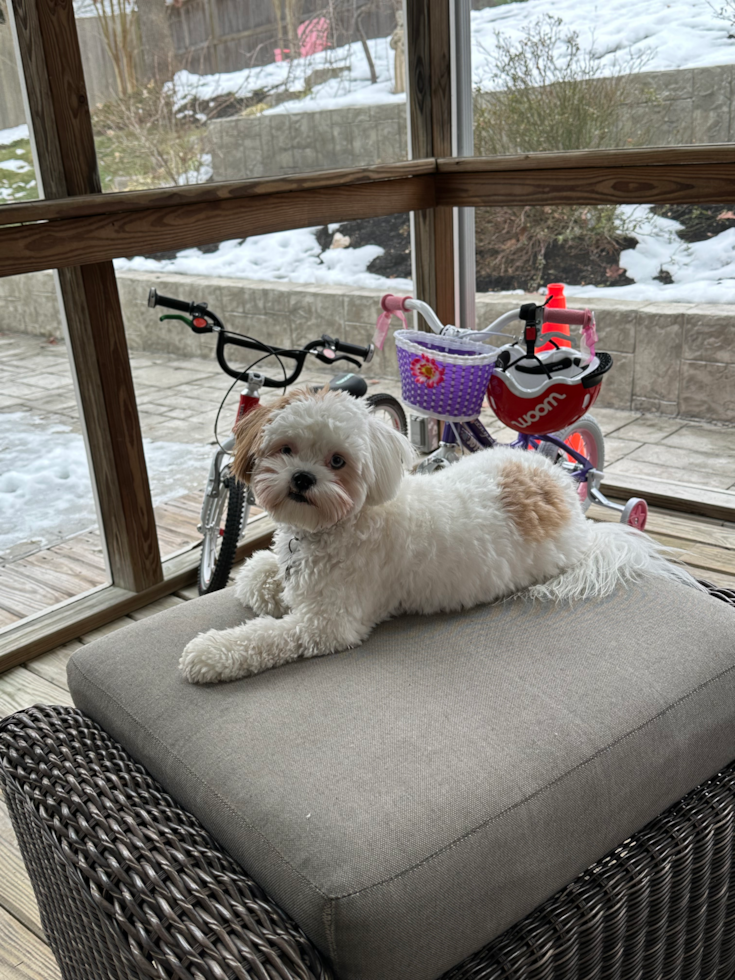
The Shih Poo combines Shih Tzu and Poodle ancestry. Like the Poochon, it belongs to the modern group of companion crosses without one universally documented first breeder or exact starting date.
The Shih Tzu contributes one of the clearest companion histories in the dog world. Dogs behind the modern breed were associated with Tibet and Chinese imperial courts for centuries, where their role centered on close human company.
Modern Shih Tzus still reflect that purpose. They are affectionate, outgoing, playful dogs that typically enjoy being near their people without requiring the kind of physical workload associated with sporting or herding breeds.
The Shih Tzu also changes the physical picture. Adults usually stand around 9 to 10.5 inches and weigh 9 to 16 pounds. They are compact, solid dogs with good body substance, long flowing double coats, large expressive eyes, and short muzzles.
Added to the Poodle, those traits create a cross that can keep plenty of intelligence and playful energy while shifting toward a calmer companion rhythm. The Shih Poo can enjoy learning without necessarily asking for as much structured mental work as the Poochon.
Poochon vs Shih Poo Appearance
The Poochon and Shih Poo can look remarkably similar after a teddy bear trim. Both may have dark eyes, floppy ears, rounded facial furnishings, compact bodies, and soft fluffy coats.
The differences sit underneath the haircut. Poochons usually have a more consistent foundation for waves and curls because both the Bichon and Poodle contribute textured hair. Shih Poos can show a wider range because the Shih Tzu adds a long, straighter coat and a very different facial structure.
Body shape also offers clues. Poochons may look slightly more athletic or square, while Shih Poos can have a broader, more substantial body and shorter-looking legs when Shih Tzu traits show strongly.
Poochon Appearance
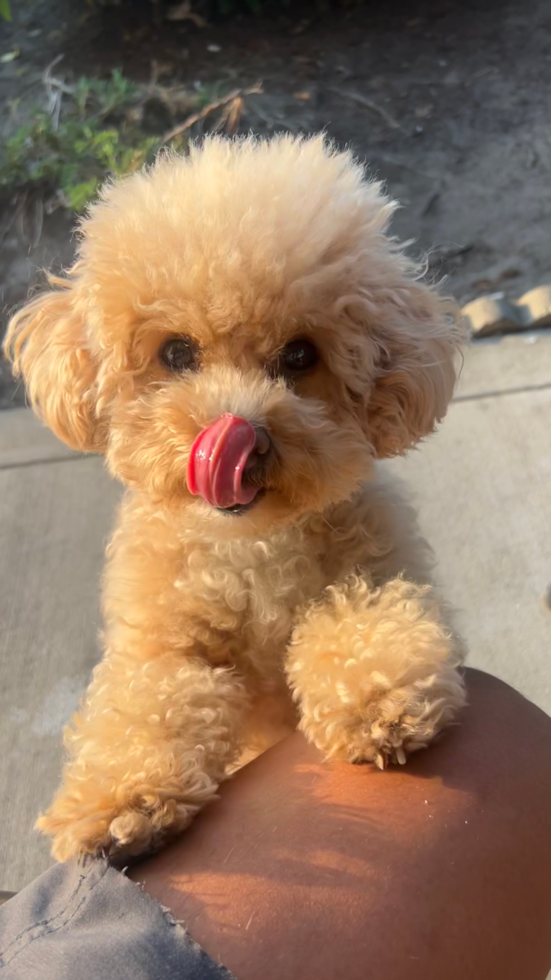
Poochons commonly fall somewhere around 6 to 17 pounds, with adult height often ranging from roughly 9 to 15 inches. Toy Poodle influence can keep the dog very small, while Miniature Poodle influence can add height and muscle.
The body usually feels compact and balanced. Bichons are sturdier than their fluffy appearance suggests, and Poodles add another athletic influence.
This combination can produce a small dog that looks soft but moves with surprising speed and agility. The Poochon generally carries a lighter, sportier impression than a Shih Poo of similar weight.
Poochon Coat Type and Texture
The Poochon usually has a wavy or curly coat.
Bichons naturally carry soft, plush curls, while Poodles contribute a dense curly coat. That gives the Poochon strong odds of visible texture from both sides.
Some coats grow in loose open waves, especially in dogs with a softer Bichon look. Others develop tighter Poodle-style curls around the body, legs, and face.
Straight coats are less characteristic because neither breed strongly contributes that texture. This gives the Poochon a somewhat narrower coat range than the Shih Poo.
Poochon Colors and Markings
Poochons can appear in white, cream, apricot, red-related shades, brown, black, gray, and various combinations.
The Bichon naturally contributes white and pale shading such as cream, buff, or apricot. Poodle ancestry adds a much wider range of colors.
Cream and apricot are especially familiar in Poochons because they emphasize the soft teddy bear appearance. Darker brown, black, or gray dogs can look surprisingly different despite sharing the same basic body and coat structure.
Some Poodle-influenced colors lighten as the dog matures, so a puppy’s rich shade may soften over time.
Poochon Eyes, Ears, and Facial Features
Poochons usually have dark eyes, hanging ears, and a moderate muzzle.
Bichon influence contributes a rounded, friendly expression, while the Poodle can refine the head and create a slightly narrower muzzle.
Heavy facial furnishings often make the face look rounder than the underlying skull. A teddy bear haircut can exaggerate this effect further.
The moderate muzzle is useful for active small-dog life because the Poochon does not have the same short-faced structural influence that can appear in a Shih Poo.
Poochon Build and Size
The Poochon generally has the more athletic body.
Bichons are compact and sturdy, while Poodles add strong muscle and agile movement. Even a small Poochon can enjoy brisk walks, training games, and bursts of energetic play.
Dogs with Miniature Poodle influence may have longer legs and greater physical stamina. Toy-Poodle-influenced examples may sit at the much smaller end of the range.
This size variation makes the Poochon flexible, but the cross still tends to feel physically capable rather than delicate.
Poochon Shedding
The Poochon generally has a very strong low-shedding profile.
Both Bichons and Poodles release little visible hair compared with many conventional shedding breeds. Loose strands get caught inside the coat and usually come out during brushing.
This can reduce the amount of hair seen on furniture and clothing, but it increases the need for regular coat maintenance.
Low visible shedding should not be confused with guaranteed allergy compatibility because allergens also come from dander and saliva.
Poochon Grooming Needs
Poochons need consistent grooming.
Dense curls can mat close to the skin, especially behind the ears, beneath the legs, around the neck, and through the tail. Brushing only the surface can leave hidden knots underneath.
Professional grooming is usually part of the routine. Many families choose shorter teddy bear trims because they simplify brushing while preserving the rounded appearance.
The cross rewards owners with very little loose hair around the home, but the coat needs real maintenance in return.
Shih Poo Appearance
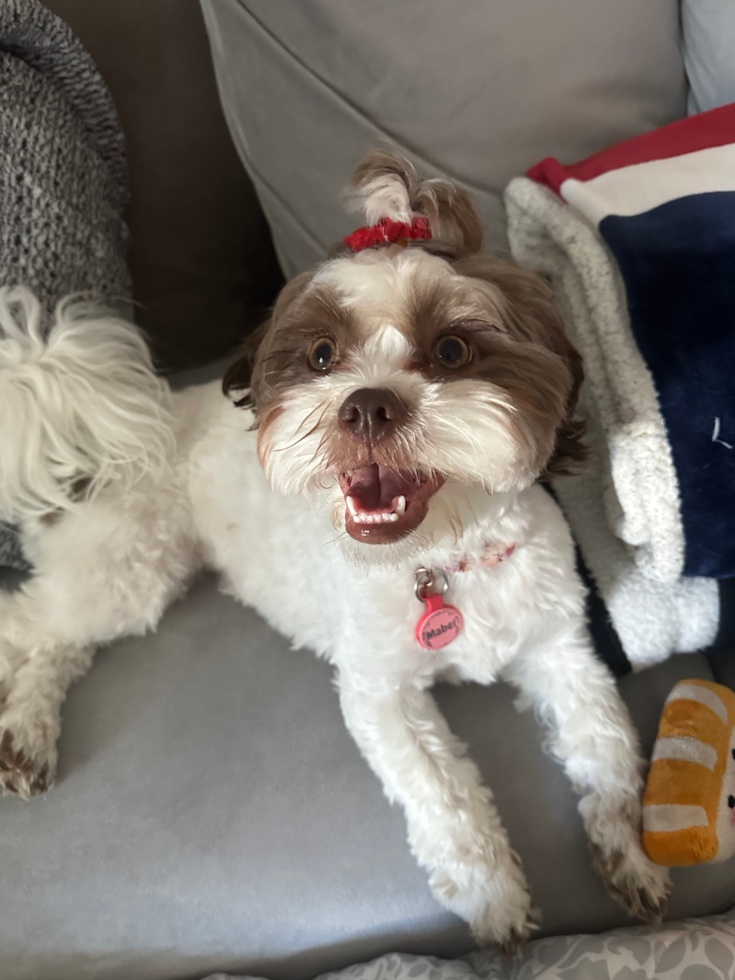
Shih Poos commonly fall somewhere around 7 to 18 pounds, with adult height often ranging from about 8 to 15 inches. Toy versus Miniature Poodle ancestry can shift those numbers considerably.
The Shih Tzu contributes a compact, solid body with good substance for its size. Poodle influence may add more leg and athletic refinement.
The finished dog can therefore range from a low, sturdy little companion to a taller, lighter Poodle-influenced small dog.
Shih Poo Coat Type and Texture
The Shih Poo has the wider coat range in this comparison.
Shih Tzus have long, flowing double coats that can feel soft and silky, while Poodles contribute dense curl. The cross may therefore have loose waves, soft curls, or straighter-looking furnishings.
Some Shih Poos grow coats that fall around the body in long waves. Others have stronger Poodle curl and look very similar to other small Doodle crosses.
Cottony textures can mat especially quickly because neighboring hairs grip each other rather than sliding apart easily. Soft does not necessarily mean easy.
Shih Poo Colors and Markings
Shih Poos can appear in an enormous range of colors and patterns.
The Shih Tzu contributes white, black, gold, cream, brown, gray, and many multicolor combinations. Poodle ancestry adds apricot, red, silver, brown, black, cream, and other shades.
This can create solid dogs, two-color coats, dark masks, white markings, or more complex patterns. Shih Tzu influence gives the cross particularly strong potential for clearly defined patches and facial markings.
Color can change with age, especially when Poodle fading genes are present.
Shih Poo Eyes, Ears, and Facial Features
Shih Poos commonly have dark, expressive eyes and hanging ears.
The face can vary considerably. Stronger Poodle influence may create a moderate muzzle and a more refined head, while Shih Tzu influence can produce a broader skull, larger-looking eyes, and a noticeably shorter muzzle.
That shorter muzzle matters beyond appearance. Dogs with stronger short-faced structure may struggle more with heat and strenuous activity, especially during warm, humid weather.
Facial coat can also need regular cleaning around the eyes and mouth when the hair grows long.
Shih Poo Build and Size
The Shih Poo often feels more substantial through the body.
Shih Tzus carry good weight and bone for their height, while Poodles contribute muscle and athletic movement. That combination can create a compact little dog that feels sturdier than its teddy bear appearance suggests.
Some Shih Poos inherit shorter legs and a longer-looking body. Others lean toward the Poodle and carry a squarer, more athletic outline.
The variation is wider than in the Poochon, which can appeal to people who enjoy the range but offers less certainty about one exact adult look.
Shih Poo Shedding
Shih Poos usually shed little visible hair, though coat behavior can vary.
The Poodle contributes strong low-shedding influence. Shih Tzu hair also tends to stay within the long coat rather than dropping heavily around the home.
A curlier Shih Poo may release very little visible hair. Straighter coats can still shed modestly, though the overall amount is often low compared with many double-coated breeds.
The Poochon has the more consistent low-shedding foundation because both sides reinforce curl, but the practical difference may be small in many individual dogs.
Shih Poo Grooming Needs
Shih Poos need regular grooming regardless of coat texture.
Curlier dogs need thorough combing close to the skin, much like Poochons. Straighter or wavier Shih Tzu-like coats may need more detangling through long hair around the ears, legs, chest, tail, and face.
A short companion trim can reduce the workload significantly. Facial cleaning may also play a larger role when the dog inherits heavy Shih Tzu furnishings around the eyes and mouth.
The Shih Poo can therefore be slightly less predictable in grooming style, but it is not a low-maintenance coat.
Poochon vs Shih Poo Appearance Comparison: What Is the Difference?
The clearest appearance difference is curly consistency versus broader teddy bear variation.
The Poochon combines two breeds with strongly textured coats, so waves and curls are the usual direction. Its body also tends to look compact and athletic, especially when Miniature Poodle traits show strongly.
The Shih Poo combines Poodle curl with the Shih Tzu’s long flowing coat. That can create anything from soft loose waves to strong curls, with greater variation in muzzle length, body proportions, and facial appearance.
The Shih Poo may also look more substantial or lower to the ground when Shih Tzu traits are strong. A Poochon may look a little lighter and more agile at the same weight.
If you strongly prefer a curly small Poodle mix, the Poochon offers the more consistent direction. If you like a wider range of teddy bear coats and enjoy softer Shih Tzu facial features, the Shih Poo may appeal more.
Poochon vs Shih Poo Temperament
The Poodle gives both crosses intelligence, trainability, and a strong ability to notice patterns. The difference lies in what the Bichon Frise and Shih Tzu add to that foundation.
The Bichon tends to reinforce sociability, playful energy, and interactive learning. The Shih Tzu tends to reinforce close companionship, a calmer rhythm, and a slightly more independent approach to training.
This creates two affectionate small dogs that may want different things from the same afternoon. The Poochon may prefer a game or short training session, while the Shih Poo may enjoy a little play and then settle comfortably nearby.
Poochon Temperament
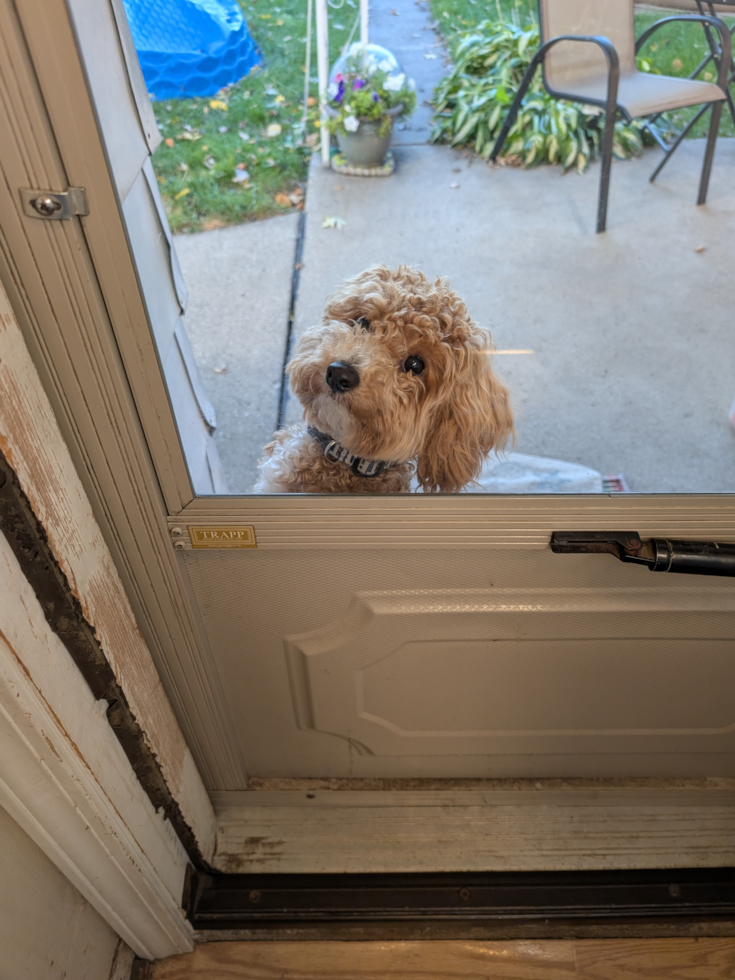
Poochons tend to be cheerful, social, intelligent dogs that enjoy active involvement with people.
The Bichon contributes an open, friendly personality, while the Poodle adds quick learning and greater mental intensity. Many Poochons notice routines quickly and find interaction itself rewarding.
This can create a dog that feels highly connected to family life. A Poochon may follow people from room to room, watch for signs that something fun is about to happen, and eagerly join games or training.
The same intelligence can create unwanted habits when rules change constantly. Consistency gives the dog clearer ways to use its enthusiasm.
Poochon Intelligence and Training
The Poochon has excellent training potential.
Both Bichons and Poodles have histories that rewarded performance and responsiveness. The Poodle adds particularly strong problem-solving ability, while the Bichon contributes a cheerful willingness to interact.
Short positive sessions tend to work beautifully. Tricks, obedience, scent games, and food-based exercises can all hold the dog’s attention.
The biggest challenge may be keeping training interesting enough for a dog that learns basic patterns quickly. Once a skill is understood, small variations can keep the brain involved.
Poochon Energy Level
Poochons generally have moderate energy.
The Bichon is playful and agile, while the Poodle adds another athletic influence. Daily walks, indoor games, and short training sessions can provide a satisfying routine.
Many Poochons enjoy more activity than their fluffy appearance suggests. A dog with stronger Miniature Poodle influence may especially enjoy longer walks and more active play.
The cross still fits ordinary companion life well. Exercise does not need to dominate the day.
Poochon Mental Stimulation
The Poochon usually has the stronger mental-stimulation needs in this comparison.
Poodle intelligence combines with the Bichon’s performance-friendly personality, which can make learning especially rewarding. The dog may enjoy figuring out puzzles, searching for treats, practicing tricks, or exploring new walking routes.
Mental activity does not need to be elaborate. Five or ten minutes of thoughtful training can add more value than endlessly repeating the same physical game.
For someone who enjoys teaching a small dog regularly, the Poochon can feel especially satisfying.
Poochon Affection and Social Style
Poochons tend to be highly social dogs.
Bichons are famously open to people, while Poodles form close relationships and tend to enjoy direct interaction. Many Poochons show affection toward several family members rather than focusing narrowly on one person.
Their social style can feel energetic. Cuddling, playing, following people, and requesting interaction can all blend together.
Independence practice still matters because a dog that finds people highly rewarding should also feel comfortable resting without constant attention.
Poochons With Children
Poochons can make excellent family companions.
The Bichon contributes sturdiness and a cheerful temperament, while the Poodle adds trainability. Older children may especially enjoy teaching tricks, playing games, and participating in walks.
Very small examples need gentle handling, particularly when Toy Poodle influence keeps adult size near the bottom of the range.
For young children, the dog’s actual physical size can matter as much as its personality.
Poochons With Other Dogs and Pets
Poochons generally have strong potential with other dogs.
Bichon sociability and Poodle adaptability can create a dog that enjoys canine companionship, especially when another dog shares a similar play style.
Cats can fit comfortably too. Neither side of the cross adds strong terrier or herding ancestry that would make persistent chasing a central expectation.
A lively young Poochon may still try to play with a cat that prefers peace, so calm boundaries help everyone share the home comfortably.
Poochon Barking and Alertness
Poochons can be alert and vocal.
Bichons notice unusual activity, while Poodles are observant dogs that quickly register sounds, visitors, and changes around the home.
Excitement can also trigger barking. A clever dog may learn that vocalizing brings attention or speeds up an anticipated event.
A consistent response from the family helps prevent ordinary alerting from turning into a frequent habit.
Shih Poo Temperament
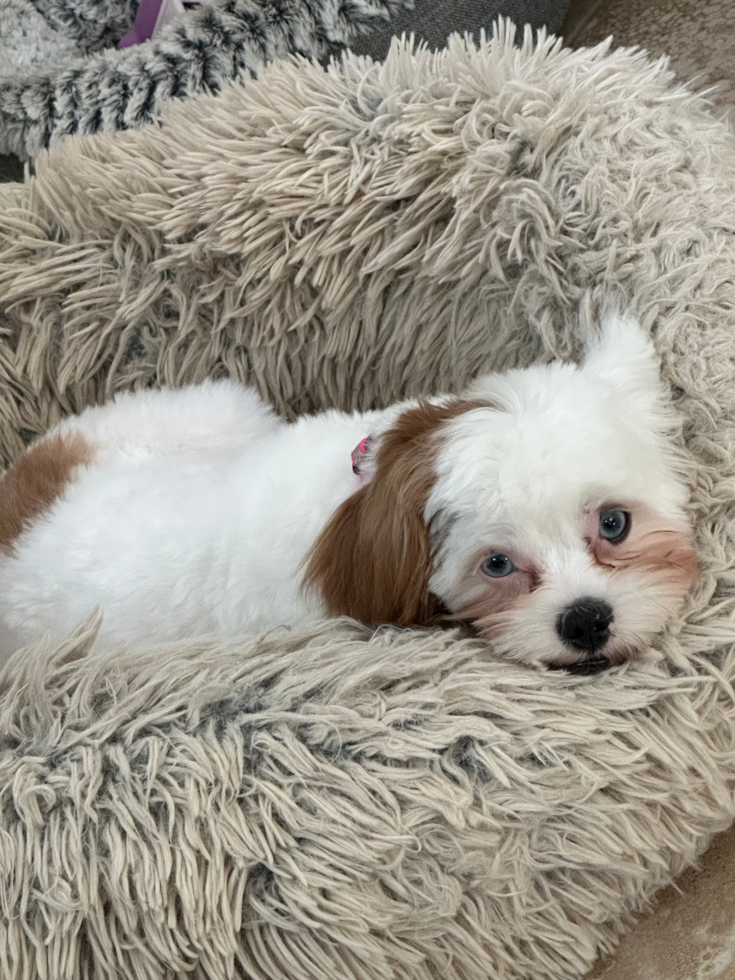
Shih Poos tend to be affectionate, intelligent companions with a softer daily style.
The Poodle contributes trainability and curiosity, while the Shih Tzu adds a strong preference for close human company and a more relaxed approach to physical activity.
Many Shih Poos enjoy play, walks, and training but do not need every quiet moment filled with a challenge. Once their needs are met, they can be very content simply sharing space with their people.
This can make the cross appealing to someone who wants intelligence without quite as much mental intensity.
Shih Poo Intelligence and Training
Shih Poos are intelligent, but their training style can include more independence.
The Poodle side learns quickly, while the Shih Tzu may contribute a dog that understands a cue without feeling compelled to repeat it several more times.
Positive reinforcement works best. Food, praise, affection, and playful sessions can keep the dog interested without turning training into a contest of wills.
House training may require patience and a predictable routine. Small dogs can give subtle signals, so consistency is especially valuable during puppyhood.
Shih Poo Energy Level
Shih Poos generally have low-moderate to moderate energy.
The Poodle adds athletic ability, while the Shih Tzu shifts the balance toward companion life. Many enjoy daily walks and indoor play without requiring a highly structured exercise schedule.
A dog with stronger Miniature Poodle influence may sit toward the more active end of the range. A dog with stronger Shih Tzu traits may prefer shorter outings and longer quiet periods.
Short-faced individuals need additional care during hot weather and intense activity.
Shih Poo Companion Style
The Shih Poo often leans strongly toward close companionship.
Shih Tzus were shaped for centuries around human company, and the Poodle adds another breed that forms strong bonds with people. The result can be a dog that likes staying physically near its family throughout the day.
That closeness does not always need to involve a game. Resting beside someone, following family members through the house, or settling nearby can provide plenty of satisfaction.
This makes the Shih Poo especially attractive for people who want an involved dog without a constant demand for structured activity.
Shih Poo Affection and Social Style
Shih Poos are usually very affectionate.
The Poodle can add playful interaction, while the Shih Tzu contributes a warm companion temperament. Some dogs may form an especially strong attachment to one or two people, while others spread their attention widely across the household.
Compared with the Poochon, the social style can feel quieter. The dog may want just as much closeness without constantly asking for another activity.
Comfortable alone time is still important because strong family attachment can make separation practice valuable from an early age.
Shih Poos With Children
Shih Poos can do very well with respectful children.
The Shih Tzu contributes a sturdy little body, while Poodle intelligence can make training family manners easier. Older children may enjoy tricks, walks, gentle play, and cuddling.
Very small Shih Poos still need careful handling, especially when Toy Poodle influence reduces adult size.
The cross may offer slightly more physical substance than a tiny Poochon, though individual adult size matters more than the name alone.
Shih Poos With Other Dogs and Pets
Shih Poos usually have good potential with other dogs.
Shih Tzus are companion dogs rather than intense working or hunting dogs, while Poodles can adapt well to canine company. This gives the cross a useful foundation for multi-dog homes.
The Shih Poo may have an easier time settling around a quieter dog because its overall play style can be less insistent than a lively Poochon’s.
Cats can also fit comfortably into the home. Calm introductions and respectful boundaries are usually more important than breed-driven prey concerns.
Shih Poo Barking and Alertness
Shih Poos can bark at visitors, outside sounds, or exciting activity, but strong watchdog behavior is not usually the defining trait.
Poodle influence can add attentiveness, while Shih Tzu ancestry may soften the intensity of the response. Some dogs simply announce something unusual and then return to family life.
Attention-seeking barking can still develop if noise consistently earns a reaction.
Teaching quiet behavior early is especially useful in apartments or busy neighborhoods.
Poochon vs Shih Poo Temperament Comparison: What Is the Real Difference?
The strongest temperament distinction is buoyant social engagement versus softer companion independence.
The Poochon generally adds Bichon-style openness and playful enthusiasm to the shared Poodle intelligence. It may seek more games, more interaction, and more chances to use its brain throughout the day.
The Shih Poo generally adds Shih Tzu-style companionship and a calmer rhythm. It can be clever and playful but may put less value on constant structured interaction once its social and exercise needs are satisfied.
Both dogs can form close family bonds. The Poochon may express that bond through active participation, while the Shih Poo may express it more through staying near the people it loves.
This is not an active dog versus a lazy dog. It is a difference in emphasis: the Poochon tends to lean toward doing things with you, while the Shih Poo may be especially content simply being with you.
Poochon vs Shih Poo: Which One Should You Choose?
The Poochon and Shih Poo both offer many of the qualities people seek in a small companion. They are intelligent, affectionate, compact, adaptable, and usually low shedding. Both can fit apartments, families, seniors, and first-time ownership when their grooming and social needs are understood.
The better choice depends on how much interaction you want, what coat texture you prefer, how important physical sturdiness is, and whether your ideal dog leans toward playful engagement or relaxed companionship.
Choose a Poochon if You Want a Social, Interactive Little Dog
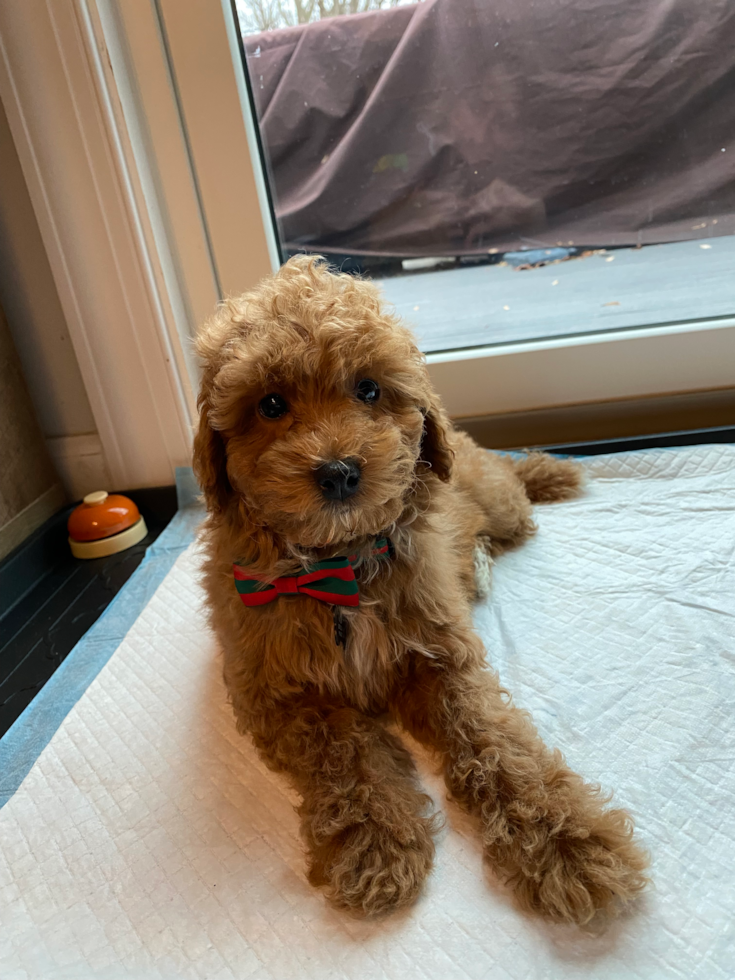
A Poochon puppy may suit you better if you enjoy training, tricks, food puzzles, varied walks, and a dog that seems genuinely interested in participating in whatever you are doing.
The Bichon reinforces the Poodle’s social and performance-friendly side. Many Poochons combine a cheerful attitude toward people with an active little brain that makes shared activities particularly rewarding.
The coat also offers a strong low-shedding profile and more consistent curl. Families that love the classic curly teddy bear appearance may find the Poochon especially appealing.
The tradeoff is that a bright social dog may ask for more engagement, and the dense coat requires serious grooming.
Choose a Shih Poo if You Want a Softer, More Relaxed Companion
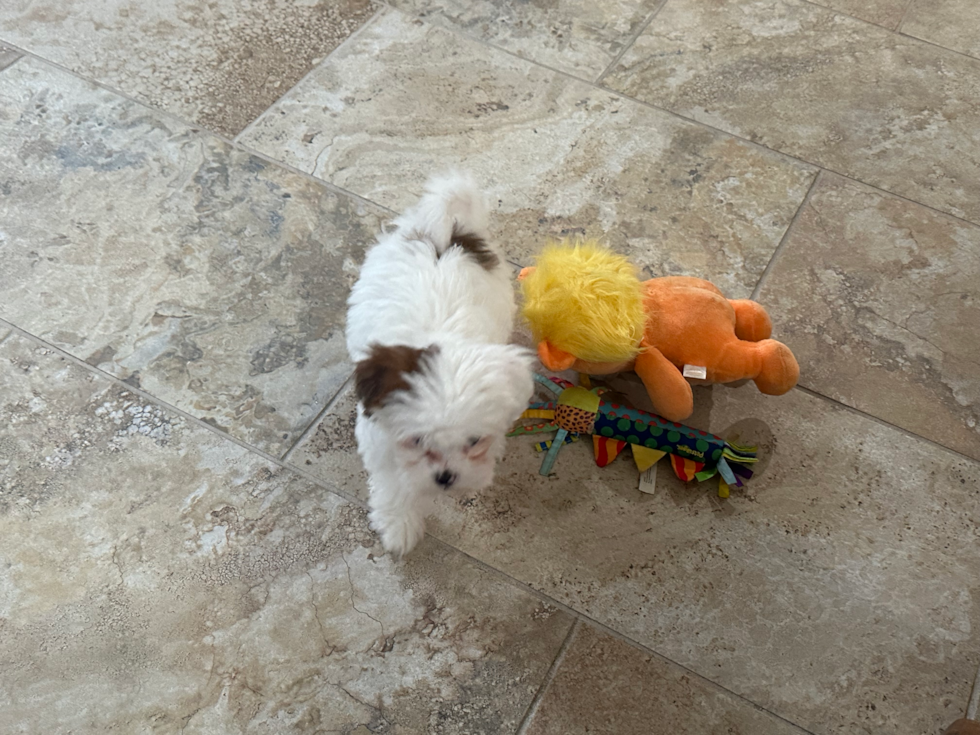
A Shih Poo puppy may suit you better if you want an intelligent small dog but prefer a calmer relationship built heavily around companionship.
The Shih Tzu can add a sturdy frame, a relaxed daily rhythm, and a strong preference for close family presence. The dog can still learn tricks and enjoy games without needing training to occupy a large part of every day.
The wider coat range may also appeal to someone who likes soft waves or a less consistently curly look.
The main considerations are grooming and the possibility of a shorter muzzle, which can make warm weather and strenuous activity more challenging.
Which Is Bigger: Poochon or Shih Poo?
Their adult ranges overlap heavily.
Poochons commonly fall somewhere around 6 to 17 pounds, while Shih Poos frequently sit around 7 to 18 pounds. Toy or Miniature Poodle ancestry can push either cross toward a smaller or larger adult frame.
The Shih Poo may feel more substantial even at a similar weight because the Shih Tzu contributes a compact, solid body. Poochons often carry a more agile, lightly athletic outline.
For someone seeking an extremely small dog, either cross can reach toy-like dimensions, but the Poochon may offer slightly more potential at the very low end.
Which Is Calmer: Poochon or Shih Poo?
The Shih Poo generally has the calmer everyday rhythm.
Shih Tzu influence adds a breed shaped specifically for companionship, so many Shih Poos enjoy short walks, play, and then long stretches of relaxed family time.
Poochons can settle very well too, but Bichon sociability combined with Poodle intelligence can create more interest in interaction and activity.
For someone who wants a dog that adapts readily to quiet days, the Shih Poo may have the advantage.
Which Is More Energetic?
The Poochon usually has a slight advantage for energy and playful activity.
Bichons are lively, agile dogs, and Poodles add another athletic influence. The combination can produce a small dog that enjoys brisk walks, games, and frequent bursts of play.
Shih Poos can be active too, especially with stronger Poodle influence, but the Shih Tzu side usually pulls the average daily pace down slightly.
Neither dog requires an extreme exercise schedule. The difference shows more clearly in how readily each one looks for another activity.
Which Needs More Mental Stimulation?
The Poochon generally needs more deliberate mental engagement.
Bichons have a history of performing and interacting with people, while Poodles add exceptional problem-solving ability. The cross may therefore enjoy regular tricks, puzzles, scent games, and training variety.
Shih Poos benefit from mental activity too, but many are satisfied with simpler routines woven into everyday life.
Someone who views training as an enjoyable hobby may prefer the Poochon. Someone who wants a clever dog without a strong need for ongoing challenges may find the Shih Poo easier.
Which Is Easier to Train?
The Poochon may have a slight advantage for consistent training enthusiasm.
Both share Poodle intelligence, so neither starts from a weak learning foundation. The difference comes from the Bichon and Shih Tzu.
Bichons have a long performance history and often enjoy working for attention and rewards. Shih Tzus can learn very well but may show a little more independence and lose interest in repetitive exercises sooner.
For normal household manners, both can do beautifully. The Poochon simply has the stronger overall foundation for owners who want to push training further.
Which Is Better for First-Time Dog Owners?
Both can make excellent first dogs.
The Shih Poo may suit a first-time owner who values a calmer companion routine, while the Poochon may suit someone excited about training and interactive play. Neither has exercise needs that should overwhelm a typical household.
Grooming is the area first-time owners should take most seriously. Both crosses can mat badly when coat maintenance is inconsistent.
Breed-specific owner reviews that discuss adult grooming, barking, house training, energy, and alone time can give a realistic picture of what each dog feels like after the puppy stage.
Which Is Better With Young Children?
Both have good family potential, but the Shih Poo may offer a slight physical advantage when its body leans toward the Shih Tzu side.
Shih Tzus are compact, solid dogs with more substance than the smallest Toy Poodle combinations.
A Shih Poo around 12 or 15 pounds can therefore feel sturdier during ordinary family life than a six-pound Poochon.
Poochons can be wonderful with children too, particularly larger examples with Miniature Poodle influence. Very small dogs of either cross need gentle handling.
Supervision and respectful interaction matter more than simply labeling one cross better with children.
Which Is Better With Older Children?
Both can be excellent with older children.
A Poochon may appeal to a child who loves teaching tricks, playing games, and actively interacting with the dog. Its bright temperament gives children plenty of ways to build a relationship through shared activities.
A Shih Poo may suit a child who enjoys the same play but also wants a dog happy to settle nearby during homework, reading, or quiet family time.
The better match depends on the child’s natural style rather than age alone.
Which Is Better With Other Dogs?
Both usually have strong potential in multi-dog homes.
The Poochon may bring greater social enthusiasm through the Bichon side and can be an excellent match for another playful small dog.
The Shih Poo may offer a slightly softer play rhythm, which can suit older or quieter canine companions particularly well.
Neither has a major breed-based disadvantage. Compatible size, age, and preferred play style matter more than the cross name.
Which Is Better With Cats?
Both can share a home successfully with cats.
Neither pairing introduces strong terrier, herding, or specialized prey-focused ancestry. Puppy curiosity can still lead to chasing when a cat runs, but that behavior is not the central instinct profile of either cross.
The Shih Poo’s calmer adult rhythm may give it a small advantage in a very quiet cat household. A well-trained Poochon can be equally respectful.
Calm introductions and cat-only retreat spaces support either relationship.
Which Is More Affectionate?
Both are deeply affectionate, but the style can differ.
The Poochon may show affection through energetic involvement. It may follow people, bring toys, ask for games, seek cuddles, and treat interaction as part of the bond.
The Shih Poo may lean toward quieter physical closeness. Resting beside someone, sharing a lap, and staying near familiar people can occupy more of the day.
There is no useful winner for affection. The distinction is active social engagement versus softer companion closeness.
Which Is More Social With Strangers?
The Poochon may have a slight advantage for immediate broad sociability.
Bichons are famously open and friendly, and the shared Poodle can add curiosity and responsiveness. Many Poochons show obvious interest in unfamiliar people once introductions start.
Shih Poos can also be outgoing, especially through the Shih Tzu side, but some may focus more strongly on familiar family members.
Both are companion-oriented crosses and can develop excellent social confidence.
Which Barks More?
The comparison is close, but the Poochon may have a slight tendency toward more alert or excitement barking.
Bichons and Poodles are both attentive dogs, so a Poochon may quickly notice visitors, outside movement, or household sounds.
Shih Poos can bark too, especially when the Poodle side adds environmental awareness. Shih Tzu influence may soften the overall response in some dogs.
Apartment owners should plan to teach calm responses rather than assuming either cross will naturally stay quiet.
Which Sheds Less: Poochon or Shih Poo?
Both tend to shed very little, but the Poochon has the more consistent low-shedding foundation.
The Bichon and Poodle both have coats that hold loose hair inside rather than releasing large amounts around the home. This makes low visible shedding a strong tendency in the Poochon.
Shih Poos can also release very little hair because Poodle influence combines with the Shih Tzu’s long coat. Their broader texture range creates slightly more variation.
Neither cross is guaranteed hypoallergenic, regardless of how little hair appears on the furniture.
Which Needs More Grooming?
Both need substantial grooming, but the type of work differs.
The Poochon may need more intensive curl maintenance. Dense waves and curls can mat near the skin and require thorough brushing and regular professional clipping.
The Shih Poo may need more detangling through long, soft furnishings, along with greater attention around the face, eyes, and mouth when Shih Tzu coat traits show strongly.
Neither is a low-maintenance coat. Short practical trims can make daily care much easier for both.
Which Is Better for Allergies?
The Poochon may have the stronger low-shedding profile, but neither cross can guarantee allergy compatibility.
Bichon and Poodle ancestry both reduce visible shedding, which can limit loose hair around the home. Shih Poos also tend to shed little, though coat texture is less consistent.
Dog allergens come from saliva and dander as well as hair. Someone with significant allergies should rely on personal tolerance rather than assuming either cross solves the problem.
Which Is Better for Apartment Living?
Both are excellent apartment candidates from a size perspective.
The Poochon may need more deliberate mental engagement, such as short training sessions, toy searches, and varied walks. Its small body does not automatically make its brain low maintenance.
The Shih Poo may offer the slightly easier indoor rhythm because Shih Tzu influence often supports relaxed companion life.
For either dog, barking, grooming, daily walks, and comfortable alone time matter more than the size of the home.
Which Is Better for Seniors?
Both can make excellent companions for seniors.
The Shih Poo may suit someone who prefers a calmer daily routine, close physical companionship, and manageable exercise. A sturdy small body can also feel easier to handle than an extremely tiny dog.
The Poochon may suit an active senior who enjoys training, longer walks, tricks, and a more interactive relationship.
Professional grooming can simplify ownership for either cross, especially when the coat is kept in a short practical trim.
Which Is Better for a Quieter Household?
The Shih Poo generally has the advantage for a quieter home.
Shih Tzu influence can create a dog that gains plenty of satisfaction from simply staying close to its people. Once exercise and social needs are met, long relaxed periods may come naturally.
Poochons can enjoy peaceful homes too, but they may ask for more little bursts of interaction throughout the day.
Someone who values soft companionship over regular training games may find the Shih Poo especially appealing.
Which Is Better for an Active Small-Dog Lifestyle?
The Poochon generally has the advantage for owners who want more activity from a small dog.
Bichon agility and Poodle athleticism create a combination well suited to longer walks, tricks, small-dog sports, and varied outings.
Shih Poos can join normal family adventures and enjoy active play, especially when Poodle traits show strongly. The Shih Tzu side simply makes high activity less central to everyday satisfaction.
For someone who wants a compact companion that can double as a little hobby partner, the Poochon may fit better.
Which Is More Physically Sturdy?
The Shih Poo may have a slight advantage for physical substance, though the size of the Poodle side matters.
Shih Tzus are compact, solid dogs weighing about 9 to 16 pounds. Added to Toy or Miniature Poodle ancestry, that can create a sturdy small companion.
Poochons are also far from fragile by default because Bichons have strong little bodies. Toy-Poodle-influenced examples can simply sit at a smaller and lighter end of the range.
For young families, adult size can matter more than the difference between the two cross names.
Which Handles Warm Weather Better?
The Poochon generally has the easier warm-weather profile.
Bichons and Poodles have moderate muzzles, which support normal panting, although dense curly coats still require sensible management during heat.
Shih Poos can inherit the Shih Tzu’s shorter face. A noticeably short-muzzled dog may struggle more during hot weather or strenuous activity because panting is less efficient.
Walks during cooler hours, shade, fresh water, and indoor cooling are sensible for both during summer.
Which Has the More Predictable Coat Texture?
The Poochon usually has the more predictable coat texture.
Both Bichons and Poodles contribute waves or curls, which keeps the finished coat within a fairly consistent textured range.
Shih Poos mix Poodle curl with the Shih Tzu’s long flowing hair. One dog may have obvious curls while another develops soft waves or a straighter-looking coat.
For someone who strongly prefers a curly teddy bear appearance, the Poochon offers the clearer direction.
Poochon vs Shih Poo: The Final Comparison
Choosing between a Poochon vs Shih Poo gets much easier once you hold the Poodle constant and focus on what the Bichon Frise and Shih Tzu change.
Both dogs start with Poodle intelligence, athletic ability, close human attachment, and strong low-shedding potential. Either can learn household routines quickly, fit comfortably into apartment life, and form deep family bonds.
The Poochon adds the Bichon Frise, a sturdy, cheerful companion with a long history of sociability and performance. That influence tends to create more consistent curl, broad friendliness, playful energy, and a stronger appetite for interactive learning.
The Shih Poo adds the Shih Tzu, a compact companion shaped for centuries around close human company. That influence tends to add more body substance, a softer daily rhythm, wider coat variation, and a greater tendency to find simple physical closeness deeply rewarding.
Their activity levels overlap, but the Poochon often feels more mentally busy. A walk may satisfy the body while the dog still enjoys a quick training game afterward. A Shih Poo may enjoy the same walk and then spend the next hour happily resting beside someone.
Coat care is substantial with both. The Poochon usually offers the stronger low-shedding and curly-coat profile, while the Shih Poo can range from loose waves to curls and may need more facial maintenance.
Heat tolerance adds another useful distinction. A Poochon generally keeps a moderate muzzle, while a Shih Poo can inherit a shorter face through the Shih Tzu side. That makes hot-weather caution especially important for some Shih Poos.
If you want a bright, highly social, curly-coated companion that enjoys training, games, and frequent interaction, the Poochon may fit your life better.
If you want a smart, affectionate small dog with a sturdier body, softer companion temperament, broader coat possibilities, and a calmer everyday pace, the Shih Poo may make more sense.
Breed-specific customer reviews can add useful real-world perspective, especially when owners discuss adult size, coat texture, grooming, barking, heat tolerance, house training, and how much interaction the dog seeks once the puppy stage has passed.
The real choice is between the shared Poodle foundation strengthened by Bichon sociability and playful engagement or softened by Shih Tzu companionship and ease.
Frequently Asked Questions
What is the main difference between a Poochon and Shih Poo? Both share Poodle ancestry, but the Poochon adds Bichon Frise influence while the Shih Poo adds Shih Tzu influence. That changes coat predictability, body type, social style, activity level, and facial structure. Poochons usually lean toward stronger curl, broader sociability, and greater enthusiasm for training and games. Shih Poos usually lean toward a sturdier companion build, wider coat variation, and a calmer everyday rhythm.
Which is bigger, a Poochon or Shih Poo? Their size ranges overlap heavily. Poochons often fall around 6 to 17 pounds, while Shih Poos commonly sit around 7 to 18 pounds. The Shih Poo may feel more substantial at the same weight because the Shih Tzu contributes a compact, solid body. Toy or Miniature Poodle ancestry can shift either cross toward a smaller or larger adult frame.
Which is calmer, a Poochon or Shih Poo? The Shih Poo generally has the calmer daily style. Shih Tzu influence adds a breed shaped specifically around close companion life, so many Shih Poos enjoy activity without needing frequent structured challenges. Poochons can settle beautifully too, but the Bichon-Poodle combination often creates more interest in games, interaction, and mental stimulation throughout the day.
Which is easier to train, a Poochon or Shih Poo? Both share Poodle intelligence, but the Poochon may have a slight advantage for enthusiastic and varied training. Bichons have their own history of performance and tend to respond well to social interaction. Shih Poos can learn household manners very successfully, though Shih Tzu influence may add more independence. Positive rewards and short sessions suit both crosses.
Which sheds less, a Poochon or Shih Poo? Both tend to shed very little, but the Poochon generally has the more consistent low-shedding profile. Bichons and Poodles both contribute coats that hold loose hair rather than releasing large amounts around the home. Shih Poos can also shed very little, especially with stronger Poodle coat traits. Their coat texture simply covers a wider range from loose waves to curls.
Which needs more grooming, a Poochon or Shih Poo? Both need regular grooming. Poochons usually require thorough curl maintenance, while Shih Poos may need more detangling and facial care when long Shih Tzu-like furnishings are present. Short teddy bear trims can simplify either routine considerably. Low shedding does not make either cross low maintenance.
Is a Poochon or Shih Poo better with children? Both can make excellent family dogs. The Shih Poo may offer slightly more physical substance when strong Shih Tzu traits show, while the Poochon can provide more interactive play and training opportunities. Very small examples of either cross need gentle handling. The dog’s actual adult size and the child’s behavior matter more than choosing solely by cross name.
Which barks more, a Poochon or Shih Poo? The difference is modest, but the Poochon may show slightly more alert or excitement barking because both Bichons and Poodles tend to notice changes around them quickly. Shih Poos can also be vocal, especially when Poodle awareness shows strongly. Early quiet training is useful with either dog, particularly in apartments.
Is a Poochon or Shih Poo better for apartment living? Both fit apartment living very well. The Poochon may need more planned mental activity, while the Shih Poo may settle into quieter indoor routines more easily. Daily walks, barking manners, grooming, and comfortable alone time matter much more than floor space for either cross.
Should I choose a Poochon or Shih Poo? Choose a Poochon if you want a small, curly, highly trainable companion with broad sociability, strong low-shedding potential, and a greater interest in games and mental activity. Choose a Shih Poo if you want a smart, affectionate small dog with more companion softness, a sturdy build, broader coat variation, and a calmer daily pace. Both share Poodle intelligence, but Bichon sociability and Shih Tzu companionship create two distinctly different versions of it.