


Published Tuesday, October 27, 2026 by Pilesgrove Pups
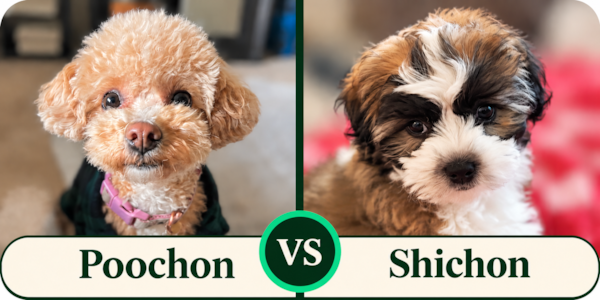
The Poochon vs Shichon comparison starts with a strong shared foundation: both dogs are half Bichon Frise. That gives either cross the potential for a cheerful personality, close family attachment, playful social behavior, a compact body, and the fluffy teddy bear look that makes both dogs so popular.
The difference comes from the breed paired with the Bichon. A Poochon combines the Bichon Frise with a Toy or Miniature Poodle, while a Shichon combines the Bichon Frise with the Shih Tzu. That creates a useful contrast between Poodle intelligence and athleticism and Shih Tzu companionship and sturdiness.
The Poodle adds an active working background. Beneath the curls is a water retriever known for quick learning, physical ability, and strong responsiveness to training. A Poochon can therefore feel brighter and more interactive than its small fluffy appearance suggests, with greater interest in tricks, games, patterns, and mentally engaging activities.
The Shih Tzu comes from a very different tradition. It was developed as a companion in Chinese imperial households and has spent centuries close to people rather than performing a demanding working role. That influence can give the Shichon a calmer daily rhythm, a more substantial little body, and a strong preference for close family life.
Their coats also reflect this difference. Poochons usually stay within a wavy-to-curly range because both Bichons and Poodles contribute textured low-shedding coats. Shichons can have softer waves, looser curls, or longer hair because the Shih Tzu adds a flowing double coat rather than tight curl.
The choice is not between an affectionate dog and an intelligent one. Both can offer plenty of each. The real decision is whether you want the Bichon's cheerful personality paired with Poodle versatility and mental engagement or with Shih Tzu softness, physical substance, and companion ease.
Table of Contents
- Poochon vs Shichon at a Glance
- Poochon and Shichon Overview and History
- Poochon vs Shichon Appearance
- Poochon vs Shichon Temperament
- Poochon vs Shichon: Which One Should You Choose?
- Choose a Poochon if You Want a Bright, Interactive Companion
- Choose a Shichon if You Want a Sturdier, Softer Companion
- Which Is Bigger: Poochon or Shichon?
- Which Is Calmer: Poochon or Shichon?
- Which Is More Energetic?
- Which Needs More Mental Stimulation?
- Which Is Easier to Train?
- Which Is Better for First-Time Dog Owners?
- Which Is Better With Young Children?
- Which Is Better With Older Children?
- Which Is Better With Other Dogs?
- Which Is Better With Cats?
- Which Is More Affectionate?
- Which Is More Social With Strangers?
- Which Barks More?
- Which Sheds Less: Poochon or Shichon?
- Which Needs More Grooming?
- Which Is Better for Allergies?
- Which Is Better for Apartment Living?
- Which Is Better for Seniors?
- Which Is Better for a Quieter Household?
- Which Is Better for an Active Small-Dog Lifestyle?
- Which Is More Physically Sturdy?
- Which Handles Warm Weather Better?
- Which Has the More Predictable Coat Texture?
- Poochon vs Shichon: The Final Comparison
Poochon vs Shichon at a Glance
| Trait | Poochon | Shichon |
| Parent breeds | Bichon Frise × Toy or Miniature Poodle | Bichon Frise × Shih Tzu |
| Other common names | Bichpoo, Bichonpoo | Zuchon, Shih Tzu Bichon |
| General size | Small | Small |
| Common adult weight | Often about 6–17 pounds | Often about 9–16 pounds |
| Common adult height | Often about 9–15 inches | Often about 9–12 inches |
| Build | Compact, agile, sometimes finer | Compact, sturdy, more substantial |
| Coat | Usually wavy or curly | Usually soft, wavy, fluffy, or loosely curled |
| Shedding | Usually very low | Usually low |
| Grooming | High | Moderate to high |
| Common colors | White, cream, apricot, brown, black, gray and more | White, cream, gold, apricot, brown, black, gray and combinations |
| Energy | Moderate | Low-moderate to moderate |
| Mental stimulation | Moderate to high | Moderate |
| Trainability | High | Moderate to high |
| Heat tolerance | Typical small-dog caution | Extra caution if short-faced |
| Physical sturdiness | Moderate | Usually higher |
| Best fit | Someone wanting a bright, interactive small dog | Someone wanting a soft, sturdy companion with a calmer rhythm |
Neither cross has one formal breed standard, so adult size and coat can vary. The Poochon has a wider possible height range because either Toy or Miniature Poodle ancestry may influence the finished dog, while the Shichon's two breeds sit closer together in overall body size.
Poochon and Shichon Overview and History
The Bichon Frise gives both crosses an unusually strong companion foundation. Bichons developed from small Mediterranean companion dogs and later gained popularity in European courts, among street performers, and in circus settings. Their history favored dogs that were sociable, adaptable, clever, and comfortable around people.
That background helps explain why both the Poochon and Shichon tend to fit family life naturally. Neither cross adds a strongly territorial guardian, intense terrier, or livestock-focused working dog. Both stay rooted in social companionship, even though the Poodle and Shih Tzu add very different traits.
The Poodle reinforces the Bichon's intelligence and performance history while adding greater athleticism and a serious water-working background. The Shih Tzu reinforces the Bichon's companion side while adding more body substance, a shorter face, and an even stronger historical focus on close human company.
That makes this comparison less about whether one dog is friendly and the other is not. Both usually are. The more useful question is whether you prefer a companion that leans toward active participation and learning or one that leans toward comfortable closeness and a gentler pace.
The Bichon Frise Foundation Both Dogs Share
The Bichon Frise stands roughly 9.5 to 11.5 inches tall and weighs about 12 to 18 pounds. Underneath the rounded white coat is a sturdy, agile little dog rather than a fragile toy.
Bichons are known for curiosity, playfulness, adaptability, and a social attitude toward people and other dogs. Their history as companions and performers also helps explain why they tend to respond well to interaction and training.
That shared Bichon influence gives both crosses a cheerful emotional baseline. Poochons and Shichons can enjoy visitors, other dogs, family activity, and plenty of affection when early experiences are positive.
The difference begins once the other parent breed enters the picture. Poodle influence sharpens the learning and activity side, while Shih Tzu influence deepens the companion and relaxation side.
Poochon History and Background
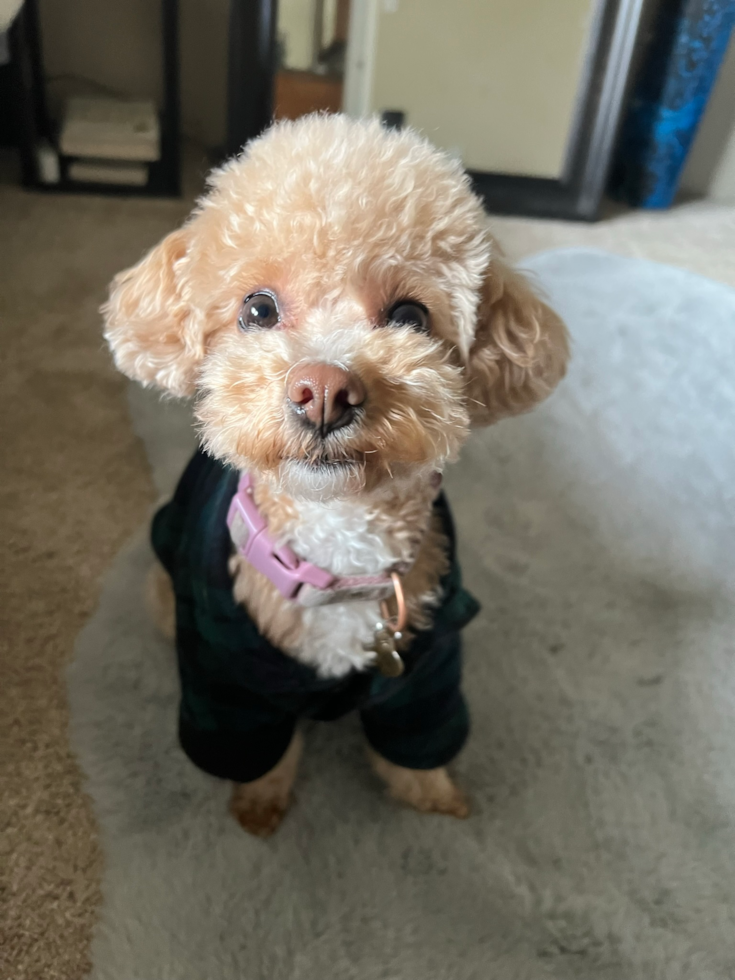
The Poochon, also called a Bichpoo or Bichonpoo, combines the Bichon Frise with a Toy or Miniature Poodle. There is no single reliably documented breeder or year that defines the origin of the entire cross, so claims about one exact starting point should be treated cautiously.
The Poodle adds one of the most versatile working backgrounds found among companion-size dogs. Despite the breed's elegant appearance, Poodles developed around water retrieval and needed intelligence, athletic ability, stamina, and close communication with people.
Miniature Poodles stand about 10 to 15 inches tall and weigh roughly 10 to 15 pounds. Toy Poodles stand no more than 10 inches and usually weigh around 4 to 6 pounds. That size difference is one reason Poochons can cover a fairly broad small-dog range.
The Bichon and Poodle also share a history of performance and trainability. Bichons succeeded as entertainers, while Poodles earned their own reputation as exceptionally capable performers and problem-solvers.
The combination can produce a companion dog that loves people but also wants its brain involved in the relationship. A Poochon may be perfectly happy on a lap and still jump up quickly when someone reaches for a treat pouch or training toy.
Shichon History and Background
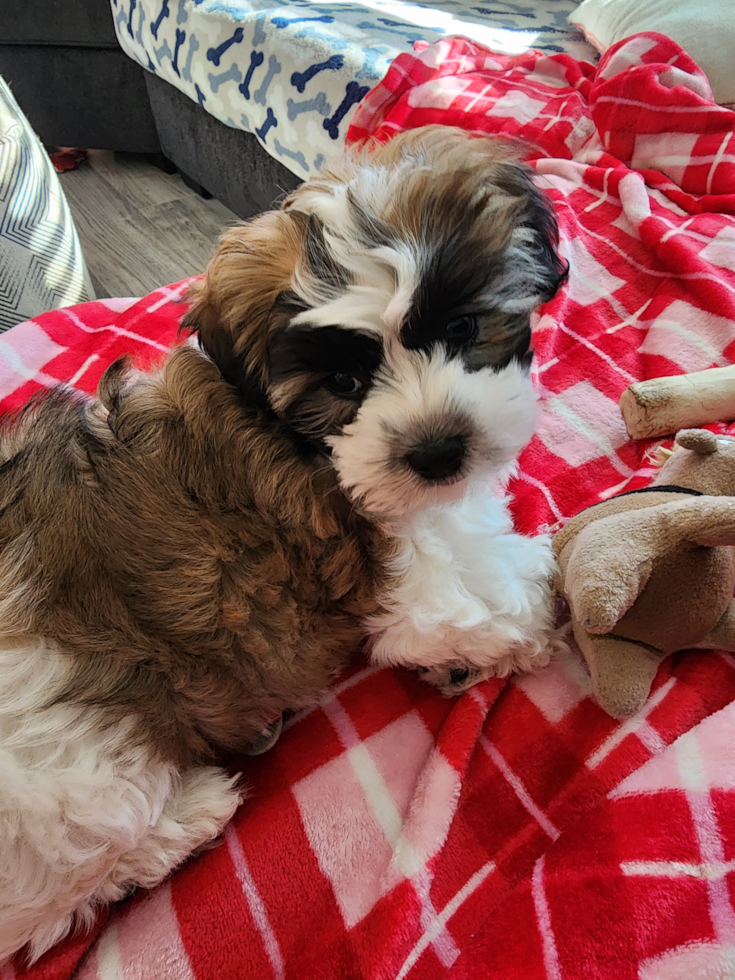
The Shichon combines the Bichon Frise with the Shih Tzu and is also commonly called a Zuchon. Like the Poochon, the cross does not have one well-documented origin story that applies to every modern line.
The Shih Tzu brings a long history tied to Tibetan and Chinese companion dogs. Dogs behind the modern breed were highly valued in Chinese imperial households, where their purpose centered on companionship rather than hunting, retrieving, guarding livestock, or other physically demanding work.
That companion role still defines the modern Shih Tzu. The breed is playful, affectionate, outgoing, and highly people-oriented, with a strong tendency to enjoy close physical contact and comfortable indoor life.
Shih Tzus weigh about 9 to 16 pounds and stand roughly 9 to 10.5 inches tall. They are compact and solid for their size, with broader bodies and more physical substance than their long flowing coats sometimes suggest.
The Shichon therefore combines two breeds built heavily around human companionship. The Bichon adds playful sociability and agility, while the Shih Tzu adds a calmer lapdog influence and a sturdier, more substantial little frame.
Poochon vs Shichon Appearance
The Poochon and Shichon can both have round teddy bear faces, dark expressive eyes, hanging ears, and soft coats, especially when trimmed into similar puppy cuts. Coat texture, facial structure, and body proportions usually provide better clues than grooming style alone.
The Poochon generally leans toward visible curl because both breeds behind it contribute textured coats. The Shichon has a wider soft-hair range because the Bichon's curl meets the Shih Tzu's long, flowing double coat.
Body structure differs too. Poochons may look lighter or more athletic, particularly with Miniature Poodle influence. Shichons usually feel compact, broad, and sturdy, which reflects the Shih Tzu's solid Toy-breed construction.
Poochon Appearance
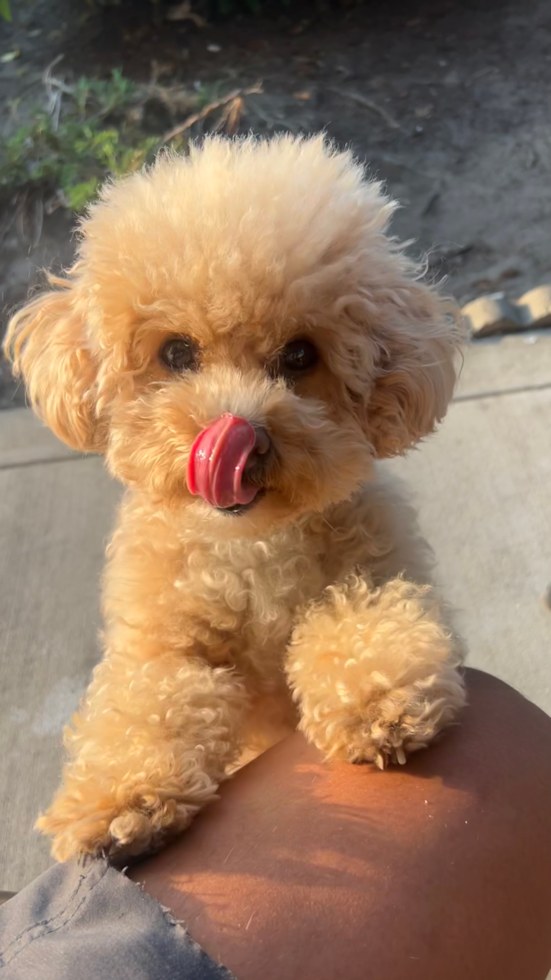
Poochons commonly weigh around 6 to 17 pounds and may stand roughly 9 to 15 inches tall. Smaller examples frequently show stronger Toy Poodle influence, while dogs with Miniature Poodle ancestry may carry more height and athletic structure.
The body is generally compact and balanced. Bichons contribute sturdiness, while Poodles add a square, smoothly muscled build that can make the cross look surprisingly athletic beneath a fluffy coat.
A Poochon may therefore look like a soft teddy bear at rest and move like a much sportier little dog once play begins.
Poochon Coat Type and Texture
The Poochon usually has a wavy or curly coat.
Bichons naturally have plush, curly coats, and Poodles contribute another dense curl. This gives the cross a relatively narrow texture range compared with crosses that include a straight-coated breed.
Some Poochons have open waves with a soft, airy appearance. Others develop tighter curls that look much more strongly Poodle-influenced.
The coat may release very little visible hair, but loose strands can stay trapped inside. This creates the familiar tradeoff between low shedding and high grooming needs.
Poochon Colors and Markings
Poochons can appear in white, cream, apricot, red-related shades, brown, black, gray, and a variety of combinations.
The Bichon contributes a strong white foundation, sometimes with cream, buff, or apricot shading. Poodle ancestry expands the palette considerably.
Warm apricot and cream coats are common-looking in the cross because those shades emphasize the rounded teddy bear appearance. Black or brown Poochons can look dramatically different despite having the same texture and build.
Some colors can lighten with age, particularly when Poodle fading genes are present.
Poochon Eyes, Ears, and Facial Features
Poochons usually have dark eyes and hanging ears covered in soft curls or waves.
The Bichon contributes a rounded expression, while the Poodle can add a more refined muzzle and slightly narrower head. Facial furnishings often hide much of that structure.
The muzzle usually stays moderate rather than very short. This gives the Poochon a different facial profile from a Shichon that inherits strong Shih Tzu features.
Rounded grooming can make the face look especially full, but the underlying structure usually has more projection through the muzzle.
Poochon Build and Size
The Poochon generally has the more athletic build in this comparison.
Bichons are sturdy and agile, while Poodles contribute a square body, good muscle, and strong physical ability. Miniature Poodle influence can make a Poochon especially lively on walks and during games.
Toy-Poodle-influenced dogs can be much smaller and more delicate. That broader size range means one Poochon may feel like a tiny lapdog while another has the body and stamina of a more substantial small companion.
The cross still fits easily into small homes, but its body often invites more activity than the fluffy appearance first suggests.
Poochon Shedding
The Poochon generally has a strong low-shedding profile.
Bichons and Poodles both release relatively little visible hair. Loose strands tend to stay inside the coat rather than spreading freely around the home.
That does not make the dog completely non-shedding, and it does not guarantee allergy compatibility. Hair still comes out during brushing and normal coat turnover.
For families that strongly dislike loose hair on clothing or furniture, the Poochon usually offers a dependable direction within the limits of crossbreed variation.
Poochon Grooming Needs
Poochon grooming can be demanding because dense curls and waves mat easily.
Brushing needs to reach through the entire coat rather than simply smoothing the outer surface. Behind the ears, beneath the legs, around the collar area, and through the tail can tighten quickly.
Professional grooming is usually part of normal care. Shorter teddy bear trims can reduce daily maintenance while keeping the soft rounded appearance.
The low-shedding advantage therefore comes with a clear tradeoff: less loose hair around the house often means more hair that needs to be managed on the dog.
Shichon Appearance
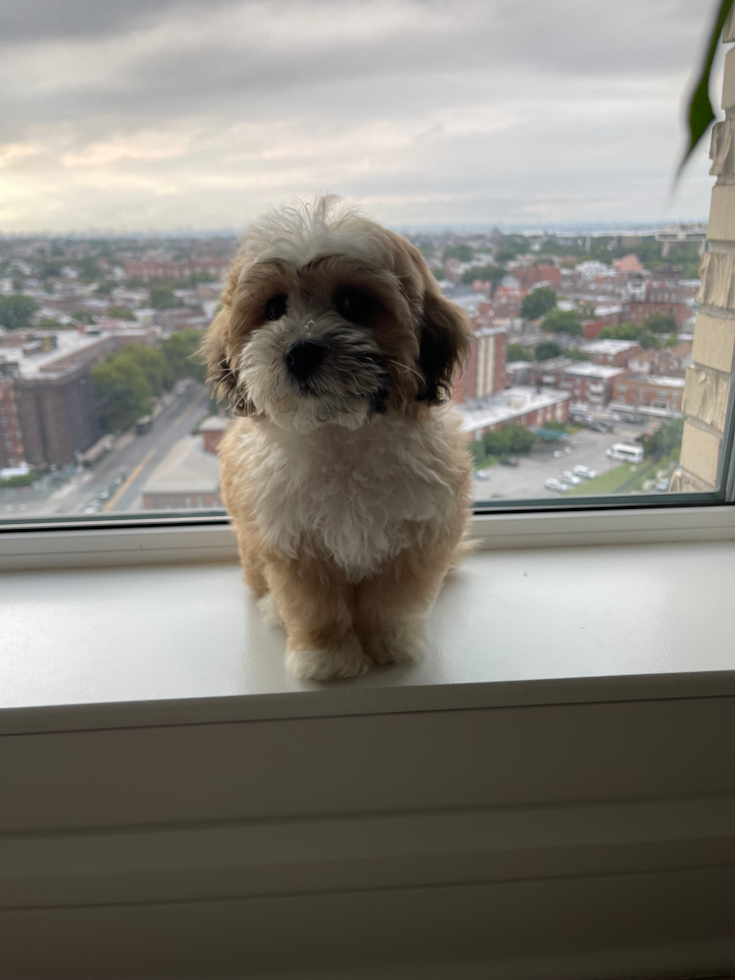
Shichons commonly weigh somewhere around 9 to 16 pounds and usually stand roughly 9 to 12 inches tall. Some sit outside those ranges, but the cross typically stays compact and solid rather than tall or fine-boned.
The Shih Tzu contributes a sturdy body with good substance, while the Bichon keeps the overall dog light enough to fit comfortably into the small companion category.
The result is frequently a dog that looks extremely soft but feels surprisingly solid when picked up.
Shichon Coat Type and Texture
Shichon coats can be soft, wavy, fluffy, or loosely curled.
The Bichon contributes curl and volume, while the Shih Tzu contributes a long double coat with a smoother, flowing texture. The blend can produce more variation than the Poochon's Poodle-Bichon coat.
Some Shichons develop plush open curls. Others have long soft waves that fall around the body and face in a more Shih Tzu-like way.
Cottony coats can be particularly prone to mats because the hairs grip one another easily. A very soft coat is not automatically an easy coat.
Shichon Colors and Markings
Shichons can appear in white, cream, gold, apricot, brown, black, gray, silver, and numerous combinations.
Bichon influence contributes white and pale shading, while the Shih Tzu adds a very broad color range. Bold patches, darker masks, white facial markings, and multicolor coats can all appear.
A Shichon may therefore have more clearly defined patterning than many Poochons. White and gold, black and white, cream and brown, and tricolor combinations can create especially distinctive teddy bear faces.
Color can shift as the adult coat develops, so puppy shades may soften or change over time.
Shichon Eyes, Ears, and Facial Features
Shichons usually have dark, round eyes and hanging ears with plenty of coat.
The Shih Tzu can add a broader skull, larger-looking eyes, and a shorter muzzle. Bichon influence may lengthen and soften that face somewhat, so Shichons can range from moderately projected muzzles to noticeably shorter facial structures.
This difference matters beyond appearance. A Shichon with a shorter Shih Tzu-like face may have more difficulty with heat and strenuous activity during warm weather.
The facial coat can also require regular attention around the eyes and mouth, especially when hair is kept long.
Shichon Build and Size
The Shichon usually has the sturdier body in this comparison.
Shih Tzus are compact, solid dogs with good substance for their size, and Bichons also have sturdy little frames. Their combination often creates a dog that feels broad and physically resilient rather than delicate.
That extra body can help in family life, particularly around respectful children who enjoy playing with the dog. The Shichon is still small and should never be handled roughly, but it often has more physical margin than a very tiny Poochon.
The build also contributes to the cross's companion feel. Many Shichons look more grounded and substantial than their fluffy coats suggest.
Shichon Shedding
Shichons generally shed little visible hair, though coat behavior can vary.
The Bichon contributes low shedding, while the Shih Tzu's long coat tends to hold more loose hair within the furnishings instead of releasing it freely around the home.
This can keep furniture relatively clean while increasing the importance of brushing. Hair caught within a dense coat can contribute to mats if it is not removed regularly.
The Poochon may have the slightly stronger low-shedding profile because both of its breeds reinforce that trait, but the practical difference can be small in many individual dogs.
Shichon Grooming Needs
Shichons require consistent grooming regardless of whether the coat is wavy or loosely curled.
Longer Shih Tzu-like coats can tangle around the face, ears, legs, chest, and underside. Softer cottony coats may mat especially quickly.
Many families choose a shorter puppy trim to simplify daily care. This reduces tangling and makes face cleaning much easier without changing the dog's basic teddy bear appearance.
Shichons with shorter muzzles may also need more routine attention around facial folds, eye discharge, and damp hair around the mouth.
Poochon vs Shichon Appearance Comparison: What Is the Difference?
The strongest appearance distinction is curly athletic refinement versus plush companion sturdiness.
The Poochon generally has more consistent waves or curls because both Bichons and Poodles contribute textured coats. Its body can look slightly taller, finer, or more athletic, particularly when Miniature Poodle influence is strong.
The Shichon usually carries more physical substance and may have a rounder face, shorter muzzle, and softer flowing coat. Shih Tzu influence also increases the chance of bold multicolor patterns and heavier facial furnishings.
The Poochon has the more predictable curly teddy bear direction. The Shichon offers a broader range between Bichon fluff and Shih Tzu silk.
If you prefer a small dog with obvious curls and an athletic little frame, the Poochon may appeal more.
If you prefer a sturdier teddy bear companion with softer waves and a rounder face, the Shichon may fit your picture better.
Poochon vs Shichon Temperament
The shared Bichon gives both dogs a cheerful, affectionate, social foundation. Neither cross should feel naturally aloof or intensely serious when temperament follows the broad traits of the breeds behind it.
The main difference lies in what the Poodle and Shih Tzu add. Poodle influence generally increases mental intensity, responsiveness, and interest in structured activities. Shih Tzu influence generally adds more relaxed companionship and a stronger tendency to enjoy closeness without needing a task.
That creates two different versions of a social small dog. The Poochon often feels more interactive, while the Shichon often feels more companion-centered.
Poochon Temperament
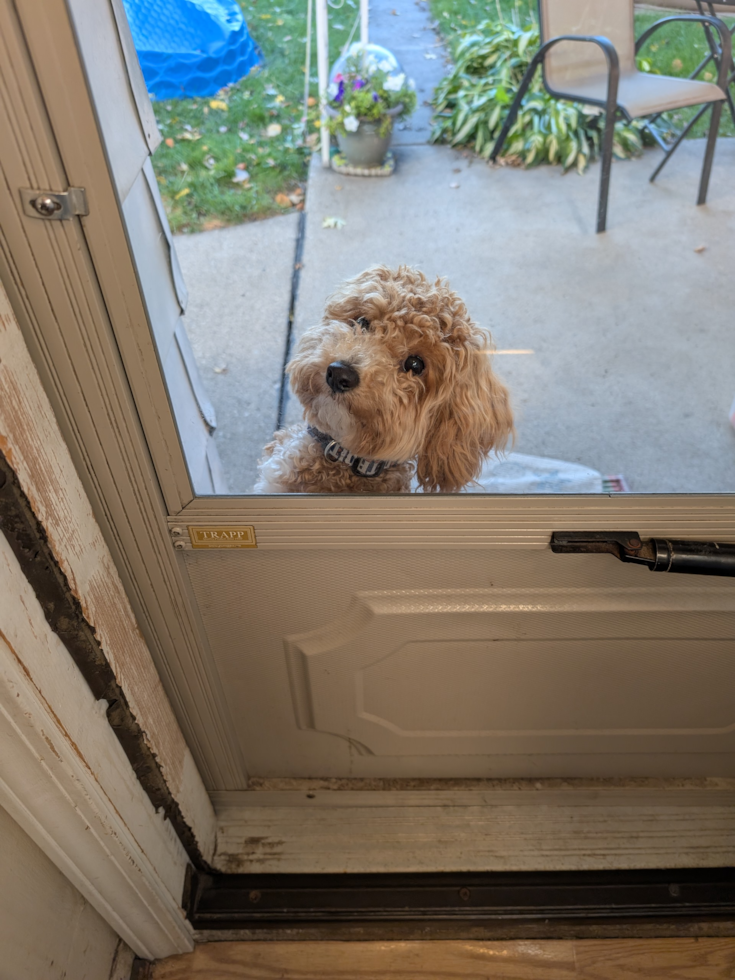
Poochons tend to be affectionate, cheerful, intelligent dogs that enjoy participating in family life.
The Bichon contributes playfulness and broad sociability, while the Poodle adds a quick, observant mind. Many Poochons learn household routines rapidly and notice patterns that people do not realize they are teaching.
This can make the dog extremely engaging. A Poochon may enjoy cuddling but quickly switch into training or play mode when an opportunity appears.
The same intelligence needs direction. A clever little dog with nothing useful to do can create habits that are much less entertaining than the tricks its family intended to teach.
Poochon Intelligence and Training
Training is one of the Poochon's strongest areas.
Poodles have exceptional learning ability, and Bichons also have a successful history as performers. The combination can create a dog that picks up tricks, routines, and household cues quickly.
Positive reinforcement works especially well. Food, toys, praise, and access to play can all keep training enjoyable.
Variety helps preserve interest. Once a Poochon understands a simple exercise, adding a new challenge can be more productive than repeating the same cue endlessly.
Poochon Energy Level
Poochons generally have moderate energy.
Their small size keeps exercise needs manageable, but Poodle influence can create more stamina and physical enthusiasm than someone expects from a teddy bear companion.
Daily walks, play, training, and opportunities to explore usually work well. Some larger Poochons with Miniature Poodle influence may enjoy longer outings and small-dog sports.
The key is balance. Physical exercise should work alongside mental stimulation rather than trying to create calm through movement alone.
Poochon Mental Stimulation
The Poochon has the stronger mental-stimulation needs in this comparison.
Simple puzzles, scent games, trick training, toy searches, and varied walking routes can all give a bright little dog useful work.
These activities do not need to occupy hours. A few short training sessions throughout the week can satisfy the brain more effectively than constantly offering new toys.
This makes the Poochon especially appealing to people who genuinely enjoy interacting with their dogs and teaching new things.
Poochon Affection and Social Style
Poochons tend to be highly affectionate and socially engaged.
The Bichon side contributes openness toward people, while Poodles tend to form close relationships and enjoy direct interaction with their families.
Affection may feel active. A Poochon can curl up beside someone and then initiate play, carry over a toy, or watch closely for signs that a training session might start.
This creates a companion that likes closeness but also appreciates participation.
Poochons With Children
Poochons can make excellent companions for respectful children.
The Bichon contributes a sturdy social temperament, while the Poodle adds trainability and playful energy. Older children may especially enjoy tricks, games, and short training sessions.
Very small Poochons can be physically delicate when Toy Poodle influence keeps adult size low. Young children need supervision around any dog that weighs only a few pounds.
Larger Poochons can offer more physical margin, but gentle handling still matters.
Poochons With Other Dogs and Pets
Poochons generally have strong potential with other dogs.
Bichons are socially inclined, and Poodles can also enjoy canine companionship. Another playful small dog may provide an excellent outlet for social play.
Cats can fit comfortably into the home too. Neither side adds strong terrier or herding behavior, so persistent chase tendencies are not central to the cross.
Individual play style still matters, particularly when the other pet is older or prefers a quiet household.
Poochon Barking and Alertness
Poochons can be alert barkers.
Bichons notice changes around the home, while Poodles are attentive dogs that quickly register unusual sounds and movement. Doorbells, visitors, hallway noise, or another dog outside may all trigger a response.
Mental boredom can also contribute to vocal behavior in a clever dog. A Poochon with enough engagement and a clear quiet routine is easier to live with than one that spends the day inventing reasons to react.
Early training can prevent alertness from turning into constant commentary.
Shichon Temperament
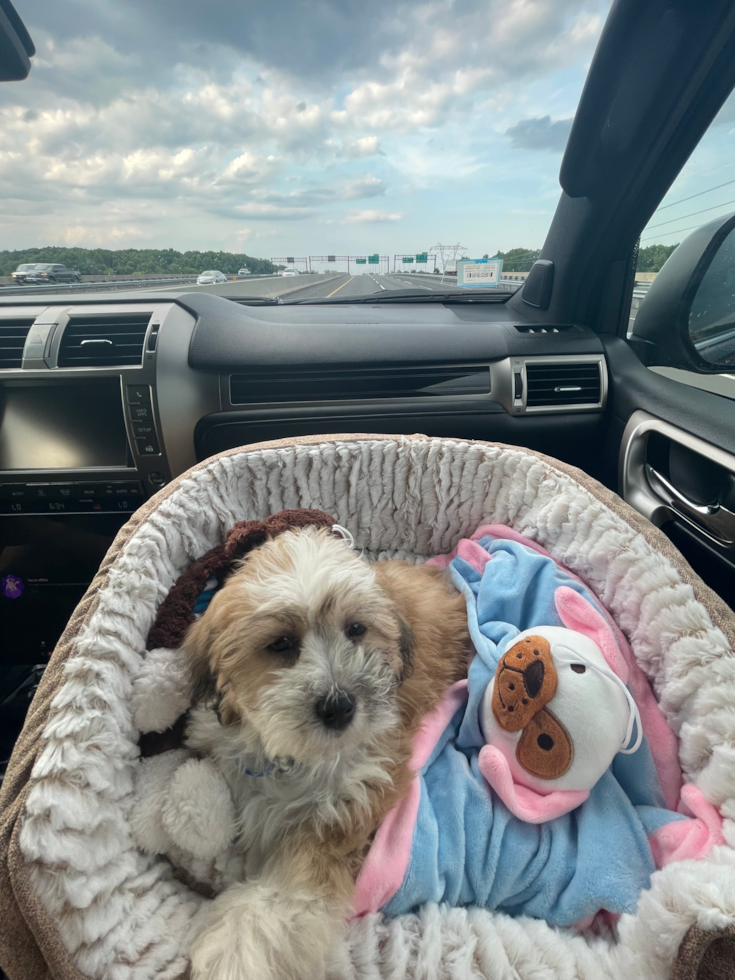
Shichons tend to be affectionate, friendly dogs with a softer and more relaxed companion style.
The Bichon contributes playfulness and social confidence, while the Shih Tzu adds centuries of breeding for close human company. This can create a dog that enjoys play without needing the same amount of structured activity as a Poochon.
Many Shichons are content to follow family members, rest nearby, enjoy short walks, and join whatever the household happens to be doing.
That adaptability can make the cross particularly easy to fit into quieter homes or families whose activity level changes from one day to the next.
Shichon Intelligence and Training
Shichons are intelligent, but their training style can feel more independent.
Bichons are good learners, while Shih Tzus can understand household routines very well but may not share the Poodle's enthusiasm for repeated exercises.
Positive reinforcement works best. Food, praise, and short playful sessions can keep the dog interested without turning training into a battle over repetition.
Patience can be especially useful with house training. Small companion dogs sometimes give subtle signals, and a consistent schedule usually works better than expecting the dog to communicate in obvious ways.
Shichon Energy Level
Shichons generally have low-moderate to moderate energy.
The Bichon contributes playful bursts, while the Shih Tzu pulls the daily rhythm toward a more relaxed companion lifestyle. Many Shichons enjoy a walk, some indoor play, and then a comfortable stretch of quiet time.
This can suit people who want a dog that enjoys activity without requiring exercise to organize the whole day.
Shorter-faced Shichons may need additional care in warm weather, since heat and strenuous activity can be harder for dogs that inherit more Shih Tzu facial structure.
Shichon Companion Style
Companionship sits at the center of the Shichon's temperament.
Both breeds behind the cross have long histories close to people, and the Shih Tzu's historical purpose was specifically human companionship. A Shichon may therefore find simple presence deeply satisfying.
The dog does not always need an elaborate game to feel involved. Sitting beside someone, following family members around the house, joining a short outing, or resting nearby can provide plenty of emotional satisfaction.
This makes the Shichon particularly appealing to people who want closeness without a strong demand for constant training or activity.
Shichon Affection and Sociability
Shichons tend to be highly affectionate.
Bichon sociability combines naturally with the Shih Tzu's outgoing, trusting temperament. Many Shichons enjoy familiar people, visitors, and close physical contact.
Their affection may feel quieter than the Poochon's. A Shichon can enjoy play and interaction but may spend more time simply resting near the family.
Independence practice is still important. A companion-focused dog should learn that ordinary time alone is safe and uneventful.
Shichons With Children
Shichons can make excellent family companions.
Their sturdy little bodies may offer more physical resilience than the smallest Poochons, and both the Bichon and Shih Tzu bring strong companion temperaments.
Young children still need to handle the dog gently. Small size does not disappear simply because the body feels solid.
Older children may appreciate the Shichon's mix of play and calm companionship, especially if they enjoy a dog that can join a game without asking for constant activity afterward.
Shichons With Other Dogs and Pets
Shichons generally have good potential with other dogs.
The Bichon contributes broad sociability, while the Shih Tzu adds another companion breed that usually focuses more heavily on family life than competition or guarding.
This can create a dog that fits comfortably with a quieter canine companion. A Shichon may enjoy play but often has an easier time settling after the interaction ends.
Cats can also live comfortably with the cross. Neither parent breed adds strong prey, herding, or terrier behavior.
Shichon Barking and Alertness
Shichons can bark at visitors and unusual sounds, though the cross generally leans more toward companion behavior than serious watchfulness.
Bichon influence can add alertness, while Shih Tzus may announce something interesting before returning attention to the people around them.
Some dogs bark through excitement or because they have learned that noise brings attention. A consistent response from the household can keep this from turning into a strong habit.
The Shichon may have a slight advantage over the Poochon for households that value a quieter indoor rhythm, though individual behavior still matters.
Poochon vs Shichon Temperament Comparison: What Is the Real Difference?
The strongest temperament distinction is interactive intelligence versus relaxed companionship.
The Poochon generally brings more Poodle-driven mental energy. It may enjoy training, puzzles, tricks, exploration, and the feeling of actively doing something with its people.
The Shichon generally brings more Shih Tzu-driven companion softness. It can learn well and play happily but often finds greater satisfaction in simple closeness and an easier daily rhythm.
Both have the Bichon's cheerful social personality underneath. That keeps the comparison from turning into active versus lazy or smart versus affectionate.
The practical difference is how much structured engagement each dog tends to enjoy. A Poochon may look for another little challenge, while a Shichon may be perfectly content once the walk is over and the best seat in the room has been secured.
Poochon vs Shichon: Which One Should You Choose?
The Poochon and Shichon can both make excellent small companions for families, singles, seniors, and apartment dwellers. Both are social, affectionate, manageable in size, and capable of fitting comfortably into everyday household life.
The decision gets clearer when you consider mental energy, physical build, coat texture, heat tolerance, training style, and how active you want the relationship with your dog to feel.
Choose a Poochon if You Want a Bright, Interactive Companion
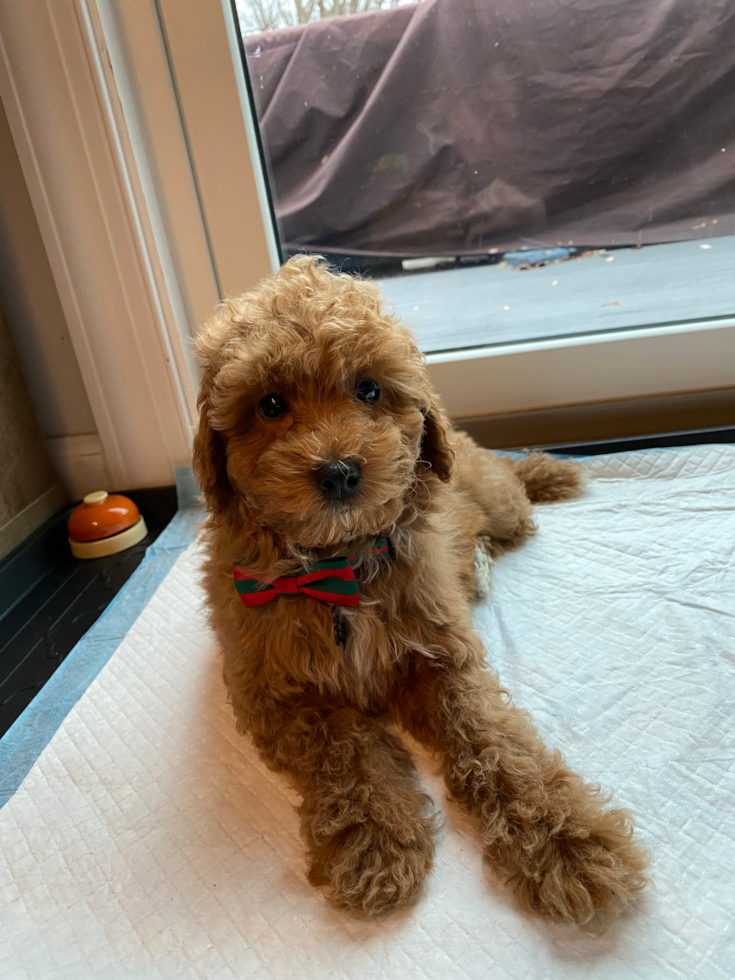
A Poochon puppy may suit you better if you enjoy teaching tricks, playing training games, varying your walks, and giving your dog small challenges throughout the week.
Poodle influence adds quick learning and athletic ability to the Bichon's cheerful personality. The result can feel like a tiny hobby partner as much as a lap companion.
The stronger curly-coat foundation may also appeal to people who place a high priority on minimal visible shedding. The tradeoff is substantial grooming and a greater need to keep the dog's brain involved.
The Poochon works especially well for someone who enjoys a dog that responds enthusiastically when asked to participate.
Choose a Shichon if You Want a Sturdier, Softer Companion
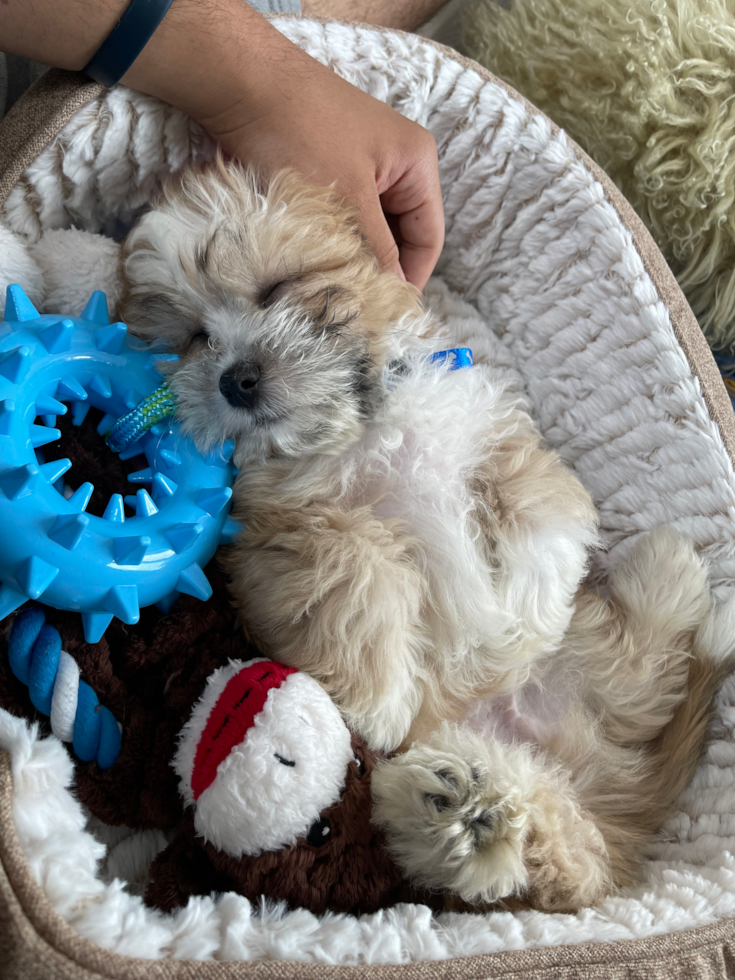
A Shichon puppy may suit you better if you want a small dog with a relaxed family style and a little more physical substance.
Shih Tzu influence can add a sturdy body, a rounder face, and a temperament strongly focused on close companionship. The dog can still enjoy walks and play without needing training games to form a major part of every day.
This makes the cross appealing to quieter households, seniors, and families that want a friendly companion whose activity needs stay manageable.
The main tradeoffs are grooming and possible heat sensitivity when the dog inherits a shorter Shih Tzu-like muzzle.
Which Is Bigger: Poochon or Shichon?
The ranges overlap considerably, but the Shichon usually has the more consistently substantial body.
Poochons commonly fall around 6 to 17 pounds, with Toy Poodle influence creating some very small examples. Shichons frequently sit around 9 to 16 pounds and often feel broad and sturdy for their height.
A larger Miniature-Poodle-influenced Poochon can equal or exceed a Shichon in height. The difference then may show more through body shape than actual weight.
For households that want the smallest possible dog, the Poochon offers more potential at the lower end. For people who prefer a little more body substance, the Shichon usually has the advantage.
Which Is Calmer: Poochon or Shichon?
The Shichon generally has the calmer everyday profile.
Shih Tzus were developed specifically as companions, and that influence can create a dog that settles comfortably after modest exercise. Bichon playfulness still keeps the Shichon cheerful and entertaining.
Poochons can relax beautifully too, but Poodle influence often creates more curiosity and a stronger appetite for interaction.
The difference is not dramatic physical energy. It is more about how quickly the dog's mind decides that the day's activities are finished.
Which Is More Energetic?
The Poochon usually has the higher activity profile.
Poodles are athletic dogs, and the Bichon already brings plenty of playful agility. Together, those traits can create a small dog that enjoys brisk walks, games, tricks, and active exploration.
Shichons still need daily exercise and can enjoy lively play. The Shih Tzu side simply shifts the balance toward shorter bursts followed by more relaxed companion time.
For an owner who wants more activity from a small dog, the Poochon may feel more satisfying without moving into high-energy territory.
Which Needs More Mental Stimulation?
The Poochon has the clearer advantage for mental stimulation needs.
Poodle intelligence can make patterns, training, problem-solving, and interactive games especially rewarding. A Poochon may learn household routines quickly and notice opportunities that people never intended to teach.
Shichons benefit from training and enrichment too, but their companion-oriented temperament usually asks for less structured mental work.
Someone who enjoys teaching new behaviors regularly may appreciate the Poochon more, while someone who prefers simpler routines may find the Shichon easier.
Which Is Easier to Train?
The Poochon usually has the advantage for quick and varied training.
Poodles and Bichons both bring strong learning ability and performance history. Many Poochons enjoy the training process itself, especially when sessions are varied and rewarding.
Shichons can learn household skills very successfully, but the Shih Tzu side may add more independence. Repeating an exercise after the dog already understands it may not seem especially worthwhile from the Shichon's point of view.
For everyday manners, both are capable. The Poochon simply offers the stronger foundation for people who want training to extend beyond the basics.
Which Is Better for First-Time Dog Owners?
Both can work very well for first-time owners, but the Shichon may have a slight advantage for someone seeking a simpler companion routine.
Its exercise needs are manageable, its temperament is usually highly people-oriented, and the dog does not generally require complex mental activities to feel satisfied.
A Poochon can also make an excellent first dog, especially for someone who enjoys training and understands the grooming commitment. Its intelligence can make many early lessons surprisingly easy.
Reviews from people who live with adult Poochons or Shichons can give a first-time owner useful insight into house training, grooming, barking, energy, and alone time after the puppy stage.
Which Is Better With Young Children?
The Shichon may have a slight physical advantage around younger children because it generally has a sturdier body.
Shih Tzus carry good substance for their size, and Bichons are sturdy little dogs as well. That combination can give many Shichons more physical margin during normal family activity.
A very small Toy-Poodle-influenced Poochon may need more careful handling. Larger Poochons can be equally well suited to family life when children understand how to interact respectfully.
Neither cross should be treated as a toy for children. Gentle handling and adult supervision matter with any small dog.
Which Is Better With Older Children?
Both can be excellent companions for older children.
A Poochon may particularly appeal to children who enjoy tricks, training games, and teaching the dog new skills. The cross can make interaction feel like a shared hobby rather than simple companionship.
A Shichon may suit a child who enjoys gentle play, cuddling, walks, and having the dog nearby during quiet activities.
The better choice depends less on the child's age than on how that child naturally wants to spend time with the dog.
Which Is Better With Other Dogs?
Both usually have strong potential with other dogs because the shared Bichon contributes broad social ability.
Poochons may show a more energetic play style through the Poodle side and can enjoy repeated games with another lively dog.
Shichons may offer a slightly softer social rhythm. They can enjoy play and then settle more readily, which may suit an older or quieter canine companion.
There is no universal winner. Matching size, age, and preferred play style matters more than choosing by cross name alone.
Which Is Better With Cats?
Both can fit cat households very well.
Neither cross includes strong terrier, herding, or hunting ancestry that would make persistent chasing a central expectation. A young dog may still follow a running cat simply because movement is exciting.
The Shichon's calmer adult rhythm may offer a small advantage in a very quiet cat household. A well-trained Poochon can be equally peaceful and may quickly learn the household rules.
Calm introductions and places where the cat can rest without being followed support either pairing.
Which Is More Affectionate?
Both are highly affectionate, so the useful difference is how affection is expressed.
The Poochon may seek closeness through interaction. Cuddling, following, bringing toys, and initiating games can all form part of the same social bond.
The Shichon may lean more toward sustained physical companionship. Sitting beside someone, curling up on a lap, or resting nearby can occupy a larger part of the day.
Neither gives more love. They simply offer slightly different versions of closeness.
Which Is More Social With Strangers?
This category is extremely close because all three breeds involved are strongly people-oriented.
Bichon influence gives both crosses a friendly social foundation. Poodles can add curiosity and attentiveness, while Shih Tzus are known for outgoing and trusting companion temperaments.
A Poochon may approach interaction with more energy, while a Shichon may feel softer and easier once introductions begin.
Neither cross is a natural choice for someone who specifically wants a reserved or aloof small dog.
Which Barks More?
The Poochon may have a slight advantage for alert or excitement barking, though the difference is modest.
Poodles are highly attentive, and Bichons can also announce unusual activity. That can create a dog that reacts quickly to hallway sounds, visitors, dogs outside, or anticipation of something fun.
Shichons can bark too, particularly when they learn that vocal behavior earns attention. The Shih Tzu side may soften environmental alertness in some dogs.
For apartment living, early quiet training matters more than assuming one cross will naturally stay silent.
Which Sheds Less: Poochon or Shichon?
Both generally shed very little, but the Poochon has the stronger low-shedding foundation.
Bichons and Poodles both release relatively little visible hair. Their curls hold loose strands inside the coat until brushing removes them.
Shichons combine the same Bichon with a Shih Tzu, which also tends to leave relatively little loose hair compared with many conventional double-coated breeds. Coat texture still varies more because the Shih Tzu contributes long flowing hair rather than Poodle curl.
For people who strongly prioritize minimal visible shedding, the Poochon may offer the more consistent direction.
Which Needs More Grooming?
Both need significant grooming, and neither should be considered low maintenance.
The Poochon may need more intensive combing because dense curls can mat close to the skin. Regular professional trimming is common.
The Shichon may require more facial care and detangling through long, soft areas around the ears, legs, chest, and mouth. A cottony coat can mat surprisingly fast.
The grooming workload is substantial in both cases. The difference is curl management versus softer coat and facial maintenance.
Which Is Better for Allergies?
Neither cross can guarantee compatibility for someone with dog allergies.
The Poochon may have the stronger low-shedding profile because both Bichon and Poodle ancestry reinforce that coat behavior. Shichons can also release little visible hair.
Allergens come from dander and saliva as well as coat, so a dog can leave almost no hair on the sofa and still trigger symptoms.
Personal tolerance matters more than the words Poochon, Shichon, or low shedding.
Which Is Better for Apartment Living?
Both can make excellent apartment dogs.
The Poochon fits compact spaces easily but may need a little more deliberate mental engagement. Walks, training, toy searches, and varied interaction can keep indoor life satisfying.
The Shichon may offer a slightly calmer apartment rhythm because its Shih Tzu side is deeply suited to companion life and modest physical exercise.
Barking, grooming, and comfortable alone time matter far more than square footage for either dog.
Which Is Better for Seniors?
Both can make excellent companions for seniors.
The Shichon may appeal to someone who wants a sturdy small dog with manageable exercise and a strong lap-companion temperament. Its quieter daily rhythm can fit naturally into a relaxed household.
The Poochon may suit an active senior who enjoys walking, tricks, games, and more interactive training. Smaller examples can also be extremely easy to lift and travel with.
Coat maintenance should form part of the decision for both, since regular professional grooming may simplify life considerably.
Which Is Better for a Quieter Household?
The Shichon generally has the stronger fit for a quieter home.
Shih Tzu influence can create a dog that gets plenty of emotional satisfaction from simply sharing space with family. Short walks and gentle play may provide enough activity without needing a long list of extra challenges.
Poochons can enjoy quiet homes too, but their Poodle side may look for more things to learn or do during the day.
For someone who values relaxed companionship over constant interaction, the Shichon may feel more natural.
Which Is Better for an Active Small-Dog Lifestyle?
The Poochon generally has the advantage for an owner who wants more activity from a small dog.
Poodle athleticism can support longer walks, tricks, small-dog agility, retrieving games, and varied outings. The Bichon adds another agile and playful influence.
Shichons can happily join regular walks and family adventures, but their Shih Tzu side usually makes intense activity less central to daily satisfaction.
The Poochon therefore offers more range for someone who wants a small companion that can double as an active little hobby partner.
Which Is More Physically Sturdy?
The Shichon usually has the stronger foundation for physical substance.
Shih Tzus weigh roughly 9 to 16 pounds and are compact, solid dogs. Bichons also have sturdy bodies, which gives the Shichon good substance from both sides.
Poochons can be sturdy too, especially when Miniature Poodle influence is strong. Toy-Poodle-based dogs can sit at a much smaller and more delicate end of the range.
For busy family life, that difference may matter more than a few inches of height.
Which Handles Warm Weather Better?
The Poochon generally has the easier warm-weather profile.
Poodles and Bichons have moderate-length muzzles that allow normal panting mechanics, although thick curly coats still require sensible heat management.
Shih Tzus have short faces and heavy coats and are known to tolerate heat poorly. A Shichon that inherits a noticeably shorter muzzle may share some of that limitation.
Exercise during cooler parts of the day, access to water and shade, and indoor cooling are sensible for both during hot weather.
Which Has the More Predictable Coat Texture?
The Poochon generally has the narrower coat-texture range.
Bichons and Poodles both contribute curls or strong waves, so the finished dog usually stays somewhere within a fluffy textured profile.
The Shichon combines Bichon curl with the Shih Tzu's long flowing coat. That can create anything from loose curls to soft waves or straighter-looking furnishings.
Someone who strongly prefers a curly teddy bear look may find the Poochon more consistent. Someone who likes softer flowing hair may prefer the Shichon's wider range.
Poochon vs Shichon: The Final Comparison
Choosing between a Poochon vs Shichon gets much easier once you hold the Bichon Frise constant and focus on what the Poodle and Shih Tzu add.
Both dogs start with a cheerful, playful, social companion breed. Bichon influence gives them strong family potential, a sturdy small-dog foundation, and plenty of charm. Neither cross needs an extreme lifestyle to thrive.
The Poochon adds the Poodle, an athletic water retriever known for exceptional intelligence and training ability. That influence usually creates more curl, stronger mental engagement, greater interest in structured activity, and a slightly sportier feel in everyday life.
The Shichon adds the Shih Tzu, a breed developed for close companionship in Chinese imperial households. That influence generally adds greater body substance, a softer daily rhythm, a rounder face, and a stronger tendency to find simple family closeness deeply satisfying.
Their coats create a useful practical difference. Poochons usually stay within a curly or strongly wavy range and tend to release very little visible hair. Shichons can have looser waves, softer flowing hair, or open curls, with more facial and coat variation overall.
Their exercise needs overlap, but the Poochon generally asks for more interaction. A bright Poochon may enjoy a walk and still appreciate a training game afterward. A Shichon may enjoy the same walk and then decide that the family sofa is a perfectly reasonable next activity.
Heat tolerance also deserves attention. A Shichon with a short Shih Tzu-like muzzle may need more caution during hot weather and strenuous exercise. The Poochon generally avoids that particular structural concern.
If you want a small, highly trainable, low-shedding companion with an active mind, curly coat, and enthusiasm for games and learning, the Poochon may fit your life better.
If you want a small, sturdy, affectionate companion with a softer temperament, manageable exercise needs, and a stronger lapdog influence, the Shichon may make more sense.
Breed-specific customer reviews can add useful perspective, especially when owners discuss adult energy, coat care, heat tolerance, barking, house training, children, and how much daily interaction their dog seeks after puppyhood.
The real choice is not between two versions of the same teddy bear dog. It is whether you want the Bichon's cheerful social foundation strengthened by Poodle versatility or softened further by Shih Tzu companionship.
Frequently Asked Questions
What is the main difference between a Poochon and Shichon? Both share Bichon Frise ancestry, but the Poochon adds Toy or Miniature Poodle influence while the Shichon adds Shih Tzu influence. That changes the typical coat, body type, energy level, training style, and facial structure. Poochons usually lean toward curls, athletic intelligence, and greater mental engagement. Shichons generally lean toward a sturdier body, softer companion temperament, and more relaxed daily rhythm.
Which is bigger, a Poochon or Shichon? Their weight ranges overlap, but the Shichon usually has the more consistently substantial build. Shichons often weigh around 9 to 16 pounds, while Poochons may range from roughly 6 to 17 pounds depending partly on Poodle size. A Toy-Poodle-influenced Poochon can be much smaller than the average Shichon. A larger Miniature-Poodle-influenced Poochon may stand taller while still looking more athletic and refined.
Which is calmer, a Poochon or Shichon? The Shichon generally has the calmer everyday profile. Shih Tzu influence adds a long companion tradition and usually places less emphasis on structured mental activity. Poochons can settle comfortably too, but the Poodle side often creates more curiosity and interest in training or games. The difference is less about extreme energy and more about how much engagement each dog seeks.
Which is easier to train, a Poochon or Shichon? The Poochon usually has the advantage for fast and varied training. Poodles and Bichons both have strong learning ability and histories that reward responsiveness to people. Shichons can learn household manners very well, but Shih Tzu influence may add more independence. Positive reinforcement and short, enjoyable sessions work best for both.
Which sheds less, a Poochon or Shichon? Both tend to shed very little, but the Poochon has the stronger low-shedding foundation because both Poodles and Bichons release little visible hair. Shichons can also leave very little hair around the home. Their coat simply has more texture variation because the Shih Tzu contributes long flowing hair rather than tight curl.
Which needs more grooming, a Poochon or Shichon? Both need substantial grooming. Poochon curls may require more thorough combing close to the skin, while Shichons can need more detangling and facial care when the coat is long and soft. Shorter professional trims make either cross easier to maintain. Low shedding should not be confused with low grooming needs.
Is a Poochon or Shichon better with children? Both can make excellent family companions. The Shichon may offer a slight physical advantage around younger children because Shih Tzu and Bichon ancestry both contribute sturdy small-dog bodies. Poochons can be wonderful with children too, especially those who enjoy tricks and games. Very small Toy-Poodle-influenced dogs need more careful handling.
Which barks more, a Poochon or Shichon? The Poochon may have a slight tendency toward more alert or excitement barking because Poodles are highly attentive dogs and Bichons also notice household activity. Shichons can certainly bark, but the Shih Tzu side may create a softer response in some dogs. Early quiet training matters more than relying on either cross to stay naturally silent.
Is a Poochon or Shichon better for apartment living? Both can fit apartment life extremely well because they are small and need manageable amounts of physical exercise. The Poochon may need more deliberate mental engagement, while the Shichon may settle into a quieter indoor routine more easily. Barking, grooming, comfortable alone time, and regular walks matter more than the amount of floor space available.
Should I choose a Poochon or Shichon? Choose a Poochon if you want a small, clever, low-shedding dog with a curly coat, strong training potential, moderate activity, and a greater interest in games and mental stimulation. Choose a Shichon if you want a small, sturdy, affectionate companion with softer coat variation, a calmer daily rhythm, and strong Shih Tzu-style lapdog influence. Both share the Bichon's cheerful social personality, but Poodle versatility and Shih Tzu companionship create two distinctly different versions of it.