


Published Tuesday, October 27, 2026 by Pilesgrove Pups
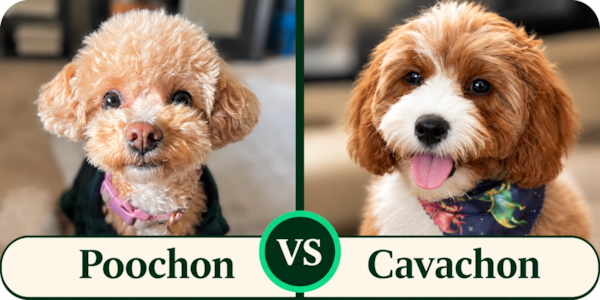
The Poochon vs Cavachon comparison brings together two affectionate small dogs with an important connection: both share the Bichon Frise. That common ancestry can give either cross a cheerful social personality, compact body, playful nature, strong family attachment, and the soft teddy bear look that makes both dogs so appealing.
The difference comes from the breed paired with the Bichon. A Poochon combines the Bichon Frise with a Toy or Miniature Poodle, while a Cavachon combines the Bichon Frise with a Cavalier King Charles Spaniel. That gives us a much more useful way to compare them than simply calling both friendly small dogs.
The Poodle adds athletic intelligence, a stronger working background, dense curl, quick problem-solving ability, and a greater appetite for structured activity. A Poochon may still be a cuddly companion, but there is usually a bright little athlete underneath the fluffy coat that enjoys learning, games, and having its brain included in daily life.
The Cavalier King Charles Spaniel adds something softer. Cavaliers combine the affectionate nature of a toy companion with the gentle athleticism of spaniel ancestry, and their temperament tends to emphasize closeness, adaptability, and an easy willingness to share whatever pace their family chooses.
That difference can shape everyday ownership more than it first appears. The Poochon generally leans toward a more mentally active, responsive, and curly-coated companion. The Cavachon generally leans toward a softer, more relaxed spaniel style with a silkier coat, slightly greater body substance, and less pressure for structured mental work.
Neither is automatically easier or more affectionate. Both can bond intensely with their families, both can fit apartment life beautifully, and both need serious grooming despite their small size. The better choice comes down to whether you prefer Poodle-driven engagement and versatility or Cavalier-driven softness and companionship added to the same happy Bichon foundation.
Table of Contents
- Poochon vs Cavachon at a Glance
- Poochon and Cavachon Overview and History
- Poochon vs Cavachon Appearance
- Poochon vs Cavachon Temperament
- Poochon vs Cavachon: Which One Should You Choose?
- Choose a Poochon if You Want a Bright, Interactive Small Companion
- Choose a Cavachon if You Want a Softer, Easygoing Companion Style
- Which Is Bigger: Poochon or Cavachon?
- Which Is Calmer: Poochon or Cavachon?
- Which Is More Energetic?
- Which Needs More Mental Stimulation?
- Which Is Easier to Train?
- Which Is Better for First-Time Dog Owners?
- Which Is Better With Young Children?
- Which Is Better With Older Children?
- Which Is Better With Other Dogs?
- Which Is Better With Cats?
- Which Is More Affectionate?
- Which Is More Social With Strangers?
- Which Barks More?
- Which Sheds Less: Poochon or Cavachon?
- Which Needs More Grooming?
- Which Is Better for Allergies?
- Which Is Better for Apartment Living?
- Which Is Better for Seniors?
- Which Is Better for a Quieter Household?
- Which Is Better for an Active Small-Dog Lifestyle?
- Which Is More Physically Sturdy?
- Which Has the More Predictable Coat?
- Poochon vs Cavachon: The Final Comparison
Poochon vs Cavachon at a Glance
| Trait | Poochon | Cavachon |
| Parent breeds | Bichon Frise × Toy or Miniature Poodle | Bichon Frise × Cavalier King Charles Spaniel |
| General size | Small | Small |
| Common adult weight | Often about 6–17 pounds | Often about 10–20 pounds |
| Common adult height | Often about 9–15 inches | Often about 9–13 inches |
| Build | Compact, agile, sometimes finer | Compact, sturdy, softly athletic |
| Coat | Usually wavy to curly | Usually soft, wavy, or loosely curled |
| Shedding | Usually very low | Low to moderate, coat-dependent |
| Grooming | High | Moderate to high |
| Common colors | White, cream, apricot, brown, black, gray and more | White, cream, apricot, ruby, black and tan, tricolor and more |
| Energy | Moderate | Low-moderate to moderate |
| Mental stimulation | Moderate to high | Moderate |
| Trainability | High | Moderate to high |
| Best fit | Someone wanting a bright, trainable, interactive small dog | Someone wanting a soft, affectionate, easygoing companion |
Both crosses can vary because neither has one formal breed standard. The Poochon has additional size variation because either Toy or Miniature Poodle ancestry may be used, while the Cavachon's two breeds sit within a somewhat closer general size range.
Poochon and Cavachon Overview and History
The Bichon Frise gives both dogs an unusually cheerful starting point. Bichons developed as small Mediterranean companion dogs and later found favor in European royal courts, among street performers, and in family homes. Their history rewarded charm, adaptability, trainability, and the ability to connect easily with people.
That shared Bichon influence explains why both crosses tend to feel so approachable. Neither pairing adds a strongly territorial guardian, intense terrier, or high-drive herding breed. Both stay rooted in companion life, even though the Poodle and Cavalier bring different working histories into the mix.
The Poodle adds a water-retrieving background and a much stronger athletic learning profile. The Cavalier adds toy-spaniel history, gentle sporting ability, and a temperament shaped heavily around close human companionship.
The result is two dogs that may both happily curl up beside you, but one is more likely to ask, “What are we learning next?” while the other may be perfectly satisfied asking, “Where are we sitting?”
The Bichon Frise Foundation Both Dogs Share
The Bichon Frise usually stands around 9.5 to 11.5 inches and weighs about 12 to 18 pounds. Underneath the rounded white coat is a sturdy, agile little body rather than a fragile lapdog frame.
Bichons are famous for sociability. They tend to enjoy family, visitors, other dogs, and opportunities to interact, which helps explain why both the Poochon and Cavachon usually have strong potential as household companions.
The breed is also intelligent and historically adaptable. Bichons moved from aristocratic courts into street performance and circus work, where charm alone was not enough. Dogs that could learn quickly and engage audiences had a practical advantage.
That combination of playfulness, resilience, and social confidence acts as the shared base in this comparison. The Poodle sharpens the active learning side, while the Cavalier deepens the gentle companion side.
Poochon History and Background
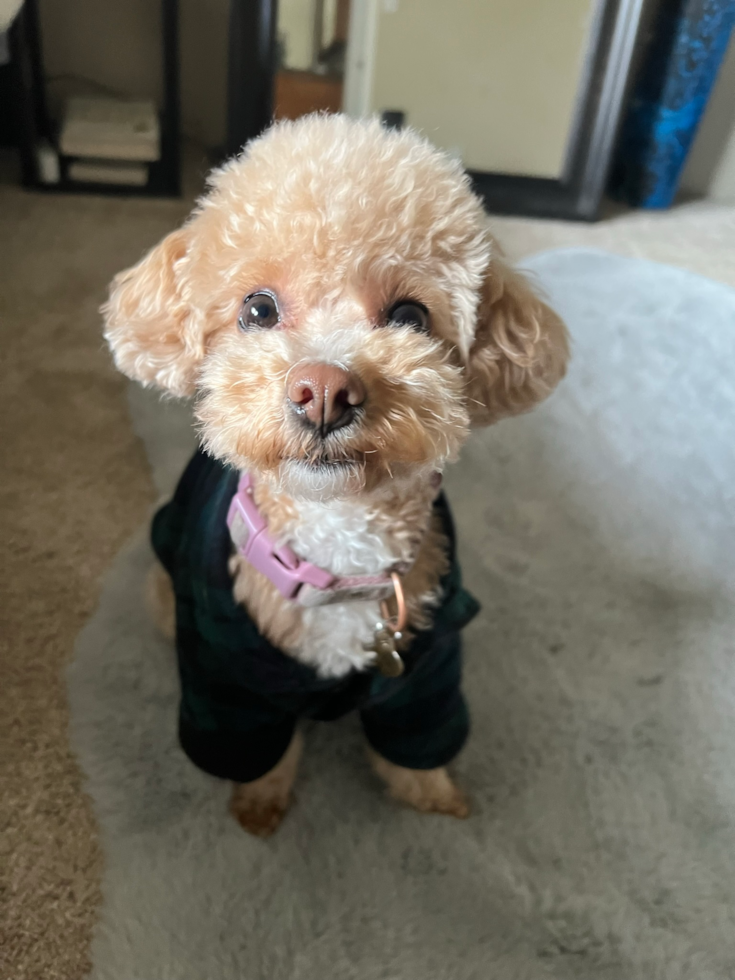
The Poochon, also called a Bichpoo or Bichonpoo, combines a Bichon Frise with a Toy or Miniature Poodle. Like many modern companion crosses, there is no single reliably documented first breeder or origin point that defines the entire Poochon population.
The Poodle side brings one of the most misunderstood working histories in the companion-dog world. Poodles may be associated with elaborate show clips today, but the breed developed around water retrieval and needed intelligence, swimming ability, responsiveness, and athleticism.
Miniature and Toy Poodles were later developed from larger Poodles to offer the same basic structure and bright temperament in smaller bodies. Toy Poodles weigh only a few pounds, while Miniatures commonly sit around 10 to 15 pounds, which helps explain the Poochon's broad small-dog size range.
The pairing works naturally in several ways. Both the Bichon and Poodle are people-oriented, highly trainable, and known for coats that release little visible hair. Both can also enjoy performance and interactive learning.
That creates a small dog with companion warmth on both sides but a stronger active-training profile than someone might expect from a fluffy lapdog.
Cavachon History and Background
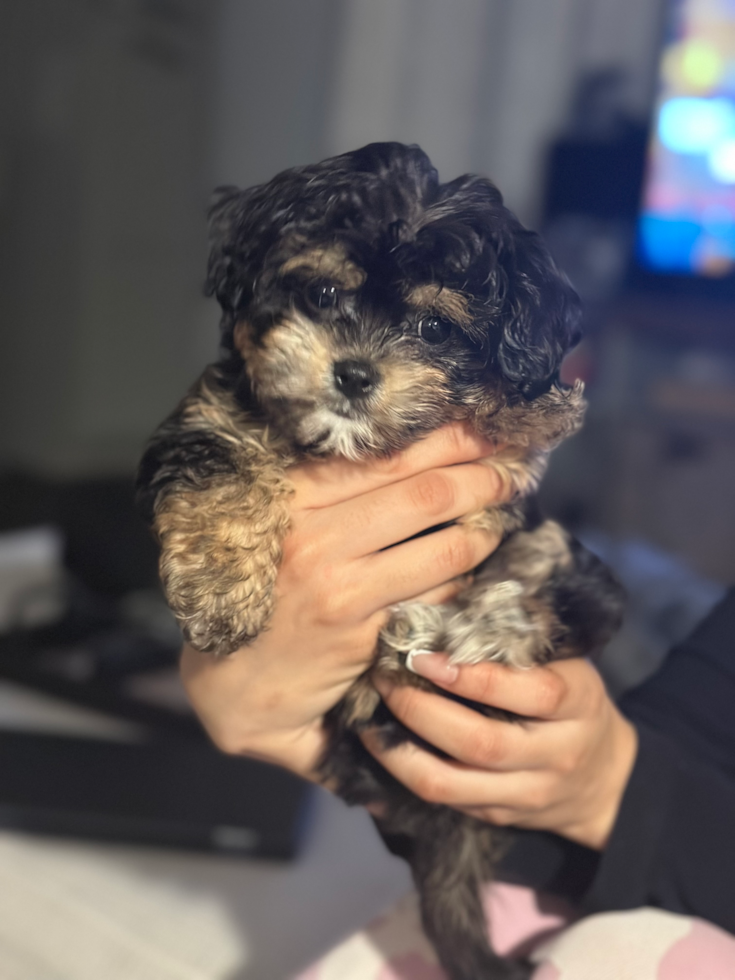
The Cavachon combines the Bichon Frise with the Cavalier King Charles Spaniel. Intentional Cavachon breeding is relatively modern, but the two breeds behind the cross have much older companion histories.
Cavaliers trace their identity to the small spaniels favored by British nobility. The breed's name reflects its association with Kings Charles I and Charles II, whose devotion to toy spaniels helped make the dogs part of British royal imagery.
The modern Cavalier was reconstructed to resemble the longer-muzzled toy spaniels seen in older paintings. It carries a distinctive balance of toy-dog affection and sporting-spaniel ability, which is one reason the breed can enjoy a walk and then settle comfortably beside its family.
Cavaliers stand around 12 to 13 inches and weigh about 13 to 18 pounds. Their silky coats, feathered ears, large expressive eyes, and gentle temperaments contrast nicely with the Bichon's curlier, more buoyant look.
The Cavachon brings those qualities together. The Bichon adds cheerfulness and coat texture, while the Cavalier contributes spaniel softness, a slightly more substantial frame, and a temperament that frequently feels especially easy to live with.
Poochon vs Cavachon Appearance
The Poochon and Cavachon can both have rounded teddy bear faces, dark expressive eyes, hanging ears, and fluffy coats, especially when professionally trimmed. Coat texture and body structure offer better clues than the overall teddy bear outline.
The Poochon generally carries more obvious curl because both the Bichon and Poodle contribute textured coats. The Cavachon usually has looser waves or a softer flowing texture because Cavalier hair is naturally straight to gently waved and heavily feathered.
Body shape differs too. Poochons may look more compact or lightly athletic, while Cavachons frequently have a slightly longer, sturdier spaniel-influenced frame.
Poochon Appearance
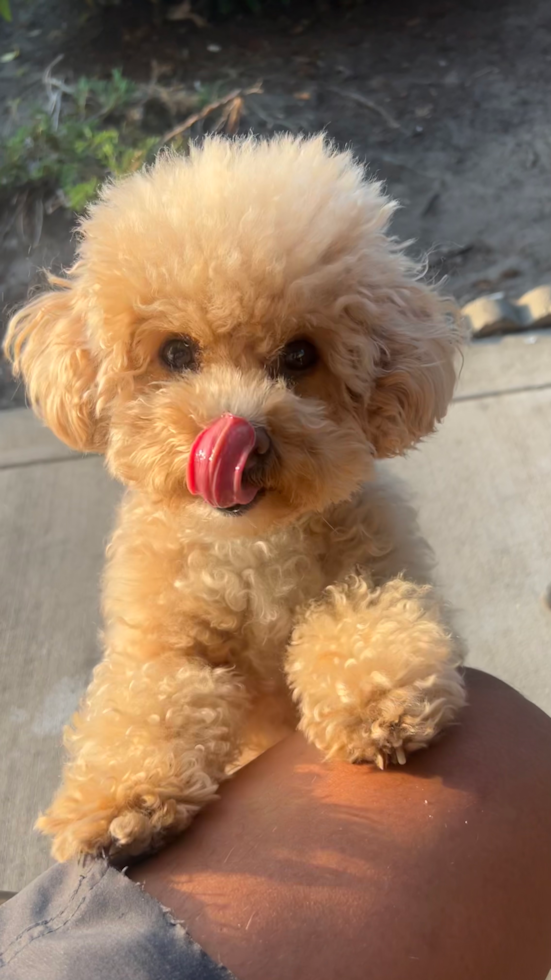
Poochons commonly weigh around 6 to 17 pounds and stand roughly 9 to 15 inches tall. The range is broad partly because the Poodle side can come from either Toy or Miniature lines.
The body is usually compact and well balanced. Bichon influence contributes sturdiness, while Poodle influence may add more leg, refinement, and athletic structure.
A small Poochon can look like a fluffy toy dog while still having plenty of physical ability underneath the coat. Larger examples may feel more like compact small dogs than delicate lapdogs.
Poochon Coat Type and Texture
The Poochon usually has a wavy or curly coat.
Bichons naturally have soft, dense curls, while Poodles contribute another dense curly coat. This gives the cross a strong foundation for visible texture and makes completely straight coats less characteristic.
Some Poochons have soft open waves that fall naturally around the body. Others have tighter curls and a stronger Poodle appearance, especially through the legs, chest, and facial furnishings.
The same texture that creates the teddy bear look can also mat quickly. Loose hairs tend to stay inside the coat rather than falling freely, so regular combing is essential.
Poochon Colors and Markings
Poochons can appear in white, cream, apricot, red-related shades, brown, black, gray, and combinations depending on the Poodle influence.
The Bichon contributes a strong white foundation, sometimes with cream, buff, or apricot shading. Poodle ancestry greatly expands the available palette.
Warm apricot and cream Poochons are especially familiar because those colors emphasize the teddy bear appearance. Black or brown dogs can look quite different despite sharing the same coat texture and build.
Some colors lighten with age, particularly when Poodle fading genes are present. A rich puppy shade can soften considerably by adulthood.
Poochon Eyes, Ears, and Facial Features
Poochons usually have dark eyes, black or brown noses according to coat color, and hanging ears covered in soft hair.
The Bichon contributes a rounded expression, while the Poodle can add more refinement through the muzzle and skull. Heavy furnishings often hide much of the underlying structure.
The face usually has a moderate muzzle rather than a shortened one. This suits the dog's active little body and allows the Poochon to enjoy exercise without the breathing limitations associated with flatter-faced breeds.
Rounded grooming around the muzzle and forehead can exaggerate the teddy bear look, especially when the coat is curly.
Poochon Build and Size
The Poochon generally has the lighter and more agile body in this comparison.
Bichons are sturdier than their fluffy appearance suggests, while Poodles add another athletic influence. Even small Poochons can enjoy brisk walks, games, trick training, and small-dog sports.
Toy-Poodle influence can keep the body particularly petite. Miniature Poodle influence may add more height and muscle, which gives some Poochons a noticeably sportier outline.
That variation makes the Poochon appealing to people who want a small dog without automatically choosing a low-activity lapdog.
Poochon Shedding
The Poochon generally has the stronger low-shedding profile.
Both Bichons and Poodles release relatively little visible hair. Loose strands tend to stay caught within the coat, which keeps furniture cleaner but shifts the maintenance burden toward brushing and combing.
This does not make the dog completely non-shedding, and it does not guarantee compatibility for someone with allergies.
The practical advantage is that visible hair around the home is usually limited compared with crosses that include a conventional shedding coat.
Poochon Grooming Needs
Poochon grooming is a significant commitment.
Dense curls and waves can mat close to the skin, especially behind the ears, under the legs, around the collar, and through the tail. A quick surface brushing is not enough when the coat is thick.
Professional grooming is usually part of the routine. Short teddy bear trims can make daily maintenance easier without sacrificing the rounded appearance.
The tradeoff for low visible shedding is clear: less hair on the sofa usually means more hair that needs to be managed on the dog.
Cavachon Appearance
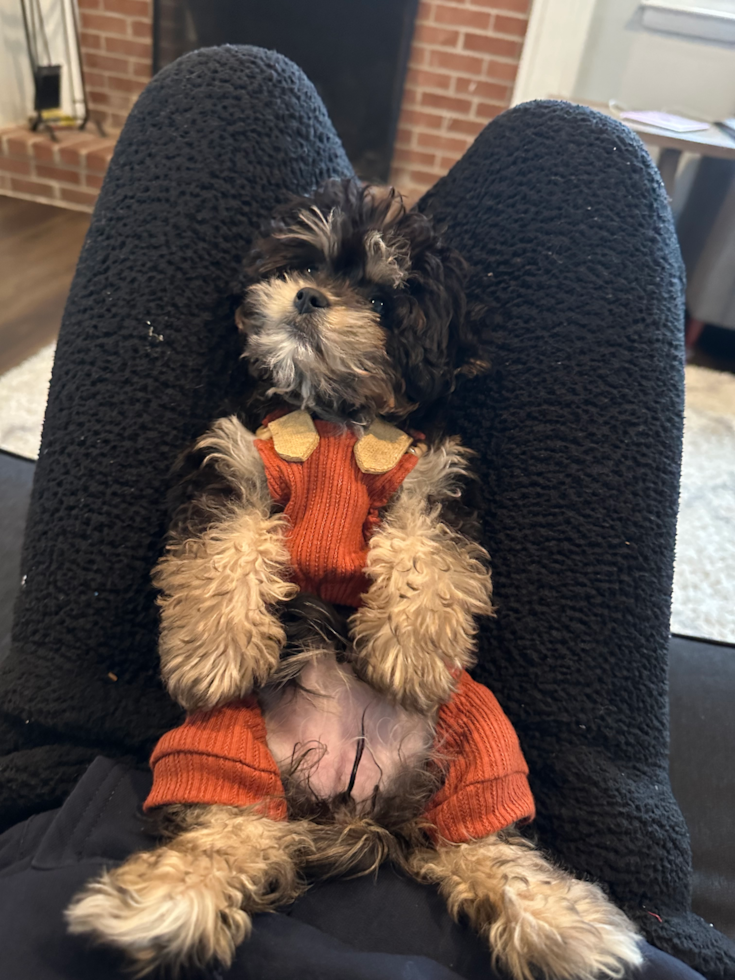
Cavachons commonly fall around 10 to 20 pounds and roughly 9 to 13 inches tall. Some dogs sit outside those ranges, but the cross usually stays firmly within the small-dog category.
The Cavalier contributes a slightly longer and more substantial body than the Poodle does in many Poochons. The result can feel sturdy without looking heavy.
The Bichon still adds compactness and fluff, which keeps the Cavachon from simply looking like a smaller Cavalier.
Cavachon Coat Type and Texture
Cavachon coats commonly range from silky waves to soft loose curls.
The Cavalier contributes medium-length silky hair with feathering around the ears, chest, legs, and tail. The Bichon contributes a dense curly coat.
The combination frequently creates a soft wavy texture rather than the tighter curl common in Poochons. Some Cavachons lean more strongly toward Bichon fluff, while others carry a visibly spaniel-like coat.
This softer coat can tangle easily, particularly around long ears and feathered areas, even when it does not look especially curly.
Cavachon Colors and Markings
Cavachons have a broad and distinctive color range because the Cavalier contributes several classic spaniel patterns.
White and apricot, cream, ruby, black and tan, and tricolor combinations can all appear. Blenheim-style chestnut and white markings are especially recognizable when Cavalier influence is strong.
The Bichon can add larger white areas or soften the overall pattern. Some Cavachons are mostly cream or white, while others have bold patches and facial markings.
Compared with the Poochon, the Cavachon has stronger potential for clearly defined multicolor spaniel patterns rather than primarily solid or softly shaded coats.
Cavachon Eyes, Ears, and Facial Features
The Cavachon often has especially large, soft-looking dark eyes.
Cavalier King Charles Spaniels are known for their gentle expression, and that feature can carry strongly into the cross. The Bichon adds roundness and fuller facial hair.
The ears usually hang beside the head and can carry substantial feathering. They may look longer and silkier than Poochon ears when Cavalier traits show clearly.
The muzzle is moderate, and the face generally has a soft, open appearance rather than the more refined look sometimes created by Poodle influence.
Cavachon Build and Size
The Cavachon is usually the somewhat sturdier and heavier-built dog.
Cavaliers weigh around 13 to 18 pounds and carry a compact spaniel body with enough substance for genuine athletic activity. Bichons add another sturdy small-dog structure.
The finished cross frequently has a balanced body that can handle walks and play easily without feeling especially delicate.
Compared with a Toy-Poodle-based Poochon, the difference can be substantial. Compared with a larger Miniature-Poodle-based Poochon, the sizes may overlap almost completely.
Cavachon Shedding
Cavachon shedding is generally low to moderate, but it can vary more than Poochon shedding.
The Bichon contributes low visible shedding, while Cavaliers have silky coats that naturally release hair. A Cavachon with stronger spaniel coat traits may therefore leave more hair around the home than a curly Poochon.
A more Bichon-like Cavachon may release very little visible hair. Coat texture can provide some guidance, but it does not guarantee one exact shedding pattern.
For readers who strongly prioritize minimal loose hair, the Poochon has the clearer advantage.
Cavachon Grooming Needs
Cavachons still need regular grooming despite their softer coat.
Wavy hair can tangle behind the ears, under the legs, around the chest, and through feathering. Long ears need particular attention because fine silky hair can knot where it rubs against the neck and shoulders.
Some dogs need regular professional trims, while others can keep a more natural spaniel-like outline with routine tidying.
The grooming workload is serious but may feel somewhat different from the Poochon's dense curl maintenance. Cavachons need detangling and coat care, while Poochons more consistently need thorough curl management.
Poochon vs Cavachon Appearance Comparison: What Is the Difference?
The clearest appearance distinction is curly athletic fluff versus silky spaniel softness.
The Poochon generally has stronger curl, a more compact or refined outline, and a wider size range due to Toy and Miniature Poodle influence. Its coat frequently sits away from the body and creates the rounded teddy bear shape people associate with Poodle mixes.
The Cavachon usually has looser waves, longer-looking ears, a softer expression, and slightly more body substance. Cavalier markings can also create much more obvious tricolor, ruby, black-and-tan, or chestnut-and-white patterns.
Shedding separates them too. Both can release little visible hair, but the Poochon has low-shedding coat ancestry on both sides, while the Cavalier introduces a conventional shedding coat into the Cavachon.
If you prefer curls and a more classic little Doodle appearance, the Poochon may appeal more. If you love silky waves, expressive spaniel eyes, and a softer overall look, the Cavachon may be the stronger match.
Poochon vs Cavachon Temperament
Both dogs have an affectionate Bichon foundation, so this is not a comparison between a social dog and an independent one. The more useful difference is how each dog uses its attention.
The Poodle adds quick problem-solving, athletic intelligence, and a stronger appetite for training. A Poochon may actively look for games, patterns, and ways to engage with people.
The Cavalier adds a gentler spaniel temperament that can feel less driven. A Cavachon may enjoy training and play but place just as much value on simply staying near the family and adapting to the pace of the room.
That distinction is subtle, but it matters for someone choosing between two otherwise very similar small companions.
Poochon Temperament
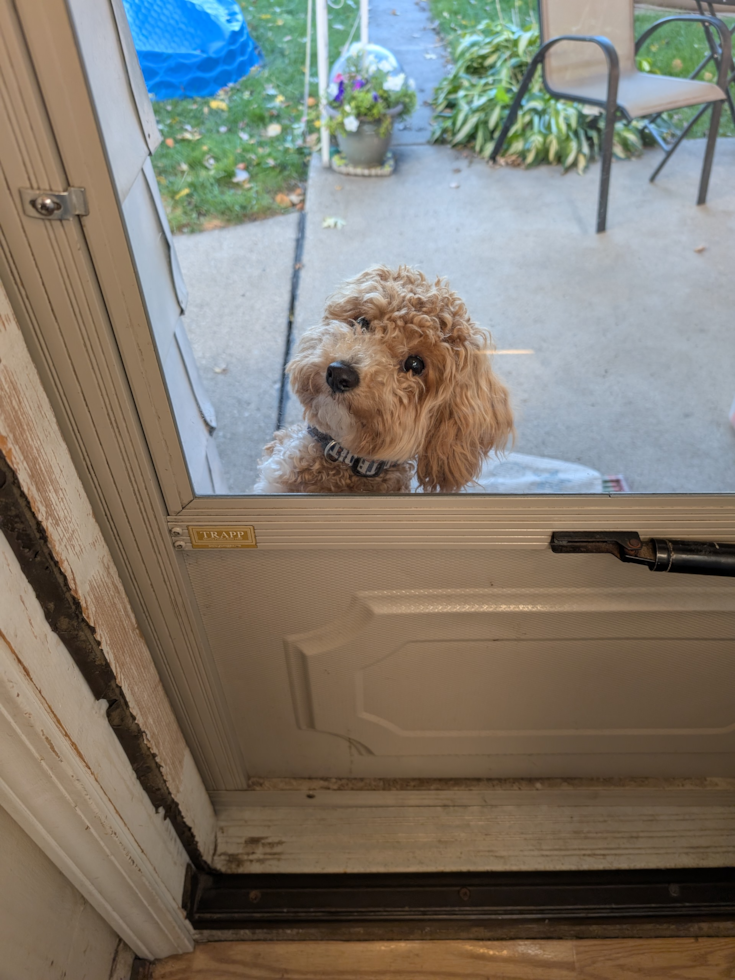
Poochons tend to be cheerful, affectionate, clever dogs that enjoy active participation in family life.
The Bichon contributes broad sociability and a playful companion personality. The Poodle adds more mental intensity and quick learning, which can make the cross especially engaging for people who enjoy training.
Many Poochons like to know what is happening and may follow family routines closely. They can switch between cuddling and activity very quickly when something interesting appears.
Their small size should not lead anyone to assume they need no stimulation. A bored Poochon can create its own projects just as easily as a larger intelligent dog.
Poochon Intelligence and Training
Training is one of the Poochon's strongest areas.
Poodles are exceptional learners, while Bichons have their own history of performance and interactive work. Together, the two breeds create an excellent foundation for tricks, obedience, games, and household manners.
The Poochon may learn patterns almost too efficiently. A dog can quickly understand not only what earns a reward but also which family member is most likely to bend a rule.
Positive reinforcement works especially well. Short, varied sessions can keep the dog interested without turning training into repetitive drilling.
Poochon Energy Level
Poochons generally have moderate energy.
They do not need the exercise schedule of a sporting breed, but many enjoy brisk walks, play, training, and short bursts of surprisingly athletic movement.
Poodle influence can make the dog more interested in activity than someone expects from a small fluffy companion. Bichon playfulness reinforces that cheerful energy.
A balanced routine usually works best. Daily walks combined with games, training, and calm indoor time can satisfy the dog without turning every day into an exercise program.
Poochon Mental Stimulation
The Poochon generally has the stronger need for mental engagement in this comparison.
Training, food puzzles, toy searches, scent games, tricks, and varied walking routes can all give the dog useful opportunities to think. These activities do not need to be difficult or time-consuming.
The important point is that physical exercise alone may not fully satisfy a particularly bright Poochon. A short training game can sometimes do more for indoor calm than adding another lap around the block.
This makes the cross especially enjoyable for owners who like interacting with their dogs rather than relying only on walks for enrichment.
Poochon Affection and Sociability
Poochons usually have strong social needs.
The Bichon side contributes a famously friendly outlook, while Poodles tend to form close working relationships with people. Many Poochons enjoy family, visitors, and other dogs when social experiences are positive.
Affection can be active. A Poochon may cuddle one moment and bring a toy or initiate a game the next.
That involvement is appealing in a companion dog, but independence practice still matters so family closeness does not turn into difficulty when the dog spends time alone.
Poochons With Children
Poochons can make excellent family dogs when children understand how to interact with a small animal.
The Bichon contributes sturdiness and a strong family temperament, while the Poodle adds playfulness and trainability. Older children may particularly enjoy teaching tricks and playing structured games.
Very small Poochons need gentle handling. A Toy-Poodle-influenced dog can be much lighter and more delicate than a larger Cavachon.
For active young children, physical size deserves as much consideration as temperament.
Poochons With Other Dogs and Pets
Poochons generally have excellent potential with other dogs.
Bichons are broadly social, and Poodles can also enjoy canine companionship. Another playful small dog may make an excellent match.
Cats can fit comfortably into the home as well. Neither breed behind the Poochon adds strong terrier or specialized herding instincts.
The dog's intelligence can make moving animals interesting, but calm introductions usually give the household a good foundation for peaceful coexistence.
Poochon Barking and Alertness
Poochons can be alert barkers, though they are not generally serious watchdogs.
Bichons notice unusual activity, while Poodles are attentive dogs that quickly detect changes around the home. Doorbells, hallway sounds, visitors, and outdoor movement can all earn a response.
The Poodle side may also contribute barking through excitement or frustration when the dog wants something to happen.
Quiet training, adequate engagement, and a predictable daily routine can help keep vocal behavior reasonable.
Cavachon Temperament
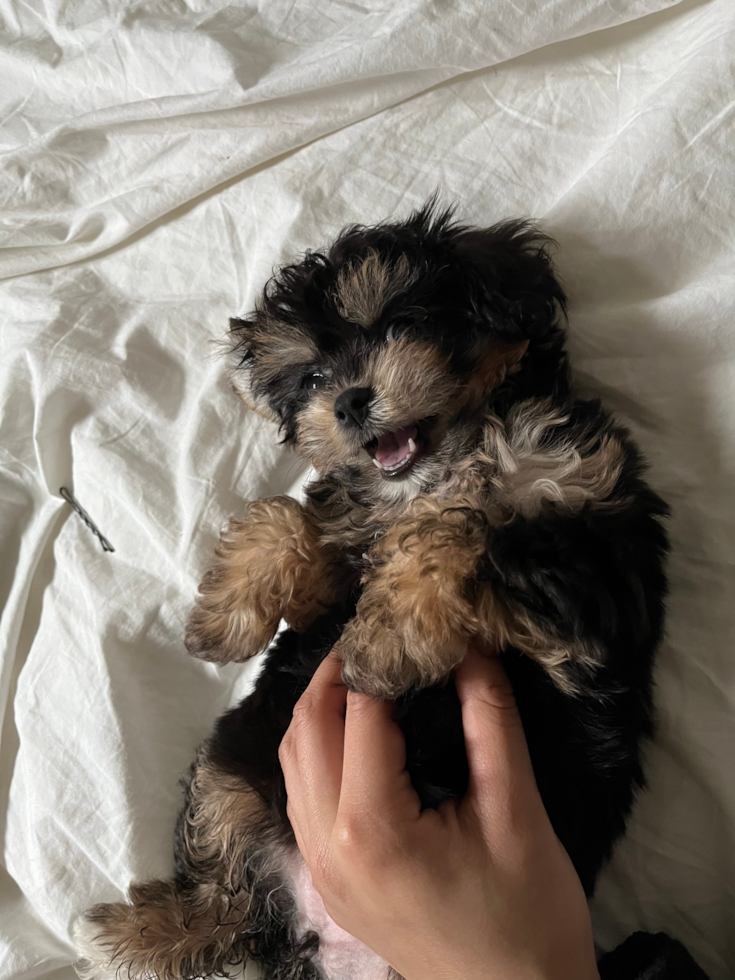
Cavachons tend to be affectionate, gentle dogs with a warm and adaptable companion style.
The Bichon contributes cheerfulness and sociability, while the Cavalier adds one of the softest temperaments in the toy group. Cavaliers are known for combining toy-dog closeness with the willingness and athletic ability of a small spaniel.
This can create a dog that enjoys walks and games without demanding constant challenges. Many Cavachons fit comfortably into the flow of family life and are just as happy joining an outing as they are settling beside someone afterward.
The cross can therefore feel especially easy for households that want involvement without a strong need to entertain the dog mentally throughout the day.
Cavachon Intelligence and Training
Cavachons are intelligent and trainable, though their style can feel softer than the Poochon's.
Bichons bring a history of performance and learning, while Cavaliers are cooperative dogs that generally enjoy working with people.
Most Cavachons can learn household manners, tricks, recall, and leash skills very successfully. They may simply show less drive to turn learning itself into a hobby.
Positive reinforcement suits the cross beautifully. Gentle consistency usually works better than high-pressure or repetitive training.
Cavachon Energy Level
Cavachons generally have low-moderate to moderate energy.
Cavaliers have real sporting-spaniel ability despite belonging to the Toy Group, while Bichons add playful bursts and enough sturdiness for active family life.
The cross usually enjoys daily walks, games, and outdoor exploration without needing a demanding exercise schedule. Many adults settle readily after their basic needs have been met.
This can make the Cavachon especially appealing to families whose activity changes from one day to the next.
Cavachon Companion Style
The Cavachon's strongest quality may be how naturally it fits into companion life.
Cavaliers were bred to stay close to people, and Bichons share that strong social orientation. Together, those influences can create a dog that finds ordinary family presence deeply rewarding.
A Cavachon does not necessarily need a complicated activity to feel included. Sitting near someone, joining a short walk, riding along on an outing, or relaxing with the family can all satisfy the social side of the dog.
That softness should not be confused with emotional independence. Comfortable alone time still needs practice because both breeds strongly value company.
Cavachon Affection and Sociability
Cavachons tend to be extremely affectionate.
The Cavalier's gentle, trusting temperament blends naturally with the Bichon's social confidence. Many Cavachons enjoy family members, visitors, and other dogs with little need for a long warm-up period.
Their affection may feel quieter than a Poochon's. Instead of constantly asking for another game, the Cavachon may simply choose the closest comfortable place and settle there.
This can make the cross particularly appealing to people who want companionship to feel calm rather than constantly interactive.
Cavachons With Children
Cavachons can make excellent family companions.
Their slightly sturdier average body gives them a little more physical margin than the smallest Poochons, while the Bichon and Cavalier both contribute strong companion temperaments.
Young children still need supervision because the Cavachon is a small dog. Rough handling, picking the dog up incorrectly, or disturbing it while resting can create problems regardless of friendliness.
Older children can enjoy walks, gentle play, grooming, and basic training without needing to provide intense activity.
Cavachons With Other Dogs and Pets
Cavachons generally have strong potential with other dogs.
Bichons tend to enjoy canine company, and Cavaliers have an easy social temperament that frequently works well in multi-dog households.
Cats can also fit naturally into Cavachon life. The Cavalier adds spaniel ancestry and may show interest in birds or movement, but the breed's modern temperament is strongly companion-focused.
A calm Cavachon may be particularly easy to integrate into a household with quieter pets or older dogs that do not want constant invitations to play.
Cavachon Barking and Alertness
The Cavachon generally has the quieter temperament in this comparison, though individuals can certainly bark.
Bichons can alert to visitors, while Cavaliers tend to lean more toward greeting people than monitoring property. This can soften the overall watchdog tendency.
A Cavachon may still announce the doorbell or react to a dog outside, but persistent environmental monitoring is less central to the cross.
For apartment households or people who value a quieter companion, this can give the Cavachon a modest practical advantage.
Poochon vs Cavachon Temperament Comparison: What Is the Real Difference?
The strongest temperament contrast is interactive intelligence versus companion softness.
The Poochon generally leans toward a brighter, more mentally active style. Poodle influence can create a dog that enjoys learning for its own sake, notices patterns quickly, and finds games or structured interaction especially satisfying.
The Cavachon generally leans toward the Cavalier's gentle adaptability. It can learn well and enjoy play while asking for less deliberate mental work through an ordinary week.
Both are affectionate, and both can be extremely social. The difference is how they prefer to connect. A Poochon may seek closeness through interaction, while a Cavachon may find simple physical presence just as rewarding.
For someone who loves tricks, training games, and an active little brain, the Poochon may feel more engaging. For someone who wants a soft, adaptable companion that comfortably matches the family's pace, the Cavachon may feel more natural.
Poochon vs Cavachon: Which One Should You Choose?
The Poochon and Cavachon overlap in all the areas that make small companion dogs attractive. Both can live beautifully in apartments, both tend to bond closely with family, and both can offer low-shedding coat potential.
The decision gets clearer when you compare mental energy, coat type, shedding, physical size, and the kind of relationship you want with the dog through an ordinary day.
Choose a Poochon if You Want a Bright, Interactive Small Companion
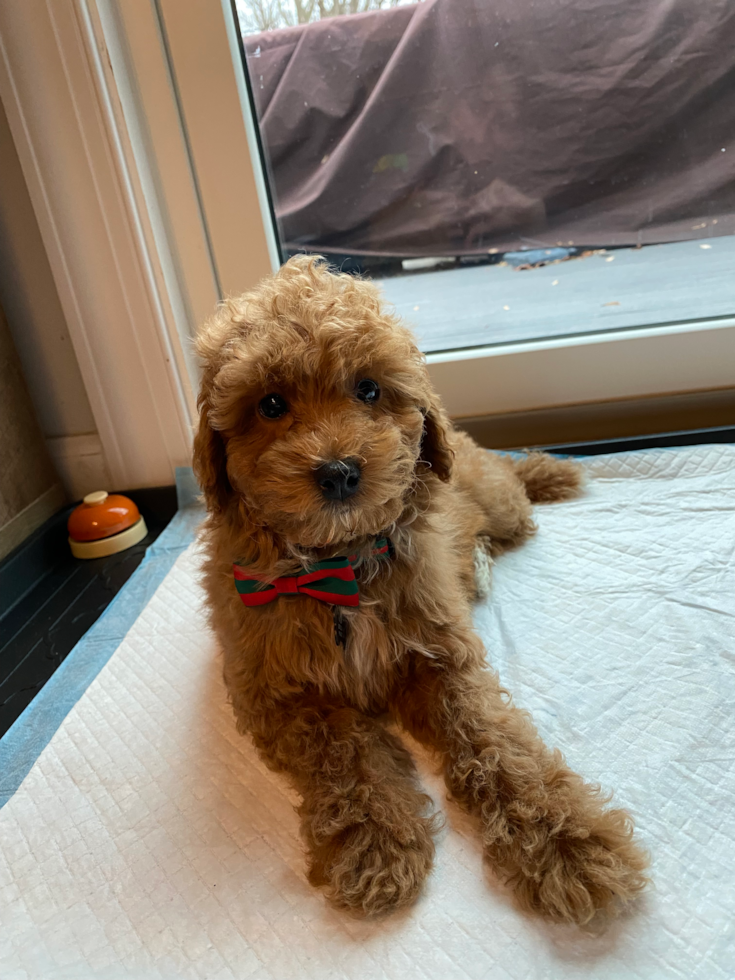
A Poochon puppy may suit you better if you enjoy teaching tricks, using food puzzles, varying walks, playing training games, and giving a small dog regular ways to think.
The Poodle adds athletic intelligence to the Bichon's social personality. This can create a dog that is cuddly and affectionate but still appreciates a little more purpose in the day.
The stronger low-shedding profile may also appeal to households that strongly dislike loose hair. That advantage comes with substantial grooming, especially when the coat is tightly curled.
The Poochon suits someone who wants a true companion but enjoys a relationship built around interaction as well as closeness.
Choose a Cavachon if You Want a Softer, Easygoing Companion Style
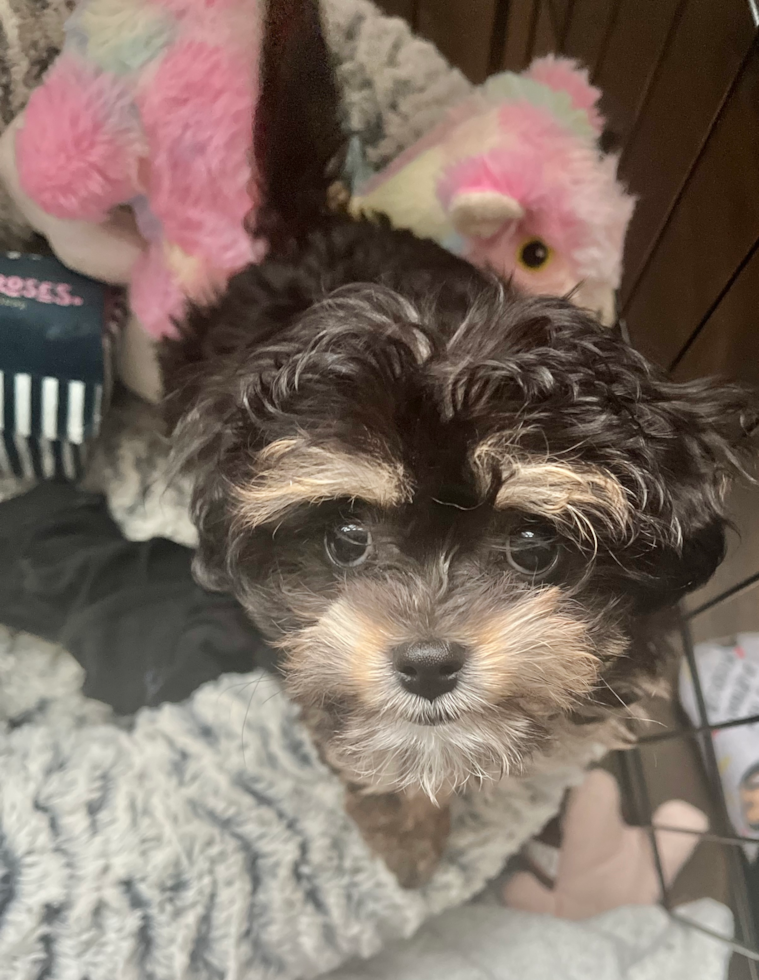
A Cavachon puppy may suit you better if your ideal small dog enjoys activity but is equally happy settling into ordinary family routines.
The Cavalier adds gentleness, spaniel affection, and a flexible companion temperament to the social Bichon foundation. Many Cavachons enjoy being included without needing constant structured engagement.
Their slightly sturdier average body can also appeal to families that do not want an extremely tiny dog.
The tradeoff is greater shedding variability. A silky Cavalier-influenced coat may leave more visible hair than the typical Poochon coat.
Which Is Bigger: Poochon or Cavachon?
The ranges overlap, but the Cavachon generally has the more substantial average build.
Poochons commonly weigh about 6 to 17 pounds, while Cavachons frequently sit around 10 to 20 pounds. A Toy-Poodle-based Poochon can therefore be considerably smaller than the average Cavachon.
Larger Poochons with Miniature Poodle influence can overlap almost completely with Cavachons in height and weight. The difference may then show more through body style than actual measurements.
Cavachons often feel sturdier and more spaniel-like, while Poochons can feel lighter and more agile.
Which Is Calmer: Poochon or Cavachon?
The Cavachon generally has the calmer everyday profile.
Cavalier influence adds a gentle temperament that adapts easily to quiet companion life. A Cavachon may enjoy a walk, play for a while, and then settle close to the family without searching for another activity.
Poochons can relax beautifully too, but Poodle intelligence can create greater interest in stimulation and interaction.
For someone whose ideal dog is affectionate without feeling mentally busy, the Cavachon may have the advantage.
Which Is More Energetic?
The Poochon usually has a slight advantage for activity and athletic enthusiasm.
Poodles are energetic, capable dogs, and the Bichon itself is playful and agile. That combination can give the Poochon plenty of enthusiasm for walks, games, tricks, and active play.
Cavachons can keep up with normal family outings and enjoy a good romp, but many are content with a more moderate routine.
The distinction is modest. Both are small companion dogs, not high-endurance working breeds.
Which Needs More Mental Stimulation?
The Poochon generally has the clearer need for mental stimulation.
Poodle intelligence can make patterns, puzzles, and training especially rewarding. A clever Poochon may quickly find ways to entertain itself when the household never offers anything interesting.
Cavachons benefit from mental activity too, but the Cavalier side generally adds less pressure for structured challenges.
For someone who enjoys training as a hobby, the Poochon offers more room to explore that interest without needing a physically demanding dog.
Which Is Easier to Train?
The Poochon may have a slight advantage for advanced or varied training, though both dogs are very capable learners.
Poodle and Bichon ancestry gives the Poochon two breeds with strong histories of learning and performance. Many enjoy tricks, obedience exercises, and interactive games.
The Cavachon adds the cooperative Cavalier instead of the Poodle. Training may feel very pleasant and straightforward, but the dog may show less desire for repeated mental challenges.
For normal household manners, there is little reason to consider either cross difficult.
Which Is Better for First-Time Dog Owners?
Both can be excellent first dogs, but the Cavachon may have a slight advantage for someone seeking an easy companion rhythm.
Its activity level is manageable, its temperament is generally social and affectionate, and the dog usually does not ask for extensive mental work to feel included.
The Poochon also works beautifully for a first-time owner who enjoys training and does not mind a demanding grooming routine. Its intelligence can actually make many early lessons easier.
Customer reviews that discuss adult energy, house training, grooming, barking, and alone time can help a first-time owner picture which routine fits more naturally.
Which Is Better With Young Children?
Both have strong family potential, but the Cavachon may offer a slight physical advantage around younger childrenbecause it usually has more body substance.
A very small Poochon can be physically delicate, particularly when Toy Poodle influence keeps the adult weight near the lower end of the range.
Cavachons are still small dogs and need respectful handling. Their sturdy Bichon and Cavalier foundation simply gives many of them a little more physical margin.
Supervision matters with either cross, especially when children are still learning how to handle animals calmly.
Which Is Better With Older Children?
Both can make excellent companions for older children.
A Poochon may particularly suit a child who enjoys teaching tricks, creating games, or working with a dog that likes figuring things out.
A Cavachon may appeal to a child who wants a gentler companion for walks, cuddling, play, and shared family routines without as much emphasis on structured training.
Neither choice is better universally. The child's natural style of interaction can make the decision surprisingly clear.
Which Is Better With Other Dogs?
Both generally have excellent potential with other dogs because the shared Bichon already contributes broad sociability.
The Poochon may bring a slightly more energetic play style through the Poodle side. Another playful small dog can make an excellent companion.
The Cavachon may have a slight advantage with quieter or older dogs because Cavalier influence can create a softer social rhythm.
Size, age, and preferred play style matter more than trying to declare one cross universally more dog-friendly.
Which Is Better With Cats?
Both can live successfully with cats.
Neither cross includes strong terrier or herding ancestry, so there is no major breed-driven reason for constant movement control or vermin hunting.
The Cavalier does bring sporting-spaniel ancestry, which can create some interest in birds or fast movement. Poodles have retrieving history but are also highly adaptable companions.
For a quiet cat household, the Cavachon's softer adult rhythm may offer a small advantage, though either can fit very well.
Which Is More Affectionate?
Both are extremely affectionate, so the difference lies in style rather than amount.
The Poochon may express affection through interaction. Cuddling can lead into a toy, a trick, or another attempt to get someone involved.
The Cavachon may express affection through quiet proximity. Resting beside someone, following family members, and simply sharing the room can feel especially satisfying.
Someone who wants a more interactive relationship may prefer the Poochon, while someone who values relaxed closeness may lean toward the Cavachon.
Which Is More Social With Strangers?
This category is extremely close because Bichons are highly social and both additional breeds are strongly people-oriented.
Poochons can approach new people with cheerful curiosity, especially when the Bichon personality shows strongly. Poodle influence can add awareness without necessarily reducing friendliness.
Cavachons can also be remarkably open with strangers. Cavalier temperament is known for gentleness and affection, which fits naturally with the Bichon's social outlook.
Neither cross is especially suited to someone who wants a naturally aloof little dog.
Which Barks More?
The Poochon may have a slight advantage for alert or excitement barking, though the difference is not dramatic.
Poodles are attentive dogs that notice changes quickly, while Bichons are also capable little watchdogs. That can create barking around doors, visitors, outside activity, or anticipation.
Cavachons can bark too, but Cavalier influence tends to shift the cross toward a softer response to unfamiliar activity.
Quiet training still matters with both, particularly in apartments where hallway sounds happen throughout the day.
Which Sheds Less: Poochon or Cavachon?
The Poochon generally has the clearer advantage for low visible shedding.
Bichons and Poodles both contribute coats that release relatively little visible hair. Loose strands stay caught in curls and need to be removed during brushing.
Cavachons share the same Bichon influence, but the Cavalier contributes a naturally shedding silky coat. Some Cavachons release very little hair, while others shed noticeably more.
For households where loose hair is a major concern, the Poochon is usually the safer direction, while still requiring substantial coat maintenance.
Which Needs More Grooming?
Both require regular grooming, but the Poochon may need more intensive curl maintenance.
Dense Poodle and Bichon texture can mat quickly close to the skin. Thorough brushing, combing, and regular professional grooming are usually part of Poochon life.
Cavachons need frequent detangling too, particularly around long ears, chest hair, legs, and feathering. Their coat may feel somewhat easier when it stays loose and silky.
Neither cross suits someone who wants a long fluffy dog without putting real time into coat care.
Which Is Better for Allergies?
The Poochon may offer the stronger low-shedding profile, but neither cross can be guaranteed suitable for allergies.
Both Bichons and Poodles release relatively little visible hair, which gives the Poochon low-shedding ancestry on both sides.
The Cavachon adds the conventionally shedding Cavalier coat. That can increase loose hair and dander distribution in some dogs.
Allergens also come from saliva and skin, so direct personal tolerance matters more than the cross name.
Which Is Better for Apartment Living?
Both are excellent apartment candidates.
The Poochon is compact and highly adaptable, though its brighter temperament may call for deliberate walks, training, and mental activities to keep indoor life satisfying.
The Cavachon may offer the slightly easier apartment rhythm because many settle readily after modest daily exercise and are less inclined to treat every quiet moment as a request for another activity.
Barking and alone-time skills matter more than floor space for either dog.
Which Is Better for Seniors?
Both can make excellent companions for seniors.
The Cavachon may appeal to someone who values a gentle daily rhythm, moderate exercise, and a dog that is happy simply sharing time with its person.
The Poochon may suit an active senior who enjoys training, games, and a slightly brighter, more interactive companion. Smaller examples can also be exceptionally easy to lift and travel with.
Grooming deserves serious consideration with either. Regular professional trims can make home maintenance far easier.
Which Is Better for a Quieter Household?
The Cavachon generally has the advantage for a quieter household.
Cavalier influence can create a dog that fits naturally into calm routines and enjoys close companionship without asking for constant stimulation.
Poochons can absolutely live happily in quiet homes, but the Poodle side may appreciate more deliberate games, training, and variety.
The distinction is less about raw exercise and more about how much interaction the dog's brain seeks during an ordinary day.
Which Is Better for an Active Small-Dog Lifestyle?
The Poochon generally has the advantage for someone who wants more activity from a small companion.
Poodle athleticism can make longer walks, tricks, small-dog agility, retrieving games, and varied outings especially enjoyable.
The Cavachon can also participate in walks and adventures, thanks partly to the Cavalier's spaniel heritage. It simply tends to ask for less structured activity as a regular requirement.
For someone who wants a small dog that can act like a little hobby partner, the Poochon may fit especially well.
Which Is More Physically Sturdy?
The Cavachon may have a slight advantage for overall physical substance, especially compared with very small Toy-Poodle-influenced Poochons.
Cavaliers and Bichons are both compact dogs with sturdy bodies, and the Cavachon frequently lands somewhere around 10 to 20 pounds.
Poochons can be equally sturdy at the upper end of their range, especially with Miniature Poodle influence. Smaller examples can feel considerably more delicate.
For busy family life, adult size can matter just as much as general temperament.
Which Has the More Predictable Coat?
The Poochon generally has the narrower texture range because both Bichons and Poodles contribute wavy-to-curly, low-shedding coat traits.
The amount of curl can differ, but the cross usually stays somewhere within a fluffy textured profile.
Cavachons combine Bichon curl with Cavalier silkiness, so their coats can range more clearly from loose spaniel-like waves to soft curls.
People who strongly prefer the classic curly teddy bear appearance may find the Poochon more consistent, while those who love soft flowing waves may prefer the Cavachon.
Poochon vs Cavachon: The Final Comparison
Choosing between a Poochon vs Cavachon gets much easier once you hold the Bichon Frise constant and focus on what the Poodle and Cavalier King Charles Spaniel contribute.
Both dogs receive a wonderful starting point from the Bichon. Cheerfulness, sociability, adaptability, playful charm, and a sturdy small-dog body can appear strongly in either cross. Both also have excellent potential for life with families, other dogs, seniors, and people living in smaller homes.
The Poochon adds the Poodle, an athletic water retriever with exceptional intelligence and training ability. That influence usually pushes the cross toward stronger curl, lower visible shedding, greater mental stimulation needs, and more enthusiasm for tricks, games, and structured interaction.
The Cavachon adds the Cavalier King Charles Spaniel, a gentle toy spaniel with an affectionate, adaptable temperament. That influence generally creates silkier waves, slightly greater body substance, a softer social style, and a dog that may find quiet companionship every bit as satisfying as active engagement.
Energy reflects the same difference. The Poochon often feels brighter and busier mentally even when its physical exercise needs are modest. The Cavachon can enjoy walks and play while generally fitting more easily into days when the household slows down.
Coat care is substantial with both. Poochons usually shed less visibly but need intensive curl maintenance. Cavachons may release more hair when Cavalier coat traits show strongly, while their softer waves and feathering still need regular detangling.
Their affectionate styles can provide the final clue. A Poochon may show love by asking you to participate, learn, play, and interact. A Cavachon may show just as much devotion through quieter proximity and a willingness to settle wherever its people happen to be.
If you want a small, clever, low-shedding companion that enjoys training, games, and regular mental engagement, the Poochon may fit your life better.
If you want a small, gentle, affectionate companion with a softer spaniel temperament, moderate activity, and an especially easy family rhythm, the Cavachon may make more sense.
Breed-specific customer reviews can add useful context, especially when owners describe adult energy, coat care, shedding, barking, alone time, and what the dog is like during an ordinary weekday rather than only during puppyhood.
The choice is not between an intelligent dog and an affectionate one. Both offer plenty of each. The real decision is whether you want the Bichon's cheerful companion personality paired with Poodle versatility or Cavalier softness.
Frequently Asked Questions
What is the main difference between a Poochon and Cavachon? Both share Bichon Frise ancestry, but the Poochon adds Toy or Miniature Poodle influence while the Cavachon adds Cavalier King Charles Spaniel influence. That changes the typical coat, activity style, training needs, and overall companion rhythm. Poochons generally lean toward more curl, lower visible shedding, stronger trainability, and greater mental engagement. Cavachons usually lean toward silkier waves, a somewhat sturdier body, softer spaniel affection, and a more relaxed everyday pace.
Which is bigger, a Poochon or Cavachon? Their ranges overlap, but the Cavachon generally has the larger average body. Poochons commonly fall around 6 to 17 pounds, while Cavachons frequently sit around 10 to 20 pounds. Toy-Poodle-based Poochons can be noticeably smaller than the average Cavachon. Larger Miniature-Poodle-influenced Poochons may overlap almost completely with Cavachons in adult height and weight.
Which is calmer, a Poochon or Cavachon? The Cavachon generally has the calmer daily style. Cavalier King Charles Spaniels are affectionate, gentle companion dogs that can enjoy activity without demanding constant stimulation. Poochons can settle very well too, but Poodle influence may create a stronger appetite for learning and interaction. Someone seeking the softer lap-companion direction may therefore prefer the Cavachon.
Which is easier to train, a Poochon or Cavachon? Both are very trainable, but the Poochon may have a slight advantage for more complex or varied learning. Poodles and Bichons both have strong histories of performance and responsive training. Cavachons are cooperative learners too and can master normal household manners easily. They may simply show less interest in turning training into an ongoing hobby.
Which sheds less, a Poochon or Cavachon? The Poochon generally sheds less visibly because both Bichons and Poodles have low-shedding coats. Loose hairs tend to stay caught within the coat rather than falling freely around the home. Cavachons can also shed very little, but Cavalier ancestry introduces a conventionally shedding silky coat. Some individuals therefore leave more hair on clothing and furniture.
Which needs more grooming, a Poochon or Cavachon? Both need regular grooming. Poochons may require more intensive combing because dense Bichon and Poodle curls can mat quickly close to the skin. Cavachons need consistent detangling around the ears, legs, chest, and feathered areas. Their looser coat can sometimes feel easier, but a long fluffy Cavachon is still far from low maintenance.
Is a Poochon or Cavachon better with children? Both can make excellent family companions. The Cavachon may have a slight advantage around younger children because it usually has a little more physical substance than the smallest Poochons. Poochons can be wonderful with children too, especially those who enjoy tricks and games. Very small dogs of either cross still need gentle handling and adult supervision.
Which barks more, a Poochon or Cavachon? The Poochon may have a slightly stronger tendency toward alert or excitement barking because Poodles are attentive dogs and Bichons also notice household activity. Cavachons can certainly bark, but Cavalier influence often pulls the cross toward a softer response to visitors and unfamiliar sounds. Early quiet training is useful for either dog in apartment settings.
Is a Poochon or Cavachon better for apartment living? Both are excellent apartment dogs from a size perspective. The Poochon may need a little more deliberate mental engagement, while the Cavachon can fit especially well into quieter indoor routines. Daily walks, comfortable alone time, grooming, and barking manners matter more than floor space. Neither dog needs a large home to have a satisfying life.
Should I choose a Poochon or Cavachon? Choose a Poochon if you want a small, highly trainable, low-shedding companion with a curly coat, moderate activity, and a stronger interest in learning and interactive games. Choose a Cavachon if you want a small, affectionate, softly social dog with silky or wavy coat potential, moderate exercise needs, and a gentler companion rhythm. Both share the Bichon's happy personality, but Poodle versatility and Cavalier softness create two distinctly different versions of it.