


Published Monday, October 26, 2026 by Pilesgrove Pups
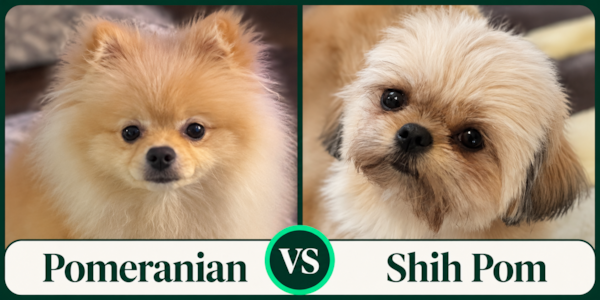
The Pomeranian vs Shih Pom comparison starts differently from many designer-dog matchups because only one dog is a cross. The Pomeranian is an established purebred with a defined size, body structure, coat, expression, and temperament. The Shih Pom combines that Pomeranian foundation with the Shih Tzu, which adds a sturdier companion body, a much different face shape, a long flowing coat, and a softer palace-dog influence.
That shared Pomeranian ancestry still gives the two dogs plenty in common. Either can be affectionate, alert, lively, intelligent, fluffy, and surprisingly confident for its size. Both can fit comfortably into apartment life, enjoy short daily walks, and act as highly efficient household alarm systems when something interesting happens outside the door.
The difference lies in what the Shih Tzu changes. A purebred Pomeranian carries the compact square body, erect ears, foxlike expression, plumed tail, dense stand-off coat, and vivacious spitz personality associated with the breed. A Shih Pom can soften several of those features, producing a slightly larger and heavier dog with a rounder face, variable ear carriage, longer or softer coat, and more companion-focused temperament.
The Shih Tzu also changes the daily rhythm. Shih Tzus were developed specifically as companions and palace pets, with a friendly, affectionate temperament and relatively modest exercise needs. Mixed with a lively Pomeranian, that influence can create a dog that still notices everything but may place greater value on lap time, close family company, and relaxed indoor life.
There is another important distinction: predictability. A Pomeranian has a recognized breed standard, so the general adult size, coat structure, ear carriage, and body type are relatively well established. A Shih Pom has no single breed standard, which means adult size, muzzle length, coat texture, shedding, and overall appearance can cover a wider range.
The better choice depends on whether you want the bright, animated personality and recognizable spitz look of a Pomeranian or a softer, sturdier companion blend that combines Pom confidence with Shih Tzu affection.
Table of Contents
- Pomeranian vs Shih Pom at a Glance
- Pomeranian and Shih Pom Overview and History
- Pomeranian vs Shih Pom Appearance
- Pomeranian vs Shih Pom Temperament
- Pomeranian vs Shih Pom: Which One Should You Choose?
- Choose a Pomeranian if You Love the Classic Tiny Spitz Personality
- Choose a Shih Pom if You Want a Sturdier, Softer Companion Blend
- Which Is Bigger: Pomeranian or Shih Pom?
- Which Is Calmer: Pomeranian or Shih Pom?
- Which Is More Energetic?
- Which Is Easier to Train?
- Which Is Better for First-Time Dog Owners?
- Which Is Better With Young Children?
- Which Is Better With Older Children?
- Which Is Better With Other Dogs?
- Which Is Better With Cats?
- Which Barks More?
- Which Is More Watchful?
- Which Is More Affectionate?
- Which Is More Social With Strangers?
- Which Sheds Less: Pomeranian or Shih Pom?
- Which Needs More Grooming?
- Which Is Better for Allergies?
- Which Is Better for Apartment Living?
- Which Is Better for Seniors?
- Which Is Better for a Quieter Household?
- Which Handles Cold Weather Better?
- Which Handles Warm Weather Better?
- Which Is More Predictable in Appearance and Size?
- Which Has the Easier Puppy Stage?
- Pomeranian vs Shih Pom: The Final Comparison
Pomeranian vs Shih Pom at a Glance
| Trait | Pomeranian | Shih Pom |
| Breed type | Purebred Toy breed | Pomeranian × Shih Tzu mix |
| General size | Toy | Toy to small |
| Typical adult weight | 3–7 pounds | Often about 5–15 pounds |
| Typical adult height | 6–7 inches | Often about 7–12 inches |
| Build | Compact, square, light but sturdy | Compact, usually heavier and more substantial |
| Face | Foxlike, wedge-shaped | Rounder, with variable muzzle length |
| Ears | Small and upright | Upright, folded, or partly upright |
| Coat | Dense stand-off double coat | Long, fluffy, straight, or softly wavy |
| Shedding | Moderate, with seasonal increases | Low to moderate, coat-dependent |
| Grooming | Moderate to high | Moderate to high |
| Energy | Moderate, lively and animated | Low-moderate to moderate |
| Trainability | High | Moderate to high |
| Barking | Moderate to high | Moderate to high |
| Watchfulness | High | Moderate to high |
| Physical sturdiness | Low to moderate | Usually greater |
| Heat tolerance | Moderate caution due to coat | Extra caution if short-faced |
| Best fit | Someone wanting a tiny, lively spitz companion | Someone wanting a sturdier, softer Pom mix |
The Shih Pom is also called a Pomshi, Shiranian, or Pom Tzu in some places. These names describe the same basic Pomeranian and Shih Tzu combination rather than separate established breeds.
Pomeranian and Shih Pom Overview and History
Understanding the Pomeranian first makes the Shih Pom much easier to understand. The Pomeranian supplies the spitz traits both dogs share, while the Shih Tzu adds a completely different companion-dog tradition.
The Pomeranian's ancestors were much larger northern spitz dogs associated with work such as guarding, livestock duties, and pulling sleds. Over generations, the breed was reduced dramatically in size and developed into the tiny companion recognized today.
The Shih Tzu followed another path. It was shaped as a companion dog rather than a working specialist, with centuries of history tied to Tibetan and Chinese palace dogs. Its modern breed standard still treats companionship as the central purpose of the breed.
Put those histories together and the contrast is clear. The Pomeranian is a miniaturized spitz with much of the alertness and boldness of its larger ancestors still visible. The Shih Pom mixes that lively little spitz with a dog whose historical job was essentially to share human company.
Pomeranian History and Background
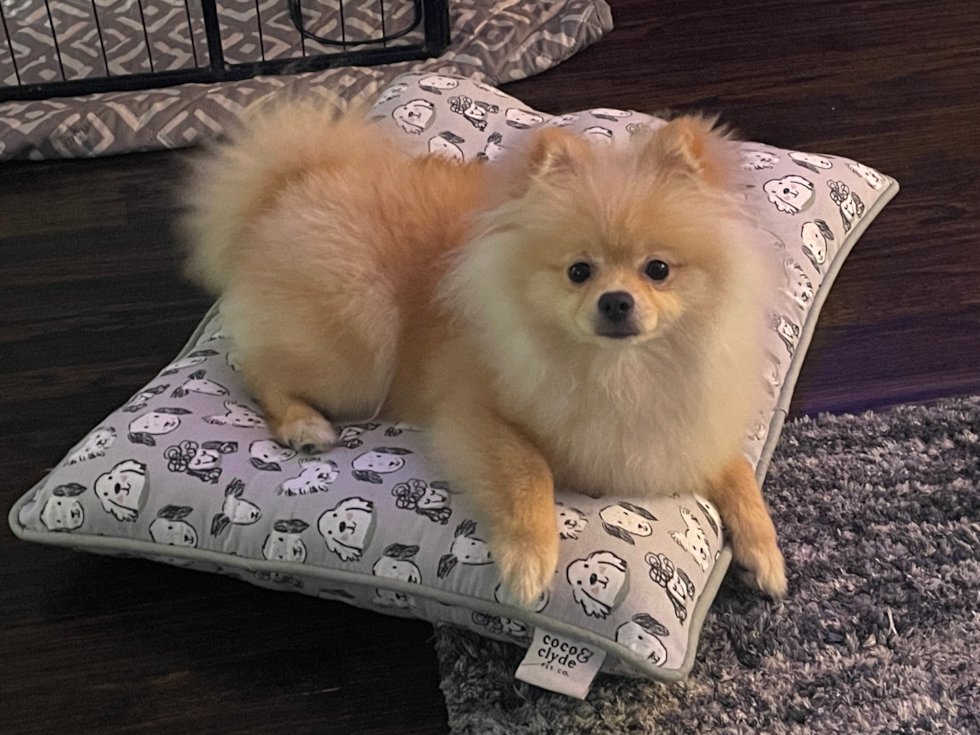
The Pomeranian belongs to the spitz family and descends from much larger northern dogs. The breed takes its name from Pomerania, a historic region that now lies within parts of Germany and Poland.
Early dogs behind the Pomeranian were far larger than the modern three-to-seven-pound companion. Their spitz ancestry included dogs suited to cold climates, with dense protective coats, alert temperaments, and enough physical ability for demanding outdoor tasks.
Over time, smaller examples gained popularity as companions. Queen Victoria played an especially important role in increasing the breed's popularity in Britain during the nineteenth century and helped encourage the much smaller Pomeranian type that people recognize today.
That history explains an important part of the modern Pom personality. The body may have shrunk dramatically, but the breed never lost its alertness, intelligence, confidence, or willingness to announce something unusual.
Modern Pomeranians are companion dogs through and through, yet they frequently approach life with the attitude of a much larger spitz. That combination of tiny size and serious self-confidence is one of the breed's defining charms.
Shih Pom History and Background
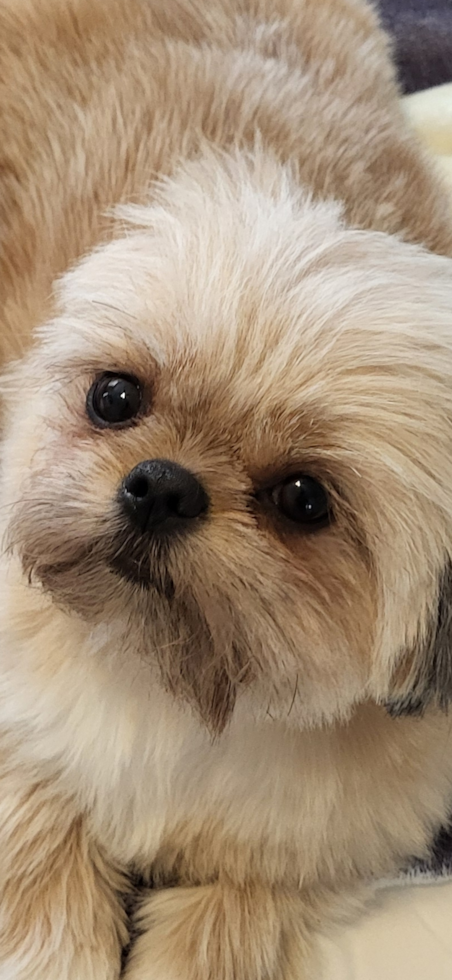
The Shih Pom combines the Pomeranian with the Shih Tzu. There is no well-documented single breeder or exact year that can reliably be credited with creating the cross, so claims about one precise modern origin should be treated cautiously.
The Shih Tzu side brings a long companion-dog history. Dogs behind the modern Shih Tzu were associated with Tibet and China, and the breed became closely linked with Chinese imperial households.
Unlike the larger ancestors behind the Pomeranian, the Shih Tzu was not developed around hunting, guarding livestock, retrieving, or other demanding physical work. Its central role was companionship, and that history still shapes its friendly, affectionate, people-oriented temperament.
The Shih Tzu is also physically very different from the Pom. It weighs about 9 to 16 pounds, carries greater body substance, has a broad short muzzle, large dark eyes, drop ears, and a long dense coat.
Mixing these breeds creates a much wider visual range than the purebred Pomeranian offers. A Shih Pom may look strongly Pom-like, strongly Shih Tzu-like, or sit somewhere between them with a foxier face than a Shih Tzu but a rounder expression than a Pom.
Pomeranian vs Shih Pom Appearance
The appearance comparison is one of the biggest reasons these dogs feel different despite their shared Pomeranian ancestry. The purebred Pom has a very recognizable spitz outline, while the Shih Pom can blend that outline with the shorter, sturdier proportions of the Shih Tzu.
A Pomeranian should look compact and square, with tiny erect ears, a wedge-shaped head, a heavily plumed tail carried over the back, and a profuse double coat that creates a dramatic silhouette.
The Shih Pom can keep the fluffy coat and curled tail but change almost everything else. Its ears may fold, its body can feel heavier, its legs may look shorter, and its muzzle may be noticeably shorter and broader.
Pomeranian Appearance
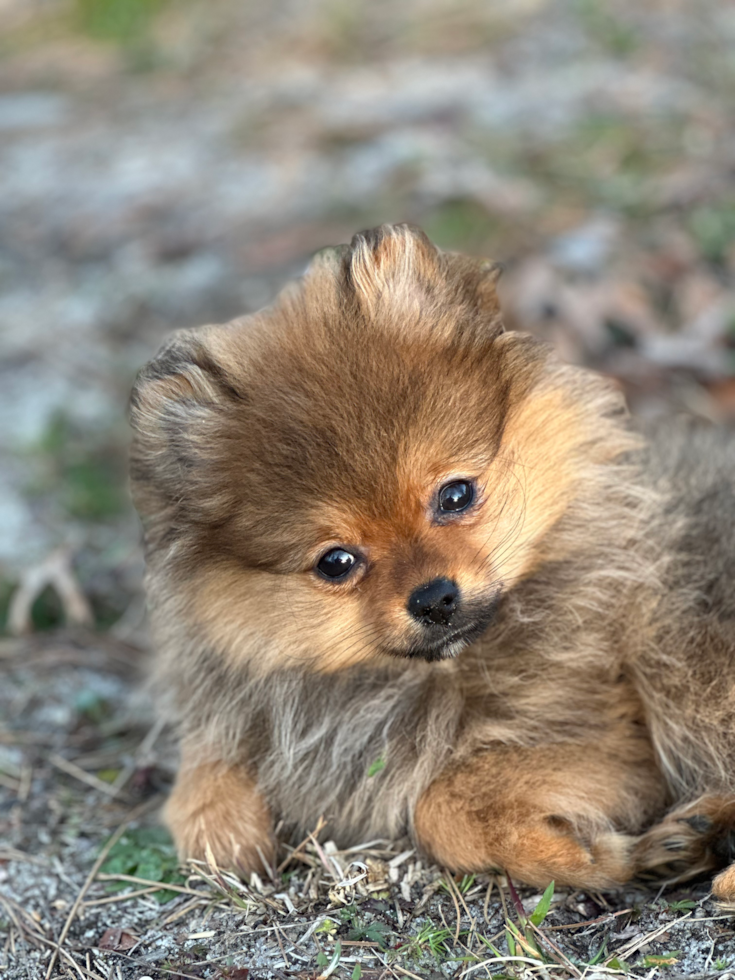
Pomeranians are among the smallest recognized dog breeds. Adults generally stand around six to seven inches tall and weigh between three and seven pounds.
Despite their size, they are not meant to look weak or frail. A well-proportioned Pom has a compact, square body with moderate bone and a sturdy feel underneath the coat.
The breed's enormous visual presence comes mostly from its coat. A three- or four-pound dog can look twice its actual body size when the full ruff and tail are fluffed out.
Pomeranian Coat Type and Texture
The Pomeranian has a true double coat.
A soft, dense undercoat provides insulation, while longer guard hairs stand away from the body and create the breed's characteristic fluffy outline. The coat is particularly abundant around the neck and chest, where it forms a heavy ruff.
The tail is heavily plumed and carried over the back. Leg feathering and a full rear coat add even more volume to a very small frame.
The correct texture is not silky like a Shih Tzu coat. A Pom coat has more structure and stands away from the body rather than flowing downward.
Pomeranian Colors and Markings
Pomeranians come in an unusually broad range of colors and patterns.
Orange and red are strongly associated with the breed, but black, cream, white, chocolate, blue, sable, brindle, parti-color, tan-pointed combinations, and other recognized colors can also occur.
Sable patterns can create darker tipping over a lighter base, especially in puppies. Some coats also change noticeably as the puppy coat gives way to adult hair.
This broad palette means color alone does not separate a Pomeranian from a Shih Pom. Body structure, face, coat texture, and ears are much more useful clues.
Pomeranian Eyes, Ears, and Facial Features
The classic Pomeranian face is foxlike.
The head tapers toward the nose, and the muzzle is relatively short but still clearly projected rather than flat. Dark almond-shaped eyes and small upright ears create a bright, attentive expression.
Those ears are one of the easiest differences from many Shih Poms. A purebred Pom should carry small erect ears rather than the large dropped ears associated with Shih Tzus.
The expression fits the temperament. Pomeranians frequently look as though they have noticed something important several seconds before everyone else.
Pomeranian Build and Size
A Pomeranian is compact, short-backed, and square in proportion.
The breed may weigh only a few pounds, but its body is designed to feel balanced and active rather than delicate in structure. The legs are proportionate to the frame, and the dog can move with surprising confidence and speed.
Physical size still creates vulnerability. A four-pound dog can be injured through falls, rough play, or accidental handling even when its structure is sound.
This matters in homes with toddlers or very large dogs. The Pomeranian's confidence can greatly exceed the amount of physical protection its body provides.
Pomeranian Shedding
Pomeranians shed more visibly than many other popular toy companions because of their dense double coats.
Loose undercoat needs to come out through brushing, and seasonal coat changes can increase the amount of hair around the home. The small body keeps the total volume below that of a large double-coated dog, but the breed should not be described as low shedding.
Regular brushing helps capture loose hair before it spreads across furniture and clothing.
People who strongly dislike visible hair may find the Shih Pom easier if the dog inherits more of the Shih Tzu coat, though a mixed coat cannot guarantee one exact shedding level.
Pomeranian Grooming Needs
The Pomeranian needs regular brushing to keep the dense coat separated and free of tangles.
Special attention is useful behind the ears, beneath the legs, around the rear, and anywhere the undercoat can compact. Routine grooming also removes loose hair and helps preserve the full stand-off texture.
The breed's natural coat is part of its identity. A practical tidy-up and normal hygiene trimming are very different from removing most of the double coat.
Owners who enjoy the classic full Pom appearance should expect ongoing brushing rather than relying on frequent short haircuts to manage the coat.
Shih Pom Appearance
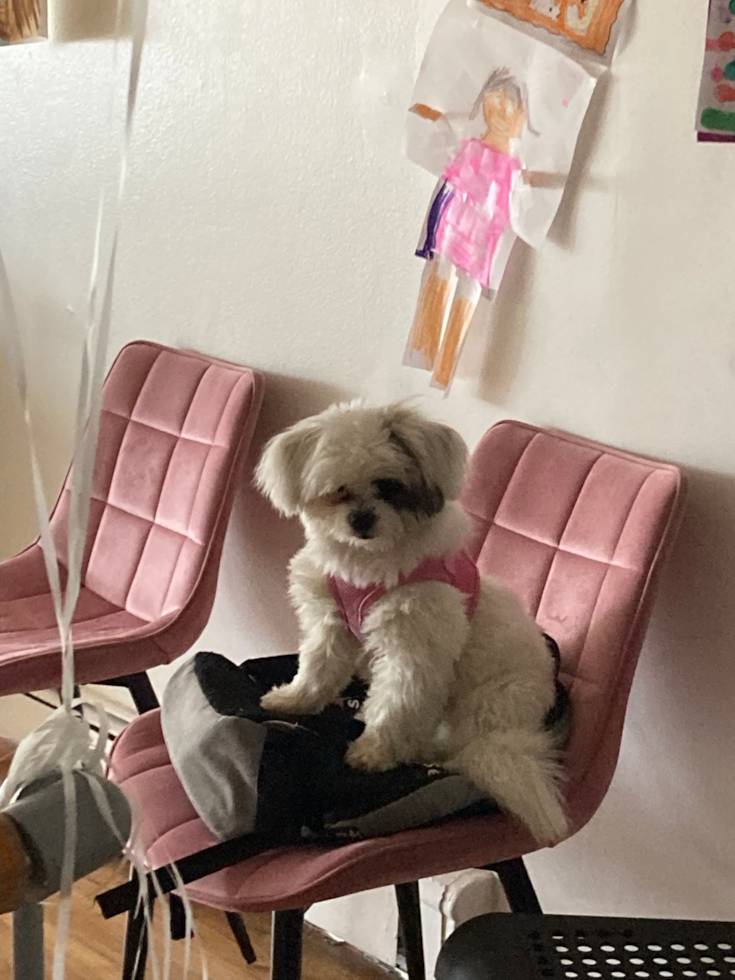
Shih Poms usually have a broader adult size range because the breeds behind the cross differ significantly in weight.
Many fall somewhere around five to fifteen pounds and roughly seven to twelve inches tall. Some sit close to purebred Pom dimensions, while others inherit more of the Shih Tzu's body mass and can feel like a substantially larger dog.
The body is usually compact. Strong Shih Tzu influence can add greater chest width, shorter-looking legs, and more weight for the dog's height.
Shih Pom Coat Type and Texture
The Shih Pom coat can vary more than a Pomeranian coat.
Pomeranians contribute a dense stand-off double coat, while Shih Tzus contribute a long, luxurious double coat that falls more smoothly around the body. Mixing those structures can create fluffy, straight, softly wavy, or slightly cottony textures.
Some Shih Poms look very Pom-like, with abundant volume around the neck and a fluffy tail. Others grow softer hair that falls around the face and body in a more Shih Tzu-like way.
The coat can also change substantially between puppyhood and adulthood. Early fluff gives only a partial idea of the final texture and density.
Shih Pom Colors and Markings
Shih Poms can appear in an enormous range of colors because both breeds contribute extensive color variety.
Orange, red, cream, black, chocolate, sable, gold, white, gray, and numerous multicolor combinations can occur. White facial markings, darker masks, patches, and tan points can add even more variation.
Some Shih Poms have the classic warm coloring associated with Pomeranians but a darker Shih Tzu-style mask around the muzzle. Others may be largely white and gold, black and white, or cream. Color may shift as the adult coat develops, so a young puppy's shade does not always describe its final appearance accurately.
Shih Pom Eyes, Ears, and Facial Features
The Shih Pom face can differ dramatically from one dog to another.
Shih Tzu influence can add a broader skull, rounder eyes, and a shorter muzzle. Pomeranian influence can lengthen the muzzle and create a more foxlike shape.
Ear carriage is especially variable. Some Shih Poms have upright ears, some have dropped ears, and others carry partly folded ears that create a look unlike either pure breed.
A shorter muzzle has practical consequences beyond appearance. Dogs that inherit more Shih Tzu facial structure may find hot weather and strenuous exercise harder to manage, so their breathing and comfort deserve extra attention during warm conditions.
Shih Pom Build and Size
The Shih Pom is usually the sturdier and heavier dog in this comparison.
Shih Tzus weigh roughly 9 to 16 pounds and are specifically described as compact, solid dogs with good substance. That influence can add far more body than the three-to-seven-pound Pomeranian provides.
A Shih Pom in the ten-to-twelve-pound range is still easy to lift and travel with, but it offers noticeably more physical margin than a tiny Pom.
This can matter in family homes, especially around respectful children. The dog is still small and needs gentle handling, but the difference between four pounds and twelve pounds is substantial in everyday life.
Shih Pom Shedding
Shih Pom shedding can range from low to moderate.
The Pomeranian contributes a coat that releases visible undercoat, while the Shih Tzu's long coat usually holds more loose hair within the furnishings. The finished coat can lean in either direction.
A softer Shih Tzu-like coat may leave less hair on furniture but require more detangling. A more Pom-like coat can shed more freely and need additional undercoat brushing.
Customer reviews from families living with adult Shih Poms can give useful practical context when shedding and coat maintenance are major priorities.
Shih Pom Grooming Needs
Shih Poms usually need consistent coat care regardless of which texture they inherit.
Longer Shih Tzu-like hair can tangle around the ears, face, legs, chest, and underside. Fluffier Pom-like coats need brushing through the undercoat to prevent compacted hair.
Many Shih Poms suit a shorter companion trim when the coat falls more like Shih Tzu hair. Dogs with stronger stand-off double coats need a grooming approach suited to that texture rather than automatically receiving the same haircut.
Facial care may also require more attention than with a Pomeranian, especially when long hair grows around large eyes and a shorter muzzle.
Pomeranian vs Shih Pom Appearance Comparison: What Is the Difference?
The clearest visual difference is foxlike spitz precision versus softer companion-dog variation.
A Pomeranian has a recognized appearance: tiny square body, erect ears, wedge-shaped face, high-set plumed tail, and a dense coat that stands away from the body. The overall silhouette is distinctive even from a distance.
A Shih Pom can soften that entire outline. The dog may have a heavier body, shorter legs, folded ears, rounder eyes, a broader face, and a coat that hangs more naturally rather than standing out.
Size is another useful distinction. Pomeranians occupy a narrow three-to-seven-pound range, while Shih Poms can stretch much farther into the small-dog category.
If you love the unmistakable tiny-spitz appearance, the Pomeranian has the clear advantage. If you prefer a fluffier teddy bear look with a rounder face and more physical substance, the Shih Pom may appeal more.
Pomeranian vs Shih Pom Temperament
The temperament comparison is where the Shih Tzu influence changes the Pomeranian foundation most clearly.
Purebred Pomeranians are lively, inquisitive, intelligent dogs with plenty of alertness. They enjoy companionship but also carry the confidence and environmental awareness expected from a spitz breed.
Shih Tzus were shaped around a different purpose. Their breed temperament emphasizes friendliness, affection, trust, and close companion life rather than watchfulness or physical work.
The Shih Pom can therefore keep plenty of Pom personality while shifting toward a softer, somewhat more relaxed social style.
Pomeranian Temperament
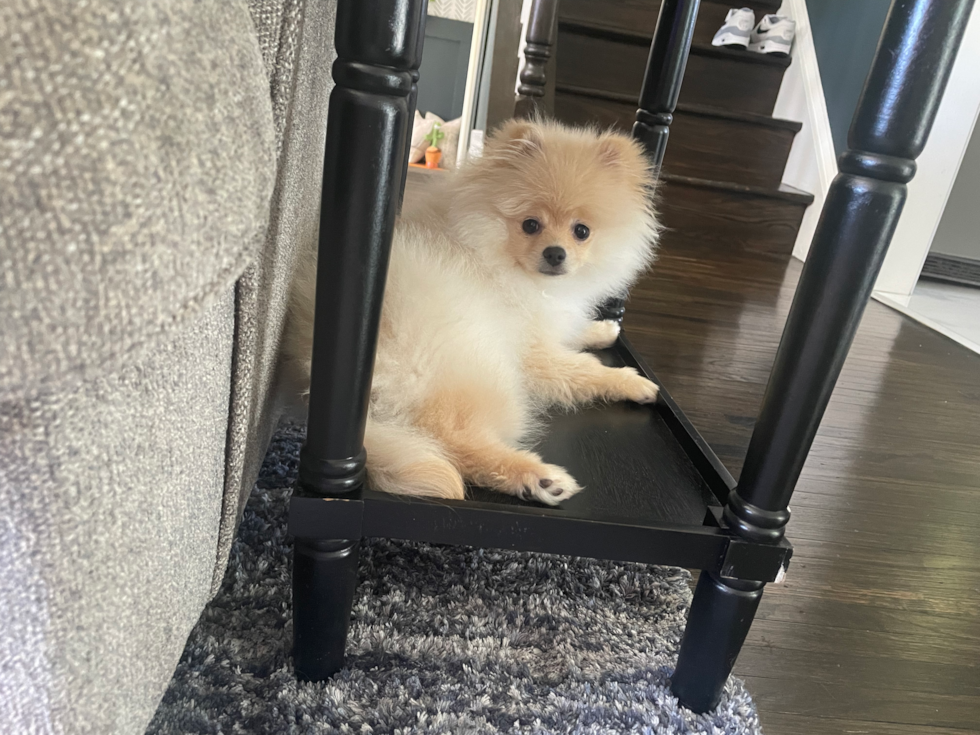
Pomeranians tend to be bright, lively companions that enjoy knowing exactly what is happening around them.
Their tiny size does very little to limit their confidence. Many approach visitors, other dogs, new objects, and unfamiliar sounds with curiosity rather than hesitation.
They also form strong bonds with their people and can be highly affectionate. The difference from many traditional lapdogs is that affection shares space with a surprisingly busy little mind.
A Pom may happily sit with someone and still interrupt the moment because a delivery truck stopped three houses away.
Pomeranian Intelligence and Training
Pomeranians are highly intelligent and generally respond well to training.
They can learn tricks, household routines, and obedience skills quickly. Their small size also makes indoor training games easy to fit into everyday life.
The biggest challenge is consistency. Behaviors that would never be accepted from a large dog, such as charging the door or barking repeatedly, can accidentally get ignored because a Pom looks so small while doing them.
Clear rules and positive reinforcement help the dog use its intelligence in more useful ways.
Pomeranian Energy Level
Pomeranians are active but do not need enormous amounts of exercise.
Short walks, indoor play, training, and games can satisfy much of their physical activity. Their size means even a modest outdoor route covers plenty of ground from the dog's perspective.
What Poms may seek more strongly is stimulation. They like watching, learning, investigating, and participating in whatever is happening.
A good routine balances activity with calm periods so the dog does not treat every household event as an invitation to react.
Pomeranian Affection and Social Style
Pomeranians are affectionate and companion-oriented, but their social style often feels animated rather than passive.
A Pom may cuddle, follow family members, request attention, and then immediately switch into watchdog mode when something changes outside.
Many are friendly with people when well socialized, though individuals can show some selectivity or strong attachment to familiar family members.
Their confidence makes them entertaining companions for people who enjoy a dog with opinions rather than a quiet ornament on the sofa.
Pomeranians With Children
Pomeranians can enjoy children, particularly older children who understand how to interact with a very small dog.
Physical size is the main concern. A three-to-seven-pound dog can be hurt by accidental drops, rough handling, or energetic play even if its personality seems fearless.
Older children can participate in tricks, walks, toy games, and grooming, all of which give the relationship useful structure.
For homes with toddlers, the sturdier Shih Pom may offer slightly more physical margin, though either dog still needs supervision.
Pomeranians With Other Dogs and Pets
Pomeranians can live happily with other dogs, but confidence can occasionally outrun common sense.
A tiny Pom may approach a large dog as though both animals occupy the same weight class. Safe introductions and sensible play matching help protect the smaller dog from accidental injury.
Cats can also share a home successfully with Pomeranians. The breed may chase through curiosity or excitement, but its modern role is strongly companion-focused.
Very small pets should still have secure separation from any dog rather than relying on size as protection.
Pomeranian Barking and Watchfulness
The Pomeranian generally has the stronger watchdog profile in this comparison.
Poms are alert and attentive, and many are quick to announce unfamiliar sounds, visitors, or activity around the home. Their hearing and environmental awareness can make them excellent tiny alarm systems.
The challenge is teaching when the announcement has done its job. Without clear guidance, one alert can turn into a long commentary on every sound in the hallway.
Quiet training is especially useful for apartment living, where the dog may hear neighbors and doors throughout the day.
Shih Pom Temperament
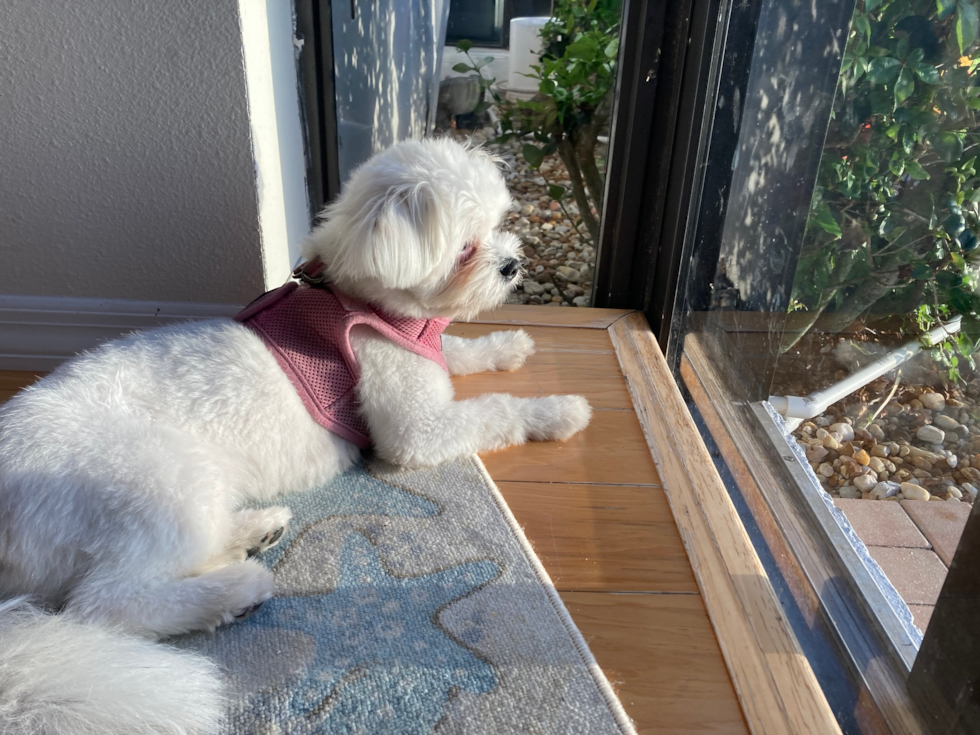
Shih Poms tend to combine Pom alertness with the softer companion qualities of the Shih Tzu.
This can create an affectionate, cheerful dog that enjoys family involvement but does not always approach the environment with quite the same intensity as a pure Pom.
Many still have plenty of personality. Shih Tzu influence does not erase the Pomeranian's confidence, curiosity, or tendency to notice unusual activity.
The difference is usually one of balance. A Shih Pom may spend more of the day enjoying companionship and less of it acting as self-appointed manager of the household perimeter.
Shih Pom Intelligence and Training
Shih Poms are smart, but their training style can be more variable than the Pomeranian's.
The Pom contributes quick learning and enthusiasm for tricks. The Shih Tzu is also intelligent but can bring a more independent companion style that sometimes asks the owner to make training worth the effort.
Positive rewards and short sessions work particularly well. Praise, food, play, and affection can all help keep the dog interested without creating tension.
Patience matters with house training and repetitive exercises. A Shih Pom may understand the lesson but lose interest when practice feels overly predictable.
Shih Pom Energy Level
Shih Poms generally have low-moderate to moderate exercise needs.
The Pomeranian adds lively bursts and curiosity, while the Shih Tzu pulls the cross toward a quieter companion lifestyle. Many do well with daily walks, indoor play, and regular opportunities to explore. This can suit someone who enjoys an active little dog but does not want exercise to dominate the day.
Dogs with shorter Shih Tzu-like muzzles may also need activity adjusted during hot weather, since intense exercise and heat can be harder for short-faced dogs to handle.
Shih Pom Affection and Companion Style
The Shih Pom may have the stronger lapdog tendency.
Shih Tzus were developed specifically to live closely with people, and their affectionate temperament can soften some of the Pom's busier spitz personality.
Many Shih Poms enjoy following family members, curling up nearby, and spending long stretches in close company. They may still spring into action when the doorbell rings, but companionship can occupy a larger part of the day.
This makes the cross appealing to someone who loves Pom looks and personality but wants a little more softness in the daily routine.
Shih Poms With Children
Shih Poms can work very well with respectful children.
Shih Tzu influence usually adds greater body substance, which can give the cross more physical resilience than a three- or four-pound Pomeranian. It also adds a breed with a long reputation as an affectionate family companion.
The dog is still small, so rough handling is never appropriate. Even a twelve-pound Shih Pom can be injured by being dropped or squeezed.
For families with older children, either dog can work beautifully. With younger children, the Shih Pom may offer the easier physical profile when its adult size sits toward the middle or upper part of the usual range.
Shih Poms With Other Dogs and Pets
Shih Poms generally have good potential with other dogs.
The Shih Tzu brings a friendly companion temperament, while the Pomeranian adds confidence and social curiosity. This can create a dog that enjoys canine company without automatically losing the Pom's boldness.
Cats can also fit comfortably into the home. Neither side of the cross adds a strong specialized hunting role to the modern temperament.
Size matching still matters during play. A small Shih Pom can be accidentally overwhelmed by a much larger dog even when the interaction is friendly.
Shih Pom Barking and Watchfulness
Shih Poms can still be vocal because the Pomeranian contributes a strong alert tendency.
The Shih Tzu side may soften that watchfulness in some dogs, especially when the dog leans toward a relaxed, friendly companion temperament.
Barking may still appear around visitors, outside movement, unfamiliar noises, excitement, or frustration. The difference is that the Shih Pom may settle more readily once it understands that nothing requires further attention.
Early quiet training helps prevent the Pomeranian half from turning every minor sound into an official household announcement.
Pomeranian vs Shih Pom Temperament Comparison: What Is the Real Difference?
The strongest temperament contrast is spitz alertness versus companion softness.
The Pomeranian usually feels brighter, busier, and more environmentally aware. It notices sounds quickly, learns tricks readily, and can treat ordinary household activity as something worth investigating.
The Shih Pom usually adds more Shih Tzu-style ease and physical affection. It may still bark, play, learn, and investigate, but its attention can lean more heavily toward people and comfortable family life.
The purebred Pomeranian also offers greater temperament consistency at the broad breed level. The Shih Pom can land closer to either side of the cross, so one adult may feel very Pom-like while another shows a much stronger Shih Tzu companion style.
Neither approach is universally better. The Pom suits someone who enjoys a very animated little dog, while the Shih Pom may suit someone who wants the Pom's confidence in a somewhat softer package.
Pomeranian vs Shih Pom: Which One Should You Choose?
The Pomeranian and Shih Pom can both fit beautifully into small homes, apartments, and companion-focused households. Their exercise needs are manageable, their personalities are large, and both can build close relationships with their families.
The decision gets easier when you think about physical size, predictability, barking, coat care, facial structure, and how lively you want your small dog to feel through an ordinary day.
Choose a Pomeranian if You Love the Classic Tiny Spitz Personality
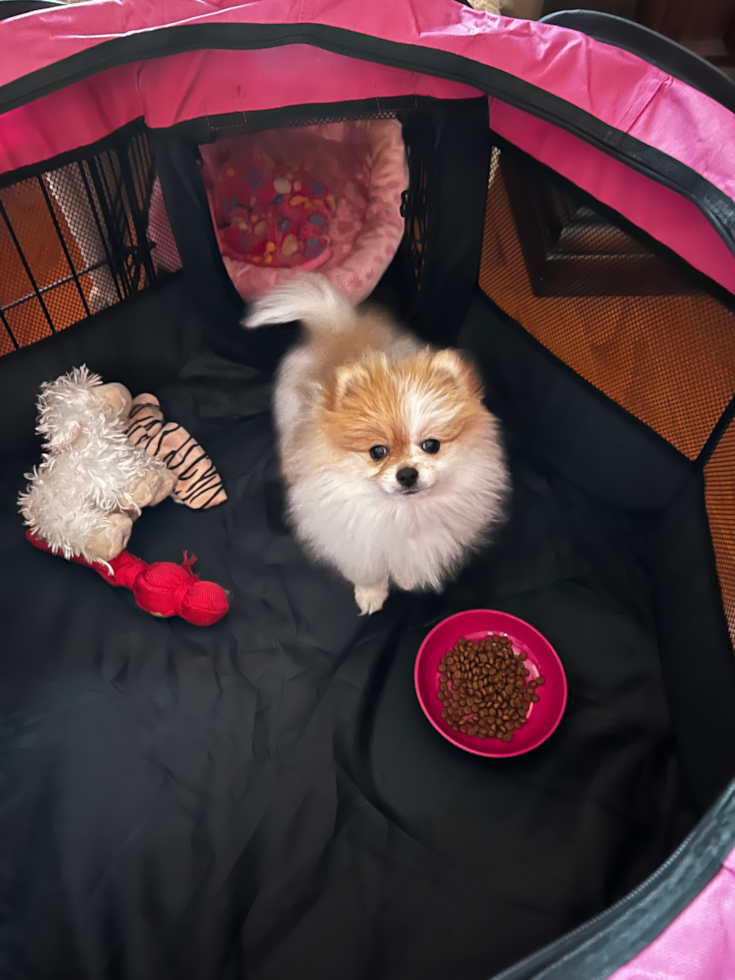
A Pomeranian puppy may suit you better if you want the recognizable foxlike face, erect ears, dramatic plumed coat, and bold personality of an established purebred.
The Pom is tiny but highly animated. Training tricks, playing games, taking short walks, and observing the world can all keep this bright little dog satisfied.
You also get a narrower adult-size expectation and a more predictable physical type. Someone who specifically wants a true three-to-seven-pound spitz companion may appreciate that consistency.
The tradeoffs include visible shedding, alert barking, and physical fragility. A Pomeranian's confidence can make it easy to forget just how small the body really is.
Choose a Shih Pom if You Want a Sturdier, Softer Companion Blend
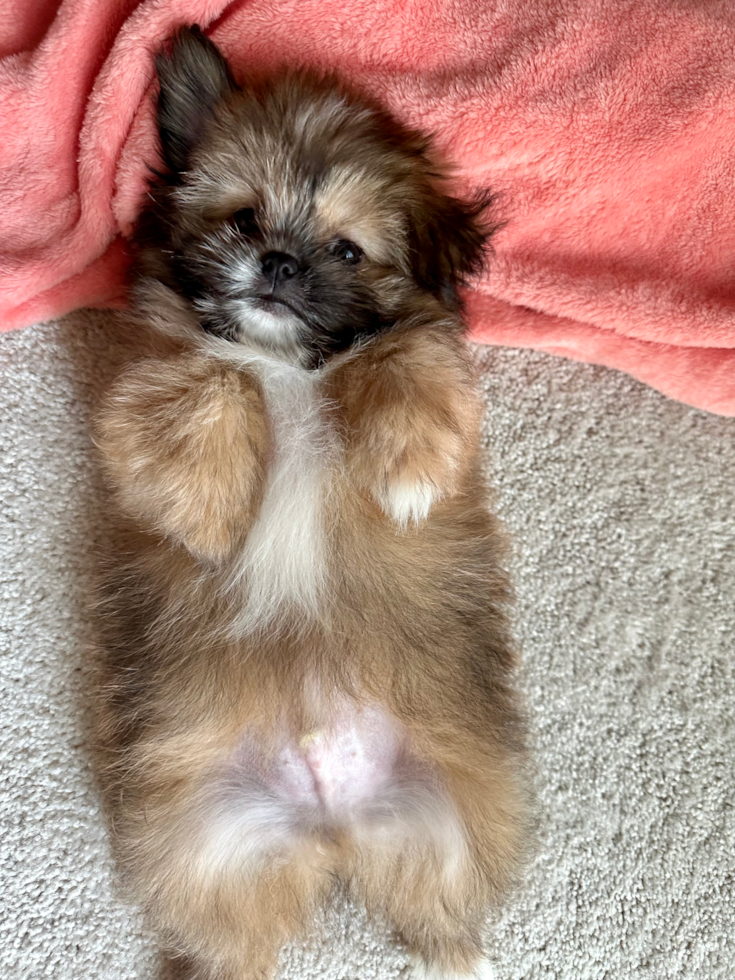
A Shih Pom puppy may suit you better if you like Pomeranian personality but want more body substance and a stronger lapdog influence.
The Shih Tzu can add a calmer daily rhythm, a rounder expression, and a friendly companion style. Some Shih Poms also shed less visibly than a pure Pom when their coat leans toward the Shih Tzu side.
The cross can be especially appealing for people who want a small dog without pushing all the way into the three-to-five-pound range.
The tradeoff is greater variation. Size, ear carriage, face shape, coat texture, shedding, and exercise tolerance can differ more widely than they do in a purebred Pomeranian.
Which Is Bigger: Pomeranian or Shih Pom?
The Shih Pom is usually bigger.
Pomeranians have a recognized adult weight range of three to seven pounds and stand roughly six to seven inches tall. Shih Poms commonly reach around five to fifteen pounds because the Shih Tzu side brings a nine-to-sixteen-pound body into the mix.
The difference can be substantial in daily handling. A twelve-pound Shih Pom still qualifies as a small dog but feels much sturdier than a four-pound Pom.
For someone who loves tiny dogs specifically, the Pomeranian has the advantage. For someone who wants more physical substance without moving into a medium-sized breed, the Shih Pom may feel easier.
Which Is Calmer: Pomeranian or Shih Pom?
The Shih Pom generally has the calmer lifestyle profile.
Shih Tzus were developed exclusively around companion life and tend to enjoy relaxed time with their people. That influence can soften some of the Pomeranian's constant alertness and animated curiosity.
Pomeranians do not require huge amounts of exercise, but they can feel mentally busy. A Pom may notice every noise and react quickly even after its physical exercise needs have been met.
Someone seeking the stronger lapdog direction may therefore lean toward the Shih Pom, while someone who enjoys a lively little observer may prefer the Pom.
Which Is More Energetic?
The Pomeranian usually has the slight advantage for animated energy.
Poms are active, inquisitive dogs that enjoy games, tricks, short walks, and investigating their surroundings. Their physical exercise needs are modest, but their personality can make them seem busy.
Shih Poms can be playful too, especially when Pomeranian traits show strongly. Shih Tzu influence generally pulls the daily routine toward shorter bursts of activity followed by more relaxed companion time.
Neither requires an athletic household. The distinction is more about how lively the dog feels inside the home than how many miles it needs to walk.
Which Is Easier to Train?
The Pomeranian generally has the advantage for quick trick and obedience training.
Poms are intelligent, attentive dogs and frequently enjoy learning. Their alertness can make them very responsive when training feels rewarding.
Shih Poms can learn extremely well too, but the Shih Tzu side may add a more independent streak. Repetitive exercises can lose their appeal faster.
Positive reinforcement suits both. The Pom may seek the training challenge more eagerly, while the Shih Pom may need a little more persuasion to see why practicing the same behavior again is worthwhile.
Which Is Better for First-Time Dog Owners?
Both can suit first-time owners, but the challenges differ.
A Pomeranian may appeal to someone who values predictability and enjoys training. The adult size, appearance, and broad temperament are well established, though barking and coat care still require attention.
A Shih Pom may suit someone who wants a somewhat sturdier and calmer companion. The owner needs to be comfortable with greater variation in coat, adult size, and activity level.
Customer reviews from people who live with adult Shih Poms can be especially useful for understanding how that variation feels in everyday life.
Which Is Better With Young Children?
The Shih Pom may have the advantage with younger children because it is usually sturdier, though both still need careful supervision.
A Pomeranian can weigh only three or four pounds. That tiny body leaves little room for accidental falls, rough handling, or a child stepping backward without seeing the dog.
A Shih Pom may carry significantly more weight and substance through the Shih Tzu side. This gives the dog more physical margin, though it does not make rough play safe.
For calm older children, either can make an affectionate companion. With toddlers, physical size deserves serious attention.
Which Is Better With Older Children?
Both can work beautifully with older children who understand small-dog handling.
Pomeranians can be great fun for children who enjoy teaching tricks, playing games, and interacting with a lively little personality. Their intelligence gives older children plenty of constructive activities to share.
Shih Poms may appeal to children who enjoy the same play but also want a sturdier dog for cuddling and quieter companionship.
The better fit depends less on age alone and more on how the child naturally wants to interact with the dog.
Which Is Better With Other Dogs?
Both can live successfully with other dogs.
Pomeranians can be very social, but their boldness sometimes creates a mismatch between attitude and body size. A tiny Pom may approach large dogs with complete confidence despite the obvious physical difference.
Shih Poms usually have more body weight and may also receive a broadly friendly social influence from the Shih Tzu.
The Shih Pom may therefore have a small practical advantage in multi-dog homes, especially when the other dogs are playful. Compatible size and play style still matter more than the label.
Which Is Better With Cats?
Both can live successfully with cats.
The modern Pomeranian is primarily a companion dog, though its spitz curiosity can make quick movement interesting. Shih Tzu influence generally adds an easy companion temperament rather than stronger chasing instincts.
A Shih Pom may have a slight advantage in a calm cat household when its personality leans toward the Shih Tzu side.
Good introductions and access to cat-only resting areas can help either dog settle into a peaceful multi-pet routine.
Which Barks More?
The Pomeranian usually has the stronger alert-barking tendency.
Poms are attentive little watchdogs and can quickly announce doorbells, footsteps, visitors, animals outside, and unfamiliar sounds. Without training, that alertness can turn into frequent commentary.
Shih Poms can still inherit plenty of Pom barking. The Shih Tzu's friendlier, more relaxed companion style may soften the response in some dogs.
Neither should be chosen under the assumption that small automatically means quiet. Training calm responses to common household sounds is useful from the beginning.
Which Is More Watchful?
The Pomeranian generally has the clearer advantage for watchfulness.
Its spitz ancestry contributes strong awareness of the environment, and modern Poms still make effective little watchdogs despite their tiny size.
A Shih Pom may notice the same things but can be quicker to return its attention to family life once the situation feels ordinary.
Someone who enjoys an alert dog may appreciate the Pom's personality. Someone living in a noise-sensitive apartment may prefer the softer possibility offered by the Shih Pom, while understanding that barking can still appear.
Which Is More Affectionate?
Both can be deeply affectionate, but their style can differ.
The Pomeranian mixes affection with activity. A Pom may cuddle enthusiastically and then leap up because something interesting happened across the room.
The Shih Pom may lean more strongly toward prolonged physical companionship because the Shih Tzu was developed specifically as a lap and house companion.
The comparison is therefore not more love versus less love. It is animated affection versus a greater chance of relaxed, lingering closeness.
Which Is More Social With Strangers?
Both can be friendly, but the Shih Pom may have a slight advantage for broad companion sociability.
Shih Tzu temperament is strongly associated with friendliness, affection, and trust toward people. That influence can make some Shih Poms especially open to visitors.
Pomeranians can also enjoy strangers but may notice and announce the arrival before deciding that the newcomer is worth meeting.
Good social experiences help either dog develop confidence without requiring it to greet every person it sees.
Which Sheds Less: Pomeranian or Shih Pom?
The Shih Pom may shed less visibly when its coat leans toward the Shih Tzu side, but there is no guarantee.
Pomeranians have dense double coats and release a noticeable amount of loose undercoat. Seasonal changes can increase that shedding.
Shih Tzus also have dense coats, but loose hair tends to stay caught within the long furnishings rather than spreading as freely through the home. A Shih Pom can inherit some of that coat behavior.
The tradeoff is that trapped hair still needs to be removed through grooming before it contributes to tangles.
Which Needs More Grooming?
Both require meaningful grooming, but the work is different.
A Pomeranian needs regular brushing through its dense undercoat and longer guard hairs. Coat maintenance centers heavily on preventing compacted undercoat and controlling loose hair.
A Shih Pom may need more detangling and facial care if the coat grows long and soft like a Shih Tzu's. Some coats also need regular professional trimming to stay practical.
There is no simple low-maintenance winner. The Pomeranian asks for double-coat care, while the Shih Pom may ask for more hair management.
Which Is Better for Allergies?
Neither dog can be guaranteed suitable for someone with allergies.
Pomeranians shed visible coat and dander, which can make them less appealing to someone who strongly prefers low-shedding dogs.
A Shih Pom may release less visible hair if Shih Tzu coat traits are strong, but allergens also come from skin and saliva.
Someone with significant allergies should base the decision on personal tolerance rather than assuming the mixed coat solves the problem.
Which Is Better for Apartment Living?
Both can fit apartment life extremely well from a size and exercise perspective.
The Pomeranian takes up almost no physical space and can meet much of its activity need through short walks and indoor games. Barking is the larger concern because neighbors, elevators, doors, and hallway noises can provide a steady supply of things to announce.
The Shih Pom may offer a slightly calmer indoor rhythm, especially when Shih Tzu temperament shows strongly. A shorter muzzle can make temperature control and strenuous summer exercise more important considerations.
For either dog, quiet training and comfortable alone time matter far more than the number of square feet in the home.
Which Is Better for Seniors?
Both can make excellent senior companions.
The Pomeranian may suit someone who wants an exceptionally light dog and enjoys an alert, animated personality. The breed is easy to carry, needs manageable exercise, and can provide plenty of interaction without long outdoor outings.
The Shih Pom may suit someone who prefers a sturdier body and a softer companion rhythm. A dog around eight to twelve pounds can still be highly portable while feeling less physically delicate.
Grooming is a real commitment with either, so shorter practical coat care on a Shih Pom or regular professional help can simplify the routine.
Which Is Better for a Quieter Household?
The Shih Pom generally has the stronger fit for a quieter lifestyle.
Shih Tzu influence can create a dog that enjoys short walks, gentle play, and long periods close to family without constantly seeking another activity.
Pomeranians also fit quiet homes physically, but their alert minds can make the house feel less quiet when outside sounds repeatedly attract attention.
Someone who loves calm companion time may prefer the Shih Pom. Someone who enjoys a little more animation and household commentary may find the Pom especially entertaining.
Which Handles Cold Weather Better?
The Pomeranian has the stronger cold-weather background.
Its northern spitz ancestry and dense stand-off double coat reflect generations of dogs adapted to colder climates. The modern Pom is tiny, so extreme cold still requires sensible limits, but the coat itself offers substantial insulation.
Shih Poms can carry equally abundant hair, especially when Pomeranian traits are strong. Shih Tzu ancestry comes from heavily coated companion dogs rather than Arctic-type workers.
For normal winter walks, either can do well with sensible exposure. The Pom simply has the clearer cold-climate heritage.
Which Handles Warm Weather Better?
Neither should be pushed hard in hot weather, but some Shih Poms may need extra caution if they inherit the Shih Tzu's shorter face.
Pomeranians have thick double coats, which can make hot conditions uncomfortable even though their muzzles allow normal panting mechanics.
Shih Tzus combine a heavy coat with a short face and are known to tolerate heat poorly. A Shih Pom with a noticeably short muzzle may inherit some of that limitation.
Cooler walking hours, shade, water, and indoor cooling make summer life safer for both dogs.
Which Is More Predictable in Appearance and Size?
The Pomeranian has the clear advantage for predictability.
It has an established breed standard with a narrow three-to-seven-pound weight range, upright ears, a square body, a defined foxlike head, and a specific double-coat structure.
The Shih Pom has no single breed standard and combines two dogs with noticeably different bodies and faces. One may look almost like a slightly larger Pom, while another can look much closer to a fluffy Shih Tzu.
For readers who strongly value one exact look or size, that difference is important. For readers who enjoy variety, the Shih Pom's wider range can be part of its appeal.
Which Has the Easier Puppy Stage?
Neither puppy raises itself, but the challenges can feel different.
A Pomeranian puppy is extremely small and may bring plenty of barking, curiosity, confidence, and quick learning. Its intelligence can make training rewarding, while its fragile body requires careful household management.
A Shih Pom puppy may be physically sturdier but can bring more variation in training style. Pom alertness mixed with Shih Tzu independence may require patience around house training, recall, and repeated routines.
Customer reviews that discuss the adolescent and adult stages can be particularly useful because puppy enthusiasm alone tells very little about how either dog fits daily life later.
Pomeranian vs Shih Pom: The Final Comparison
Choosing between a Pomeranian vs Shih Pom comes down to whether you want the established identity of the purebred Pom or the softer companion blend created by adding Shih Tzu influence.
The Pomeranian is a tiny spitz with a very recognizable appearance. It offers erect ears, a foxlike expression, a dramatic stand-off coat, a plumed tail, and a lively personality in a three-to-seven-pound body. Its alertness and intelligence make it entertaining to train, though those same traits can contribute to barking and a constant interest in household activity.
The Shih Pom keeps part of that Pomeranian personality while adding a sturdier companion breed. Shih Tzu influence can create a heavier body, rounder face, softer coat, more variable ears, and a calmer style of affection. The cross frequently feels less like a miniature spitz and more like a fluffy toy companion with a streak of Pom confidence underneath.
Their coats create a practical difference as well. The Pomeranian has a predictable dense double coat that sheds visibly and needs regular undercoat care. The Shih Pom may release less hair when Shih Tzu traits are strong, but softer, longer furnishings can create more tangling and may require regular trimming.
Family fit is closely tied to size. A tiny Pomeranian can do beautifully with respectful older children but needs protection from rough handling. A Shih Pom frequently offers more physical substance, which can make ordinary family life a little easier while still keeping the dog small enough for laps and easy travel.
Temperament may settle the choice. The Pomeranian usually feels more animated, alert, and spitz-like through the day. The Shih Pom can carry the same confidence but may spend more of its time focused on comfortable companionship.
If you want a tiny, recognizable purebred with a foxlike face, upright ears, high intelligence, lively curiosity, and plenty of watchdog personality, the Pomeranian may suit you better.
If you want a slightly larger and sturdier fluffy companion with a softer social style, more lapdog influence, and a blend of Pom confidence and Shih Tzu affection, the Shih Pom may make more sense.
Breed-specific customer reviews can add useful practical context, especially when Shih Pom owners discuss adult size, muzzle length, shedding, barking, grooming, heat tolerance, and everyday energy. Those experiences can help show how broad tendencies translate into ordinary home life.
The choice is ultimately between Pomeranian spitz character in its established purebred form and that same lively foundation softened by the Shih Tzu's sturdy, affectionate companion influence.
Frequently Asked Questions
What is the main difference between a Pomeranian and Shih Pom? The Pomeranian is a purebred toy spitz with a defined size, coat, body type, and foxlike expression. The Shih Pom combines Pomeranian and Shih Tzu ancestry, so its appearance and temperament can cover a wider range. Shih Tzu influence usually adds greater body size, a rounder face, softer companion traits, and the possibility of a shorter muzzle or dropped ears. The Pomeranian generally offers more predictable spitz appearance and stronger alert behavior.
Which is bigger, a Pomeranian or Shih Pom? The Shih Pom is usually bigger. Purebred Pomeranians weigh three to seven pounds, while many Shih Poms fall somewhere around five to fifteen pounds. The Shih Tzu side also adds a sturdier body. A Shih Pom can therefore feel considerably more substantial even when the height difference looks modest.
Which is calmer, a Pomeranian or Shih Pom? The Shih Pom generally has the calmer daily profile because Shih Tzus were developed specifically as companion dogs. Many enjoy play and walks but also value long periods of relaxed family time. Pomeranians need only moderate physical exercise, yet their alertness can make them feel busier indoors. They frequently notice sounds, movement, visitors, and changes around the home very quickly.
Which is easier to train, a Pomeranian or Shih Pom? The Pomeranian may have a slight advantage for fast trick and obedience learning. Poms are bright, attentive dogs that frequently enjoy structured interaction. Shih Poms are intelligent too, but Shih Tzu influence can add more independence. Short positive sessions with useful rewards usually work better than repetitive practice.
Which sheds less, a Pomeranian or Shih Pom? A Shih Pom may shed less visibly when its coat leans toward the Shih Tzu side. Pomeranians have dense double coats and release noticeable undercoat, especially during heavier coat changes. Shih Pom shedding is less predictable because coat inheritance varies. A Pom-like coat can shed noticeably, while a softer Shih Tzu-like coat may hold more loose hair inside and need additional brushing.
Which needs more grooming, a Pomeranian or Shih Pom? Both need regular grooming, but they need different types of care. Pomeranians require thorough brushing through the double coat to remove loose undercoat and prevent compacted areas. Shih Poms may need more detangling and trimming if they inherit long, soft Shih Tzu-like hair. Facial hair and the areas around the ears can also need more frequent attention.
Is a Pomeranian or Shih Pom better with children? Both can live happily with respectful children, but the Shih Pom usually has the advantage for physical sturdiness. A purebred Pomeranian may weigh only three or four pounds, which makes accidental injury a bigger concern. Shih Poms can weigh twice that amount or more while still fitting comfortably into the small-dog category. Older children who understand gentle handling can enjoy either dog.
Which barks more, a Pomeranian or Shih Pom? The Pomeranian generally has the stronger alert-barking tendency. Poms are attentive little watchdogs and may announce visitors, hallway sounds, animals outside, and unfamiliar activity. Shih Poms can inherit the same habit, but Shih Tzu influence may create a somewhat softer response. Quiet training is useful with either dog, especially in apartments.
Is a Pomeranian or Shih Pom better for apartment living? Both can make excellent apartment dogs because they are small and need manageable amounts of physical exercise. The Pomeranian's biggest challenge is usually alert barking rather than lack of space. The Shih Pom may offer a calmer indoor style but can need extra heat awareness when it inherits a shorter Shih Tzu-like face. Regular walks, quiet manners, and comfortable alone time matter for both.
Should I choose a Pomeranian or Shih Pom? Choose a Pomeranian if you want a very small, highly recognizable spitz with an alert personality, foxlike face, upright ears, strong training potential, and a predictable adult size. Choose a Shih Pom if you want a somewhat sturdier companion with Pom confidence, Shih Tzu affection, a softer teddy bear appearance, and a potentially calmer daily rhythm. The best choice depends on whether pure Pomeranian character or the added Shih Tzu companion influence fits your household more naturally.