


Published Monday, October 26, 2026 by Pilesgrove Pups
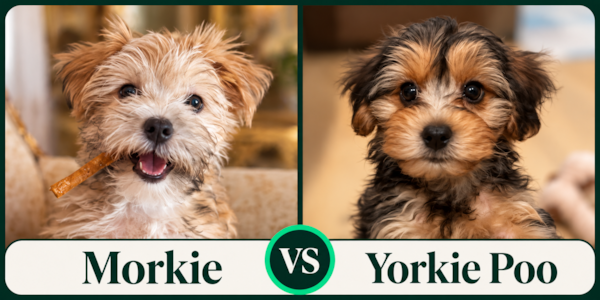
The Morkie vs Yorkie Poo comparison starts with a strong shared foundation: both dogs have Yorkshire Terrier ancestry. That gives either cross the potential for confidence, alertness, close attachment to people, lively curiosity, and the unmistakable Yorkie habit of carrying a much bigger personality than its body seems designed to hold.
The difference comes from the other breed in each cross. A Morkie combines the Yorkshire Terrier with the Maltese, while a Yorkie Poo combines the Yorkshire Terrier with a Toy or Miniature Poodle. That creates a useful comparison between two companion-sized dogs that share terrier spark but receive very different secondary influences.
The Maltese adds another tiny, low-shedding companion breed with a silky coat and thousands of years of history centered around close human company. This usually pushes the Morkie toward a very small body, a straight or softly wavy coat, modest exercise needs, and a particularly intimate style of attachment.
The Poodle adds something different. Toy and Miniature Poodles are highly intelligent, athletic dogs with water-retrieving roots, strong training ability, and naturally curly coats. That can give the Yorkie Poo more physical range, more coat variation, greater appetite for mental stimulation, and a stronger interest in structured games and training.
Neither dog is simply the calmer or smarter version of the other. The shared Yorkie can make both alert, bold, and occasionally opinionated. The useful difference is whether you prefer the Maltese's silky companion influence or the Poodle's athletic, highly trainable influence wrapped around the same Yorkshire Terrier personality.
Table of Contents
- Morkie vs Yorkie Poo at a Glance
- Morkie and Yorkie Poo Overview and History
- Morkie vs Yorkie Poo Appearance
- Morkie vs Yorkie Poo Temperament
- Morkie vs Yorkie Poo: Which One Should You Choose?
- Choose a Morkie if You Want a Tiny, Attached Companion
- Choose a Yorkie Poo if You Want a Smarter, More Active Training Partner
- Which Is Bigger: Morkie or Yorkie Poo?
- Which Is Calmer: Morkie or Yorkie Poo?
- Which Is More Energetic?
- Which Needs More Mental Stimulation?
- Which Is Easier to Train?
- Which Is Better for First-Time Dog Owners?
- Which Is Better With Young Children?
- Which Is Better With Older Children?
- Which Is Better With Other Dogs?
- Which Is Better With Cats?
- Which Has Stronger Terrier Personality?
- Which Has More Prey or Chasing Interest?
- Which Is More Likely to Bark?
- Which Is More Social With Strangers?
- Which Is More Affectionate?
- Which Sheds Less: Morkie or Yorkie Poo?
- Which Needs More Grooming?
- Which Is Better for Allergies?
- Which Is Better for Apartment Living?
- Which Is Better for Seniors?
- Which Is Better for a Quieter Household?
- Which Is Better for an Active Small-Dog Lifestyle?
- Which Is More Physically Sturdy?
- Morkie vs Yorkie Poo: The Final Comparison
Morkie vs Yorkie Poo at a Glance
| Trait | Morkie | Yorkie Poo |
| Parent breeds | Maltese × Yorkshire Terrier | Yorkshire Terrier × Toy or Miniature Poodle |
| General size | Toy | Toy to small |
| Common adult weight | Often about 4–10 pounds | Often about 4–15 pounds |
| Common adult height | Often about 6–10 inches | Often about 7–15 inches |
| Build | Petite, compact, fine-boned | Petite to sturdy, athletic, variable |
| Coat | Usually straight, silky, or softly wavy | Straight, wavy, or curly |
| Shedding | Usually very low | Usually very low |
| Grooming | Moderate to high | Moderate to high |
| Common colors | Black, tan, gold, white, cream, brown, silver and combinations | Black, tan, brown, cream, apricot, red, white, silver and combinations |
| Energy | Low to moderate | Moderate |
| Mental stimulation | Moderate | Moderate to high |
| Trainability | Moderate to high | High |
| Barking tendency | Moderate to high | Moderate to high |
| Terrier influence | Strong | Strong |
| Athletic ability | Moderate | Usually higher |
| Attachment style | Very close, companion-focused | Close, interactive, activity-oriented |
| Best fit | Someone wanting a tiny, attached companion | Someone wanting a small, smart, more active companion |
These ranges are useful guides rather than formal standards. Yorkie Poos can vary more in adult size because Toy and Miniature Poodles occupy different size categories, while the Morkie combines two breeds that are already very close in size.
Morkie and Yorkie Poo Overview and History
The Morkie and Yorkie Poo share the Yorkshire Terrier, so the Yorkie provides the best starting point for understanding both dogs. Beneath the elegant coat and toy size is a true terrier with working roots.
Yorkshire Terriers developed during the nineteenth century in northern England. Early Yorkies and related terriers worked around mills, mines, and working-class homes, where their small size and vermin-hunting ability made them useful ratters.
That background still matters today. Modern Yorkies are affectionate companion dogs, but they can also be alert, tenacious, curious, vocal, and surprisingly fearless. Those qualities can appear in both the Morkie and Yorkie Poo regardless of how soft or cuddly the finished dog looks.
The Maltese and Poodle then pull that shared terrier foundation in different directions. The Maltese adds an ancient lapdog tradition, very small size, and another silky low-shedding coat. The Poodle adds athletic intelligence, stronger training drive, curls, and a working history based around water retrieval.
The central comparison is therefore clear: the Morkie doubles down on tiny companion traits, while the Yorkie Poo adds more working intelligence and athletic versatility to the Yorkie foundation.
The Yorkshire Terrier Foundation Both Dogs Share
The Yorkshire Terrier stands about seven to eight inches tall and weighs around seven pounds. Its delicate appearance can be misleading because the breed's early purpose required confidence, persistence, and enough courage to pursue vermin in difficult environments.
Those terrier traits influence both crosses. A Morkie or Yorkie Poo may notice hallway noises, investigate quick movement, challenge a toy vigorously, or announce a visitor long before a larger dog reacts.
The Yorkie's relationship with people is equally important. The breed transitioned successfully from working-class ratter to fashionable Victorian companion because its confidence came with strong attachment and charm.
That combination explains why both crosses can feel intensely companion-oriented without acting passive. They may love laps and soft blankets, but the little terrier brain still wants to know what made that noise in the next room.
Morkie History and Background
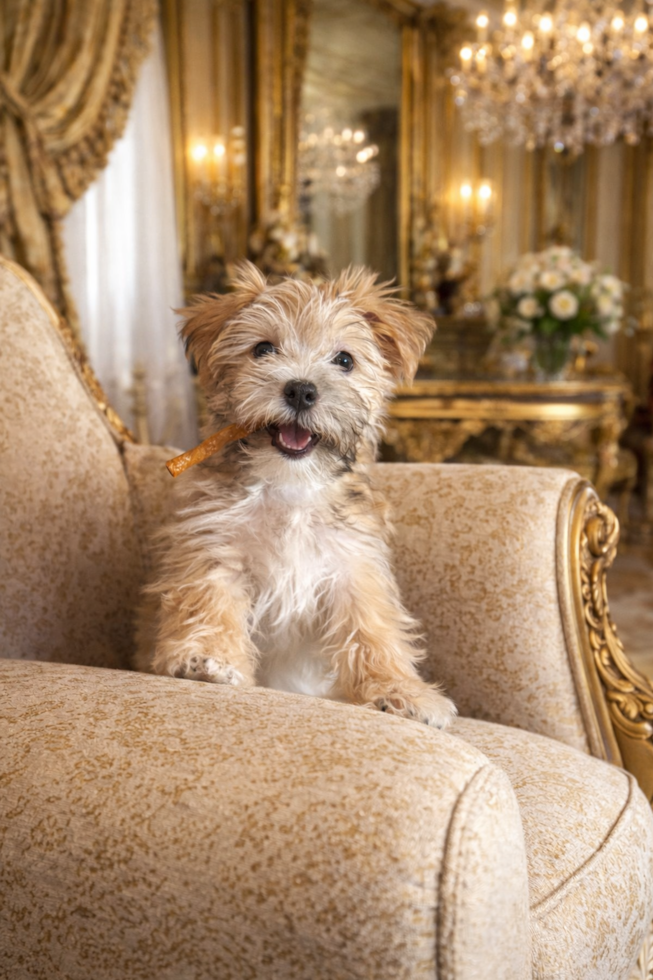
The Morkie combines the Yorkshire Terrier with the Maltese. Like many modern companion crosses, its exact first intentional development is not documented clearly enough to assign one definitive origin story.
The Maltese brings one of the oldest companion-dog traditions in the world. Dogs of Maltese type have been associated with the Mediterranean for thousands of years, with historical references connecting small white companion dogs to Malta, ancient trade routes, Greek culture, and Roman households.
The important point for modern temperament is that the Maltese was shaped around companionship rather than a specialized physical job. Its value came from living closely with people, adapting to household life, and providing affection in a very small package.
Maltese stand around seven to nine inches tall and weigh under seven pounds. Combined with a Yorkie of similar size, this gives the Morkie a strong foundation for genuinely tiny adult dimensions.
Coat similarities are equally important. Both Maltese and Yorkies have long, silky, low-shedding hair, so the Morkie commonly has a straighter and more predictable coat texture than many other small crosses.
Yorkie Poo History and Background
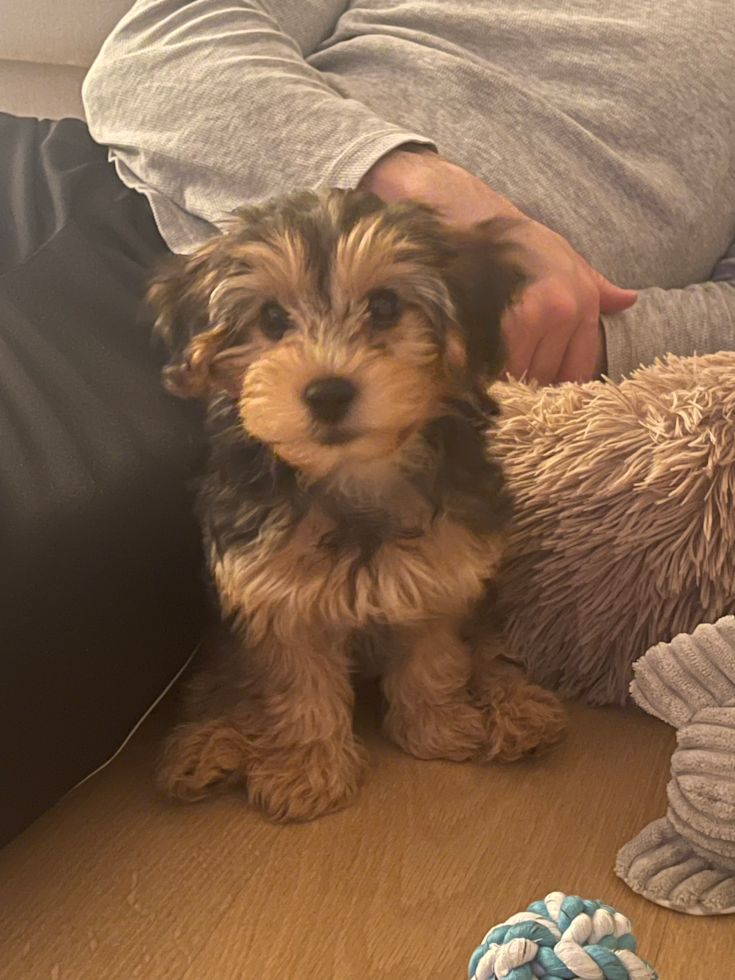
The Yorkie Poo, also written Yorkipoo or Yorkiepoo, combines Yorkshire Terrier ancestry with Toy or Miniature Poodle ancestry. Different size varieties of Poodle can create a wider range of adult Yorkie Poo sizes.
The Poodle brings a very different history from the Maltese. Despite its association with elegant grooming and European high society, the Poodle developed as an athletic water retriever.
Its name is linked to the German word associated with splashing in water, and the breed's famous coat clips have practical roots connected with swimming and working in cold water.
Poodles later earned success far beyond retrieving. Their exceptional learning ability helped them thrive in performance, obedience, dog sports, and companion life, while smaller Toy and Miniature varieties made the same intelligence accessible in more compact bodies.
That influence changes the Yorkie foundation noticeably. A Yorkie Poo can still bring plenty of terrier confidence and alertness, but the Poodle adds another highly responsive, athletic mind rather than the Maltese's primarily companion-centered influence.
This gives the Yorkie Poo a particularly appealing combination for people who want a very small dog but also enjoy training, tricks, games, and a little more physical activity.
Morkie vs Yorkie Poo Appearance
The Morkie and Yorkie Poo can look remarkably similar when both have soft teddy bear trims. Dark eyes, small muzzles, facial furnishings, compact bodies, and expressive little faces appear in either cross.
Coat texture provides the most useful visual clue. The Morkie combines two silky-haired breeds, while the Yorkie Poo combines the Yorkie's fine coat with Poodle curl.
Size can overlap heavily, especially when a Yorkie Poo has Toy Poodle ancestry. Miniature Poodle influence can push the Yorkie Poo taller and heavier than the typical Morkie.
Morkie Appearance
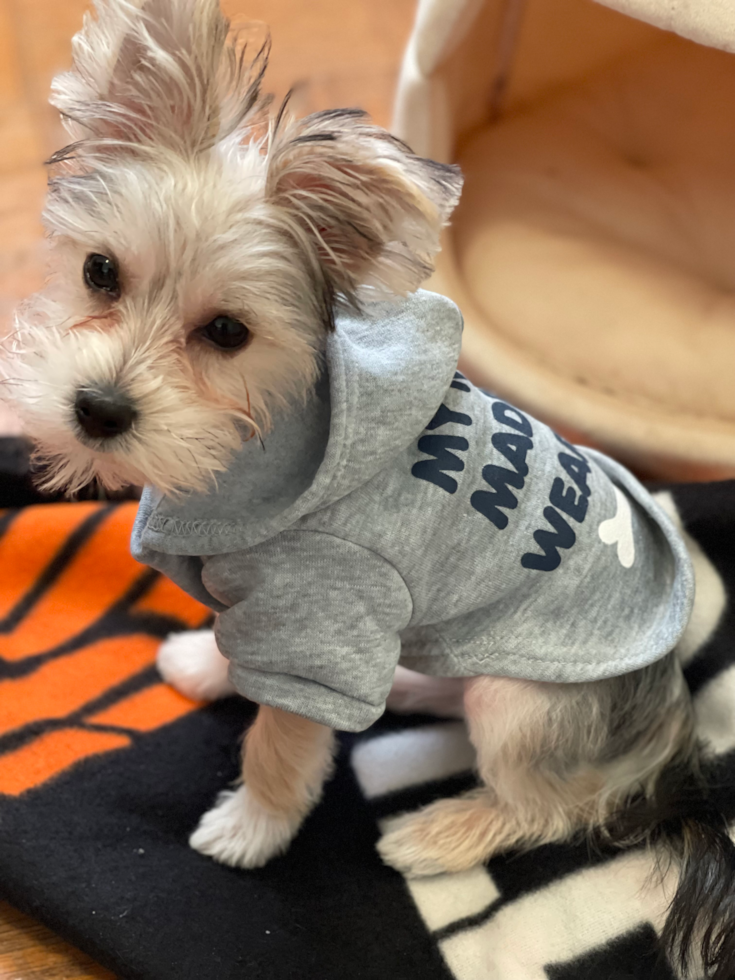
Morkies usually stay within toy-dog territory. Many adults weigh around four to ten pounds and stand roughly six to ten inches tall.
The body tends to be compact and fine-boned. Both the Maltese and Yorkshire Terrier are tiny breeds, so there is little pressure toward a larger or heavier frame.
A Morkie can therefore look delicate even when its personality is anything but. This mismatch between physical size and mental confidence is one of the cross's most recognizable qualities.
Morkie Coat Type and Texture
Morkie coats usually lean straight, silky, or softly wavy. The Maltese contributes long, flowing, straight hair with a soft texture. The Yorkie contributes another long, fine coat that feels more like hair than conventional dense fur.
Gentle waves can appear, especially in shorter pet trims, but strong curls are not characteristic of either breed behind the cross.
This makes coat texture one of the more predictable Morkie traits in broad terms. Density, softness, color, and length can differ, but the cross usually stays on the silky side.
Morkie Colors and Markings
Morkies can display a surprisingly broad color range despite the Maltese being white. Yorkshire Terrier ancestry contributes black, tan, blue, and gold, while the Maltese contributes white and cream. The cross may therefore appear black and tan, black and gold, white and tan, cream, brown, silver, or in mixed combinations.
Yorkie-associated coat changes can alter the adult appearance substantially. A dark puppy may develop more gold, silver, or blue-gray tones with age.
White or cream may also grow more visually prominent as the coat matures. This gives some Morkies a very different adult appearance from the puppy photograph families first fell in love with.
Morkie Eyes, Ears, and Facial Features
Morkies generally have dark expressive eyes and small faces. The Maltese contributes a soft, rounded companion expression, while the Yorkie adds a sharper terrier alertness. The result can look sweet and intensely observant at the same time.
Ear carriage varies because Yorkies have upright ears while Maltese have dropped ears. Some Morkies have erect ears, others fold over, and some carry one ear differently from the other.
Facial hair can stay long and silky or be trimmed into a rounded puppy cut. Either style highlights how petite the head and muzzle really are.
Morkie Build and Size
The Morkie usually has a very fine physical build. Both breeds behind it sit at the tiny end of the companion-dog spectrum, which gives many Morkies narrow legs, light bodies, and little margin for rough handling.
This is appealing for portability. The dog can travel easily, fit comfortably in small spaces, and sit on a lap without anyone questioning whether the arrangement still qualifies as lapdog territory. The tradeoff is fragility. Falls, being stepped on, rough play with larger dogs, or careless handling by young children can present genuine risks.
Morkie Shedding
Morkies generally shed very little. Both Maltese and Yorkies have low-shedding coats that grow more like hair than the heavy seasonal fur of many double-coated breeds. Loose strands still come out, but the amount around the home is usually modest.
Low shedding does not remove the need for coat care. Fine silky hair can knot quickly and may develop tight tangles in areas exposed to friction.
For families that dislike hair on furniture but do not mind grooming, the Morkie's coat can be very appealing.
Morkie Grooming Needs
Morkies need regular brushing when the coat has any significant length. Fine hair tangles easily around the ears, legs, chest, tail, and areas where collars or harnesses rub. Long facial hair also needs cleaning and combing.
Many owners choose shorter teddy bear or puppy trims because they preserve the soft appearance without requiring show-coat maintenance.
Light-colored facial hair can show tear staining more clearly, so routine face cleaning may form part of everyday grooming.
Yorkie Poo Appearance
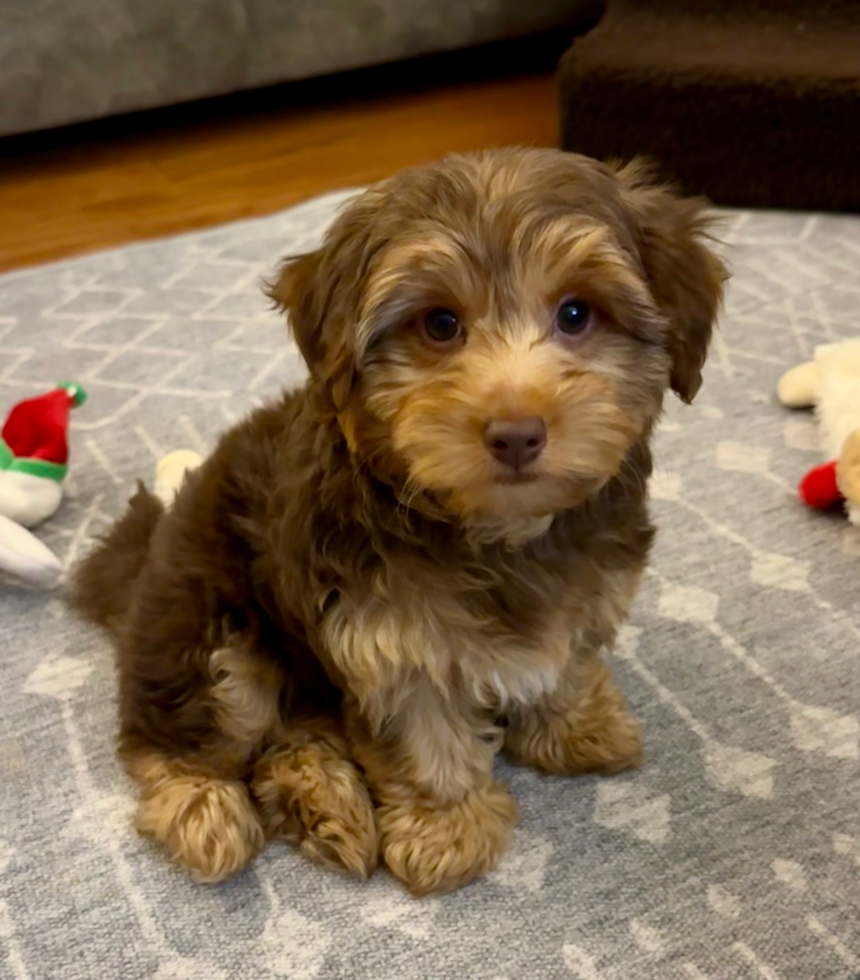
Yorkie Poos have a broader size range because the Poodle side can come from Toy or Miniature lines.
Toy Poodles stand no more than ten inches tall, while Miniature Poodles stand over ten and up to fifteen inches. This can give Yorkie Poos adult heights from roughly seven inches into the mid-teens.
Weight frequently falls somewhere around four to fifteen pounds. Some dogs feel almost as tiny as Morkies, while others have noticeably more leg and body.
Yorkie Poo Coat Type and Texture
Yorkie Poo coats can be straight, wavy, or curly. The Yorkshire Terrier contributes silky hair, while the Poodle contributes dense curl. The finished texture can land almost anywhere between those two extremes.
Loose waves are particularly common-looking because they combine the flow of Yorkie hair with softer Poodle texture. Other Yorkie Poos develop obvious curls and a much fluffier outline.
This wider coat range is one of the clearest differences from the Morkie. A Yorkie Poo can look almost Yorkie-like in one case and unmistakably Poodle-influenced in another.
Yorkie Poo Colors and Markings
Yorkie Poos can appear in black, tan, brown, cream, apricot, red, white, silver, gray, and many combinations.
The Yorkie contributes its traditional dark puppy colors and gold or tan points. Poodle ancestry introduces a much broader palette, including solid black, brown, apricot, red, cream, and other shades.
Some dogs show strong two-tone patterns, while others appear almost solid. Fading can also change the adult color, particularly in Poodle-influenced coats.
The Yorkie Poo therefore offers more color and texture variety than the Morkie, although appearance should still take second place to temperament and lifestyle fit.
Yorkie Poo Eyes, Ears, and Facial Features
Yorkie Poos generally have dark, expressive eyes and lively faces. Yorkie influence can produce a finer muzzle and alert expression. Poodle influence may add more refinement through the head while dense facial furnishings create a rounded appearance.
Ear carriage can vary substantially because the Yorkie contributes upright ears and the Poodle contributes hanging ears. Some Yorkie Poos have floppy ears, while others carry them partly or fully upright.
Curly furnishings around the face can create a stronger teddy bear effect than the usually silkier Morkie coat.
Yorkie Poo Build and Size
The Yorkie Poo generally has greater potential for an athletic and sturdy body. Toy Poodle crosses can stay extremely small, but Miniature Poodle influence can add more height, muscle, and physical capability. Poodles are squarely built athletes beneath the curls, not fragile decorative dogs.
This can make the Yorkie Poo appealing to someone who wants a small companion with enough physical ability for longer walks, games, training, and active outings.
The size range is broader than the Morkie's, so the words “Yorkie Poo” alone describe less about the eventual physical scale.
Yorkie Poo Shedding
Yorkie Poos generally shed very little because both breeds contribute low-shedding coats. The Yorkie's fine hair releases relatively little visible coat, while Poodle curls tend to trap loose strands rather than dropping them freely around the home.
Curlier Yorkie Poos may leave especially little hair on furniture, though those same curls can mat quickly without regular brushing.
A straighter Yorkie Poo may release slightly more visible hair, but heavy seasonal shedding is not a defining expectation for the cross.
Yorkie Poo Grooming Needs
Yorkie Poo grooming depends heavily on texture. A straight or lightly waved coat may need regular detangling similar to Yorkie care. Curlier coats need more thorough combing because mats can form close to the skin.
Professional grooming is common, particularly when Poodle texture is strong. Short teddy bear trims can simplify maintenance considerably.
Regular ear care also deserves attention in dogs with heavily coated drop ears, especially after bathing.
Morkie vs Yorkie Poo Appearance Comparison: What Is the Difference?
The strongest appearance distinction is silky consistency versus greater coat and body variation.
The Morkie combines two tiny silky-coated dogs, so the cross generally stays petite and its coat usually stays straight or softly wavy. The Yorkie Poo adds a Poodle, which introduces curls, greater athletic structure, a wider color range, and more possible variation in adult height.
A Morkie therefore offers the more predictable tiny-companion look. A Yorkie Poo can range from a very small Yorkie-like dog with loose waves to a taller, curly little athlete with obvious Poodle influence.
Physical substance can differ too. Morkies tend to be fine-boned, while Yorkie Poos with Miniature Poodle influence may feel noticeably sturdier.
If your ideal dog is exceptionally small and silky, the Morkie may fit the picture better. If you like a wider range of teddy bear coats and want a little more athleticism in the body, the Yorkie Poo may appeal more.
Morkie vs Yorkie Poo Temperament
The shared Yorkie gives both crosses confidence, alertness, curiosity, and the possibility of a strong little watchdog voice. The Maltese and Poodle then alter what each dog wants from daily life.
The Morkie generally leans further toward close companionship. The Yorkie Poo usually adds more appetite for activity, learning, and interactive mental work.
That does not make the Morkie unintelligent or the Yorkie Poo less affectionate. The difference lies in how each dog tends to use its attention and how much structured interaction it may enjoy.
Morkie Temperament
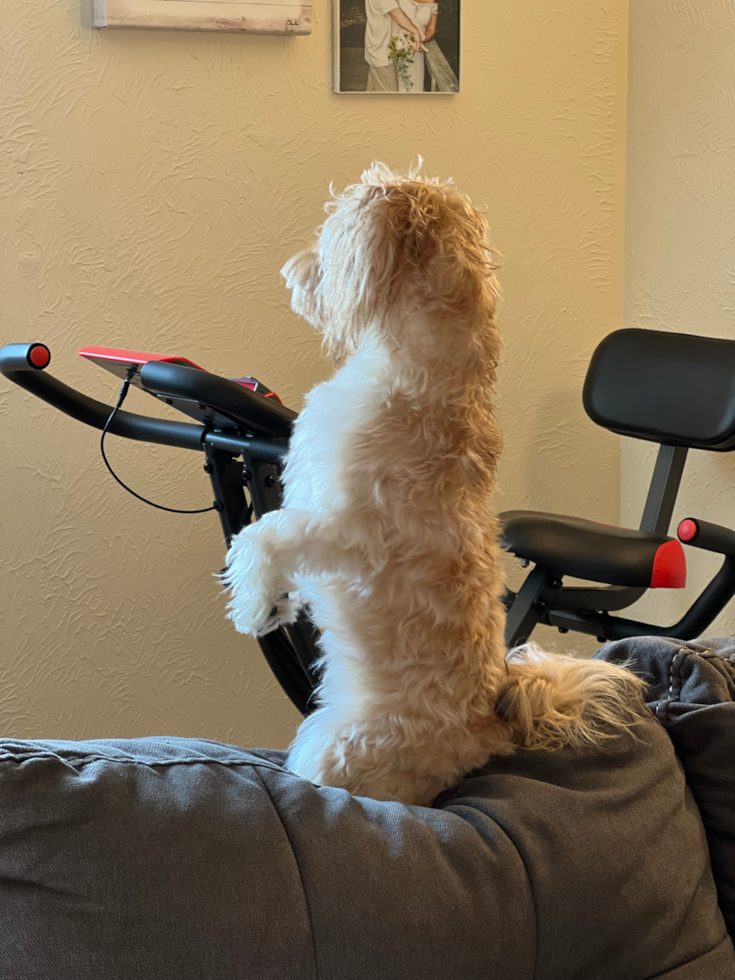
Morkies tend to be affectionate, lively little dogs that build strong bonds with familiar people.
The Maltese side adds a long companion tradition, while the Yorkie contributes terrier confidence and alertness. This can create a dog that wants plenty of physical closeness but still keeps track of every interesting sound around the home.
Many Morkies enjoy being carried, sitting beside someone, following family members, and finding a comfortable position as close to their favorite person as possible.
The terrier influence keeps the personality from feeling passive. A Morkie may be tiny, but it can still have strong opinions about visitors, toys, other dogs, and the suspicious noise coming from the hallway.
Morkie Intelligence and Training
Morkies are clever dogs, though their intelligence may include a stubborn streak. The Yorkshire Terrier brings persistence, while Maltese can also show a willful side. A dog may understand exactly what earned the reward yesterday and still test whether a different strategy works today.
Positive reinforcement is particularly important. Food, praise, toys, and affection can all help, while harsh correction risks creating fear without improving understanding.
Short sessions work well because the dog does not need long training periods to learn useful household skills. Consistency matters more than duration.
Morkie Energy Level
Morkies generally have low to moderate exercise requirements. The Maltese side keeps the physical workload fairly modest, while the Yorkie adds lively curiosity and bursts of terrier energy. Many Morkies enjoy short walks, indoor play, and brief energetic sessions before settling again.
Small size does not remove the need for walks. Exploring outside provides mental stimulation, social exposure, and opportunities to sniff that indoor play cannot fully replace.
The overall routine is still manageable for people who do not want an athletic dog.
Morkie Affection and Attachment
Strong attachment is one of the Morkie's defining tendencies. Both breeds are deeply people-oriented, and the Maltese adds centuries of close companion history. A Morkie may prefer one person's lap, bed, chair, or side of the sofa with impressive consistency.
That closeness can feel wonderful for someone who wants a true companion dog. It can also create difficulty if the dog never practices being comfortable without constant access to people.
Independent resting, short calm separations, and predictable routines help create a healthier balance.
Morkies With Children
Morkies can enjoy gentle children, but their tiny bodies require careful handling. A five-pound dog can be injured by a fall from someone's arms or by an accidental step. Young children may not yet have enough physical control to understand how little force a tiny dog can safely handle.
Older children who know how to sit calmly, let the dog approach, and avoid rough handling can form very close relationships with a Morkie.
For busy households with toddlers, physical fragility may matter more than temperament when making the decision.
Morkies With Other Dogs and Pets
Morkies can live happily with other dogs, but their terrier confidence may exceed their sense of physical scale.
A tiny Morkie may approach a much larger dog as though the size difference is merely a technical detail. Supervised introductions and compatible play styles matter because ordinary rough play can be risky for a very small body.
Cats can fit well into the home. Yorkie ancestry may add curiosity about quick movement, but the Maltese does not reinforce hunting behavior.
Rodents and similarly small pets should still have secure separation because the Yorkie comes from genuine vermin-hunting stock.
Morkie Barking and Watchfulness
Morkies can be enthusiastic little watchdogs. Yorkies are alert terriers, while Maltese are also capable of announcing unfamiliar sounds and visitors. Combined, those tendencies can create a dog that notices activity well beyond what its size might suggest.
Apartment hallways, doorbells, outside dogs, and footsteps can all trigger barking when the behavior is allowed to rehearse daily.
Teaching a quiet cue and rewarding calm observation early can make an enormous difference.
Yorkie Poo Temperament
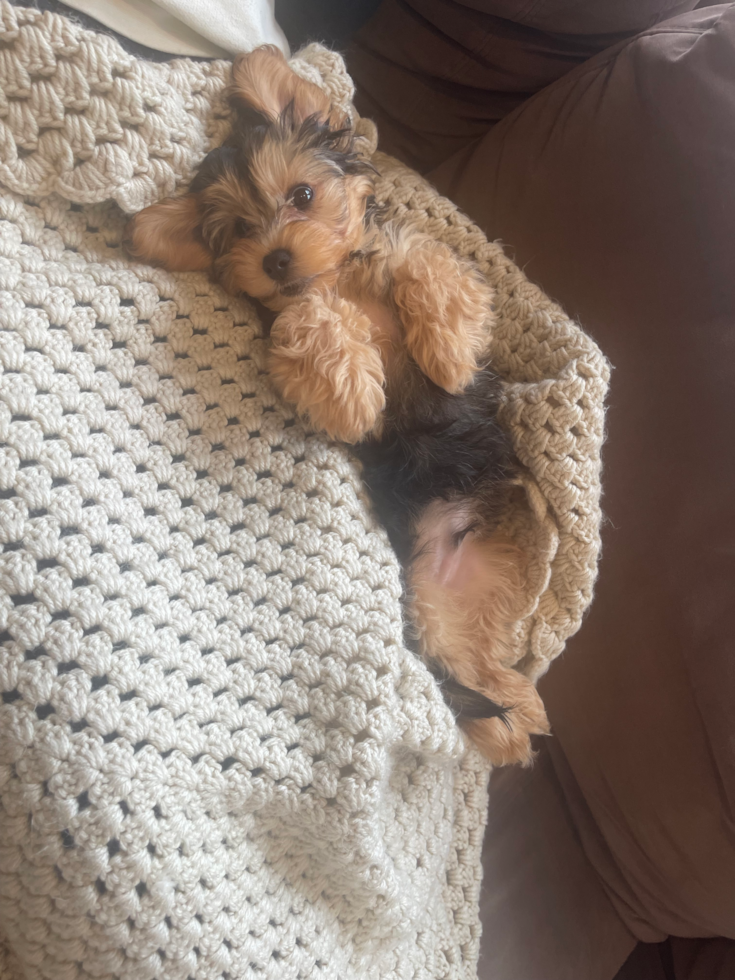
Yorkie Poos tend to combine terrier confidence with Poodle intelligence and athleticism. This usually creates a small dog that enjoys affection but also appreciates interaction. Tricks, games, walks, food puzzles, training sessions, and exploring can all hold genuine interest.
The Poodle side can make the dog especially responsive to patterns and routines. A Yorkie Poo may work out what happens before dinner, before a walk, or before someone leaves the house faster than the family realizes.
That intelligence is an advantage when training is consistent and a challenge when the dog discovers its own rewarding habits.
Yorkie Poo Intelligence and Training
The Yorkie Poo generally has the stronger training profile in this comparison. Poodles are exceptionally trainable dogs with a long history of water work, performance, and canine sports.
Adding that influence to the smart, persistent Yorkie can create a little dog capable of learning far beyond basic household manners.
Tricks, scent games, obedience, retrieving, and small-dog agility activities can all appeal to a Yorkie Poo. Training does not have to feel formal to satisfy the dog's brain.
The Yorkie side can still contribute independence. A clever dog is not automatically obedient, so consistency and worthwhile rewards still matter.
Yorkie Poo Energy Level
Yorkie Poos generally have moderate energy. The Poodle contributes more athletic ability than the Maltese does, while the Yorkie keeps the cross lively and curious. Many Yorkie Poos enjoy longer walks and more structured play than the average Morkie.
The dog is still small, so physical requirements are manageable. A brisk walk, some indoor play, and a short training session can provide a substantial amount of activity.
Dogs with stronger Miniature Poodle influence may especially enjoy an active lifestyle and can surprise people with their stamina.
Yorkie Poo Mental Stimulation
Mental activity matters more in the Yorkie Poo comparison than many owners expect from such a small dog.
Poodles are problem-solvers, and Yorkies are persistent terriers. Together, those traits can produce a dog that quickly finds ways to entertain itself when nothing interesting is offered.
Simple training can prevent boredom without turning ownership into a full-time project. Hidden treats, toy searches, learning new cues, retrieving, and varied walking routes can all give the brain useful work.
The goal is not constant entertainment. It is giving an intelligent dog regular opportunities to think.
Yorkie Poo Affection and Attachment
Yorkie Poos can be extremely affectionate, but their attachment may feel more interactive than the Morkie's.
A Yorkie Poo may cuddle happily and then jump up when someone reaches for a toy or leash. Poodle influence can make shared activity a major part of the relationship rather than relying mainly on physical closeness.
The Yorkie contributes loyalty and a desire to stay aware of family routines. This can still create a dog that follows people closely around the home.
Independence training matters for both crosses, but the Yorkie Poo may offer more ways to channel attachment through games and training.
Yorkie Poos With Children
Yorkie Poos can be good family dogs, though adult size matters. A Toy-Poodle-based Yorkie Poo can be every bit as small and fragile as a Morkie. A larger dog with Miniature Poodle influence may have more physical substance and can be easier to manage around respectful children.
The Poodle side can add playful interest in games and training, which older children may particularly enjoy.
Families should choose based on the realities of handling a small dog rather than assuming the Yorkie Poo name guarantees greater sturdiness.
Yorkie Poos With Other Dogs and Pets
Yorkie Poos generally have good potential with other dogs. Poodles can be social and responsive, while the Yorkie adds confidence and enthusiasm. The combination can create a dog that enjoys play despite its small size.
Physical matching still matters. A tiny Yorkie Poo may face the same risks around a large, rough dog as a Morkie.
Cats can share the home successfully, though the Yorkie side may contribute chasing interest when movement is fast. Poodle ancestry does not add terrier-style vermin drive.
Yorkie Poo Barking and Watchfulness
Yorkie Poos can also be vocal. The Yorkie contributes alert barking, and Poodles are attentive dogs that notice changes in their environment quickly. This can produce a very efficient little household alarm system.
The difference from the Morkie is not necessarily the amount of barking but the trigger. A Yorkie Poo may bark through alertness, excitement, frustration, or anticipation when its active mind notices something interesting.
Training, exercise, and mental engagement can all help reduce unnecessary noise.
Morkie vs Yorkie Poo Temperament Comparison: What Is the Real Difference?
The strongest temperament contrast is companion intimacy versus interactive intelligence.
The Morkie generally leans toward closer physical companionship. The Maltese adds a breed developed almost entirely around staying close to people, which can create a dog that finds enormous satisfaction simply through proximity and affection.
The Yorkie Poo generally adds more appetite for doing things. Poodle influence can make training, games, exploration, retrieving, and problem-solving more central to the dog's relationship with its family.
Both still have the Yorkie's terrier personality underneath. Either dog can bark, investigate movement, act stubborn, and display astonishing confidence in situations where a sensible five-pound animal might reconsider its options.
The practical difference is what balances that Yorkie spark. Maltese influence pulls the Morkie toward a softer lapdog lifestyle, while Poodle influence gives the Yorkie Poo a more athletic, mentally active companion style.
Morkie vs Yorkie Poo: Which One Should You Choose?
The Morkie and Yorkie Poo can both fit beautifully into small homes and companion-focused lifestyles. Both offer low-shedding coat potential, close family attachment, and plenty of personality.
The decision is easier when you think about how much exercise and training you enjoy, how small you want the adult dog to be, what coat texture you prefer, and whether your ideal companion spends more time cuddling or participating in activities.
Choose a Morkie if You Want a Tiny, Attached Companion
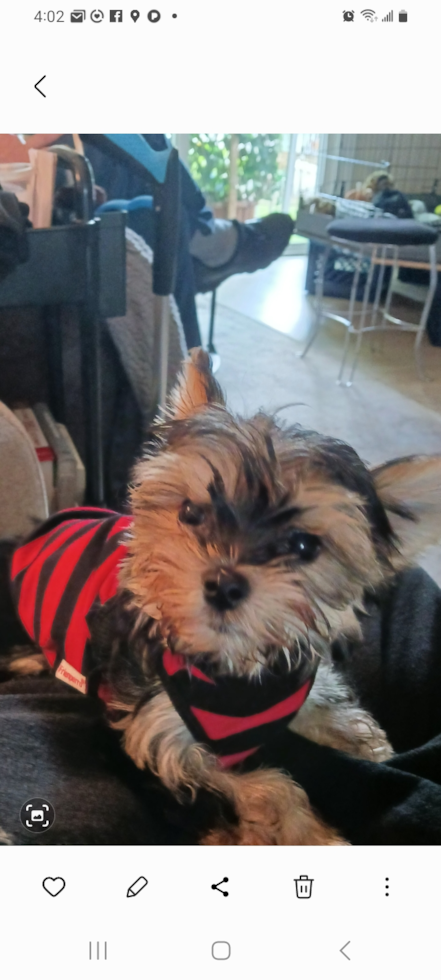
A Morkie puppy may suit you better if exceptionally small size and close companionship are high priorities.
The Maltese and Yorkie combination creates a strong toy-dog profile. Many Morkies fit easily into travel, apartment living, lap time, and quieter household routines while still providing enough terrier personality to keep life entertaining.
The silky coat may also appeal to people who prefer flowing hair or soft waves over curls. Low visible shedding adds another practical benefit for people who dislike loose hair around the home.
The tradeoffs are physical fragility, possible barking, and the need to teach independence to a dog that may strongly prefer constant company.
Choose a Yorkie Poo if You Want a Smarter, More Active Training Partner
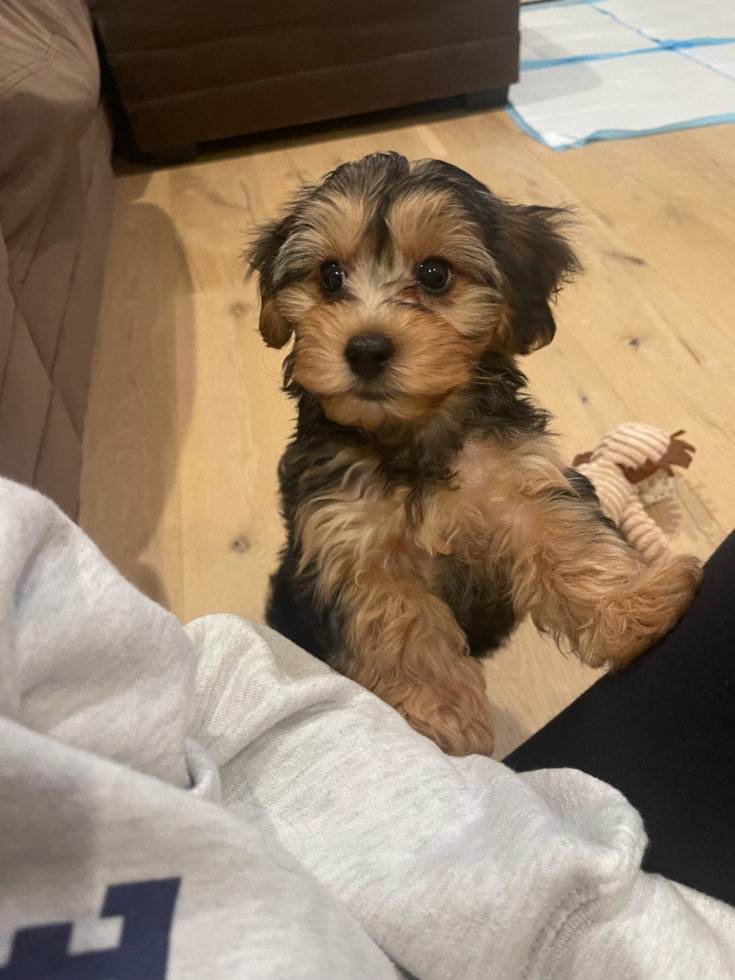
A Yorkie Poo puppy may suit you better if you want a small companion but genuinely enjoy teaching, playing, and giving your dog little challenges.
Poodle influence adds exceptional trainability and more athletic ability. A Yorkie Poo can still enjoy the sofa while also finding tricks, scent games, retrieving, longer walks, and small-dog sports highly rewarding.
The broader size range can also appeal to people who want something slightly sturdier than the average Morkie. Miniature Poodle influence can add more leg and body without pushing the dog out of the small-dog category.
The tradeoff is greater need for engagement. A clever little dog can find its own projects when nobody provides better ones.
Which Is Bigger: Morkie or Yorkie Poo?
The Yorkie Poo has the wider and potentially larger size range. Morkies commonly fall around four to ten pounds because both the Maltese and Yorkshire Terrier are tiny breeds. Yorkie Poos may range from roughly four to fifteen pounds because the Poodle side can come from either Toy or Miniature lines.
A Toy-Poodle-based Yorkie Poo can be just as small as a Morkie. Miniature Poodle influence can produce considerably more height and body.
For anyone who wants a very specific size category, breed-specific owner reviews that mention adult measurements can provide useful real-world context.
Which Is Calmer: Morkie or Yorkie Poo?
The Morkie generally leans toward the calmer physical lifestyle. Maltese need modest exercise, and their strong companion orientation fits a routine built around short walks, indoor play, and plenty of close time with people. The Yorkie side still keeps the Morkie lively and alert.
Yorkie Poos usually bring more athletic energy because of the Poodle. They can settle very nicely indoors, but many enjoy a little more walking, training, and interactive activity through the day.
For someone who wants a stronger lapdog direction, the Morkie may fit more naturally.
Which Is More Energetic?
The Yorkie Poo generally has the higher activity profile. Poodles are athletic dogs, and the shared Yorkie already brings considerable liveliness for its size. Together, those traits can produce a dog that enjoys regular walks, games, training, and exploration.
Morkies can be playful and energetic too, but the Maltese side usually keeps exercise needs more modest.
Neither requires the schedule of a large sporting breed. The distinction matters more in how much interactive activity each dog may seek during an ordinary day.
Which Needs More Mental Stimulation?
The Yorkie Poo generally needs more mental engagement. Poodle intelligence adds strong problem-solving ability to the Yorkie's natural persistence. Training, puzzle toys, scent games, tricks, and varied walks can all help satisfy that combination.
Morkies benefit from training and enrichment too, but their lifestyle can lean more heavily on companionship and shorter periods of activity.
For someone who enjoys teaching a dog new things regularly, the Yorkie Poo may offer more room to explore that interest.
Which Is Easier to Train?
The Yorkie Poo usually has the advantage for training. Poodles are exceptionally responsive learners, and their influence can soften some of the Yorkie's more independent terrier tendencies. Many Yorkie Poos enjoy the process of learning and can handle a wide range of tricks and household skills.
Morkies are clever but may show more stubbornness through the Maltese-Yorkie combination. They can learn extremely well when rewards are worthwhile and rules are consistent.
The difference is motivation rather than intelligence alone. A Yorkie Poo may seek the training interaction more eagerly.
Which Is Better for First-Time Dog Owners?
Both can work for first-time owners, but their challenges differ. A Morkie may suit someone who wants modest exercise needs and understands the extra care required around a very small body. Barking, grooming, house training, and independence still require consistency.
A Yorkie Poo may suit someone who enjoys training and wants a more interactive small dog. The Poodle side can make teaching especially rewarding, though the dog may also ask for more mental activity.
Reviews from adults who already live with either cross can help first-time owners understand which daily routine sounds easier to maintain long term.
Which Is Better With Young Children?
Neither cross should automatically be chosen as the ideal rough-and-tumble children's dog because both can be very small.
The Morkie is especially likely to have a fine-boned toy body. Accidental drops, falls, or rough handling can cause injury even when the child has no intention of hurting the dog.
Yorkie Poos with Miniature Poodle influence may have more physical substance, but Toy-Poodle-based dogs can be equally tiny. The individual dog's adult size matters greatly here.
For families with very young children, a sturdier small breed or cross may offer more physical margin than either of the smallest examples.
Which Is Better With Older Children?
Both can do very well with older children who understand small-dog handling. The Morkie may appeal to a gentle child who enjoys cuddling, quiet companionship, and short play sessions. Its strong attachment can create a very close one-on-one relationship.
The Yorkie Poo may suit a child who enjoys teaching tricks, playing games, walking, and interacting more actively with the dog.
The child's personality and preferred style of companionship can make this decision much clearer.
Which Is Better With Other Dogs?
Both can live successfully with other dogs, but physical size should stay part of the decision. Morkies can carry plenty of Yorkie confidence and may approach larger dogs fearlessly. Their tiny bodies make rough play risky even when everyone involved is friendly.
Yorkie Poos may have slightly more athletic ability and body substance when Miniature Poodle influence is strong. Very small examples still need the same protection from accidental injury.
Social compatibility and play style matter more than declaring one cross universally better.
Which Is Better With Cats?
Both can live comfortably with cats. The shared Yorkshire Terrier ancestry may add interest in quick movement, while neither the Maltese nor Poodle adds another strong terrier hunting background.
A Morkie's small size can make a confident cat physically equal or even larger. A Yorkie Poo may show more interest in active play through the Poodle side.
Calm introductions and places where the cat can retreat help either relationship start well.
Which Has Stronger Terrier Personality?
Both can show plenty of Yorkie attitude because the Yorkshire Terrier is shared. The Morkie may sometimes feel more purely companion-like because the Maltese adds another lapdog tradition rather than another working breed. Terrier confidence can still appear strongly through barking, curiosity, and persistence.
The Yorkie Poo may channel that Yorkie drive into more activity because Poodle intelligence and athleticism add another energetic working influence.
The result is not more terrier in one dog and less in the other. It is the same terrier foundation expressed through two different secondary temperaments.
Which Has More Prey or Chasing Interest?
The comparison is fairly close because the Yorkie is the main source of vermin-hunting history in both crosses.
A Morkie may chase insects, rodents, or quick movement through Yorkie curiosity. Maltese ancestry does not strengthen that instinct.
A Yorkie Poo may also chase movement, though some of that interest can come from general Poodle athleticism and play rather than terrier prey behavior.
Homes with pet rodents should use secure physical separation with either cross.
Which Is More Likely to Bark?
Both can be vocal, and this category is closer than many other parts of the comparison. The Morkie combines Yorkie alertness with a Maltese that can also be an effective little watchdog. This may create frequent announcements when sounds occur around the home.
Yorkie Poos combine the alert Yorkie with an attentive Poodle. The dog may bark at noises, visitors, excitement, frustration, or anticipation of activity.
For apartment households, early quiet training is important regardless of which cross is chosen.
Which Is More Social With Strangers?
Both can be friendly, but the Morkie may lean slightly more toward close family attachment while the Yorkie Poo may show more interactive curiosity.
Maltese are friendly companion dogs, yet the Morkie's strongest bonds may focus heavily on familiar people. The Yorkie side can also add a little initial alertness.
Poodles are responsive and socially engaged, which can give the Yorkie Poo greater interest in interacting with unfamiliar people after a comfortable introduction.
Neither dog needs to greet every stranger. Calm confidence is more useful than universal enthusiasm.
Which Is More Affectionate?
Both can be deeply affectionate, but their style differs. The Morkie usually leans toward physical proximity and close companionship. Sitting beside someone, sleeping close, following a favorite person, and sharing quiet time can form a large part of the relationship.
The Yorkie Poo may combine affection with more active interaction. Cuddling can shift quickly into a training game, a walk, or a request to play.
The better choice depends on whether you picture affection primarily through closeness or through closeness plus shared activity.
Which Sheds Less: Morkie or Yorkie Poo?
Both have excellent low-shedding potential. The Morkie combines two breeds with fine, low-shedding hair. The Yorkie Poo combines the same Yorkie coat with Poodle curls that also release little visible hair.
The difference is more about what happens to loose strands. Fine Morkie hair can tangle, while Poodle-influenced curls can hold loose hair inside and create mats.
Neither should be described as completely non-shedding or guaranteed for allergies.
Which Needs More Grooming?
Both require regular grooming when their coats are kept long. The Morkie's fine silky hair can knot easily, especially around friction points. A short puppy trim makes the routine considerably easier.
The Yorkie Poo can require more intensive combing when the coat is strongly curled. Dense curls may hide mats close to the skin even while the outside still looks fluffy.
There is no strong low-maintenance winner. The kind of grooming differs more than the overall commitment.
Which Is Better for Allergies?
Both have low-shedding coat ancestry, but neither can guarantee compatibility with dog allergies.
The Maltese, Yorkie, and Poodle all release relatively little visible hair. This can reduce loose coat around the home compared with many shedding breeds.
Dog allergens also come from saliva and dander, so coat alone does not decide whether someone reacts.
Direct personal tolerance is far more useful than relying on the Morkie or Yorkie Poo label.
Which Is Better for Apartment Living?
Both are excellent candidates for apartment living from a size perspective. The Morkie may have the advantage for lower physical exercise needs, while the Yorkie Poo can suit an apartment owner who enjoys more regular walking and training.
Barking is the bigger issue for both. Yorkie alertness can make hallway sounds and nearby activity seem worthy of commentary.
A small home works beautifully when quiet manners, daily walks, and comfortable alone time are taught early.
Which Is Better for Seniors?
Both can make excellent companions for seniors. The Morkie may suit someone who wants a very light dog and a quiet companion-centered routine. Its small body is easy to carry, though that same delicacy requires careful handling.
The Yorkie Poo may suit an active senior who enjoys walking, teaching tricks, and giving a dog more interactive stimulation. A slightly larger Yorkie Poo can also offer more physical sturdiness.
Grooming should factor into either decision, especially if professional coat care is preferred.
Which Is Better for a Quieter Household?
The Morkie generally has the advantage for a quieter physical lifestyle. Maltese influence supports a companion routine centered on short walks, indoor play, cuddling, and close family time. The Yorkie side still keeps the dog alert enough that quiet does not necessarily mean silent.
Yorkie Poos can relax comfortably too, but Poodle influence usually adds more interest in training, games, and regular activity.
Someone who wants the stronger lapdog experience may therefore lean toward the Morkie.
Which Is Better for an Active Small-Dog Lifestyle?
The Yorkie Poo has the clearer advantage for owners who want more activity from a small dog. Poodle ancestry adds athleticism and training ability to the Yorkie's existing energy. Longer walks, tricks, scent games, retrieving, and small-dog sports may all appeal.
Morkies can enjoy active outings too, but their tiny bodies and Maltese influence usually make intense physical activity less central to daily life.
The Yorkie Poo offers more range for someone who wants a companion small enough for easy travel but active enough to join a busier routine.
Which Is More Physically Sturdy?
The answer depends heavily on which size of Poodle sits behind the Yorkie Poo. A Toy-Poodle-based Yorkie Poo may be every bit as fine-boned as a Morkie. A Yorkie Poo with stronger Miniature Poodle influence can carry more leg, muscle, and body substance.
The Morkie is more consistently tiny because both of its breeds are very small. That makes physical delicacy a more predictable consideration.
For households where sturdiness matters, Yorkie Poo owner reviews that mention adult size and everyday activity can add useful context.
Morkie vs Yorkie Poo: The Final Comparison
Choosing between a Morkie vs Yorkie Poo gets much easier once you hold the Yorkshire Terrier constant and focus on what the Maltese and Poodle add.
Both dogs can inherit Yorkie confidence, alertness, loyalty, low shedding, and an occasional belief that household security rests entirely on their tiny shoulders. They can also both form deep family bonds and fit beautifully into apartment life.
The Morkie adds the Maltese, an ancient companion breed shaped around close human company. That influence generally produces a smaller, silkier dog with modest physical exercise needs and an especially closestyle of attachment.
The Yorkie Poo adds the Poodle, an athletic water retriever famous for intelligence and training ability. That influence creates greater variation in size and coat while generally adding more mental stimulation needs, more athletic potential, and a stronger appetite for structured interaction.
Their coats tell the same story visually. Morkies tend toward straight or softly wavy silky hair because both sides contribute that basic texture. Yorkie Poos may have anything from silky waves to dense curls.
Their ideal households can differ just as clearly. A Morkie may suit someone whose favorite small-dog moments involve cuddling, companionship, portability, short walks, and a dog that likes staying close.
A Yorkie Poo may suit someone who wants the same Yorkie confidence but enjoys teaching tricks, taking longer walks, playing games, and keeping a clever little dog mentally involved.
Children introduce another consideration. Morkies are consistently tiny and need careful handling. Yorkie Poos can offer more physical substance when Miniature Poodle influence is present, though the smallest Yorkie Poos can be equally delicate.
Neither gives you an escape from grooming or barking training. Both have low-shedding coats that need maintenance, and both have enough alertness to turn household noises into a regular commentary if quiet behavior is never taught.
If you want a very small, silky, low-shedding dog with modest exercise needs and an especially close companion bond, the Morkie may fit your life better.
If you want a small, highly trainable, more athletic dog with greater mental drive, broader coat possibilities, and plenty of interactive personality, the Yorkie Poo may make more sense.
Breed-specific customer reviews can add a useful final layer, especially when owners discuss adult size, barking, house training, grooming, energy, and how much daily interaction their dog seeks.
The real choice is not between two versions of a Yorkie mix. It is between the Yorkie's terrier spark paired with Maltese companionship or paired with Poodle intelligence and athleticism.
Frequently Asked Questions
What is the main difference between a Morkie and Yorkie Poo? Both share Yorkshire Terrier ancestry, but the Morkie also has Maltese ancestry while the Yorkie Poo adds Toy or Miniature Poodle ancestry. That changes the typical coat, activity level, training style, and size range. Morkies generally lean toward very small size, silky hair, modest exercise, and especially close companionship. Yorkie Poos usually have more coat variation, greater athletic potential, stronger trainability, and higher mental stimulation needs.
Which is bigger, a Morkie or Yorkie Poo? The Yorkie Poo has the wider size range. Morkies commonly weigh around four to ten pounds because both breeds behind them are tiny, while Yorkie Poos may fall around four to fifteen pounds depending partly on whether Toy or Miniature Poodle influence is stronger. A small Yorkie Poo can be nearly identical to a Morkie in weight. Larger examples may stand several inches taller and have noticeably more muscle and leg.
Which is calmer, a Morkie or Yorkie Poo? The Morkie generally has the calmer physical lifestyle because the Maltese contributes modest exercise needs and a strong companion orientation. Yorkie energy still keeps the dog playful and alert. Yorkie Poos usually enjoy more activity through the Poodle side. They can relax happily indoors but may seek training, walks, games, and mental interaction more frequently.
Which is easier to train, a Morkie or Yorkie Poo? The Yorkie Poo generally has the advantage for training because Poodles are exceptionally intelligent and responsive learners. This can pair very well with the Yorkie's confidence and persistence. Morkies are clever too, but the Maltese and Yorkie can both contribute a stubborn streak. Positive rewards and consistent rules work much better than pressure with either cross.
Which sheds less, a Morkie or Yorkie Poo? Both usually shed very little. Maltese, Yorkshire Terriers, and Poodles all have coats associated with low visible shedding. The main difference is texture. Morkies generally have fine silky hair that tangles, while Yorkie Poos may have waves or curls that trap loose strands and can mat close to the skin.
Which needs more grooming, a Morkie or Yorkie Poo? Both need regular grooming, and neither offers a clear low-maintenance advantage. Long Morkie hair needs frequent detangling because its fine silky texture can knot easily. Curly Yorkie Poo coats may need even more thorough combing near the skin. Shorter professional trims can make either cross much easier to maintain.
Is a Morkie or Yorkie Poo better with children? Both can do well with respectful older children, but very small examples need gentle handling. Morkies are consistently tiny, so physical fragility is a particularly important concern. Yorkie Poos with Miniature Poodle influence may have more body substance, while Toy-Poodle-based dogs can be just as delicate. Families should think about the realities of handling a small dog rather than relying on the cross name alone.
Which barks more, a Morkie or Yorkie Poo? Both can be vocal because they share the alert Yorkshire Terrier. The Morkie can combine that trait with a Maltese watchdog streak, while the Yorkie Poo adds an attentive Poodle that may bark through excitement as well as alertness. There is no dependable winner in this category. Early quiet training is one of the most useful investments for either cross, especially in apartments.
Is a Morkie or Yorkie Poo better for apartment living? Both can fit apartment life extremely well because they take up little physical space. The Morkie may need slightly less exercise, while the Yorkie Poo may appreciate longer walks and more interactive training. Noise management matters more than square footage. Yorkie influence can make either dog highly aware of hallway sounds, doors, neighbors, and outdoor activity.
Should I choose a Morkie or Yorkie Poo? Choose a Morkie if you want a very small, silky, low-shedding companion with modest exercise requirements and a particularly close attachment style. Choose a Yorkie Poo if you want a small, highly intelligent dog with more athletic ability, stronger training potential, wider coat variation, and a greater appetite for mental activity. Both bring Yorkie confidence, but Maltese companionship and Poodle versatility create two distinctly different small-dog lifestyles.