


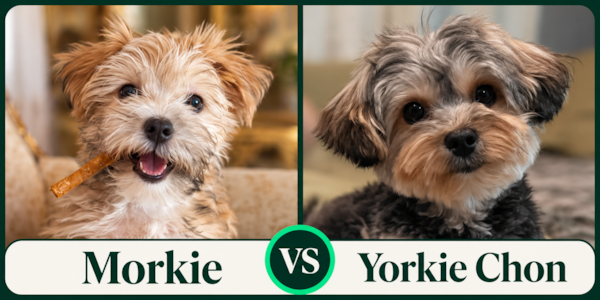
Published Thursday, October 22, 2026 by Pilesgrove Pups
The Morkie vs Yorkie Chon comparison starts with an important similarity: both dogs are half Yorkshire Terrier. That shared Yorkie influence can give either cross a bold personality, strong attachment to people, an alert little watchdog streak, and far more confidence than the dog's size suggests.
The difference comes from the other half of each cross. A Morkie combines the Yorkshire Terrier with the Maltese, while a Yorkie Chon combines the Yorkshire Terrier with the Bichon Frise. That means the real comparison is not simply between two small fluffy dogs. It is between the tiny, silky companion influence of the Maltese and the sturdier, cheerful, curly-coated influence of the Bichon Frise.
The Maltese is one of the classic companion dogs of the Mediterranean world. It was shaped over centuries around close human company rather than a physical working job, and its very small body, silky white coat, and affectionate temperament reflect that history. Added to the Yorkie, it can create a particularly petite dog that bonds closely and brings a softer companion side to the terrier personality.
The Bichon Frise has companion roots too, but its history took a different path. Bichons spent time in European courts, later worked with street entertainers and circuses, and earned a reputation for cheerful sociability, quick learning, and a sturdy little body underneath the powder-puff coat. Added to the Yorkie, those traits can create a slightly larger dog with more body substance, a more outwardly social style, and stronger potential for a plush wavy or curly coat.
That makes the choice surprisingly meaningful. The Morkie usually fits someone who wants a very small, closely attached companion with silky coat potential and a strong Yorkie personality packed into a tiny frame. The Yorkie Chon may suit someone who wants the same terrier spark but prefers a sturdier body, broader sociability, and a somewhat more playful, resilient family-dog feel.
Table of Contents
- Morkie vs Yorkie Chon at a Glance
- Morkie and Yorkie Chon Overview and History
- Morkie vs Yorkie Chon Appearance
- Morkie vs Yorkie Chon Temperament
- Morkie vs Yorkie Chon: Which One Should You Choose?
- Choose a Morkie if You Want a Very Small, Closely Bonded Companion
- Choose a Yorkie Chon if You Want a Sturdier, More Social Small Dog
- Which Is Bigger: Morkie or Yorkie Chon?
- Which Is Calmer: Morkie or Yorkie Chon?
- Which Is More Energetic?
- Which Is Easier to Train?
- Which Is Better for First-Time Dog Owners?
- Which Is Better With Young Children?
- Which Is Better With Older Children?
- Which Is Better With Other Dogs?
- Which Is Better With Cats?
- Which Has More Terrier Personality?
- Which Has More Prey or Chasing Interest?
- Which Is More Likely to Bark?
- Which Is More Social With Strangers?
- Which Is More Affectionate?
- Which Sheds Less: Morkie or Yorkie Chon?
- Which Needs More Grooming?
- Which Is Better for Allergies?
- Which Is Better for Apartment Living?
- Which Is Better for Seniors?
- Which Is Better for a Quieter Household?
- Which Is More Physically Sturdy?
- Morkie vs Yorkie Chon: The Final Comparison
Morkie vs Yorkie Chon at a Glance
| Trait | Morkie | Yorkie Chon |
| Parent breeds | Maltese × Yorkshire Terrier | Yorkshire Terrier × Bichon Frise |
| General size | Toy | Toy to small |
| Common adult weight | Often about 4–10 pounds | Often about 7–15 pounds |
| Common adult height | Often about 6–10 inches | Often about 9–12 inches |
| Build | Petite, fine-boned, compact | Compact, sturdier, more substantial |
| Coat | Usually straight, silky, or softly wavy | Usually wavy, fluffy, or curly |
| Shedding | Usually very low | Usually very low |
| Grooming | Moderate to high | High for longer coats |
| Common colors | Black, tan, gold, brown, white, cream, silver and combinations | Black, tan, white, cream, apricot, gray, silver and combinations |
| Energy | Low to moderate, with lively bursts | Moderate, with playful bursts |
| Trainability | Moderate to high | High |
| Barking tendency | Moderate to high | Moderate |
| Terrier influence | Strong | Strong |
| Broad sociability | Moderate to high | Often high |
| Physical sturdiness | Lower | Higher |
| Best fit | Someone wanting a tiny, closely bonded companion | Someone wanting a sturdier, social, playful small dog |
Neither cross has one formal breed standard, so adult size and coat can vary. The difference in the purebred breeds behind them still gives useful guidance: both the Maltese and Yorkie weigh around seven pounds or less, while the Bichon Frise commonly weighs 12 to 18 pounds. That helps explain why Yorkie Chons usually have more body and why Morkies can stay exceptionally small.
Morkie and Yorkie Chon Overview and History
The most useful way to understand the Morkie and Yorkie Chon is to start with the breed they share. The Yorkshire Terrier gives both crosses their terrier foundation, which can include confidence, alertness, persistence, curiosity, and a willingness to act much larger than their actual size.
The Yorkie did not begin as a pampered lapdog. It developed in nineteenth-century northern England, where early terriers worked around mills, mines, and other industrial settings as vermin hunters. That working background still shows in the modern Yorkshire Terrier's boldness, attentiveness, and tendency to investigate anything suspicious.
The Maltese and Bichon Frise soften that terrier influence in different ways. The Maltese adds an ancient companion tradition and pushes the Morkie toward smaller size, fine bone, silky hair, and especially close human attachment. The Bichon Frise adds a somewhat sturdier companion foundation, broader sociability, a playful performance history, and a much fuller curly coat.
This gives the cluster a particularly clean comparison. Hold the Yorkie's terrier confidence constant, then ask whether you want more Maltese intimacy and delicacy or more Bichon sociability and sturdiness.
The Yorkshire Terrier Foundation Both Dogs Share
The Yorkshire Terrier weighs about seven pounds and stands roughly seven to eight inches tall, but its personality was never shaped around fragility. Yorkies descend from working terriers used to pursue rats and other vermin, and that history contributes to the breed's confidence and willingness to investigate.
Modern Yorkies are deeply attached to their people and fit beautifully into companion life, but the terrier underneath the silky coat still matters. They can be alert, vocal, persistent, curious, and surprisingly brave when something captures their attention.
That shared influence means neither the Morkie nor Yorkie Chon should be viewed as a passive lapdog by default. Both may enjoy cuddling, but both can also monitor the hallway, announce visitors, chase an insect across the floor, or confidently challenge a dog several times their size if good manners are never taught.
The Yorkie coat matters too. It is long, fine, silky, and very low shedding, which gives both crosses strong potential for coats that release little loose hair. What changes is whether that silky texture meets the equally silky Maltese coat or the dense curly Bichon coat.
Morkie History and Background
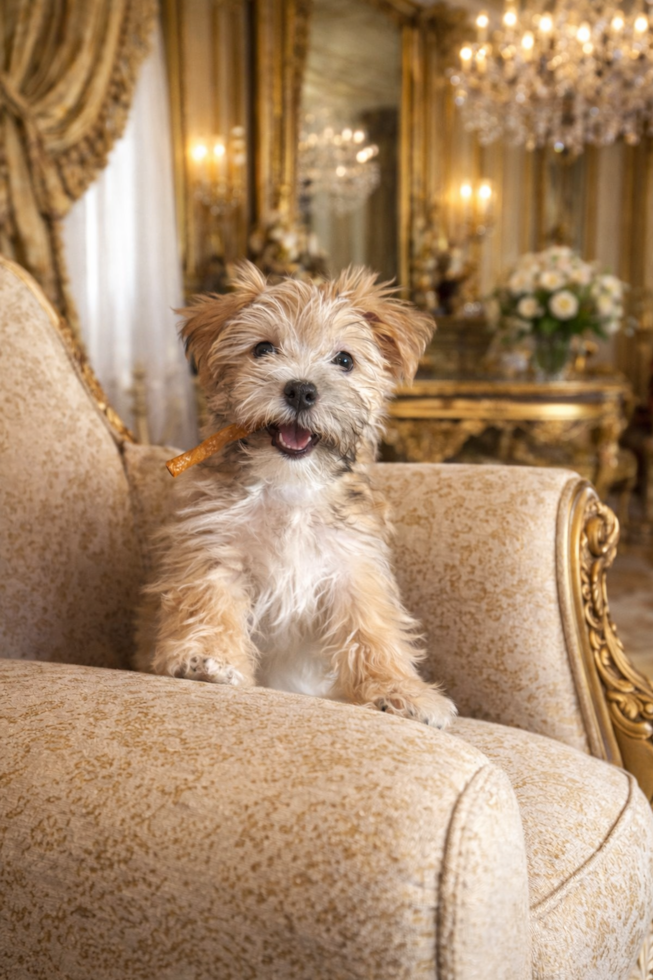
The Morkie combines two Toy Group breeds: the Maltese and Yorkshire Terrier. The exact modern origin of the cross is not documented well enough to credit one breeder or one specific year, so it is more accurate to view the Morkie as part of the broader rise of small companion crosses.
The Maltese brings an exceptionally old companion-dog tradition. Dogs of this type have been associated with the Mediterranean for centuries, and the modern Maltese developed entirely around companionship rather than hunting, herding, guarding, or retrieving.
That history gives the Morkie an unusual combination. The Yorkie contributes genuine terrier background, while the Maltese adds a dog shaped almost entirely around being close to people. One side says, “I noticed something moving.” The other says, “I would also like to sit directly beside you while we investigate.”
Both breeds are extremely small. Maltese stand around seven to nine inches and weigh under seven pounds, while Yorkies stand around seven to eight inches and weigh about seven pounds. Their similar size makes the Morkie one of the more consistently toy-sized popular crosses.
Their coats also have strong similarities. Maltese have long, straight, silky single coats, while Yorkies have long, fine, silky hair. This gives the Morkie a strong foundation for a soft, low-shedding coat rather than the broader straight-to-curly range seen in many Poodle mixes.
Yorkie Chon History and Background
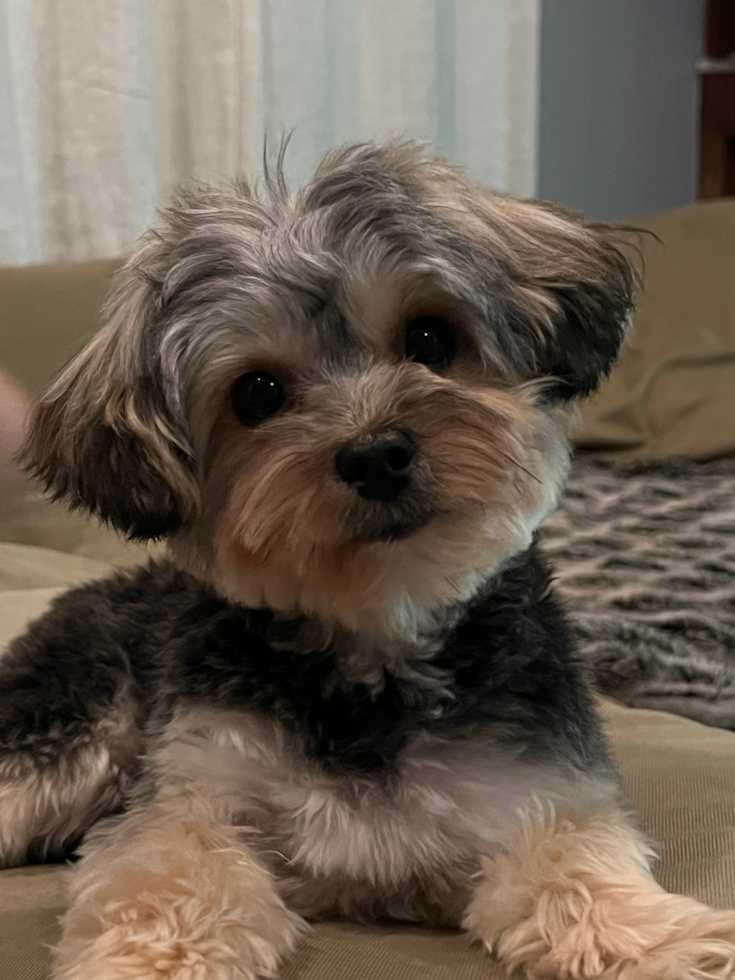
The Yorkie Chon combines the Yorkshire Terrier with the Bichon Frise. You may also see names such as Yorkiechon, Yo-Chon, or Yorkie Bichon used for the same general cross.
The Bichon Frise comes from the Mediterranean family of small companion dogs sometimes grouped under the old Barbichon umbrella. These dogs traveled widely and gained popularity in European courts, where their charm and attractive appearance made them fashionable companions.
The Bichon's story did not stop in palaces. After political upheaval pushed many dogs out of aristocratic households, their intelligence and cheerful personalities helped them find work with street entertainers and later in circuses. Their ability to learn tricks and engage with audiences helped shape the breed's reputation as a natural performer.
This history adds something very different to the Yorkie Chon. The Yorkie's terrier background contributes confidence and alertness, while the Bichon contributes broader social enthusiasm, a sturdy little body, and a strong history of interactive training.
Size also shifts upward. Bichon Frises stand around 9.5 to 11.5 inches and commonly weigh 12 to 18 pounds, which is noticeably larger than the Yorkshire Terrier. A Yorkie Chon therefore has more potential to feel like a small dog rather than an exceptionally tiny toy.
Morkie vs Yorkie Chon Appearance
The Morkie and Yorkie Chon can both have expressive dark eyes, small faces, soft coats, and a teddy bear appearance after grooming, but their texture and physical substance usually separate them.
The Morkie combines two very small, silky-coated breeds. This pushes the cross toward a petite frame and hair that may fall straight or in gentle waves. The Yorkie Chon combines the fine Yorkie coat with the dense, curly Bichon coat, which increases the chance of a fluffier or more textured appearance.
The Bichon also contributes more body size. A Yorkie Chon often feels sturdier in the hands, while a Morkie can be exceptionally light and delicate.
Morkie Appearance
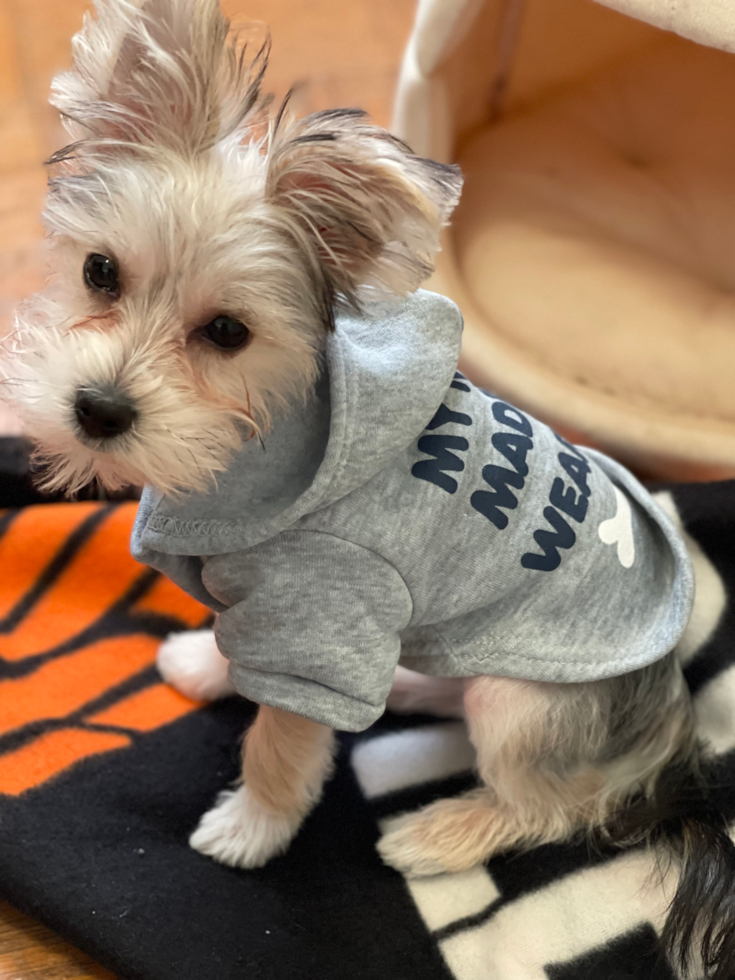
Morkies usually stay firmly within toy-dog territory. Many adults weigh somewhere around four to ten pounds, with plenty clustering toward the middle or lower part of that range.
The body is generally compact and lightly built. A strong Maltese influence can create fine bone and a delicate outline, while stronger Yorkie structure may add a slightly more upright, terrier-like look.
The overall impression is a very small companion dog rather than a sturdy small breed. That physical scale is one of the most important practical differences in this comparison.
Morkie Coat Type and Texture
The Morkie usually has excellent potential for a straight, silky, or softly wavy coat because both breeds behind it have long, hair-like coats.
The Maltese contributes a straight single coat with a fine, flowing texture. The Yorkie contributes similarly fine silky hair, although the color and feel differ.
Some Morkies develop gentle waves, particularly when the coat is cut shorter. Tight curls are far less characteristic because neither breed naturally contributes a curly coat.
This can make the coat easier to predict in broad texture than many mixed breeds. The greater variation is usually in density, softness, color, and how much Maltese or Yorkie styling shows through.
Morkie Colors and Markings
Morkies can show much more color variation than a pure Maltese because the Yorkie contributes black, tan, blue, and gold.
Puppies may appear black and tan, black and gold, cream, white, brown, or combinations of several shades. Some develop silver or blue-gray tones as their Yorkie-influenced coat changes with age.
White can play a major role when Maltese influence is strong. A dog may be mostly cream or white with darker ears or patches, while another may look much closer to a traditional Yorkie.
Color can shift significantly through the first few years. Yorkies naturally undergo coat-color changes from puppyhood into adulthood, so Morkie puppy coloring should not be treated as permanent.
Morkie Eyes, Ears, and Facial Features
Morkies typically have dark eyes and small faces with plenty of expression. The Maltese contributes large dark eyes and a soft companion expression, while the Yorkie adds a more alert terrier look.
Ear carriage can vary. Yorkies have small upright ears, while Maltese have drop ears, so Morkies may have erect ears, folded ears, or something between the two.
The muzzle is usually fine and moderate rather than flat. Facial hair can be kept long and silky or trimmed into a rounded teddy bear shape.
The smaller the dog, the more important the underlying scale feels in daily handling. A six-pound Morkie can look sturdy in photographs yet feel very delicate when picked up.
Morkie Build and Size
The Morkie is usually the smaller and finer-boned dog in this comparison.
Both breeds behind the cross weigh around seven pounds or less, so there is no larger breed pulling the body toward a heavier small-dog frame. This makes the cross especially appealing to people who genuinely want a very small companion.
The downside is fragility. Jumping from high furniture, rough handling, or being accidentally stepped on can pose more risk to a tiny dog than to a sturdier Yorkie Chon.
That physical difference matters particularly in households with young children or large, energetic dogs. Personality may say fearless terrier while the body still weighs only a few pounds.
Morkie Shedding
Morkies usually shed very little because both the Maltese and Yorkshire Terrier have coats known for low visible shedding.
The Maltese has a single coat rather than a heavy undercoat, while Yorkie hair grows long and fine. Loose strands are therefore less likely to coat furniture in the way they would with a typical double-coated dog.
Low shedding does not eliminate grooming. Fine hair can tangle quickly, especially around friction points and wherever longer hair rubs together.
A short haircut reduces the daily burden, but regular brushing is still part of normal Morkie care.
Morkie Grooming Needs
Long Morkie hair can require frequent brushing to prevent knots around the ears, legs, chest, tail, and face.
The fine texture makes tangles easy to overlook. A coat may feel soft on the surface while small knots form underneath, particularly if the dog wears a harness regularly.
Many families choose a shorter teddy bear trim rather than maintaining floor-length hair. That keeps the companion look while making daily grooming much more realistic.
Facial care also deserves attention. Light-colored dogs may show tear staining more clearly, while long hair around the eyes and mouth needs regular cleaning.
Yorkie Chon Appearance
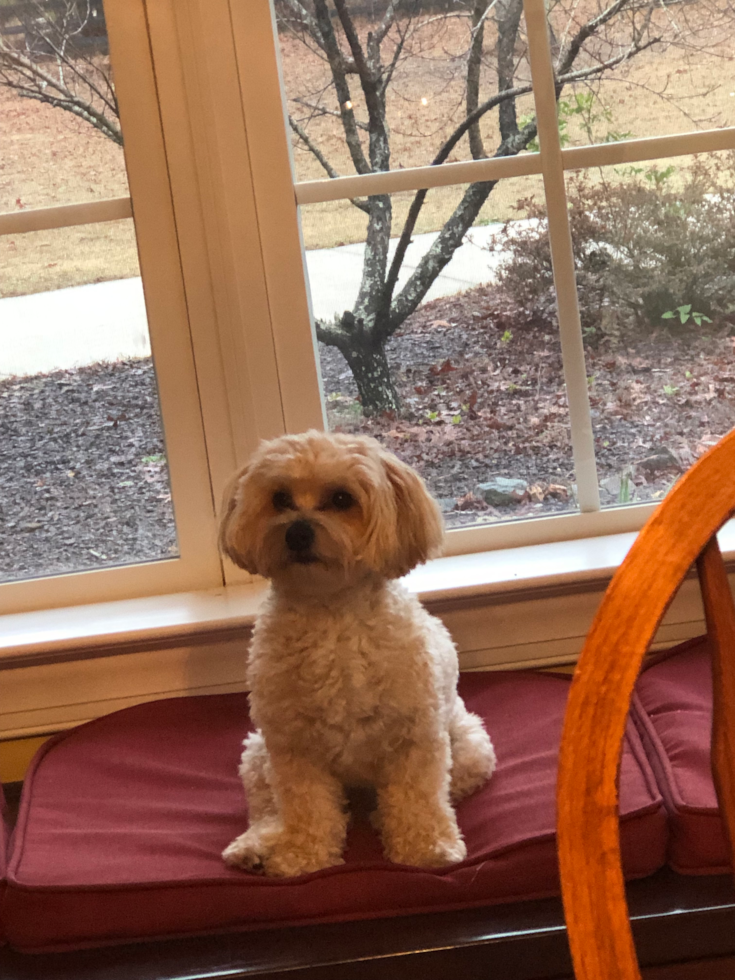
Yorkie Chons usually have more physical substance than Morkies because the Bichon Frise is larger and sturdier than both breeds behind the Morkie.
Many Yorkie Chons fall somewhere around seven to fifteen pounds and roughly nine to twelve inches tall. Individual dogs can sit outside those ranges, but the overall trend is toward a sturdier small companion.
The body may feel compact and well balanced rather than fine-boned. Bichon influence can also add a rounder outline and more coat volume.
Yorkie Chon Coat Type and Texture
The Yorkie Chon has a much wider texture range than the Morkie because it combines two very different coats.
The Yorkshire Terrier contributes long, silky hair. The Bichon Frise contributes a soft, dense double coat with natural curl and substantial volume.
The combination can create loose waves, fluffy curls, or a softer textured coat that sits away from the body more than a Morkie's hair usually does. Some Yorkie Chons look quite silky, while others have a distinctly plush Bichon-like coat.
This variety can produce an especially convincing teddy bear look when the hair is trimmed into a rounded style.
Yorkie Chon Colors and Markings
Yorkie Chons can appear in black, tan, white, cream, gold, gray, silver, apricot-related shades, and combinations of those colors.
The Yorkie brings darker puppy colors and the possibility of blue, tan, and gold tones. The Bichon Frise is primarily white but can have cream, buff, or apricot shading.
This can create everything from a dark Yorkie-like puppy to a pale cream dog with a few darker patches. Parti-style appearances can also be especially striking when white plays a large role.
Color can shift with age. Yorkie-associated changes may soften dark puppy colors, while Bichon influence can make the finished coat look much lighter than it did early on.
Yorkie Chon Eyes, Ears, and Facial Features
Yorkie Chons commonly have dark round eyes and an expressive face.
The Bichon can add a rounder head and fuller facial hair, while the Yorkie contributes a more refined terrier expression. Together, the two can create the classic teddy bear face many people picture when they hear “small designer dog.”
Ear carriage varies because the Yorkie has upright ears while the Bichon has drop ears. Some Yorkie Chons have folded ears, some carry them higher, and others sit somewhere between those two looks.
The face frequently appears fuller than a Morkie's because Bichon coat texture adds more volume around the cheeks and forehead.
Yorkie Chon Build and Size
The Yorkie Chon is generally the sturdier dog in this comparison.
The Bichon Frise may look like a powder puff, but underneath the coat is a solid, resilient little body. At 12 to 18 pounds in purebred form, the Bichon adds considerably more physical substance than the Maltese.
A Yorkie Chon can therefore feel sturdier around active family life while still fitting easily into the small-dog category. This can matter around children, stairs, travel, and normal household bumps.
The dog is still small and should be handled sensibly. The difference is relative: compared with a very tiny Morkie, the Yorkie Chon usually has more body to work with.
Yorkie Chon Shedding
Yorkie Chons also tend to shed very little.
Yorkies release relatively little visible hair, while Bichons are known for low shedding because loose hair gets caught within the curly coat rather than falling freely around the home.
The tradeoff is coat maintenance. Hair caught inside a dense coat can contribute to tangles and mats if it is not brushed out.
A Yorkie Chon may therefore leave very little hair on the sofa while still demanding considerable grooming time.
Yorkie Chon Grooming Needs
The Yorkie Chon may have the more demanding coat when Bichon density and curl show strongly.
Wavy and curly hair needs brushing all the way through rather than simply smoothing the outer fluff. Areas around the ears, legs, chest, collar, and tail can tighten quickly.
Professional grooming is common for longer coats. Shorter teddy bear trims can reduce matting and make the dog much easier to maintain at home.
The Bichon influence can also add more coat volume than the Morkie's finer hair, so grooming may take longer even when the finished dog is only a few pounds heavier.
Morkie vs Yorkie Chon Appearance Comparison: What Is the Difference?
The clearest physical difference is silky delicacy versus plush sturdiness.
The Morkie combines two tiny breeds with long silky coats, which pushes the cross toward a fine-boned body and straighter hair. The Yorkie Chon adds the larger Bichon Frise, which usually creates more body substance and stronger potential for waves or curls.
Size is therefore one of the most useful distinctions. A Morkie may weigh only five or six pounds, while a Yorkie Chon can sit comfortably in the low teens. That difference affects handling and family fit even though both dogs count as small companions.
Their coats differ in maintenance style too. Morkie hair may need frequent detangling because it is fine and silky, while Yorkie Chon hair can develop dense mats when Bichon curl traps loose strands.
If you love the appearance of a very small silky companion, the Morkie may fit the picture better. If you prefer a sturdier teddy bear dog with a fuller, fluffier coat, the Yorkie Chon generally has the advantage.
Morkie vs Yorkie Chon Temperament
Temperament is where the shared Yorkie foundation makes this comparison especially interesting. Both dogs can inherit terrier confidence, alertness, curiosity, and a tendency to form strong opinions about what is happening around the home.
The Maltese and Bichon then change how that Yorkie personality is expressed. The Maltese pushes the Morkie toward a more intimate companion style. The Bichon pushes the Yorkie Chon toward broader sociability and a more playful, outward-facing personality.
The central contrast is therefore close personal attachment versus cheerful social engagement, with the same terrier spark running underneath both.
Morkie Temperament
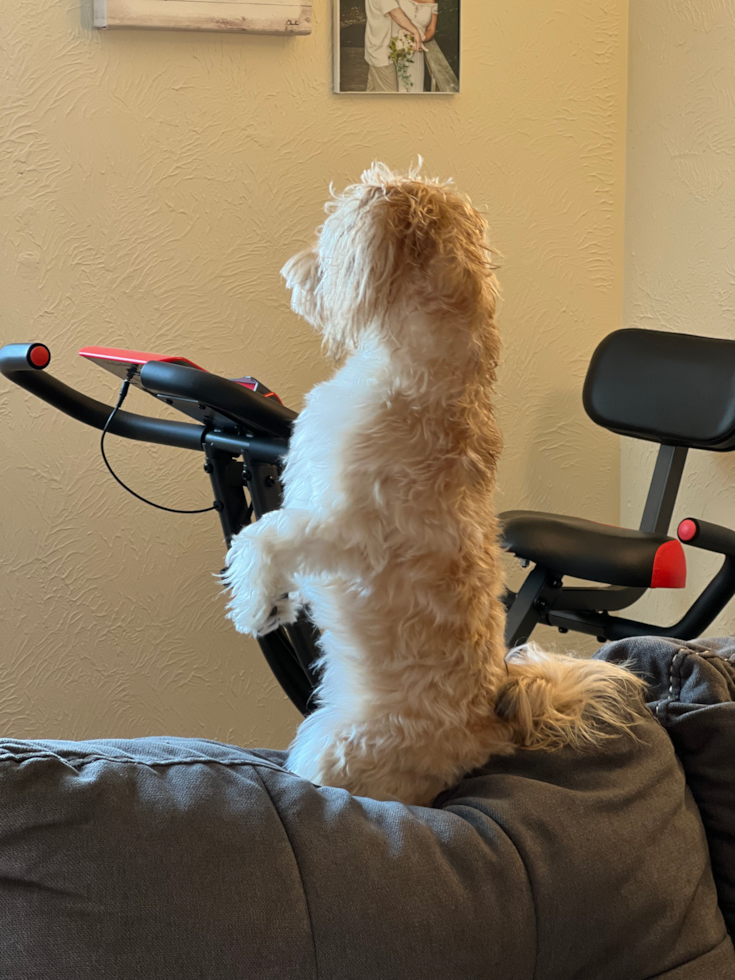
Morkies tend to be affectionate, lively little dogs that form very strong bonds with their people.
The Maltese brings centuries of companion history, while the Yorkie adds confidence and alertness. This can create a tiny dog that loves being close but still wants a say in what happens around the home.
Many Morkies enjoy lap time, following family members, sleeping close by, and participating in ordinary household routines. Their small bodies make constant proximity easy, which can strengthen the companion relationship even further.
Morkie Intelligence and Training
Morkies are intelligent, but their training style can carry some terrier independence.
The Yorkie side may add persistence and a willingness to test whether a rule truly applies every time. The Maltese is also clever and has spent centuries learning how to get what it wants from people.
Positive reinforcement works especially well because harsh correction can make a small sensitive dog less confident without teaching the desired behavior clearly.
Short, consistent sessions tend to work better than repetitive drills. Training should include practical skills such as recall, handling, quiet behavior, comfortable alone time, and polite greetings rather than focusing only on cute tricks.
Morkie Energy Level
Morkies usually have low to moderate exercise needs, but they can be surprisingly lively inside the home.
The Maltese can get much of its activity through short walks and indoor play, while the Yorkie adds more terrier energy and curiosity. A Morkie may therefore bounce around enthusiastically for a period and then settle close to its person.
Daily walks still matter. They provide exercise, social exposure, sniffing opportunities, and a change of scenery that indoor play cannot fully replace.
The tiny size means a normal neighborhood walk can be a meaningful outing without needing miles of strenuous exercise.
Morkie Affection and Attachment
Close attachment is one of the strongest Morkie tendencies.
Both breeds behind the cross bond deeply with people, but Maltese history places companionship at the center of the breed's identity. A Morkie may strongly prefer being near one or two familiar people and can build a particularly intimate relationship with them.
This closeness is wonderful for someone who wants a constant companion. It also makes independence training important so the dog can rest comfortably when its favorite person is unavailable.
A healthy bond should include both closeness and confidence during ordinary periods alone.
Morkies With Children
Morkies can enjoy children, but physical fragility is the main concern. A dog weighing five or six pounds can be injured through rough handling or an accidental fall. Young children may not yet have the coordination needed to handle such a small body safely even when their intentions are gentle.
Older children who understand how to sit calmly and allow the dog to approach can form wonderful relationships with a Morkie.
For families with toddlers or very physical young children, the sturdier Yorkie Chon may offer an easier fit.
Morkies With Other Dogs and Pets
Morkies can live happily with other dogs, but size matching deserves attention. A confident Morkie may have little understanding of how small it actually is. Yorkie terrier boldness can inspire a tiny dog to interact fearlessly with much larger dogs, which makes supervision important.
Cats can also fit comfortably into the household. A Morkie may chase a moving cat or small animal through terrier curiosity, though the Maltese side usually shifts the overall dog toward companion life.
Very small pets such as rodents still deserve secure separation because Yorkie ancestry includes real vermin-hunting history.
Morkie Barking and Watchfulness
The Morkie may have the stronger barking tendency in this comparison. Yorkies are alert little terriers and natural watchdogs, while Maltese can also announce unusual sounds or visitors. Combined, those traits can create a dog that has plenty to say about hallway noises, deliveries, unfamiliar people, or activity outside.
The small size makes barking easy to dismiss during puppyhood, but habits practiced daily can grow very strong.
Teaching a quiet response early is especially useful in apartments or homes where outside sounds happen frequently.
Yorkie Chon Temperament
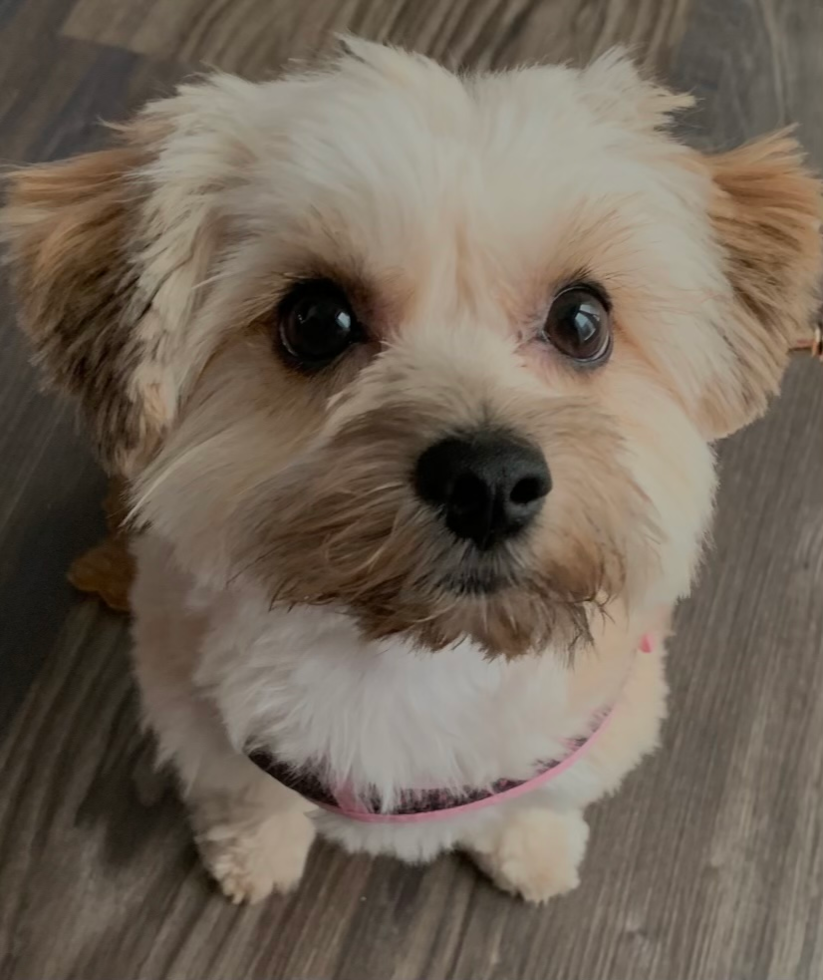
Yorkie Chons tend to be cheerful, affectionate dogs with a more outwardly social personality.
The Yorkie still contributes confidence, alertness, and terrier spirit, but the Bichon Frise adds one of the companion world's most openly friendly temperaments. Bichons have a long history of entertaining people and tend to approach social interaction with enthusiasm.
This can create a dog that enjoys its family deeply without focusing quite so intensely on one person. Visitors, children, other dogs, and new social situations may all attract genuine interest.
Yorkie Chon Intelligence and Training
Yorkie Chons usually have strong training potential. The Yorkie contributes terrier intelligence and persistence, while the Bichon adds a history of learning tricks and performing for people. Bichons gained success as street and circus performers precisely because they were bright, agile, and responsive to reward-based training.
This can soften some of the Yorkie's more independent tendencies. A Yorkie Chon may still have opinions, but interactive training can hold its attention very well.
House training deserves patience. Bichons have a reputation for requiring extra consistency in this area, and small dogs in general can be easier to misread because their physical signals are subtle.
Yorkie Chon Energy Level
Yorkie Chons generally have moderate activity needs. Bichons are known for calm periods interrupted by energetic bursts, while Yorkies bring a more consistently alert terrier personality. The combination can create a dog that enjoys walks and games without needing a demanding exercise schedule.
Play may feel particularly cheerful and social. Short zooming sessions, toy games, tricks, and interactive play can satisfy much of the dog's activity appetite.
Regular walks still add important mental stimulation and help the dog use its curiosity outside the home.
Yorkie Chon Affection and Sociability
The Yorkie Chon's affection can feel broader than the Morkie's. Bichon Frises have a famously social outlook and tend to enjoy people well beyond the immediate household. When that trait comes through, the Yorkie Chon can be deeply attached to family while also greeting visitors or familiar neighbors with enthusiasm.
The Yorkie side adds loyalty and enough alertness to prevent the dog from feeling indiscriminately passive.
This balance can work beautifully for households that want a cuddly companion but also enjoy visitors, outings, and a slightly more social dog.
Yorkie Chons With Children
The Yorkie Chon generally has the stronger physical profile for family life with children.
Bichons are sturdier than Maltese and Yorkies despite their small size. That extra body substance can make a Yorkie Chon less fragile during ordinary family activity.
Supervision is still important because the dog is small. Children should never pull hair, pick the dog up incorrectly, or disturb it while eating or sleeping.
The advantage is relative rather than absolute. Compared with a five-pound Morkie, a 12-pound Yorkie Chon simply has more physical margin for normal household life.
Yorkie Chons With Other Dogs and Pets
Yorkie Chons often have excellent potential with other dogs because the Bichon brings broad canine sociability into the shared Yorkie foundation.
The Yorkie side may still add confidence and the occasional desire to act bigger than reality. The Bichon can shift the social balance toward playful interaction rather than constant territorial posturing.
Cats can also live successfully with the cross. Terrier curiosity may inspire chasing, but the Bichon side does not add further hunting instinct.
As with the Morkie, secure separation is sensible around rodents and very small pets because the Yorkie side still comes from vermin-hunting ancestry.
Yorkie Chon Barking and Watchfulness
Yorkie Chons can be alert barkers, but the Bichon may soften the Yorkie's watchdog edge somewhat.
Bichons notice activity and can alert their families, yet their general social attitude leans strongly toward friendliness. A visitor may trigger barking at the door followed quickly by enthusiastic social interest.
The Yorkie side can still make hallway sounds or outdoor movement important enough to announce.
Consistent quiet training is useful, particularly in apartment settings, but excessive barking is not an unavoidable feature of the cross.
Morkie vs Yorkie Chon Temperament Comparison: What Is the Real Difference?
The strongest temperament distinction is intimate attachment versus broader sociability.
The Morkie generally leans toward a particularly close companion relationship. Maltese influence adds a breed built around human proximity, while Yorkie influence adds loyalty and alertness. The result can be a tiny dog that wants to know exactly where its favorite person is and prefers to share as much of the day as possible.
The Yorkie Chon generally brings more Bichon-style social openness. It can be equally loving at home while showing greater enthusiasm for visitors, other dogs, children, tricks, and social interaction beyond one primary person.
Both still carry Yorkie personality. Either can bark, act fearless, investigate movement, and insist on having an opinion about household events.
The practical difference is where the softer half of the cross pulls that terrier temperament. The Maltese pushes toward a tiny, intimate lap companion, while the Bichon pushes toward a sturdier, cheerful little social performer.
Morkie vs Yorkie Chon: Which One Should You Choose?
The Morkie and Yorkie Chon both suit people who want a small, affectionate companion with low-shedding coat potential and enough personality to keep life interesting. Their shared Yorkie heritage means either can bring terrier confidence and alertness into the home.
The deciding factors are usually body size, coat texture, social style, child compatibility, and how closely you want the dog attached to everyday personal routines.
Choose a Morkie if You Want a Very Small, Closely Bonded Companion
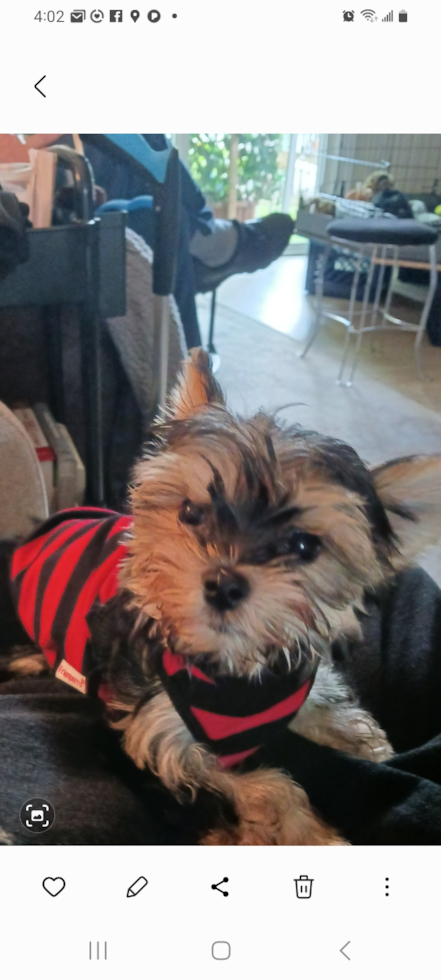
A Morkie puppy may suit you better if you genuinely want a toy-sized dog and enjoy the intimacy of a companion that likes staying physically close.
The Maltese influence pushes the cross toward a tiny body, silky coat, and strong companion orientation. For someone who wants a portable lapdog with enough Yorkie confidence to keep the personality lively, that combination can be highly appealing.
The Morkie's smaller size also makes travel and compact living extremely easy. The tradeoff is greater physical fragility, particularly in busy homes with very young children or large dogs.
Barking and attachment can also need deliberate training. A tiny dog still needs boundaries, independence skills, and the confidence to cope when every family member cannot provide attention.
Choose a Yorkie Chon if You Want a Sturdier, More Social Small Dog
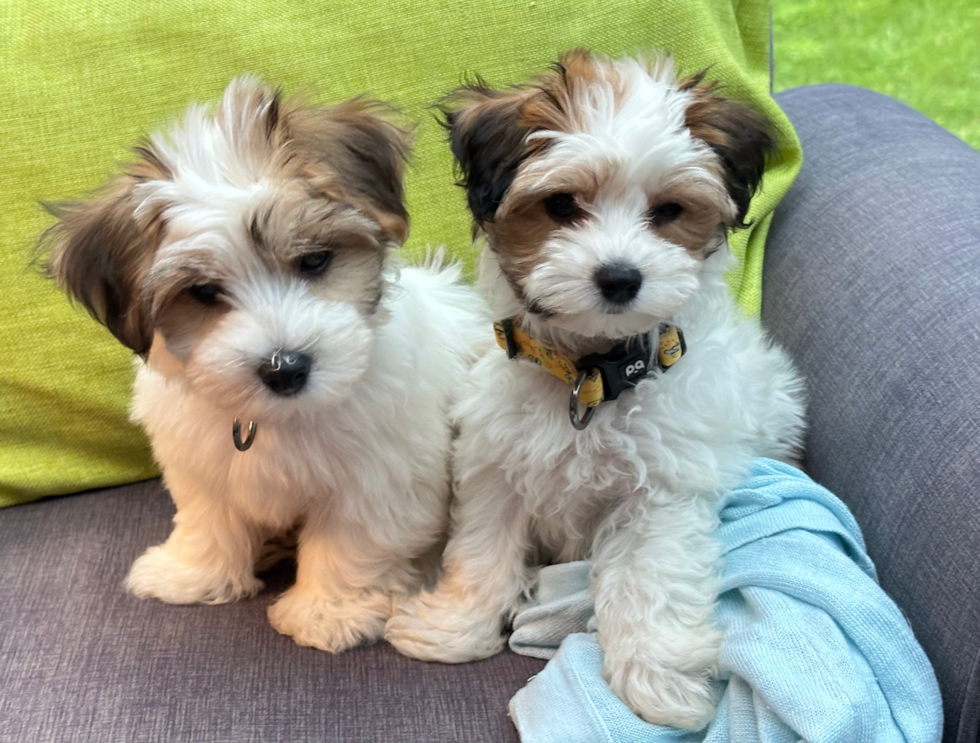
A Yorkie Chon puppy may suit you better if you want a small companion but prefer more physical substance and a broadly cheerful social personality.
The Bichon Frise contributes greater size, sturdiness, and a long history of friendly interaction with people. It also adds strong potential for playful training, tricks, and a more outgoing response to social situations.
The Yorkie keeps plenty of personality in the mix. The finished dog can still be alert, confident, and entertaining rather than turning into a passive lapdog.
The main tradeoff is coat care. Dense Bichon-influenced waves or curls can require serious brushing and regular professional grooming if the coat is kept fluffy.
Which Is Bigger: Morkie or Yorkie Chon?
The Yorkie Chon is usually bigger.
Morkies commonly fall somewhere around four to ten pounds because both the Maltese and Yorkshire Terrier are tiny breeds. Yorkie Chons commonly sit around seven to fifteen pounds because the Bichon Frise contributes a larger 12-to-18-pound body.
Height differs too. A Morkie may stand only six to ten inches, while many Yorkie Chons sit closer to nine to twelve inches.
The difference can feel substantial in daily life. A 13-pound Yorkie Chon is still a small dog, but it offers considerably more physical presence than a five-pound Morkie.
Which Is Calmer: Morkie or Yorkie Chon?
Neither cross is naturally hyperactive, but their activity styles differ.
Morkies tend to have short lively periods mixed with plenty of close companion time. The Maltese side generally asks for modest exercise, while the Yorkie keeps the dog curious and alert.
Yorkie Chons can be slightly more playful and socially active because the Bichon contributes cheerful bursts of energy. They may seek games, tricks, and interaction a little more frequently.
For a household that wants the stronger lapdog direction, the Morkie may have the edge. For someone who enjoys a little more playful social activity, the Yorkie Chon may fit better.
Which Is More Energetic?
The Yorkie Chon may have a slight advantage for playful activity, though the difference is not dramatic.
Bichons are surprisingly quick and playful dogs despite their companion history. They can enjoy agility, obedience, games, and energetic bursts around the home.
Morkies have plenty of personality and can play enthusiastically, but the Maltese side generally keeps physical exercise requirements modest.
Both can get much of their exercise through daily walks and interactive play rather than long-distance activity.
Which Is Easier to Train?
The Yorkie Chon may have a slight advantage for interactive training.
Bichons have a strong performance history and are known for enjoying tricks and reward-based learning. That can pair nicely with the Yorkie's intelligence and confidence.
Morkies are smart too, but the shared Maltese and Yorkie tendency toward independence can make consistency especially important. A Morkie may understand a rule while also checking whether ignoring it produces an equally interesting result.
Both respond best to patient, positive methods rather than harsh correction.
Which Is Better for First-Time Dog Owners?
Both can suit first-time dog owners, but the Yorkie Chon may offer a slightly more forgiving physical profile.
Its sturdier body can make everyday handling less nerve-racking, and Bichon sociability can create an adaptable companion for a variety of households. Training still needs consistency, particularly around housebreaking and barking.
A Morkie can also make an excellent first dog for someone who specifically wants a tiny companion and understands the extra care required around a very small body.
Customer reviews that discuss adult barking, grooming, house training, and daily routines can help a first-time owner decide which set of challenges sounds easier to manage.
Which Is Better With Young Children?
The Yorkie Chon usually has the advantage with young children because it tends to be sturdier.
A Morkie can weigh only a few pounds, which makes accidental injury a genuine concern. Even a gentle toddler can fall, grab, or pick up a dog incorrectly.
Yorkie Chons are still small and need supervision, but the Bichon's stronger body gives the cross more physical resilience.
Families with older, calm children can do very well with either dog. For very young or highly active children, the Yorkie Chon generally offers the easier physical match.
Which Is Better With Older Children?
Both can be excellent with older children who understand how to handle small dogs respectfully.
A Morkie may form an especially close relationship with a gentle child who enjoys cuddling, quiet companionship, and short play sessions.
A Yorkie Chon may offer more options for interactive games, tricks, and energetic indoor play because of the Bichon side's performance-oriented personality.
The better fit depends on whether the child wants a tiny close companion or a sturdier little playmate.
Which Is Better With Other Dogs?
The Yorkie Chon may have a slight advantage for broad canine sociability.
Bichons generally get along well with other dogs, which can soften some of the Yorkie's bold terrier edge. A Yorkie Chon may therefore enjoy canine play while still carrying plenty of confidence.
Morkies can live very happily with other dogs too, but their tiny size needs more consideration. A friendly larger dog can accidentally hurt a very small Morkie during ordinary play.
The best household match considers both social style and physical size rather than friendliness alone.
Which Is Better With Cats?
Both can share a home successfully with cats.
The shared Yorkshire Terrier ancestry means either dog may notice quick movement or attempt a short chase. Neither the Maltese nor Bichon adds a stronger hunting background, which keeps the comparison relatively close.
A Yorkie Chon's slightly sturdier body may help around a confident cat that likes physical interaction. A tiny Morkie can also coexist beautifully when the cat respects the dog's space.
Calm introductions and clear escape areas for the cat support peaceful relationships with either cross.
Which Has More Terrier Personality?
Both can show plenty of Yorkie personality because the Yorkshire Terrier is shared.
The Morkie may sometimes feel more terrier-like simply because the Maltese adds a quieter companion foundation. Yorkie boldness, barking, persistence, or watchfulness can therefore stand out clearly against the softer Maltese side.
The Yorkie Chon can show the same traits, but the Bichon's cheerful sociability may dilute the overall terrier impression. The dog may act bold and alert while also showing strong enthusiasm for strangers and social play.
Neither should be expected to behave like a pure companion breed with no terrier instincts at all.
Which Has More Prey or Chasing Interest?
The comparison is close because both share Yorkshire Terrier ancestry.
Yorkies were developed from working terriers that hunted vermin, so either cross may show interest in mice, insects, birds, or quick movement.
The Maltese does not add hunting history, and the Bichon Frise does not add meaningful prey-oriented work either. This leaves the Yorkie as the main source of that behavior in both crosses.
Households with pet rodents or other very small animals should use secure separation regardless of which dog they choose.
Which Is More Likely to Bark?
The Morkie may have the slight advantage for barking, especially when strong Yorkie alertness combines with a close attachment to the household.
Maltese can also be vocal little watchdogs, so the two sides can reinforce an interest in announcing visitors and unfamiliar sounds.
Yorkie Chons can bark too, but the Bichon's broad social temperament may shift some alert responses toward quicker friendliness.
Training matters enormously. Small dogs that practice barking at every hallway sound can turn the behavior into a deeply established routine regardless of cross.
Which Is More Social With Strangers?
The Yorkie Chon generally has the stronger tendency toward broad stranger sociability.
Bichon Frises are famous for viewing new people as potential friends. Their history as performers also favored dogs comfortable engaging with unfamiliar audiences and handlers.
Morkies can be very friendly, but many may focus more strongly on familiar people and show a slightly more selective social style.
For a household with frequent visitors, travel, or regular social outings, the Yorkie Chon may fit especially naturally.
Which Is More Affectionate?
Both are highly affectionate, but their style can differ.
The Morkie may lean toward more intimate one-on-one attachment. Maltese influence can create a dog that wants to sit close, sleep close, follow a favorite person, and spend large parts of the day within easy touching distance.
The Yorkie Chon may spread its affection more broadly across family members, visitors, and social activity. Bichon influence can make the dog just as loving without always concentrating that attention on one person.
The choice is less about how much affection each gives and more about whether you prefer intimacy or broad sociability.
Which Sheds Less: Morkie or Yorkie Chon?
Both generally shed very little.
The Morkie has low-shedding coat traits from both the Maltese and Yorkshire Terrier. Its hair is usually finer and silkier, which can make loose strands less noticeable around the home.
The Yorkie Chon also has strong low-shedding potential because Yorkies shed little and the Bichon's curls trap loose hair inside the coat.
The bigger difference is grooming texture rather than visible shedding. Morkie coats tend to tangle through fine silky hair, while Yorkie Chon coats can mat through density and curl.
Which Needs More Grooming?
Both need regular grooming, but the Yorkie Chon may require more intensive coat work when Bichon texture is strong.
A dense wavy or curly Yorkie Chon coat can mat quickly close to the skin and may need frequent brushing, combing, and professional clipping.
Morkies also require consistent maintenance, especially when their fine silky hair is kept long. Shorter trims can make either dog much easier to manage.
Neither is an ideal match for someone who wants a long fluffy coat with minimal home grooming.
Which Is Better for Allergies?
Both have strong low-shedding profiles, but neither can be guaranteed suitable for someone with dog allergies.
The Maltese, Yorkshire Terrier, and Bichon Frise all release relatively little visible hair, which can reduce the amount of loose coat circulating around the home.
Allergens also come from saliva and dander, so hair level alone cannot predict an individual's reaction.
Direct personal tolerance matters much more than choosing one cross because it is advertised as hypoallergenic.
Which Is Better for Apartment Living?
Both are excellent candidates for apartment living because of their small size.
The Morkie takes up almost no physical space and needs only modest exercise. Barking can be the larger apartment challenge, particularly when hallway noises or neighbors trigger a Yorkie-style alert response.
The Yorkie Chon is slightly larger but still easily fits small homes. Its Bichon sociability and playful bursts can work very well in city life as long as it gets regular walks and interactive play.
For either dog, quiet training matters more than square footage.
Which Is Better for Seniors?
Both can suit seniors very well, but they offer slightly different advantages.
The Morkie may appeal to someone who wants an exceptionally light, portable companion. Its exercise needs are modest, and the close companion style can fit beautifully into a quieter household.
The Yorkie Chon may appeal to someone who wants more physical sturdiness and a broadly social personality. It is still easy to handle while offering a little more body for walks and daily activity.
Grooming is a meaningful commitment with either cross, so professional shorter trims can make ownership easier.
Which Is Better for a Quieter Household?
The Morkie may have a slight advantage for someone who wants a strongly companion-focused lifestyle, especially when barking is trained carefully.
The Maltese side asks for relatively little physical exercise and often enjoys spending large amounts of time close to familiar people.
Yorkie Chons can settle nicely too, but the Bichon adds more interest in play, social interaction, and entertaining activity.
The difference is modest. Both are small companion dogs rather than demanding athletic breeds.
Which Is More Physically Sturdy?
The Yorkie Chon has the clear advantage for physical sturdiness.
Bichon Frises commonly weigh 12 to 18 pounds and have compact, resilient bodies. That influence gives the Yorkie Chon more substance than a cross built from two breeds weighing around seven pounds or less.
Morkies can be healthy, lively dogs, but their extremely small bodies require more care around falls, rough play, young children, and large dogs.
This is one of the most practical differences for families deciding between the two.
Morkie vs Yorkie Chon: The Final Comparison
Choosing between a Morkie vs Yorkie Chon is easier once you recognize how much Yorkshire Terrier personality they share. Both can be bold, alert, affectionate, intelligent, low shedding, and far more confident than their small bodies suggest.
The meaningful difference comes from the other companion breed.
The Morkie adds the Maltese, one of the classic tiny companion dogs of the Mediterranean world. Maltese influence tends to push the cross toward a smaller body, silkier coat, gentler physical presence, and a particularly intimate attachment style. The Morkie can feel like a true toy companion with a streak of terrier confidence running underneath.
The Yorkie Chon adds the Bichon Frise, a sturdier Mediterranean companion with a long history of social charm and performance. Bichon influence can add more body substance, stronger playful sociability, greater enthusiasm for interactive training, and a plush wavy or curly coat.
That physical difference matters. A Morkie may weigh only a few pounds and needs careful handling around young children or large dogs. A Yorkie Chon can still be compact enough for apartment living while offering more resilience for ordinary family activity.
Their coats also ask for different kinds of work. Morkie hair is commonly fine and silky, so tangles can form easily when the coat is long. Yorkie Chon hair may be denser, fluffier, and curlier, which can create stronger matting potential even though visible shedding is very low.
Temperament may make the final decision easier. The Morkie generally leans toward a smaller emotional circle, with particularly strong attachment to familiar people. The Yorkie Chon may offer a broader social personality, with Bichon influence encouraging interest in visitors, children, other dogs, and playful training.
If you want a very small, silky-coated companion that forms an especially close bond and brings plenty of Yorkie attitude in a tiny package, the Morkie may fit you better.
If you want a sturdier small dog with cheerful sociability, a plush teddy bear coat, strong training potential, and a little more physical resilience, the Yorkie Chon may make more sense.
Customer reviews from people who have lived with either cross into adulthood can add useful perspective. Comments about barking, house training, grooming, child compatibility, adult size, and how closely the dog follows family members can give you a realistic picture of life beyond the puppy stage.
The choice is not between a quiet lapdog and an active terrier. Both have elements of each. The real choice is whether you want the Yorkie's terrier spark paired with Maltese intimacy or Bichon sociability.
Frequently Asked Questions
What is the main difference between a Morkie and Yorkie Chon? Both share Yorkshire Terrier ancestry, but the Morkie also has Maltese ancestry while the Yorkie Chon adds the Bichon Frise. That creates a useful difference in size, coat, and social style. Morkies are generally smaller, finer-boned, and more likely to have silky straight or softly wavy hair. Yorkie Chons usually have more physical substance, stronger potential for a fluffy or curly coat, and a broader, more playful social personality.
Which is bigger, a Morkie or Yorkie Chon? The Yorkie Chon is usually bigger. Many Morkies fall around four to ten pounds, while Yorkie Chons commonly sit around seven to fifteen pounds. That difference reflects the Bichon Frise's larger body. Bichons commonly weigh 12 to 18 pounds, while Maltese and Yorkies both sit around seven pounds or less.
Which is calmer, a Morkie or Yorkie Chon? The Morkie may have a slight advantage for a quieter companion lifestyle because the Maltese usually needs modest exercise and strongly values close human company. Yorkie influence still adds alertness and lively bursts, so the cross should not be viewed as inactive. Yorkie Chons may show a little more playful energy through the Bichon side. They can settle nicely indoors, but games, tricks, short walks, and social interaction may play a larger role in the daily routine.
Which is easier to train, a Morkie or Yorkie Chon? Both are intelligent, but the Yorkie Chon may have a slight advantage for interactive training because Bichons have a strong history as trick dogs and performers. Their cheerful interest in people can pair nicely with Yorkie intelligence. Morkies learn well too, though the Maltese and Yorkie can both contribute an independent streak. Short, positive sessions and consistent rules work much better than pressure or repetitive drills.
Which sheds less, a Morkie or Yorkie Chon? Both generally shed very little. The Maltese, Yorkshire Terrier, and Bichon Frise all have coats known for low visible shedding. The more important difference is how the coat needs to be maintained. Morkies tend toward fine silky hair that tangles, while Yorkie Chons may grow denser waves or curls that trap loose strands and form mats.
Which needs more grooming, a Morkie or Yorkie Chon? Both need regular grooming, but the Yorkie Chon may have the more demanding coat when strong Bichon texture comes through. Dense waves and curls can mat quickly and need thorough combing. A long-haired Morkie also needs frequent brushing because fine silky hair tangles easily. Short teddy bear trims can make either cross considerably easier to care for.
Is a Morkie or Yorkie Chon better with children? The Yorkie Chon generally has the advantage with younger children because it tends to have a sturdier body. A Morkie may weigh only five or six pounds, which increases the risk of accidental injury during rough handling or active play. Older children who understand how to handle tiny dogs can do very well with either. The Morkie may offer closer lap companionship, while the Yorkie Chon may enjoy more interactive play.
Which barks more, a Morkie or Yorkie Chon? The Morkie may have a slightly stronger barking tendency because Yorkie alertness can combine with another very people-focused small companion breed. Hallway noises, visitors, or outside movement may trigger quick announcements. Yorkie Chons can also be vocal, but Bichon sociability may shift some alert behavior toward friendliness once the dog understands what is happening. Early quiet training is valuable with both.
Is a Morkie or Yorkie Chon better for apartment living? Both can make excellent apartment dogs because they need little physical space and moderate amounts of exercise. Daily walks and interactive play are usually enough to support a healthy routine. Barking is the larger apartment concern. The Morkie is smaller and especially easy to fit into compact living, while the Yorkie Chon may offer a little more physical sturdiness for busy urban life.
Should I choose a Morkie or Yorkie Chon? Choose a Morkie if you want a very small, low-shedding companion with silky coat potential, close personal attachment, modest exercise needs, and plenty of Yorkie confidence. Choose a Yorkie Chon if you want a sturdier small dog with a fluffier coat, broader sociability, playful training potential, and more physical resilience. Both bring Yorkshire Terrier personality, but Maltese intimacy and Bichon sociability create two noticeably different small-dog experiences.