


Published Wednesday, October 21, 2026 by Pilesgrove Pups
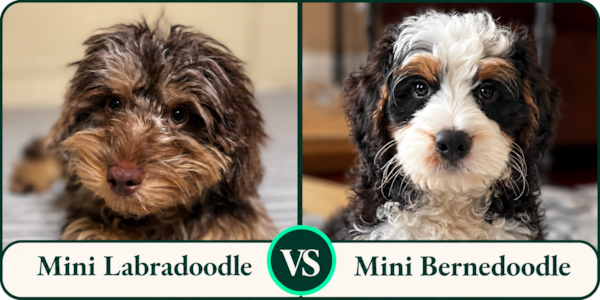
The Mini Labradoodle vs Mini Bernedoodle comparison puts two intelligent, affectionate Poodle mixes side by side, but their fluffy coats can hide a substantial lifestyle difference. Both can be wonderful family companions. Both can learn quickly, enjoy outdoor activities, bond closely with people, and grow the soft wavy or curly coats associated with modern Doodles.
The shared Poodle explains many of those similarities. The difference comes from the Labrador Retriever behind the Mini Labradoodle and the Bernese Mountain Dog behind the Mini Bernedoodle. One adds a high-spirited sporting dog with deep water-retrieving roots. The other adds a large Swiss farm and draft dog known for strength, affection, and a steadier working style.
Labrador Retrievers developed from Newfoundland water dogs that worked alongside fishermen before the modern breed took shape as an exceptional hunting retriever. Their history rewarded stamina, swimming ability, retrieving enthusiasm, food motivation, confidence, and a willingness to throw themselves into work with people.
Bernese Mountain Dogs came from Swiss farm life. They pulled carts, worked around livestock, watched property, and served as close companions to farming families. Their jobs demanded real strength and working ability, but not the same repeated sporting intensity seen in Labrador work.
That contrast gives the two crosses different rhythms. The Mini Labradoodle generally leans toward a livelier, more physical style with strong retrieving potential, water enthusiasm, and plenty of interest in activity. The Mini Bernedoodle usually offers more body substance and a steadier pace, with enough ability for hiking and play but less pressure to keep the day moving.
Neither is simply the smart one, the friendly one, or the family dog. Both can score highly in all three areas. The useful question is whether you prefer the Labrador Retriever's robust sporting enthusiasm or the Bernese Mountain Dog's substantial, calmer farm-dog influence added to the shared Poodle intelligence.
Table of Contents
- Mini Labradoodle vs Mini Bernedoodle at a Glance
- Mini Labradoodle and Mini Bernedoodle Overview and History
- Mini Labradoodle vs Mini Bernedoodle Appearance
- Mini Labradoodle vs Mini Bernedoodle Temperament
- Mini Labradoodle vs Mini Bernedoodle: Which One Should You Choose?
- Choose a Mini Labradoodle if You Want an Active Retriever Personality
- Choose a Mini Bernedoodle if You Want a Steadier Family Companion
- Which Is Bigger: Mini Labradoodle or Mini Bernedoodle?
- Which Is Calmer: Mini Labradoodle or Mini Bernedoodle?
- Which Is More Energetic?
- Which Needs More Mental Stimulation?
- Which Is Easier to Train?
- Which Is Better for First-Time Dog Owners?
- Which Is Better With Young Children?
- Which Is Better With Older Children?
- Which Is Better With Other Dogs?
- Which Is Better With Cats?
- Which Likes Fetch More?
- Which Is Better for Swimming?
- Which Is More Food Motivated?
- Which Is More Affectionate?
- Which Is More Social With Strangers?
- Which Is More Likely to Bark?
- Which Sheds Less: Mini Labradoodle or Mini Bernedoodle?
- Which Needs More Grooming?
- Which Is Better for Allergies?
- Which Is Better for Apartment Living?
- Which Is Better for Seniors?
- Which Is Better for an Active Lifestyle?
- Which Handles Cold Weather Better?
- Which Handles Warm Weather Better?
- Which Is More Predictable in Adult Size?
- Mini Labradoodle vs Mini Bernedoodle: The Final Comparison
Mini Labradoodle vs Mini Bernedoodle at a Glance
| Trait | Mini Labradoodle | Mini Bernedoodle |
| Parent Breeds | Labrador Retriever × Poodle | Bernese Mountain Dog × Poodle |
| General size | Small-medium | Small-medium to medium |
| Common adult weight | Often about 15–30 pounds, with wider variation | Often about 20–50 pounds, generation-dependent |
| Common adult height | Often around 14–17 inches, with variation | Roughly 13–22 inches |
| Build | Athletic, sturdy, compact | Broad, substantial, heavier-boned |
| Coat | Straight, wavy, or curly | Straight, wavy, or curly |
| Shedding | Low to moderate, coat-dependent | Low to moderate, coat-dependent |
| Grooming | Moderate to high | Moderate to high |
| Common colors | Black, chocolate, cream, apricot, red, caramel and more | Black, white and rust tricolor, brown, sable and more |
| Energy | Moderate to high | Moderate |
| Mental stimulation | Moderate to high | Moderate to high |
| Trainability | Very high | High |
| Retrieving interest | Frequently strong | Individual-dependent |
| Water interest | Frequently strong | Individual-dependent |
| Food motivation | Frequently high | Moderate to high |
| Social style | Outgoing, lively, affectionate, confident | Gentle, affectionate, steady, family-focused |
| Physical play | Often high | Moderate |
| Best fit | Active families wanting a sporty, interactive Doodle | Families wanting a steadier, more substantial Doodle |
These ranges are practical guides rather than official standards for either cross. Mini versions can differ between breeding programs, and generation can influence size, coat, and physical proportions. The Mini Bernedoodle generally has the wider upper size range because the Bernese Mountain Dog is such a large, heavy breed.
Mini Labradoodle and Mini Bernedoodle Overview and History
The Mini Labradoodle and Mini Bernedoodle both combine a highly intelligent Poodle background with a large working breed, yet the work behind those breeds could hardly be more different.
The Labrador Retriever belongs to the Sporting Group. Its history centers on water work, retrieving, and close cooperation with fishermen and hunters. The Bernese Mountain Dog belongs to the Working Group and developed around Swiss farms, where strength, versatility, carting ability, and steady companionship were important.
The Poodle adds another athletic working background to both crosses. Poodles have water-retrieving history and are exceptional learners, so intelligence and trainability are supported strongly in either dog.
The difference lies in how those qualities may show in daily life. The Mini Labradoodle tends to channel more of its ability into physical activity, retrieving, water play, and energetic interaction. The Mini Bernedoodle can enjoy many of the same activities but usually approaches them with a more moderate underlying pace.
Mini Labradoodle History and Background

The Mini Labradoodle combines Labrador Retriever and Poodle ancestry while breeding toward a smaller adult size than the original Labradoodle. Mini Labradoodles can come from different generations, so the name does not refer to one single genetic formula.
Labrador Retriever history starts in Newfoundland, despite the breed's name. Smaller St. John's water dogs worked alongside fishermen and gained a reputation for excellent swimming, retrieving, and willingness to work in cold coastal conditions.
Historical accounts describe these dogs retrieving fish and objects from water and assisting with fishing gear. Dogs later taken to Britain attracted the attention of sportsmen, who refined them into the Labrador Retriever recognized today.
The modern Labrador inherited that intense enthusiasm for retrieving and water. Labs are friendly, outgoing, athletic dogs and have found success in hunting, guide work, detection, search and rescue, assistance work, and many other jobs that require both intelligence and cooperation.
The Poodle complements that history particularly well. It adds another water-retrieving background, fast learning, athletic ability, and the possibility of a coat that releases much less visible hair.
The first well-documented Labradoodle litter was produced in Australia in 1989 during an effort to create a guide dog that might combine Labrador working ability with a lower-shedding Poodle coat. Smaller Labradoodles came later as breeding programs expanded the range of adult sizes.
Mini Labradoodle vs Mini Australian Labradoodle
A Mini Labradoodle is not automatically the same dog as a Mini Australian Labradoodle. The names are sometimes used casually as if they were interchangeable, but they can describe different breeding histories.
A Mini Labradoodle generally refers to a smaller dog built around Labrador Retriever and Poodle ancestry. Australian Labradoodles developed through multigenerational programs that may include additional breeds in their historical background, including spaniel influence in established lines.
That distinction matters when comparing temperament and appearance. This article focuses on the Mini Labradoodle built around Labrador Retriever and Poodle ancestry, so the comparison with the Mini Bernedoodle stays clear and useful.
Mini Bernedoodle History and Background
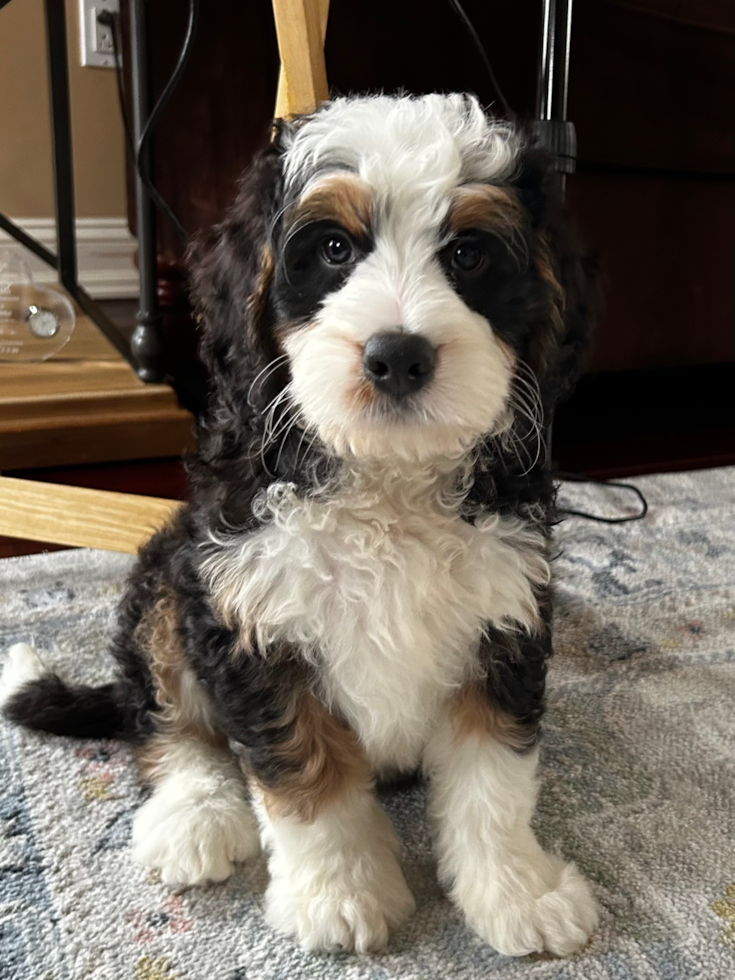
The Mini Bernedoodle combines Bernese Mountain Dog and Poodle ancestry while breeding toward a smaller adult size than the Standard Bernedoodle. Like the Mini Labradoodle, it can appear in several generations.
The Bernese Mountain Dog developed in Switzerland and took its name from the canton of Bern. These dogs were valued on farms for practical work that called for strength, dependability, and the ability to live closely alongside people.
Berners pulled carts, helped around livestock, watched farm property, and served as family companions. Draft work is particularly important to their history because it helps explain the breed's large frame, heavy bone, and steady physical power.
The modern Bernese Mountain Dog is still known for an affectionate, good-natured temperament alongside its working ability. Adults are substantial dogs, with males commonly weighing around 80 to 115 pounds and females around 70 to 95 pounds.
The Poodle reduces the size of the cross and adds quick learning, athletic ability, and greater coat variation. It also adds another people-oriented working breed to a dog that already has a strong tradition of living closely with families.
The Mini Bernedoodle can therefore offer plenty of intelligence and physical ability without usually matching the Labrador side of a Mini Labradoodle for sustained sporting enthusiasm.
Mini Labradoodle vs Mini Bernedoodle Appearance
The Mini Labradoodle and Mini Bernedoodle can share wavy coats, curly coats, floppy ears, dark eyes, facial furnishings, and the rounded teddy bear look that makes Poodle mixes so visually appealing. Their underlying bodies tell a much clearer story.
The Labrador Retriever is an athletic sporting dog with a strong, compact body designed for efficient swimming and retrieving. The Bernese Mountain Dog is a much larger working dog with heavier bone, a broader frame, and the physical power needed for draft work.
Poodle influence can reduce and refine both structures, but the basic contrast still appears frequently. Mini Labradoodles tend to feel athletic and compact, while Mini Bernedoodles usually carry more body mass and physical substance.
Mini Labradoodle Appearance
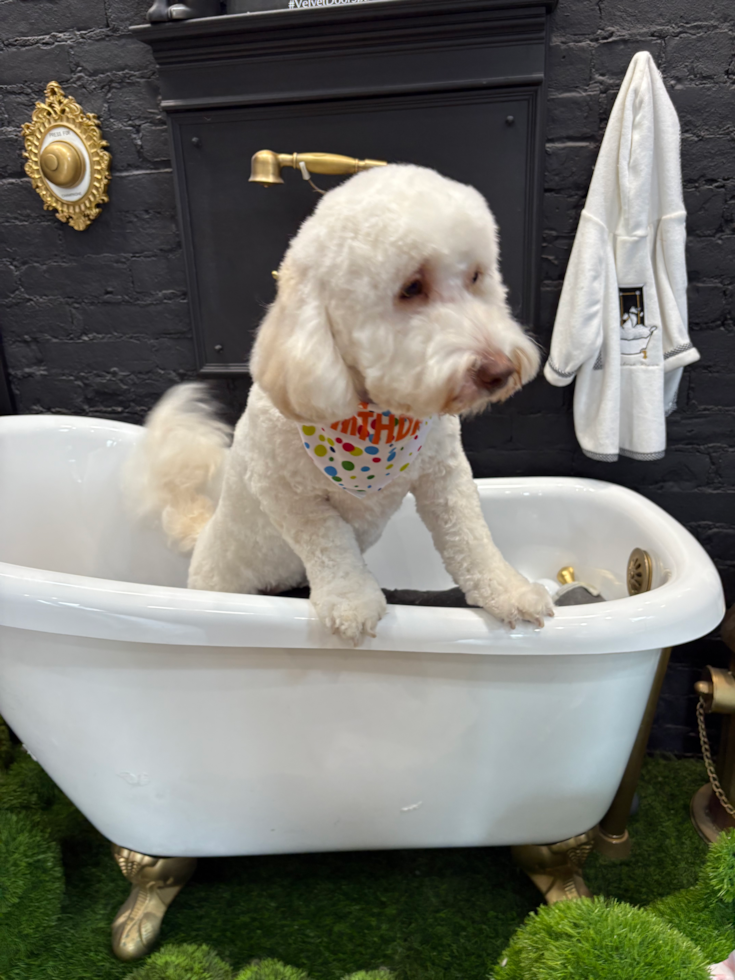
Mini Labradoodles commonly sit somewhere around 15 to 30 pounds, although broader ranges are used by different breeding programs. Height frequently falls in the mid-teens.
The Labrador Retriever adds muscle and sturdy proportions, while the smaller Poodle influence can give the dog a lighter outline and more moderate dimensions.
The finished dog frequently feels solid without looking heavy. Even a 20-pound Mini Labradoodle can have enough muscle and physical confidence to participate in serious outdoor activity.
Mini Labradoodle Coat Type and Texture
Mini Labradoodle coats can be straight, wavy, or curly.
Labrador Retrievers have short, dense, weather-resistant double coats. Poodles have dense curly coats, so the cross can show a broad range between those two textures.
Loose waves are very common in the Doodle look. They create a soft shaggy coat with movement around the body while still showing some Poodle influence through facial furnishings.
Curlier coats usually hold more loose hair inside the coat. Straighter Labrador-influenced coats can release more visible hair and may feel less fluffy overall.
Mini Labradoodle Colors and Markings
Mini Labradoodles can appear in a broad range of colors.
The Labrador contributes black, chocolate, and yellow, while Poodle ancestry expands the possibilities into cream, apricot, red, caramel, brown, and other shades.
Black and chocolate Mini Labradoodles can look quite different from the warm teddy bear image many people associate with Doodles. Cream, apricot, and red examples can look much closer to other Poodle crosses.
Some coats also lighten with age, especially when fading genes from the Poodle side are present.
Mini Labradoodle Eyes and Facial Features
Mini Labradoodles generally have brown or dark brown eyes, while brown-coated dogs can show lighter brown or hazel-like shades.
Labrador influence may create a broader head and muzzle. Stronger Poodle traits can produce a narrower face and more refined outline.
Both breeds have hanging ears, so Mini Labradoodles typically have soft floppy ears with varying amounts of coat.
Facial furnishings can create a rounded teddy bear expression that looks very different from the clean, short-coated Labrador face despite the structure underneath.
Mini Labradoodle Build and Size
Mini Labradoodles usually have a sturdy athletic build.
The Labrador Retriever is a powerful swimmer with strong hindquarters, a broad chest, and the physical stamina needed for repeated retrieving. Poodle ancestry reduces the overall size without taking away that athletic foundation.
A Mini Labradoodle can therefore pack plenty of ability into a manageable body. Hiking, swimming, retrieving, brisk walks, and active games can all suit a healthy adult.
The smaller physical package is one of the cross's practical attractions for people who love retriever personality but do not want a full-size Labrador.
Mini Labradoodle Shedding
Mini Labradoodle shedding can range from very low to noticeable.
Labradors have dense double coats and shed much more than their sleek appearance may suggest. Poodles contribute a very different coat that releases little visible hair.
Curlier Mini Labradoodles can leave little hair around the home because loose strands get trapped inside the coat. Straighter dogs can show more obvious shedding.
Hair length does not predict shedding accurately. Short Labrador-like hair can still appear in significant amounts on furniture and clothing.
Mini Labradoodle Grooming Needs
Wavy and curly Mini Labradoodles need regular brushing and combing.
Dense hair can hide mats close to the skin, particularly behind the ears, under the legs, around the collar, and through the tail. Surface brushing alone may leave deeper tangles untouched.
Straighter coats may require more undercoat management and less clipping. Their grooming needs shift toward controlling loose hair rather than maintaining curls.
Professional grooming is common for longer furnished coats, and shorter practical trims can simplify life for dogs that swim or spend a lot of time outdoors.
Mini Bernedoodle Appearance
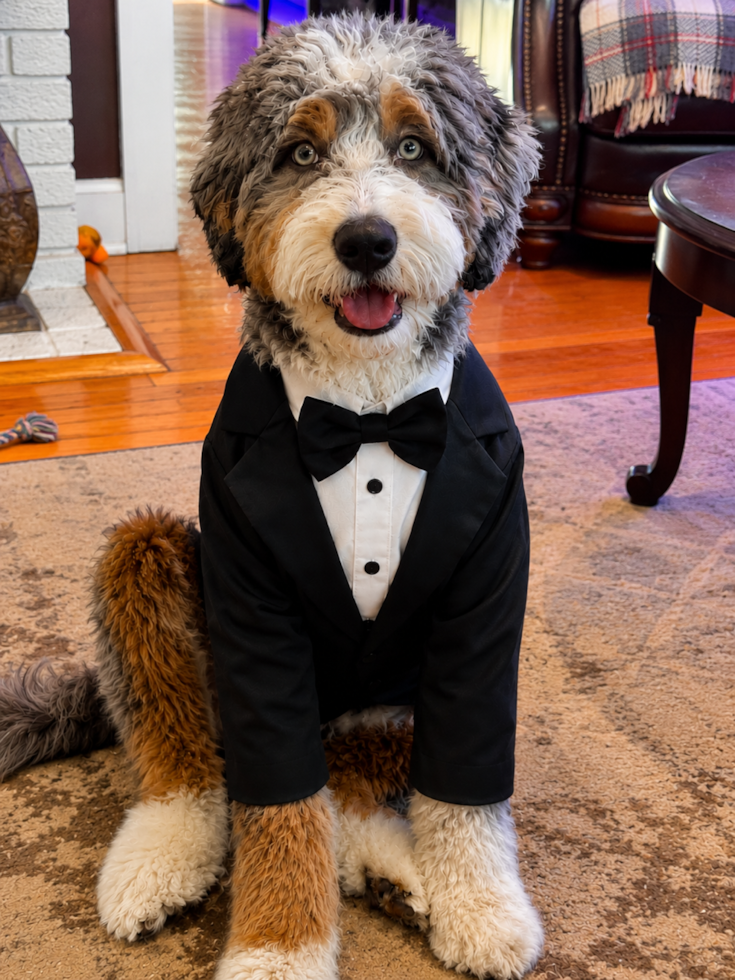
Mini Bernedoodles generally have greater size potential. Many fall somewhere around 20 to 50 pounds, depending on generation and the size framework used by the breeding program.
The Bernese Mountain Dog contributes heavy bone, broad proportions, and considerable body mass. Poodle influence can reduce the adult size substantially, but many Mini Bernedoodles still feel sturdy and substantial.
A Mini Bernedoodle may therefore weigh considerably more than a Mini Labradoodle without standing dramatically taller.
Mini Bernedoodle Coat Type and Texture
Mini Bernedoodle coats can also be straight, wavy, or curly.
Bernese Mountain Dogs have thick, moderately long double coats that may lie straight or slightly wavy. The Poodle adds much tighter curl.
Loose shaggy waves are strongly associated with the cross. They can create a plush teddy bear appearance while still showing some of the Bernese coat's body and density.
Straighter coats may carry more undercoat and release more visible hair. Curlier dogs may shed less around the home but need especially careful mat prevention.
Mini Bernedoodle Colors and Markings
The classic Mini Bernedoodle look is tied closely to the Bernese Mountain Dog's black, white, and rust tricolor pattern.
White facial blazes, dark bodies, white chests, and warm tan points can create a striking miniature interpretation of the Bernese appearance.
Poodle ancestry can broaden the palette. Brown, sable, black and white, phantom, and other combinations may appear depending on the breeding line.
The strong contrast between tricolor Bernedoodles and solid black, chocolate, cream, or apricot Labradoodles makes color one of the easiest visual differences between the crosses.
Mini Bernedoodle Eyes and Facial Features
Mini Bernedoodles generally have brown or dark brown eyes with a soft expression.
The Bernese side can create a broader head and stronger muzzle, while the Poodle may refine the face and add more delicate lines.
Dropped ears frame the face and can collect plenty of soft hair. Rounded grooming around the muzzle and brows adds heavily to the teddy bear effect.
The overall expression frequently looks gentle and substantial rather than especially sharp or alert.
Mini Bernedoodle Build and Size
The Mini Bernedoodle is generally the heavier and broader dog in this comparison.
Bernese Mountain Dogs were built for strength. Their history as draft and farm dogs required a powerful frame rather than the lighter athletic structure of a sporting retriever.
Even after downsizing, Mini Bernedoodles can carry wider chests, heavier bone, and greater overall mass than Mini Labradoodles.
That extra body can feel reassuringly sturdy in family life, but it also affects lifting, travel, leash handling, grooming costs, and the amount of space the dog occupies.
Mini Bernedoodle Shedding
Mini Bernedoodle shedding varies considerably.
Bernese Mountain Dogs have dense double coats and naturally shed. Poodles contribute very low visible shedding, so the finished coat can sit anywhere between those tendencies.
Curlier Mini Bernedoodles may leave very little hair on furniture. Straighter dogs can release much more, especially when substantial undercoat is present.
A low-shedding appearance still does not make the coat easy. Hair caught within waves and curls needs to come out during grooming before tangles tighten.
Mini Bernedoodle Grooming Needs
Mini Bernedoodles need regular coat maintenance, especially when kept fluffy.
The combination of body size and coat density can make grooming time substantial. A 40-pound dog with several inches of wavy hair simply has a lot of coat to brush, wash, dry, and trim.
Problem areas include behind the ears, beneath the legs, around the neck, and through the hindquarters.
Shorter professional trims can reduce daily work considerably while still preserving the soft Doodle appearance many families enjoy.
Mini Labradoodle vs Mini Bernedoodle Appearance Comparison: What Is the Difference?
The strongest physical distinction is compact sporting athleticism versus heavier working-dog substance.
Mini Labradoodles usually carry a lighter, more athletic body. Labrador Retriever ancestry adds muscle and strength, but Labs were designed for efficient movement and swimming rather than draft power.
Mini Bernedoodles usually feel broader and heavier. Bernese ancestry contributes more bone, chest depth, and overall body mass, which can make two dogs of similar height feel completely different in the home.
Color also separates them visually. Mini Labradoodles commonly appear in black, chocolate, cream, apricot, red, and caramel-related shades. Mini Bernedoodles are strongly associated with black, white, and rust tricolor coats.
Coat texture offers less certainty because either cross can be straight, wavy, or curly. The Bernedoodle may carry more total coat simply because its body is often larger and its Bernese ancestry contributes longer natural hair.
If you want a smaller, sportier dog with strong retriever influence, the Mini Labradoodle may appeal more. If you want a broader, heavier teddy bear dog with classic tricolor possibilities, the Mini Bernedoodle offers a very different physical presence.
Mini Labradoodle vs Mini Bernedoodle Temperament
The temperament difference between these dogs is easier to understand through their working histories.
Labrador Retrievers were bred to retrieve repeatedly and work energetically around people. Their jobs rewarded stamina, confidence, responsiveness, enthusiasm, swimming ability, and a strong desire to carry objects.
Bernese Mountain Dogs worked on farms where strength, steadiness, versatility, and close family companionship mattered. They could handle real physical work without needing the constant motion associated with sporting retrievers.
The shared Poodle adds intelligence and activity to both. The result is a Mini Labradoodle that commonly leans toward greater physical enthusiasm and a Mini Bernedoodle that usually brings a steadier overall pace.
Mini Labradoodle Temperament
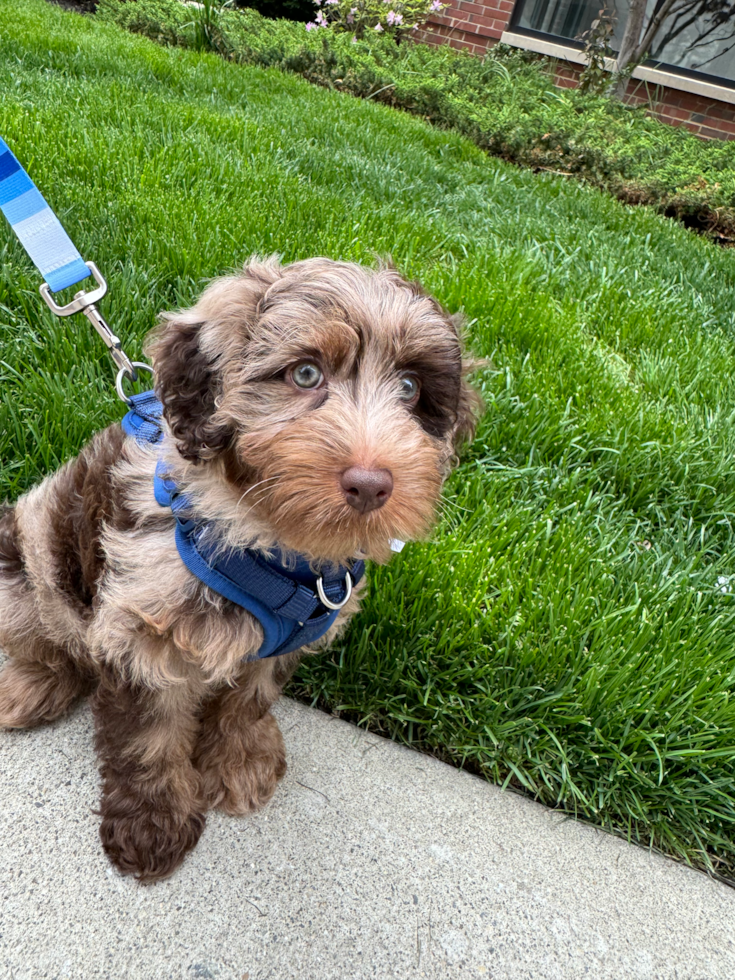
Mini Labradoodles tend to be friendly, outgoing, intelligent dogs with a lively approach to family life.
The Labrador side can add considerable physical enthusiasm. Many enjoy food, water, toys, other dogs, visitors, and outdoor activity with a level of excitement that makes their feelings very easy to read.
Poodle influence adds quick learning and responsiveness. This can create a dog that learns household rules fast but also notices inconsistencies just as quickly.
The combination works especially well for people who enjoy active interaction rather than wanting a dog that mainly observes family life.
Mini Labradoodle Intelligence and Training
Mini Labradoodles have excellent training potential.
Labradors are used widely for guide work, detection, assistance, search and rescue, hunting, and other jobs that require dependable communication with people. Poodles add another exceptionally intelligent and versatile working background.
Many Mini Labradoodles respond particularly well to reward-based training. Food, toys, retrieving, praise, and access to activities can all function as powerful motivators.
The challenge is usually self-control rather than understanding. A clever dog may know exactly what is expected while still finding the person carrying food, the pond across the field, or another dog more exciting in that moment.
Mini Labradoodle Energy Level
The Mini Labradoodle usually has the higher energy level in this comparison.
Labradors are active sporting dogs with stamina for repeated retrieving, and Poodles add another athletic influence. The smaller body does not automatically reduce that desire for activity.
Daily walks, play, retrieving, training, swimming, and exploration suit many adults well. A quick trip outside and a few minutes in the yard are unlikely to satisfy an energetic individual.
Mental work also matters. A dog that finishes a walk with plenty of curiosity left can benefit from scent games, short training sessions, or structured retrieving.
Mini Labradoodle Food Motivation
Food motivation can be especially useful with Mini Labradoodles.
Labradors have a well-known enthusiasm for food, and many dogs with strong Lab influence bring that appetite into training. Small rewards can make recall, leash manners, handling, and household routines very easy to reinforce.
The same enthusiasm can create challenges around countertops, open bags, dropped food, and portion control. A clever dog quickly remembers where successful food discoveries have happened. Good management turns that trait into an advantage rather than a daily battle.
Mini Labradoodle Retrieving and Water Interest
The Mini Labradoodle has exceptionally strong water and retrieving ancestry.
Labrador ancestors worked around Newfoundland fisheries before the modern breed gained fame as a hunting retriever. Poodles also have deep water-retrieving history.
Many Mini Labradoodles therefore enjoy carrying toys, playing fetch, swimming, and retrieving objects from water.
These activities can provide excellent exercise because they match the dog's natural interests while strengthening communication with the owner.
Mini Labradoodle Affection and Social Style
Mini Labradoodles generally have a very outgoing social style.
Labradors are famously friendly dogs, and Poodles also form close bonds with people. The cross may approach visitors, family activities, and outings with obvious enthusiasm.
Affection can be physical and interactive. A Mini Labradoodle may bring toys, follow people through the house, seek cuddles, and regularly check whether anything interesting is about to happen.
The social temperament makes independence training important. A dog that enjoys constant company should still learn that quiet time alone is safe.
Mini Labradoodles With Children
Mini Labradoodles can make excellent family dogs, particularly in active households.
Their sturdy body and playful personality can work well with children who enjoy fetch, training, outdoor games, and walks. The dog's smaller size can make Labrador-style enthusiasm easier to manage than it would be in a full-size Lab.
The main caution is physical excitement. Young dogs may jump, rush into games, or collide with people when enthusiasm outruns impulse control.
Teaching calm greetings and a reliable settle gives children a much easier companion to live with.
Mini Labradoodles With Other Dogs and Pets
Mini Labradoodles usually have strong potential with other dogs.
Labrador Retrievers have a broadly social temperament, and Poodles can also adapt very well to canine companions. Another active dog may make an excellent playmate.
The enthusiasm of a young Labradoodle can overwhelm quieter dogs, so play should include natural breaks rather than continuing until one animal gets frustrated.
Cats can also share a home successfully. Puppy chasing should be redirected, but the cross does not bring specialized herding or terrier instincts into the relationship.
Mini Labradoodle Barking and Alertness
Mini Labradoodles can bark, though heavy watchdog behavior is not usually the central concern.
The Labrador side generally brings a social rather than suspicious attitude toward unfamiliar people. Poodle ancestry can add greater awareness of sounds and activity.
Excitement may create more barking than protectiveness. Visitors, another dog outside, or anticipation of a walk can all inspire noise.
Training a quiet cue and a predictable greeting routine can prevent enthusiastic vocal behavior from turning into a habit.
Mini Bernedoodle Temperament

Mini Bernedoodles tend to be affectionate, intelligent dogs with a steadier overall temperament.
Bernese Mountain Dog influence can add patience and a calmer working style. The Poodle increases athletic ability and responsiveness without necessarily turning the cross into a high-intensity dog.
Many enjoy activity but are equally interested in quiet companionship. A Mini Bernedoodle may happily join a long walk and then spend the rest of the afternoon resting near the family.
That balance is one of the clearest differences from the Mini Labradoodle.
Mini Bernedoodle Intelligence and Training
Mini Bernedoodles are intelligent and capable learners.
The Poodle contributes fast problem-solving ability, while the Bernese Mountain Dog brings working intelligence shaped around practical farm jobs and cooperation with people.
Their training style may feel more deliberate than a Mini Labradoodle's. Some Mini Bernedoodles understand a cue quickly without showing the same intense desire to repeat it over and over.
Positive reinforcement and variety work well. Clear household skills such as recall, leash manners, polite greetings, grooming cooperation, and settling have particular value.
Mini Bernedoodle Energy Level
Mini Bernedoodles generally have moderate energy.
Bernese Mountain Dogs are capable working dogs and can enjoy substantial exercise, but their historical role did not call for the same repeated sporting effort as Labrador work.
Healthy Mini Bernedoodles can hike, swim, walk, play, and travel with active families. Many simply need less sustained activity before they are satisfied.
This can suit households that enjoy weekend adventures but have quieter working days during the week.
Mini Bernedoodle Play Style
Mini Bernedoodles can be extremely playful when young, but their play frequently feels different from the Labrador-style enthusiasm of a Mini Labradoodle.
A young Bernedoodle may enjoy chasing toys, romping around the yard, wrestling with another dog, and interacting with the family. It may show less interest in endless retrieving.
Their heavier bodies can make play look more substantial. A 40-pound adolescent bouncing through the living room has a very different physical impact from a 20-pound Mini Labradoodle.
As adult routines settle in, many Mini Bernedoodles show an appealing balance between play and relaxation.
Mini Bernedoodle Affection and Family Attachment
Mini Bernedoodles commonly form very close family bonds.
Bernese Mountain Dogs have a long history of living and working beside farming families, while Poodles also prefer close involvement with people.
Affection can have a quieter style than the Labradoodle's. Leaning against someone, resting nearby, following family members through the home, and seeking gentle physical contact may play a larger role than constantly initiating games.
This can suit people who want an involved dog without quite as much social intensity.
Mini Bernedoodles With Children
Mini Bernedoodles can be excellent family dogs.
Their generally steady temperament can work particularly well in households that value a calmer adult companion. Bernese influence may add patience, while Poodle intelligence helps with training.
Size deserves attention. A larger Mini Bernedoodle can easily knock over a toddler during excited play even if its temperament is exceptionally gentle.
Teaching four paws on the floor and calm indoor behavior keeps the dog's substantial body from creating unnecessary chaos.
Mini Bernedoodles With Other Dogs and Pets
Mini Bernedoodles generally have good potential with other dogs and household pets.
Their social style can feel somewhat less exuberant than a Mini Labradoodle's, which may suit quieter canine companions.
Another playful dog can still make an excellent friend, especially during the younger years. Larger Bernedoodles should learn to moderate physical play around much smaller dogs.
Cats can also fit comfortably into the household. The absence of strong specialized herding or terrier instincts gives the cross a useful foundation for peaceful multi-pet life.
Mini Bernedoodle Barking and Watchfulness
Mini Bernedoodles may show somewhat more natural watchfulness than Mini Labradoodles.
Bernese Mountain Dogs historically watched farms as part of their broader working role. A Mini Bernedoodle may therefore notice unfamiliar visitors or unusual activity and announce it.
This usually does not translate into intense guarding. Many dogs settle once they understand that the situation is normal.
Teaching the dog what to do after the first alert helps keep ordinary awareness from turning into repeated barking.
Mini Labradoodle vs Mini Bernedoodle Temperament Comparison: What Is the Real Difference?
The strongest temperament contrast is sporting exuberance versus steady companionship.
The Mini Labradoodle generally brings more Labrador-style physical enthusiasm. Food, water, retrieving, outdoor activity, visitors, games, and training can all attract strong interest. The dog may approach daily life with a cheerful sense that almost anything could turn into an activity.
The Mini Bernedoodle generally brings more Bernese steadiness. It can enjoy walks, games, training, and adventures without asking for the same level of sustained action through the week.
Their intelligence also feels different in use. The Mini Labradoodle may repeatedly seek opportunities to interact and earn rewards. The Mini Bernedoodle may learn just as effectively while showing less urgency about turning every moment into another exercise.
This difference is especially useful for households deciding between an active sporting companion and a more moderate family dog. Both can do plenty. They simply do not ask for exactly the same pace.
Mini Labradoodle vs Mini Bernedoodle: Which One Should You Choose?
The Mini Labradoodle and Mini Bernedoodle both offer affection, intelligence, trainability, and strong family companionship, but they tend to suit different types of everyday life.
The Mini Labradoodle generally offers a smaller, sportier body and more enthusiasm for activity. The Mini Bernedoodle usually offers greater physical substance and a calmer adult rhythm.
Choose a Mini Labradoodle if You Want an Active Retriever Personality
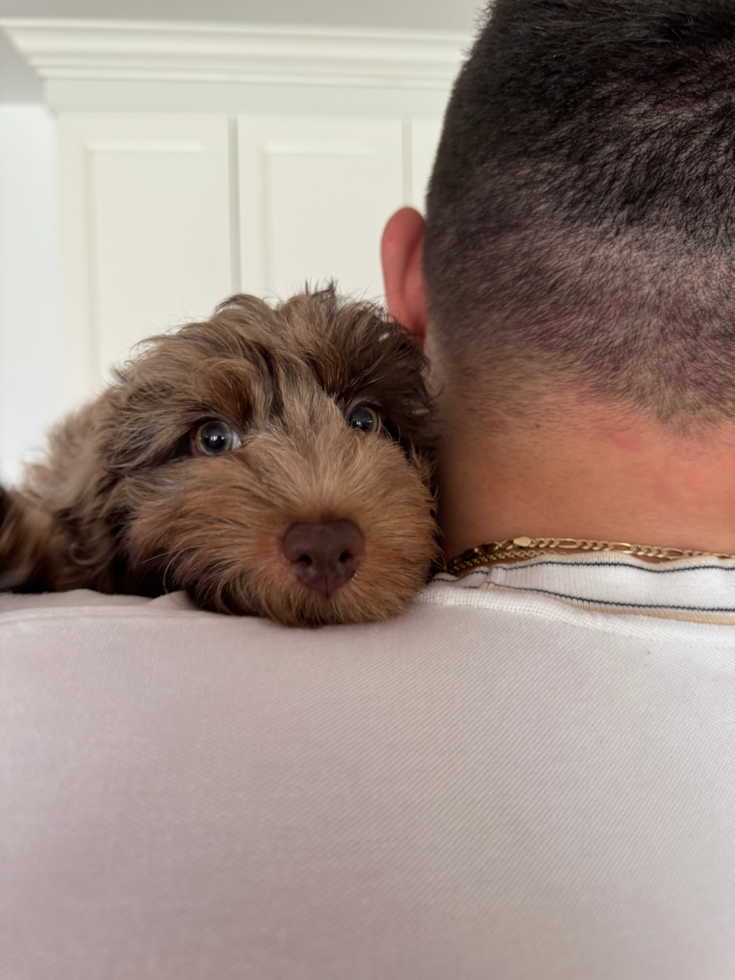
A Mini Labradoodle puppy may suit you better if you genuinely enjoy walks, retrieving, swimming, training, outdoor activities, and an interactive dog.
Labrador and Poodle ancestry combines two athletic, water-oriented working backgrounds. Many Mini Labradoodles find shared activity deeply rewarding and are happy to participate in almost anything.
The smaller physical package can make that enthusiasm easier to fit into travel, apartment life, and households that do not want a full-size Labrador.
The tradeoff is energy. Compact size should not be mistaken for compact exercise needs.
Choose a Mini Bernedoodle if You Want a Steadier Family Companion
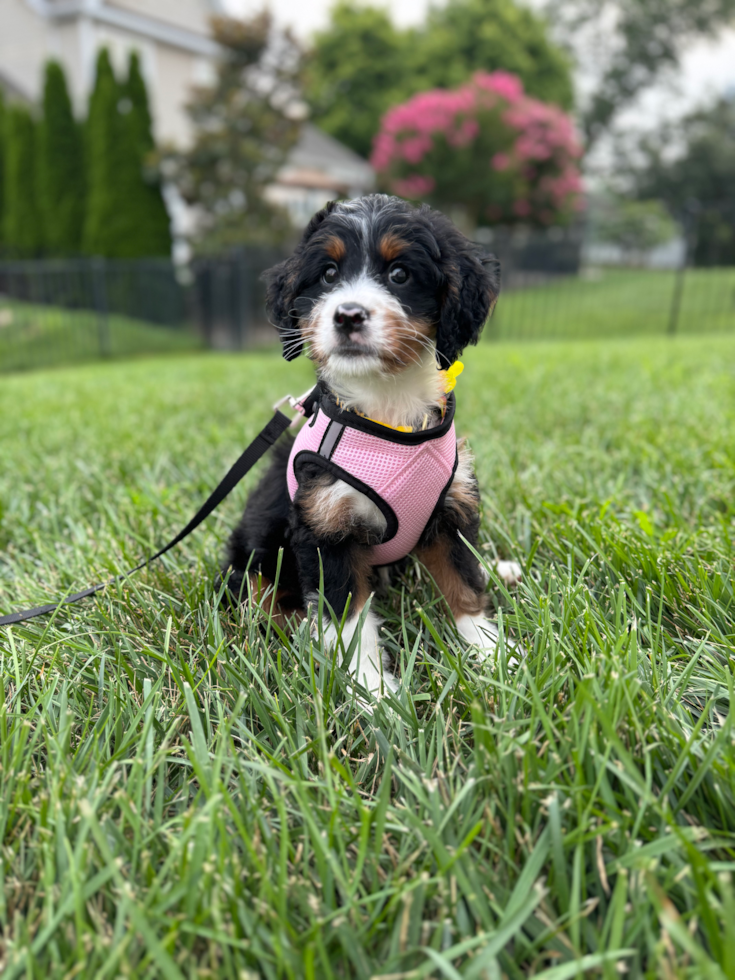
A Mini Bernedoodle puppy may suit you better if you want an intelligent dog capable of real activity but prefer a more moderate everyday rhythm.
Bernese Mountain Dog influence can add a calm, affectionate quality that works especially well for families whose weeks include both adventures and quiet days.
The larger body also appeals to people who prefer a sturdy dog with more physical presence. A Mini Bernedoodle can feel much closer to a medium-sized companion than the word “mini” suggests.
The tradeoff is practical. More body means more dog to groom, lift, control on leash, and fit into the car or home.
Which Is Bigger: Mini Labradoodle or Mini Bernedoodle?
The Mini Bernedoodle is usually larger and heavier.
Mini Labradoodles commonly fall around 15 to 30 pounds, while Mini Bernedoodles frequently span about 20 to 50 pounds. Different breeding programs use somewhat different size categories, so there is plenty of overlap.
Body type strengthens the distinction. Mini Bernedoodles generally carry more bone and broader chests, while Mini Labradoodles have a more compact sporting build.
For people with strict limits around lifting, travel, or living space, the Mini Labradoodle usually offers the easier physical package.
Which Is Calmer: Mini Labradoodle or Mini Bernedoodle?
The Mini Bernedoodle usually has the calmer adult profile.
Bernese Mountain Dogs are strong working dogs, but their temperament is generally steady and good-natured. Mini Bernedoodles often enjoy exercise without demanding the same volume of sustained activity.
Mini Labradoodles can bring more Labrador-style exuberance. Water, toys, food, walks, visitors, and other dogs may all trigger visible enthusiasm.
Good training can give either dog an excellent indoor off switch, but the Bernedoodle is usually the stronger direction when calmness is a major priority.
Which Is More Energetic?
The Mini Labradoodle usually has the higher activity level.
Labrador Retrievers were built for repeated retrieving and have substantial stamina. Poodle ancestry adds another active working breed to the combination.
Mini Bernedoodles can certainly handle long walks, hikes, swimming, and active family outings. Their advantage is that many are equally comfortable when some days are quieter.
For households that already live an active lifestyle, the Mini Labradoodle's enthusiasm may fit naturally rather than feeling demanding.
Which Needs More Mental Stimulation?
The Mini Labradoodle may ask for slightly more ongoing engagement.
Labrador and Poodle ancestry gives the cross strong problem-solving ability and a natural interest in interactive work. Retrieving, scent games, obedience, food puzzles, and varied outings can all help use that intelligence.
Mini Bernedoodles benefit from mental stimulation too, but many are content with training woven into ordinary family life rather than several planned activities every day.
Neither dog needs constant entertainment. The difference is that a Mini Labradoodle may look for the next activity sooner.
Which Is Easier to Train?
Both are highly trainable, but the Mini Labradoodle may have a slight advantage for immediate motivation.
Labrador Retrievers are famous for food interest, retrieving drive, and responsiveness to people. Poodle intelligence reinforces the ability to learn quickly.
Mini Bernedoodles are capable students too, although some can show a more deliberate or independent style during training.
For normal family manners, both can excel. The Labradoodle may simply make reward-based training feel particularly straightforward.
Which Is Better for First-Time Dog Owners?
Both can work well for first-time owners, but they suit different beginners.
A Mini Labradoodle may suit someone enthusiastic about training and exercise. Its strong motivation and manageable size can make learning together rewarding, but owners need to enjoy keeping an active dog engaged.
A Mini Bernedoodle may suit someone who prefers a calmer adult routine and feels comfortable handling a heavier dog. Coat maintenance and physical size can create more work even when the temperament feels easier.
Reading detailed reviews from adults who already live with either cross can help a first-time owner understand which type of daily routine sounds realistic.
Which Is Better With Young Children?
Both can have excellent family temperaments, but the Mini Bernedoodle may have a slight advantage for households that prioritize a calmer adult style.
Its Bernese influence can add patience and steadiness. The larger body still creates a risk of accidental bumps, especially during adolescence.
Mini Labradoodles can also be wonderful with young children but may bring more physical excitement into games and greetings. Their smaller average body can make that enthusiasm easier to manage.
Training calm behavior matters more than relying on either cross's friendly reputation.
Which Is Better With Older Children?
The Mini Labradoodle may have a slight advantage for highly active older children.
Fetch, swimming, trick training, scent games, hiking, and outdoor play all fit naturally with the cross's sporting background. Children who enjoy interacting with the dog can have plenty of constructive activities to share.
Mini Bernedoodles can participate in many of the same things but may offer a more relaxed balance between play and quiet companionship.
The better fit depends on whether the child wants an activity partner or a somewhat calmer companion that still enjoys joining family adventures.
Which Is Better With Other Dogs?
Both can do very well with other dogs.
Mini Labradoodles may approach canine play with more enthusiasm. Another lively dog can make an excellent match for running, wrestling, and active games.
Mini Bernedoodles may have a slight advantage with quieter dogs because many develop a less insistent adult play style.
Compatibility still depends heavily on the individual animals. Energy level, size, and preferred play style matter far more than assuming one cross gets along with every dog.
Which Is Better With Cats?
Both can live successfully with cats.
Neither cross adds strong terrier or specialized herding instincts. A Mini Labradoodle may show more interest in movement because of its general sporting enthusiasm, while a Mini Bernedoodle may have an easier time settling around a quiet cat.
Puppy chasing can happen with either. Calm introductions, cat-only retreat spaces, and rewards for relaxed behavior make the relationship much easier.
The Mini Bernedoodle may have a small lifestyle advantage in very quiet multi-pet homes, but there is no dramatic difference.
Which Likes Fetch More?
The Mini Labradoodle has the clear historical advantage for retrieving.
Labrador Retrievers were developed as powerful working retrievers, and Poodles bring another water-retrieving tradition. Fetch can therefore tap into strong inherited interests on both sides.
Mini Bernedoodles can enjoy retrieving too, particularly through Poodle influence. The Bernese Mountain Dog simply does not add the same specialized background.
For families that picture daily ball games, retrieving toys, or water fetch, the Mini Labradoodle is the more natural direction.
Which Is Better for Swimming?
The Mini Labradoodle has the stronger aquatic foundation.
Labrador ancestors worked around Newfoundland fisheries before the breed developed further as a water-loving sporting retriever. Poodles also have extensive water-retrieving history.
Mini Bernedoodles can certainly enjoy swimming, and some love water. Bernese ancestry simply does not reinforce aquatic work in the same way.
For households that spend significant time around safe lakes, pools, or beaches, the Mini Labradoodle may fit especially well.
Which Is More Food Motivated?
The Mini Labradoodle usually has the stronger tendency toward food motivation.
Labs are famous for their appetite, and that characteristic can make positive training exceptionally effective. Food can help teach recall, polite walking, calm greetings, handling, and numerous other useful skills.
The downside is equally practical. Counters, open bags, dropped snacks, and unattended meals can attract serious attention.
Mini Bernedoodles can also love food, but it is less central to the comparison than it is with strong Labrador influence.
Which Is More Affectionate?
Both can be deeply affectionate, but the style may differ.
The Mini Labradoodle may show affection through energetic interaction. It may bring toys, seek games, follow people, greet enthusiastically, and regularly check whether the family is doing anything interesting.
The Mini Bernedoodle may lean toward quieter physical closeness. Resting beside someone, leaning into contact, and simply sharing space can feature heavily in its family bond.
There is no meaningful winner. The choice is between two different expressions of closeness rather than more affection versus less.
Which Is More Social With Strangers?
The Mini Labradoodle generally has the advantage for immediate outgoing sociability.
Labrador Retrievers are famously friendly and confident around people. Poodle ancestry can add another socially responsive influence.
Mini Bernedoodles can be friendly too, but Bernese Mountain Dogs may show a more measured attitude toward unfamiliar people. Some prefer a little time before engaging fully.
For households with frequent visitors or a busy social life, the Labradoodle's broad friendliness may feel especially easy.
Which Is More Likely to Bark?
Neither cross is known primarily for excessive barking, but their reasons for using their voices can differ.
Mini Labradoodles may bark from excitement. Visitors, play, another dog, or anticipation of an outing can create noisy enthusiasm.
Mini Bernedoodles may show slightly more alert barking because Bernese Mountain Dogs historically watched farm property as part of their broader working role.
Training a predictable response to visitors and outdoor activity helps either dog develop better household manners.
Which Sheds Less: Mini Labradoodle or Mini Bernedoodle?
There is no guaranteed winner, but the Mini Labradoodle may have a modest practical advantage in some coats.
Both crosses combine a Poodle with a shedding double-coated breed. Labradors shed heavily despite having short hair, and Bernese Mountain Dogs shed substantial longer coats.
Curlier dogs of either cross may leave very little visible hair around the home. Straighter coats can release much more.
Breed-specific customer reviews that describe adult coat texture alongside shedding can provide useful real-world perspective.
Which Needs More Grooming?
The Mini Bernedoodle may require more total grooming time, largely because it is frequently larger and can carry a longer, denser coat.
Wavy and curly coats in either cross can mat if regular brushing and combing are skipped. Mini Labradoodles that swim frequently also need thorough drying, coat checks, and ear care afterward.
Straight-coated dogs may need more undercoat management rather than frequent clipping.
Neither cross fits someone who wants a long fluffy coat without putting real time or professional grooming into its care.
Which Is Better for Allergies?
Neither cross can be guaranteed suitable for someone with dog allergies.
Poodle influence may reduce visible shedding, but allergens are found in saliva and dander as well as hair. A curly, low-shedding dog can still cause symptoms.
Mini Labradoodles and Mini Bernedoodles both show considerable coat variation, so the Doodle label does not provide certainty.
Direct personal tolerance is far more useful than choosing one cross based solely on shedding reputation.
Which Is Better for Apartment Living?
The Mini Labradoodle usually has the physical-size advantage, while the Mini Bernedoodle may have the calmer temperament advantage.
Mini Labradoodles tend to take up less room, but their exercise needs can be higher. Apartment owners need a genuine daily activity routine rather than relying on the dog's smaller size.
Mini Bernedoodles may settle more easily indoors but can grow much heavier and physically fill a small home faster.
Either can live successfully in an apartment when exercise, quiet manners, grooming, and alone-time skills are handled well.
Which Is Better for Seniors?
The answer depends on whether size or activity creates the bigger concern.
A Mini Labradoodle may suit an active senior who wants a lighter dog for walking, travel, training, and outdoor activities. Its smaller body can be easier to lift and handle.
A Mini Bernedoodle may suit someone who prefers a calmer daily rhythm but is comfortable managing a heavier dog.
Professional grooming is worth considering for both, since keeping the coat short can reduce physical maintenance at home.
Which Is Better for an Active Lifestyle?
The Mini Labradoodle has the clearer advantage for consistently active households.
Labrador Retriever and Poodle ancestry gives the cross strong stamina, retrieving ability, swimming potential, and enthusiasm for shared activity.
Mini Bernedoodles can still make excellent hiking and outdoor companions. Their strength lies in flexibility, since many cope well when busy weekends are followed by quieter weekdays.
If exercise and outdoor activity already occupy a large part of your normal routine, the Mini Labradoodle may fit especially naturally.
Which Handles Cold Weather Better?
The Mini Bernedoodle generally has the stronger cold-weather background.
Bernese Mountain Dogs developed in Switzerland and have thick weather-resistant coats suited to cool, snowy conditions. Their heavier bodies add further insulation.
Labradors also handle cold water impressively thanks to their dense water-resistant coats, and Mini Labradoodles can enjoy winter activities very comfortably.
The Bernedoodle still has the broader cold-climate advantage when Bernese coat and body traits show strongly.
Which Handles Warm Weather Better?
The Mini Labradoodle may have a modest practical advantage in warmer conditions because it is generally lighter and less heavily built.
Bernese Mountain Dogs were shaped by a cool Alpine environment, and their heavy bodies and dense coats can make high heat difficult.
Mini Labradoodles can also overheat, especially during vigorous exercise. Their sporting enthusiasm may encourage them to keep playing beyond the point when a sensible break is needed.
For both, exercise during cooler hours, shade, fresh water, and indoor cooling are important in hot weather.
Which Is More Predictable in Adult Size?
The Mini Labradoodle generally occupies a narrower small-to-medium physical range, although neither cross has one universal mini standard.
The Mini Bernedoodle combines Poodle ancestry with a dog that may weigh well over 100 pounds, which creates substantial size variation across generations.
Mini Labradoodle programs commonly center on smaller adult ranges, though the exact label can still differ between breeding programs.
Customer reviews that mention adult weight can help readers understand how each size feels in everyday areas such as travel, lifting, grooming, and leash handling.
Mini Labradoodle vs Mini Bernedoodle: The Final Comparison
Choosing between a Mini Labradoodle vs Mini Bernedoodle gets much easier once you look beyond the shared Poodle and ask what type of working dog you want influencing daily life.
The Mini Labradoodle adds the Labrador Retriever, a sturdy sporting dog with roots in Newfoundland water work and a long history as a highly capable retriever. That influence can create an outgoing, active dog with strong food motivation, retrieving enthusiasm, water interest, and a physical approach to play.
The Mini Bernedoodle adds the Bernese Mountain Dog, a large Swiss farm and draft dog whose work demanded strength, steadiness, and close family companionship. That influence can create a heavier, calmer dog that enjoys activity without asking for as much sustained sporting exercise through an ordinary week.
Size creates one of the easiest practical differences. Mini Labradoodles are generally lighter and easier to lift, transport, and fit into compact spaces. Mini Bernedoodles can reach the size of a substantial medium dog despite the word “mini” in the name.
Their coats overlap more than their bodies. Either can have straight, wavy, or curly hair, and either can shed very little or considerably more. The Mini Bernedoodle may simply bring more total coat to maintain because of its larger body and longer Bernese hair.
Family life works beautifully with both when the lifestyle matches. The Mini Labradoodle generally suits households that enjoy regular activity, swimming, fetch, training, and a dog that approaches life enthusiastically. The Mini Bernedoodle may fit families that want a substantial, affectionate companion with enough ability for adventures but a steadier rhythm once everyone gets home.
If you want a smaller, athletic, highly trainable dog with strong retrieving instincts, water enthusiasm, and plenty of physical personality, the Mini Labradoodle may suit you better.
If you want a larger, gentle, affectionate dog with moderate energy, greater physical substance, and a calmer everyday pace, the Mini Bernedoodle may make more sense.
Reading breed-specific reviews from people who have lived with either cross into adulthood can add valuable perspective. Comments about exercise, food motivation, settling indoors, grooming, shedding, adult size, and behavior with children can tell you much more than descriptions focused only on the puppy stage.
The better choice is not the dog capable of doing the most. It is the one whose normal needs and natural pace fit comfortably into the life you actually want to share.
Frequently Asked Questions
What is the main difference between a Mini Labradoodle and Mini Bernedoodle? Both share Poodle ancestry, but the Mini Labradoodle adds Labrador Retriever influence while the Mini Bernedoodle adds Bernese Mountain Dog influence. The Labrador generally contributes more sporting energy, retrieving interest, water enthusiasm, food motivation, and physical exuberance. The Bernese Mountain Dog generally contributes greater body substance, a steadier temperament, and more moderate adult energy. Both can be affectionate, intelligent family dogs, but they usually suit different daily rhythms.
Which is bigger, a Mini Labradoodle or Mini Bernedoodle? The Mini Bernedoodle is usually bigger and heavier. Mini Labradoodles commonly fall around 15 to 30 pounds, while Mini Bernedoodles frequently span about 20 to 50 pounds. The Bernedoodle also tends to carry heavier bone and a broader body. A Mini Labradoodle may therefore feel significantly smaller even when the difference in shoulder height is modest.
Which is calmer, a Mini Labradoodle or Mini Bernedoodle? The Mini Bernedoodle usually has the calmer adult profile. Bernese Mountain Dog influence can add a steady, good-natured pace that works well in households where active days alternate with quiet ones. Mini Labradoodles generally bring more Labrador-style sporting enthusiasm. They can develop excellent indoor manners too, but many ask for more physical and mental activity through the week.
Which is easier to train, a Mini Labradoodle or Mini Bernedoodle? Both are highly trainable, but the Mini Labradoodle may have a slight advantage for immediate motivation. Labrador food interest, retrieving drive, and Poodle intelligence can make positive training especially effective. Mini Bernedoodles learn very well too, although some show a more deliberate style. Short, rewarding sessions with clear expectations work beautifully for either cross.
Which sheds less, a Mini Labradoodle or Mini Bernedoodle? There is no guaranteed winner because both combine Poodle ancestry with a naturally shedding breed. Curlier dogs generally release less visible hair, while straighter Labrador- or Bernese-influenced coats can shed more. Coat texture matters far more than assuming either Doodle label automatically means low shedding.
Which needs more grooming, a Mini Labradoodle or Mini Bernedoodle? Both require regular grooming, but the Mini Bernedoodle may need more total grooming time because it is usually larger and can carry a particularly dense coat. Mini Labradoodles with curly or wavy furnishings can mat just as easily in problem areas. Dogs that swim frequently also need extra drying, ear care, and detangling.
Is a Mini Labradoodle or Mini Bernedoodle better with children? Both can make excellent family dogs. Mini Labradoodles may suit active children who enjoy fetch, swimming, training, and outdoor games, while Mini Bernedoodles may appeal to families seeking a steadier adult companion. Young dogs of either cross can knock over a small child during excited play. Calm greetings and respectful child-dog interaction matter regardless of which dog joins the family.
Which is better for swimming, a Mini Labradoodle or Mini Bernedoodle? The Mini Labradoodle has the stronger natural aquatic background. Labrador Retrievers and Poodles both have deep water-working histories, so swimming and retrieving from water may fit the cross particularly well. Mini Bernedoodles can enjoy swimming too, but Bernese Mountain Dog ancestry does not add the same specialized water work.
Which is better for an active family, Mini Labradoodle or Mini Bernedoodle? The Mini Labradoodle usually has the advantage for consistently active families. Its sporting ancestry suits hiking, swimming, retrieving, training, travel, and regular outdoor activity. The Mini Bernedoodle can participate in many of the same adventures while generally asking for less sustained exercise. It may suit families whose activity level changes considerably from one day to the next.
Should I choose a Mini Labradoodle or Mini Bernedoodle? Choose a Mini Labradoodle if you want a smaller, athletic, outgoing dog with strong retrieving ability, water interest, food motivation, and enthusiasm for regular activity. Choose a Mini Bernedoodle if you want a more substantial, affectionate companion with a steadier adult temperament and moderate energy. Both offer excellent family potential, but Labrador Retriever sporting drive and Bernese Mountain Dog steadiness create two distinctly different ways of living with a Poodle mix.