


Published Wednesday, October 21, 2026 by Pilesgrove Pups
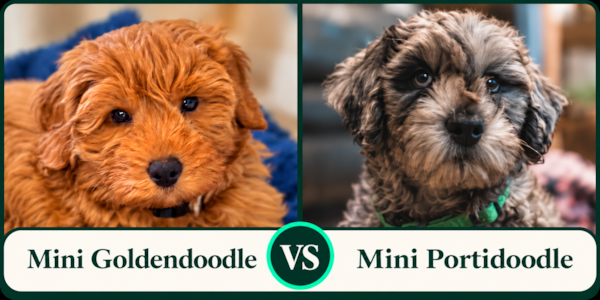
The Mini Goldendoodle vs Mini Portidoodle comparison brings together two intelligent, athletic Poodle mixes with unusually strong water-working backgrounds. Both can be affectionate, highly trainable, active, playful, and deeply connected to their families. Both may also enjoy retrieving, swimming, outdoor activities, and any game that gives them something useful to do with a person.
The differences start with the breed on the other side of the Poodle. A Mini Goldendoodle combines Golden Retriever and Poodle ancestry, while a Mini Portidoodle combines Portuguese Water Dog and Poodle ancestry. The shared Poodle gives both crosses intelligence, athletic ability, water-retrieving history, and strong training potential, but the Golden Retriever and Portuguese Water Dog were developed for different kinds of work.
Golden Retrievers were bred as gundogs. Their job centered on finding and retrieving shot game over land and water while working closely with hunters. That history helped shape a dog known for cooperation, sociability, steady retrieving enthusiasm, and a strong desire to interact with people.
Portuguese Water Dogs worked alongside fishermen on Portugal's coast. Their duties included swimming between boats, carrying messages, retrieving lost fishing gear, helping with nets, and even driving fish toward nets. They needed stamina, intelligence, confidence, physical strength, and enough persistence to keep working in difficult conditions.
That distinction can show in everyday life. The Mini Goldendoodle generally leans toward a softer, socially expansive sporting style. The Mini Portidoodle can feel more purposeful, physically driven, and alert, with a stronger appetite for sustained activity and tasks that challenge both body and brain.
Neither is simply the calmer or smarter dog. Both can learn an impressive amount, and both can turn into excellent active family companions. The better choice depends on whether you prefer the Golden Retriever's broad sociability and cooperative sporting style or the Portuguese Water Dog's spirited, athletic, work-focused personality.
Table of Contents
- Mini Goldendoodle vs Mini Portidoodle at a Glance
- Mini Goldendoodle and Mini Portidoodle Overview and History
- Mini Goldendoodle vs Mini Portidoodle Appearance
- Mini Goldendoodle vs Mini Portidoodle Temperament
- Mini Goldendoodle vs Mini Portidoodle: Which One Should You Choose?
- Choose a Mini Goldendoodle if You Want a Social, Cooperative Family Dog
- Choose a Mini Portidoodle if You Want a Compact Working Athlete
- Which Is Bigger: Mini Goldendoodle or Mini Portidoodle?
- Which Is Calmer: Mini Goldendoodle or Mini Portidoodle?
- Which Is More Energetic?
- Which Needs More Mental Stimulation?
- Which Is Easier to Train?
- Which Is Better for First-Time Dog Owners?
- Which Is Better With Young Children?
- Which Is Better With Older Children?
- Which Is Better With Other Dogs?
- Which Is Better With Cats?
- Which Likes Water More?
- Which Is Better for Swimming?
- Which Likes Fetch More?
- Which Is More Alert?
- Which Is More Social With Strangers?
- Which Sheds Less: Mini Goldendoodle or Mini Portidoodle?
- Which Needs More Grooming?
- Which Is Better for Allergies?
- Which Is Better for Apartment Living?
- Which Is Better for Seniors?
- Which Is Better for an Active Lifestyle?
- Which Is Better for a Quieter Household?
- Which Handles Cold Weather Better?
- Which Handles Warm Weather Better?
- Which Is More Predictable in Coat Type?
- Mini Goldendoodle vs Mini Portidoodle: The Final Comparison
Mini Goldendoodle vs Mini Portidoodle at a Glance
| Trait | Mini Goldendoodle | Mini Portidoodle |
| Parent Breeds | Golden Retriever × Poodle | Portuguese Water Dog × Miniature Poodle |
| General size | Small-medium | Small-medium |
| Common adult weight | Often about 15–35 pounds | Often about 15–30 pounds |
| Common adult height | Often around 13–20 inches | Commonly around 10–20 inches |
| Build | Athletic, sturdy, balanced | Compact, muscular, athletic |
| Coat | Straight, wavy, or curly | Usually wavy or curly |
| Shedding | Low to moderate, coat-dependent | Usually low |
| Grooming | Moderate to high | Moderate to high |
| Common colors | Cream, gold, apricot, red, brown, black and more | Black, brown, white, cream and other Poodle-influenced shades |
| Energy | Moderate to moderately high | Moderate to high |
| Mental stimulation | Moderate to high | High |
| Trainability | Very high | Very high |
| Water interest | Frequently strong | Frequently very strong |
| Retrieving interest | Frequently strong | Frequently strong |
| Watchfulness | Usually moderate | Often somewhat higher |
| Social style | Friendly, outgoing, affectionate | Affectionate, spirited, alert, interactive |
| Best fit | Families wanting an active, highly social Doodle | Active owners wanting a compact, driven water-dog companion |
These ranges are useful guides rather than official standards. Both crosses can vary in size and coat according to generation and breeding program, and the word “mini” does not describe one exact adult weight across every program.
Mini Goldendoodle and Mini Portidoodle Overview and History
The Mini Goldendoodle and Mini Portidoodle have more in common historically than many Poodle mixes. Golden Retrievers, Portuguese Water Dogs, and Poodles all come from working backgrounds that involved water, retrieving, physical stamina, and close cooperation with people.
What changes is the purpose behind that work.
Golden Retrievers were developed as sporting dogs for hunters. Their work called for patience, responsiveness, and the ability to retrieve shot birds repeatedly without damaging them. Portuguese Water Dogs had a much broader set of jobs around fishing boats. They swam, carried messages, retrieved equipment, helped with nets, and worked for long periods in demanding coastal conditions.
That contrast helps explain why both crosses can be highly trainable while still feeling different to live with. The Mini Goldendoodle commonly brings a socially soft, cooperative sporting temperament. The Mini Portidoodle can bring more working intensity, environmental awareness, and physical determination.
The Miniature Poodle strengthens the athletic and intelligent side of both combinations. Poodles were developed around water retrieval and are exceptionally versatile learners, so neither cross lacks problem-solving ability or an appetite for interaction.
Mini Goldendoodle History and Background
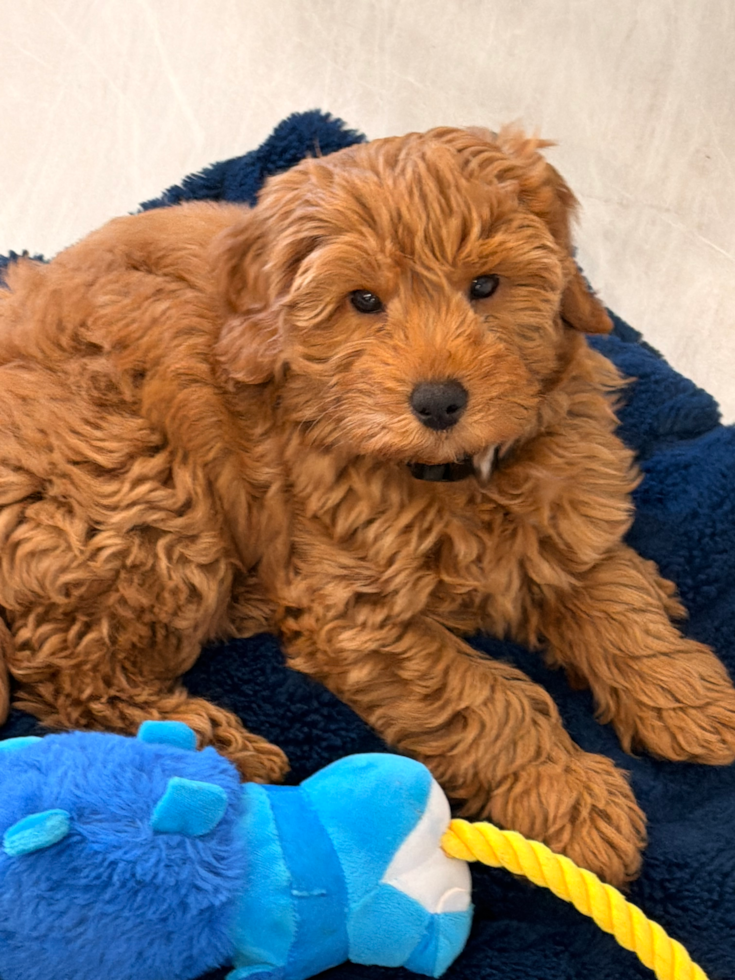
The Mini Goldendoodle combines Golden Retriever and Poodle ancestry in a smaller package than the traditional Standard Goldendoodle. Different generations can fall under the Mini Goldendoodle name, which explains some of the variation in adult size and coat.
Golden Retrievers developed in nineteenth-century Scotland. Detailed records from the Guisachan estate document the efforts of Dudley Marjoribanks, later Lord Tweedmouth, to develop a reliable gundog suited to the wet, rugged landscape of the Scottish Highlands.
The work demanded stamina and cooperation. A Golden needed to locate fallen game, travel through difficult terrain, enter water confidently, retrieve birds carefully, and return them to the hunter.
Those traits are still visible in the modern breed. Golden Retrievers are athletic and energetic, but their working style centers heavily on cooperation with people. They have earned success in hunting, guide work, search and rescue, therapy, obedience, and many other roles because they combine intelligence with a strong desire to interact.
The Poodle adds its own water-retrieving history and an even quicker problem-solving style. Miniature Poodles retain the athletic proportions and trainability of the larger variety despite their smaller size.
The Mini Goldendoodle therefore has strong human cooperation built into both sides of its ancestry. Many find shared activities especially rewarding and enjoy training because the interaction itself is part of the fun.
Mini Portidoodle History and Background
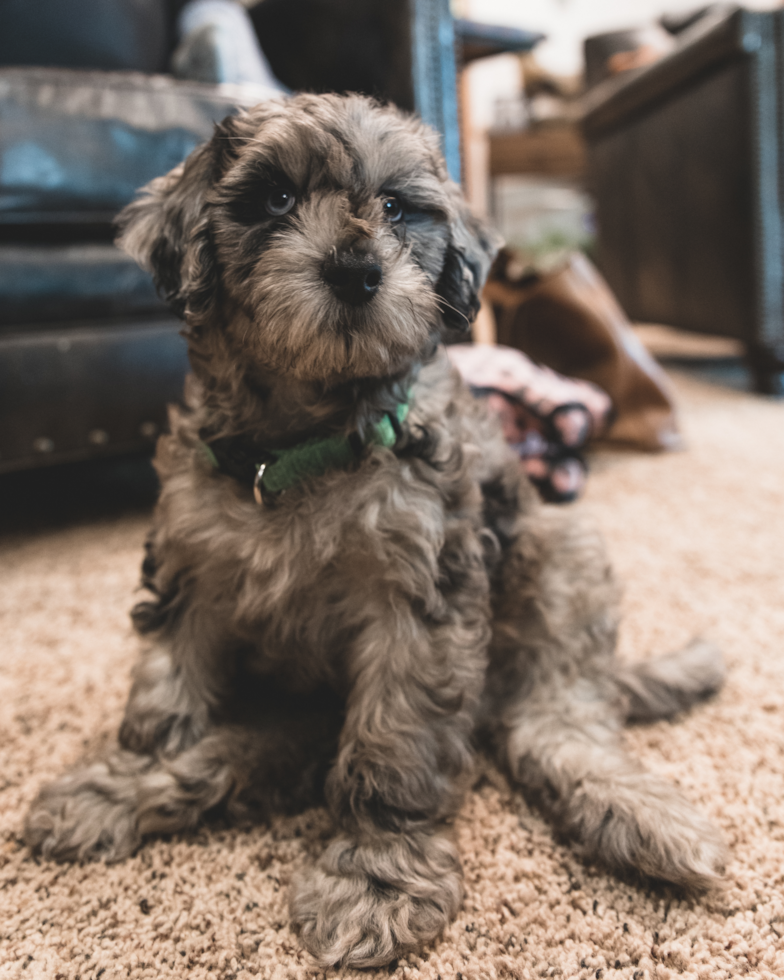
The Mini Portidoodle, sometimes called the Mini Portipoo, combines a Portuguese Water Dog with a Miniature Poodle. The cross is much less widely known than the Goldendoodle, but the breeds behind it create one of the most naturally athletic combinations in the Doodle group.
Portuguese Water Dogs developed along Portugal's coast as working partners for fishermen. Their jobs went far beyond retrieving. They helped drive fish into nets, recovered lost tackle and damaged fishing equipment, and carried messages from boat to boat or between boats and shore.
That work demanded stamina and confidence. A dog had to swim strongly, tolerate challenging water conditions, respond to people, think through problems, and keep working without constant guidance.
Portuguese Water Dogs nearly disappeared as fishing technology changed during the twentieth century. Preservation efforts helped save the breed, and today's dogs still carry the athleticism and intelligence tied to their original working role.
The Miniature Poodle adds another water-working background. This gives the Mini Portidoodle unusually concentrated aquatic ancestry, with swimming, retrieving, intelligence, and training ability supported on both sides.
The result can be a compact dog with far more working ability than its fluffy appearance suggests. A Mini Portidoodle may look like a small teddy bear after grooming, but the brain and body underneath can be ready for a very active day.
Mini Goldendoodle vs Mini Portidoodle Appearance
Mini Goldendoodles and Mini Portidoodles can overlap considerably in size and overall Doodle appearance. Both may have soft furnishings, floppy ears, dark expressive eyes, and wavy or curly coats.
Their natural breed coats create a useful difference. Golden Retrievers have long, dense double coats that shed, while Portuguese Water Dogs naturally have wavy or curly coats that release relatively little visible hair. Poodle influence adds curl to both, but the Mini Portidoodle starts with textured coat genetics from both sides.
Body shape can differ as well. Mini Goldendoodles tend to have a balanced sporting outline, while Mini Portidoodles can look particularly muscular and compact because Portuguese Water Dogs were built for powerful swimming and demanding physical work.
Mini Goldendoodle Appearance
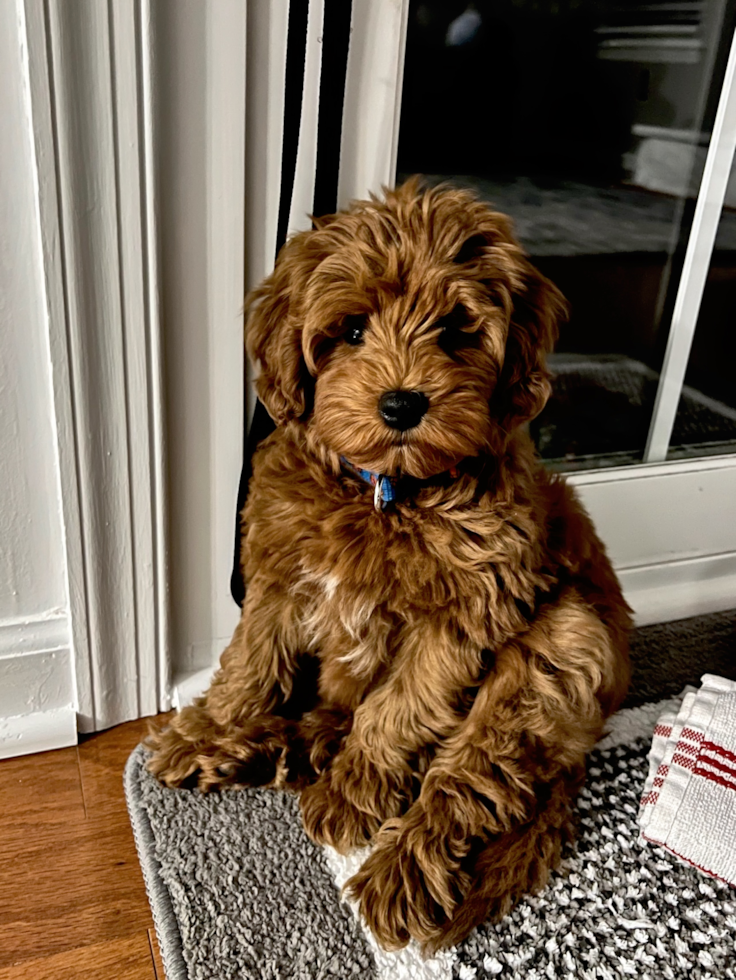
Mini Goldendoodles commonly fall somewhere around 15 to 35 pounds, although some sit above or below that range. Height frequently lands in the low-to-upper teens.
The Golden Retriever contributes a sturdy sporting body, while the Poodle can lighten the frame and reduce overall size. Many Mini Goldendoodles therefore look balanced rather than heavy, with enough body substance for active family life.
Some have longer legs and a more refined outline. Others carry stronger Golden influence through the chest and body and feel considerably sturdier than their fluffy appearance suggests.
Mini Goldendoodle Coat Type and Texture
Mini Goldendoodle coats may be straight, wavy, or curly. Golden Retrievers naturally have a thick double coat that can lie straight or slightly wavy, while Poodles contribute dense curls.
The loose wavy coat is especially familiar in Mini Goldendoodles. It creates a soft shaggy appearance and tends to move naturally around the body.
Curlier coats may leave less visible hair around the home because loose strands get caught inside the coat. Straighter dogs may carry more undercoat and can shed more noticeably.
Adult texture may develop differently from the puppy coat. Hair can get denser or curlier as the dog moves through adolescence and the mature coat grows in.
Mini Goldendoodle Colors and Markings
Warm colors dominate the familiar Mini Goldendoodle look. Cream, gold, apricot, and red are especially common, although brown, black, and other Poodle-influenced shades can appear.
Golden Retriever ancestry contributes natural shades from pale cream through deeper gold. Poodle ancestry expands that range considerably.
White markings and broader patterns can also appear in some lines, especially in later generations.
Color may lighten over time. A strongly red or apricot puppy can develop a much softer adult shade as the coat matures.
Mini Goldendoodle Eyes and Facial Features
Most Mini Goldendoodles have brown or dark brown eyes with a soft, open expression.
Golden Retriever influence can create a broader head and muzzle, while the Poodle can add more refinement. Thick facial furnishings can hide much of that underlying structure.
Both breeds have hanging ears, so the cross usually has soft ears that frame the face. Longer hair around the ears adds to the classic teddy bear appearance.
The muzzle is moderate in length, which fits the dog's sporting background and active lifestyle.
Mini Goldendoodle Build and Size
The Mini Goldendoodle usually has a sturdy but athletic frame. Golden Retriever ancestry provides muscle and physical confidence, while Miniature Poodle influence reduces size and may add a lighter outline.
Healthy adults can handle far more activity than their fluffy appearance suggests. Hiking, retrieving, swimming, long walks, and outdoor family trips can all suit the cross well.
The Mini Goldendoodle may run slightly larger than the Mini Portidoodle in some size ranges, although there is considerable overlap.
The overall impression is usually sporty and approachable rather than especially compact or powerful.
Mini Goldendoodle Shedding
Mini Goldendoodle shedding varies significantly.
The Golden Retriever has a true shedding double coat, while the Poodle releases very little visible hair. That difference creates anything from very low shedding to noticeable hair around the home.
Curly coats usually trap more loose hair inside, while straighter Golden-influenced coats may release more freely.
Low visible shedding also increases the need for grooming. Loose strands caught inside a soft coat can contribute to matting if they are not brushed out.
Mini Goldendoodle Grooming Needs
Mini Goldendoodles with wavy or curly coats need consistent brushing and combing. Common matting areas include behind the ears, under the legs, around the neck, and through the tail and hindquarters.
Straighter coats may need more undercoat removal and less frequent clipping. The maintenance style changes, but the dog is not necessarily easier to care for.
Professional grooming is common for longer furnished coats. Shorter trims can make daily care much easier for dogs that spend a lot of time outdoors.
Swimming adds another step. Wet coats should be dried properly, and dropped ears need routine checks after water activity.
Mini Portidoodle Appearance
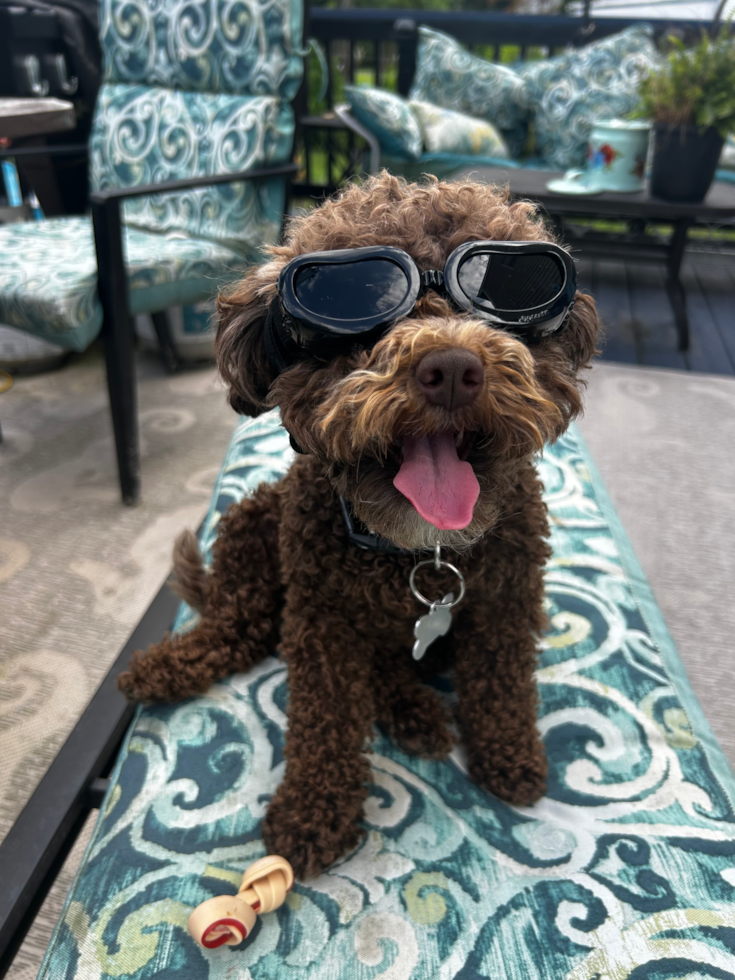
Mini Portidoodles commonly fall somewhere around 15 to 30 pounds, although broader ranges can occur. Many stand roughly 10 to 20 inches tall.
The Portuguese Water Dog contributes a robust, muscular body. Purebred Portuguese Water Dogs stand roughly 17 to 23 inches and weigh about 35 to 60 pounds, so the Miniature Poodle can reduce the finished size while preserving much of the athletic construction.
Mini Portidoodles tend to look compact rather than delicate. They may weigh only 20 or 25 pounds but still feel sturdy and physically capable.
Mini Portidoodle Coat Type and Texture
The Mini Portidoodle usually has a wavy or curly coat because both sides contribute naturally textured hair.
Portuguese Water Dogs have two accepted coat types: curly and wavy. The Poodle adds another curly coat, which gives the Mini Portidoodle stronger odds of visible texture than a cross involving a straight-coated breed.
Some dogs develop loose, flowing waves that look very similar to Portuguese Water Dog coats. Others grow tighter Poodle-style curls.
The coat can feel dense and substantial even when it sheds very little. Low visible shedding does not reduce the need for brushing.
Mini Portidoodle Colors and Markings
Black, brown, and white are the traditional colors associated with Portuguese Water Dogs. White markings can create striking black-and-white or brown-and-white patterns.
Poodle ancestry can expand the range, so Mini Portidoodles may also appear in cream, apricot-related shades, gray, or other colors depending on the breeding line.
Black-and-white dogs can look particularly distinctive because the pattern can echo the Portuguese Water Dog much more clearly than the warm solid shades common in Mini Goldendoodles.
Some brown coats can lighten over time, especially when Poodle fading genes are present.
Mini Portidoodle Eyes and Facial Features
Mini Portidoodles commonly have dark brown eyes, though different brown tones may appear.
Portuguese Water Dogs have broad, substantial heads with attentive expressions. Poodle influence can refine the muzzle and reduce some of that width.
The ears lie close to the head and usually carry plenty of coat. Facial furnishings can give the dog the same rounded teddy bear appearance seen in many Doodles.
The expression often looks alert and engaged. Even while relaxed, many Mini Portidoodles seem highly aware of what is happening around them.
Mini Portidoodle Build and Size
The Mini Portidoodle generally has the more compact and muscular build in this comparison.
Portuguese Water Dogs were expected to swim, dive, climb around boats, and work for long stretches. Their bodies are strong and solid rather than light or delicate.
Poodle influence adds agility and reduces overall size. This can create a small-to-medium dog that handles challenging physical activity extremely well.
A 20-pound Mini Portidoodle may therefore feel surprisingly powerful for its size, especially during swimming, running, or active play.
Mini Portidoodle Shedding
The Mini Portidoodle generally has the stronger low-shedding profile.
Portuguese Water Dogs naturally release relatively little visible hair, and Poodles share that trait. This gives the Mini Portidoodle low-shedding ancestry on both sides.
That does not make every dog completely non-shedding, and it does not guarantee compatibility for people with allergies. Hair still grows, breaks, and comes out during brushing.
The practical difference is that visible hair around the house is generally less of a concern than it can be with a straighter Mini Goldendoodle.
Mini Portidoodle Grooming Needs
Mini Portidoodles still require serious coat care despite their low-shedding tendency.
Wavy and curly coats can mat when loose hair gets trapped inside. Brushing and combing need to reach through the full coat rather than smoothing only the surface.
Active swimming creates extra grooming work. Water should be rinsed from the coat when needed, and the dog needs thorough drying so damp hair does not tighten into tangles.
Ear care also matters because hanging ears can hold moisture after swimming. For an active water dog, routine ear checks should be part of normal care rather than an occasional task.
Mini Goldendoodle vs Mini Portidoodle Appearance Comparison: What Is the Difference?
The strongest appearance distinction is soft sporting balance versus compact water-dog muscle.
Mini Goldendoodles usually have a somewhat softer outline shaped by the Golden Retriever. They may look longer through the body and carry furnishings that blend Golden feathering with Poodle waves or curls.
Mini Portidoodles tend to look more compact and muscular. The Portuguese Water Dog was built for demanding work around boats and water, and that sturdy body can still show clearly at a smaller size.
Coat texture also differs in predictability. Mini Goldendoodles can have straight, wavy, or curly coats because the Golden Retriever contributes conventional double-coated hair. Mini Portidoodles usually start with waves or curls from both sides.
Color can make the two easier to separate visually. Warm cream, gold, apricot, and red dominate the familiar Mini Goldendoodle palette, while black, brown, white, and bold white markings are strongly associated with Mini Portidoodles.
If you prefer a classic warm-colored teddy bear Doodle with a softer sporting outline, the Mini Goldendoodle may appeal more. If you prefer a compact, athletic water-dog look with stronger curl or wave consistency, the Mini Portidoodle offers something quite different.
Mini Goldendoodle vs Mini Portidoodle Temperament
The temperament difference between these crosses is not intelligence versus friendliness. Both can score extremely well in those areas.
The more useful distinction is social cooperation versus spirited working intensity.
Golden Retrievers were selected to retrieve for hunters while staying closely responsive to human direction. Portuguese Water Dogs needed cooperation too, but their jobs demanded greater versatility and self-confidence in a difficult working environment.
A Mini Goldendoodle may therefore bring a softer, more socially expansive style, while a Mini Portidoodle can bring more intensity, persistence, and alertness to the same basic Poodle intelligence.
Mini Goldendoodle Temperament
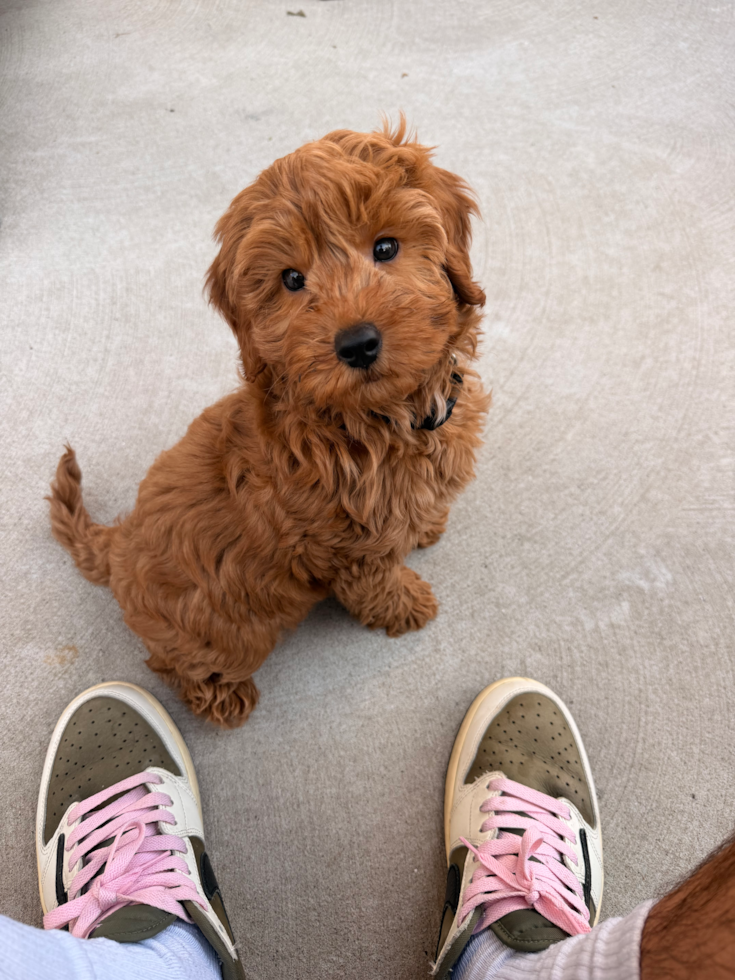
Mini Goldendoodles tend to be cheerful, affectionate dogs that enjoy being involved with their families. Golden Retriever and Poodle ancestry both support strong human attachment and cooperative training.
Many approach life socially. Visitors, walks, toys, training, children, other dogs, and outings can all spark enthusiastic interest.
This broad friendliness is one of the cross's strongest qualities. The challenge is teaching enough self-control that enthusiasm stays pleasant rather than turning into jumping, rushing, or constant demands for attention.
Mini Goldendoodle Intelligence and Training
Mini Goldendoodles are highly trainable because both sides contribute excellent working intelligence.
Golden Retrievers are widely used in jobs that call for patience, reliability, and cooperation with people. Poodles add quick problem-solving and versatility.
Many dogs respond readily to food, praise, toys, and shared activity. Training can feel smooth when the owner keeps expectations consistent.
Calm skills deserve equal attention. Settling, polite greetings, waiting at doors, loose-leash walking, and relaxing around distractions can make family life much easier.
Mini Goldendoodle Energy Level
Mini Goldendoodles generally have moderate to moderately high energy.
Golden Retrievers are powerful sporting dogs built for repeated retrieving, and Poodles add another active influence. Daily walks, play, training, and outdoor activity suit the cross well.
Many enjoy exercise without needing every outing to feel like serious work. A walk, some fetch, a little training, and family involvement can provide a satisfying routine for a healthy adult.
Dogs with stronger sporting drive may enjoy much more and can handle active households extremely well.
Mini Goldendoodle Retrieving and Water Interest
The Mini Goldendoodle has water-retrieving history on both sides.
Golden Retrievers were developed for retrieving game over land and water, while Poodles have their own strong water-retriever heritage.
This can create dogs that enjoy carrying toys, fetching, swimming, and games that involve returning objects to people.
These instincts also make enrichment straightforward. A ball, floating toy, hidden object, or retrieving game can turn ordinary exercise into something highly satisfying.
Mini Goldendoodle Affection and Social Style
Mini Goldendoodles generally lean toward broad sociability.
Golden Retriever influence can create a dog that treats visitors, family friends, and new people with open interest. Poodle influence adds close attachment and responsiveness.
Many are physically affectionate without being quiet about it. They may follow family members, bring toys, seek cuddles, and look for ways to join whatever is happening.
For social households, this can feel effortless. For quieter homes, teaching the dog that not every event requires participation can be just as important.
Mini Goldendoodles With Children
Mini Goldendoodles can be excellent family companions.
Their combination of trainability, playfulness, and physical sturdiness can work well with children who enjoy interacting with the dog. Fetch, walks, simple tricks, and outdoor games can create constructive shared activities.
Excitement needs boundaries around toddlers. A friendly dog can still knock over a small child while rushing in for attention.
Calm greetings and polite play are skills worth teaching early rather than expecting them to appear naturally with age.
Mini Goldendoodles With Other Dogs and Pets
Mini Goldendoodles generally have strong potential with other dogs.
Golden Retriever ancestry supports broad sociability, and Poodles also tend to adapt well to canine companions. Young dogs may play enthusiastically, so compatible energy levels make multi-dog living easier.
Cats can also fit well into the household. Playful chasing can happen, especially during puppyhood, but the cross does not add strong terrier or specialized herding instincts.
Early calm interaction teaches the dog that other pets are part of the family rather than moving toys.
Mini Goldendoodle Barking and Alertness
Mini Goldendoodles may bark at visitors, outdoor activity, or unfamiliar sounds, but strong watchfulness is not usually central to the temperament.
Golden Retrievers were selected primarily for cooperative sporting work rather than guarding. Poodle influence can add more awareness of the environment.
Excitement can produce more noise than suspicion. A dog may bark because someone has arrived and it desperately wants to say hello.
Training a calm arrival routine can reduce this kind of vocal enthusiasm significantly.
Mini Portidoodle Temperament
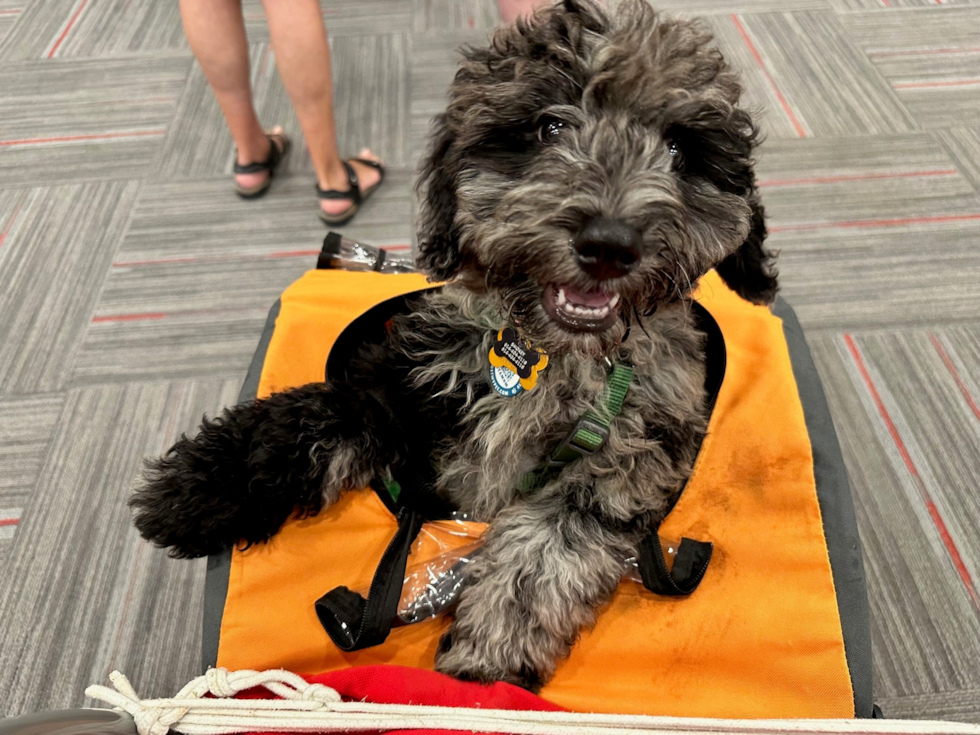
Mini Portidoodles tend to be intelligent, affectionate, spirited dogs with strong athletic ability. Their Portuguese Water Dog side can add persistence, confidence, and a more purposeful approach to activity.
These dogs may enjoy family life deeply while still showing a stronger need to use both body and brain. Walking alone may not satisfy a particularly driven Mini Portidoodle if the day offers no training, games, exploration, or problem-solving.
The cross can therefore feel highly interactive. It is less about constant hyperactivity and more about having a dog that genuinely appreciates useful engagement.
Mini Portidoodle Intelligence and Training
Training is one of the Mini Portidoodle's strongest areas.
Portuguese Water Dogs had to perform varied tasks in difficult working conditions. Their job required responsiveness but also enough intelligence to make decisions without waiting for instructions at every moment.
Poodles reinforce that mental ability. The combination can create a quick learner that handles complex tasks particularly well.
Basic manners may come quickly, so training can progress into retrieving, scent games, obedience, agility-style activities, tricks, or water work. Variety usually keeps the experience more interesting than repetitive drilling.
Mini Portidoodle Energy Level
The Mini Portidoodle generally has the higher activity profile in this comparison.
Portuguese Water Dogs are energetic working dogs with enough stamina for a full day of demanding activity around water. Miniature Poodles add more athletic ability rather than softening that side.
Daily walks are useful, but many dogs appreciate additional engagement. Training, retrieving, swimming, sniffing, and active games can create a more complete routine.
This does not mean the dog needs endless exercise. Teaching relaxation is important so the Mini Portidoodle learns how to switch from activity to calm indoor behavior.
Mini Portidoodle Water Drive
Water interest can be especially strong in Mini Portidoodles because both sides bring aquatic working history.
Portuguese Water Dogs did far more than swim recreationally. They worked from boats, retrieved equipment, carried messages over water, and assisted fishermen with nets.
The Poodle adds another water-retrieving tradition. For some Mini Portidoodles, swimming can feel almost instinctively rewarding.
Safe water activities can therefore provide excellent exercise. Swimming, retrieving floating toys, and supervised dock-style games give the dog a natural outlet while reducing repetitive impact on the joints.
Mini Portidoodle Affection and Family Attachment
Mini Portidoodles can form intense bonds with their people.
Portuguese Water Dogs historically worked beside fishermen through long days, and Poodles are equally people-oriented. The cross can therefore develop a strong desire to stay involved with family activity.
Affection may feel more interactive than passive. A Mini Portidoodle may seek games, training, walks, and participation before curling up beside someone afterward.
Independence training still matters. A dog that loves involvement should also know how to settle comfortably when family members are busy or away.
Mini Portidoodles With Children
Mini Portidoodles can make excellent family companions, especially in households with active children.
Their compact, sturdy bodies can handle play well, while their intelligence gives children plenty of opportunities to interact through training and games.
The cross may bring more physical enthusiasm than a quieter family expects. Running, jumping, retrieving, and water play can all hold strong appeal.
Young children need supervision simply because an excited athletic dog can move quickly. Older children may especially enjoy the dog's appetite for activity.
Mini Portidoodles With Other Dogs and Pets
Mini Portidoodles can do very well with other dogs, particularly when play styles match.
Their energetic nature may suit another active companion better than a very quiet senior dog. A young Portidoodle can keep asking for play long after a calmer dog has decided the session is over.
Cats can also share the home successfully. Movement may attract interest, but the Portuguese Water Dog does not bring terrier-style vermin hunting into the cross.
Clear early boundaries around chasing help other household pets feel comfortable.
Mini Portidoodle Barking and Watchfulness
The Mini Portidoodle may have the stronger alert side.
Portuguese Water Dogs were not only fishermen's helpers. Breed standards also describe them as loyal companions and alert guards, which fits a dog expected to pay attention to what happened around boats and working environments.
A Mini Portidoodle may therefore notice visitors, sounds, or changes around the home more readily than the average Mini Goldendoodle.
That awareness does not equal aggression. Good training teaches the dog that noticing something is useful, but continuing to announce it long after the family understands is unnecessary.
Mini Goldendoodle vs Mini Portidoodle Temperament Comparison: What Is the Real Difference?
The strongest temperament contrast is social softness versus working intensity.
The Mini Goldendoodle generally brings more Golden Retriever warmth and broad friendliness. Many enjoy training and activity because those experiences involve people, and the dog can approach family life with an easy social enthusiasm.
The Mini Portidoodle generally brings more of the Portuguese Water Dog's spirited working character. It can be affectionate and social while also showing more persistence, physical drive, alertness, and interest in challenging activities.
Both can be highly trainable. Both may love swimming. Both can enjoy retrieving and outdoor adventures. The difference is how much purpose they tend to bring to those activities.
A Mini Goldendoodle may happily retrieve because fetch is a wonderful game with its person. A Mini Portidoodle may enjoy the same game but also seem especially interested in the work itself: finding the object, reaching it quickly, solving the route, and doing it again.
This distinction is subtle, but it matters for lifestyle fit. One leans more heavily toward a socially cooperative sporting companion, while the other can feel closer to a compact working athlete.
Mini Goldendoodle vs Mini Portidoodle: Which One Should You Choose?
The Mini Goldendoodle and Mini Portidoodle can both fit active households beautifully, and both have enough intelligence to make training one of the most enjoyable parts of ownership.
The decision gets easier when you think about what kind of interaction you want throughout the week. The Mini Goldendoodle usually leans toward broad social involvement and a somewhat softer temperament. The Mini Portidoodle usually asks for more purposeful physical and mental engagement.
Choose a Mini Goldendoodle if You Want a Social, Cooperative Family Dog
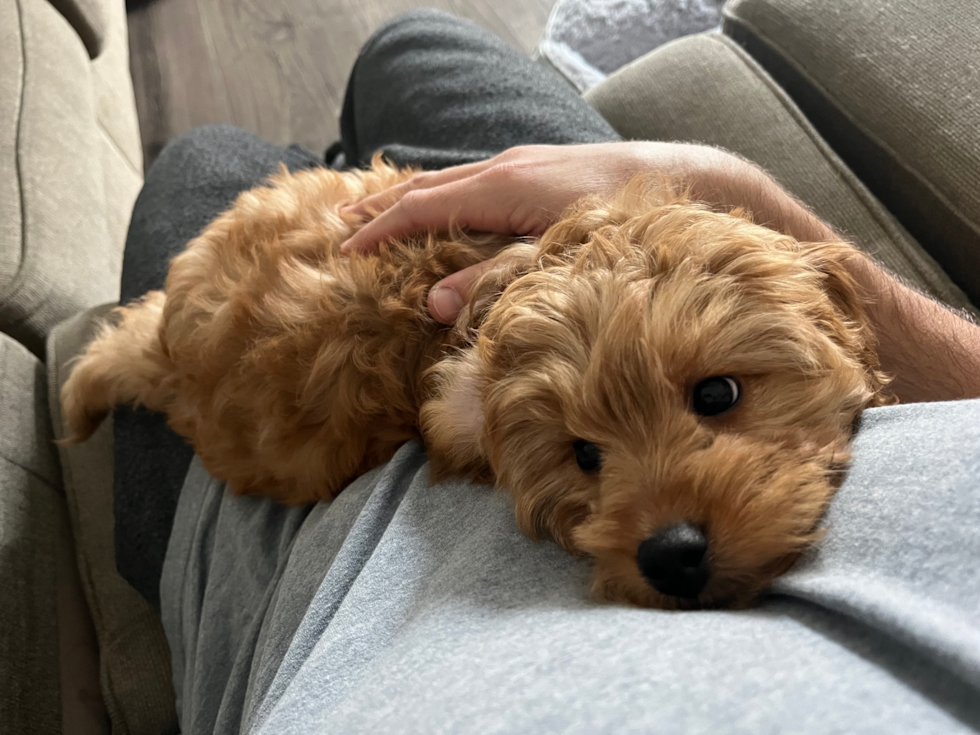
A Mini Goldendoodle puppy may suit you better if friendliness, easy social interaction, and shared family activity sit high on your priority list.
Golden Retriever influence can create a dog that enjoys people almost as much as the activity itself. Walks, training, swimming, retrieving, visitors, and family outings can all feel rewarding because they involve someone the dog loves.
This makes the cross especially appealing for busy social households. Families with children, frequent visitors, and an active routine may appreciate how naturally the dog wants to participate.
The tradeoff is enthusiasm. Good manners around greetings and excitement need training so friendliness stays pleasant rather than overwhelming.
Choose a Mini Portidoodle if You Want a Compact Working Athlete
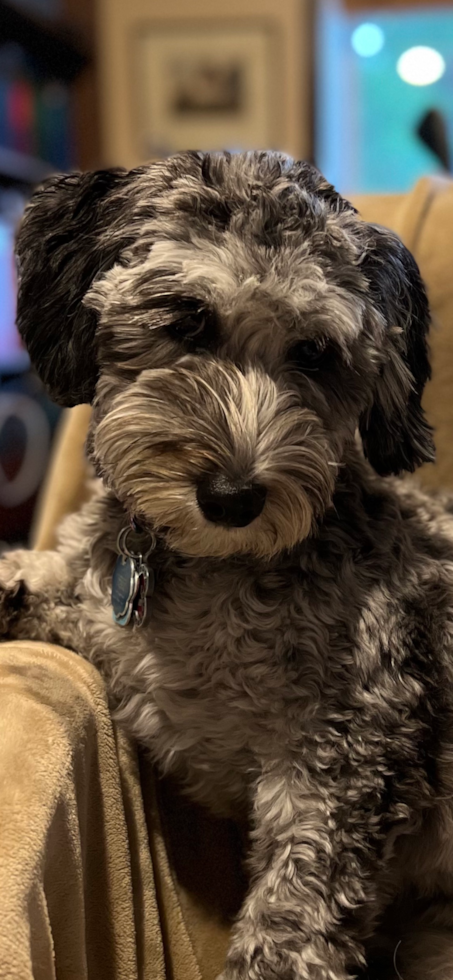
A Mini Portidoodle may suit you better if you enjoy training, outdoor activity, water sports, and dogs that like having something meaningful to do.
Portuguese Water Dog and Poodle ancestry combine two capable water-working backgrounds. The result can be an athletic dog that enjoys learning well beyond basic obedience.
The cross can feel especially rewarding for owners who see dog training as part of the fun rather than something that ends once the puppy understands sit and stay.
Its smaller body also makes that athletic ability convenient. A 20-to-25-pound dog can travel easily while still having plenty of stamina for real adventure.
Which Is Bigger: Mini Goldendoodle or Mini Portidoodle?
The Mini Goldendoodle may run slightly larger on average, although their ranges overlap significantly.
Mini Goldendoodles are commonly described around 15 to 35 pounds, while Mini Portidoodles frequently sit around 15 to 30 pounds. Broader examples exist in both crosses.
The Mini Portidoodle can also feel more compact and muscular at the same weight. Portuguese Water Dogs have sturdy working bodies, while Golden Retrievers bring a longer, broader sporting outline.
For many families, either fits comfortably into the small-to-medium category.
Which Is Calmer: Mini Goldendoodle or Mini Portidoodle?
The Mini Goldendoodle usually has the calmer overall profile.
Golden Retrievers are active dogs, but their social and sporting temperament can translate into an easier family rhythm once exercise needs are met.
Portuguese Water Dogs are spirited working dogs with significant energy and persistence. Mini Portidoodles may look for more activity or mental work through an ordinary week.
This does not make the Mini Portidoodle hyperactive. A well-trained dog with adequate outlets can relax beautifully indoors, but it may need more deliberate engagement to reach that point.
Which Is More Energetic?
The Mini Portidoodle generally has the higher working energy.
Portuguese Water Dogs were developed for sustained physical work in and around the water, and the Poodle adds another athletic influence.
Mini Goldendoodles also have plenty of stamina and can handle hiking, swimming, retrieving, and long walks very well.
The difference is how strongly the dog seeks activity. Mini Portidoodles may show greater persistence when they know more fun or work is available.
Which Needs More Mental Stimulation?
The Mini Portidoodle generally needs more deliberate mental engagement.
Portuguese Water Dogs performed several different jobs rather than one repeated task. They needed to respond to changing conditions, solve problems, and work independently enough to be useful around boats.
Poodle intelligence reinforces that trait. Training, search games, retrieving, obstacle work, and water activities can help give the Mini Portidoodle useful outlets.
Mini Goldendoodles benefit from mental enrichment too, but many are satisfied with a more typical mix of training, retrieving, walks, and family interaction.
Which Is Easier to Train?
Both are highly trainable, but the experience may feel different.
The Mini Goldendoodle may have the slight advantage for straightforward family training because Golden Retriever influence can add strong social cooperation and eagerness to please.
The Mini Portidoodle may have the advantage for owners who want to push training further.
Portuguese Water Dog and Poodle intelligence can create a dog capable of handling complex tasks and varied activities with enthusiasm.
Neither needs harsh methods. Positive reinforcement, consistency, and variety work exceptionally well with both.
Which Is Better for First-Time Dog Owners?
The Mini Goldendoodle may have a slight advantage for many first-time owners because the cross generally has a softer social style and somewhat more moderate activity needs.
Its intelligence makes training rewarding, while Golden Retriever influence can make cooperation feel natural.
A Mini Portidoodle can also make an excellent first dog for someone who enjoys active training and is willing to provide consistent physical and mental outlets.
The mistake would be choosing the Portidoodle primarily because it is compact while expecting the exercise needs of a low-energy companion dog.
Which Is Better With Young Children?
Both can fit family life well, but the Mini Goldendoodle may have a slight advantage for very young children because of its typically softer social temperament.
Golden Retriever influence can add patience, friendliness, and broad family sociability. Mini Goldendoodles can still be energetic enough to knock over toddlers, so polite greetings matter.
Mini Portidoodles can also be wonderful with children, especially when activity is part of the household rhythm. Their faster, more physically driven style may suit older or more active children particularly well.
Supervision and respectful handling matter with either cross.
Which Is Better With Older Children?
The comparison is extremely close with older children.
Mini Goldendoodles can offer excellent companions for fetch, swimming, hiking, training, and outdoor games. Their social style can make participation feel easy and relaxed.
Mini Portidoodles may appeal even more to children who genuinely enjoy teaching tricks, creating games, or participating in water activities. The dog's appetite for engagement gives older children plenty of constructive ways to interact.
The best fit depends on whether the household prefers broad family companionship or a more activity-focused partnership.
Which Is Better With Other Dogs?
Both generally have good potential with other dogs.
Mini Goldendoodles may have the slight advantage for broad social ease because Golden Retrievers are famously sociable. Many enjoy canine playmates and adapt comfortably to multi-dog households.
Mini Portidoodles can also be highly social but may bring more energy into the interaction. Another active dog can make an excellent companion, while a quiet senior may need frequent breaks.
Play style and energy compatibility matter more than naming one cross the universal winner.
Which Is Better With Cats?
Both can live comfortably with cats when introductions and boundaries are handled well.
Neither cross has strong terrier-style prey ancestry. A running cat can still attract attention because both dogs have sporting or working instincts.
Mini Goldendoodles may have a slight advantage if their overall activity level is softer. Mini Portidoodles may need more deliberate work around chasing when excitement runs high.
Cat escape areas and reinforcement for calm behavior can make either combination successful.
Which Likes Water More?
This is one of the closest categories because both crosses have water-working ancestry on both sides.
Golden Retrievers were developed for retrieving game through water, and Poodles have their own water-retriever history.
Portuguese Water Dogs worked directly with fishermen, swimming between boats, retrieving equipment, and carrying messages over water. The Poodle adds another aquatic background here too.
The Mini Portidoodle may have a slight edge for the intensity of water interest because the Portuguese Water Dog's historical role centered so heavily on aquatic work. Individual preference still matters more than the label alone.
Which Is Better for Swimming?
Both are excellent candidates for swimming.
Mini Goldendoodles can bring Golden Retriever strength, retrieving instinct, and enthusiasm for water. Many enjoy fetching floating toys and joining family outings around lakes or pools.
Mini Portidoodles can be especially impressive swimmers because Portuguese Water Dogs were built for repeated work in the water. Their compact muscular bodies and strong working history fit aquatic activities extremely well.
If swimming is a major part of family life, either cross offers an unusually good foundation.
Which Likes Fetch More?
The Mini Goldendoodle may have a slight advantage for classic fetch because Golden Retrievers were specialized gundog retrievers.
Many Mini Goldendoodles naturally enjoy carrying toys back to people and repeating the game.
Mini Portidoodles can also love retrieving. Portuguese Water Dogs retrieved lost equipment and other objects from the water, so carrying and returning items fit their historical skill set too.
The difference is subtle. The Goldendoodle may lean more toward repetitive person-focused retrieval, while the Portidoodle may enjoy a wider range of problem-solving tasks around the game.
Which Is More Alert?
The Mini Portidoodle generally has the stronger watchful side.
Portuguese Water Dogs had to pay close attention to working environments and are historically described as alert companions. A Mini Portidoodle may notice outside sounds, unfamiliar visitors, or changes around the home more quickly.
Mini Goldendoodles can alert too, especially through Poodle influence, but their Golden side usually pushes them more strongly toward sociability.
For apartment living or noise-sensitive homes, early quiet training may deserve slightly more attention with a Mini Portidoodle.
Which Is More Social With Strangers?
The Mini Goldendoodle generally has the advantage for immediate broad sociability.
Golden Retrievers are famous for outgoing, friendly temperaments, and many Mini Goldendoodles approach new people with enthusiasm.
Portuguese Water Dogs can be affectionate and confident but may show more awareness before throwing themselves into an unfamiliar interaction. Their working history includes a stronger alert component.
A Mini Portidoodle can still be highly social. The difference is that the Mini Goldendoodle is more likely to treat friendliness as the default starting point.
Which Sheds Less: Mini Goldendoodle or Mini Portidoodle?
The Mini Portidoodle generally has the clearer advantage for low visible shedding.
Portuguese Water Dogs and Poodles both have coats known for releasing relatively little hair. Mini Portidoodles therefore start with low-shedding coat traits on both sides.
Mini Goldendoodles have a shedding Golden Retriever on one side, so coat behavior can vary much more. Curly dogs may shed very little, while straighter individuals can leave noticeably more hair around the home.
Neither cross should be treated as an allergy guarantee.
Which Needs More Grooming?
Both need regular grooming, but the reasons differ slightly.
Mini Goldendoodles can have soft wavy coats that mat quickly underneath, and straighter dogs may need undercoat removal. Longer furnishings can collect debris during outdoor activity.
Mini Portidoodles commonly have dense waves or curls that need frequent combing. Their tendency to enjoy swimming can add rinsing, drying, detangling, and ear care to the routine.
Neither is a low-maintenance coat. Short practical trims make life considerably easier for active dogs of either cross.
Which Is Better for Allergies?
The Mini Portidoodle may offer the stronger low-shedding profile, but neither dog can be guaranteed suitable for someone with allergies.
Portuguese Water Dogs and Poodles both release relatively little visible hair. Mini Goldendoodles can inherit significantly more shedding through the Golden Retriever side.
Allergens still come from dander and saliva, so low shedding does not equal allergen-free.
Anyone with serious allergies should base the decision on personal tolerance rather than relying only on coat type.
Which Is Better for Apartment Living?
Both can live successfully in apartments, but their challenges differ.
The Mini Goldendoodle may have the easier temperament profile because its activity needs can sit slightly lower and broad sociability may make urban life easy to navigate.
The Mini Portidoodle is frequently compact, but its stronger energy and mental needs require a deliberate routine. Daily exercise and training matter much more than floor space.
A bored working dog struggles in a large house just as easily as a small apartment. A well-exercised Mini Portidoodle can live very comfortably in compact housing.
Which Is Better for Seniors?
The Mini Goldendoodle may have the broader appeal for active seniors because its social temperament and somewhat more moderate energy can fit a flexible daily routine.
Smaller Mini Goldendoodles can provide enough athletic ability for regular walking without asking for as much structured mental work.
A Mini Portidoodle may suit a very active senior who enjoys training, swimming, outdoor hobbies, or longer daily exercise.
For either cross, grooming and adult weight should be considered alongside temperament.
Which Is Better for an Active Lifestyle?
The Mini Portidoodle has a slight advantage for consistently active households.
Portuguese Water Dog and Poodle ancestry combines stamina, intelligence, athletic ability, and enthusiasm for work. A healthy adult may enjoy hiking, swimming, training, retrieving, agility-style games, and varied outdoor activity.
Mini Goldendoodles also make excellent adventure companions and can easily keep up with active families.
The difference is that the Portidoodle may seek that level of engagement more strongly, while the Goldendoodle may offer a little more flexibility when some days are quieter.
Which Is Better for a Quieter Household?
The Mini Goldendoodle is usually the easier choice for a quieter home.
It still needs exercise and engagement, but Golden Retriever influence can create a more socially relaxed rhythm once daily needs are met.
Mini Portidoodles can settle beautifully, but they generally benefit from more purposeful mental activity and may notice household or outside activity more quickly.
For someone who wants a dog that enjoys adventure without making structured activity a central part of every day, the Mini Goldendoodle may fit more naturally.
Which Handles Cold Weather Better?
Both can tolerate cool conditions reasonably well, especially when their coats are kept at a practical length.
Golden Retrievers have dense double coats designed to protect them during outdoor and water work.
Mini Goldendoodles with stronger Golden coat influence may handle colder conditions comfortably.
Portuguese Water Dogs also developed for coastal work and carry dense, water-resistant coats suited to challenging environments.
There is no major practical winner for normal winter activity. Coat length, body size, activity, and individual comfort matter more.
Which Handles Warm Weather Better?
The Mini Portidoodle may have a slight practical advantage when it stays smaller and more compact, but neither cross should exercise hard in extreme heat.
Portuguese Water Dogs are muscular working dogs and can generate considerable heat during activity. Their coats also need sensible management.
Mini Goldendoodles with thicker Golden-style coats can struggle in hot, humid conditions too.
Early morning or evening exercise, shade, water, and indoor cooling make summer activity safer for both.
Which Is More Predictable in Coat Type?
The Mini Portidoodle generally has the advantage for coat-texture predictability.
Portuguese Water Dogs naturally come in wavy or curly coats, while Poodles contribute curl. This keeps the Mini Portidoodle's likely texture within a narrower range.
Mini Goldendoodles combine the Poodle curl with a Golden Retriever coat that may be straight or gently wavy and includes a true undercoat. Their coat possibilities therefore stretch more widely from relatively straight to strongly curled.
Customer reviews that describe adult coat care can give useful practical insight into how each texture feels to maintain.
Mini Goldendoodle vs Mini Portidoodle: The Final Comparison
Choosing between a Mini Goldendoodle vs Mini Portidoodle is easier once you recognize how much working history they share. Both have Poodle ancestry. Both have water-working ability behind them.
Both can retrieve, swim, learn quickly, form strong family bonds, and participate in an active lifestyle.
The meaningful difference lies in the type of working dog added to that shared foundation.
The Mini Goldendoodle brings the Golden Retriever, a Scottish gundog built around cooperative retrieving over land and water. That influence can create an affectionate, openly social dog that enjoys activity largely through interaction with people. It is athletic without usually feeling intensely work-driven and can fit a wide range of family routines.
The Mini Portidoodle brings the Portuguese Water Dog, a muscular coastal worker expected to perform varied jobs alongside fishermen. That ancestry can add greater persistence, alertness, stamina, and a stronger appetite for purposeful activity. The dog can still be cuddly and affectionate, but it may ask for more from its day.
Their coats create another useful difference. Mini Goldendoodles can have straight, wavy, or curly hair and may show anything from very low to noticeable shedding. Mini Portidoodles usually have waves or curls and generally offer a stronger low-shedding profile because both sides contribute that type of coat.
Size is relatively close, though the Mini Goldendoodle can run slightly larger. Both fit comfortably into the small-to-medium range in many breeding programs.
Family fit comes down to daily rhythm.
If you want a friendly, trainable, athletic dog with broad sociability and a slightly softer lifestyle profile, the Mini Goldendoodle may suit you better.
If you want a compact working athlete with strong water instinct, high intelligence, greater alertness, and more appetite for structured activity, the Mini Portidoodle may be the more satisfying match.
Neither choice is simply better. One leans toward Golden Retriever social cooperation, while the other leans toward Portuguese Water Dog working intensity.
Breed-specific customer reviews can add useful real-world perspective before deciding, especially reviews that describe adult energy, swimming habits, training needs, grooming, shedding, and what an ordinary weekday feels like with the dog.
The best fit is the dog whose natural pace makes sense within the life your household already enjoys.
Frequently Asked Questions
What is the main difference between a Mini Goldendoodle and Mini Portidoodle? Both share Poodle ancestry, but the Mini Goldendoodle adds Golden Retriever influence while the Mini Portidoodle adds Portuguese Water Dog influence. Mini Goldendoodles generally lean toward broad sociability, cooperative training, and moderate-to-high sporting energy. Mini Portidoodles may show greater working intensity, alertness, stamina, and interest in challenging physical or mental activity.
Which is bigger, a Mini Goldendoodle or Mini Portidoodle? Their ranges overlap, but the Mini Goldendoodle may run slightly larger. Mini Goldendoodles are commonly described around 15 to 35 pounds, while Mini Portidoodles frequently fall around 15 to 30 pounds. Different breeding programs may use broader definitions, so neither name describes one exact adult size.
Which is calmer, a Mini Goldendoodle or Mini Portidoodle? The Mini Goldendoodle usually has the calmer overall lifestyle profile. Mini Portidoodles can relax very well indoors, but Portuguese Water Dog ancestry can add greater stamina and a stronger desire for mental and physical engagement. The Goldendoodle may fit more easily into households where active days alternate with quieter ones.
Which is easier to train, a Mini Goldendoodle or Mini Portidoodle? Both are highly trainable. The Mini Goldendoodle may feel slightly easier for straightforward family training because Golden Retrievers are exceptionally cooperative and socially motivated. Mini Portidoodles may excel when training gets more complex because Portuguese Water Dogs and Poodles both bring strong problem-solving ability and working drive.
Which sheds less, a Mini Goldendoodle or Mini Portidoodle? The Mini Portidoodle generally has the stronger low-shedding profile because both Portuguese Water Dogs and Poodles naturally release relatively little visible hair. Mini Goldendoodles can also shed very little when the coat is curly, but straighter Golden-influenced coats may release significantly more. Neither cross is guaranteed allergy-friendly.
Which needs more grooming, a Mini Goldendoodle or Mini Portidoodle? Both require regular coat care. Mini Goldendoodles can mat through soft waves or need more undercoat management when the coat is straighter. Mini Portidoodles commonly have dense waves or curls, and regular swimming can add rinsing, drying, ear care, and extra detangling. Neither cross is a low-maintenance grooming choice.
Is a Mini Goldendoodle or Mini Portidoodle better with children? Both can be excellent with children. The Mini Goldendoodle may have a slight advantage for families seeking a softer, broadly social companion. The Mini Portidoodle may especially suit active older children who enjoy training, swimming, games, and outdoor activity. Young children should always be supervised with either dog, especially during energetic play.
Which is better for swimming, a Mini Goldendoodle or Mini Portidoodle? Both have excellent aquatic ancestry. Golden Retrievers and Poodles were developed around retrieving through water. Portuguese Water Dogs worked directly alongside fishermen and were expected to swim, retrieve equipment, and carry messages between boats. The Mini Portidoodle may show a slightly stronger natural drive toward water work, but either cross can turn into an enthusiastic swimmer.
Which is better for an active family, Mini Goldendoodle or Mini Portidoodle? Both can fit active families very well, but the Mini Portidoodle generally has the stronger working-energy profile. It may especially suit households that enjoy swimming, hiking, structured training, retrieving, and dog sports. The Mini Goldendoodle can participate in all of those activities too while usually offering a little more flexibility during quieter periods.
Should I choose a Mini Goldendoodle or Mini Portidoodle? Choose a Mini Goldendoodle if you want an affectionate, outgoing, highly trainable family dog with strong sporting ability and a slightly softer social temperament. Choose a Mini Portidoodle if you want a compact, muscular, low-shedding water-dog mix with high intelligence, strong athletic ability, greater alertness, and more appetite for purposeful activity. Both can be excellent companions, but the better fit depends on whether Golden Retriever sociability or Portuguese Water Dog working intensity matches your lifestyle more closely.