


Published Tuesday, October 20, 2026 by Pilesgrove Pups
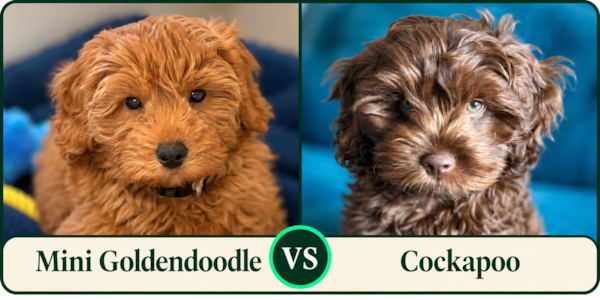
The Mini Goldendoodle vs Cockapoo comparison brings together two friendly Poodle mixes with sporting-dog roots, which is why the choice can feel harder than expected. Both can be affectionate, clever, playful, highly trainable, and eager to participate in family life. Both can also have soft wavy or curly coats and the rounded teddy bear appearance many people associate with small Poodle mixes.
The important difference sits on the other side of the Poodle. A Mini Goldendoodle combines Golden Retriever ancestry with a Miniature Poodle, while a Cockapoo combines a Cocker Spaniel with a Toy or Miniature Poodle. That gives both dogs retrieving ability and sporting heritage, but the original jobs of the Golden Retriever and Cocker Spaniel were not identical.
Golden Retrievers were developed as larger gundogs capable of locating and retrieving shot game, including waterfowl, over demanding ground and water. Cocker Spaniels developed as compact flushing spaniels that worked closer to the hunter, using scent and lively movement to push gamebirds from cover before retrieving when needed. Modern Cockapoos may come from American or English Cocker Spaniels, which adds another layer of variation because English Cockers are generally larger and can bring stronger field-dog energy.
In everyday life, the Mini Goldendoodle usually has greater potential for adult size and may bring more of the Golden's broad sociability, retrieving enthusiasm, physical sturdiness, and easy willingness to work with people. The Cockapoo is usually more compact and can bring a lively spaniel style with strong scent interest, playful enthusiasm, and a surprisingly athletic body beneath all that soft hair.
Neither dog is simply the calmer or easier option. Both need exercise, grooming, training, and close involvement with their families. The more useful question is whether you prefer the larger retriever influence of the Golden or the compact flushing-spaniel influence of the Cocker alongside the intelligence and coat traits of the Poodle.
Table of Contents
- Mini Goldendoodle vs Cockapoo at a Glance
- Mini Goldendoodle and Cockapoo Overview and History
- Mini Goldendoodle vs Cockapoo Appearance
- Mini Goldendoodle vs Cockapoo Temperament
- Mini Goldendoodle vs Cockapoo: Which One Should You Choose?
- Choose a Mini Goldendoodle if You Want a Social, Sturdy Family Companion
- Choose a Cockapoo if You Want a Compact Sporting Companion
- Which Is Bigger: Mini Goldendoodle or Cockapoo?
- Which Is Calmer: Mini Goldendoodle or Cockapoo?
- Which Is More Energetic?
- Which Is Easier to Train?
- Which Is Better for First-Time Dog Owners?
- Which Is Better With Young Children?
- Which Is Better With Older Children?
- Which Is Better With Other Dogs?
- Which Is Better With Cats?
- Which Has Stronger Hunting or Sporting Instincts?
- Which Is Better for Fetch and Retrieving?
- Which Is Better for Swimming?
- Which Sheds Less: Mini Goldendoodle or Cockapoo?
- Which Needs More Grooming?
- Which Has Easier Ear Care?
- Which Is Better for Allergies?
- Which Is Better for Apartment Living?
- Which Is Better for Seniors?
- Which Is Better for an Active Lifestyle?
- Which Is More Social With Strangers?
- Which Is More Likely to Follow Its Nose?
- Which Is More Predictable in Size?
- Mini Goldendoodle vs Cockapoo: The Final Comparison
Mini Goldendoodle vs Cockapoo at a Glance
| Trait | Mini Goldendoodle | Cockapoo |
| Parent breeds | Golden Retriever × Miniature Poodle | Cocker Spaniel × Toy or Miniature Poodle |
| General size | Small-medium to medium | Small to medium-small |
| Common adult weight | Often about 15–35 pounds, with wider variation | Often about 12–25 pounds, with wider variation |
| Build | Sturdy, athletic, sometimes longer-legged | Compact, sturdy, athletic |
| Coat | Straight, wavy, or curly | Straight, wavy, or curly |
| Shedding | Low to moderate, coat-dependent | Low to moderate, coat-dependent |
| Grooming | Moderate to high | Moderate to high |
| Color range | Cream, gold, apricot, red, brown, black and more | Very broad, including solid, parti and roan-influenced patterns |
| Eye color | Usually brown or dark brown | Usually brown or dark brown |
| Energy | Moderate to moderately high | Moderate to moderately high |
| Trainability | High to very high | High |
| Retrieving interest | Common | Common |
| Scent and flushing influence | Present but less central | Can be especially noticeable |
| Social style | Friendly, affectionate, outgoing, cooperative | Merry, affectionate, lively, social |
| Best fit | Families wanting a social, trainable, slightly larger companion | Families wanting a compact, playful sporting companion |
These are useful tendencies rather than fixed standards. Neither cross has one official adult size, and Poodle size, generation, parent lines, and the actual Cocker or Golden used in the pairing can shift the result. Cockapoos also vary depending on whether American or English Cocker Spaniel ancestry is involved.
Mini Goldendoodle and Cockapoo Overview and History
The Mini Goldendoodle and Cockapoo share more history than many designer-dog comparisons because three of the parent breeds involved have strong sporting backgrounds. Golden Retrievers, Cocker Spaniels, and Poodles all developed around work that required cooperation with people, athletic ability, and an interest in retrieving.
That shared history helps explain why both crosses can learn quickly and enjoy active family life. Their sporting instincts are not identical, though. Golden Retrievers were bred as larger retrievers, while Cockers were compact spaniels whose work centered heavily on flushing birds from dense cover and then retrieving them.
The Miniature Poodle adds another athletic, highly intelligent parent to each cross. Although modern Miniature Poodles are widely kept as companions, they share the Poodle's water-retriever heritage and retain impressive trainability and physical ability.
The result is two dogs that may look like soft companion breeds but have considerably more sporting ability underneath their coats than their teddy bear appearance suggests.
Mini Goldendoodle History and Background
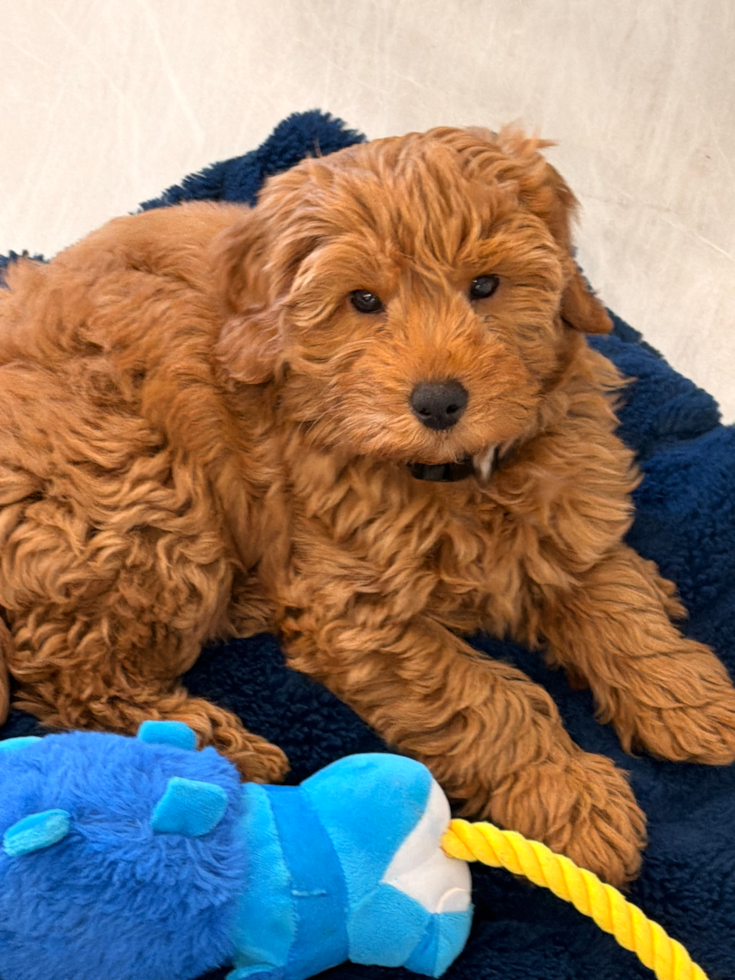
The Mini Goldendoodle combines Golden Retriever and Miniature Poodle ancestry. Unlike the Standard Goldendoodle, which can be produced directly from a Golden Retriever and Standard Poodle of more comparable size, smaller Goldendoodles may involve different generations or carefully selected smaller lines because of the large physical gap between a Golden Retriever and Miniature Poodle.
Golden Retrievers developed in nineteenth-century Scotland, with particularly detailed records tied to Lord Tweedmouth's Guisachan estate in the Highlands. The goal was a capable retrieving dog that could work over the wet, rugged terrain associated with British shooting estates.
Retrieving required a particular combination of traits. The dog needed enough stamina to work for long periods, the willingness to enter water, a natural inclination to carry game, a soft mouth, and close cooperation with the hunter.
Those qualities still shape the Golden Retriever. Modern Goldens are friendly, devoted, playful, physically capable dogs that excel in areas ranging from hunting and obedience to guide work, search and rescue, therapy, and dog sports.
The Miniature Poodle adds another intelligent retriever heritage while reducing the size of the finished cross. Poodles are agile, quick learners, and highly responsive to training, so the Mini Goldendoodle can receive strong cooperation and problem-solving traits from both sides.
This combination helps explain why many Mini Goldendoodles are so people-focused. Their ancestry contains two breeds shaped around working closely with humans rather than making most decisions far away from them.
Cockapoo History and Background
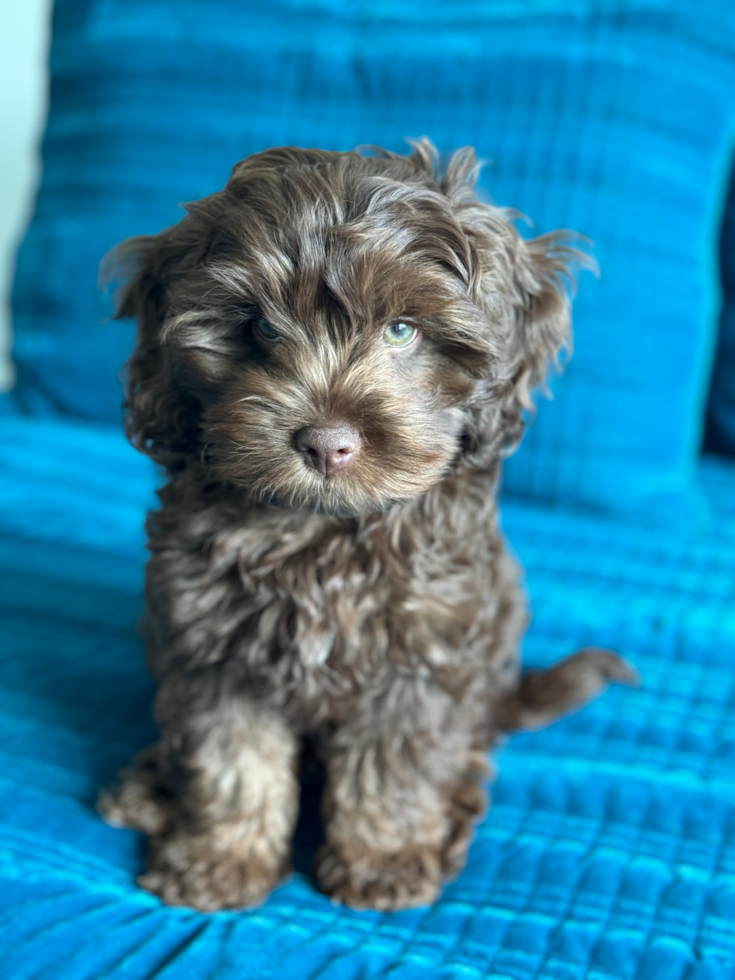
The Cockapoo combines a Cocker Spaniel with a Toy or Miniature Poodle. It is one of the older well-known Poodle crosses, with intentional Cockapoo breeding commonly associated with the United States during the mid-twentieth century.
The Cocker Spaniel brings sporting history on a smaller scale. Spaniels were developed to locate and flush game from cover, and the name “Cocker” is tied historically to work involving woodcock. Their compact bodies allowed them to move through brush while their noses helped them locate birds hidden from the hunter.
In the United States, the Cocker Spaniel developed into its own smaller breed, distinct from the English Cocker Spaniel. American Cockers commonly weigh around 20 to 30 pounds and stand roughly 13.5 to 15.5 inches. English Cockers are generally larger, commonly around 26 to 34 pounds and 15 to 17 inches tall.
That distinction matters in Cockapoos. An American-Cocker Cockapoo may be smaller and somewhat more companion-oriented in build, while English-Cocker ancestry can add size, stamina, and a stronger sporting feel. Working or field-oriented Cocker lines can push the activity level higher still.
The shared Poodle adds intelligence, curl, athleticism, and another retrieving background. As a result, the Cockapoo may have more sporting ability than someone expects from a compact dog with a rounded haircut.
Mini Goldendoodle vs Cockapoo Appearance
The Mini Goldendoodle and Cockapoo can overlap considerably in coat texture, especially when both inherit loose waves and similar warm colors. Apricot dogs with teddy bear trims can look remarkably alike in photographs.
The underlying structures tell a different story. Golden Retrievers are medium-to-large, muscular sporting dogs, while Cocker Spaniels are the compact end of the Sporting Group. Even after Miniature Poodle influence reduces the Mini Goldendoodle's size, Golden ancestry can add more leg, body mass, and overall physical presence.
The Cockapoo generally starts from a smaller foundation and frequently has a more compact outline. Long Cocker ears, spaniel expression, and heavier coat around the ears can also give the face a noticeably different look.
Mini Goldendoodle Appearance
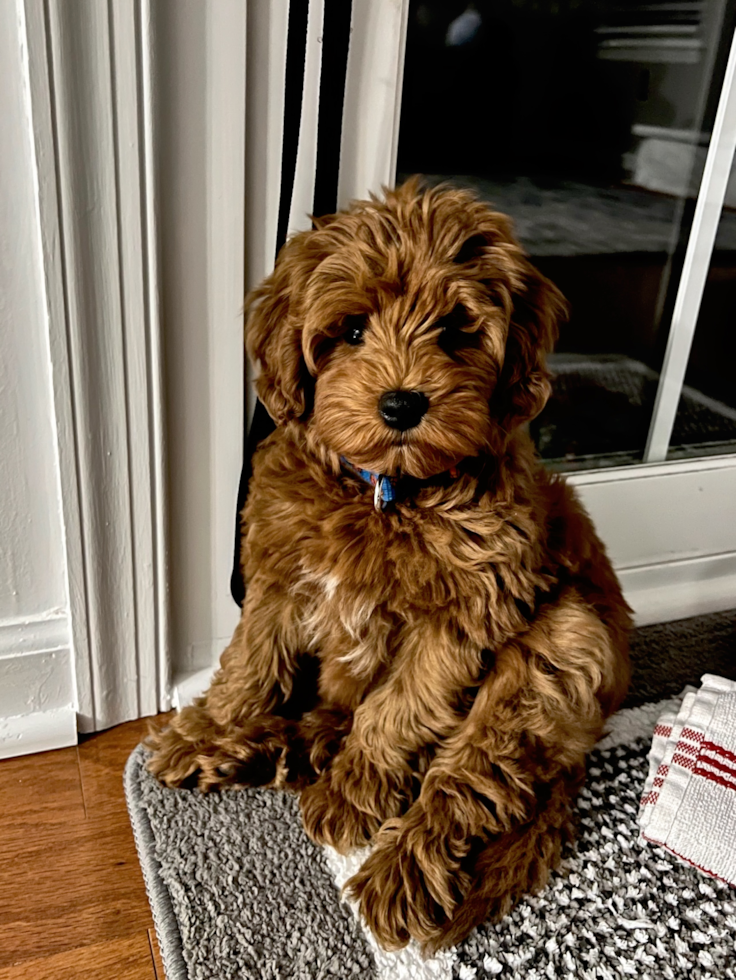
Mini Goldendoodles can vary widely in size because the Golden Retriever is far larger than the Miniature Poodle. Golden Retrievers commonly weigh 55 to 75 pounds and stand around 21.5 to 24 inches, while Miniature Poodles stand over 10 and up to 15 inches and commonly weigh about 10 to 15 pounds.
Many Mini Goldendoodles fall somewhere around 15 to 35 pounds, but some grow outside that range according to generation and the dogs behind the pairing. A first-generation small Goldendoodle and a later-generation Mini Goldendoodle can therefore look quite different despite sharing the same general label.
The body commonly has an athletic, sturdy feel. Strong Golden influence may add more bone, a broader chest, and greater length, while Poodle influence can create a lighter, more refined outline.
Mini Goldendoodle Coat Type and Texture
Mini Goldendoodle coats can be straight, wavy, or curly. Golden Retrievers have dense, water-resistant double coats that may lie straight or wavy, while Poodles contribute dense curl.
Loose waves are particularly familiar in Mini Goldendoodles because they create the shaggy Doodle appearance without the tight texture of a Poodle coat. Some dogs develop stronger curls, especially when they have greater Poodle ancestry.
Straighter dogs may carry more undercoat and release more visible hair. Curlier coats usually trap more loose strands, which can reduce hair around the home but increase the risk of matting.
Adult texture may differ from puppy texture. The soft coat seen during the first few months can develop more density, wave, or curl as mature hair grows in.
Mini Goldendoodle Colors and Markings
Golden Retriever ancestry naturally contributes shades ranging from light gold through richer golden tones. The Poodle broadens the palette considerably.
Mini Goldendoodles can appear in cream, apricot, red, gold, brown, chocolate, black, and other Poodle-influenced colors. White markings and multicolor patterns may also occur depending on the ancestry behind the Poodle side and later generations.
Cream, apricot, red, and gold are especially associated with the cross because they visually connect the Golden Retriever and warm-toned Poodle palettes.
Some coats lighten with age. Poodle fading genes can soften strong puppy colors, so a rich red or apricot puppy may look noticeably lighter as an adult.
Mini Goldendoodle Eyes and Facial Features
Most Mini Goldendoodles have brown or dark brown eyes with a friendly, open expression. Golden Retrievers are known for their soft, intelligent look, while the Poodle can add more refinement through the muzzle and head.
Both parent breeds have dropped ears, so Mini Goldendoodles usually carry ears close to the head. Furnishings can add substantial hair around the muzzle and eyebrows, which creates the familiar rounded Doodle face.
A dog with stronger Golden influence may have a broader head and muzzle. Stronger Poodle traits can produce a narrower, more elegant outline beneath the coat.
Facial structure is generally moderate rather than short, which suits an active sporting companion.
Mini Goldendoodle Build and Size
The Mini Goldendoodle is generally the larger and more variable dog in this comparison. Golden ancestry can add greater height, bone, chest depth, and overall body length.
This can make the cross feel especially sturdy in family life. A 30-pound Mini Goldendoodle has more physical presence than a 15-pound Cockapoo even when both have similar grooming styles.
The athletic build also gives healthy adults plenty of capacity for longer walks, hiking, retrieving, swimming, and active play. Their size is compact compared with a full Golden Retriever but still substantial enough for real outdoor activity.
Anyone with a firm weight limit should ask about parent sizes and mature relatives rather than assuming every Mini Goldendoodle fits one narrow range.
Mini Goldendoodle Shedding
Shedding can vary substantially because the Golden Retriever has a dense double coat while the Poodle has very low visible shedding.
A curly Mini Goldendoodle may leave relatively little hair around the home. A straighter dog with more Golden-style undercoat can shed much more, especially during seasonal coat changes.
Generation can influence the odds, but it does not guarantee one exact coat. Even dogs with similar ancestry can show different shedding patterns.
For someone who strongly dislikes loose hair, coat information from mature parents and adult relatives is more useful than the Mini Goldendoodle name alone.
Mini Goldendoodle Grooming Needs
Wavy and curly Mini Goldendoodles need regular brushing and combing because soft furnishings can tangle quickly. Areas behind the ears, beneath the legs, around the collar, and along the tail are especially easy to miss.
Straighter dogs may need more undercoat removal and somewhat less clipping. Their grooming burden is different rather than automatically lighter.
Professional grooming is common for furnished coats. A shorter pet trim can reduce home maintenance considerably and works particularly well for dogs that swim, hike, or spend plenty of time outdoors.
Ear checks are useful after swimming because dropped ears can hold moisture close to the ear canal.
Cockapoo Appearance
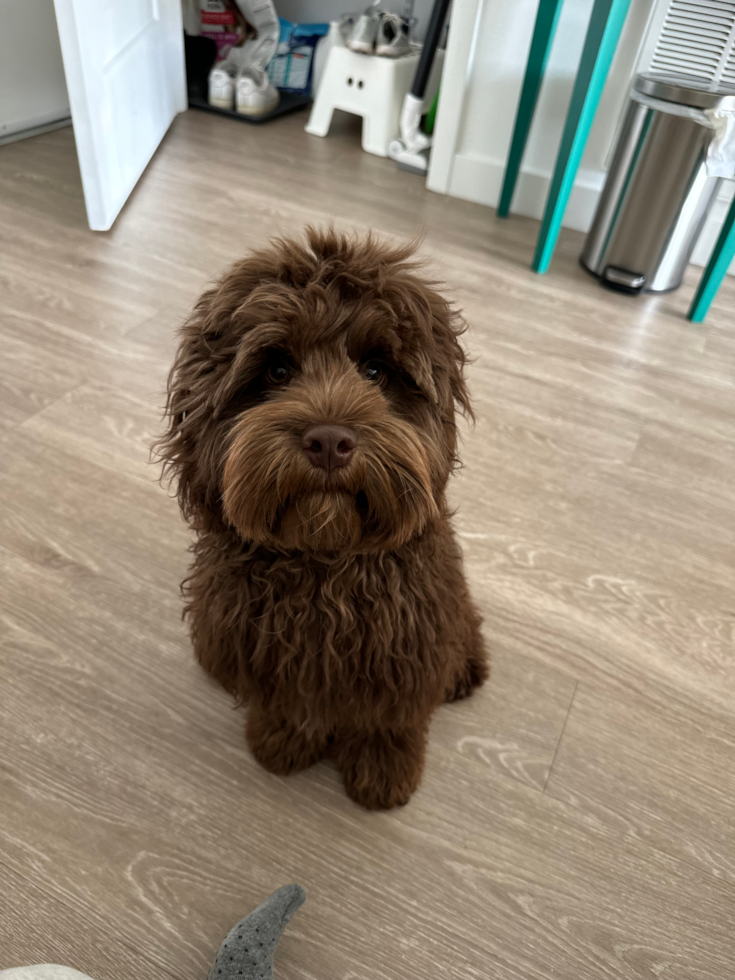
Cockapoos are generally smaller and more compact than Mini Goldendoodles, although Miniature Poodle and English Cocker ancestry can push some adults toward the upper end of the small-dog range.
Many Cockapoos fall around 12 to 25 pounds. Toy Poodle ancestry may produce smaller adults, while an English Cocker paired with a Miniature Poodle can create a sturdier and taller dog.
The Cocker contributes a compact sporting body with enough strength and endurance for real field work. This is not a delicate toy dog simply because it fits comfortably in a smaller home.
Cockapoo Coat Type and Texture
Cockapoo coats can range from relatively straight and silky to loose waves or stronger curls. The Cocker Spaniel contributes silky hair and feathering, while the Poodle adds dense curl.
Many Cockapoos develop a soft wavy coat that feels less woolly than a strong Poodle coat. Others grow substantial curls, especially when Poodle influence is high.
American and English Cocker ancestry can also influence the overall appearance. American Cockers tend to carry more abundant coat in show-bred lines, while English Cockers have a somewhat more moderate sporting outline.
As with Mini Goldendoodles, coat texture may shift as adult hair grows in. A puppy's early waves are not a perfect forecast of adult grooming needs.
Cockapoo Colors and Markings
The Cockapoo has an exceptionally broad color range because both Cocker Spaniels and Poodles contribute variety.
Black, brown, chocolate, cream, buff, apricot, red, gold, white, black and tan, parti patterns, and other combinations can all appear. Cocker ancestry can also contribute roan-influenced patterns, particularly when English Cocker lines are involved.
This wider pattern variety is one of the visual differences from the Mini Goldendoodle. Goldendoodles are frequently associated with solid warm shades, while Cockapoos are commonly seen in both solids and strongly patterned coats.
Poodle fading can affect Cockapoos too. Rich colors may soften as the dog ages, especially when those genes are present in the Poodle line.
Cockapoo Eyes, Ears, and Facial Features
Cockapoos generally have dark, expressive eyes and the soft spaniel expression that contributes heavily to their appeal.
The ears deserve special attention. Cocker Spaniels have long, low-set ears with considerable feathering, and many Cockapoos inherit ears that carry more length and coat than the average Mini Goldendoodle.
Those ears can require extra grooming and routine checks. Hair, moisture, and reduced air circulation around dropped ears can make cleanliness particularly important.
The muzzle is moderate in length. Poodle influence may narrow the face, while stronger Cocker traits can create the rounded, soulful expression associated with spaniels.
Cockapoo Build and Size
Cockapoos tend to have a compact, sturdy build. Cocker Spaniels may be smaller than Golden Retrievers, but they are capable sporting dogs with muscular hindquarters and surprising endurance.
This makes the Cockapoo a useful middle ground for someone who wants an active companion without the larger physical presence of many Mini Goldendoodles.
The shorter, more compact body can also make travel and apartment living easier. A 15-to-20-pound Cockapoo is physically simpler to lift or carry than a 30-to-35-pound Mini Goldendoodle.
The exact Cocker parent matters, though. English Cocker ancestry can add several pounds, additional height, and a noticeably sportier outline.
Cockapoo Shedding
Cockapoos usually shed lightly, but visible shedding still depends on coat inheritance.
Cocker Spaniels have conventional shedding coats, while Poodles release much less visible hair. A curly Cockapoo may leave very little hair around the house, while a straighter spaniel-influenced coat can release more.
Some loose hair also stays caught inside wavy furnishings rather than reaching the floor. Regular brushing removes it before it contributes to tangles.
Low shedding should describe a coat tendency rather than serve as an allergy guarantee.
Cockapoo Grooming Needs
Cockapoos require consistent grooming, especially around the ears, legs, chest, and belly where longer furnishings can tangle.
Curlier dogs need thorough combing close to the skin. Straighter or silkier coats may brush out more easily in some areas but can still knot where friction and feathering meet.
Ear maintenance deserves more emphasis in the Cockapoo than in many other small Poodle mixes. Long, hairy ears should be checked regularly, particularly after bathing or swimming.
Many families choose shorter pet trims because they simplify coat and ear care while keeping the soft spaniel-Doodle appearance.
Mini Goldendoodle vs Cockapoo Appearance Comparison: What Is the Difference?
The most useful physical difference is larger retriever structure versus compact spaniel structure. Mini Goldendoodles usually have greater potential for height, weight, and overall body mass because of the Golden Retriever.
Cockapoos generally stay smaller and more compact. Even when a Cockapoo reaches the low twenties in weight, the spaniel foundation commonly gives it a different outline from a similarly sized Mini Goldendoodle.
Coat texture overlaps heavily. Either dog can have loose waves or curls, so coat alone does not separate the crosses reliably. The Cockapoo may show more silky spaniel texture and heavier ear feathering, while the Mini Goldendoodle may carry more Golden-like undercoat when its coat is straighter.
Color and pattern also differ. Mini Goldendoodles are strongly associated with cream, gold, apricot, and red, although other colors occur. Cockapoos commonly display a wider range of parti, tan-pointed, and roan-influenced patterns through Cocker ancestry.
For someone who wants a sturdier, slightly larger Doodle appearance, the Mini Goldendoodle may have the edge. For someone who wants a compact sporting dog with long spaniel ears and greater pattern variety, the Cockapoo offers a distinctive alternative.
Mini Goldendoodle vs Cockapoo Temperament
The temperament comparison is closer than it first appears because both crosses have cooperative sporting ancestry. Golden Retrievers, Cocker Spaniels, and Poodles all developed around work with people, so trainability and human attachment are strong themes on both sides.
The difference is less about whether the dog likes activity and more about how that sporting drive is expressed.
Golden influence can produce an outgoing retriever that enjoys carrying toys, fetching, swimming, and participating broadly in family activities. Cocker influence may add a smaller, quicker sporting style with greater interest in scent, brush, birds, and close-range exploration.
Mini Goldendoodle Temperament

Mini Goldendoodles tend to be affectionate, social, playful dogs that enjoy close involvement with their families. Golden Retriever influence can add a famously friendly approach to people, while the Poodle contributes another responsive, intelligent temperament.
Many Mini Goldendoodles enjoy doing things with people rather than simply staying nearby. Walks, retrieving games, training, trips, swimming, and family outings can all fit naturally into the relationship.
Their social nature can make them excellent companions, but it also means independence should be taught rather than assumed. A puppy that has constant access to people may struggle when the household eventually has to leave.
Mini Goldendoodle Intelligence and Training
Mini Goldendoodles have strong training potential because both parent breeds are cooperative learners. Goldens have long histories in hunting, assistance work, search and rescue, obedience, and other jobs that depend on close human communication.
Miniature Poodles add quick problem-solving and excellent responsiveness. Together, those traits can make basic training straightforward when owners are consistent.
Many dogs also enjoy progressing past basic manners. Tricks, retrieving, scent games, obedience exercises, and simple agility work can keep training interesting.
Their eagerness can create one challenge: excitement. Teaching calm greetings and impulse control is just as useful as teaching cues because a friendly dog still needs manners.
Mini Goldendoodle Energy Level
Mini Goldendoodles generally have moderate to moderately high energy. Golden Retrievers are active sporting dogs, and Miniature Poodles add another athletic parent.
Healthy adults commonly enjoy brisk walks, retrieving, play, swimming, and longer outings. They usually do best when physical activity is paired with some mental engagement rather than relying on short bathroom walks as their entire routine.
The exact level can vary considerably with generation and Golden lines. A dog with strong field-oriented Golden ancestry may ask for more activity than one from calmer companion-oriented lines.
Many adults develop a useful off switch when exercise, training, and calm behavior are balanced from puppyhood.
Mini Goldendoodle Affection and Sociability
Broad sociability is one of the Mini Goldendoodle's strongest tendencies. Golden Retrievers are known for friendly, trustworthy temperaments, and Poodles also form close relationships with people.
Many Mini Goldendoodles enjoy familiar people and visitors alike. Early socialization helps turn that natural interest into calm confidence rather than uncontrolled enthusiasm.
Affection can be highly physical. The dog may follow family members, lean against them, carry toys over for interaction, and choose resting places close to the group.
That social enthusiasm is wonderful for households that enjoy an involved dog. People seeking a naturally detached companion may find the cross more emotionally present than they expected.
Mini Goldendoodles With Children
Mini Goldendoodles can make excellent family companions. Their playful temperament, trainability, and sturdy body can work especially well with children who enjoy interacting with the dog.
Size still matters. A larger Mini Goldendoodle can knock over a toddler during enthusiastic greetings, even when the dog is exceptionally gentle.
Older children may enjoy retrieving games, training, walks, and swimming with the dog. These activities give the relationship structure and help channel youthful energy.
As with every family dog, children should learn respectful handling rather than relying on a friendly breed reputation to excuse rough behavior.
Mini Goldendoodles With Other Dogs and Pets
Mini Goldendoodles usually have strong potential in multi-dog households. Golden Retrievers are social sporting dogs, while Poodles also tend to adapt well to canine companionship.
Their playful style may suit another active dog particularly well. Size and enthusiasm should still be matched so that a larger adolescent does not repeatedly overwhelm a quiet smaller companion.
Cats can also fit comfortably into the household. A running cat may trigger playful chasing or retrieving-style interest, but the cross does not bring strong terrier or herding instincts into the mix.
Early calm introductions and rewards for disengaging from the cat help create respectful habits.
Mini Goldendoodle Barking and Alertness
Mini Goldendoodles can alert to visitors or unusual sounds, but barking is not usually the defining feature of the cross.
Golden Retrievers were developed primarily to work alongside hunters rather than guard property, and their social nature generally pushes them toward friendly engagement. Poodles can add more environmental awareness.
Some dogs bark through excitement rather than suspicion. Doorbells, visitors, another dog outside, or anticipation of activity can trigger vocal behavior.
Training calm greetings and quiet responses early keeps enthusiasm from turning into a noisy household routine.
Cockapoo Temperament
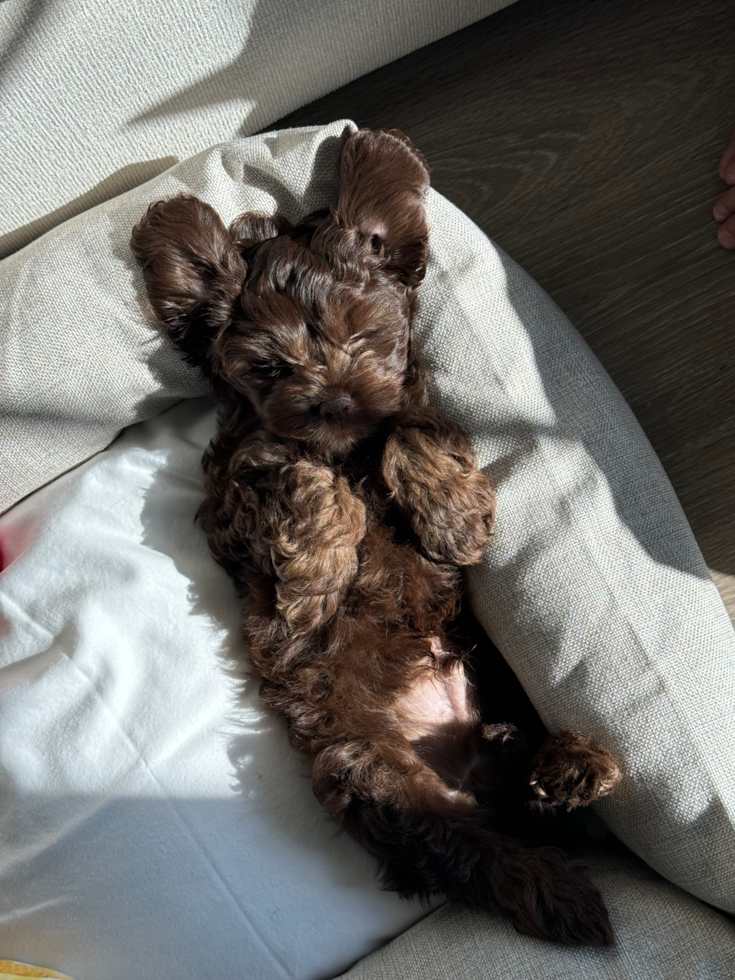
Cockapoos tend to be cheerful, affectionate, lively companions with plenty of sporting ability packed into a smaller body. The Cocker contributes the classic merry spaniel temperament, while the Poodle adds intelligence and an eagerness to interact.
Many Cockapoos have a playful, curious style. They may investigate smells during walks, follow birds through the yard with their eyes, and enthusiastically join games without needing the body size of a Golden-based cross.
Their compact size can make the energy easier to manage physically, but it should not be mistaken for low activity.
Cockapoo Intelligence and Training
Cockapoos are strong learners. Poodle intelligence combines with a spaniel that was bred to respond to hunters while locating and flushing birds.
Positive training usually suits the cross extremely well. Food, toys, retrieving, and praise can all provide useful motivation.
Scent and environmental distractions may challenge recall more than raw understanding does. A Cockapoo can know exactly what “come” means and still find an interesting scent worth investigating for another second.
This is especially relevant when English Cocker or working-spaniel traits are strong. Training around real-world distractions matters more than practicing every cue only in a quiet living room.
Cockapoo Energy Level
Cockapoos generally have moderate to moderately high energy. American-Cocker crosses can fit comfortably into many family routines, while English-Cocker or field-line influence may push activity and stamina higher.
The exercise style can feel lively rather than heavy. Brisk walks, sniffing, retrieving, exploring, and short bursts of play suit many adults very well.
A Cockapoo may also use its nose more intensely than a Mini Goldendoodle. A walk that allows time to investigate scents can satisfy the dog in ways that simply walking faster may not.
Once physical and mental needs are met, many adults settle comfortably indoors and enjoy close companion time.
Cockapoo Scent and Sporting Instincts
Cocker Spaniels were developed to work in cover, locate gamebirds, flush them for hunters, and retrieve when needed. That history can give the Cockapoo a particular interest in scents, birds, brush, and outdoor exploration.
This does not mean every Cockapoo acts like a hunting dog. Companion-bred lines may show only mild traces of these instincts, while dogs with stronger working Cocker ancestry can display much more.
Owners may notice nose-down exploring, excitement around birds, an enthusiasm for retrieving, or a tendency to investigate dense vegetation on walks.
Scent games and hidden-treat searches can turn these instincts into easy enrichment at home without requiring any formal hunting activity.
Cockapoo Affection and Family Attachment
Cockapoos are strongly people-oriented. Cockers have long combined sporting ability with an affectionate household temperament, while Poodles add another breed that bonds closely with people.
Many Cockapoos enjoy lap time and physical closeness more readily than their athletic ability might suggest. They can spend part of the day exploring enthusiastically and the evening pressed against someone on the sofa.
Separation skills still deserve attention. A dog bred from two human-focused parents can struggle if it never learns that short periods alone are normal.
Independent naps, calm departures, and solo enrichment help create a healthier balance.
Cockapoos With Children
Cockapoos can be excellent family dogs, particularly with children who enjoy active play but live in a household that prefers a smaller companion.
Their compact build provides more sturdiness than many toy breeds without creating the same knocking power as a larger Mini Goldendoodle.
Temperament and line matter, though. A lively English-Cocker-influenced Cockapoo may enjoy significantly more action than a calmer American-Cocker-based dog.
Older children can participate in retrieving, scent games, training, and walks, which gives the dog's sporting intelligence productive outlets.
Cockapoos With Other Dogs and Pets
Cockapoos generally do well with other dogs and can enjoy canine playmates. Their social spaniel and Poodle ancestry gives them a good foundation for multi-dog living.
Cats can also fit well, especially when introductions start early. Birds and very small animals may attract more interest because of the Cocker's hunting heritage.
This does not equal terrier-style prey drive, but outdoor birds or quick movement can be highly interesting to some dogs.
Recall and calm disengagement around distractions are useful life skills even when the dog never shows intense hunting behavior.
Cockapoo Barking and Alertness
Cockapoos can be alert and may announce visitors, movement outside, or unfamiliar noises. The degree varies considerably among individuals and lines.
Some barking comes from excitement. A Cockapoo that loves visitors may sound very vocal at the door even though its intention is social rather than defensive.
Sufficient exercise and mental activity can reduce boredom-based noise. Teaching a predictable door routine also gives the dog something more useful to do than bark through the entire arrival.
Apartment owners should consider the individual parents' vocal tendencies rather than assuming every small Cockapoo is naturally quiet.
Mini Goldendoodle vs Cockapoo Temperament Comparison: What Is the Real Difference?
The strongest temperament distinction is broad retriever sociability versus compact spaniel curiosity.
The Mini Goldendoodle generally leans toward the Golden Retriever's open, cooperative style. Many are enthusiastic about people, retrieving, shared activities, and training, with a temperament that feels socially expansive.
The Cockapoo generally adds more of the Cocker's merry, close-working sporting style. It can be equally affectionate and trainable while showing greater interest in scent, birds, brush, and exploring the details of its surroundings.
Size also changes how those temperaments feel. A Mini Goldendoodle with Golden-style enthusiasm may deliver its affection and play through a 30-pound body, while a 16-pound Cockapoo can express similar excitement in a much more compact package.
The Cocker parent adds another important variable. American-Cocker-based Cockapoos may lean toward a smaller companion style, while English or working Cocker ancestry can add noticeably more stamina, scent interest, and field-dog enthusiasm.
Neither personality is better. The Mini Goldendoodle may suit someone who wants a friendly all-around family participant, while the Cockapoo may appeal more to someone who enjoys a compact dog with a lively spaniel personality and a nose that likes to investigate the world.
Mini Goldendoodle vs Cockapoo: Which One Should You Choose?
The Mini Goldendoodle and Cockapoo overlap enough that either can fit an affectionate, active household. Both are highly people-oriented, both can learn quickly, and both need regular grooming despite their low-shedding reputation.
The decision gets easier when size, sporting style, coat care, and daily activity are considered together. Golden Retriever influence pushes the Mini Goldendoodle toward greater body size and broad retriever sociability, while Cocker Spaniel influence keeps the Cockapoo more compact and can add stronger scent-focused curiosity.
Choose a Mini Goldendoodle if You Want a Social, Sturdy Family Companion

A Mini Goldendoodle puppy may suit you better if you want a dog with some of the Golden Retriever's physical presence and famously cooperative social style without the full size of a Golden.
Many enjoy family outings, retrieving, swimming, training, and outdoor adventures while staying deeply connected to their people. Their sturdier body can also appeal to families that do not want a very small dog.
The cross suits owners who enjoy an involved companion that likes meeting people and participating in whatever the family is doing. A good daily routine should still include exercise and training rather than relying on friendliness alone.
The main tradeoffs are size and coat predictability. Mini Goldendoodles can grow larger than expected, and straighter Golden-influenced coats may shed more than buyers associate with a Doodle.
Choose a Cockapoo if You Want a Compact Sporting Companion
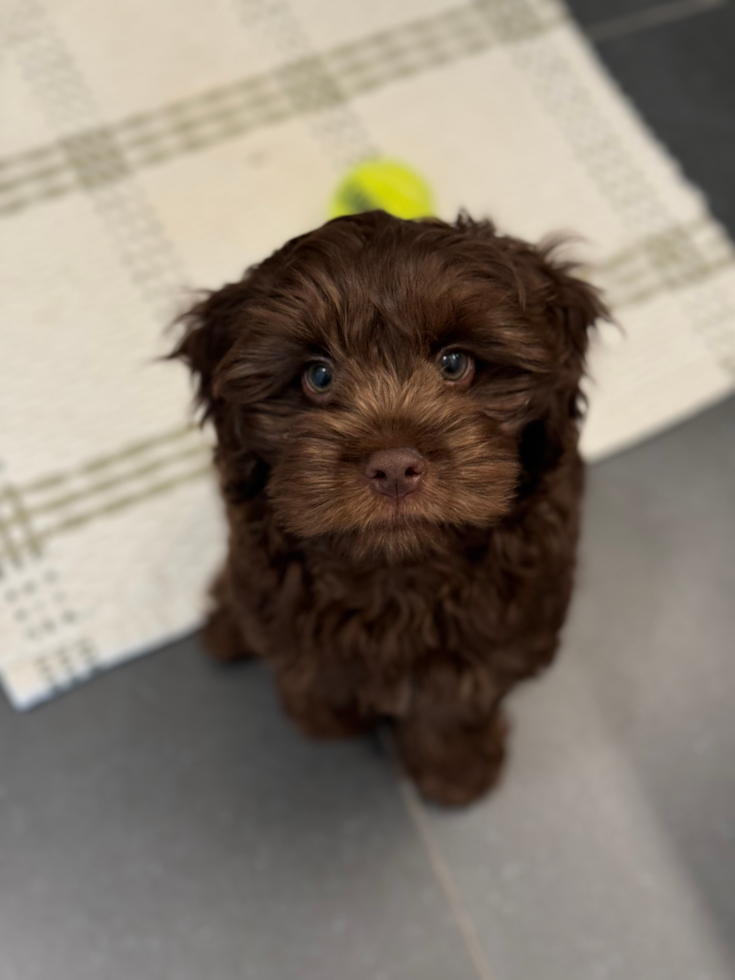
A Cockapoo puppy may suit you better if you want genuine sporting-dog personality in a smaller, easier-to-handle body.
The cross can provide plenty of intelligence, affection, and athletic ability without taking up the physical space of many Mini Goldendoodles. This makes it especially appealing for smaller homes, frequent travel, or owners who simply prefer a compact dog.
Spaniel influence also adds a distinctive style of outdoor interest. Sniffing, birds, brush, retrieving, and close exploration can make walks and games especially engaging for the dog.
The biggest practical cautions are grooming around the ears, possible scent-related distraction, and the need to understand which kind of Cocker sits behind the puppy. An English-Cocker-based
Cockapoo may ask for a more active routine than someone expects.
Which Is Bigger: Mini Goldendoodle or Cockapoo?
The Mini Goldendoodle is usually the larger dog. Golden Retrievers weigh far more than Cocker Spaniels, and that difference can still show strongly even when Miniature Poodle ancestry pulls Goldendoodle size downward.
Many Mini Goldendoodles fall somewhere around 15 to 35 pounds, with some outside that range. Cockapoos commonly sit around 12 to 25 pounds, though English Cocker and Miniature Poodle ancestry can create larger adults.
There is plenty of overlap, so a large Cockapoo can outweigh a petite later-generation Mini Goldendoodle. The better rule is to look at the actual parents rather than depending on the cross name.
Size matters practically for lifting, travel, children, apartment living, and the physical strength required on leash.
Which Is Calmer: Mini Goldendoodle or Cockapoo?
There is no large universal difference in calmness because both crosses come from active sporting breeds and Poodles. Individual lines can shift the answer considerably.
A Mini Goldendoodle with calmer Golden and Miniature Poodle parents may develop a relaxed family rhythm after daily exercise. A Cockapoo from companion-oriented American Cocker lines can do the same.
Working English Cocker ancestry can make some Cockapoos noticeably busier and more scent-driven. Field-oriented Golden ancestry can push a Mini Goldendoodle in the opposite direction and create a dog with more stamina than the average family expects.
For a buyer who strongly prioritizes calmness, parent temperament is more useful than choosing between these two labels.
Which Is More Energetic?
Both usually sit in the moderate-to-moderately-high range, but their energy can feel different.
The Mini Goldendoodle may show more sustained retrieving, swimming, running, and broad physical enthusiasm. Golden Retrievers were built for repeated retrieves over land and water, and Poodle ancestry reinforces athletic ability.
The Cockapoo may express more of its activity through sniffing, exploring, bursts of play, and following scents. English-Cocker or working-line ancestry can increase stamina substantially.
Neither should be chosen as a low-exercise dog. Both benefit from real walks, play, training, and opportunities to use their brains.
Which Is Easier to Train?
Both are highly trainable, but the Mini Goldendoodle may have a small advantage for straightforward cooperative training.
Golden Retrievers and Poodles are both strongly associated with work that requires close responsiveness to people. Many Mini Goldendoodles therefore enjoy learning cues and repeating behaviors that earn praise or rewards.
Cockapoos are excellent learners too. The challenge can appear when scent or wildlife competes for attention, especially in dogs with strong sporting Cocker ancestry.
The Cockapoo may understand a cue just as quickly while needing more deliberate practice around real-world distractions. That difference matters most for recall and off-leash reliability.
Which Is Better for First-Time Dog Owners?
Both can work very well for first-time owners who are prepared for grooming and regular exercise.
The Mini Goldendoodle may have a slight advantage for someone who values easy social cooperation. Golden and Poodle ancestry often creates a dog that responds enthusiastically to positive training and enjoys working closely with people.
The Cockapoo may be easier physically because it is usually smaller. A compact dog can be simpler to lift, transport, manage on leash, and fit into a smaller home.
The deciding factor should be the owner's lifestyle. Someone who dislikes daily coat care, training, or exercise will find challenges with either cross regardless of prior dog experience.
Which Is Better With Young Children?
Both can be excellent with children, but the Mini Goldendoodle may have an advantage for families that want a somewhat sturdier dog.
Golden Retriever influence can add body substance and a friendly, tolerant social style. A larger Mini Goldendoodle still needs good manners because enthusiastic greetings can knock over a toddler.
Cockapoos can also be wonderful family dogs and may be physically easier around small children when their adult size stays modest. Children still need to respect the dog's ears, resting space, and body.
For either cross, a stable parent temperament and early socialization matter more than assuming a popular family-dog label guarantees patience.
Which Is Better With Older Children?
The comparison is extremely close with older children because both dogs can enjoy games, training, walks, and outdoor activity.
A Mini Goldendoodle may particularly suit children who enjoy fetch, swimming, and more physical outdoor play. The Golden side can add enthusiasm for carrying toys and retrieving repeatedly.
A Cockapoo may appeal to children who enjoy teaching tricks, hiding treats, and exploring outdoors with a smaller dog. Scent games can be especially satisfying when Cocker traits are strong.
The best fit depends on how the family actually likes to interact with its dog rather than the age of the children alone.
Which Is Better With Other Dogs?
Both generally have strong potential with other dogs.
Golden Retrievers have a broadly social reputation, and Poodles can adapt well to canine company, giving the Mini Goldendoodle an excellent foundation. Cockers are also social sporting dogs and commonly enjoy canine companionship.
A larger Mini Goldendoodle may play too physically for a very small dog, while a lively Cockapoo may tire a quiet senior despite its smaller body.
Play style, age, and energy compatibility matter more than choosing one cross as universally better.
Which Is Better With Cats?
Both can live successfully with cats, and neither has a strong herding or terrier background.
The Cockapoo may show greater interest in fast movement or scent when sporting instincts are strong. Cocker Spaniels were bred to locate and flush birds, so a running cat can attract attention even if the dog has no serious intention to harm it.
Mini Goldendoodles may also chase playfully, particularly during puppyhood. Golden Retrievers have retrieving instincts and can find movement exciting too.
Early introductions, cat escape spaces, and rewarding calm behavior make either cross much easier to integrate into a multi-pet home.
Which Has Stronger Hunting or Sporting Instincts?
Both have genuine sporting ancestry, but the style is different rather than simply stronger or weaker.
Mini Goldendoodles can inherit Golden-style retrieving, carrying, swimming, and an eagerness to bring objects back to people. Fetch may feel especially natural to some dogs.
Cockapoos can inherit closer-range spaniel behaviors such as intense sniffing, interest in birds, exploring cover, and flushing-style movement. Retrieving can also be strong because Cockers historically performed both jobs.
For ordinary pet homes, these instincts can turn into wonderful enrichment. Fetch, scent games, hidden toys, and structured outdoor exploration give both dogs appropriate ways to use their inherited abilities.
Which Is Better for Fetch and Retrieving?
The Mini Goldendoodle may have a slight advantage for classic repetitive retrieving because the Golden Retriever was developed specifically around that work and is famous for carrying and returning objects.
The Poodle reinforces that background because it also has retrieving ancestry. Some Mini Goldendoodles therefore seem to understand the basic idea of fetch with very little encouragement.
Cockapoos can be excellent retrievers too, particularly when the Cocker and Poodle traits align strongly. Their sporting history gives them no shortage of ability.
The difference is that the Cockapoo may divide its attention more readily between retrieving and exploring scent, while the Mini Goldendoodle may focus more naturally on carrying the object back to the person.
Which Is Better for Swimming?
The Mini Goldendoodle may have a small advantage for natural water enthusiasm because Golden Retrievers and Poodles both have strong water-retrieving histories.
Many enjoy swimming once they are introduced safely and positively. Their larger average body can also provide more physical power in the water.
Cockapoos can enjoy swimming too, and some are enthusiastic water dogs. Cocker Spaniels have sporting and retrieving ancestry, while Poodles add their own aquatic background.
Individual preference matters greatly. No dog should be pushed into deep water simply because its family tree suggests swimming ability.
Which Sheds Less: Mini Goldendoodle or Cockapoo?
There is no guaranteed winner because both crosses combine a Poodle with a breed that naturally sheds.
A curly Mini Goldendoodle may release very little visible hair, while a straighter Golden-influenced dog may shed much more. Cockapoos show the same basic pattern, with curlier coats usually holding more loose hair inside the coat.
The Cockapoo may have a slight practical advantage in total hair simply because the dog is usually smaller. Less body can mean less coat to manage even when the shedding rate itself is similar.
Anyone who needs consistently low shedding should look closely at coat generation, furnishings, parents, and mature relatives rather than relying on either cross name.
Which Needs More Grooming?
Both need regular grooming, but their trouble spots differ slightly.
The Mini Goldendoodle may have more total coat because of its larger body. Wavy and curly dogs need thorough brushing, while straighter coats can require undercoat removal during heavier shedding periods.
Cockapoos may require extra attention around the long spaniel ears and feathering. Ear hair, moisture, and tangles can turn this area into the most demanding part of the grooming routine.
Neither is a good choice for someone who wants a fluffy low-shedding dog without regular brushing and professional grooming.
Which Has Easier Ear Care?
The Mini Goldendoodle usually has the easier ear-care profile, although both have dropped ears that should be checked routinely.
Cocker Spaniels are famous for their long, heavily coated ears, and many Cockapoos inherit enough of that structure to need frequent attention. Moisture after bathing or swimming can stay close to the ear canal, while long furnishings can tangle or collect debris.
Mini Goldendoodles can have hairy dropped ears too, so they are not free from ear-care responsibilities. Their ears are simply less likely to carry the same amount of spaniel length and feathering.
For active swimmers of either cross, drying and checking the ears should be part of the normal routine.
Which Is Better for Allergies?
Neither can be guaranteed suitable for someone with dog allergies.
Poodle ancestry can reduce visible shedding, particularly in curly dogs, but allergens also come from saliva and dander. A low-shedding coat does not remove those proteins.
Individual dogs within either cross can produce very different reactions in the same person. Coat appearance alone cannot predict that response reliably.
Anyone with significant allergies should spend time with the individual dog before making a decision rather than treating the Poodle percentage as a guarantee.
Which Is Better for Apartment Living?
The Cockapoo usually has the physical advantage for apartment living because it is smaller and easier to fit into compact spaces.
That does not mean its exercise needs disappear. A lively Cockapoo still needs real walks, sniffing, play, and training, and a bored sporting dog can make a small apartment feel much smaller.
Mini Goldendoodles can live successfully in apartments too, particularly those at the lower end of the size range. Larger individuals need more physical room simply because their bodies take up more space.
For either dog, barking, daily routine, alone-time skills, and access to outdoor exercise matter more than whether the home has a yard.
Which Is Better for Seniors?
Both can work well for active seniors, but the Cockapoo may have a practical advantage because of its smaller average size.
A dog in the 15-to-20-pound range is easier to lift, transport, and handle physically than a 30-to-35-pound Mini Goldendoodle. The Cockapoo still needs regular exercise, so compact size should not be mistaken for a sedentary temperament.
A Mini Goldendoodle may suit someone who wants a sturdier walking companion and prefers the broad social style associated with Golden ancestry.
Grooming ability should also be considered honestly. Both require ongoing coat care regardless of the owner's activity level.
Which Is Better for an Active Lifestyle?
Both can fit active households extremely well, but the kind of activity may guide the choice.
The Mini Goldendoodle may suit owners who enjoy hiking, swimming, retrieving, and longer family outings. Golden and Poodle ancestry can create a capable little athlete with plenty of enthusiasm for shared adventures.
The Cockapoo may appeal to someone who wants similar sporting energy in a smaller body. Brisk walks, trails, scent exploration, retrieving, and travel can all fit the cross very well.
English-Cocker or working-line ancestry can make some Cockapoos every bit as active as Mini Goldendoodles. Asking about the actual Cocker line is important when exercise level is a deciding factor.
Which Is More Social With Strangers?
The Mini Goldendoodle may have a slight advantage for broad, immediate sociability because Golden Retrievers are especially known for outgoing, trustworthy temperaments.
Many Mini Goldendoodles greet unfamiliar people with considerable enthusiasm. Training polite greetings is usually more useful than trying to create sociability that is already there.
Cockapoos are commonly friendly as well, and Cocker Spaniels have affectionate, merry temperaments. Individual dogs may show slightly more selectivity or excitement depending on their line.
Good socialization matters for both. A dog does not need to greet every stranger to count as confident and socially comfortable.
Which Is More Likely to Follow Its Nose?
The Cockapoo may have the stronger tendency to let scent influence what it wants to do, particularly when Cocker sporting traits are strong.
Flushing spaniels had to locate birds hidden in cover, which made scent and close-range searching central to their work. That background can appear as enthusiastic sniffing, interest in brush, or difficulty leaving an exciting scent during walks.
Mini Goldendoodles use their noses too and can excel at scent games, but their Golden ancestry places more emphasis on locating and retrieving shot game than on the classic close-cover flushing style.
For a Cockapoo owner, allowing appropriate sniffing can make walks more satisfying rather than treating every pause as wasted time.
Which Is More Predictable in Size?
The Cockapoo generally has the advantage for adult-size predictability, especially when the breeder clearly identifies whether the Cocker parent is American or English and whether the Poodle is Toy or Miniature.
The Mini Goldendoodle has a much larger gap between the Golden Retriever and Miniature Poodle sides. Later-generation breeding can narrow the expected range, but the cross can still produce more variation than buyers anticipate.
Cockapoos are not standardized either, and Toy versus Miniature Poodle ancestry can create meaningful size differences. English Cockers also push the upper range higher than American Cockers.
Mini Goldendoodle vs Cockapoo: The Final Comparison
Choosing between a Mini Goldendoodle vs Cockapoo is less about finding the friendlier or smarter dog and more about choosing the sporting style and physical package that fits your life. Both crosses come from intelligent, cooperative breeds with long histories of working beside people, which gives them substantial overlap in trainability, affection, and enthusiasm for family activity.
The Mini Goldendoodle adds the Golden Retriever, a larger gundog developed for retrieving over land and water. That influence can create a sturdier dog with broad sociability, strong retrieving interest, physical confidence, and enough athletic ability for hiking, swimming, games, and busy family life.
The Cockapoo adds the Cocker Spaniel, a smaller sporting dog historically shaped around flushing birds from cover and retrieving them. That can produce a more compact companion with lively curiosity, strong scent interest, plenty of playfulness, and surprising stamina for its size.
The size difference matters in real life. Mini Goldendoodles commonly offer more dog physically, which can suit families that want sturdiness but may make travel, lifting, and very small spaces less convenient. Cockapoos usually fit more easily into compact homes and travel routines without giving up the sporting personality many active owners enjoy.
Their grooming needs are substantial on both sides. Mini Goldendoodles may have more total coat and greater shedding variation because of the Golden Retriever. Cockapoos bring the additional work of long, heavily furnished spaniel ears and feathering.
Temperament offers fewer dramatic winners than size. Both can be affectionate, social, trainable, active, and good with children. The finer difference is where their attention naturally goes. The Mini Goldendoodle may focus more readily on people, retrieving, and shared activity, while the Cockapoo may spend more time investigating scents and the smaller details of its surroundings.
Cocker ancestry deserves one final look before choosing. An American-Cocker Cockapoo and an English-Cocker Cockapoo can differ noticeably in size, energy, and sporting style, especially when working lines enter the picture. Asking which Cocker sits behind the puppy gives the comparison much more meaning.
If you want a sturdy, openly social companion with Golden Retriever influence, a strong appetite for retrieving, and enough size for substantial outdoor activity, the Mini Goldendoodle may fit your household better.
If you want a smaller sporting companion with a cheerful personality, strong trainability, an excellent nose, and more portability without giving up athletic ability, the Cockapoo may make more sense.
The best choice is the dog whose ordinary needs fit comfortably into your ordinary week.
Frequently Asked Questions
What is the main difference between a Mini Goldendoodle and Cockapoo? Both have Poodle ancestry and sporting-dog influence, but the Mini Goldendoodle also has Golden Retriever ancestry while the Cockapoo has Cocker Spaniel ancestry. Golden influence generally adds greater adult size, broad sociability, and strong retrieving ability, while Cocker influence keeps the dog more compact and can add stronger scent-focused curiosity and flushing-spaniel behavior. Both can be intelligent, affectionate, active family dogs. The biggest practical differences are size, sporting style, ear care, and the amount of variation introduced by the specific Golden or Cocker lines behind the puppy.
Which is bigger, a Mini Goldendoodle or Cockapoo? The Mini Goldendoodle is usually bigger. Many adults fall around 15 to 35 pounds, while Cockapoos commonly fall around 12 to 25 pounds, though either cross can sit outside those ranges. The specific parents matter greatly. English Cocker and Miniature Poodle ancestry can create a larger Cockapoo, while a later-generation Mini Goldendoodle from carefully selected smaller parents may stay surprisingly compact.
Which is calmer, a Mini Goldendoodle or Cockapoo? There is no reliable universal winner because both crosses contain active sporting breeds and Poodles. Parent lines can influence calmness more strongly than the cross name itself. American-Cocker Cockapoos may have a relatively easy companion rhythm, while English or working Cocker lines can add considerable activity. Mini Goldendoodles from field-oriented Golden lines can also have much more stamina than someone expecting a relaxed family pet.
Which is easier to train, a Mini Goldendoodle or Cockapoo? Both are strong learners. The Mini Goldendoodle may have a slight advantage for straightforward cooperative training because Golden Retrievers and Poodles are both strongly oriented toward working closely with people. Cockapoos can learn just as quickly, but scent and environmental distractions may require more attention during recall training. Positive reinforcement and real-world practice suit both crosses extremely well.
Which sheds less, a Mini Goldendoodle or Cockapoo? Neither cross has a guaranteed shedding level. Curlier dogs usually release less visible hair, while straighter coats with more undercoat can shed more noticeably. The Cockapoo may involve less total loose hair simply because it is commonly smaller, but that does not guarantee a lower shedding rate. Coat generation, parent coats, and mature relatives give better clues for either cross.
Which needs more grooming, a Mini Goldendoodle or Cockapoo? Both require regular brushing, combing, and professional grooming when the coat is kept fluffy. The Mini Goldendoodle may have more total coat because of its larger body, while the Cockapoo often needs extra care around its long, heavily furnished ears. A practical short trim makes either dog easier to maintain. Buyers looking for low shedding should understand that less hair on the floor usually does not mean less grooming overall.
Is a Mini Goldendoodle or Cockapoo better with children? Both can be excellent with children when parent temperament and socialization are good. The Mini Goldendoodle may offer more physical sturdiness, while the Cockapoo's smaller size can make it easier to manage around the home. Young children should still be supervised with either dog. Older children can build excellent relationships through fetch, training, walks, swimming, scent games, and other structured activities.
Is a Mini Goldendoodle or Cockapoo better for apartment living? The Cockapoo usually has the practical size advantage for apartments because it is smaller and easier to fit into compact spaces. Its sporting ancestry still means it needs proper walks, play, sniffing, and mental activity. Mini Goldendoodles can live successfully in apartments too, especially smaller adults with a good exercise routine. Daily activity, barking habits, and comfortable alone time matter more than access to a private yard.
Which is more active, a Mini Goldendoodle or Cockapoo? Both can be quite active. Mini Goldendoodles may show more enthusiasm for longer retrieving sessions, swimming, and broad physical activity, while Cockapoos may combine brisk movement with more scent-focused exploration. The Cocker line can change the answer substantially. English or working Cocker ancestry can give a Cockapoo excellent stamina, while field-bred Golden ancestry can push a Mini Goldendoodle's activity level higher too.
Should I choose a Mini Goldendoodle or Cockapoo? Choose a Mini Goldendoodle if you want a slightly larger, sturdy, highly social companion with strong retrieving potential and plenty of enthusiasm for family activities, training, swimming, and outdoor adventures. Choose a Cockapoo if you want similar intelligence and sporting ability in a smaller body, with a merry spaniel personality, strong scent interest, and greater portability. The best choice comes down to whether Golden Retriever-style sociability and retrieving or Cocker Spaniel compactness and curiosity fit your daily life better.