





Published Tuesday, October 13, 2026 by Pilesgrove Pups
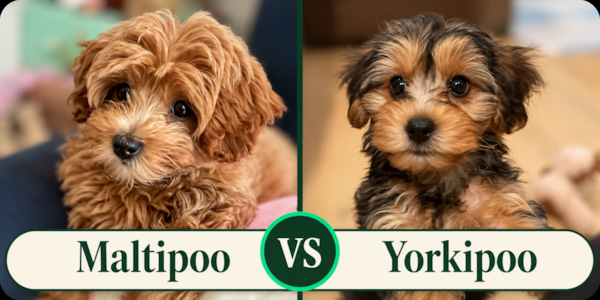
The Maltipoo vs Yorkipoo comparison puts two small Poodle mixes side by side that can look deceptively similar. Both can have soft wavy or curly coats, expressive dark eyes, small bodies, strong attachments to their people, and plenty of intelligence. In a fluffy teddy bear haircut, a cream Maltipoo and light-colored Yorkipoo can even be difficult to tell apart at first glance.
Their personalities can be much easier to separate. A Maltipoo combines a Maltese with a Toy or Miniature Poodle. A Yorkipoo combines a Yorkshire Terrier with a Toy or Miniature Poodle. The Poodle gives both dogs intelligence, athletic ability, low-shedding coat potential, and a strong capacity for learning, but the other parent sends those traits in two different directions.
The Maltese is one of the world's oldest dedicated companion breeds. It was developed around close human company rather than hunting or physical work, and that history still shows in its affectionate, adaptable personality. The Yorkshire Terrier may now be famous as a tiny lapdog with a glamorous coat, but underneath that polish is a true terrier. Yorkies were once valued as ratters, and the breed still carries the alertness, confidence, persistence, and interest in movement associated with that background.
That distinction can affect daily life in surprisingly practical ways. The Maltipoo may be more likely to focus its attention on staying close to people, playing, and learning through interaction. The Yorkipoo may do all of those things too, but can bring more watchdog behavior, stronger opinions, greater interest in chasing movement, and a boldness that sometimes seems completely unaware of the dog's tiny size.
Neither is a difficult dog when well matched to the household. Both fit easily into small homes and can become wonderful companions. The better choice depends on whether you prefer the softer companion influence of the Maltese or want the extra confidence, alertness, and terrier spark of the Yorkshire Terrier alongside the Poodle.
Table of Contents
- Maltipoo vs Yorkipoo at a Glance
- Maltipoo and Yorkipoo Overview and History
- Maltipoo vs Yorkipoo Appearance
- Maltipoo vs Yorkipoo Temperament
- Maltipoo vs Yorkipoo: Which One Should You Choose?
- Choose a Maltipoo if You Want a Softer Companion Temperament
- Choose a Yorkipoo if You Love Terrier Personality in a Tiny Package
- Which Is Smaller: Maltipoo or Yorkipoo?
- Which Is Calmer: Maltipoo or Yorkipoo?
- Which Is More Energetic?
- Which Is Easier to Train?
- Which Is Better for First-Time Dog Owners?
- Which Is Better With Children?
- Which Is Better With Other Dogs?
- Which Is Better With Cats?
- Which Is Better With Small Pets?
- Which Is More Likely to Bark?
- Which Sheds Less: Maltipoo or Yorkipoo?
- Which Needs More Grooming?
- Which Is Better for Allergies?
- Which Is More Affectionate?
- Which Is Better for Apartment Living?
- Which Is Better for Seniors?
- Which Is Better for an Active Lifestyle?
- Which Has a Stronger Prey or Chase Drive?
- Which Is More Predictable in Size and Appearance?
- Maltipoo vs Yorkipoo: The Final Comparison
Maltipoo vs Yorkipoo at a Glance
| Trait | Maltipoo | Yorkipoo |
| Parent breeds | Maltese × Toy or Miniature Poodle | Yorkshire Terrier × Toy or Miniature Poodle |
| General size | Small to very small | Small to very small |
| Common adult weight | About 5–20 pounds, parent-dependent | Commonly about 5–15 pounds, with variation |
| Build | Petite, compact, sometimes fine-boned | Compact, light, sometimes slightly more terrier-like |
| Coat | Wavy to curly, sometimes silky | Straight, wavy, or curly, often silky or tousled |
| Shedding | Usually very low | Usually very low |
| Grooming | Moderate to high | Moderate to high |
| Color range | White, cream, apricot, red, brown, black and combinations | Black, tan, blue, gold, brown, cream, apricot and combinations |
| Eye color | Usually dark brown | Usually dark brown |
| Energy | Moderate | Moderate, sometimes somewhat busier |
| Trainability | High | High, with possible terrier independence |
| Barking tendency | Moderate, individual-dependent | Often more alert and vocal |
| Chase instinct | Usually fairly low | Can be stronger due to terrier ancestry |
| Social style | Affectionate, playful, closely attached | Affectionate, bold, alert, lively |
| Best fit | Someone wanting a soft, people-focused companion | Someone wanting a tiny dog with more terrier personality |
Neither cross has an official breed standard, and the Poodle parent creates considerable variation. A dog produced from a Toy Poodle may remain exceptionally small, while Miniature Poodle ancestry can add height, weight, and athletic ability. Parent size, temperament, and coat are therefore more useful than a generic online range when choosing an individual puppy.
Maltipoo and Yorkipoo Overview and History
The Maltipoo and Yorkipoo are modern Poodle crosses, but all four parent lines behind them have much longer histories. The Poodle creates their common foundation, while the Maltese and Yorkshire Terrier explain why two similar-looking dogs can behave quite differently.
Poodles were developed as highly capable water retrievers. Their working past rewarded intelligence, athletic ability, responsiveness, and an interest in cooperating with humans. Smaller Toy and Miniature Poodles preserve the same basic structure and mental quickness even though their modern lives center much more heavily on companionship.
The Maltese and Yorkie followed very different paths. Maltese spent centuries close to humans as treasured little companions. Yorkshire Terriers came from working terriers whose job demanded courage, persistence, awareness, and an instinct to pursue small animals.
The Maltipoo therefore combines Poodle ability with another strongly companion-focused breed. The Yorkipoo combines that same Poodle ability with a terrier.
That is the central difference around which the rest of the comparison makes sense.
Maltipoo History and Background

The Maltipoo combines a Maltese with a Toy or Miniature Poodle. Like many modern companion crosses, there is no single well-documented breeder or precise date that can reliably be called the origin of the Maltipoo.
Its Maltese ancestry reaches back much further. Small Maltese-type dogs were known throughout the ancient Mediterranean and became closely associated with the island of Malta. For centuries, these little white dogs were prized primarily as human companions rather than hunters or working animals.
The modern Maltese remains extremely small, with the official breed standard calling for dogs under seven pounds. Its long white coat is straight and silky rather than woolly or curly, and beneath that elegant appearance is a playful, alert little dog that can be much more lively than its lapdog history suggests.
The Poodle changes the equation by adding curl, greater potential size variation, and a much more athletic historical background. Toy Poodles remain tiny, while Miniature Poodles can add considerably more height and physical substance.
Both parent breeds are intelligent and strongly people-oriented, which helps explain why Maltipoos commonly respond well to training and develop close relationships with their owners. The Poodle does not turn the Maltese into a working dog, but it can add greater enthusiasm for games, tricks, retrieving, and mental challenges.
Yorkipoo History and Background
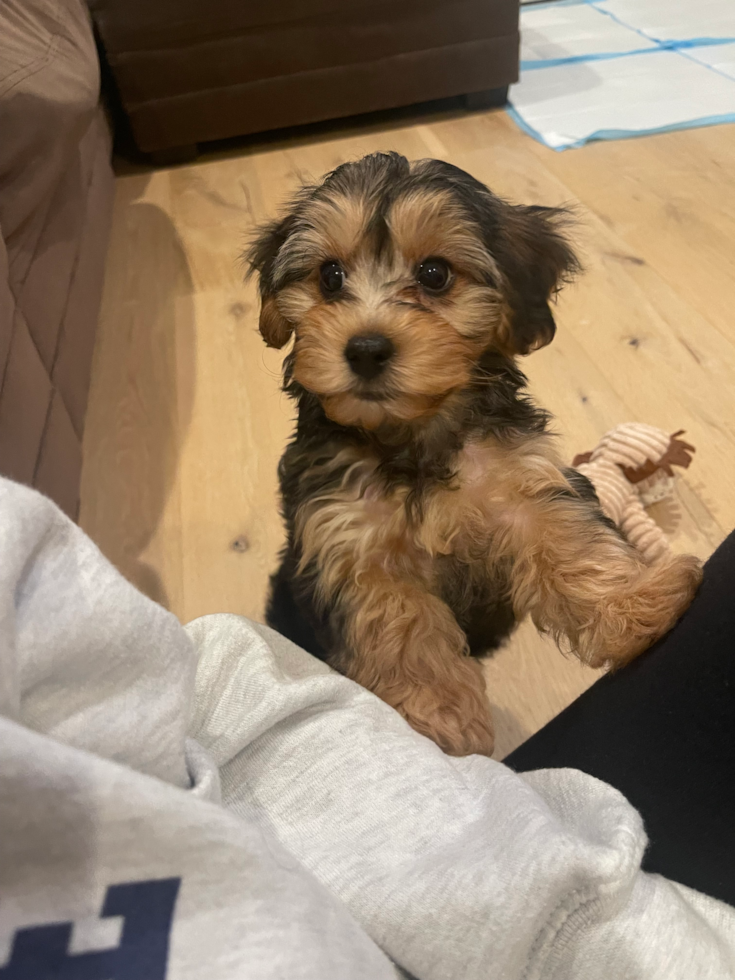
The Yorkipoo, also known as the Yorkiepoo or Yorkie Poo, combines a Yorkshire Terrier with a Toy or Miniature Poodle. Like the Maltipoo, its modern crossbreed history is far less clearly documented than the histories of its parents.
The Yorkshire Terrier has one of the more interesting transformations in the toy-dog world. Today's Yorkie may wear a floor-length coat and spend most of its life as a close companion, but its ancestors came from working terriers brought into northern England by Scottish workers during the Industrial Revolution.
Those dogs were used to control rats and other vermin in mills, mines, and industrial areas. The work required quick movement, persistence, boldness, and enough confidence to pursue prey into tight spaces.
Over time, breeders refined the Yorkshire Terrier into the tiny blue-and-gold companion known today. The body became smaller and the coat more glamorous, but the terrier personality did not disappear along with the factory job.
Modern Yorkies remain remarkably self-assured for dogs weighing no more than seven pounds. They tend to notice what happens around them, can be vocal about unfamiliar activity, and may show interest in chasing small moving animals.
The Poodle adds another highly intelligent and agile parent. A Yorkipoo can therefore inherit quick learning from both sides along with enough independence and terrier confidence to keep owners on their toes.
Maltipoo vs Yorkipoo Appearance
Maltipoos and Yorkipoos are both small dogs, and grooming can make them look even more alike. A rounded puppy cut can hide head shape, body proportions, ear carriage, and coat texture until almost every small Poodle cross begins to resemble the same stuffed animal.
Their natural parent coats are quite different, though. Maltese have long, straight, silky white hair. Yorkshire Terriers have long, fine, glossy hair that is also straight and silky, but the breed's characteristic mature colors are blue and tan or blue and gold.
The shared Poodle introduces curl into both combinations. This leaves either cross with the potential for straight, wavy, or curly hair, but Yorkipoo coloring and terrier expression can create a noticeably different adult look.
Maltipoo Appearance
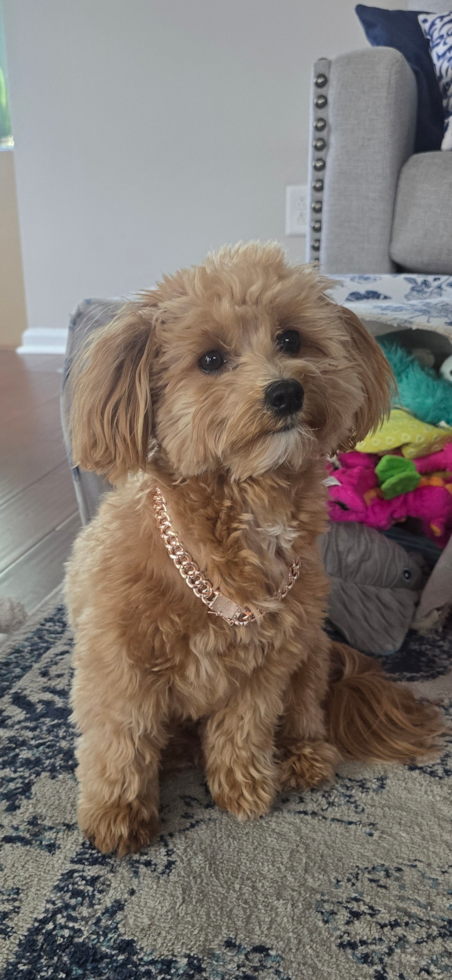
The Maltipoo has the potential to be exceptionally small. Purebred Maltese weigh under seven pounds, while Toy Poodles commonly weigh around four to six pounds and stand no more than ten inches tall.
When a Maltese is paired with a small Toy Poodle, the finished Maltipoo can remain very petite.
Miniature Poodle ancestry broadens the range considerably because Miniatures stand over ten and up to fifteen inches and carry more body weight.
This makes parent size especially important. Two dogs both advertised as Maltipoos can mature into noticeably different adults simply because one came from Toy Poodle lines and the other from larger Miniature Poodle lines.
Maltipoo Coat Type and Texture
Maltipoo coats can range from straight and silky to loose waves and dense curls. The Maltese contributes silky hair with very little natural curl, while the Poodle contributes a much denser coat with strong curl.
Many Maltipoos develop a soft wavy texture that sits comfortably between the two. This can produce the fluffy teddy bear appearance without the full ringlets of a strongly Poodle-influenced coat.
Straighter Maltipoos may have hair that falls around the body rather than standing away from it. Curlier individuals can look almost entirely Poodle-like after grooming.
The coat may also change as the dog matures. Puppy hair can be softer and looser than the adult coat, so early appearance should not be treated as a guarantee.
Maltipoo Colors and Markings
The Maltese contributes little color variety because the breed is overwhelmingly white. Most of the broader Maltipoo palette comes from the Poodle.
Maltipoos can therefore appear in white, cream, apricot, red, gold-related shades, brown, chocolate, black, gray or silver-related colors, and various combinations depending on the Poodle lines involved.
Light colors are particularly familiar because white Maltese ancestry blends naturally with cream, apricot, and red Poodle shades.
Some Maltipoo coats lighten substantially with age. A rich apricot or red puppy may become much softer in color after the adult coat develops.
Maltipoo Eyes and Facial Features
Maltipoos commonly have dark brown eyes with dark pigmentation around the nose and eye rims. Maltese have especially strong dark contrast against their white coats, and many Maltipoos retain that expressive look.
The muzzle is moderate in length. A strong Maltese influence may create a small, compact face, while the Poodle can contribute a narrower muzzle and slightly more refined outline.
Facial hair has an enormous effect on appearance. A rounded trim can make the eyes look larger and the muzzle shorter even though the underlying skull has conventional proportions.
The result is usually a soft expression that fits the Maltipoo's companion-dog personality.
Maltipoo Build and Size
The Maltipoo is usually compact and can be quite fine-boned when both parents are small. A Toy-Poodle Maltipoo may feel exceptionally light, while Miniature Poodle ancestry can create more leg, muscle, and physical sturdiness.
Tiny size should not be confused with inactivity. Maltese are lively dogs, and Poodles are athletic, so healthy Maltipoos can enjoy proper walks, games, training, and family outings.
The smallest individuals simply require common sense around rough handling, stairs, large dogs, and young children.
For anyone specifically seeking a very petite companion, the Maltipoo offers a great deal of potential, but parent size remains the most useful guide.
Maltipoo Shedding
Maltipoos usually shed very little visibly. Both parent breeds release relatively small amounts of hair around the home compared with traditional shedding breeds.
Curlier coats may trap even more loose hair inside the coat instead of allowing it to fall onto furniture and clothing.
That creates the usual low-shedding tradeoff. Hair caught within the coat needs to be removed through grooming or it can contribute to tangles.
Low shedding does not guarantee that an individual with dog allergies will tolerate a Maltipoo.
Maltipoo Grooming Needs
Maltipoos require regular brushing and professional grooming. Coat texture determines exactly how much work is involved, but long hair of any texture can knot around the ears, legs, neck, belly, and tail.
Curly coats can form mats close to the skin, while straighter silky coats can develop tangles where hair rubs against itself.
Short puppy trims make the routine much easier and suit many pet households better than maintaining several inches of hair.
Dental care also deserves particular attention in these very small dogs. Routine tooth brushing from puppyhood is far easier than trying to introduce it after dental problems have already developed.
Yorkipoo Appearance
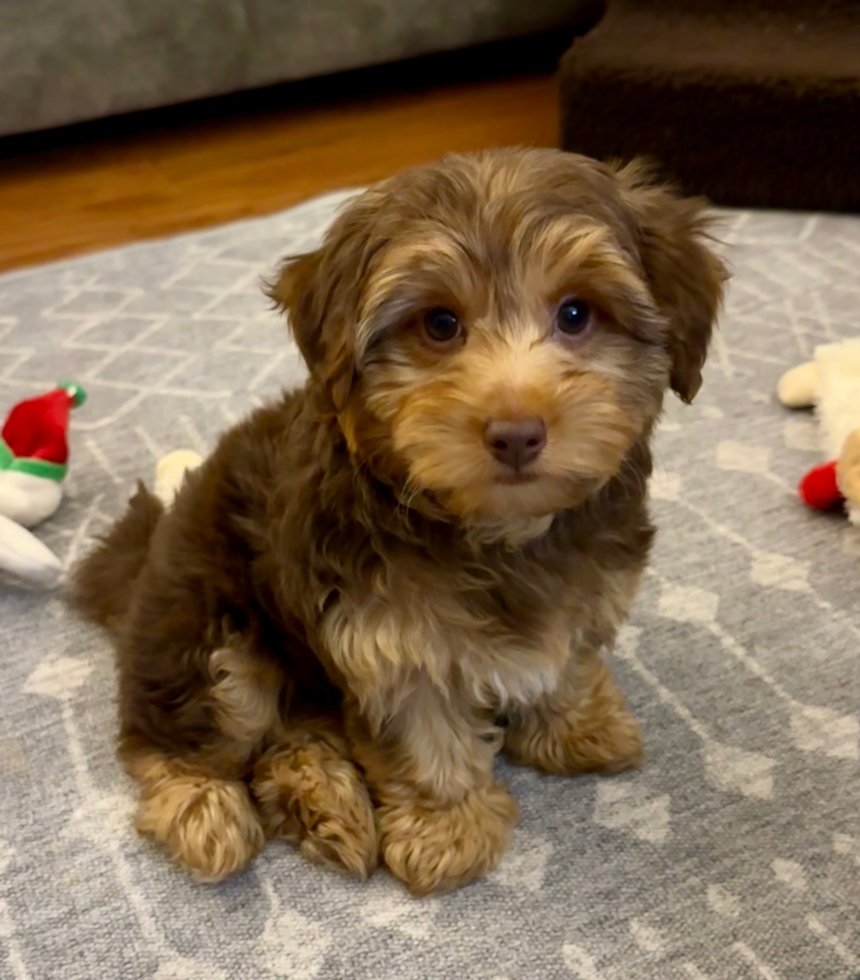
The Yorkipoo also begins with a very small non-Poodle parent. Purebred Yorkshire Terriers should weigh no more than seven pounds, so Toy-Poodle Yorkipoos can remain firmly within the tiny-dog category.
Miniature Poodle ancestry can increase the final height and weight, just as it does with Maltipoos. As a result, a Yorkipoo can range from an extremely portable little dog to a taller, more athletic small companion.
Yorkie structure may add a distinctly terrier-like quality. Even under a fluffy coat, some Yorkipoos have an alert expression, compact body, and lively posture that makes them look ready to investigate whatever just moved.
Yorkipoo Coat Type and Texture
The Yorkipoo coat can be straight, wavy, or curly. Yorkshire Terriers have fine, glossy, silky hair, while the Poodle contributes dense curls.
A Yorkipoo that favors the Yorkie can have a looser, silkier coat than people expect from a Poodle mix. Another may develop strong curls across most of the body.
Wavy coats are especially common-looking in photographs because they combine Poodle volume with enough silky texture to remain soft and flowing.
Coat density matters for grooming. Fine silky hair tangles easily, while dense curls can mat beneath the surface, so neither end of the spectrum is maintenance-free.
Yorkipoo Colors and Markings
Color is one of the easiest ways for the Yorkipoo to distinguish itself from the Maltipoo.
Yorkshire Terrier puppies are born darker, and mature purebred Yorkies develop the characteristic combinations of blue and gold or blue and tan. Black and tan can also appear earlier in development, while Poodle genetics add an even broader range.
Yorkipoos may therefore appear in black, tan, gold, brown, cream, apricot, gray or blue-toned shades, and numerous combinations. Some carry clear Yorkie-style points, while others look much more like solid-colored Poodle mixes.
The coat can change substantially during maturity. Yorkie color transitions and Poodle fading can both influence the finished adult shade, so puppy color can be particularly unreliable in this cross.
Yorkipoo Eyes and Facial Features
Yorkipoos typically have dark brown eyes with a lively, attentive expression. Yorkshire Terriers are known for a bright, intelligent look, and that quality can remain obvious even when the dog inherits a fluffy Poodle-style face.
The muzzle stays moderate rather than flat. Yorkie influence can create a compact terrier face, while stronger Poodle traits may lengthen and narrow the muzzle.
Ear appearance varies more than in the Maltipoo. Purebred Yorkies have small, upright V-shaped ears, while Poodles have dropped ears. A Yorkipoo may therefore have fully dropped ears, semi-prick ears, or ears that sit higher than those of many other Poodle mixes.
That variation can give Yorkipoos a particularly expressive appearance.
Yorkipoo Build and Size
The Yorkipoo is small, light, and usually agile. Yorkies themselves are compact toy terriers, while Toy and Miniature Poodles add athletic structure.
Some Yorkipoos remain extremely petite. Others inherit longer Poodle legs and enough additional weight to feel substantially sturdier.
Even the smallest examples may carry themselves with surprising confidence. Terrier heritage can create a dog that behaves as though its physical dimensions are an administrative detail rather than a meaningful limitation.
That confidence is charming, but owners still need to protect tiny dogs from falls, rough children, and confrontations with much larger animals.
Yorkipoo Shedding
Yorkipoos are generally very low-shedding dogs. Yorkshire Terriers have a hair-like coat that releases relatively little visible hair, while Poodle curls can further reduce what reaches the floor.
A Yorkie-influenced silky coat may release some hair during brushing. A strongly curly dog may trap most loose strands within the coat.
As with the Maltipoo, this is more likely to change the grooming routine than eliminate it.
Low visible shedding should never be used as a guarantee of allergy compatibility.
Yorkipoo Grooming Needs
Yorkipoo grooming can be deceptively demanding because both silky and curly coat types create their own problems.
Fine Yorkie-like hair tangles easily around the ears, legs, and areas where a collar or harness rubs. Curly Poodle-influenced coats can form compact mats underneath an outer layer that still appears fluffy.
Regular brushing and combing are therefore necessary regardless of the final texture.
Many owners choose short trims that preserve the dog's expressive face while keeping the body coat manageable. Professional grooming should be treated as a normal ownership expense rather than an occasional extra.
Maltipoo vs Yorkipoo Appearance Comparison: What Is the Difference?
The Maltipoo and Yorkipoo overlap considerably in adult size because both non-Poodle parents are tiny breeds. The Poodle parent is usually the biggest source of size variation for either cross.
Color provides a much stronger visual distinction. Maltipoo coloring is heavily influenced by the white Maltese foundation and the Poodle palette, so cream, white, apricot, and red are particularly familiar. Yorkipoos can add black, tan, gold, blue-toned, and Yorkie-style point patterns that give them a more dramatic range of markings.
Coat texture overlaps because both the Maltese and Yorkie have naturally silky hair. Either cross can therefore produce straighter silky coats, soft waves, or strong Poodle curls.
The Yorkipoo may look slightly more alert or terrier-like, particularly when it inherits higher-set ears and a sharper expression. Maltipoos tend to keep a softer companion-dog appearance.
The larger difference, however, is not something you can see in a photograph. It is what those two tiny bodies may want to do once they are awake.
Maltipoo vs Yorkipoo Temperament
This is where the Maltipoo vs Yorkipoo comparison becomes genuinely useful. Both crosses contain the intelligent, people-oriented Poodle, but the Maltese and Yorkshire Terrier contribute very different instincts.
The Maltese spent centuries primarily as a companion. It can be lively, confident, and alert, but its historical purpose revolved around life beside people.
The Yorkshire Terrier came from working terriers. Even though modern Yorkies are tiny companion dogs, terrier qualities such as boldness, persistence, alertness, and interest in moving targets remain part of the breed.
A Yorkipoo can therefore feel busier than a Maltipoo without necessarily needing dramatically more exercise. The difference is frequently mental and behavioral activity rather than raw physical stamina.
Maltipoo Temperament
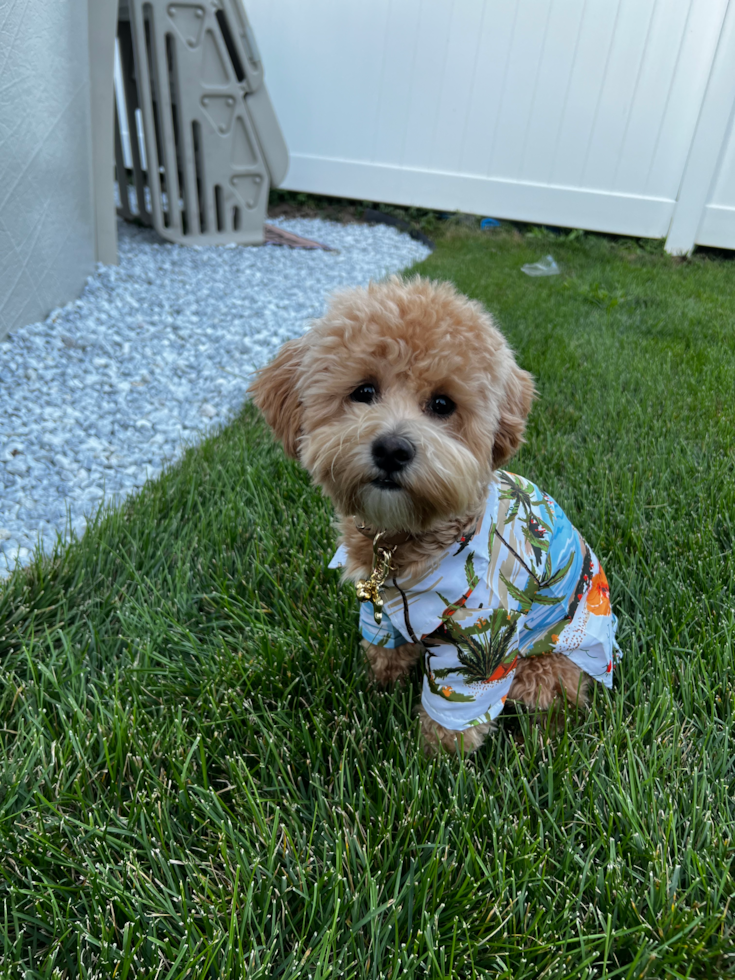
Maltipoos tend to be affectionate, lively, intelligent dogs with strong attachments to their families. The Maltese contributes a long companion history, while the Poodle adds additional trainability and enthusiasm for activity.
Many Maltipoos want to remain close to their people throughout the day. They may follow someone between rooms, enjoy curling up nearby, and become immediately interested when the household appears to be preparing for an outing.
They are playful enough to keep family life interesting without commonly bringing strong working or hunting instincts into the home.
Maltipoo Intelligence and Training
The Maltipoo has plenty of intelligence on both sides of its family tree. Poodles are exceptional learners, while Maltese are clever little dogs capable of mastering household routines and tricks with surprising speed.
Positive reinforcement works especially well. Food rewards, praise, play, and attention give the dog clear reasons to repeat the behavior the owner wants.
Some Maltipoos may bring a little Maltese independence into training, but most respond readily when sessions remain short and engaging.
The cross can be excellent for owners who enjoy teaching without wanting the extra behavioral management that sometimes accompanies stronger working instincts.
Maltipoo Energy Level
Maltipoos usually have moderate energy. Daily walks, play, training, and opportunities to explore can satisfy most adults without requiring a particularly athletic household.
Puppies and adolescents can be lively, especially during evening bursts of energy, but that should not be confused with the mature dog's long-term exercise requirements.
The Maltipoo generally enjoys activity because it involves the family rather than because it has an intense need to perform a specific job.
This distinction makes the cross flexible. It can enjoy a busy day out and still adapt when the following day is considerably quieter.
Maltipoo Affection and Attachment
Close attachment is one of the Maltipoo's strongest traits. Maltese were developed for human companionship, and Poodles also form strong relationships with their people.
A Maltipoo may be particularly interested in lap time, physical contact, and following a favorite person around the home.
That closeness should be balanced with independence training. Constant carrying and uninterrupted company can make an already social puppy less prepared for ordinary separation.
Short calm absences, independent naps, and solo enrichment teach the dog that being alone temporarily is safe without reducing its affectionate nature.
Maltipoos With Children
Maltipoos can be very good with children, particularly when the children are old enough to understand gentle handling.
Physical size is the main concern. A very petite Maltipoo can be injured by rough play, accidental drops, or a toddler falling onto it.
Older children can become excellent partners for tricks, quiet games, and walks. The Maltipoo's trainability gives them constructive ways to interact without constantly picking the dog up.
A larger Miniature-Poodle Maltipoo may be a more practical family choice when young children are part of the household.
Maltipoos With Other Dogs and Pets
Maltipoos generally have good potential with other dogs and cats. Their ancestry does not bring significant modern herding or vermin-control instincts into the mix.
A playful puppy can still chase a cat, but the behavior is usually a matter of excitement and learning rather than a particularly strong inherited drive.
Size matching is important with other dogs. A six-pound Maltipoo can be overwhelmed accidentally by an enthusiastic large companion.
Small household pets should still be protected from direct unsupervised interaction. Any dog can injure a fragile animal even without a strong prey instinct.
Maltipoo Barking and Alertness
Maltipoos can be alert and may bark at visitors, unfamiliar noises, or activity outside the home. Maltese themselves can be surprisingly capable little watchdogs, while Poodles also notice changes in their environment.
The behavior is usually manageable with early training. A puppy that learns one alert bark is enough has less reason to develop a long routine around the door or window.
Boredom and separation can increase barking as well. A Maltipoo whose social and mental needs are met is less likely to use noise simply to create interaction.
They are not silent dogs, but barking is usually not the defining feature of the temperament.
Yorkipoo Temperament
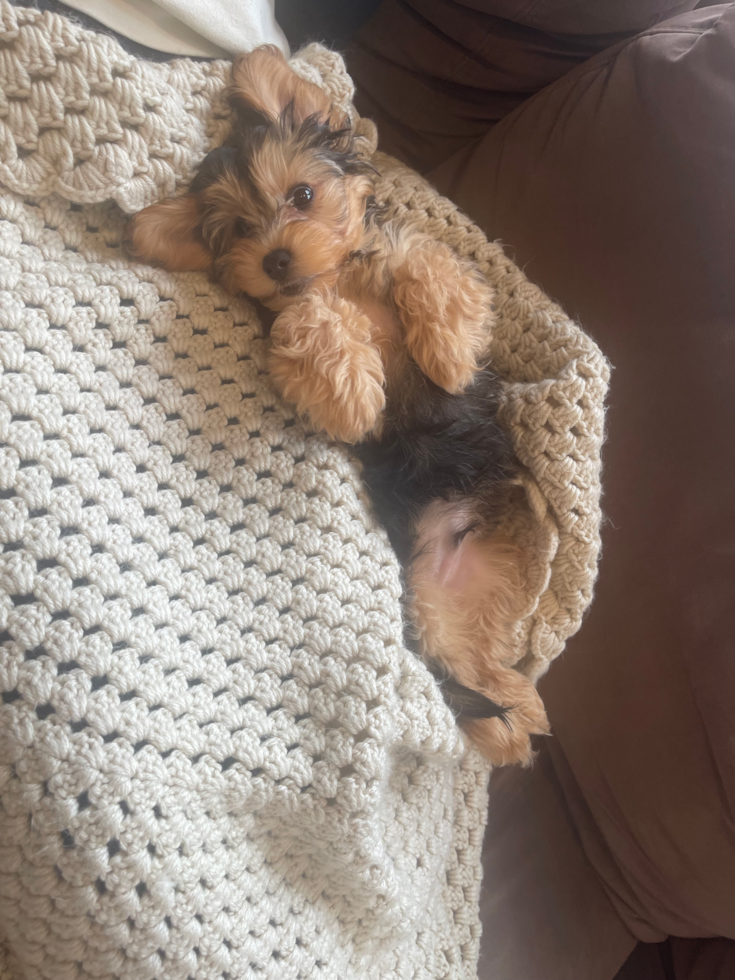
The Yorkipoo is where the terrier ancestry changes the comparison. Yorkies may weigh only a few pounds, but they descend from dogs expected to pursue vermin independently and confidently.
Crossing that temperament with the Poodle can produce a remarkably clever little dog with plenty of personality. Yorkipoos can be loving and cuddly, but they may also be alert, persistent, curious, and extremely interested in what is happening around them.
The result can feel more intense than the dog's exercise needs would suggest. A Yorkipoo may spend fifteen minutes walking and another fifteen deciding that the squirrel outside has become a matter of personal importance.
Yorkipoo Intelligence and Training
Yorkipoos are highly intelligent because both parents bring strong problem-solving ability. The Poodle tends to reinforce responsiveness to training, while the Yorkshire Terrier adds confidence and persistence.
That combination can be enormously fun, but it requires consistency. A Yorkipoo may understand a rule very quickly and then test whether the rule still applies under slightly different circumstances.
Positive reinforcement works much better than confrontation. Terrier persistence can turn a power struggle into a surprisingly long negotiation for such a small dog.
Training should include everyday self-control as well as tricks. Recall, quiet behavior, leave it, doorway manners, and settling can be particularly useful skills for a dog with an alert, curious temperament.
Yorkipoo Energy and Mental Activity
Yorkipoos usually have moderate physical exercise needs, but some feel busier than Maltipoos because they remain mentally engaged with their surroundings.
Daily walks, active play, sniffing, and short training sessions provide useful outlets. A Yorkipoo may enjoy exploring new routes and investigating smells rather than simply covering distance.
Terrier influence can make movement particularly interesting. Birds, squirrels, insects, rustling leaves, and small animals may earn more attention than they would from the average Maltipoo.
A satisfied Yorkipoo can settle very nicely indoors. The important part is giving that active little brain something appropriate to investigate first.
Terrier Instincts in Yorkipoos
The Yorkshire Terrier's ratting history is one of the most important differences between these crosses. Yorkies were not originally bred simply to look beautiful. They came from terriers expected to pursue small vermin.
A Yorkipoo may retain some of that interest in quick movement. Chasing birds, squirrels, insects, or other small creatures can be especially rewarding for certain individuals.
Not every Yorkipoo will display obvious prey drive, and Poodle influence can soften or redirect it. Still, the possibility is much more relevant here than it is with a Maltipoo.
This is why recall, leash habits, and a reliable “leave it” deserve attention early. A six-pound dog can still become remarkably determined once something exciting starts running.
Yorkipoo Affection and Loyalty
Yorkipoos can be extremely affectionate with their families. Yorkshire Terriers transitioned successfully from working dogs to beloved companions because their boldness exists alongside a strong capacity for attachment.
Some Yorkipoos become particularly devoted to one or two people. They may follow their favorite person closely while maintaining a more cautious or opinionated approach to unfamiliar visitors.
Others inherit enough Poodle sociability to greet almost everyone enthusiastically.
The important distinction is that affection does not necessarily make the Yorkipoo passive. It can be cuddling one minute and announcing an unexpected sound the next.
Yorkipoos With Children
Yorkipoos can live happily with respectful children, but they are not automatically the easiest choice for very young kids.
The first issue is size. Yorkies themselves weigh no more than seven pounds, so Toy-Poodle Yorkipoos can be physically delicate.
The second is temperament. Terrier confidence may make some Yorkipoos less willing to tolerate rough grabbing or persistent handling than a particularly soft companion dog. Older children who understand boundaries can have an excellent relationship with the cross.
Yorkipoos With Other Dogs and Pets
Yorkipoos can do very well with other dogs when introduced and socialized properly. Their confidence can make them playful companions, although tiny individuals may occasionally behave far more boldly than their size warrants.
Cats can also live successfully with Yorkipoos, especially when the dog grows up around them. Terrier ancestry makes early control of chasing more important, though.
Very small pets require greater caution. Rodents, birds, and other quick-moving animals may trigger more interest in a Yorkipoo than they would in many purely companion-bred crosses.
Physical separation is the safest choice where a meaningful size and prey relationship exists.
Yorkipoo Barking and Watchfulness
The Yorkipoo is generally the more likely of these two crosses to be noticeably alert or vocal.
Yorkshire Terriers are classic little watchdogs. They notice movement and unusual sounds quickly, and their size has never prevented them from announcing an opinion.
Poodle awareness can reinforce that attentiveness. Without training, a Yorkipoo may begin commenting on visitors, hallway sounds, neighboring dogs, delivery trucks, and whatever else appears suspicious enough to deserve review.
Early quiet training is extremely useful. The goal is not to remove the dog's alert nature but to teach it that informing the household once is sufficient.
Maltipoo vs Yorkipoo Temperament Comparison: What Is the Real Difference?
The most useful temperament distinction is companion focus versus terrier spark.
The Maltipoo combines two breeds whose modern identities center heavily on people. Poodle intelligence gives the dog plenty of interest in training and activity, while Maltese influence keeps the overall personality rooted strongly in close companionship.
The Yorkipoo also loves people, but the Yorkshire Terrier contributes something different. Alertness, confidence, persistence, and interest in movement can make the dog feel busier and more opinionated even when the actual exercise requirement is not much greater.
This is why calling both “small intelligent Poodle mixes” misses the point. One may spend a quiet afternoon curled against you until it is time for a walk. The other may curl against you too, while keeping one ear available in case someone three apartments away opens a cupboard suspiciously.
That terrier edge is not a flaw. For owners who love bold little dogs with enormous personalities, it can be exactly what makes the Yorkipoo irresistible.
Maltipoo vs Yorkipoo: Which One Should You Choose?
The Maltipoo and Yorkipoo both suit people who want a small, affectionate, intelligent companion. Both can live comfortably in apartments, both generally shed very little, and both need regular grooming.
The choice becomes much easier once temperament matters more than appearance.
The Maltipoo tends to offer a softer companion experience. The Yorkipoo tends to add more alertness, confidence, and terrier behavior to the same Poodle intelligence.
Choose a Maltipoo if You Want a Softer Companion Temperament
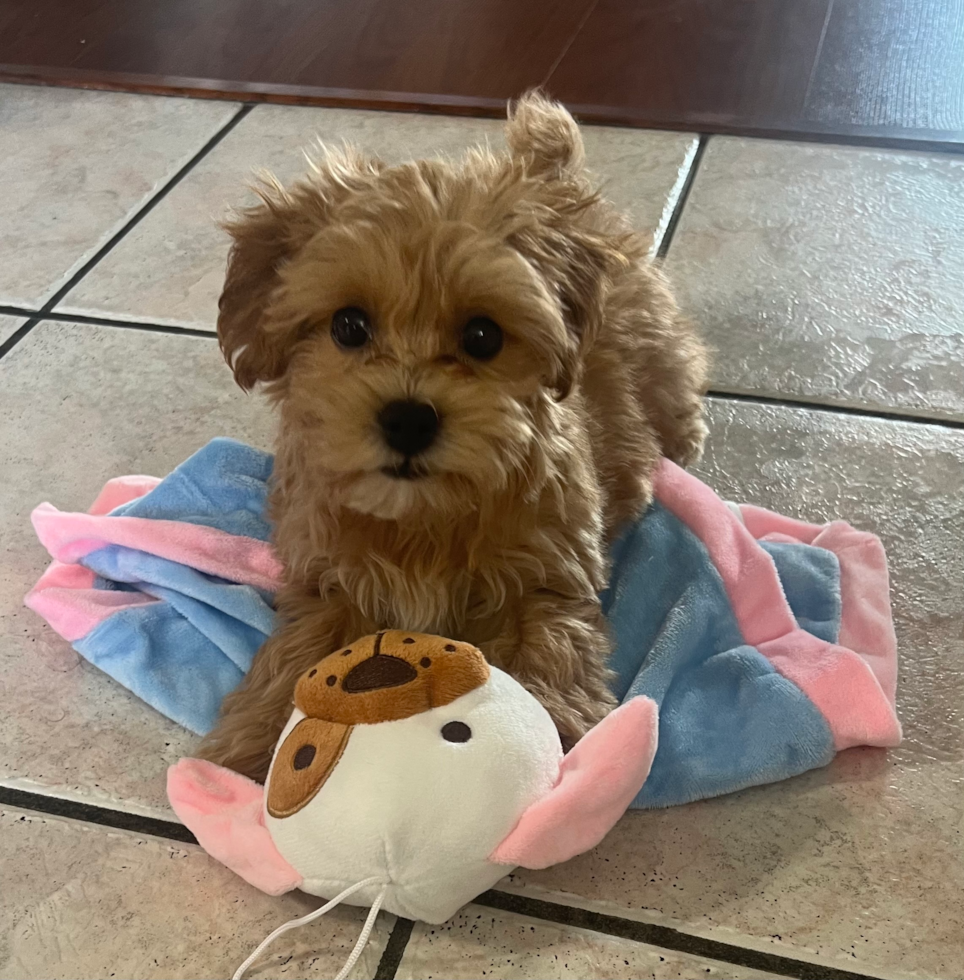
A Maltipoo puppy may suit you better if your main goal is close companionship with enough intelligence and playfulness to keep life interesting.
The Maltese side keeps the cross strongly rooted in human company. Many Maltipoos are happiest near their people and enjoy activity largely because it gives them something to do together.
They can still be lively, funny, and surprisingly bold. The difference is that you are less likely to encounter pronounced terrier behaviors such as intense interest in small moving animals or persistent environmental monitoring.
This can make the Maltipoo an easier fit for quiet households, homes with cats, and people who want a very small dog without specifically seeking a strong watchdog personality.
Choose a Yorkipoo if You Love Terrier Personality in a Tiny Package
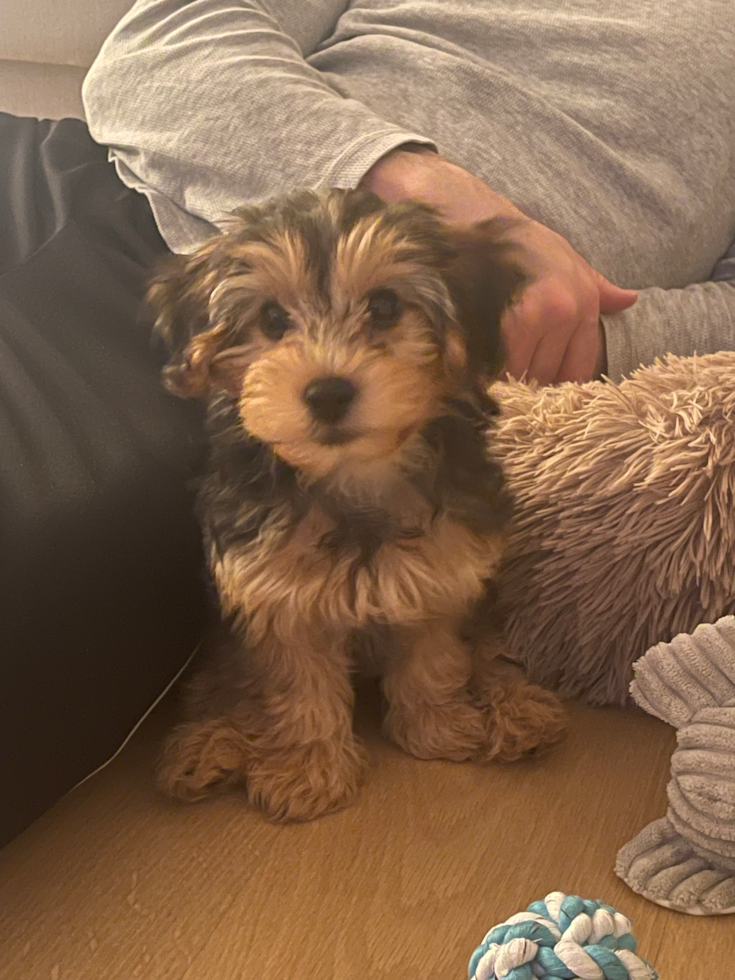
A Yorkipoo puppy may suit you better if you enjoy small dogs with confidence, curiosity, and plenty of opinions.
Yorkshire Terrier influence can create a dog that notices everything and approaches life with a surprising amount of courage. Combined with the Poodle's intelligence, this can become an entertaining companion for someone who genuinely enjoys training and interaction.
The Yorkipoo may also suit people who appreciate a little watchdog behavior. It is more likely to announce unusual activity and may be quicker to respond when something changes around the home.
The tradeoff is that the same confidence requires boundaries. Barking, chasing, and independent decision-making deserve early attention rather than being dismissed because the dog is tiny.
Which Is Smaller: Maltipoo or Yorkipoo?
Both have the potential to be extremely small. Maltese and Yorkshire Terriers each weigh around seven pounds or less according to their breed standards, while Toy Poodles commonly weigh only four to six pounds.
The larger variation comes from the Poodle. A Miniature Poodle can add considerably more height and weight to either cross.
For that reason, there is no reliable rule that every Maltipoo will be smaller than every Yorkipoo or the reverse. A Toy-Poodle Yorkipoo may weigh far less than a Miniature-Poodle Maltipoo.
If size matters, look at the actual parents and adult relatives rather than choosing by crossbreed name.
Which Is Calmer: Maltipoo or Yorkipoo?
The Maltipoo generally has a slight advantage for a calmer everyday temperament, particularly in households where the Yorkipoo's terrier traits are strong.
Yorkipoos do not necessarily need much more exercise. The difference is that they may remain more mentally alert to what is happening around them.
A Maltipoo may notice a sound and return to what it was doing. A Yorkipoo may decide the sound deserves further investigation and perhaps a formal announcement.
Individual temperament can easily narrow the gap, but people seeking the softer, quieter companion profile may find the Maltipoo the more predictable direction.
Which Is More Energetic?
Physical energy is fairly close, but the Yorkipoo can feel busier.
Both crosses enjoy daily walking, play, and training. The Yorkipoo's terrier heritage may add more chasing, investigating, scanning, and reacting to movement, which can create an impression of higher energy.
The Maltipoo remains playful and active enough for normal family adventures. Its attention may simply stay focused more heavily on people than on whatever has moved behind a bush.
For owners who enjoy an inquisitive little dog, the Yorkipoo can be great fun. Those looking for a less environmentally driven companion may prefer the Maltipoo.
Which Is Easier to Train?
Both are intelligent, but the Maltipoo may be slightly easier for straightforward companion training.
The Poodle helps both crosses learn quickly. Maltese can bring some independence, but their long companion history tends to work well with positive social interaction.
The Yorkipoo adds terrier persistence. A clever Yorkipoo may learn the cue perfectly and still decide the squirrel deserves priority.
This makes motivation and consistency particularly important. For trick training, both can excel. For reliable recall around distractions, the Yorkipoo may require more deliberate practice.
Which Is Better for First-Time Dog Owners?
The Maltipoo may have a slight advantage for a first-time owner who wants a relatively straightforward small companion.
Its exercise needs are manageable, its social focus can make training rewarding, and there are fewer strong working instincts to manage.
The Yorkipoo can still make an excellent first dog for someone who appreciates terriers and is willing to work on barking, recall, impulse control, and chasing from the beginning.
Grooming and tiny-dog handling are important with both. Neither becomes automatically easy simply because it weighs less than many people's grocery bags.
Which Is Better With Children?
There is no automatic winner because both crosses can be exceptionally small.
A larger Miniature-Poodle Maltipoo or Yorkipoo may be easier to manage around children than a five-pound Toy-Poodle version of either cross.
Temperament creates another consideration. Maltipoos may offer a somewhat softer companion style, while Yorkipoos can be more assertive about unwanted handling.
For families with young children, the best choice is a physically sturdy individual with a stable temperament rather than assuming one cross will tolerate rough interaction better.
Which Is Better With Other Dogs?
Both can live very successfully with other dogs.
Maltipoos tend to bring a straightforward companion style and may enjoy both play and quiet canine company. Yorkipoos can be enthusiastic playmates but may occasionally bring terrier confidence into interactions with dogs far larger than themselves.
That makes supervision important, particularly with very small Yorkipoos that appear unaware of the size difference.
The resident dog's play style, patience, and physical size should guide the match more than the cross name.
Which Is Better With Cats?
The Maltipoo may have a slight advantage in cat households because it lacks the Yorkshire Terrier's vermin-hunting history.
Yorkipoos can live beautifully with cats, particularly when raised alongside them. The extra consideration is movement, since a running cat may activate the terrier side of the dog's interest.
Early boundaries matter. Rewarding calm observation and preventing repeated chasing before it becomes enjoyable can create a peaceful relationship.
With a confident adult cat and good puppy training, either cross can work very well.
Which Is Better With Small Pets?
The Maltipoo has the clearer advantage around households with very small animals, although direct unsupervised contact should not be assumed safe with any dog.
Yorkshire Terriers were historically used to pursue rats and other vermin. A Yorkipoo may inherit enough of that background to show strong curiosity toward rodents, birds, or quick-moving small animals.
A Maltipoo is less likely to bring the same terrier hunting instinct, though curiosity and playful chasing can still occur.
Secure separation remains the safest option for vulnerable pets regardless of breed.
Which Is More Likely to Bark?
The Yorkipoo is generally more likely to be an enthusiastic alert barker.
Yorkies are attentive little terriers that readily announce changes around their environment. Adding Poodle intelligence can produce a dog that notices both the sound and exactly how quickly barking makes a human come investigate.
Maltipoos can certainly bark too, especially when bored, excited, or protective of their routines. The difference is that alertness may be less central to the overall temperament.
For apartment dwellers particularly sensitive to noise, this distinction is worth considering before choosing solely by appearance.
Which Sheds Less: Maltipoo or Yorkipoo?
Both are usually very low-shedding dogs.
The Maltese and Yorkshire Terrier both have hair-like coats that release relatively little visible hair, while the Poodle can add curls that retain loose strands inside the coat.
Individual coat texture matters more than which cross you choose. A tightly curled Yorkipoo may shed less visibly than a straight Maltipoo, while another pairing may produce the opposite result.
For most owners, the difference between the crosses will be much less noticeable than the difference between either dog and a conventional heavy shedder.
Which Needs More Grooming?
This comparison is effectively a tie.
The Maltipoo can inherit long silky hair that tangles easily or dense Poodle curls that mat close to the skin. The Yorkipoo has the same challenge because Yorkshire Terrier hair is also long and silky when grown naturally.
Neither cross offers a reliably easy low-maintenance coat. Short trims make life considerably easier, while long fluffy styles require frequent brushing and combing.
Owners who choose either cross because they want less hair on the sofa should expect to trade some vacuuming for time spent maintaining the dog itself.
Which Is Better for Allergies?
Neither Maltipoos nor Yorkipoos can be guaranteed hypoallergenic.
Both commonly shed very little, which can reduce loose hair around the home. Allergens can still come from saliva and dander, so the absence of visible shedding does not remove the possibility of a reaction.
Individual reactions vary even between two dogs from the same litter.
For significant allergies, spending time with the actual dog provides much more meaningful information than choosing based solely on its Poodle ancestry.
Which Is More Affectionate?
Both can be extremely affectionate, but their style may differ.
The Maltipoo may lean more consistently toward soft, close companion behavior because the Maltese brings such a long history of intimate human companionship.
The Yorkipoo can be every bit as devoted, but terrier influence may create a dog that divides its attention between its favorite person and whatever suspicious or exciting thing is happening nearby.
For someone who primarily wants a little shadow and lap companion, the Maltipoo may have a small advantage. For someone who likes affection with a side of bold personality, the Yorkipoo may be irresistible.
Which Is Better for Apartment Living?
Both can fit extremely well into apartments because their bodies take up almost no space and their physical exercise requirements are manageable.
The Maltipoo may have a small advantage in noise-sensitive buildings because it generally carries less terrier alertness.
A Yorkipoo can still be an excellent apartment dog when barking is addressed early. Daily walks also give the dog somewhere appropriate to sniff, investigate, and experience the outside world rather than monitoring it entirely through a window.
Square footage is rarely the problem with either cross. Training, social needs, and barking habits matter much more.
Which Is Better for Seniors?
Both can make excellent companions for older adults, especially when the individual dog is matched carefully to the person's activity level and physical abilities.
A Maltipoo may suit someone who values close companionship and wants a softer temperament with manageable daily exercise.
A Yorkipoo may appeal to an active senior who enjoys a bold, entertaining little dog and does not mind working on alert barking and terrier habits.
Very tiny dogs create one additional practical issue. Their small bodies can be difficult to see underfoot, so an adult dog with a known size and temperament may be easier to match than choosing the smallest puppy available.
Which Is Better for an Active Lifestyle?
Both can participate in an active small-dog lifestyle, but they approach activity a little differently.
The Maltipoo can enjoy long walks, travel, games, and light outdoor adventures when healthy and appropriately conditioned. Miniature Poodle ancestry can add useful stamina and physical substance.
The Yorkipoo can be equally enthusiastic and may show even more interest in exploring. Terrier curiosity can turn a simple trail into an investigation of every scent, movement, and rustling patch of vegetation.
For serious long-distance activity, body size matters more than the cross. A twelve-pound dog with sound structure is a different hiking partner from a five-pound one, even when both carry the same breed label.
Which Has a Stronger Prey or Chase Drive?
The Yorkipoo is more likely to show a noticeable chase instinct because of the Yorkshire Terrier side.
Yorkies descend from working ratters, and some of that interest in quick movement can remain even in dogs several generations removed from any working environment.
The Maltipoo can still chase birds or squirrels because dogs find movement interesting, but there is less historical selection behind that behavior.
For owners who want reliable off-leash control, recall training deserves extra attention with the Yorkipoo.
Which Is More Predictable in Size and Appearance?
Neither is highly standardized because both may involve either Toy or Miniature Poodles.
The non-Poodle parents are similarly tiny, which means the Poodle size usually has the largest influence on adult stature.
Appearance can be especially variable in the Yorkipoo because Yorkshire Terrier colors change as the dog matures, while Poodle genes can add further fading and color combinations. Coat texture may range from Yorkie-silky to strongly curled.
Maltipoos vary too, but their color palette commonly centers more heavily around white, cream, apricot, and related Poodle shades.
For both, looking at the parents gives a much clearer picture than relying on a puppy's crossbreed label.
Maltipoo vs Yorkipoo: The Final Comparison
Choosing between a Maltipoo vs Yorkipoo is ultimately a choice between two different personalities wrapped around the same Poodle foundation.
The Maltipoo adds the Maltese, one of the world's oldest dedicated companion breeds. That influence can produce a very petite dog with a soft social style, strong attachment to its family, moderate exercise needs, and enough Poodle intelligence to make training interesting without adding many strong working instincts.
The Yorkipoo adds the Yorkshire Terrier. Modern Yorkies may be glamorous toy dogs, but their terrier ancestry still matters. A Yorkipoo can be bolder, more alert, more vocal, more interested in movement, and more inclined to make independent decisions about whatever has caught its attention.
Both can be playful. Both can be extremely affectionate. Both can learn quickly, adapt to small homes, shed very little, and need more grooming than their fluffy photographs suggest.
The meaningful difference is the amount of terrier you want in your small companion.
If your ideal dog spends much of the day close to you, enjoys walks and games, learns easily, and generally directs most of its attention toward its people, the Maltipoo may feel like the better match.
If you love a little dog with enormous confidence, enjoy a more alert personality, and find the idea of terrier curiosity entertaining rather than inconvenient, the Yorkipoo may bring exactly the spark you want.
The Yorkipoo asks for a little more awareness around barking, chasing, recall, and small pets. The Maltipoo asks for plenty of companionship and careful independence training so close attachment does not become excessive dependence.
Neither description tells you exactly what an individual puppy will become. Poodle size, parent temperament, coat, early development, and socialization still shape the finished dog.
Frequently Asked Questions
What is the main difference between a Maltipoo and Yorkipoo? Both have a Toy or Miniature Poodle parent, but the Maltipoo's other parent is a Maltese while the Yorkipoo's is a Yorkshire Terrier. The Maltese brings a long companion-dog history, while the Yorkie brings genuine terrier ancestry. As a result, Maltipoos may lean toward softer, people-focused companionship, while Yorkipoos can show more alertness, confidence, barking, curiosity, and interest in chasing movement. Both remain intelligent, affectionate small dogs.
Which is smaller, a Maltipoo or Yorkipoo? Either can be extremely small because both the Maltese and Yorkshire Terrier are tiny breeds. Toy Poodle parentage can keep either cross within a very petite range. Miniature Poodle ancestry can produce a larger adult, so the actual parent dogs matter more than whether the puppy is called a Maltipoo or Yorkipoo. There is too much overlap to name one universal size winner.
Which is calmer, a Maltipoo or Yorkipoo? The Maltipoo usually has a slight advantage for a softer, calmer companion profile. Yorkipoos may not require much more physical exercise, but their terrier side can keep them more mentally alert to sounds, movement, and changes around the home. A relaxed Yorkipoo can certainly be calmer than a lively Maltipoo. The difference is a general tendency rather than a rule for every individual.
Which is easier to train, a Maltipoo or Yorkipoo? Both are intelligent and can learn quickly. The Maltipoo may have a slight advantage for straightforward household training because it brings fewer terrier instincts into the equation. Yorkipoos can be brilliant students but may show greater persistence or independence around distractions. Positive reinforcement and strong recall practice are especially useful when something interesting starts moving nearby.
Which is more likely to bark, a Maltipoo or Yorkipoo? The Yorkipoo is generally more likely to develop strong alert barking. Yorkshire Terriers are naturally attentive little terriers and can be quick to announce visitors, unusual sounds, and outdoor activity. Maltipoos can bark as well, particularly when bored or excited, but environmental watchfulness is usually less central to their personality. Early training can make a major difference with either cross.
Which sheds less, a Maltipoo or Yorkipoo? Both usually shed very little. Maltese and Yorkies both have long, hair-like coats that release relatively little visible hair, while the shared Poodle can add curl that retains loose strands inside the coat. Individual coat texture is more important than the cross name. A curly dog of either type may leave almost no noticeable hair around the home.
Is a Maltipoo or Yorkipoo better with children? Both can do very well with respectful older children, but extremely small individuals require careful handling. A five- or six-pound dog can be injured accidentally regardless of whether it is a Maltipoo or Yorkipoo. Maltipoos may have a slightly softer companion style, while Yorkipoos can be more assertive when they dislike rough handling. Adult size and individual temperament should guide the decision in homes with children.
Is a Maltipoo or Yorkipoo better with cats? The Maltipoo may have a slight advantage because it does not have the Yorkshire Terrier's vermin-hunting history. Yorkipoos can live successfully with cats, but a running cat may be more likely to trigger chasing in some individuals. Early introductions and rewarding calm behavior are important with either dog. A Yorkipoo raised respectfully around cats can become an excellent feline companion.
Does a Yorkipoo have more prey drive than a Maltipoo? Potentially, yes. Yorkshire Terriers descend from working ratters, so some Yorkipoos inherit stronger interest in squirrels, rodents, birds, or other quick-moving animals. Not every Yorkipoo develops noticeable prey drive, and a Maltipoo can still enjoy chasing. The difference is that terrier ancestry gives the Yorkipoo a stronger historical reason for the behavior to appear.
Should I choose a Maltipoo or Yorkipoo? Choose a Maltipoo if you want a small, affectionate Poodle mix with a softer companion style, moderate activity, strong trainability, and less emphasis on terrier behaviors such as chasing and alert barking. Choose a Yorkipoo if you love confident little dogs and want Poodle intelligence combined with the bold, curious personality of a Yorkshire Terrier. Both require grooming, companionship, and training, but the Yorkipoo brings considerably more potential for terrier spark.