





Published Tuesday, October 13, 2026 by Pilesgrove Pups
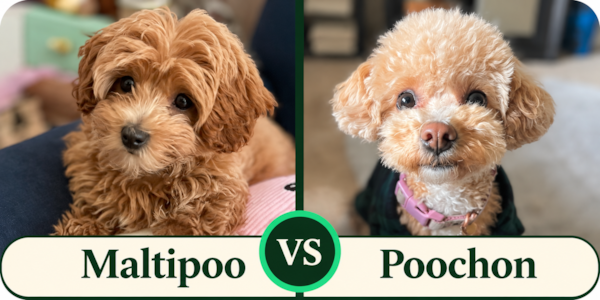
The Maltipoo vs Poochon comparison brings together two small Poodle mixes that can look remarkably similar at first glance. Both usually have soft low-shedding coats, expressive dark eyes, floppy ears, affectionate personalities, and enough intelligence to make training enjoyable. Both also fit naturally into homes looking for a small companion rather than a dog that needs hours of hard exercise.
Their shared Poodle parent explains much of that overlap. The real difference comes from the other half of each cross. A Maltipoo combines a Maltese with a Toy or Miniature Poodle, while a Poochon combines a Bichon Frise with a Toy or Miniature Poodle.
That changes more than the name. The Maltese is an exceptionally small toy breed with a long, silky coat and a centuries-old history as a close human companion. The Bichon Frise is larger and sturdier, with a plush curly double coat, an outgoing social style, and an unusual history that includes both royal courts and public performance.
As a result, the Maltipoo tends to have greater potential for a petite, light-bodied build and a softer lapdog feel. The Poochon is more likely to feel physically substantial for a small dog and may bring a broader, more openly social personality into the mix.
Neither cross is automatically calmer, smarter, or more affectionate. Both have plenty of overlap. The useful question is whether you prefer the petite, silky-companion influence of the Maltese or the sturdier, plush, highly social influence of the Bichon Frise alongside the intelligence of the Poodle.
Table of Contents
- Maltipoo vs Poochon at a Glance
- Maltipoo and Poochon Overview and History
- Maltipoo vs Poochon Appearance
- Maltipoo vs Poochon Temperament
- Maltipoo vs Poochon: Which One Should You Choose?
- Choose a Maltipoo if You Want a Petite, Closely Attached Companion
- Choose a Poochon if You Want a Sturdier, Highly Social Small Dog
- Which Is Smaller: Maltipoo or Poochon?
- Which Is Calmer: Maltipoo or Poochon?
- Which Is More Energetic?
- Which Is Easier to Train?
- Which Is Better for First-Time Dog Owners?
- Which Is Better With Children?
- Which Is Better With Other Dogs?
- Which Is Better With Cats?
- Which Sheds Less: Maltipoo or Poochon?
- Which Needs More Grooming?
- Which Is Better for Allergies?
- Which Is More Affectionate?
- Which Is Better for Apartment Living?
- Which Is Better for Seniors?
- Which Is Better for an Active Lifestyle?
- Which Is More Social With Strangers?
- Which Is More Predictable in Size and Appearance?
- Maltipoo vs Poochon: The Final Comparison
Maltipoo vs Poochon at a Glance
| Trait | Maltipoo | Poochon |
| Parent breeds | Maltese × Toy or Miniature Poodle | Bichon Frise × Toy or Miniature Poodle |
| General size | Small to very small | Small |
| Common adult weight | About 5–20 pounds, parent-dependent | About 8–20 pounds, parent-dependent |
| Build | Petite, compact, sometimes fine-boned | Compact, sturdy, often more substantial |
| Coat | Wavy to curly, sometimes silkier | Wavy to curly, usually plush and dense |
| Shedding | Usually very low | Usually very low |
| Grooming | Moderate to high | Moderate to high |
| Color range | White, cream, apricot, red, brown, black and combinations | White, cream, apricot and other Poodle-influenced shades |
| Eye color | Usually dark brown | Usually dark brown |
| Energy | Moderate | Moderate |
| Trainability | High | High to very high |
| Social style | Affectionate, lively, closely attached | Cheerful, playful, outgoing, social |
| Physical sturdiness | More variable, can be very petite | Usually greater |
| Best fit | Someone wanting a petite, affectionate Poodle mix | Someone wanting a sturdy, social teddy bear companion |
These ranges are guides rather than breed standards. Toy versus Miniature Poodle parentage can shift the size of either cross considerably, and individual puppies do not divide their parents' traits into exact halves. The actual parent dogs remain the best starting point when adult size, coat, or temperament matters.
Maltipoo and Poochon Overview and History
The Maltipoo and Poochon are modern Poodle crosses, but the breeds behind them belong to much older canine families. Both combine the Poodle with a small companion breed whose history stretches back centuries.
The comparison becomes even more interesting because the Maltese and Bichon Frise are distant relatives within the broad family of Barbichon-type companion dogs. Other members of this historic group include breeds such as the Havanese and Bolognese. They share old Mediterranean roots but developed in different directions over time.
The Maltese became one of the tiniest and most refined companion breeds in the world. The Bichon Frise became a somewhat larger, sturdier dog known for sociability, resilience, and performance. Adding the same Poodle influence to those two foundations gives the Maltipoo and Poochon their shared qualities as well as their differences.
Maltipoo History and Background
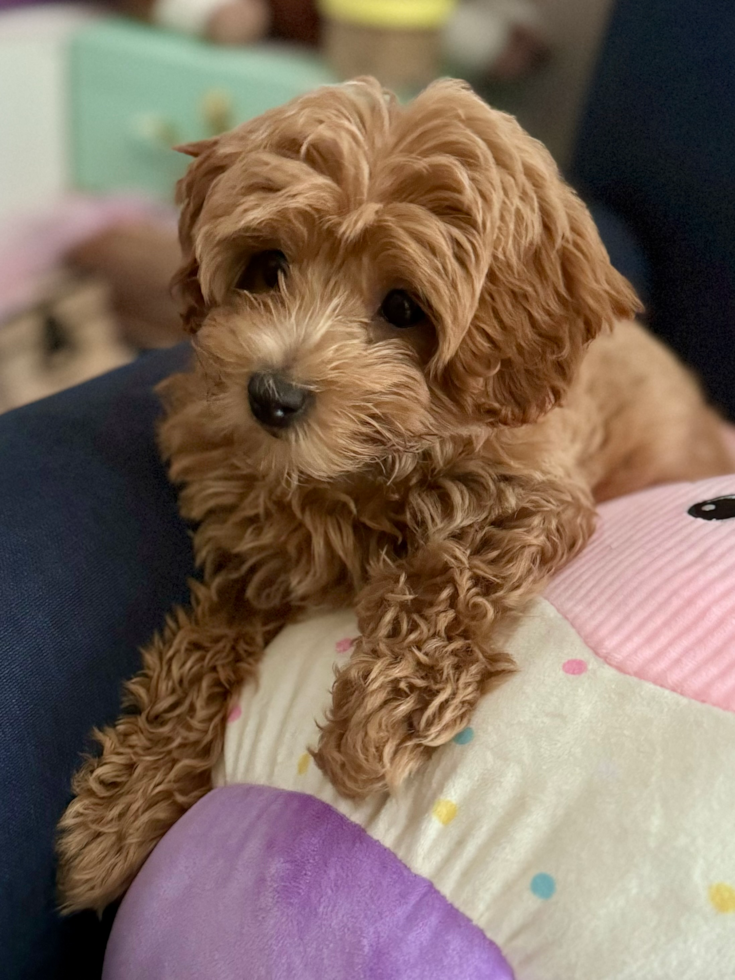
The Maltipoo combines a Maltese with a Toy or Miniature Poodle. Like many modern designer crosses, there is no reliable historical record that identifies one breeder as its creator or gives one universally accepted year when the first intentional Maltipoo breeding took place.
The Maltese side has a history that is far easier to trace. Maltese-type dogs have existed around the central Mediterranean for thousands of years, and the breed became closely associated with the island of Malta. Ancient Greek and Roman writings and artwork include small white companion dogs resembling the ancestors of today's Maltese.
These dogs lived close to people from the beginning. They were valued among aristocratic households and became symbols of luxury, refinement, and companionship rather than being developed for a physical working role.
The modern Maltese remains true to that history. It is a very small dog, weighing under seven pounds according to the breed standard, with a straight, silky white coat and a personality that combines affection with a surprising amount of confidence and playfulness.
The Poodle adds a very different background. Poodles developed around water retrieving and were expected to swim, locate birds, retrieve game, and work in close cooperation with people. That history rewarded intelligence, athleticism, responsiveness, and the ability to learn complicated tasks.
Crossing the Maltese with a Toy or Miniature Poodle can therefore add more coat curl, athletic potential, and training enthusiasm to an already clever little companion. The result remains very much a household dog, but one with enough mental and physical ability to enjoy far more than lap time.
Poochon History and Background
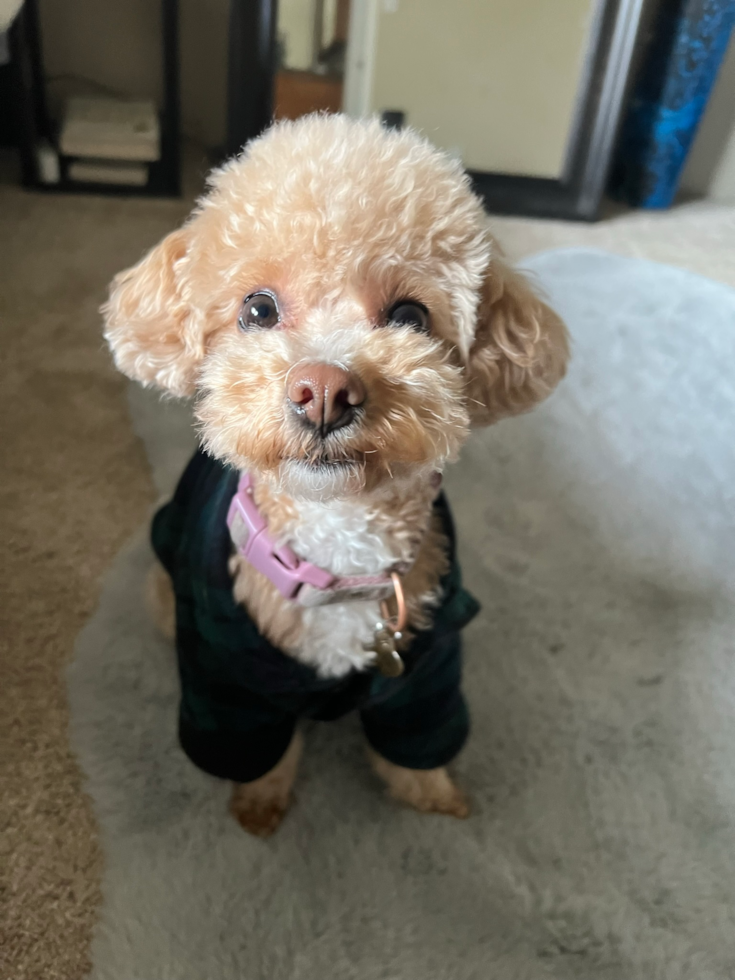
The Poochon, also called the Bichpoo or Bichonpoo, combines a Bichon Frise with a Toy or Miniature Poodle. Like the Maltipoo, it does not have one well-documented foundation story or official breed standard.
The Bichon Frise brings a particularly colorful history into the pairing. Its ancestors belonged to the old Barbichon group of small companion dogs and became strongly associated with Tenerife in the Canary Islands before finding enormous popularity in European royal courts.
Bichons enjoyed fashionable lives among Spanish, Italian, and French nobility, but that was not the end of their story. Political and social change eventually pushed many out of aristocratic households. Their intelligence and natural ability to entertain helped them adapt to life with street performers and circuses.
That performance history says a lot about the modern Bichon temperament. These dogs are cheerful, playful, highly social, adaptable, and capable of learning tricks with real enthusiasm. Beneath the rounded white show coat is also a surprisingly sturdy body.
The Poodle reinforces many of those qualities. Both breeds learn readily, enjoy interaction, and have enough athletic ability to participate in obedience, agility, tricks, and active family life.
The Poochon therefore combines two breeds that bring intelligence and performance ability from different historical paths. The result can be a very social, playful little dog that enjoys learning without becoming a high-drive working companion.
Maltipoo vs Poochon Appearance
The Maltipoo and Poochon can look so similar that grooming style sometimes hides more differences than it reveals. Both can have rounded teddy bear haircuts, dark eyes, floppy ears, fluffy muzzles, and soft curls or waves.
The underlying dogs are not quite the same. Maltese are significantly smaller and more finely built than Bichon Frise, while the natural Maltese coat is long, straight, and silky rather than plush and curly. Bichons bring more body substance and a dense double coat with a distinctly springy texture.
The shared Poodle can blur those differences, especially when strong curl comes through. Still, size, coat density, and physical sturdiness are useful clues when comparing the two.
Maltipoo Appearance
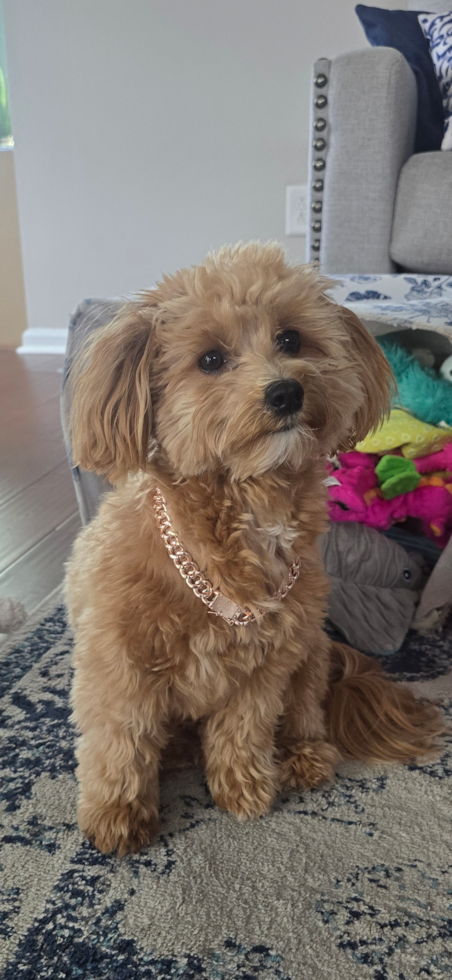
Maltipoos can be extremely small when a petite Maltese is paired with a Toy Poodle. Maltese weigh under seven pounds and stand around 7 to 9 inches, while Toy Poodles stand no more than 10 inches and commonly weigh around 4 to 6 pounds.
Miniature Poodle parentage widens the possibilities. Miniatures stand over 10 and up to 15 inches and commonly weigh 10 to 15 pounds, so a Maltipoo from a Miniature Poodle can become noticeably taller and heavier than one produced from two tiny parents.
This is why Maltipoo size charts can look inconsistent online. The cross is not one standardized size, and the word Maltipoo alone does not tell you whether the Poodle side came from a four-pound Toy or a fifteen-pound Miniature.
Maltipoo Coat Type and Texture
The Maltipoo coat can range from soft, loose waves to substantial Poodle curls. Maltese contribute long, straight, silky hair, while the Poodle contributes a much denser curled texture.
Many Maltipoos develop a coat somewhere in the middle. Loose waves can feel soft and light rather than woolly, especially when Maltese influence is strong.
A curlier dog may look more obviously Doodle-like and hold a rounded teddy bear haircut particularly well. A straighter Maltipoo can have hair that falls more naturally around the body and face.
Coat texture can also change during maturity. Puppy hair may feel especially soft and loose before the adult coat develops more wave, curl, or density.
Maltipoo Colors and Markings
The Maltese contributes a very narrow natural color palette. Purebred Maltese are white, with slight lemon or tan shading permitted in some cases, so much of the Maltipoo's wider color variety comes from the Poodle side.
Maltipoos may be white, cream, apricot, red, tan, brown, chocolate, black, gray or silver-related shades, depending on the Poodle parent and genetic lines involved. White markings and multicolor combinations may also appear.
Cream, apricot, and white are especially familiar Maltipoo colors because they preserve some of the light appearance associated with the Maltese while adding warmer Poodle shades.
Color can change significantly with age. Some rich puppy coats become lighter as the dog matures, particularly when fading genes from the Poodle side are present.
Maltipoo Eyes and Facial Features
Maltipoos usually have dark brown eyes with a bright, expressive appearance. Maltese themselves are famous for the contrast between dark eyes, black pigmentation, and their white coats.
The muzzle is moderate in length in both parent breeds, though Poodle influence can create a somewhat narrower, more refined face.
Facial furnishings can make the head appear much rounder than the underlying skull actually is. Grooming plays a major role in whether a Maltipoo looks more delicate, more Poodle-like, or like a classic teddy bear.
The small face also makes regular eye-area maintenance useful, particularly in lighter dogs where tear staining may be more visible.
Maltipoo Build and Size
The Maltipoo generally has greater potential to be the smaller and more delicate dog in this comparison. Maltese are tiny by breed standard, and Toy Poodles can be similarly petite.
A Maltipoo that inherits strong Maltese structure may have fine bone, a compact body, and a surprisingly light feel when picked up. Miniature Poodle influence can add more height, muscle, and athletic substance.
Despite the delicate appearance of the smallest examples, Maltese and Poodles are both more athletic than their size suggests. A healthy Maltipoo can enjoy proper walks, play, training, and normal family outings.
Owners simply need to match activity and handling to the actual dog's size. A six-pound Maltipoo should not be expected to tolerate the same rough play as a sturdy fifteen-pound Poochon.
Maltipoo Shedding
Maltipoos usually shed very little visibly. Maltese already shed minimally, while Poodle curls retain a great deal of loose hair within the coat.
A curly Maltipoo may leave almost no obvious hair on furniture or clothing. Straighter coats can release a little more, though heavy shedding would be unusual for the cross.
The tradeoff is that trapped hair still needs to go somewhere. Without brushing and combing, it can remain inside the coat and become part of a mat.
Low shedding can make housekeeping easier, but it should not be confused with guaranteed allergy compatibility.
Maltipoo Grooming Needs
Maltipoos need regular coat maintenance regardless of whether they inherit waves or curls. Long hair can tangle behind the ears, under the legs, around the collar, and close to the skin where knots may be difficult to see.
Straighter Maltese-influenced coats may feel silkier and easier to brush, but length alone can create tangles. Curly Poodle-influenced coats can mat more tightly and need careful combing all the way through.
Many owners keep Maltipoos in short puppy or teddy bear trims. This keeps the face rounded and fluffy while reducing the amount of coat that needs daily management.
Dental care deserves special attention as well. Maltipoos can be very small dogs, and regular tooth brushing should be part of the routine rather than something introduced only when problems appear.
Poochon Appearance
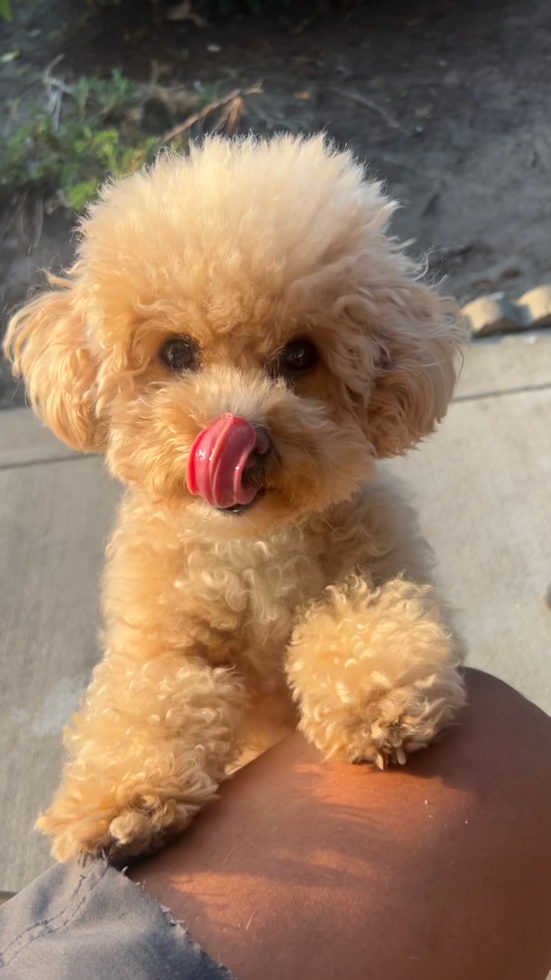
The Poochon usually has a sturdier physical starting point because the Bichon Frise is larger and more substantial than the Maltese. Adult Bichons commonly stand 9.5 to 11.5 inches and weigh around 12 to 18 pounds.
Toy Poodle parentage can reduce the finished size, while Miniature Poodle parentage can keep the dog closer to the upper end of the small-dog range. Most still feel compact and manageable rather than delicate.
The Bichon and Poodle also share a somewhat similar visual vocabulary: both have curly coats, balanced bodies, and enough natural athleticism to look surprisingly sporty beneath a fluffy haircut. This can make some Poochons more consistent in their overall teddy bear appearance than Maltipoos.
Poochon Coat Type and Texture
The Poochon usually has the greater chance of developing a dense, plush, curly coat because both parent breeds contribute substantial texture.
The Bichon Frise has a soft dense undercoat combined with a curlier outer coat. Together they create the springy, velvety texture behind the breed's famous powder-puff appearance.
The Poodle adds additional curl, so many Poochons grow coats that stand away from the body rather than falling flat. Loose waves can still occur, especially in first-generation crosses, but a plush texture is common.
That fullness makes the dog look wonderfully rounded after grooming. It also creates plenty of places for mats to form if the coat is not brushed down to the skin.
Poochon Colors and Markings
The Bichon Frise itself has a much more limited color range than the Poodle. White is the defining color, with cream, buff, or apricot shading permitted.
The Poodle expands the possibilities considerably. Poochons may therefore appear in white, cream, apricot, red, tan, brown, black, or combinations influenced by the Poodle lines involved.
Lighter colors remain closely associated with the cross because of the Bichon parent. White, cream, and apricot Poochons can look particularly similar to classic Bichons after a rounded haircut.
As with the Maltipoo, adult color may not exactly match puppy color. Poodle fading can soften rich shades as the dog matures.
Poochon Eyes and Facial Features
Poochons commonly have dark brown eyes framed by thick coat and dark pigmentation. The Bichon's round head styling and black nose create strong contrast, while the Poodle can add a slightly more refined underlying structure.
The actual muzzle remains moderate rather than extremely shortened. This gives the dog a balanced face beneath the fluffy furnishings.
A rounded haircut can create a very pronounced teddy bear look. Hair around the cheeks, ears, and muzzle fills out the face and can make the eyes appear especially large and expressive.
Regular trimming around the eyes helps maintain visibility and makes facial cleaning easier.
Poochon Build and Size
The Poochon is generally the sturdier dog in this comparison. Bichons are compact, resilient dogs that carry more average body weight than Maltese, and that difference often remains noticeable in the cross.
A Poochon may have more bone, a broader little body, and greater physical substance even when it stands at roughly the same height as a larger Maltipoo.
That sturdiness can be useful in family life. A ten- to fifteen-pound dog may feel easier to manage around older children and active household routines than a very petite companion.
The dog is still small, however. Good handling and appropriate play remain important, particularly around much larger dogs.
Poochon Shedding
Poochons usually shed very little visibly because both parent breeds contribute low-shedding curly coats.
Loose hair can remain caught within the dense coat until brushing removes it. This makes the cross attractive to people who dislike dog hair on furniture and clothing.
The same characteristic increases matting risk. A dense Poochon can look perfectly fluffy on the surface while tight knots are forming underneath.
As with every low-shedding dog in this cluster, the phrase should describe coat behavior rather than promise allergy safety.
Poochon Grooming Needs
Poochons require regular brushing, combing, and professional grooming. Their dense coats can be particularly unforgiving when maintenance is skipped.
A quick pass over the surface with a brush is rarely enough for a long fluffy coat. The grooming tool needs to reach through the hair so hidden tangles do not tighten close to the skin.
Many owners prefer a shorter teddy bear trim because it preserves the Poochon's characteristic rounded appearance without turning coat care into a daily project.
The cross may look effortlessly fluffy after leaving the groomer, but maintaining that softness requires a consistent routine between appointments.
Maltipoo vs Poochon Appearance Comparison: What Is the Difference?
The clearest physical distinction is that the Maltipoo generally has more potential to be petite and lightly built, while the Poochon usually starts with a sturdier, more substantial frame.
A Maltipoo from a small Maltese and Toy Poodle can remain extremely compact. The Poochon's Bichon parent already weighs around 12 to 18 pounds, so even Toy-Poodle Poochons commonly have more physical substance.
Coat texture creates another difference. Maltipoos can range from silky waves to curls because the Maltese parent contributes long straight hair. Poochons have curl coming from both sides, which gives them greater potential for the dense plush coat associated with the classic teddy bear look.
Color variety overlaps because the Poodle expands both crosses beyond the natural colors of their companion parent. Still, Maltipoos may look particularly delicate in lighter silky coats, while Poochons commonly have a fuller powder-puff appearance.
If you want the possibility of a very small, fine little companion, the Maltipoo has the advantage. If you prefer a small dog that feels physically sturdy and carries a thick plush coat, the Poochon may fit the picture better.
Maltipoo vs Poochon Temperament
The shared Poodle makes this temperament comparison closer than it first appears. Both crosses can be intelligent, responsive, affectionate, playful, and interested in what their families are doing.
The Maltese and Bichon Frise add different flavors to that foundation. Maltese are lively and loving but can also bring a touch of independence or stubbornness. Their tiny size and long history as close personal companions can create especially strong attachment to their people.
Bichons are famous for a cheerful, broadly social personality. They have centuries of companion history too, but their background as entertainers reinforces playfulness, confidence, adaptability, and enjoyment of attention from a wider audience.
The resulting distinction is less about one dog loving people and the other not. It is about intimate attachment versus outward sociability, with plenty of overlap between the two.
Maltipoo Temperament
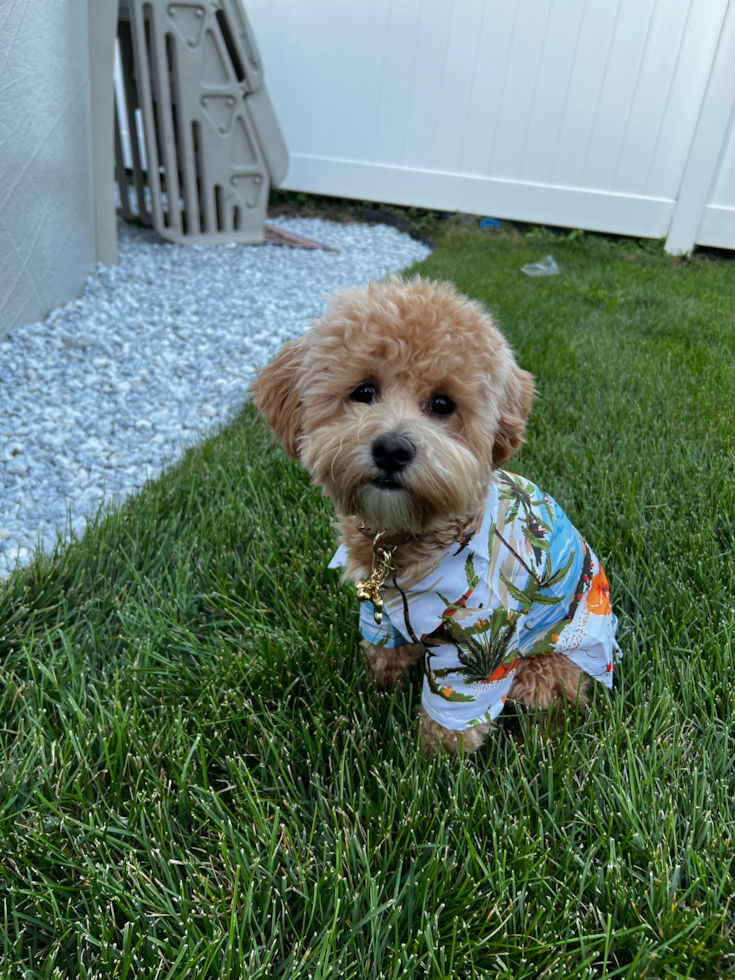
Maltipoos tend to be affectionate, lively, clever little dogs that become deeply involved with their families. Both the Maltese and Poodle have long histories of close human companionship, so the cross rarely prefers a distant relationship.
Many Maltipoos enjoy being physically close to their owners. They may follow someone around the home, settle on a lap or nearby cushion, and notice immediately when familiar routines suggest that a walk or outing is about to happen.
The Poodle side adds enthusiasm for learning and activity, which keeps the Maltipoo from being nothing more than a lapdog. Even very small individuals can have plenty of personality and surprising athletic ability.
Maltipoo Intelligence and Training
Maltipoos are intelligent, but their training style can depend on how much personality comes from each parent. Poodles are eager learners that usually respond quickly to consistent positive methods, while Maltese are clever but can occasionally bring a more independent streak.
That combination can produce a dog that learns a new cue quickly but still has opinions about when following it seems worthwhile.
Rewards help keep training cooperative. Food, praise, toys, and access to something the dog wants can turn basic obedience into a pleasant interaction rather than a battle of wills.
Maltipoos can also enjoy tricks, scent games, simple agility exercises, and puzzle toys. Their small size should not be mistaken for limited mental ability.
Maltipoo Energy Level
The Maltipoo generally has moderate energy. Maltese are lively little dogs despite their lapdog history, while Poodles bring additional athletic ability.
Daily walks, indoor play, training, and opportunities to explore can satisfy many adults. They do not usually need hours of strenuous exercise, but they benefit from more than being carried from room to room.
Toy-Poodle Maltipoos may have very small bodies, so exercise should suit the individual dog's size and maturity. A puppy does not need to cover adult walking distances simply because it appears enthusiastic.
Most mature Maltipoos develop a comfortable rhythm of activity followed by plenty of companion time.
Maltipoo Affection and Attachment
The Maltipoo can form especially close bonds with its family. Maltese have spent centuries in intimate companion roles, and Poodles are also highly people-oriented.
That closeness is one of the cross's greatest attractions, but it can make independence an important life skill. A puppy that is constantly held, carried, or allowed to follow someone every second never learns that brief separation is normal.
Independent naps, short absences, safe chew activities, and calm routines can help the dog feel secure without constant physical access to its owner.
This is particularly useful in work-from-home households, where it is easy to accidentally teach a puppy that people never disappear.
Maltipoos With Children
Maltipoos can be wonderful family companions, but size deserves serious consideration. A very small Maltipoo may weigh only a fraction of what an active young child does.
Gentle older children are usually the easier match. They can participate in tricks, walks, brushing, and quiet play without treating the dog like something that can be picked up whenever they choose.
Larger Maltipoos may be somewhat more physically forgiving, especially when a Miniature Poodle parent contributes additional size.
Temperament remains important too. A confident, well-socialized puppy from stable parents is more useful for family life than simply selecting the largest dog in the litter.
Maltipoos With Other Dogs and Pets
Maltipoos generally adapt well to other dogs when socialization begins early. They can be playful despite their small size and may enjoy having a compatible canine companion.
The main concern is physical mismatch. A five-pound Maltipoo can be accidentally injured by a forty-pound dog that plays enthusiastically even when neither animal has aggressive intentions.
Cats can also be good housemates. Calm introductions and clear boundaries prevent chasing from becoming an entertaining puppy habit.
With very small pets, supervision remains sensible. Curiosity alone can make interactions stressful for delicate animals.
Maltipoo Barking and Alertness
Maltipoos can be alert little dogs, and some may become more vocal than their owners expect. Maltese can have a strong watchdog side despite their tiny size, while Poodles are attentive to changes in their environment.
Visitors, hallway noises, activity outside a window, or unfamiliar sounds may trigger barking.
The habit becomes much easier to manage when addressed before it is well established. Teaching a quiet response after an initial alert gives the dog a clear alternative.
Loneliness and boredom can also contribute to vocal behavior. A Maltipoo that receives enough companionship, exercise, and independent enrichment has fewer reasons to bark simply to create activity.
Poochon Temperament
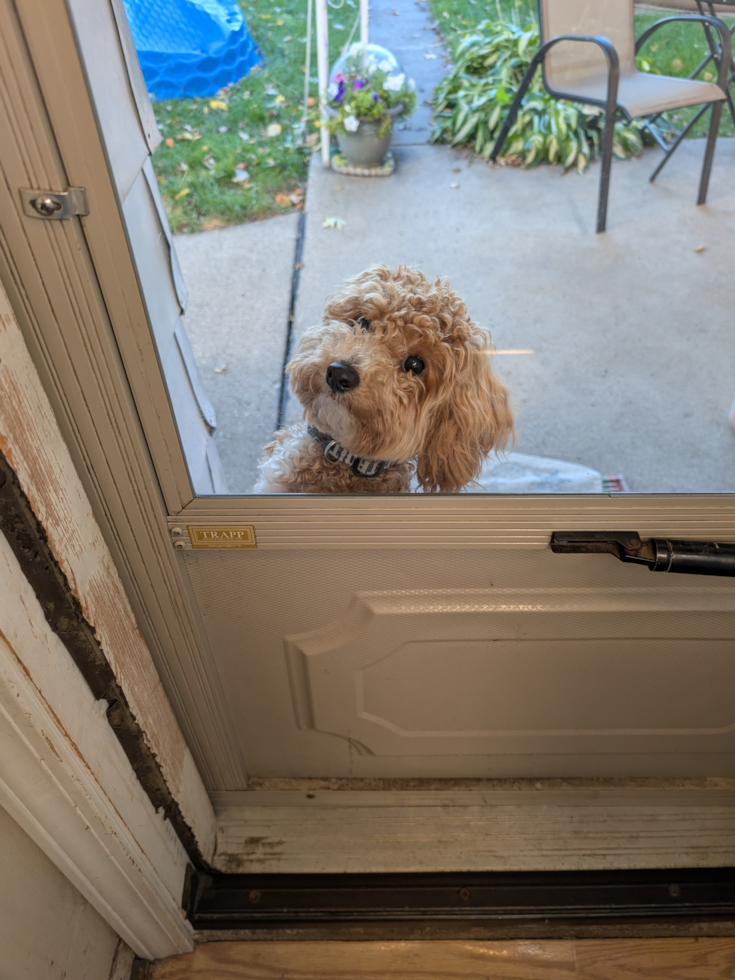
Poochons tend to be cheerful, affectionate, playful dogs with a naturally social approach to life. The Bichon Frise adds a breed famous for its friendly attitude, while the Poodle contributes intelligence and close attention to people.
Many Poochons seem to enjoy an audience. They may greet visitors enthusiastically, learn that entertaining behavior earns attention, and treat family gatherings as an opportunity rather than an inconvenience.
That does not make every Poochon fearless or extroverted. Early socialization still matters, and individual temperament always creates variation.
Poochon Intelligence and Training
Training is one of the Poochon's strengths because both parent breeds have a strong history of learning and performance.
Poodles are highly trainable, while Bichons have used intelligence and charm throughout their history, including their well-documented period as performance and circus dogs. The modern Bichon still enjoys tricks and interaction.
A Poochon may therefore bring enthusiasm as well as ability to training. Short positive sessions can build excellent household manners while also giving the dog a useful outlet for mental energy.
The cross can be particularly fun for owners who enjoy tricks. A dog that discovers applause follows a certain behavior may become very committed to improving the act.
Poochon Energy Level
Poochons generally have moderate energy. Bichons are peppy, playful dogs that can surprise people with energetic bursts, and the Poodle contributes its own athleticism.
This energy usually remains manageable. A healthy adult may enjoy brisk walks, games, short training sessions, and playful running without needing the schedule of a sporting or herding breed.
The Poochon may appear more boisterous than a very petite Maltipoo simply because it has a sturdier body and greater confidence using it.
Once activity needs are met, most can transition comfortably into companion mode.
Poochon Sociability and Affection
The Poochon may have a slight advantage for people who want an especially outgoing social dog. Bichons are known for approaching life with the assumption that new people are potential friends.
Poodle influence can reinforce that interest in humans while adding close family attachment. The finished dog may enjoy visitors, familiar strangers, and family activity without losing its strongest bond with the people at home.
A social dog still needs thoughtful exposure during puppyhood. Confidence grows through positive experiences rather than appearing automatically because of a breed label.
Poochons also need independence training. Being friendly with many people does not prevent a dog from becoming distressed when its own family leaves.
Poochons With Children
Poochons can be very good family dogs, and their physical sturdiness gives them a practical advantage over the smallest Maltipoos.
Bichons are compact but substantial dogs, and many Poochons inherit enough body weight to feel less delicate around normal family activity.
That does not mean young children can handle them roughly. A small dog can still be frightened or injured by squeezing, dropping, or overly physical play.
Older children may enjoy a Poochon's willingness to learn tricks and participate in games. The cross's social temperament can make it an enthusiastic family companion when interactions remain respectful.
Poochons With Other Dogs and Pets
Poochons usually have strong potential in multi-dog households. Bichons are famously social, while Poodles can also live very comfortably with other dogs.
The cross may actively enjoy canine company, especially when another dog's play style matches its own. Playful chasing and short bursts of energetic activity can be a regular part of the relationship.
Cats can also fit well. Early introductions and preventing repeated chasing help establish calm habits before excitement becomes routine.
Individual temperament remains more important than assuming every Poochon will want constant social interaction. Some dogs simply prefer quieter companions.
Poochon Barking and Alertness
Poochons can be alert enough to announce visitors and unexpected sounds, but they are not automatically excessive barkers.
Bichons have enough awareness to serve as small watchdogs without having a serious guarding temperament. Poodles add another attentive breed to the equation.
Barking may become more noticeable when the dog is bored, excited, or repeatedly rewarded for making noise. Consistent responses from the household help prevent confusion.
A dog that understands when the alert is finished is far easier to live with than one that believes every delivery requires a five-minute report.
Maltipoo vs Poochon Temperament Comparison What Is the Real Difference?
The temperament difference between the Maltipoo and Poochon is less about intelligence or affection and more about social style and physical confidence.
The Maltipoo can lean toward a more intimate companion relationship. Maltese influence adds an exceptionally small breed that has spent centuries close to people, and some Maltipoos form especially intense attachments to their household.
The Poochon can lean toward broader sociability and cheerful playfulness. Bichon influence adds a sturdier dog with a history of winning over strangers, entertaining crowds, and adapting to changing circumstances.
Both can be playful and outgoing. Both can also become closely attached to one person. These are tendencies, not separate personality boxes.
The distinction becomes most useful when combined with the physical differences. Someone who wants a tiny dog with close lapdog companionship may naturally lean toward the Maltipoo, while someone who wants a small but sturdier social companion may prefer the Poochon.
Maltipoo vs Poochon: Which One Should You Choose?
The Maltipoo and Poochon share enough good qualities that either can work in many small-dog households. Both usually shed very little, both can be highly trainable, both adapt well to apartments, and both want substantial human companionship.
The best choice comes from the differences their non-Poodle parents introduce. Maltese influence pushes the Maltipoo toward a more petite frame, silkier coat possibilities, and an especially close companion style. Bichon influence pushes the Poochon toward greater physical sturdiness, denser coat texture, and a cheerful social personality.
Choose a Maltipoo if You Want a Petite, Closely Attached Companion
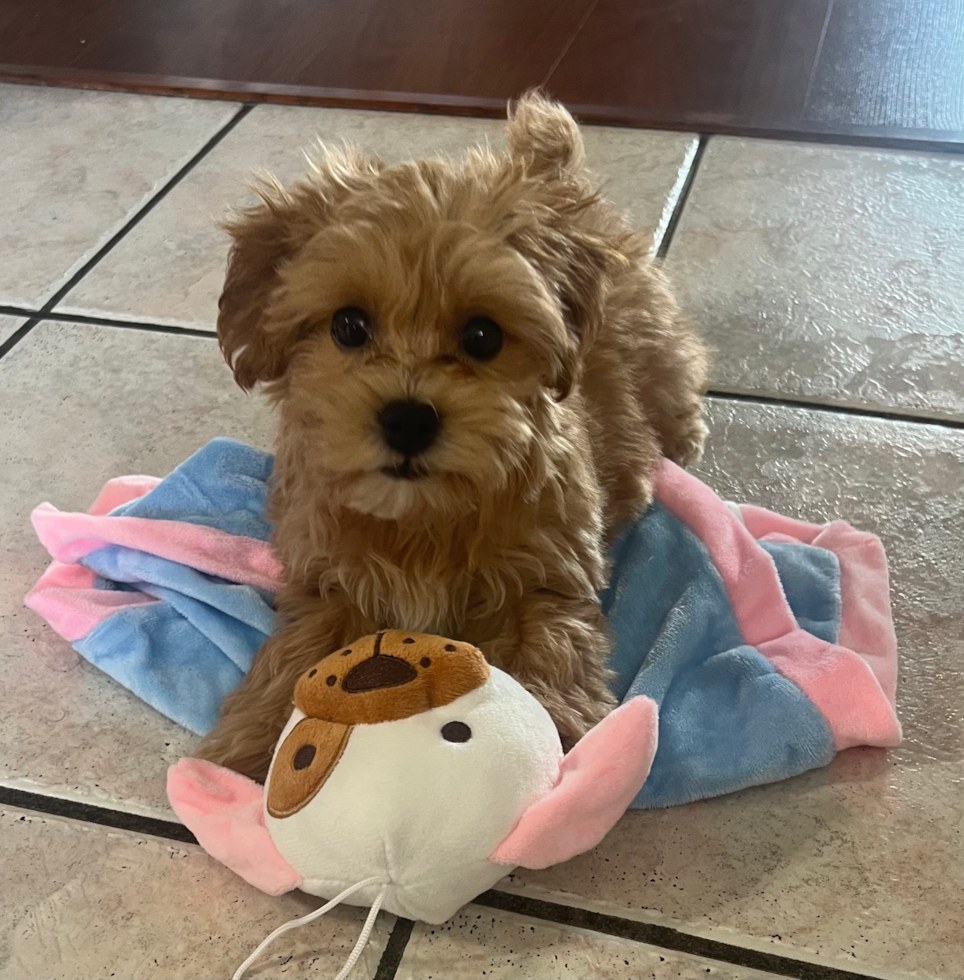
A Maltipoo puppy may suit you better if very small size is part of the appeal. A Maltese paired with a Toy Poodle can produce a genuinely petite adult that fits easily into small homes, travel routines, and lifestyles where portability matters.
The cross can also suit people who love intimate companionship. Maltipoos commonly form strong bonds and may be happiest spending much of the day close to their family.
Training still deserves a place in that relationship. Poodle intelligence gives the Maltipoo plenty of mental ability, while the Maltese contributes more athleticism and playfulness than its elegant appearance suggests.
The main caution is delicacy at the smallest sizes. A tiny Maltipoo needs a household that understands how to handle a very small dog safely.
Choose a Poochon if You Want a Sturdier, Highly Social Small Dog
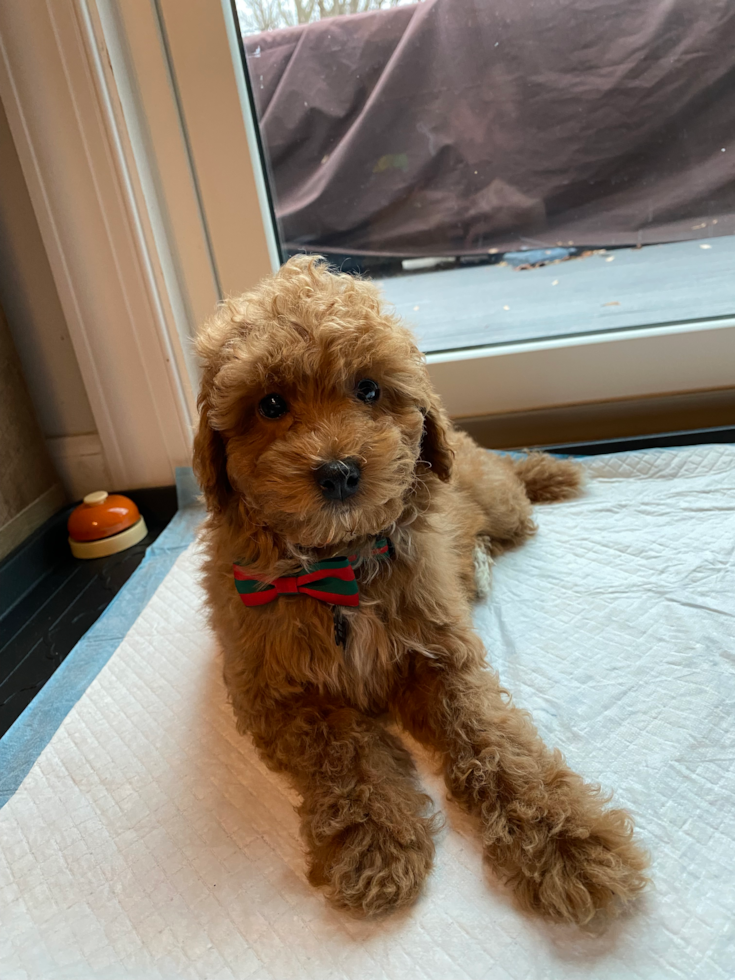
A Poochon puppy may suit you better if you want a small companion that feels more physically substantial. Bichon influence can add body weight, bone, and sturdiness without moving the dog out of the convenient small-dog category.
The Poochon also has particular appeal for social households. Bichons have a cheerful reputation around people, and that trait can combine beautifully with Poodle intelligence and responsiveness.
Training can become a source of entertainment rather than merely a responsibility. Both sides of the cross have histories that reward learning and interaction, so tricks and games can become a natural part of everyday life.
If your image of a small dog is a plush, outgoing little companion that enjoys visitors, family activity, and plenty of attention, the Poochon may fit especially well.
Which Is Smaller: Maltipoo or Poochon?
The Maltipoo has the greater potential to be the smaller dog because the Maltese itself weighs under seven pounds. A Maltipoo from a small Maltese and Toy Poodle can remain exceptionally petite.
The Poochon starts with a Bichon Frise parent that commonly weighs around 12 to 18 pounds. Toy Poodle influence can reduce the finished size, but many Poochons still carry more substance than Maltipoos.
Miniature Poodle parentage can narrow the difference. A Maltipoo from a larger Miniature Poodle may outweigh a small Toy-Poodle Poochon.
For either cross, parent size is more useful than relying on a generic adult range.
Which Is Calmer: Maltipoo or Poochon?
There is no dramatic difference in calmness. Both are playful small companions with moderate exercise needs, and the shared Poodle can add enthusiasm for activity.
A Maltipoo may lean a little more toward quiet lapdog companionship when the Maltese side is strong. A Poochon may show more playful bounce and social excitement through the Bichon.
That does not make the Poochon a high-energy dog. Bichons are adaptable and do not require intense exercise despite their cheerful bursts of activity.
The actual parents and individual puppy will provide better clues than assuming one cross is always calmer.
Which Is More Energetic?
The Poochon may have a slight edge for playful physical energy, particularly because the Bichon is a sturdier dog that enjoys active bursts and can excel in activities such as agility.
The Maltipoo is still lively. Maltese are playful and capable little athletes, while Poodle influence adds additional activity to the cross.
The difference is more likely to appear in style than in total exercise hours. A Poochon may play with greater physical confidence, while a petite Maltipoo may direct more of its energy toward shorter games and close interaction.
Neither requires an athletic household. Daily walks and regular play are appropriate for both.
Which Is Easier to Train?
Both have strong training potential, but the Poochon may have a slight advantage in consistent eagerness.
The Poodle is shared, so intelligence is present on both sides. Bichons also have a strong performance history and generally enjoy entertaining people, which can reinforce enthusiasm for tricks and training.
Maltese are intelligent but may bring a more independent streak into the Maltipoo. This does not make training difficult, but rewards and consistency become especially important.
For normal household manners, either cross can do extremely well. The difference may become more noticeable for an owner who wants training itself to become a long-term hobby.
Which Is Better for First-Time Dog Owners?
Both can be good choices for first-time owners, but the Poochon may be slightly more forgiving physically and socially. Its sturdier build can make handling less intimidating, while the Bichon's outgoing nature often fits comfortably into busy households.
The Maltipoo can also make an excellent first dog, especially for someone who wants an especially small companion. New owners simply need to understand the practical realities of living with a tiny dog.
Grooming will be a significant responsibility with either cross. Low shedding does not reduce the need for brushing, combing, professional haircuts, dental care, nail trimming, and ear maintenance.
First-time owners should also teach independence from the beginning. Both crosses can become very attached to their people.
Which Is Better With Children?
The Poochon usually has the physical advantage around children because it tends to be the sturdier dog.
Bichon Frise are compact dogs with more body weight and bone than Maltese, and that influence can make a Poochon better suited to the movement of a family household. Children still need to handle the dog respectfully.
Maltipoos can be wonderful with children too, particularly older kids who understand how fragile a small dog can be. A six-pound Maltipoo is simply not a suitable target for rough play.
For families with younger children, choosing an individual dog with enough physical substance may matter more than choosing one cross by name.
Which Is Better With Other Dogs?
Both usually do well with other dogs, but the Poochon may lean slightly more social because of the Bichon influence.
Many Bichons approach other friendly dogs with confidence and enthusiasm. A Poochon can inherit that broad social style while also benefiting from the Poodle's adaptability.
Maltipoos can be equally friendly, though very small individuals need extra consideration around large canine playmates.
Play style and personality remain more important than the label. A quiet older dog may not appreciate an enthusiastic puppy of either cross.
Which Is Better With Cats?
Both can be excellent choices for cat households.
Neither the Maltese nor Bichon Frise introduces strong modern herding or hunting instincts, and the small Poodle side is generally manageable around cats when socialization begins early.
A puppy can still chase because chasing is entertaining. Preventing that pattern from becoming a game is more useful than assuming a companion breed will automatically ignore the cat.
Cats should have escape spaces, and calm interactions should earn rewards. Those simple habits can help either cross become a polite feline roommate.
Which Sheds Less: Maltipoo or Poochon?
Both generally shed very little, and there is no reliable universal winner.
The Maltipoo combines two low-shedding parents. The Poochon does the same, with both the Bichon and Poodle contributing coats that hold loose hair rather than releasing large amounts around the home.
A dense curly Poochon may retain especially large amounts of loose hair in its coat, while a straight or loose-waved Maltipoo may release slightly more visibly.
The practical difference is likely to be noticed more during grooming than while vacuuming.
Which Needs More Grooming?
Both require significant grooming, but the Poochon may have the denser and more mat-prone coat on averagebecause both parent breeds contribute substantial curl and texture.
A Maltipoo with a silkier Maltese-influenced coat can still tangle badly when long. Length, friction, and inconsistent brushing create problems even without tight curl.
Poochon coats may hide mats particularly well because the fluffy outer appearance can remain intact while hair tightens underneath.
Short pet trims make both crosses much easier to maintain. People who want the full teddy bear look should expect regular professional grooming and consistent home care.
Which Is Better for Allergies?
Neither can be guaranteed hypoallergenic despite the low-shedding reputation of both crosses.
Maltese, Bichons, and Poodles all release relatively little visible hair, which can reduce the amount of loose coat moving through a home. Allergic reactions can still come from proteins in saliva and dander.
A person may also react differently to two individual dogs of the same cross.
When allergies are significant, direct exposure to the individual dog offers much more useful information than choosing based on the Maltipoo or Poochon name.
Which Is More Affectionate?
Both are deeply affectionate, but they may express that affection a little differently.
The Maltipoo may lean toward especially close personal attachment. Maltese have spent centuries as intimate human companions, and some Maltipoos seem happiest when they can stay very close to one or a few favorite people.
The Poochon may show affection in a broader social way. Bichon influence can create a dog that adores its family while also enthusiastically welcoming visitors and other friendly people.
Neither style indicates a stronger bond. One may feel more intimate, while the other feels more openly social.
Which Is Better for Apartment Living?
Both are excellent apartment candidates.
The Maltipoo's potential for exceptionally small size makes it easy to accommodate physically, while its moderate exercise needs fit well into homes without yards. The Poochon is slightly larger on average but remains compact enough for city living.
The Poochon's playful bursts may require a little more room to zoom safely, but regular walks and games solve that problem far more effectively than extra square footage.
Barking and alone-time skills are more important apartment considerations. Either dog can struggle in close living quarters if every hallway sound becomes an emergency.
Which Is Better for Seniors?
Both can make excellent companions for older adults, and the better choice depends on priorities.
The Maltipoo may appeal to someone who wants the smallest, lightest dog possible. A petite adult can be easy to lift, travel with, and manage in a compact home.
The Poochon may appeal to someone who prefers a sturdier small dog that still remains easy to handle. Its cheerful temperament can also suit an owner who enjoys a socially outgoing companion.
Grooming ability should be considered honestly. A short professional haircut can make either cross much easier to maintain than a long fluffy coat.
Which Is Better for an Active Lifestyle?
Both can participate in an active small-dog lifestyle, but the Poochon may have a slight edge for physical sturdiness.
Bichons are surprisingly capable athletes beneath their plush coats, and the Poodle adds more agility and trainability. A healthy Poochon can enjoy longer walks, active games, travel, and light hiking.
Maltipoos can do many of the same things, particularly when Miniature Poodle ancestry adds size and stamina. Very petite individuals simply need exercise scaled to their body.
For serious outdoor activity, the actual dog's size and conditioning matter more than the cross alone.
Which Is More Social With Strangers?
The Poochon may have the clearer advantage for broad sociability.
Bichon Frise have a long reputation for treating unfamiliar people as potential friends, and their history as entertainers rewarded confidence around different audiences.
Maltipoos can be highly friendly too, but Maltese influence may produce a dog that is more focused on familiar people or a little more alert around strangers.
Early socialization can shape either outcome considerably. Friendly parents and positive puppy experiences provide a stronger foundation than crossbreed averages alone.
Which Is More Predictable in Size and Appearance?
Neither cross has an official breed standard, and both can involve Toy or Miniature Poodles, so significant variation is possible.
The Maltipoo has an especially wide proportional difference between the Maltese and a larger Miniature Poodle. A tiny Maltese crossed with a fifteen-pound Poodle gives the puppy a broad genetic range to work with.
The Poochon's Bichon parent is already closer in size to the Miniature Poodle, which can make some pairings somewhat easier to estimate. Toy-Poodle Poochons still introduce more variation.
Appearance remains variable in both, but Poochons may have a stronger tendency toward dense curl because both sides contribute substantial coat texture.
Maltipoo vs Poochon: The Final Comparison
Choosing between a Maltipoo vs Poochon becomes much easier once you recognize that the Poodle is not the deciding factor. Both dogs already have access to Poodle intelligence, trainability, athletic ability, curl, and low-shedding coat traits.
The real choice is Maltese versus Bichon Frise influence.
The Maltipoo adds one of the smallest and oldest companion breeds in the world. That can create a petite, closely attached little dog with a softer build, silky coat possibilities, and a personality that combines affection with a surprising amount of confidence and playfulness.
The Poochon adds a larger and sturdier member of the same broad historic companion-dog family. Bichon influence can produce a denser plush coat, greater physical substance, cheerful sociability, and a strong appetite for attention and play.
Both can learn quickly. Both can live happily in apartments. Both can shed remarkably little. Both need regular grooming and enough companionship that long periods of isolation are unlikely to suit them.
The difference becomes clearer when you picture the adult dog rather than the puppy.
If you want a particularly small companion that can curl up close to you, travel easily, enjoy training, and fit into a quieter daily rhythm, the Maltipoo may feel more natural.
If you want a small dog that feels sturdier in your hands, enthusiastically joins family activity, enjoys meeting people, and carries the plush teddy bear appearance especially well, the Poochon may be the better match.
Neither description replaces the individual dog. A Miniature-Poodle Maltipoo may be larger and more athletic than a Toy-Poodle Poochon, while a reserved Poochon can be less outgoing than an exceptionally social Maltipoo.
Frequently Asked Questions
What is the main difference between a Maltipoo and Poochon? Both have a Toy or Miniature Poodle parent, but the Maltipoo's other parent is a Maltese while the Poochon's is a Bichon Frise. Maltese influence gives the Maltipoo greater potential for a very petite build, silkier coat, and especially close companion style. Bichon influence gives the Poochon more physical substance, a plush curly coat, and an especially cheerful social temperament. The two still overlap significantly because the Maltese and Bichon are both old companion breeds and the Poodle is shared. Their differences are most useful when comparing adult size, sturdiness, coat texture, and social style.
Which is smaller, a Maltipoo or Poochon? The Maltipoo usually has greater potential to be very small because purebred Maltese weigh under seven pounds. A Maltipoo from a small Maltese and Toy Poodle can remain exceptionally petite. Poochons commonly have more body weight because Bichon Frise usually weigh around 12 to 18 pounds. Toy or Miniature Poodle size can change the result in either cross, so parent measurements remain the best guide.
Which is calmer, a Maltipoo or Poochon? Neither cross has a dramatic advantage for calmness. Both are playful companion dogs with moderate activity needs and a shared Poodle parent. A Maltipoo with strong Maltese influence may lean toward closer lapdog companionship, while a Poochon may show more boisterous social play through the Bichon side. Individual temperament can easily matter more than that average distinction.
Which is easier to train, a Maltipoo or Poochon? Both are highly trainable because they share the Poodle. The Poochon may have a slight advantage in consistent enthusiasm because Bichons have a long history as performers and generally enjoy entertaining people. Maltipoos learn quickly too, although Maltese influence can sometimes add more independence. Positive rewards and short interesting sessions work extremely well for either cross.
Which sheds less, a Maltipoo or Poochon? Both usually shed very little. Maltese, Bichons, and Poodles all have coats that release much less visible hair around the home than many conventional shedding breeds. A curly Poochon may trap more loose hair within its dense coat, while a straighter Maltipoo may release slightly more visibly. Individual coat texture matters more than the crossbreed name.
Which needs more grooming, a Maltipoo or Poochon? Both need regular grooming, but Poochons may develop particularly dense coats because both the Bichon and Poodle contribute substantial curl and texture. This can make hidden mats a significant concern when brushing is inconsistent. Maltipoo coats can also tangle badly, especially when kept long. A short teddy bear trim makes either dog much easier to maintain and does not remove the need for brushing and professional grooming.
Is a Maltipoo or Poochon better with children? Both can be good family dogs, but the Poochon usually has an advantage in physical sturdiness. Bichon influence can create a more substantial little dog that is less delicate than the smallest Maltipoos. Maltipoos can still be wonderful with gentle children, particularly older kids who understand careful handling. The dog's actual adult size should be considered alongside temperament when choosing for a family.
Is a Maltipoo or Poochon better for apartment living? Both are excellent apartment dogs. Maltipoos can be exceptionally small, while Poochons remain compact despite being somewhat sturdier on average. Daily walks, play, social interaction, and good barking habits matter more than the modest size difference. Neither needs a large yard when its physical and mental needs are met.
Which is more social, a Maltipoo or Poochon? The Poochon may have a slight advantage for broad sociability because the Bichon Frise is famous for its cheerful, outgoing attitude toward people. Many Bichons seem to approach unfamiliar humans as potential new friends. Maltipoos can be very social too, but some may focus their strongest attachment more closely on familiar family members. Early socialization and parent temperament can easily influence the final result.
Should I choose a Maltipoo or Poochon? Choose a Maltipoo if you want a petite, affectionate Poodle mix with strong trainability, low shedding, and the possibility of an especially small adult size. It can be a great match for someone who values close companionship and prefers a lighter little dog. Choose a Poochon if you want a sturdier, plush-coated small dog with a highly social personality and plenty of enthusiasm for play and training. Both make excellent companions, so the decision comes down to whether the Maltese's petite intimate style or the Bichon's sturdy, outgoing character fits your household better.