





Published Tuesday, October 6, 2026 by Pilesgrove Pups
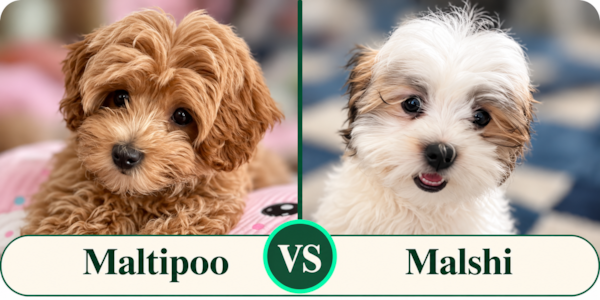
The Maltipoo vs Malshi comparison starts with an interesting advantage: these two dogs share the Maltese. Both are small companion crosses, both usually shed very little, and both tend to form close relationships with their people. Their soft coats, dark eyes, petite frames, and expressive faces can make them look surprisingly similar too.
The other half of each cross is where things change. A Maltipoo combines the Maltese with a Toy or Miniature Poodle. A Malshi combines the Maltese with a Shih Tzu. The Poodle brings athleticism, fast learning, curl, and a stronger appetite for mental activity. The Shih Tzu brings a sturdier body, a calmer companion background, a broader range of colors, and the distinctive facial structure of a breed developed for life inside royal palaces.
Those differences show up in everyday ownership. A Maltipoo may be quicker to turn training into a game and may want a little more activity across the day. A Malshi is usually more firmly rooted in the lapdog world. It still plays, learns, explores, and enjoys walks, but its idea of a successful afternoon may include considerably more lounging beside its favorite person.
Size alone will not make the decision because the ranges overlap. Grooming will not either, since both require regular coat care. Temperament, activity, build, trainability, and the kind of relationship you want with your dog are much more useful places to start.
Table of Contents
- Maltipoo vs Malshi at a Glance
- Maltipoo and Malshi Overview and History
- Maltipoo vs Malshi Appearance
- Maltipoo vs Malshi Appearance Comparison: What Is the Difference?
- Maltipoo vs Malshi Temperament
- Maltipoo vs Malshi: Which One Should You Choose?
- Choose a Maltipoo if You Want a Clever, Interactive Small Dog
- Choose a Malshi if You Want a Sturdy, Companion-Focused Dog
- Which Is Smaller: Maltipoo or Malshi?
- Which Is Calmer: Maltipoo or Malshi?
- Which Is More Energetic?
- Which Is Easier to Train?
- Which Is Better for First-Time Dog Owners?
- Which Is Better With Children?
- Which Is Better With Other Dogs?
- Which Is Better With Cats?
- Which Sheds Less: Maltipoo or Malshi?
- Which Is Better for Allergies?
- Which Needs More Grooming?
- Which Is More Affectionate?
- Which Is Better for Seniors?
- Which Is Better for Apartment Living?
- Which Handles Warm Weather Better?
- Which Has the More Predictable Size?
- Maltipoo vs Malshi: The Final Comparison
Maltipoo vs Malshi at a Glance
| Trait | Maltipoo | Malshi |
| Parent breeds | Maltese × Toy or Miniature Poodle | Maltese × Shih Tzu |
| General size | Toy to small | Toy to small |
| Common adult weight | About 5–20 pounds | About 6–16 pounds |
| Build | Fine to moderately athletic | Compact and usually sturdier |
| Coat | Wavy to curly, sometimes straighter | Straight to wavy, soft and dense |
| Shedding | Very low in many dogs | Very low in many dogs |
| Grooming | Moderate to high | Moderate to high |
| Color range | White, cream, apricot, red, black, brown, parti and others | White, cream, gold, brown, black, silver, red and multicolor combinations |
| Eye color | Usually dark brown | Usually dark brown |
| Energy | Moderate | Low to moderate |
| Trainability | Usually very responsive | Intelligent but may be more independent |
| General personality | Affectionate, bright, playful, social | Affectionate, cheerful, confident, companion-focused |
| Best fit | Someone wanting a clever, interactive small dog | Someone wanting a sturdy, relaxed small companion |
These are useful tendencies rather than fixed rules. Neither the Maltipoo nor Malshi has an official breed standard, so puppies can inherit different combinations from their parents. That matters particularly with Maltipoos because a Toy Poodle and Miniature Poodle differ significantly in size. Toy Poodles stand no more than 10 inches and weigh about 4 to 6 pounds, while Miniature Poodles can reach 10 to 15 inches and around 10 to 15 pounds.
Maltipoo and Malshi Overview and History
The Maltipoo and Malshi belong to the modern group of intentionally bred companion crosses, but the breeds behind them have histories reaching back hundreds or even thousands of years. Their shared Maltese parent is one of the oldest toy breeds still with us today.
The Maltese has spent much of its history close to people. Ancient Greeks and Romans knew small Maltese-type dogs, and the breed later became a favored companion among European nobility. Modern Maltese weigh less than seven pounds and combine a delicate-looking exterior with a lively, playful personality.
From that common foundation, the two crosses head in different directions. The Maltipoo adds one of the world's most intelligent and versatile dog breeds. The Malshi adds another ancient companion whose history centers on Chinese imperial life.
That distinction helps explain much of the personality difference between them.
Maltipoo History and Popularity
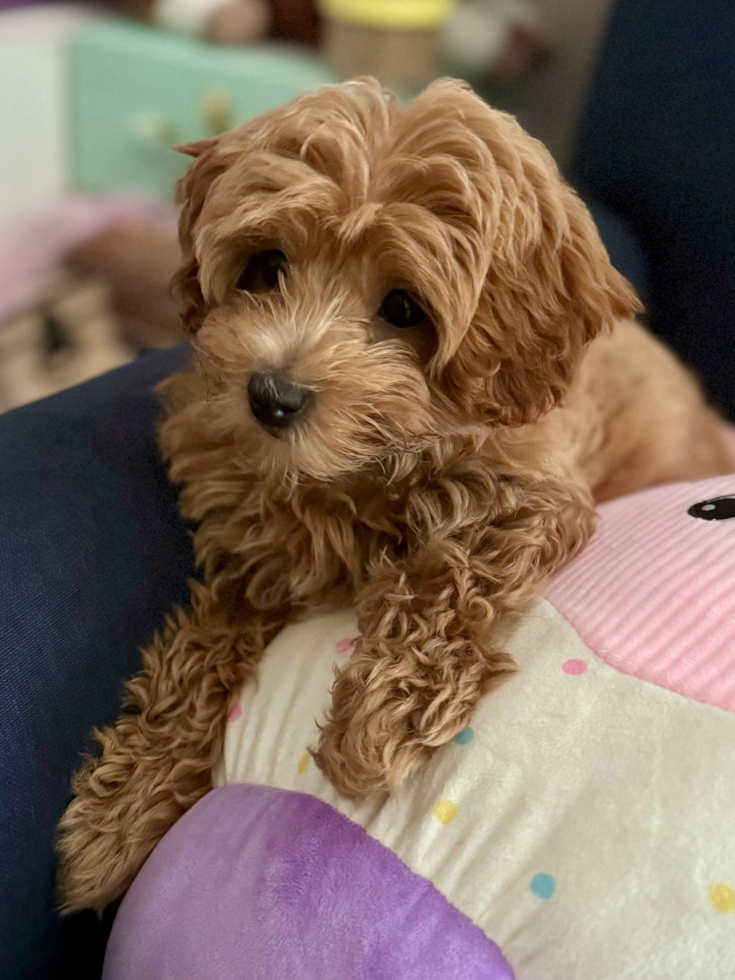
The Maltipoo, sometimes written Maltapoo and known as the Moodle in some countries, is a Maltese crossed with a Toy or Miniature Poodle. The modern cross gained visibility alongside other small Poodle mixes during the late twentieth century, when people became increasingly interested in companion dogs that combined affectionate temperaments with coats that released less hair around the home.
There is no official foundation record naming one person as the creator of the Maltipoo. That is worth remembering because designer-dog histories are frequently repeated online with far more certainty than the documentation supports. The Maltipoo developed as a companion cross rather than through the kind of closed studbook and formal breed-development process seen in established purebred dogs.
Its two parents bring very different histories together. The Maltese has been a companion for centuries, while the Poodle began as a working water retriever. The elaborate haircut associated with show Poodles sometimes hides that background, but the breed underneath the coat is athletic, eager, and remarkably trainable.
Toy Poodles later became especially successful as companion and performance dogs. Their small size did not remove the intelligence or learning ability found in the larger varieties. AKC describes Toy Poodles as agile, intelligent, and highly trainable, characteristics that explain why Maltipoos can be such engaging little dogs to teach.
The appeal of the pairing is easy to see. Both parents are small and strongly attached to people, while the Poodle can add extra trainability, activity, coat curl, and color possibilities. The Maltese contributes its gentle companion nature and petite size.
Over time, the Maltipoo became one of the most familiar small Poodle crosses. Part of its popularity is certainly visual, but the practical appeal matters just as much. These dogs can fit into apartments and smaller homes, travel relatively easily, and provide a lot of personality without requiring the space or exercise routine of a large dog.
Malshi History and Popularity
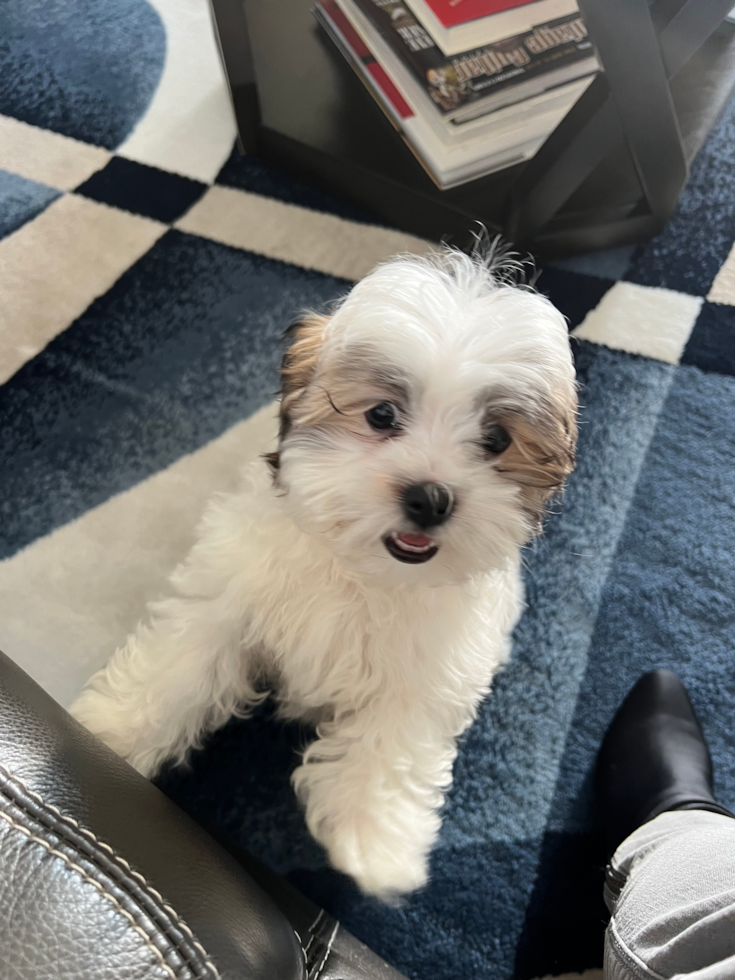
The Malshi, also called the Maltese Shih Tzu, Malt-Tzu, or Malti-Tzu, pairs two breeds that were already dedicated companion dogs long before modern designer crosses existed. The Maltese spent centuries beside people in the Mediterranean and throughout Europe, while the Shih Tzu developed as a treasured palace companion in China.
Intentional Maltese-Shih Tzu breeding became established during the modern designer-dog period, with the cross becoming particularly well known in Australia before spreading more widely. Like the Maltipoo, the Malshi remains a cross rather than a formally recognized breed, so there is no single official standard for size, coat, appearance, or temperament.
The Shih Tzu side gives the Malshi a fascinating history. Shih Tzu ancestors came from Tibetan breeding stock and became closely associated with Chinese imperial households. Modern Shih Tzu descend from a very small group of dogs preserved outside China during the twentieth century, and the breed entered the AKC Stud Book in 1969.
Perhaps the most useful historical fact is much simpler: the Shih Tzu was bred primarily to be a companion. Unlike the Poodle, there is no hunting or retrieving job sitting behind the modern breed. The Shih Tzu's purpose was life close to people, and that remains central to its temperament today.
Crossing that dog with the Maltese doubles down on companionship. Both parents are Toy Group breeds, both have long coats, and both have generations of history living closely with humans. That helps explain why Malshis have become popular with people who want a small dog whose main ambition is to be deeply involved in home and family life.
Maltipoo vs Malshi Appearance
At first glance, the Maltipoo and Malshi can occupy the same fluffy-small-dog territory. Both have dark eyes, dropped ears, soft coats, and compact bodies. A white Malshi in a short teddy bear trim can even look remarkably similar to a cream Maltipoo.
Look more closely and the differences begin to show. The Maltipoo can inherit the longer legs, narrower muzzle, curl, and lighter athletic structure of the Poodle. The Malshi usually has a stockier frame and may inherit a broader head, shorter muzzle, and heavier body from the Shih Tzu.
Coat texture separates them too. Maltipoos have the possibility of genuine Poodle-style curl, while Malshi coats are more likely to stay straight, soft, or gently wavy.
Maltipoo Appearance
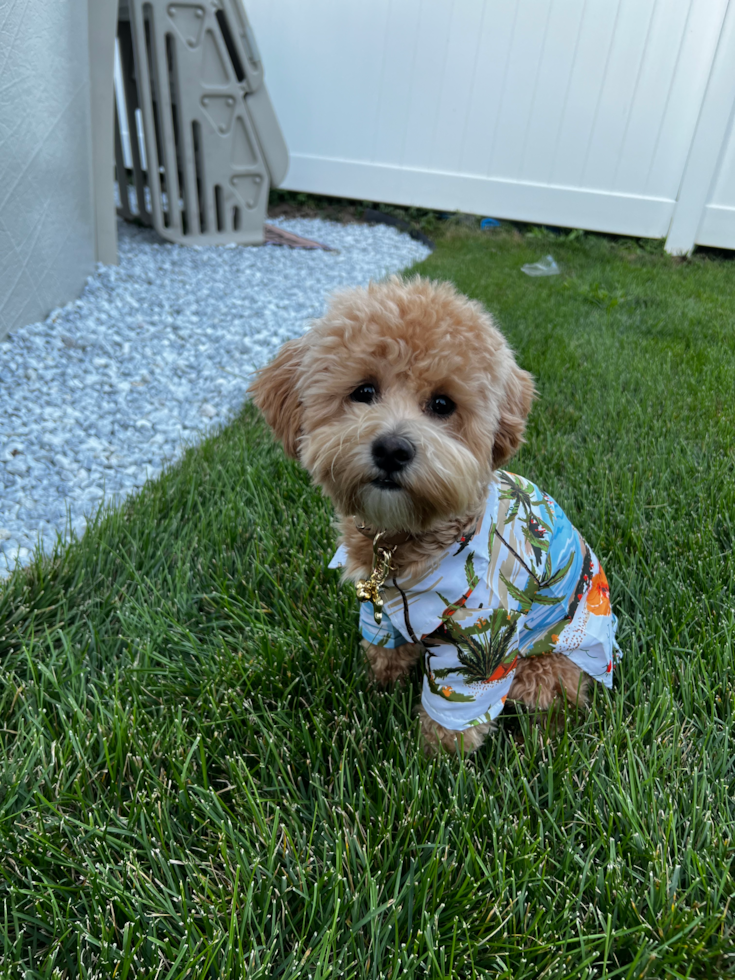
Maltipoos are small dogs, but there is more size variation than the Maltese half alone would suggest. The Maltese weighs under seven pounds and stands roughly 7 to 9 inches, while Toy Poodles weigh about 4 to 6 pounds and Miniature Poodles around 10 to 15 pounds.
That leaves room for very petite Maltipoos as well as dogs approaching 15 or even 20 pounds in some lines. A Maltipoo with a Toy Poodle parent will usually have a different expected size than one produced from a larger Miniature Poodle.
The body can vary along the same lines. Some Maltipoos are very compact and fine-boned, while others inherit more leg and a distinctly athletic outline from the Poodle. Parent size and structure are therefore much more useful than any single universal Maltipoo growth chart.
Maltipoo Coat Type and Texture
The Maltipoo coat can range from nearly straight to strongly curled. The Maltese contributes long, flat, silky hair without an undercoat, while the Poodle contributes a dense curly coat.
Many Maltipoos fall between those extremes and develop loose waves. This is the coat behind the classic shaggy teddy bear appearance seen in so many photos of the cross. Others have tighter Poodle curls, and some keep a straighter, silkier texture that makes the Maltese influence much easier to see.
Texture can also change as a puppy matures. A soft puppy coat may develop stronger waves or curls once the adult hair comes in. That is one reason predicting an exact adult coat from an eight-week-old puppy is difficult.
Generation can influence the possibilities as well. A first-generation Maltipoo has one Maltese and one Poodle parent. A backcross with a Poodle increases the proportion of Poodle ancestry, which may increase the likelihood of stronger curl, although genetics still prevent absolute guarantees.
Maltipoo Colors and Markings
The Maltese itself contributes a very limited palette. White is the standard color, with light lemon or tan shading possible around the ears.
The Poodle is responsible for most of the Maltipoo's color variety. Poodles occur in shades that include apricot, black, blue, brown, cream, red, silver, white, gray, and café au lait.
Maltipoos can therefore appear in white, cream, apricot, red, black, brown, chocolate, gray-related shades, and mixed-color patterns. White markings are common, particularly when the Maltese influence is visually strong.
Apricot and red Maltipoos are especially recognizable, but color can change with maturity. Some dogs lighten considerably over the first few years, particularly when fading genes come through the Poodle side. A deep apricot puppy may become creamier as an adult.
Maltipoo Eye Color and Facial Features
Maltipoos usually have dark brown eyes. Maltese are known for dark, round eyes and black pigmentation, while Poodles also typically contribute dark eyes depending on coat color.
The muzzle can vary more than the eyes. Maltese have a moderate muzzle, while the Poodle contributes a longer, more refined facial structure. Maltipoos that favor the Poodle side may therefore have a narrower face, while Maltese-dominant dogs can appear shorter and rounder.
Their ears drop beside the face and become fuller as the hair grows. When the muzzle and ears are trimmed into a teddy bear shape, the result can look rounder than the underlying skull actually is.
Maltipoo Build and Size
The Maltipoo is usually the more lightly built of these two crosses. Maltese are tiny, fine-boned dogs, and Toy Poodles share a similarly elegant frame. A Miniature Poodle can add more height and muscle, but the finished dog usually keeps a relatively light athletic structure.
This difference may not be obvious under a full coat. Once the hair is clipped short, longer legs and a narrower waist can make a Poodle-influenced Maltipoo look quite sporty.
That athleticism should not be mistaken for fragility. Maltipoos can be lively little dogs that enjoy proper walks, games, and training. Very small individuals still need careful handling, especially around young children and much larger dogs.
Maltipoo Shedding
Low shedding is one of the Maltipoo's best-known traits, and there is good reason for it. Both parent breeds release relatively little visible hair compared with many other dogs. Maltese have a single silky coat, while Poodles are known for dense curls that trap loose hairs within the coat.
That does not mean absolutely no hair will ever appear on a sweater or sofa. Individual coats vary, and every dog loses some hair as part of normal coat turnover.
What matters in everyday life is that many Maltipoos leave far less loose hair around the home than a conventional shedding breed. The tradeoff is grooming because trapped hair has to be removed before it contributes to tangles.
Maltipoo Grooming Needs
The Maltipoo is not a low-maintenance dog simply because it sheds very little. Wavy and curly hair can mat rapidly, particularly around the ears, armpits, collar area, legs, and tail.
Brushing several times each week is a realistic minimum for many coats, while longer and curlier styles may require daily attention. A comb is useful after brushing because fluffy surface hair can hide knots closer to the skin.
Professional grooming is also part of life with most Maltipoos. A shorter teddy bear trim reduces the amount of home maintenance and can be much more practical for active dogs.
Facial hair deserves extra attention. Light-colored Maltipoos may develop visible staining around the eyes and mouth, and hair that grows toward the eyes should be kept neat.
Malshi Appearance
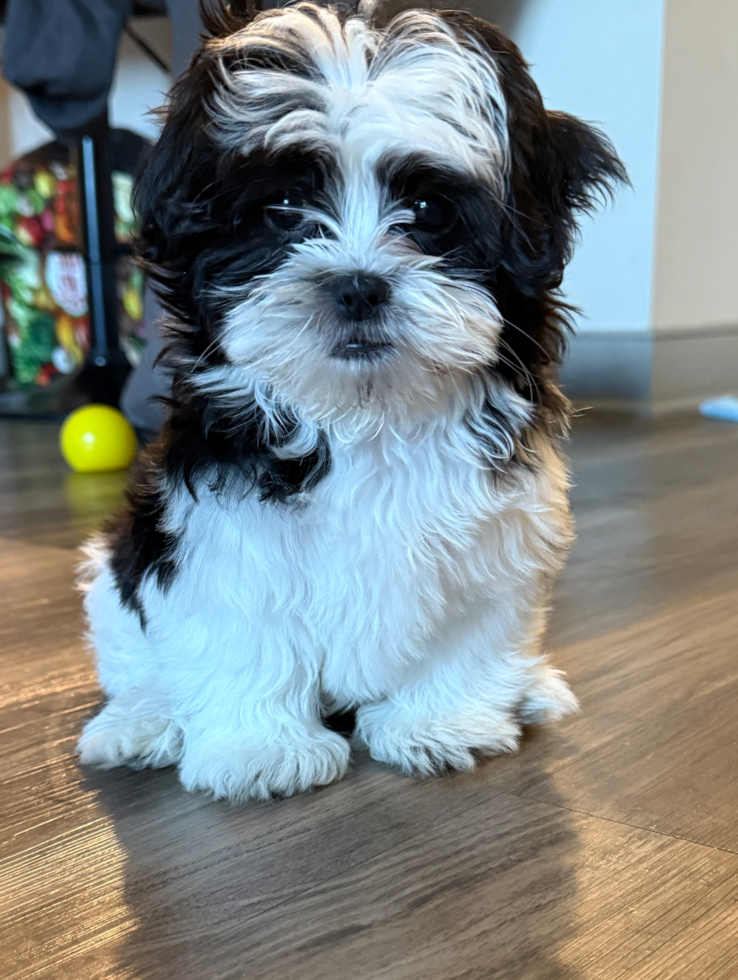
The Malshi usually has a more compact and substantial build than the Maltipoo. Its two parents differ considerably in body type even though both belong to the Toy Group. The Maltese weighs under seven pounds, while the Shih Tzu usually weighs between 9 and 16 pounds and is surprisingly solid for its size.
Most Malshis therefore remain firmly within the small-dog category, but they can feel heavier in the arms than their height suggests. Many have broad little bodies, sturdy legs, and plenty of substance beneath the coat.
Facial structure varies more than people sometimes expect. A Malshi may inherit a fairly moderate Maltese muzzle or a noticeably shorter Shih Tzu-influenced face. That difference matters for more than appearance and becomes relevant when considering breathing and warm-weather activity.
Malshi Coat Type and Texture
Both parent breeds have long coats, but they are not identical. The Maltese has a straight, silky single coat. The Shih Tzu has a long double coat with a silky outer layer and a softer undercoat.
Malshi coats are therefore more commonly straight or softly wavy than tightly curled. They can feel dense and plush, especially when the Shih Tzu undercoat comes through strongly.
Some dogs develop a very soft, cottony texture. That can look gorgeous after grooming but may mat quickly because the individual hairs catch against one another.
The coat also changes with age. Shih Tzu undergo a noticeable coat transition as puppies mature, and Malshi puppies can experience changes in density and texture during the first year too.
Malshi Colors and Markings
Color variety is one of the Malshi's biggest visual advantages over the Maltipoo. The Maltese primarily contributes white, while the Shih Tzu comes in a wide range of colors and markings.
AKC lists Shih Tzu colors that include black, white, gold, red, silver, liver, blue, and many combinations of these shades. Tricolor combinations and contrasting masks or markings can also occur.
Malshis may therefore be white, cream, gold, tan, brown, black, silver, red, or a mixture of several colors. White-and-gold and white-and-tan dogs are particularly common-looking combinations, but darker puppies are also possible.
Color may change as the coat develops. Shih Tzu are well known for coats that can lighten or shift in shade as they mature, so a Malshi puppy's early coloring should not always be treated as permanent.
Malshi Eyes, Muzzle, and Facial Structure
Dark round eyes are characteristic of both parents, so Malshis usually inherit a warm, expressive gaze. The Shih Tzu contributes particularly large, wide-set eyes and a broad head, while the Maltese tends to have a more refined face.
The muzzle is the more variable feature. Shih Tzu have a short, square muzzle and are brachycephalic, meaning the skull is shortened from front to back. The breed standard calls for broad, open nostrils and emphasizes balanced structure without exaggerated features.
A Malshi can inherit a longer muzzle than a purebred Shih Tzu, but this is not guaranteed. Some remain noticeably short-faced. That makes it sensible to look at the puppy, both parents, and particularly nostril openness rather than assuming the Maltese cross automatically creates one specific head shape.
Malshi Build and Size
This is where the two crosses may feel more different than they look. The Maltese is fine-boned and weighs less than seven pounds. The Shih Tzu weighs 9 to 16 pounds and has a broad chest, substantial bone, and compact body.
A Malshi commonly lands between those two types. Some remain very petite, while others inherit enough Shih Tzu substance to become sturdy little dogs approaching the upper end of the toy-dog range.
They also tend to have shorter legs and a more compact outline than Poodle-influenced Maltipoos. Once the coat is clipped, the difference becomes much easier to see.
This sturdiness can be appealing to families that want a genuinely small dog but are less comfortable with the delicate feel of some very tiny toy crosses.
Malshi Shedding
Malshis usually shed very little around the home. The Maltese coat sheds minimally, while the Shih Tzu's long double coat also tends to retain loose hairs rather than constantly releasing them onto furniture.
There may still be some hair loss during brushing, bathing, and normal coat turnover. A dog with stronger Shih Tzu undercoat may also release more hair during coat changes than a Maltipoo with a strongly Poodle-style coat.
Neither cross should be described as completely non-shedding, and neither can be guaranteed safe for someone with dog allergies. Allergy-causing proteins occur in saliva and dander as well as hair.
Malshi Grooming Needs
The Malshi requires regular grooming regardless of how little hair appears on the floor. A full Shih Tzu coat needs extensive brushing, and the Maltese coat also tangles readily when allowed to grow long. Their cross does not magically remove that workload.
Most pet Malshis are kept in shorter clips for good reason. A puppy cut or teddy bear trim reduces tangling and makes the face, feet, and underside much easier to keep clean.
Longer coats need frequent brushing all the way to the skin. Areas behind the ears, inside the legs, around the harness, and beneath the tail deserve particular attention.
Eye and facial care can also take more time than with some Maltipoos. Large eyes, facial hair, and a shorter muzzle can allow tears or moisture to collect around the face. Keeping the hair clean and trimmed helps prevent irritation and staining.
Maltipoo vs Malshi Appearance Comparison: What Is the Difference?
The Maltipoo is usually the lighter and more athletic-looking dog. Poodle influence can add longer legs, a narrower waist, a more refined muzzle, and true curls. Size also has a wider possible range because Toy and Miniature Poodles are both used.
The Malshi usually looks more compact and sturdy. The Shih Tzu contributes heavier bone, a broader body, a rounder head, and the possibility of a shorter muzzle. Its coat is more likely to stay straight or wavy rather than become tightly curled.
Color provides variety in both crosses, though it arrives from different sides. Maltipoo colors are largely expanded by the Poodle, while Malshi colors come primarily from the Shih Tzu. Both can be cream, white, gold-toned, brown, black, or multicolored, but their patterns and shades can look quite different.
Neither has a meaningful advantage in grooming. Maltipoo curls can mat aggressively, while the Malshi's dense silky coat can tangle just as quickly. If the goal is a dog that never needs brushing or professional grooming, neither is the right choice.
Maltipoo vs Malshi Temperament
The temperament comparison is where the Poodle-versus-Shih-Tzu difference becomes most useful. Both crosses share the Maltese, a playful and affectionate little dog with far more confidence than its size might suggest. AKC describes Maltese as charming, gentle, lively, adaptable, and sometimes surprisingly fearless.
The Maltipoo adds a highly trainable dog with a working background. The Malshi adds a breed developed almost entirely around companionship.
Both want people. What they may want to do with those people is where the distinction becomes clearer.
Maltipoo Temperament
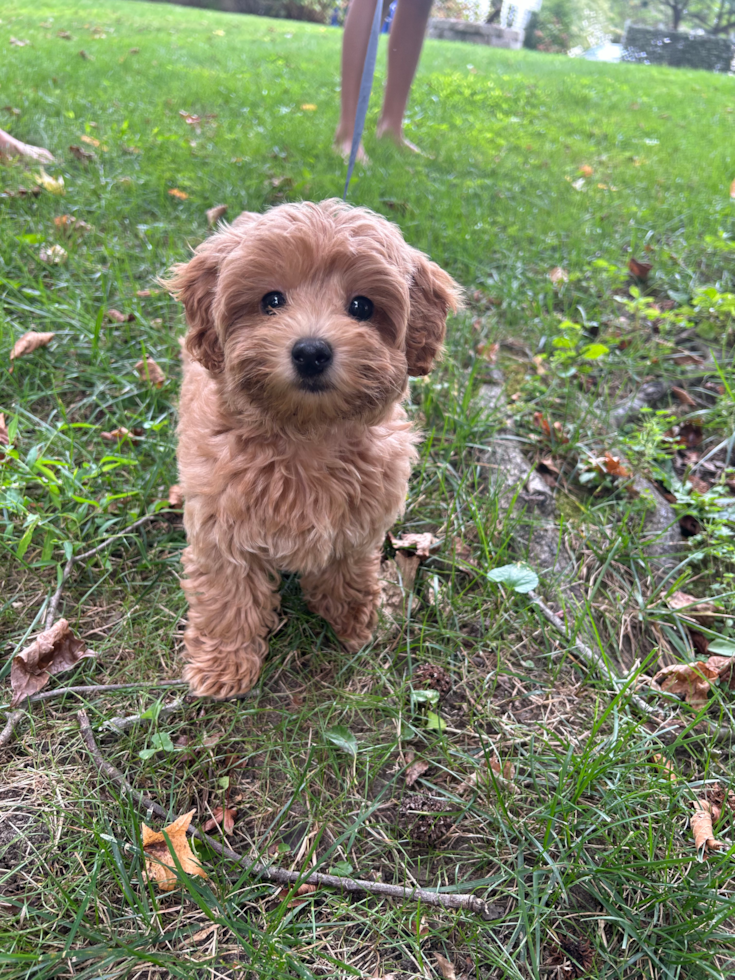
Maltipoos are affectionate, bright, playful dogs that usually enjoy direct interaction with their families. Both parent breeds are strongly people-oriented, but the Poodle adds a particular interest in learning, patterns, and activity.
A Maltipoo may follow someone around the home simply because it wants company, then become instantly interested when a toy, training treat, or leash appears. That combination makes the cross feel interactive without requiring the intensity of a larger working breed.
They can also be sensitive. Maltese and Poodles both respond better to patient, reward-based training than harsh correction. A calm approach usually produces better results and preserves the trust these dogs place in their owners.
Maltipoo Intelligence and Training
Training is one of the Maltipoo's strongest points. Toy Poodles retain the learning ability for which the breed is famous, and Maltese are capable little dogs despite a reputation for occasional stubbornness. AKC describes Poodles as highly intelligent, adaptable, and eager to work with their owners.
Many Maltipoos learn household patterns quickly. They may recognize the sound of the treat drawer, know exactly which shoes predict a walk, and work out which family member is most likely to share something interesting from the kitchen.
That intelligence is useful when directed well. Basic obedience, tricks, food puzzles, scent games, and short training sessions can turn mental energy into good habits.
It can also work against an inconsistent owner. If barking once gets the door opened or jumping up earns attention, a smart Maltipoo has every reason to repeat the experiment.
Maltipoo Energy Level
Maltipoos generally have moderate energy, though Poodle size and individual temperament can push that level higher or lower. Toy Poodles are small but athletic, while Miniature Poodles are active dogs that enjoy plenty of stimulation.
A typical adult Maltipoo benefits from daily walks, play, training, and opportunities to sniff and explore. Very young puppies may seem far busier than the adult dog they eventually become, so age should always be considered when people describe the cross as energetic.
They do not normally require hours of vigorous exercise. What they appreciate is variety. A walk plus ten minutes of training and a little indoor play can be more satisfying than one long repetitive outing.
Affection and Attachment
Maltipoos are usually deeply attached to their families. Many want to remain close enough to follow what is happening and may move from room to room with their person.
That trait is delightful until the dog has never learned how to be alone. Independence deserves deliberate practice from puppyhood, especially with small companion breeds that naturally receive a lot of constant attention.
Short periods in another room, calm naps away from the owner, and safe solo activities help build confidence. The goal is not to make an affectionate dog less affectionate. It is to teach the dog that separation for a little while is normal and safe.
Maltipoos With Children
Maltipoos can be excellent family dogs, but size matters. A very small Toy-Poodle Maltipoo may weigh only a few pounds and can be injured accidentally by a toddler who falls, grabs, or tries to carry it.
Older children who understand gentle handling can be wonderful companions for the breed. Training tricks, playing appropriate games, and joining walks give children a genuine role in the relationship.
For homes with very young children, a somewhat larger and sturdier Maltipoo may be easier than the smallest dogs in the cross. Temperament and supervision remain more important than weight alone.
Maltipoos With Other Dogs and Pets
Well-socialized Maltipoos can live very happily with other dogs. Their small size sometimes makes careful matching more important than personality, particularly if the other dog is large and plays roughly.
Cats can also be good housemates. Neither parent breed brings a particularly strong modern prey drive into the pairing, though Poodles do have retrieving ancestry and individuals can certainly enjoy chasing movement.
Early introductions and clear boundaries usually matter more than breed labels. A puppy that grows up calmly around a cat has a much easier path than one that discovers chasing first and rules later.
Maltipoo Barking and Alertness
For such small dogs, Maltese can be impressively alert. AKC notes that they may become protective and can develop excessive barking if that behavior is not managed. Poodles are attentive dogs too, so the Maltipoo can inherit a strong desire to announce visitors, sounds in the hallway, or mysterious movements outside the window.
This does not mean every Maltipoo is noisy. Early habits matter enormously. Rewarding quiet observation, teaching a calm response to the door, and providing enough activity can prevent alertness from turning into constant commentary.
It is easier to shape the habit when the dog is young than to convince a three-year-old self-appointed security guard that the delivery driver is not a national emergency.
Malshi Temperament
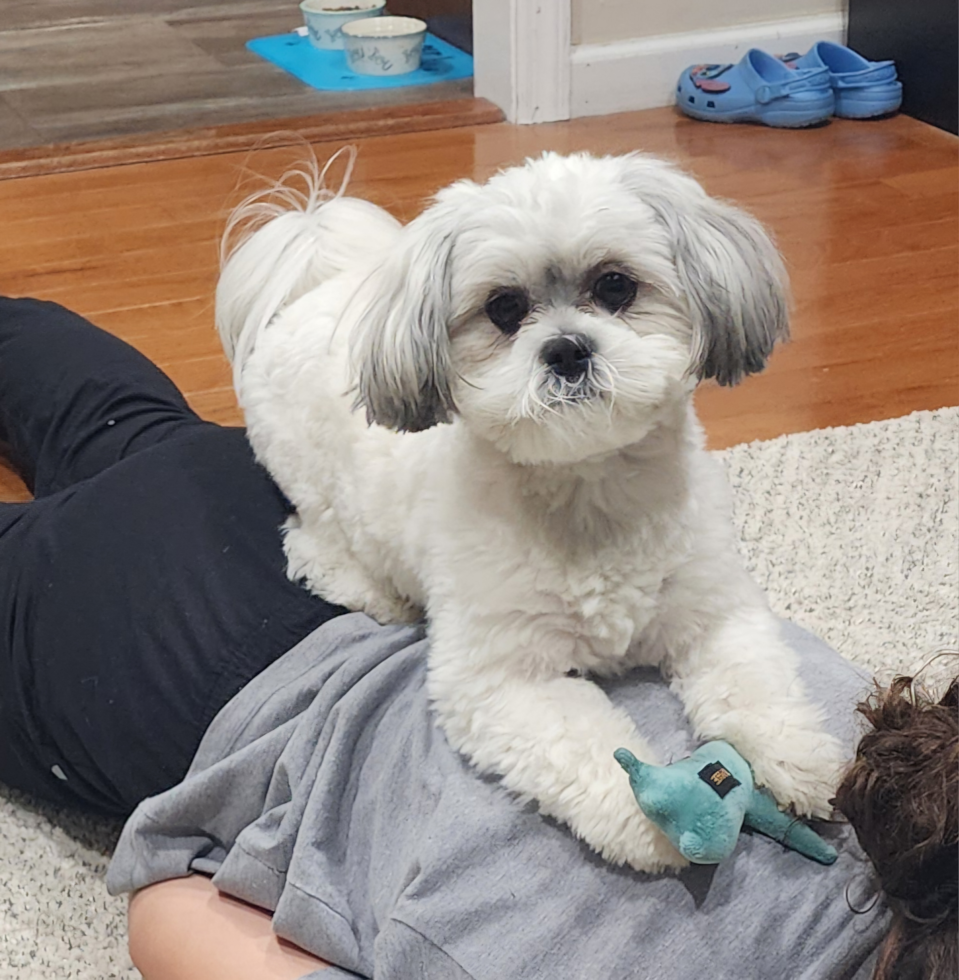
Malshis bring together two breeds whose historical job descriptions can essentially be summarized as “stay close to people and be charming.” That creates a different foundation from the Maltipoo.
The Maltese adds playfulness, confidence, and a lively streak. The Shih Tzu brings an outgoing, affectionate temperament and generations of experience as an indoor companion. AKC describes the Shih Tzu as playful, affectionate, adaptable, and strongly oriented toward its humans.
The result is usually a little dog that takes family life very seriously. Malshis want to know where everyone is, participate in whatever is happening, and settle close by once the excitement ends.
Malshi Intelligence and Training
Malshis are intelligent dogs, but their approach to training can differ from the Maltipoo's. Shih Tzu were not developed to take complex working directions from humans, so they can bring a more independent attitude to the mix.
That does not make them difficult or unintelligent. It means motivation matters. A Malshi may understand exactly what is being requested and still pause long enough to consider whether the proposed reward makes the effort worthwhile. Anyone who has lived with a confident little companion breed will recognize the expression.
Short positive sessions work best. Food rewards, enthusiastic praise, and useful real-life rewards can keep training interesting without turning it into a battle of wills.
House training deserves consistency from the beginning. Small dogs have small bladders, and missed schedules can create habits very quickly. Frequent opportunities outside and close supervision make the process much easier.
Malshi Energy Level
The Malshi usually falls into the low-to-moderate or moderate-energy range. Maltese are lively and playful, while Shih Tzu enjoy activity but were bred primarily as indoor companions rather than athletes.
Daily walks and play are still important. A small dog needs exercise for physical and mental health just as a large dog does. The difference is the quantity and intensity required.
A Malshi may be very enthusiastic during a game and then happily spend much of the afternoon resting near the family. That balance suits people who want an engaged dog without building their schedule around long exercise sessions.
Heat Tolerance and Exercise
One distinction deserves more attention than it usually receives in quick breed comparisons. Some Malshis inherit a noticeably shortened muzzle from the Shih Tzu side.
Shih Tzu are brachycephalic dogs, meaning their skull and muzzle are shortened. Responsible breed standards emphasize broad, open nostrils and balanced structure, but short-faced dogs can still have more difficulty cooling themselves efficiently in hot conditions.
A Malshi with a longer Maltese-influenced muzzle may have fewer limitations than a strongly Shih Tzu-type dog, but there is no reason to guess from the cross name. Look at the individual dog.
During hot weather, especially on humid days, walks should happen during cooler parts of the day. Heavy exercise in heat is a poor choice for any small dog and deserves extra caution when the muzzle is short.
Affection and Family Attachment
Malshis are usually excellent examples of true companion dogs. The desire to remain near people comes from both sides of the family tree rather than one parent alone.
Many are happy curled beside someone while they work, sitting on a lap during television time, or relocating themselves from room to room to keep tabs on the household. There is a social quality to them that can make a Malshi feel larger than its actual physical footprint.
As with the Maltipoo, this affection needs a little balance. A puppy that is carried everywhere and never spends five minutes alone has no chance to learn independence.
Teaching calm separation early protects the relationship later. A secure dog can adore its family without panicking whenever someone leaves the house.
Malshis With Children
Malshis can fit very well into families with children, particularly when the dog inherits the Shih Tzu's sturdy build. AKC specifically notes the Shih Tzu's affectionate nature around children.
That sturdiness should not be confused with invulnerability. Malshis remain small dogs, and young children can hurt them accidentally.
Supervision and basic rules solve most of the problem. Children should learn to sit down when holding a puppy, leave the dog alone while it sleeps or eats, and allow it to walk away when it has had enough interaction.
Older children may find a Malshi slightly less obsessed with complex games than a Maltipoo, but plenty enjoy tricks, fetch, and play. Their biggest strength is usually social companionship.
Malshis With Other Dogs and Pets
Malshis can be sociable with other dogs and fit well into multi-pet homes. Both parent breeds are companions rather than dogs developed for strong guarding, hunting, or herding work.
Their sturdy little personality sometimes means they forget how small they are. A confident Malshi may approach a much larger dog without much hesitation, which makes owner supervision important even when the Malshi itself is perfectly friendly.
Cats can also be good companions when introductions are handled gradually. The lack of strong prey-focused ancestry gives the cross a reasonable starting point for mixed-pet households.
Malshi Barking and Watchfulness
Both Shih Tzu and Maltese notice what is happening around them. A Malshi may announce visitors or unusual sounds even though nobody would reasonably hire a ten-pound dog for serious security work.
Barking is usually manageable when owners establish expectations early. Acknowledging the alert and then rewarding quiet behavior can work better than shouting over the dog, which sometimes sounds suspiciously like everyone has decided to bark together.
The Maltese side can add extra boldness, while the Shih Tzu contributes a confident awareness of its surroundings. The combination can produce a very effective little doorbell.
Maltipoo vs Malshi: Which One Should You Choose?
The Maltipoo and Malshi share enough qualities that either can work beautifully in many homes. Both are affectionate small dogs, both usually shed very little, both require regular grooming, and neither needs a huge house or backyard to be happy.
The difference comes down to the type of interaction you want.
The Maltipoo usually brings more Poodle-style mental energy and enthusiasm for learning. The Malshi usually leans more heavily into companionship, with a sturdier body and a somewhat calmer daily rhythm.
Choose a Maltipoo if You Want a Clever, Interactive Small Dog
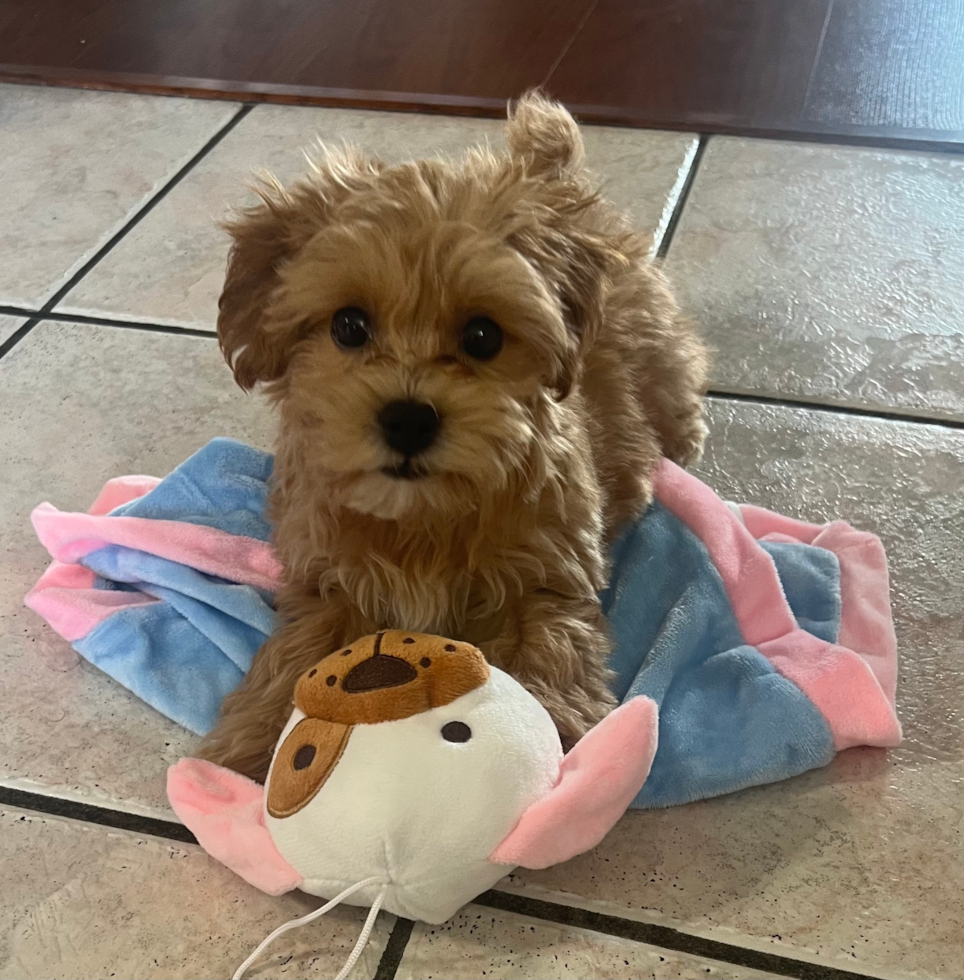
A Maltipoo puppy may suit you better if training, tricks, puzzles, and direct interaction sound like enjoyable parts of dog ownership. Poodle influence can create a quick learner that pays close attention to routines and enjoys having small problems to solve.
This does not make the Maltipoo a demanding working dog. It simply places a little more emphasis on mental activity. A daily walk, a short training session, indoor play, and time with the family can create a satisfying routine.
The Maltipoo may also appeal to someone who likes a lighter, more athletic body type. Miniature-Poodle lines in particular can produce dogs with enough stamina for longer walks and more active outings while still remaining conveniently small.
Choose a Malshi if You Want a Sturdy, Companion-Focused Dog
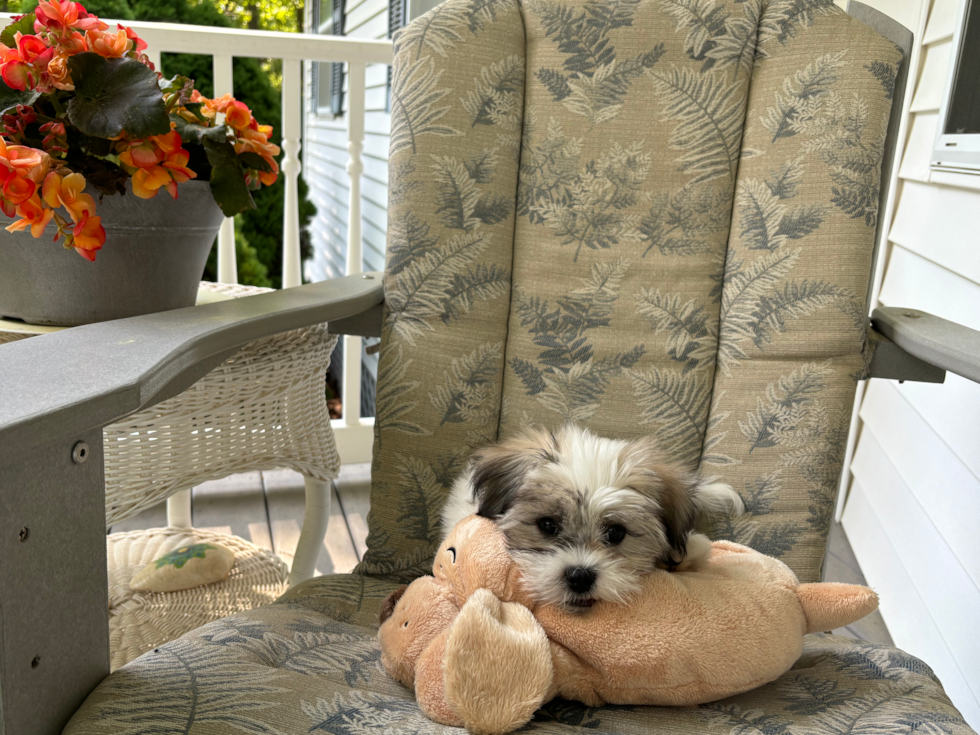
A Malshi puppy may be the stronger fit if your priority is a small companion that fits comfortably into a relaxed home routine. These dogs can be playful and lively, but their ancestry is heavily rooted in companionship rather than work.
Their sturdier Shih Tzu-influenced build may also appeal to people who like toy breeds but feel nervous handling an extremely fine-boned dog. A Malshi can still be genuinely small without feeling quite as delicate.
The cross also suits people who value closeness above athleticism. If your picture of dog ownership includes neighborhood walks, play around the house, trips with the family, and plenty of time together on the sofa, the Malshi fits that lifestyle very naturally.
Which Is Smaller: Maltipoo or Malshi?
The smallest Maltipoos can be smaller than most Malshis because both the Maltese and Toy Poodle are tiny breeds. Toy Poodles weigh around 4 to 6 pounds, and the Maltese weighs under seven.
Malshis usually have more size coming from the Shih Tzu side. Purebred Shih Tzu weigh around 9 to 16 pounds, so the cross has more potential for a sturdier adult body.
There is still plenty of overlap. A Miniature-Poodle Maltipoo may become larger than a petite Malshi, which is why parent size matters more than assumptions based on the cross name.
Which Is Calmer: Maltipoo or Malshi?
The Malshi usually has the advantage for a quieter lifestyle. Shih Tzu were developed primarily as indoor companions, and the Maltese is also firmly rooted in the toy-companion world.
Maltipoos remain manageable small dogs, but the Poodle adds more athleticism and mental drive. Some Maltipoos want more games, training, and exploration across the day.
This is a difference in emphasis rather than an absolute rule. A relaxed Maltipoo can be calmer than an energetic Malshi. Parent temperament tells you much more about an individual puppy.
Which Is More Energetic?
The Maltipoo is generally the more active of the two, particularly when a Miniature Poodle is part of the pairing. Poodles are athletic dogs that enjoy exercise, retrieving, swimming, and training.
Malshis still enjoy walks and play but usually need less sustained activity. Shorter legs and possible Shih Tzu-style facial structure can also make intense exercise less appropriate for some individuals.
If long walks and training games sound enjoyable, the Maltipoo may fit better. If you want activity to be part of the day without becoming a major feature of it, the Malshi has the more natural advantage.
Which Is Easier to Train?
The Maltipoo usually has an edge in trainability because of the Poodle. Toy and Miniature Poodles are exceptionally quick learners, and that ability can come through strongly in their crosses.
Malshis are intelligent too, but they may bring more independence from the Shih Tzu. Training can feel more like negotiation with some individuals, especially when the reward is not interesting enough.
Both respond best to positive reinforcement. The difference is that a Maltipoo may become excited by the learning process itself, while a Malshi may be more interested in what is in it for them.
That is not necessarily a disadvantage. A motivated Malshi can learn excellent household manners, obedience, and tricks. You may simply need better snacks.
Which Is Better for First-Time Dog Owners?
Both can make very good first dogs. Their small size is manageable, and neither requires advanced handling experience.
The Malshi may be slightly easier for someone who wants a lower-key companion and has no interest in elaborate training or an especially active routine. The Maltipoo may be more enjoyable for a first-time owner who is excited to learn about training and enrichment.
Grooming is the part new owners should not underestimate. Both crosses require consistent coat care, and both may need professional grooming throughout their lives.
House training and independence training also deserve attention from day one. Small companion dogs are easy to carry around and include in everything, which can accidentally prevent them from learning useful adult skills.
Which Is Better With Children?
Both can live happily with respectful children. The main consideration is size and sturdiness rather than affection.
A very tiny Maltipoo may be vulnerable around toddlers. A Malshi that inherits more of the Shih Tzu's solid build may cope better physically with normal family life, though no small dog should be subjected to rough handling.
Older children can do beautifully with either. A Maltipoo may be especially fun for children who want to teach tricks and play interactive games, while a Malshi may suit children who want an affectionate little companion that happily joins family activities.
Adult supervision is still essential with young children. It takes only one accidental drop to seriously injure a toy-sized dog.
Which Is Better With Other Dogs?
Neither cross has a clear advantage. Maltipoos and Malshis can both be sociable with other dogs when they receive good early socialization.
The more important consideration is physical compatibility. A six-pound Maltipoo may not be the ideal wrestling partner for an energetic 80-pound dog, regardless of how friendly both are.
A sturdier Malshi can feel more robust, but it is still a small dog. Matching play styles and supervising early interactions matter far more than choosing one cross over the other.
Which Is Better With Cats?
Both crosses can work very well in homes with cats. Neither parent combination brings strong modern hunting instincts into the picture.
The Poodle does have a retrieving background, but Toy and Miniature Poodles have spent generations as versatile companions. Shih Tzu and Maltese have an even stronger historical focus on life close to people.
A puppy raised respectfully around cats usually has the easiest transition. Teaching the dog not to chase and giving the cat access to dog-free spaces creates a much better household than expecting them to “figure it out.”
Which Sheds Less: Maltipoo or Malshi?
Both are strong choices for people who dislike loose hair around the house. The Maltese sheds minimally, so each cross begins with one low-shedding parent.
The Maltipoo adds the Poodle, another breed known for minimal visible shedding. The Malshi adds the Shih Tzu, whose coat also tends to hold loose hair rather than dropping large amounts around the home.
The Maltipoo may have a slight advantage when the coat is strongly Poodle-like, but individual coat texture matters more than the name of the cross.
Neither is completely non-shedding, and neither should be guaranteed hypoallergenic.
Which Is Better for Allergies?
There is no reliable breed-wide winner. Both can shed very little, which may help some households manage dog hair, but shedding and allergies are not the same thing.
People can react to proteins found in saliva, skin flakes, and other biological material. A Maltipoo or Malshi can therefore trigger allergies even when almost no hair appears on the floor.
If allergies are significant, spend time with the actual dog before bringing it home. That real-world reaction is far more useful than a generic claim about the cross.
Which Needs More Grooming?
This is effectively a tie. The coats create different grooming challenges, but both demand regular attention.
A Maltipoo with curls can develop tight mats surprisingly quickly. A Malshi with a soft, dense Shih Tzu-influenced coat can tangle just as easily, especially behind the ears and around the legs.
Short practical trims make both dogs easier to maintain. Longer coats require frequent line brushing and combing all the way to the skin.
If you enjoy fluffy coats but dislike grooming, budget for professional appointments rather than hoping the coat will somehow take care of itself. It will not.
Which Is More Affectionate?
Both are extremely people-oriented, so this category is very close. The Maltese appears on both sides of the comparison, Poodles form strong relationships with their owners, and Shih Tzu were quite literally developed for companionship.
The Malshi may lean slightly more toward pure lapdog companionship, simply because both parent breeds were shaped heavily around that role.
The Maltipoo can be equally cuddly but may bring a stronger desire to do things with its person before settling. Training, play, exploration, and then couch time is a natural rhythm for many.
If affection is your main requirement, either cross has plenty to offer.
Which Is Better for Seniors?
Both can suit older adults, but the Malshi may have a small advantage when a calm companion is the goal. Moderate exercise needs and a strong interest in staying close to people fit many quieter households.
The Maltipoo can be just as successful, particularly for someone who enjoys daily walks and training. A very small Maltipoo may also be easier to lift, although extreme smallness brings more fragility.
Grooming, trip hazards, and the ability to manage regular veterinary care matter more than a few pounds of difference. A calm adult dog may also be easier than a young puppy for someone who wants companionship without the chaos of puppyhood.
Which Is Better for Apartment Living?
Both are excellent candidates for apartments because they are small and do not require a large yard.
The Malshi has a slight advantage if the household is quiet and exercise opportunities are limited. Shih Tzu have a long history as indoor companions and adapt well to smaller living spaces.
Maltipoos also do very well in apartments as long as they receive daily exercise and mental stimulation.
The more important apartment issue may be barking. Either dog can become highly interested in hallway sounds, elevators, neighbors, or the front door. Early calmness training is therefore more important than square footage.
Which Handles Warm Weather Better?
The Maltipoo generally has the advantage, particularly if the comparison is with a short-muzzled Malshi.
Poodles and Maltese have conventional muzzle lengths, while Shih Tzu are brachycephalic. A Malshi that inherits a noticeably shortened muzzle may have more difficulty cooling itself through panting during hot or humid weather.
This does not mean Malshis cannot live in warm climates. It means exercise needs more thoughtful timing. Early-morning and evening walks, shade, water, and air-conditioned indoor spaces become particularly important during hot weather.
Individual facial structure matters greatly, so this is another area where looking at the actual puppy and parents tells you more than the cross name.
Which Has the More Predictable Size?
The Malshi may be somewhat easier to estimate because both parent breeds remain within the Toy Group and neither has multiple recognized size varieties. Shih Tzu are 9 to 16 pounds, while Maltese stay under seven pounds.
Maltipoo size becomes more variable because the Poodle parent can be Toy or Miniature. A Toy Poodle weighs around 4 to 6 pounds, while a Miniature Poodle can reach roughly 10 to 15 pounds.
That does not make every Malshi predictable. Crossbreeds do not average themselves mathematically between two parent weights.
For either one, the best estimate comes from the actual parents and previous adult offspring from similar pairings.
Maltipoo vs Malshi: The Final Comparison
Choosing between a Maltipoo vs Malshi becomes much easier once you look past their shared Maltese ancestry and fluffy appearance. Both are affectionate, low-shedding small companions that enjoy being close to people. Both fit comfortably into apartments and family homes, and both require far more grooming than their small size might suggest.
The Maltipoo adds Poodle intelligence, athleticism, and trainability to the Maltese personality. This is usually the more interactive choice for someone who enjoys teaching tricks, playing games, taking regular walks, and giving a small dog things to think about. Depending on the Poodle parent, Maltipoos can also have a wider range of adult sizes and a curlier coat.
The Malshi takes the Maltese in a different direction. The Shih Tzu adds a sturdy frame, a calmer companion background, greater color variety, and a personality that is deeply suited to home life. Malshis still enjoy walks and games, but they tend to ask for less sustained activity and may spend more of the day perfectly content beside their people.
There are practical differences too. A Maltipoo will usually have a longer muzzle and better natural tolerance for active exercise in warm conditions. A Malshi may inherit the shortened facial structure of the Shih Tzu, which makes heat management more important. On the other hand, the Malshi's heavier little body may appeal to families who want a small dog without the delicate feel of some toy-sized Maltipoos.
For training, the Maltipoo has the stronger advantage. Poodle intelligence makes learning a natural outlet, while the Malshi may bring a little more independence into the conversation. Both can learn excellent manners. One may just require slightly better negotiation skills.
So think about your ordinary day.
If you want a small dog that notices everything, enjoys learning, joins you for walks, and considers a new puzzle worth investigating, the Maltipoo may be the more natural fit.
If you want a sturdy little companion that plays happily, follows the family around, enjoys a pleasant walk, and then sees absolutely no problem with spending the rest of the evening next to you, the Malshi may make more sense.
Whichever direction you lean, look beyond the cross name before choosing a puppy. Parent size, temperament, facial structure, coat, health testing, and early development can change the experience considerably. Two puppies carrying the same label can grow into noticeably different adults.
Frequently Asked Questions
What is the main difference between a Maltipoo and a Malshi? Both have a Maltese parent, but a Maltipoo's other parent is a Toy or Miniature Poodle, while a Malshi's other parent is a Shih Tzu. The Poodle usually adds more trainability, athleticism, and curl to the Maltipoo. The Shih Tzu usually gives the Malshi a sturdier build, calmer companion style, broader color range, and potentially shorter muzzle.
Is a Maltipoo smaller than a Malshi? The smallest Maltipoos can be smaller because Toy Poodles and Maltese are both very petite breeds. Malshis usually have more body weight from the Shih Tzu side, since purebred Shih Tzu commonly weigh 9 to 16 pounds. A Maltipoo with a Miniature Poodle parent can still become larger than a petite Malshi, so parent size is the best guide.
Which is calmer, a Maltipoo or Malshi? The Malshi usually leans calmer because both the Maltese and Shih Tzu have strong companion backgrounds. Maltipoos are also excellent house dogs, but the Poodle can add more interest in training, activity, and mental stimulation. Adult temperament varies enough that the parents should always be considered.
Which is easier to train, a Maltipoo or Malshi? The Maltipoo usually has the advantage. Poodles are exceptionally trainable dogs, and many Maltipoos inherit their quick learning and interest in working with people. Malshis are intelligent but may show more independence from the Shih Tzu side, so short reward-based sessions tend to work better than repetition or pressure.
Which sheds less, Maltipoo or Malshi? Both usually shed very little. The Maltipoo combines two low-shedding parents, while the Malshi combines the minimally shedding Maltese with the Shih Tzu's long coat. Individual coat type still matters, and neither dog should be described as completely non-shedding or guaranteed hypoallergenic.
Which needs more grooming, a Maltipoo or Malshi? Both have significant grooming needs. Curly Maltipoo coats can mat quickly, while soft Malshi coats can become tangled and dense. Regular brushing, combing, facial care, nail trims, and professional grooming are normal parts of ownership for either cross.
Is a Maltipoo or Malshi better with children? Both can be wonderful with respectful children. A Malshi may have a slight physical advantage because the Shih Tzu contributes a sturdier body, while very small Maltipoos can be delicate. Older children can enjoy either, and Maltipoos may be particularly fun for children interested in training and teaching tricks.
Is a Maltipoo more energetic than a Malshi? Usually, yes. The Poodle contributes more athleticism and a stronger interest in mental activity, so many Maltipoos want more walking, training, and interactive play. Malshis still need daily exercise, but their Shih Tzu ancestry usually pulls them closer to a moderate companion-dog routine.
Is a Maltipoo or Malshi better for apartment living? Both can thrive in apartments. The Malshi may have a small advantage for quieter households because its exercise requirements are usually moderate, while the Maltipoo may need more mental and physical activity. Barking habits and independence training matter more in an apartment than the small difference in body size.
Should I choose a Maltipoo or Malshi? Choose a Maltipoo if you want a clever, affectionate small dog that enjoys training, games, walks, and regular interaction. Choose a Malshi if you prefer a sturdy, deeply companion-focused dog with moderate energy and a relaxed home-life personality. Both need plenty of human contact and regular grooming, so temperament and daily activity are the most useful deciding factors.