





Published Tuesday, October 6, 2026 by Pilesgrove Pups
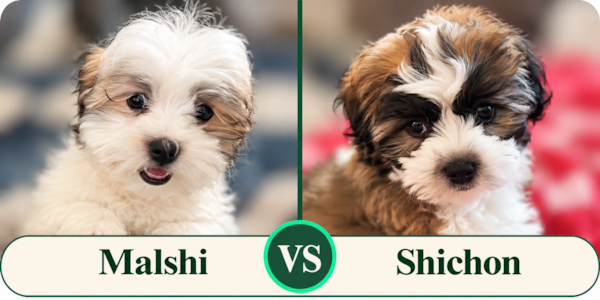
The Malshi vs Shichon comparison is one of those matchups where the dogs can look almost interchangeable at first. Both are small Shih Tzu mixes with dark expressive eyes, soft coats, compact bodies, and the rounded faces that have earned them a place among the dogs commonly called teddy bear breeds.
They also share many of the qualities people want in a small companion. Malshis and Shichons are affectionate, social, portable, adaptable to smaller homes, and usually light shedders. Neither requires the exercise schedule of a large working breed, and both are happiest when they are included in family life.
The difference sits on the other side of the family tree. A Malshi combines the Shih Tzu with a Maltese, while a Shichon combines the Shih Tzu with a Bichon Frise. The Maltese adds a finer build, silky coat, lively confidence, and centuries of toy-dog companionship. The Bichon contributes more body, curl, bounce, sociability, and a history that includes everything from royal courts to circus performance.
Those differences may sound small on paper. In everyday life, they can influence coat texture, mature size, grooming, energy, trainability, play style, and even how sturdy the dog feels in your arms.
Neither is automatically the better teddy bear dog. The better choice is the one whose personality and daily needs fit your household.
Table of Contents
- Malshi vs Shichon at a Glance
- Malshi and Shichon Overview and History
- Why Are Malshis and Shichons Called Teddy Bear Dogs?
- Malshi vs Shichon Appearance
- Malshi vs Shichon Temperament
- Malshi vs Shichon: Which One Should You Choose?
- Choose a Malshi if You Want a Softer, More Relaxed Companion
- Choose a Shichon if You Want a Playful, Social Teddy Bear Dog
- Which Is Smaller: Malshi or Shichon?
- Which Looks More Like a Teddy Bear?
- Which Is Calmer: Malshi or Shichon?
- Which Is More Playful?
- Which Is Easier to Train?
- Which Is Better for First-Time Dog Owners?
- Which Is Better With Children?
- Which Is Better With Other Dogs?
- Which Is Better With Cats?
- Which Sheds Less: Malshi or Shichon?
- Which Needs More Grooming?
- Which Is Better for Allergies?
- Which Is More Affectionate?
- Which Is Better for Seniors?
- Which Is Better for Apartment Living?
- Which Handles Warm Weather Better?
- Which Has the More Predictable Size?
- Malshi vs Shichon: The Final Comparison
Malshi vs Shichon at a Glance
| Trait | Malshi | Shichon |
| Parent breeds | Maltese × Shih Tzu | Bichon Frise × Shih Tzu |
| Other common names | Maltese Shih Tzu, Malti-Tzu, Malt-Tzu | Zuchon, Shih Tzu Bichon, Teddy Bear dog |
| General size | Toy to small | Small |
| Common adult weight | About 6–16 pounds | About 9–18 pounds |
| Build | Compact, sometimes finer | Compact and usually sturdier |
| Coat | Straight to wavy, soft and silky | Wavy to curly, plush and dense |
| Shedding | Very low in many dogs | Very low in many dogs |
| Grooming | Moderate to high | Moderate to high |
| Common colors | White, cream, gold, tan, brown, black, silver, mixed colors | White, cream, apricot, buff, gray, brown, black and mixed colors |
| Eyes | Usually dark brown | Usually dark brown |
| Energy | Low to moderate | Moderate |
| Training | Intelligent, sometimes independent | Intelligent, playful, usually responsive |
| General personality | Affectionate, devoted, cheerful, companion-focused | Affectionate, social, playful, cheerful |
| Best fit | Someone wanting a quieter little companion | Someone wanting a playful, social teddy bear dog |
These are tendencies rather than rigid breed standards. Neither cross is an established purebred, so puppies can inherit different combinations from their parents. Looking at the size, coat, temperament, and facial structure of the actual parent dogs gives a much better idea of what an individual puppy may become.
Malshi and Shichon Overview and History
The Malshi and Shichon are modern companion crosses, but all three breeds behind them have long histories beside people. The shared Shih Tzu is one of the world's classic companion breeds. Its ancestors were associated with Tibetan dogs and later with Chinese imperial households, where small lion-like dogs were treasured by royalty. The modern Shih Tzu entered the AKC Stud Book in 1969, but its history as a companion reaches back centuries.
That shared ancestry explains many similarities between the two crosses. Shih Tzu are affectionate, outgoing little dogs with compact bodies, long coats, and a very strong interest in human companionship. They were not developed to herd livestock, hunt all day, or guard property. Their purpose was to live closely with people.
The difference appears when you add the Maltese or Bichon Frise. Both belong to the broader family of ancient little white companion dogs, but they developed somewhat differently. The Maltese stayed firmly in the toy-companion world, while the Bichon became known not only as a lapdog but also as a lively entertainer and performer.
That distinction gives the Malshi and Shichon subtly different personalities despite their common Shih Tzu parent.
Malshi History and Popularity
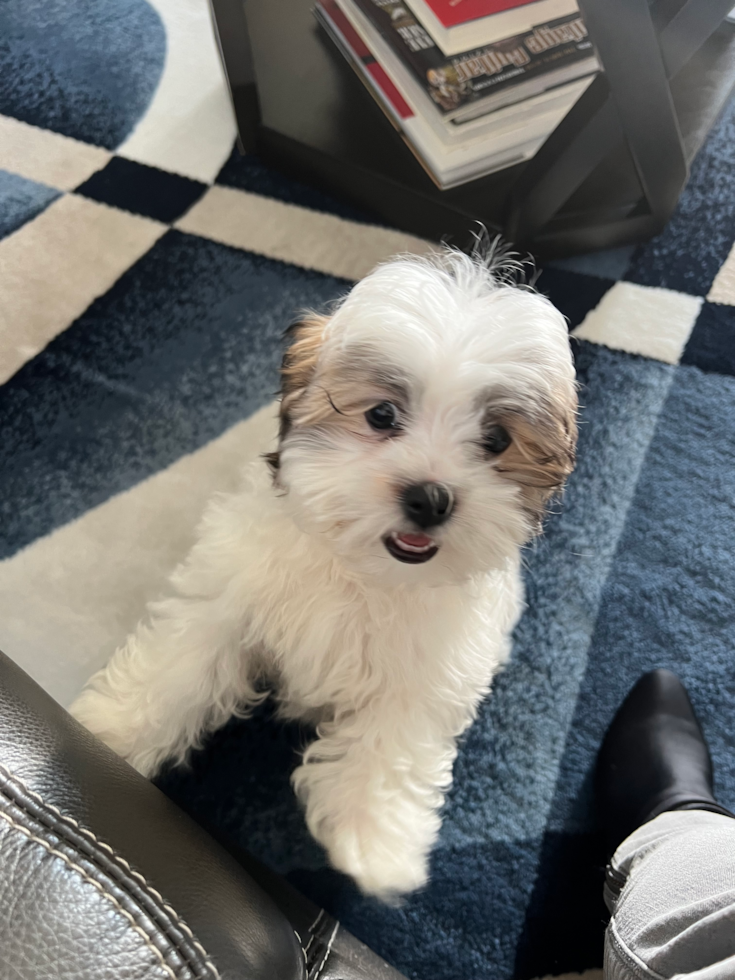
The Malshi Teddy Bear combines two established Toy Group breeds: the Maltese and Shih Tzu. Intentional breeding of the modern cross developed during the wider rise of designer companion dogs, with the Maltese Shih Tzu becoming particularly familiar in Australia before gaining a wider following elsewhere.
There is no formal foundation registry that documents one single Malshi creator or universally accepted beginning. That is common among modern companion crosses. The more useful history lies in understanding the two parent breeds rather than repeating an exact origin date that cannot be firmly verified.
The Maltese side reaches remarkably far back. AKC describes the Maltese as one of the world's oldest companion breeds, with roots extending more than 2,000 years. Small Maltese-type dogs were known in the ancient Mediterranean and became associated with the island of Malta and major trade routes. Greek and Roman writers and artists documented these tiny dogs long before many modern breeds existed.
The breed's role has remained remarkably consistent. Maltese were companions, lapdogs, and valued household pets rather than working dogs. Today's Maltese still weigh under seven pounds and retain a lively, charming temperament beneath their elegant white coats.
The Shih Tzu brings an equally companion-focused history from a different part of the world. Imperial breeders in China developed small lion-like dogs from Tibetan breeding stock, and Shih Tzu became treasured members of royal households. The modern breed remains playful, affectionate, and outgoing, with companionship still at the center of its purpose.
Put those histories together and the Malshi makes sense as a deeply people-oriented little dog. There is no working or sporting breed hidden on either side of the pedigree. Both parents were shaped to live close to humans, which gives the Malshi a particularly strong foundation as a home companion.
Shichon History and Popularity
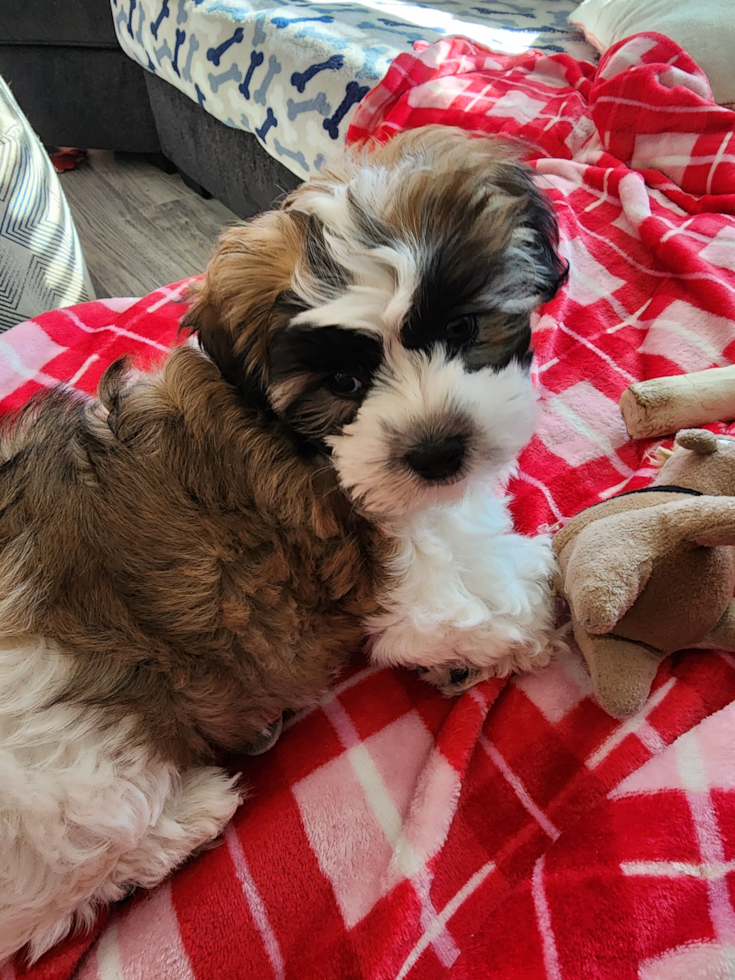
The Shichon, also widely known as the Zuchon, combines the Shih Tzu with the Bichon Frise. You may also see names such as Shih Tzu Bichon or Teddy Bear dog used for the cross.
Like the Malshi, the Shichon developed during the modern interest in small companion crosses rather than through one formally documented foundation program. The cross became especially appealing because both parent breeds contribute low-shedding coats, friendly personalities, and small but sturdy bodies.
The Bichon Frise has an unusually colorful history for such a fluffy little dog. Bichon-type dogs developed around the Mediterranean and became favorites in European royal courts. During periods when royal patronage disappeared, Bichons adapted. Some became street performers and circus dogs, where their intelligence and ability to charm a crowd helped them survive.
That background is still visible in the modern Bichon personality. The breed is cheerful, clever, curious, social, and surprisingly athletic beneath its powder-puff coat. AKC describes the Bichon as sturdy, adaptable, quick to learn, good with families, and comfortable in smaller living spaces.
The Shih Tzu contributes another strong dose of companion temperament, but with a somewhat calmer and more independent flavor.
The resulting Shichon sits nicely between those two styles. It can have the cuddly, home-oriented nature people expect from a Shih Tzu while gaining extra playfulness, sociability, and physical bounce from the Bichon.
This combination has helped the Shichon become closely associated with the modern teddy bear dog category. The rounded face, fluffy coat, button-like nose, dark eyes, and compact body can create a remarkably toy-like appearance, especially with a shorter teddy bear haircut.
Why Are Malshis and Shichons Called Teddy Bear Dogs?
The phrase teddy bear dog does not describe one official breed. It is an informal term used for small companion dogs and crosses whose appearance resembles a stuffed teddy bear.
Several features create that effect. Large dark eyes, a relatively short muzzle, dropped ears hidden beneath soft hair, a rounded head, and a thick coat around the cheeks make the face appear unusually soft and youthful. A rounded grooming style exaggerates the effect even further.
Both Malshis and Shichons fit this description extremely well.
The Malshi gets much of its rounded facial structure from the Shih Tzu and its silky softness from both parents. When clipped into a puppy cut, the long coat becomes plush and rounded around the head and body.
The Shichon may look even more classically teddy bear-like because the Bichon contributes a dense curly coat that naturally stands away from the body. This allows groomers to shape the head into a round silhouette while leaving the muzzle full and soft.
The label describes appearance, though, not temperament or breed standards. Two teddy bear dogs can look similar and behave very differently. That is why choosing between a Malshi and Shichon requires looking beneath the haircut.
Malshi vs Shichon Appearance
The shared Shih Tzu parent creates many of the similarities people notice first. Both can have broad little faces, large dark eyes, dropped ears, compact bodies, plumed tails, and soft coats in several colors.
The Maltese and Bichon Frise pull those shared traits in slightly different directions. Maltese are smaller, finer, and covered in straight silky hair. Bichons are sturdier, more rounded, and covered in a plush curly coat.
As a result, the Malshi usually looks slightly sleeker, while the Shichon tends to look rounder and fluffier.
Malshi Appearance
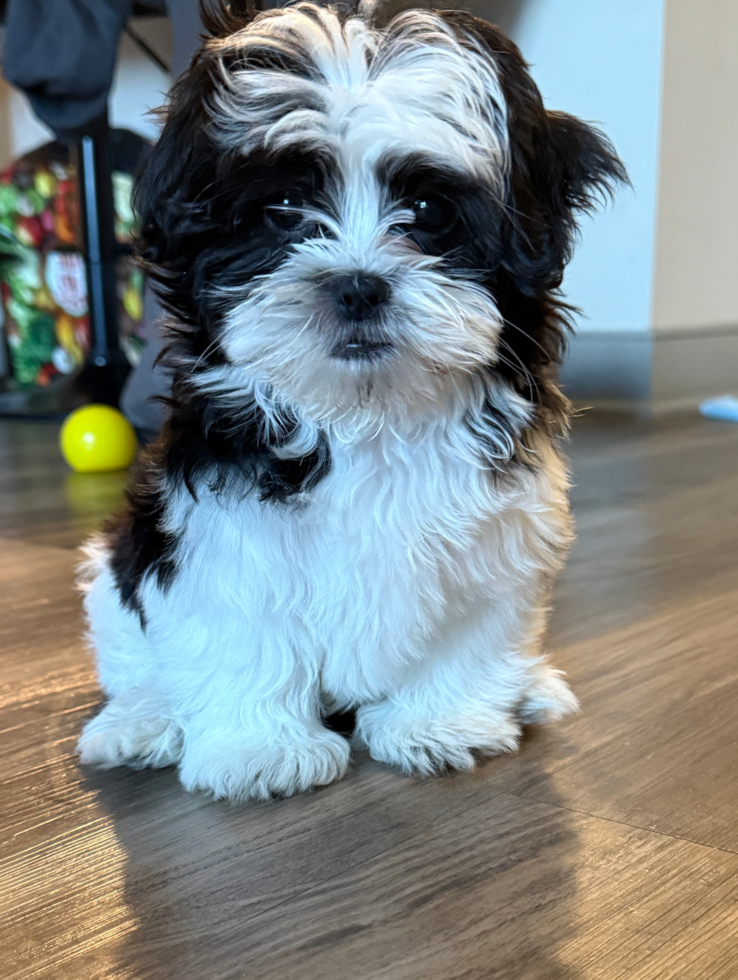
Malshis remain firmly within the small-dog category. The Maltese weighs less than seven pounds, while the Shih Tzu normally weighs 9 to 16 pounds and stands around 9 to 10.5 inches. Many adult Malshis fall somewhere around 6 to 16 pounds, though individuals can land outside that range. The size of the parents gives the best indication of mature weight. The body is usually compact. Some dogs inherit the fine frame of the Maltese, while others show more of the Shih Tzu's sturdy structure and broader chest.
Malshi Coat Type
The Malshi coat usually ranges from straight to gently wavy. Tight curls are much less characteristic because neither parent has the strongly curled coat of a Bichon or Poodle.
The Maltese contributes long, silky hair, while the Shih Tzu contributes a dense flowing coat. When those textures combine, the Malshi can develop a very soft coat with considerable volume. Some dogs feel silkier and lighter. Others develop a cottony texture that stands away from the body and mats more easily.
A long Malshi coat can be beautiful, but most pet owners choose a shorter puppy or teddy bear trim because it is much easier to maintain.
Malshi Colors and Markings
The Maltese brings mainly white into the cross. AKC recognizes the Maltese as white, with white-and-lemon and white-and-tan variations also listed.
The Shih Tzu dramatically expands the possibilities. Shih Tzu occur in many colors and combinations, which means Malshis may be white, cream, gold, tan, brown, black, silver-toned, red, or multicolored.
White with gold, tan, or brown markings is common. Some Malshis have darker masks as puppies that soften as the adult coat develops.
Color can change quite noticeably with age. A dark puppy may become much lighter, especially when the Shih Tzu side contributes fading genes.
Malshi Eyes and Facial Structure
Dark round eyes are characteristic of both parent breeds, so Malshis usually have the warm, expressive look people associate with small teddy bear dogs.
The muzzle varies. A Maltese has a more conventional facial structure, while the Shih Tzu has a shortened muzzle. A Malshi may therefore inherit anything from a moderate nose length to a noticeably flatter face.
This is an important difference between individual dogs. Facial structure affects much more than looks because a shorter muzzle can influence breathing efficiency and heat tolerance.
Looking at the parents is especially useful here. If both the Shih Tzu parent and puppy have open nostrils and less exaggerated facial structure, that gives you more useful information than the Malshi label alone.
Malshi Build and Size
Malshis range from delicate to surprisingly sturdy. A dog that takes strongly after the Maltese may have finer bone, a narrower body, and lighter overall weight. A Shih Tzu-influenced dog can have a wider chest, shorter legs, and a more substantial feel.
Either version is still a small companion dog. Even a sturdy Malshi should be handled carefully around toddlers, stairs, large dogs, and high furniture.
Their small size is practical for apartments and travel. Most are easy to pick up when necessary, although carrying should not replace normal walking and exercise.
Malshi Shedding
Malshis are usually very low shedders. Both parent breeds have coats that release relatively little loose hair into the environment compared with conventional shedding breeds. The Maltese has long silky hair rather than a typical shedding coat. The Shih Tzu also retains a great deal of loose hair within its coat instead of dropping it freely.
That does not mean absolutely no shedding occurs. Hair will still appear during grooming and normal coat turnover.
The important point for everyday ownership is that Malshis commonly leave very little loose hair on clothing and furniture. The tradeoff is that trapped hair contributes to tangling if the coat is not brushed.
Malshi Grooming Needs
A Malshi needs regular grooming regardless of whether its coat is long or short. Long coats require frequent brushing and combing because silky hair can knot around the ears, legs, chest, belly, and harness area. Soft cottony coats may tangle even faster.
A shorter teddy bear clip makes maintenance much easier. Many owners choose professional grooming every several weeks and brush at home between appointments.
The face needs its own routine. Hair around the eyes should stay clean and trimmed, especially in light-colored dogs where tear staining becomes obvious. Hair around the mouth can also collect food and moisture.
The ears, teeth, and nails deserve regular attention too. Small companion dogs can develop dental problems when tooth care is neglected, so brushing teeth should become part of the routine early rather than something introduced after trouble begins.
Shichon Appearance
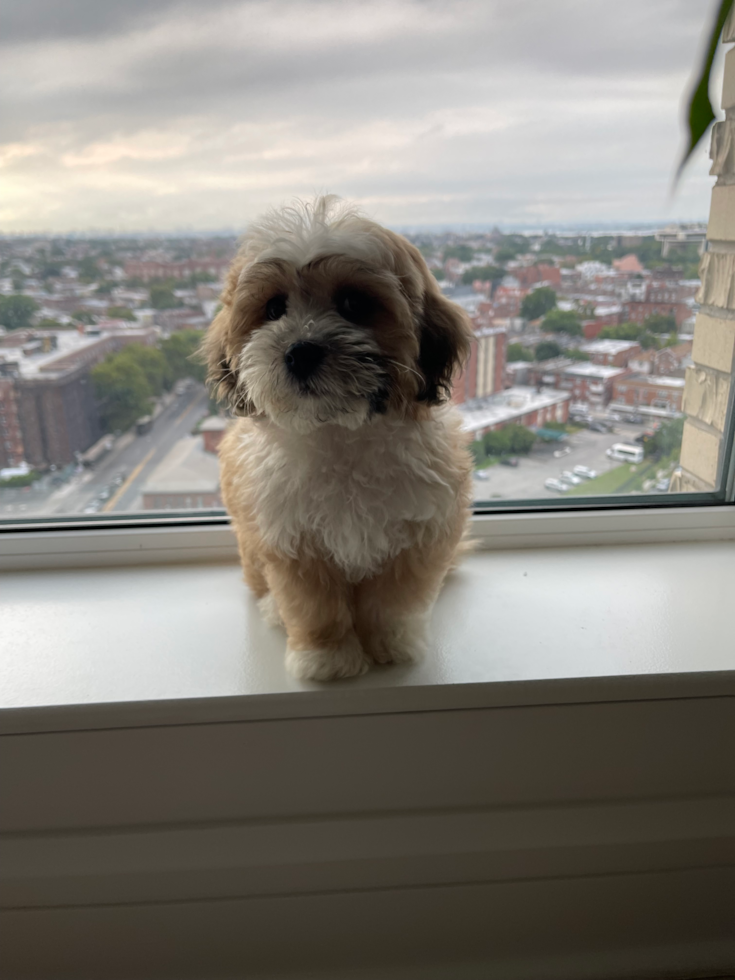
The Shichon usually has a rounder, sturdier appearance than the Malshi. Bichon Frise stand around 9.5 to 11.5 inches and weigh 12 to 18 pounds, while Shih Tzu weigh 9 to 16 pounds. Their parent ranges overlap much more closely than those of the Maltese and Shih Tzu, so Shichon size can be somewhat more consistent.
Many adult Shichons fall somewhere around 9 to 18 pounds. Some stay smaller, especially when the parents are petite, but the cross generally has more body and substance than the average Malshi. Under the coat, the dog is usually well balanced and sturdy. This physical solidity is one reason Shichons can be appealing to families that want a genuinely small dog without an especially delicate build.
Shichon Coat Type
Coat texture is one of the clearest differences between a Malshi vs Shichon. The Bichon Frise has a dense, plush coat with curl, while the Shih Tzu has long flowing hair. Combining the two commonly produces a soft wavy coat, though some Shichons develop pronounced curls.
The coat often has more lift than a Malshi coat. Instead of falling smoothly along the body, it can puff outward, especially after brushing. That texture creates the classic teddy bear silhouette. A groomer can round the head, cheeks, legs, and body while keeping enough texture for the shape to hold.
Some Shichons look almost like miniature Bichons with a slightly different face. Others have longer Shih Tzu-style hair with only loose waves.
Shichon Colors and Markings
The Bichon has a much narrower color range than the Shih Tzu. AKC recognizes white, white and apricot, white and buff, and white and cream in the Bichon Frise. The Shih Tzu adds far more possibilities.
Shichons may therefore appear in white, cream, apricot, gold, tan, gray, brown, black, or combinations of these shades. White with patches of apricot, tan, gold, or darker color is common.
A predominantly white Shichon may strongly resemble the Bichon side. Dogs with extensive gold, black, or brown markings can look much more Shih Tzu-influenced.
Color changes during maturity are possible here too. Some markings fade or soften once the adult coat grows in.
Shichon Eyes and Teddy Bear Face
The Shichon's face is one of its defining features. Large dark eyes from both parents sit beneath a thick coat that can be shaped into a round outline. The Bichon's naturally rounded head appearance combines with the Shih Tzu's broad face and shorter muzzle to create exactly the look people associate with a teddy bear puppy.
The muzzle can still vary. A puppy that inherits more Bichon facial structure may have a longer nose than one strongly influenced by the Shih Tzu. That variation matters for comfort during exercise and warm weather. A cute flat face should never be valued above healthy breathing.
Shichon Build and Size
The Shichon is usually the sturdier of these two crosses. Bichons look delicate underneath a full show coat, but they are compact, resilient dogs with enough physical ability for agility and other activities. AKC specifically describes the breed as sturdy and well balanced beneath its fluffy coat.
Combine that frame with the already substantial Shih Tzu and you tend to get a solid small dog.
Short legs are possible when the Shih Tzu influence is stronger, while a more Bichon-like Shichon may stand a little taller and appear squarer through the body.
This does not make the Shichon a rough-and-tumble large dog in miniature. It simply tends to feel less fragile than a very small Maltese-influenced Malshi.
Shichon Shedding
Shichons usually shed very little. Both parent breeds are known for coats that release minimal loose hair into the home.
The Bichon coat traps loose hair within its curls. AKC describes the breed as minimally shedding but emphasizes that regular brushing is necessary to keep that coat healthy. A Shichon with a strongly Bichon-style coat may therefore leave almost no visible hair around the house while requiring plenty of brushing. Dogs with straighter Shih Tzu-style hair can behave slightly differently, but heavy shedding would still be unusual for the cross.
As with the Malshi, low shedding should not be confused with guaranteed allergy friendliness. People can react to proteins in saliva and dander regardless of how much hair the dog leaves behind.
Shichon Grooming Needs
The Shichon's teddy bear coat comes with work. Curly and wavy hair can form mats quickly, especially behind the ears, under the front legs, around the collar, and near the tail. Thick coats need brushing all the way to the skin rather than a quick pass across the outer fluff.
The Bichon itself requires frequent grooming, and AKC notes that its coat needs regular brushing and trimming.
Most Shichons benefit from professional grooming on a regular schedule. The familiar teddy bear haircut is popular partly because it looks adorable and partly because it keeps home maintenance manageable.
Facial hair should stay clean and clear of the eyes. Ear care also matters because thick hair and dropped ears can create a warm environment where moisture lingers. The workload is manageable once it becomes routine, but this is not a dog for someone hoping to own a fluffy coat without brushing it.
Malshi vs Shichon Appearance Comparison: What Is the Difference?
The easiest visual distinction is coat texture and overall body shape.
The Malshi tends to have a straighter or softer wavy coat, with more of the silky fall associated with the Maltese. The body can also be finer, particularly in dogs that strongly favor the Maltese side.
The Shichon usually has a fuller, wavier or curlier coat. Bichon influence also adds a rounder head and sturdier body, which strengthens the teddy bear effect.
Both can have short Shih Tzu-influenced muzzles, dark eyes, floppy ears, and plumed tails. Both also come in numerous colors because the Shih Tzu contributes such a broad palette.
If your ideal teddy bear dog has a very round, fluffy, almost plush-toy appearance, the Shichon may fit that image more naturally. If you prefer the same sweet face with a silkier coat and somewhat finer body, the Malshi may appeal more.
Grooming does not provide an easy deciding factor. Both require commitment, and the curlier Shichon coat may actually need more detangling despite the dog's low-shedding reputation.
Malshi vs Shichon Temperament
The personality comparison is closer than the appearance comparison because all three parent breeds are strongly oriented toward human companionship.
Shih Tzu bring affection, confidence, and a relaxed approach to life. The Maltese adds liveliness and boldness. The Bichon contributes cheerful sociability, curiosity, and a playful streak that once made the breed successful as an entertainer.
As a result, the Malshi tends to lean toward calm companionship, while the Shichon usually brings a little more bounce and outgoing playfulness.
Malshi Temperament
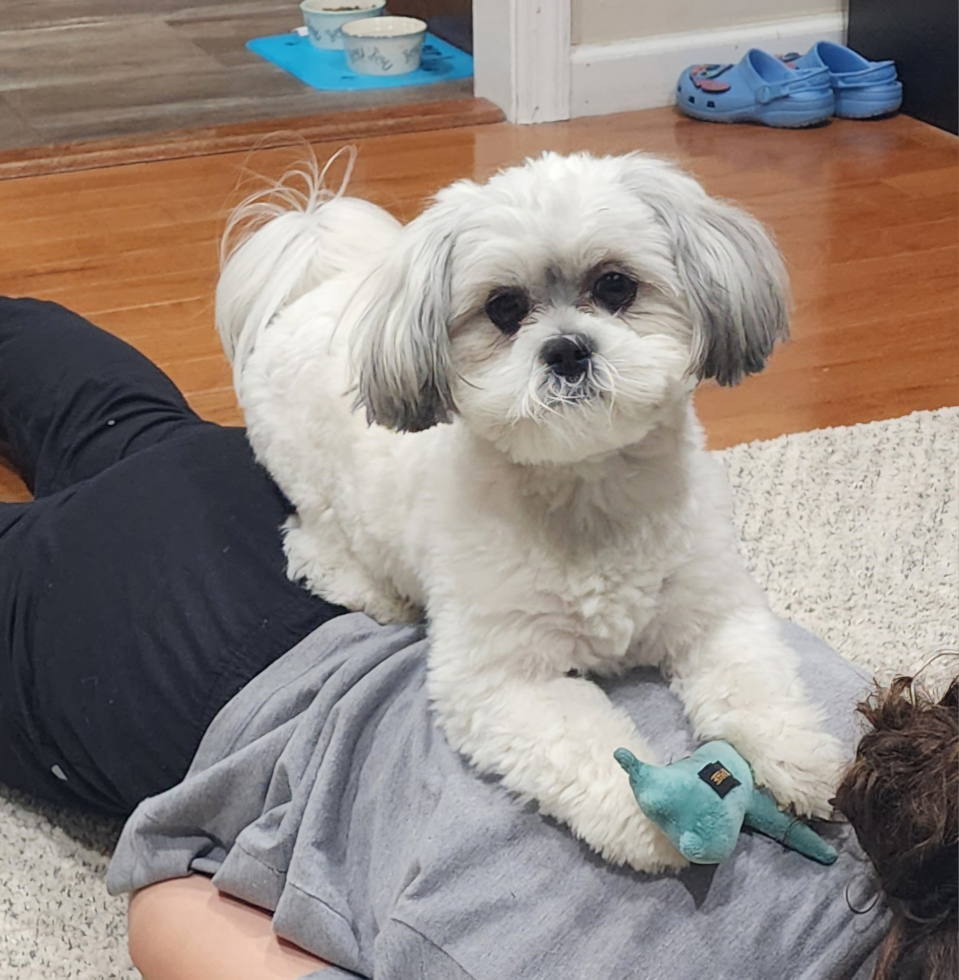
Malshis are affectionate little dogs that usually form close bonds with their families. Both parent breeds have spent generations living as companions, so being near people is not an occasional preference. It is a large part of what makes these dogs happy.
They can be playful and lively, especially during puppyhood, but they usually do not require constant activity. A walk, some indoor play, a little training, and plenty of family interaction can create a satisfying day.
Confidence can vary. Maltese have a surprisingly bold personality for such tiny dogs, while Shih Tzu tend to carry themselves with a self-assured calm. A Malshi may therefore be small enough to fit under one arm while behaving as though its opinion should carry considerable weight in household decisions.
Malshi Affection and Attachment
The Malshi's companion ancestry shows most clearly in its attachment to people. Many enjoy sitting beside family members, following them through the house, and sleeping close to someone whenever possible. They may choose a favorite person but can still form strong bonds with the rest of the household.
This devotion makes independence training important. A dog that never experiences calm time alone during puppyhood can struggle when normal adult life requires it. Short periods of separation, quiet naps in another room, and safe independent activities teach a useful lesson: loved people can leave and still come back.
Malshi Energy Level
Malshis usually have low-to-moderate or moderate energy. The Maltese is lively despite its tiny body, while the Shih Tzu is an active little companion without being an endurance athlete. A Malshi can enjoy energetic play and proper walks but usually does not require a household organized around exercise. This makes the cross attractive to people who enjoy daily walks but have no interest in spending hours outside every day.
Age matters too. Puppies and adolescents naturally have bursts of energy that may make the breed seem much busier than the eventual adult.
Malshi Intelligence and Training
Malshis are intelligent, but they may bring a little independence into training. The Maltese is clever and capable, while the Shih Tzu has spent centuries being a companion rather than performing complex jobs for humans. A Malshi may understand a cue perfectly well but decide that the reward deserves further consideration.
Positive reinforcement works much better than pressure. Good food rewards, praise, toys, and brief sessions can turn training into a cooperative activity. House training deserves consistency because toy-sized dogs have small bladders. Frequent opportunities outside, supervision, and a predictable schedule give the puppy fewer chances to practice unwanted habits.
Malshis With Children
Malshis can be excellent family companions when children understand how to treat a small dog. Dogs with stronger Shih Tzu structure may feel fairly sturdy, while Maltese-influenced individuals can be more delicate. Either way, young children should sit down when holding a puppy and should never carry one around unsupervised. Older children can participate in gentle games, walks, and training. A Malshi may not demand hours of entertainment, but it usually enjoys attention and involvement.
Respecting the dog's need for quiet matters too. Even the most affectionate companion should be allowed to walk away and rest without being followed.
Malshis With Other Pets
Malshis can fit nicely into homes with other dogs and cats. Neither parent breed was developed around strong hunting or herding instincts, which gives the cross a useful starting point for multi-pet households.
Size needs more thought than temperament when another dog is large. A friendly 70-pound dog can accidentally injure an eight-pound companion during enthusiastic play. Gradual introductions and supervised early interactions help everyone establish comfortable boundaries.
Malshi Barking and Watchfulness
Maltese and Shih Tzu are both alert enough to notice visitors, noises, and changes around the home.
Some Malshis are relatively quiet. Others believe every knock at the door deserves immediate investigation.
Barking can become more pronounced if it repeatedly earns attention. Teaching a calm response to visitors and rewarding quiet behavior early is much easier than trying to undo a well-established barking routine later. Their size may prevent them from being intimidating watchdogs, but nobody seems to have told them that.
Shichon Temperament
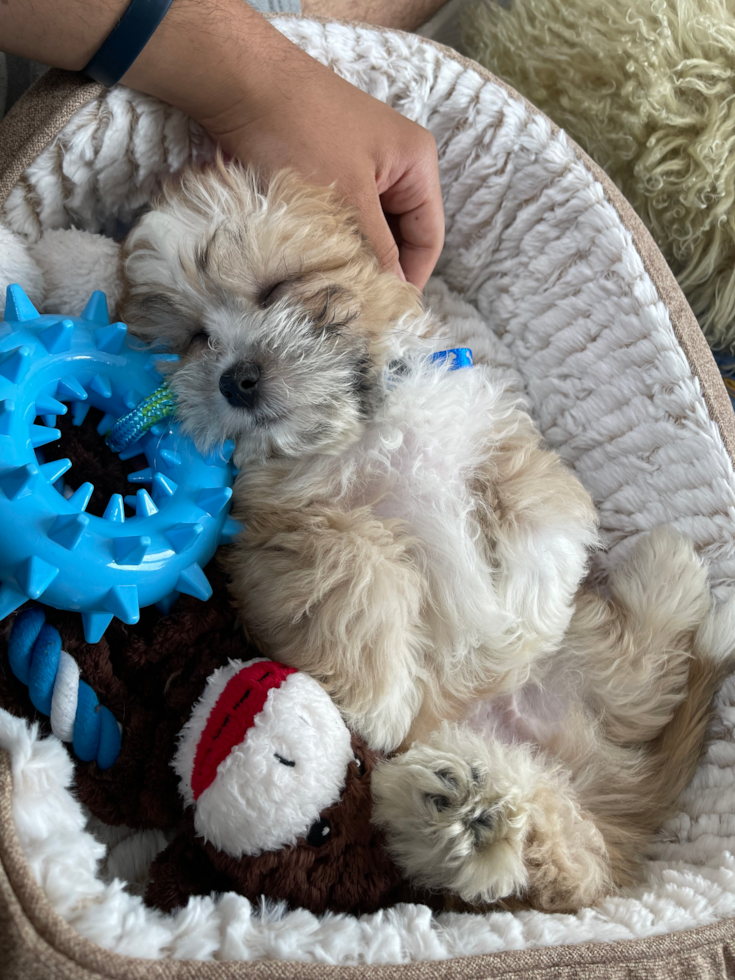
Shichons are affectionate, cheerful, social dogs with a playful quality that can make them feel slightly more animated than the typical Malshi. The Shih Tzu contributes deep attachment and a love of home life. The Bichon adds curiosity, friendliness, intelligence, and a long history of winning over strangers.
AKC describes Bichons as happy-go-lucky, adaptable dogs that tend to get along well with children and other dogs. Their sociability is one of the breed's most characteristic traits. A Shichon may therefore approach family life with the attitude that everyone is potentially a friend and every activity is worth investigating.
Shichon Sociability and Affection
Shichons usually love people, and the Bichon can broaden that affection beyond the immediate family. Some Malshis become particularly attached to one or two people. Shichons may be more inclined to work a room, greet guests, and distribute their attention more widely. That is a tendency, not a guarantee. Individual temperament and socialization still matter enormously.
At home, Shichons can be very cuddly. The extra sociability does not make them less interested in laps or couch time. It simply adds a little more enthusiasm for the world outside the family circle.
Shichon Energy Level
The Shichon usually has moderate energy. Bichons can be surprisingly lively. Their famous bursts of running, sometimes called the Bichon blitz, reveal how much energy can hide underneath all that fluff. The breed also has enough agility and enthusiasm to succeed in obedience and dog sports.
Shih Tzu pull the energy level back toward companion territory, so most Shichons do not need demanding exercise.
Daily walks, indoor games, short training sessions, and opportunities to explore usually provide a good balance.
Compared with a Malshi, the Shichon may be a little more likely to initiate play or remain interested in another round of activity before settling.
Shichon Intelligence and Training
Training can be especially enjoyable with a Shichon because the Bichon brings a long history of learning tricks and performing. Bichons survived periods of social upheaval partly by becoming street and circus performers, where quick learning and charm mattered. That trainability remains part of the modern breed. A Shichon may therefore show more enthusiasm for tricks, games, and repeated interaction than a Malshi.
The Shih Tzu side can still add a little independence, so positive reinforcement remains the best approach. Good rewards and short varied sessions prevent training from becoming boring. Basic manners matter as much as fun tricks. Recall, leash skills, handling, quiet greetings, and settling are far more useful in daily life than an impressive list of party tricks.
Shichons With Children
The Shichon has several qualities that suit family life. Bichons are small but sturdy, and AKC notes that they tend to do well with children. Shih Tzu are affectionate companions with their own history of close human relationships. That combination can create a playful family dog that feels somewhat less delicate than the smallest Malshis.
Young children still need supervision. A sturdy 14-pound Shichon is not immune to being dropped, stepped on, or frightened by rough handling. Older children may especially enjoy the Shichon's playful side because these dogs can be enthusiastic participants in games and trick training.
Shichons With Other Dogs and Pets
The Shichon is usually a strong candidate for a multi-dog household. Bichons tend to be highly social and generally get along well with other dogs. The Shih Tzu side is companion-oriented rather than territorial or intensely prey-driven.
Cats can also make good roommates when introductions happen gradually. The Shichon's willingness to socialize can occasionally create the opposite problem: the dog assumes every animal wants to be friends. Teaching calm approaches and respecting the other pet's boundaries prevents enthusiasm from becoming annoying.
Shichon Barking and Alertness
Shichons can be alert dogs, especially when the Bichon side is strong. Bichons are described as loyal little watchdogs despite being much more interested in making friends than confronting anyone. That can translate into barking when someone approaches the home or an unfamiliar sound appears. The Shih Tzu side may soften the response, but there is plenty of individual variation.
Early training makes the biggest difference. If barking is acknowledged briefly and quiet behavior earns the reward, the dog learns that one announcement is enough.
Malshi vs Shichon Temperament Comparison: What Is the Difference?
The personality difference is not dramatic, but it is useful.
The Malshi usually leans toward the quieter, more intimate companion style. It may form very close bonds with its household and spend a large part of the day content to remain near its favorite people.
The Shichon usually has a little more social bounce. Bichon influence can make the dog more outgoing with strangers, more playful, and more interested in training or games.
Both are affectionate. Both enjoy family life. Both can be good with children and other pets.
The question is whether you want the personality to lean toward calm companionship or cheerful sociability.
Malshi vs Shichon: Which One Should You Choose?
Choosing between a Malshi and Shichon can be harder than comparing two breeds with completely different backgrounds. These dogs share the Shih Tzu and occupy much of the same lifestyle territory. Both work well in small homes. Both usually shed very little. Both need regular grooming. Both want plenty of human contact and can become deeply attached to their families.
The useful differences are found in energy, coat, body type, and social style.
Choose a Malshi if You Want a Softer, More Relaxed Companion
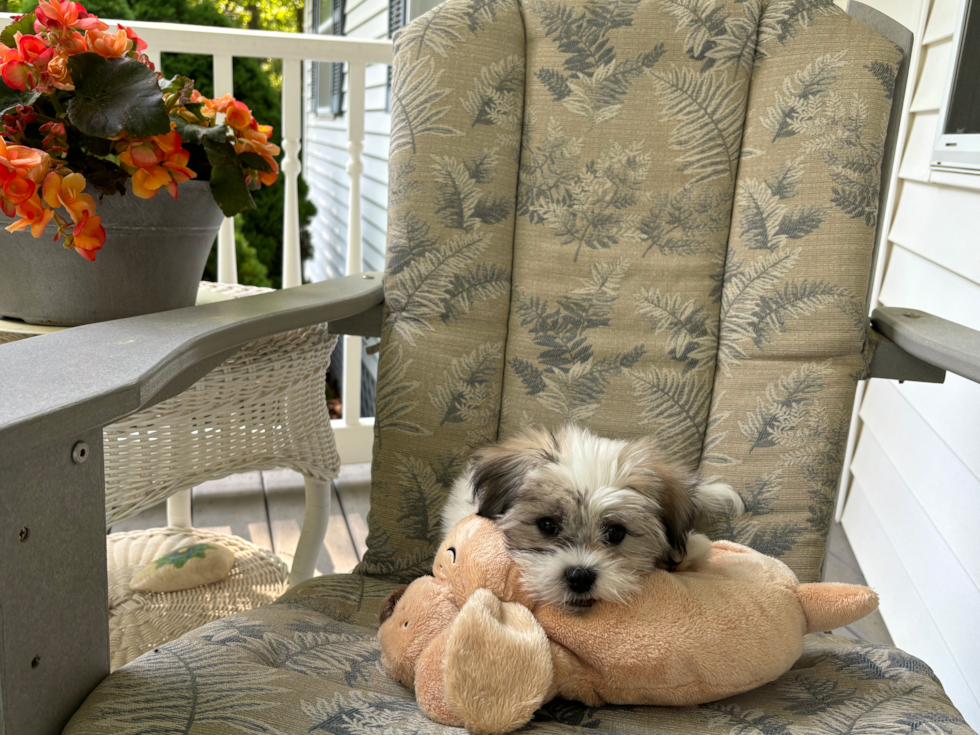
A Malshi puppy may suit you better if your ideal dog is small, affectionate, relatively calm, and deeply interested in home life. The cross works especially well for people who want companionship to be the center of the relationship. Daily walks and play still matter, but a Malshi usually does not need a steady stream of activities to remain content.
The silkier coat may also appeal to someone who prefers a softer flowing look rather than the puffier Bichon texture.
A Malshi can fit beautifully with singles, couples, retirees, and families who want a dog involved in everyday life without needing a particularly active schedule.
Choose a Shichon if You Want a Playful, Social Teddy Bear Dog
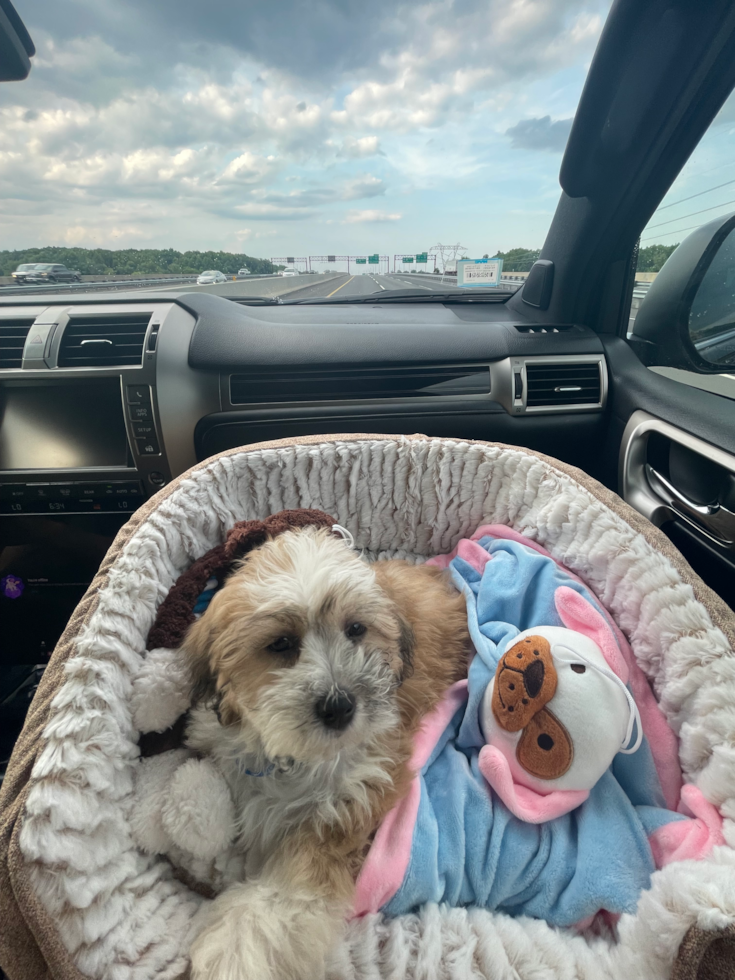
A Shichon puppy may suit you better if you want the teddy bear appearance combined with a little more bounce and sociability. Bichon influence can produce a cheerful dog that enjoys meeting people, learning tricks, playing games, and participating in family activities.
The sturdier body may also appeal to families that want a small dog without an especially delicate feel.
Visually, the Shichon has another advantage for people specifically searching for the classic teddy bear look. Wavy or curly hair can hold a rounded trim beautifully, creating that plush, almost stuffed-toy appearance.
Which Is Smaller: Malshi or Shichon?
The Malshi is usually the smaller of the two, although there is plenty of overlap. Maltese weigh under seven pounds, while Bichons generally weigh around 12 to 18 pounds. Both crosses share the 9-to-16-pound Shih Tzu. That gives the Malshi more potential to remain very petite. A Maltese-influenced adult may weigh well under 10 pounds.
The Shichon usually has more body coming from the Bichon side and commonly lands somewhere in the low-to-mid teens. Parent size still gives the best estimate. A large Malshi can outweigh a very petite Shichon.
Which Looks More Like a Teddy Bear?
Both deserve the label, but the Shichon may have the stronger classic teddy bear appearance.
The Bichon's plush curly coat naturally creates volume around the head and body. Combine that with the Shih Tzu's round eyes and broad little face, then add a rounded haircut, and the resemblance can be striking.
Malshis still make beautiful teddy bear dogs. Their coats simply tend to be straighter and silkier, so the finished look may be a little softer and less puffed out.
Grooming style makes a major difference. Either dog in a short rounded puppy cut can look remarkably toy-like.
Which Is Calmer: Malshi or Shichon?
The Malshi usually has a slight advantage for calmness. Both of its parents have spent generations primarily as small companions. The Maltese has a lively side, but it does not bring the same performer-style energy found in the Bichon.
Shichons remain very manageable small dogs, but they may be more likely to initiate play, race around the room, or seek another round of interaction. If your household is quiet and you want a dog that naturally settles into that pace, the Malshi may fit more easily.
Which Is More Playful?
The Shichon usually leans more playful. Bichons are cheerful, energetic little dogs with a history of performance and trick work. That influence can add extra enthusiasm to the Shichon personality.
Malshis enjoy games too, especially as puppies. They may simply reach the point where the couch becomes more interesting a little sooner.
For families with children who want a dog to actively participate in games and trick training, the Shichon's extra bounce can be a real advantage.
Which Is Easier to Train?
The Shichon may have a slight edge, largely because of the Bichon. Bichons are quick learners with a documented history as performers. That ability can make Shichons enthusiastic students when training is fun and rewarding.
Malshis can learn perfectly good manners and plenty of tricks, but Shih Tzu influence may bring more independence into the process.
Neither responds well to harsh methods. Short positive sessions with meaningful rewards work much better. The difference should not be exaggerated. A well-motivated Malshi can outperform a distracted Shichon on any given day.
Which Is Better for First-Time Dog Owners?
Both can make excellent first dogs. The Malshi may appeal more to someone who wants a quieter companion with manageable exercise needs. The Shichon may suit a beginner who enjoys training and wants a slightly more playful dog.
Grooming is the bigger challenge with either cross. New owners sometimes assume that low shedding means easy coat care. In reality, the opposite can be true. Both need brushing, facial care, ear care, nail trims, dental hygiene, and professional grooming if kept in a short shaped coat.
Which Is Better With Children?
The Shichon may have a small advantage with active families because the Bichon contributes a sturdier frame and playful temperament. AKC notes that Bichons tend to get along well with children, and the Shih Tzu is also an affectionate family companion.
Malshis can be wonderful with children too. Very small individuals simply need more protection from accidental rough handling. For older children, either can work beautifully. The Shichon may be the more enthusiastic playmate, while the Malshi may become the more devoted little shadow.
Which Is Better With Other Dogs?
The Shichon may have a slight advantage for very social multi-dog households because Bichons generally enjoy other dogs.
Malshis can live happily with canine companions too. Individual temperament and socialization matter much more than the small breed difference. Physical size deserves consideration. A petite Malshi needs protection from rough play with very large dogs, while a sturdier Shichon may tolerate normal wrestling a little better.
Neither should be expected to manage an unsafe size mismatch simply because the dogs are friendly.
Which Is Better With Cats?
Both are good candidates for homes with cats. Maltese, Bichons, and Shih Tzu are all primarily companion breeds rather than dogs with strong modern hunting drives.
Early introductions still help. A puppy should learn that chasing the cat is not a game, and the cat should always have places where it can retreat without being followed.
The Shichon's extra playfulness can occasionally be annoying to a quiet cat, but that is a training and personality issue rather than a serious breed concern.
Which Sheds Less: Malshi or Shichon?
Both shed very little, and there is no useful universal winner. The Malshi combines two breeds with long coats that release relatively little visible hair. The Shichon combines the Shih Tzu with the famously low-shedding Bichon.
A curly Shichon may retain almost all loose hair within its coat, while a silky Malshi may release a little more during brushing. In practical terms, both are strong options for people who dislike dog hair around the house. Neither is guaranteed hypoallergenic. Low shedding and allergy compatibility are not the same thing.
Which Needs More Grooming?
This one is extremely close, but the Shichon may require slightly more detangling when the coat is dense and curly.
Bichon coats need frequent brushing because curls trap loose hair and form mats. Shih Tzu coats bring their own maintenance demands, so combining the two can produce a very full coat.
Malshis need plenty of grooming too, particularly when the coat is kept long. The difference is mostly in texture. A Malshi may develop long silky tangles, while a Shichon may develop dense mats closer to the skin. A short teddy bear cut makes life considerably easier with either dog.
Which Is Better for Allergies?
Neither can be guaranteed safe for someone with dog allergies. Both usually shed lightly, which may reduce the amount of hair moving through a home. Allergens are also found in saliva and dander, though, so a low-shedding coat cannot remove the possibility of a reaction.
Someone with significant allergies should spend time around the actual dog before making a decision. That is much more reliable than assuming every teddy bear dog is automatically hypoallergenic.
Which Is More Affectionate?
Both are exceptionally affectionate, but they may express it somewhat differently. The Malshi may lean more toward close one-on-one companionship. Its Maltese and Shih Tzu ancestry both come heavily from the lapdog world, and some Malshis become especially devoted to one or two people.
The Shichon may spread the love more widely. Bichons are notably sociable and can be enthusiastic about family members, guests, and people they have only recently met.
Neither approach is better. One feels more intimate, while the other can feel more openly social.
Which Is Better for Seniors?
Both can suit older adults very well. The Malshi may have a small advantage for someone who wants a quieter companion and moderate daily exercise. Its small size also makes handling and travel relatively easy. The Shichon may be preferable for an older owner who enjoys more walking, games, or training and wants a slightly sturdier small dog.
An adult dog may be worth considering in either cross. Puppies are adorable, but puppyhood includes house training, biting, frequent bathroom trips, grooming practice, and enough chaos to make a quiet afternoon temporarily extinct.
Which Is Better for Apartment Living?
Both are excellent apartment candidates. Their small size means they do not need a large home, and neither requires a backyard. Daily walks and interaction matter much more than square footage.
The Malshi may fit a quieter apartment lifestyle slightly more naturally because its energy level can be lower. The Shichon does perfectly well in apartments too, provided it receives enough play and exercise. Bichons themselves are considered excellent city dogs because of their size and adaptability.
Barking may be the bigger issue. Shared hallways, elevators, and neighboring doors provide plenty of opportunities for small dogs to practice their security announcements.
Which Handles Warm Weather Better?
Neither cross should be exercised heavily in extreme heat, but the answer depends heavily on facial structure. Both share the Shih Tzu, so either can inherit a shortened muzzle. A Malshi may inherit a longer facial structure from the Maltese, while a Shichon may inherit one from the Bichon.
The individual dog's muzzle length and nostril structure matter more than choosing one cross over the other. Dogs with shorter faces should receive extra care during hot or humid weather. Walks are safer during cooler parts of the day, and air-conditioned indoor space, shade, and fresh water are important.
If heat tolerance is a major concern, look closely at the parents and the puppy's actual facial structure rather than relying on the mix name.
Which Has the More Predictable Size?
The Shichon may have a slightly narrower expected range because the Bichon and Shih Tzu are relatively similar in size.
Bichons commonly weigh around 12 to 18 pounds, while Shih Tzu weigh 9 to 16 pounds. The Malshi combines that same Shih Tzu with a Maltese that weighs under seven pounds. That creates a wider difference between the two parents and more potential for very petite offspring.
Crossbreed genetics still prevent precise predictions. Two parents of known size provide a better estimate than the average range for either mix.
Malshi vs Shichon: The Final Comparison
Choosing between a Malshi vs Shichon is less about deciding which teddy bear dog is better and more about deciding what kind of small companion you want living beside you every day.
Both are affectionate, low-shedding dogs with strong companion ancestry. Both can live happily in apartments or houses, both tend to bond closely with their families, and both require regular grooming to maintain the soft coats that make them so appealing.
The Malshi combines the Shih Tzu with the Maltese and usually leans toward the quieter side of companion life. It can be petite, silky-coated, deeply affectionate, and perfectly content with a moderate routine of walks, play, and time close to its people.
The Shichon combines the Shih Tzu with the Bichon Frise and usually brings more physical sturdiness, coat volume, sociability, and playful energy. Its wavy or curly coat also creates one of the most convincing teddy bear appearances among modern companion crosses.
For someone who wants a small dog that feels almost purpose-built for relaxed companionship, the Malshi may be the more natural choice.
For someone who wants the classic fluffy teddy bear look with a little more bounce, playfulness, and enthusiasm for meeting the world, the Shichon may fit better.
The difference is subtle enough that the individual puppy matters enormously. Parent temperament, size, coat texture, facial structure, socialization, health, and early experiences can shift the outcome in either direction.
A quiet Shichon can be calmer than a lively Malshi. A silky Shichon can have less curl than some people expect. A Malshi with strong Shih Tzu influence may be sturdier than its Maltese ancestry suggests.
Use the Malshi vs Shichon comparison to decide which general set of traits fits your household. Then look closely at the parents and the puppy itself.
That is ultimately a much better way to choose a teddy bear dog than choosing whichever face happens to look cutest in the first photograph.
Frequently Asked Questions
What is the main difference between a Malshi and Shichon? Both have a Shih Tzu parent, but the Malshi's other parent is a Maltese and the Shichon's is a Bichon Frise. The Maltese usually gives the Malshi a finer body, silkier coat, and somewhat calmer companion style. The Bichon can give the Shichon more curl, sturdiness, sociability, and playful energy.
Are Malshis and Shichons both teddy bear dogs? Yes. Both are commonly included among teddy bear dogs because of their small size, dark eyes, soft coats, rounded facial appearance, and puppy-like looks. The Shichon may have the more pronounced teddy bear appearance because Bichon curls create extra volume around the head and body, especially with a rounded haircut.
Which is smaller, a Malshi or Shichon? The Malshi is usually smaller because the Maltese weighs under seven pounds, while the Bichon Frise commonly weighs around 12 to 18 pounds. Both crosses share the Shih Tzu, which weighs roughly 9 to 16 pounds. Parent size still matters, so individual dogs can fall outside the usual pattern.
Which is calmer, a Malshi or Shichon? The Malshi usually leans calmer because both the Maltese and Shih Tzu have long histories centered on companionship. Shichons remain manageable small dogs but may inherit more playful energy and curiosity from the Bichon. Individual temperament can easily outweigh the general difference.
Which is more playful, a Malshi or Shichon? The Shichon usually has the advantage for playfulness. Bichons are lively, sociable dogs with a history as performers, while Shih Tzu add affection and a calmer companion side. Malshis enjoy games too but may settle into quiet time somewhat sooner.
Which sheds less, a Malshi or Shichon? Both are very low-shedding crosses. The Shichon's Bichon coat may trap more loose hair within its curls, while the Malshi tends to have straighter or wavier hair. The practical difference is usually small, and neither dog should be guaranteed as completely non-shedding or hypoallergenic.
Which needs more grooming, a Malshi or Shichon? Both need regular grooming. Malshi coats can form silky tangles, while the Shichon's denser curls and waves can develop mats close to the skin. A short teddy bear or puppy cut makes either dog easier to maintain, but brushing and regular professional grooming should still be expected.
Which is better with children, a Malshi or Shichon? Both can be very good family dogs. The Shichon may have a slight advantage in active households because Bichon ancestry contributes a sturdier body and playful temperament. Very small Malshis can be more delicate, so supervision around young children is especially important.
Is a Malshi or Shichon better for apartment living? Both adapt very well to apartments. The Malshi may fit a quieter household slightly better, while the Shichon may need a little more play and daily activity. Barking habits, training, and companionship matter more than the difference in size.
Should I choose a Malshi or Shichon? Choose a Malshi if you want a petite, affectionate companion with a softer coat, moderate energy, and a lifestyle centered heavily on time with family. Choose a Shichon if you prefer a sturdier, fluffier teddy bear dog with a playful, social personality and a little more enthusiasm for games and interaction. Both require regular grooming and close human companionship, so lifestyle and temperament should guide the final choice.