





Published Monday, October 12, 2026 by Pilesgrove Pups
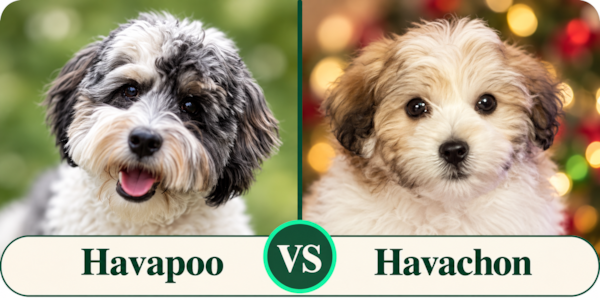
The Havapoo vs Havachon comparison starts with something important these two dogs already have in common: both are half Havanese. That shared parent gives them plenty of overlap in size, affection, sociability, playfulness, and their desire to stay close to people. Both can also have soft low-shedding coats and the expressive little faces that make small companion crosses so appealing.
The difference is what gets added to that Havanese foundation. A Havapoo combines the Havanese with a Toy or Miniature Poodle, while a Havachon pairs the Havanese with a Bichon Frise. The Poodle brings more athleticism, a strong learning drive, tighter curl, and greater variation in adult size. The Bichon contributes a sturdy little body, plush coat, cheerful sociability, and another long-established companion temperament.
There is another interesting distinction beneath the surface. The Havanese and Bichon Frise belong to the same broad historical family of small Bichon-type companion dogs. Their ancestors developed along different paths, but they retain some shared qualities. A Havachon therefore combines two fairly similar companion backgrounds, while the Havapoo introduces the more distinct working history of the Poodle.
That difference can show up in everyday life. The Havapoo may be a little more interested in structured training, puzzles, retrieving games, and varied activities. The Havachon can be just as bright, but its personality may lean more heavily toward cheerful companionship, social play, and simply being involved with the family.
Neither is difficult to exercise, neither needs a large home, and neither is a low-maintenance dog when grooming is concerned. The better choice comes down to whether you prefer the extra Poodle influence and variation of the Havapoo or the plush, social, companion-focused blend of the Havachon.
Table of Contents
- Havapoo vs Havachon at a Glance
- Havapoo and Havachon Overview and History
- Havapoo vs Havachon Appearance
- Havapoo vs Havachon Temperament
- Havapoo vs Havachon: Which One Should You Choose?
- Choose a Havapoo if You Want a Clever, Interactive Small Dog
- Choose a Havachon if You Want a Cheerful, Social Companion
- Which Is Smaller: Havapoo or Havachon?
- Which Is Calmer: Havapoo or Havachon?
- Which Is Easier to Train?
- Which Is Better for First-Time Dog Owners?
- Which Is Better With Children?
- Which Is Better With Other Dogs?
- Which Is Better With Cats?
- Which Sheds Less: Havapoo or Havachon?
- Which Needs More Grooming?
- Which Is Better for Allergies?
- Which Is More Affectionate?
- Which Is Better for Apartment Living?
- Which Is Better for Seniors?
- Which Is More Predictable in Size and Appearance?
- Havapoo vs Havachon: The Final Comparison
Havapoo vs Havachon at a Glance
| Trait | Havapoo | Havachon |
| Parent breeds | Havanese × Toy or Miniature Poodle | Havanese × Bichon Frise |
| General size | Small | Small |
| Common adult weight | About 7–20 pounds, depending on Poodle parent | Commonly about 9–18 pounds |
| Height | Commonly around 8–15 inches | Commonly around 9–12 inches |
| Build | Compact to lightly athletic | Compact and usually sturdy |
| Coat | Wavy to curly, sometimes silkier | Wavy to curly, usually soft and plush |
| Shedding | Usually very low | Usually very low |
| Grooming | Moderate to high | Moderate to high |
| Color range | Very broad | Broad, with white and cream especially common |
| Eyes | Usually brown or dark brown | Usually brown or dark brown |
| Energy | Moderate | Moderate |
| Trainability | High to very high | High |
| Personality | Affectionate, clever, playful, interactive | Affectionate, cheerful, social, playful |
| Size predictability | More variable due to Poodle size | Somewhat narrower parent-size range |
| Best fit | Someone wanting an interactive small companion | Someone wanting a social, cheerful teddy bear companion |
These ranges are guides rather than breed standards. Neither the Havapoo nor Havachon is an established purebred with one required adult size. The Havapoo can vary more because Toy and Miniature Poodles differ noticeably in height and weight, while the Havanese and Bichon Frise are closer to one another in height.
Havapoo and Havachon Overview and History
The Havapoo and Havachon are modern companion crosses, but the dogs behind them have much older histories. The Havanese forms the common thread, and understanding that breed explains why both crosses share such an affectionate, people-oriented foundation.
The Havanese belongs to an old family of small companion dogs with Mediterranean roots. Bichon Frise share that broader ancestry, which makes the Havachon a particularly interesting pairing. Rather than combining two breeds with completely different original jobs, it brings together two branches of a related companion-dog family.
The Havapoo takes a different path. Poodles are also highly social and trainable, but their history includes real working ability as water retrievers. That introduces more athleticism and task-oriented intelligence into the Havanese mix.
Neither modern cross has the kind of carefully documented origin story found in established purebred development. Claims about one exact first breeder or creation date are difficult to verify, so their parent breeds tell us much more than an overly precise designer-dog history ever could.
Havapoo History and Background
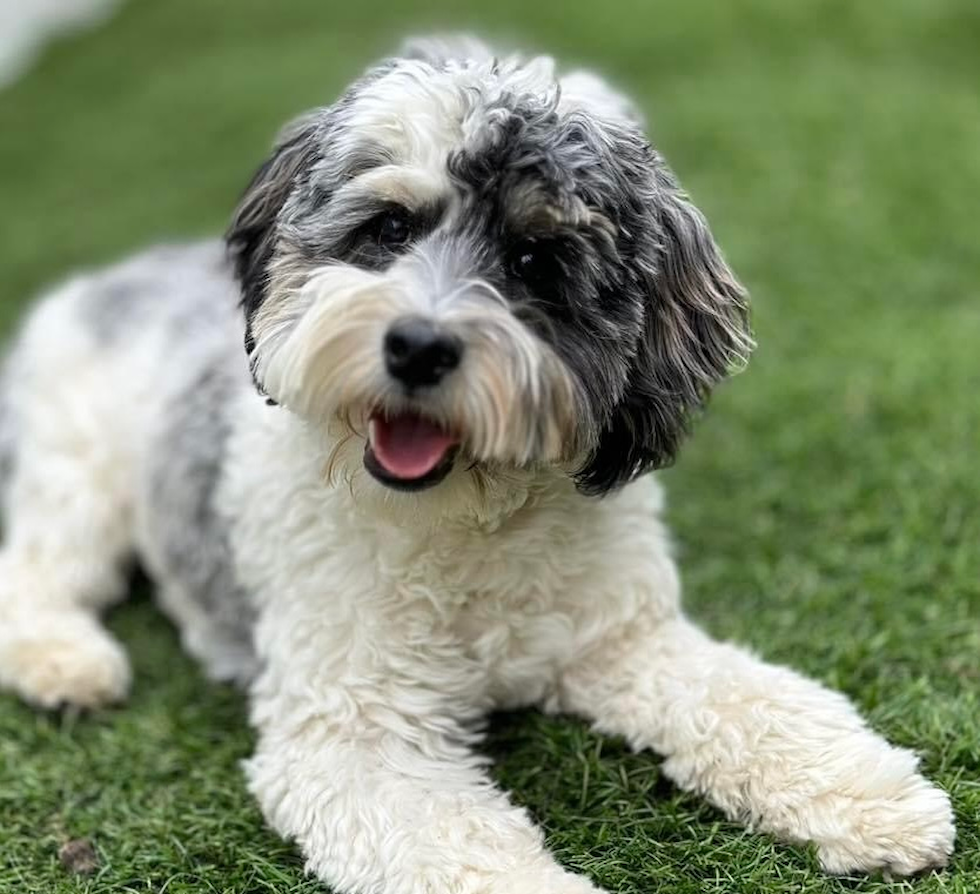
The Havapoo, also known as the Havadoodle or Poovanese, combines a Havanese with a Poodle, most commonly a Toy or Miniature Poodle. The cross became increasingly familiar as interest in small Poodle mixes grew during the late twentieth century.
The Havanese side brings the history of Cuba's native companion breed. Small Bichon-type dogs reached Cuba through European travel and trade, then developed into the distinctive Havanese. They became valued companions in Cuban households and were known for their social nature, intelligence, and ability to live closely with people.
The breed came close to disappearing during political upheaval in Cuba. Dogs brought abroad by Cuban families became crucial to its preservation, and American breeding programs during the twentieth century helped rebuild the population outside the island.
The Poodle contributes a completely different historical element. Despite its polished modern appearance, the Poodle developed as an athletic water retriever. Intelligence, responsiveness, swimming ability, and cooperation with humans were useful working qualities long before elaborate show clips became associated with the breed.
Toy and Miniature Poodles kept the intelligence and trainability of the larger dogs while offering a smaller body. That made them natural partners for modern companion crosses where breeders wanted to preserve manageable size while adding Poodle coat traits and learning ability.
The Havapoo therefore brings together two highly people-oriented dogs, but their backgrounds are not identical. The Havanese contributes a long companion tradition, while the Poodle adds more working ancestry and athletic potential. That combination explains why Havapoos can feel a little more activity-focused than some other small companion mixes without becoming demanding working dogs.
Havachon History and Background
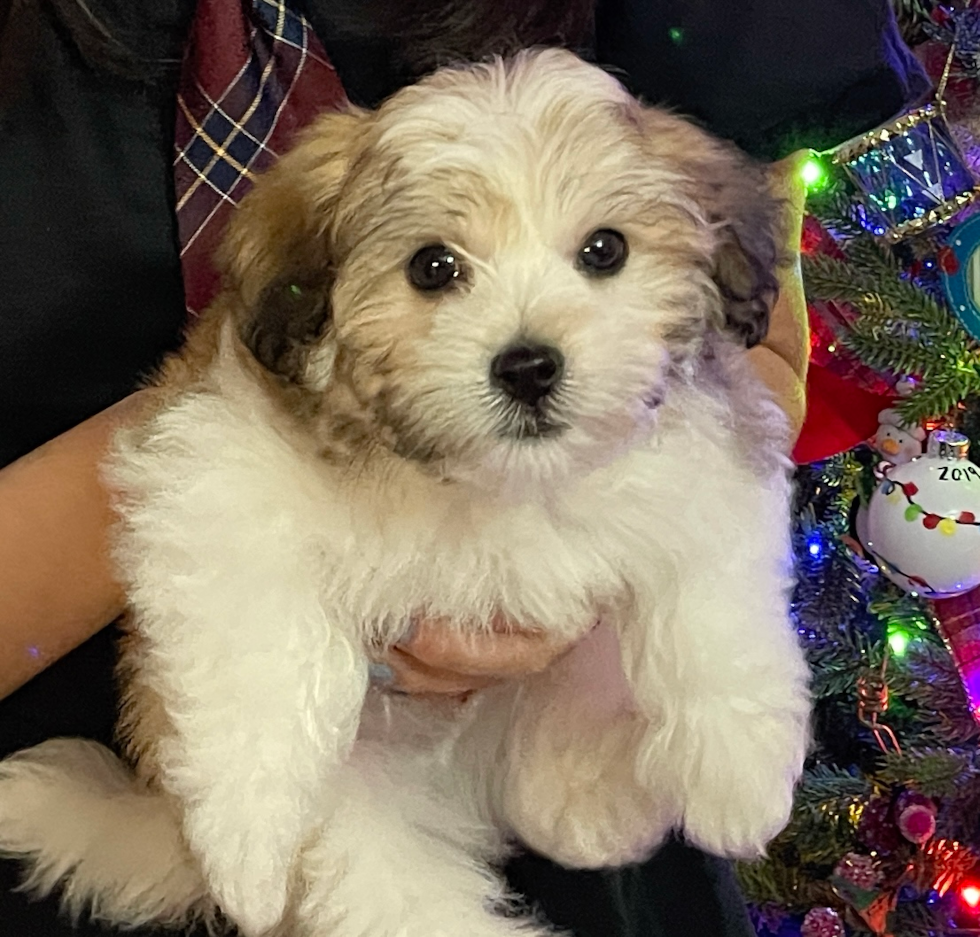
The Havachon combines a Havanese with a Bichon Frise. This pairing is particularly interesting because these two breeds are historical relatives within the broader Bichon family.
Small Barbichon-type dogs traveled around the Mediterranean for centuries. Different populations became associated with particular regions and eventually developed into separate breeds, including the Havanese, Maltese, Bolognese, and Bichon Frise.
The Bichon Frise developed from dogs associated with the Canary Island of Tenerife before becoming fashionable among European nobility. Their fortunes changed after the French Revolution, when many Bichons lost their aristocratic homes. The breed adapted remarkably well and became associated with street performers and circuses, where intelligence, agility, and a natural ability to entertain people became valuable assets.
That history helps explain the modern Bichon's personality. It is a companion dog, but not a passive one. Bichons are cheerful, curious, social, playful, and capable of learning tricks with considerable enthusiasm.
Crossing the Bichon with the Havanese therefore reinforces many traits already present on the Havanese side. Both breeds thrive on human companionship, both are small but sturdy, and both have reputations for playful social behavior.
The Havachon does not introduce a completely new working instinct into the Havanese temperament. Instead, it can amplify the friendly, entertaining, companion-focused qualities already present while changing the coat toward a fuller, curlier Bichon texture.
Havapoo vs Havachon Appearance
The Havapoo and Havachon can look extremely similar, especially when both have wavy coats and the same rounded teddy bear haircut. They share the Havanese, and the Poodle and Bichon both contribute curls, dark eyes, dropped ears, and compact bodies.
The differences are easier to see when coat texture and body structure are examined more closely. The Havapoo has greater potential for a refined, somewhat leggier outline through the Poodle. The Havachon usually stays closer to the sturdy, compact proportions shared by the Havanese and Bichon.
Color can separate them too. Havapoos may inherit the extensive Poodle color range in addition to Havanese colors, while Bichon ancestry pushes many Havachons toward white, cream, apricot, and lighter combinations. The Havanese side still adds enough variety that darker Havachons are possible.
Havapoo Appearance
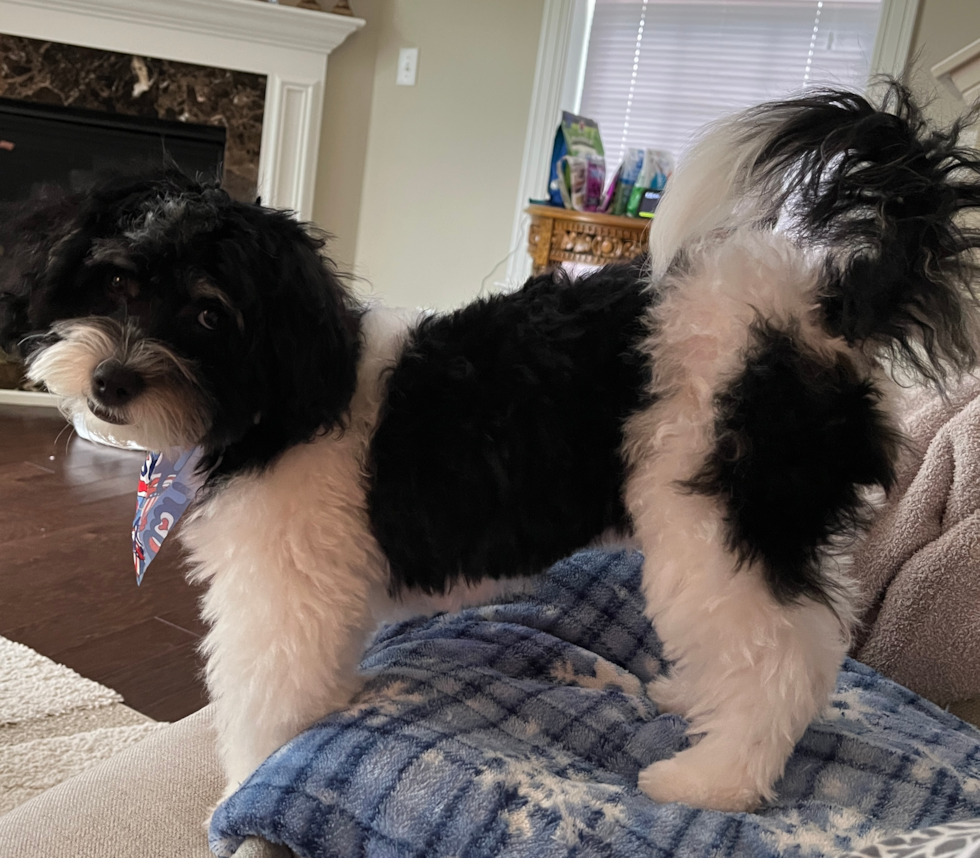
The Havapoo is a small dog, but adult size depends heavily on the Poodle used in the pairing. Havanese weigh around 7 to 13 pounds and stand 8.5 to 11.5 inches. Miniature Poodles stand 10 to 15 inches and weigh roughly 10 to 15 pounds, while Toy Poodles are smaller.
This creates more variation than people sometimes expect from the Havapoo name. A Toy-Poodle pairing can produce a very petite adult close to Havanese size, while a larger Miniature-Poodle pairing can create a taller or heavier dog.
The body also varies. Some Havapoos retain the slightly long-bodied, springy Havanese structure. Others inherit more of the Poodle's square proportions, longer legs, and refined athletic outline.
Havapoo Coat Type and Texture
The Havapoo coat can range from soft loose waves to strong Poodle-like curls. Havanese contribute a long, light, wavy double coat, while Poodles bring dense curl. Many Havapoos land somewhere between the two. Their hair may form loose waves across the body, develop stronger curl around the neck and back, and remain softer or straighter around the ears and tail.
A strongly Poodle-influenced coat may stand away from the body and hold a rounded teddy bear trim particularly well. A Havanese-influenced coat tends to fall more naturally and can look silkier.
Generation can shift the possibilities. A first-generation Havapoo has one Havanese and one Poodle parent, while backcrosses may contain more Poodle ancestry. Greater Poodle ancestry can increase the odds of stronger curl, but it cannot promise one exact coat.
Havapoo Colors and Markings
Havapoos have one of the broader color ranges among small companion crosses because both parents contribute substantial variety. Havanese can be black, white, cream, gold, chocolate, sable, red, silver-related shades, and many combinations. Poodles add their own colors, including black, white, cream, apricot, red, brown, silver, gray, and several related shades.
A Havapoo may therefore be white, cream, apricot, red, gold, brown, chocolate, black, gray, silver-toned, or multicolored. White markings can range from a small chest patch to extensive areas across the body.
Some colors change as the dog matures. A rich red or dark puppy may become lighter over time, particularly when fading genes from the Poodle side are involved.
Havapoo Eyes and Facial Features
Most Havapoos have brown or dark brown eyes, though exact shade can vary with coat color and pigmentation. The eyes may look rounder when the Havanese side dominates or slightly more oval when the Poodle structure comes through strongly.
The muzzle is moderate in length in both parent breeds, so Havapoos generally retain balanced facial proportions rather than an extremely shortened face. Poodle influence can make the muzzle look narrower and more refined.
Facial furnishings change the appearance dramatically. Thick hair around the cheeks, eyebrows, and muzzle can create the rounded face people associate with teddy bear dogs even when the underlying skull is fairly narrow.
This is why photographs can be deceptive. Two Havapoos with different facial structures can look almost identical after a skilled groomer gives them the same trim.
Havapoo Build and Size
The Havapoo usually remains firmly within the small-dog category, but there is more variation than with a Havachon. The Poodle parent creates the biggest difference because Toy and Miniature Poodles do not share the same adult height.
A Havapoo that favors the Havanese may have a longer body and shorter overall outline. Strong Poodle influence can create more leg length, a squarer frame, and a visibly athletic little dog under the coat.
Neither body type should appear fragile. Havanese are sturdy for their size, and Poodles are muscular, agile dogs despite their refined appearance. This gives many Havapoos enough physical ability for longer walks, games, light hiking, and active family outings while remaining easy to lift and manage.
Havapoo Shedding
Havapoos are usually very low shedders because both parents contribute coats that release relatively little visible hair around the home. A tightly curled Havapoo may leave remarkably little hair on furniture and clothing.
That does not mean the hair simply disappears. Loose strands can remain trapped inside the coat, where they contribute to knots and mats if regular brushing is skipped.
Straighter Havapoos may release slightly more visible hair, though heavy shedding would be unusual compared with many other dogs. Low shedding should also be kept separate from allergy claims. A person can react to proteins found in saliva and dander even when almost no loose hair appears on the sofa.
Havapoo Grooming Needs
The Havapoo needs regular grooming regardless of how little it sheds. Curlier coats can mat rapidly behind the ears, under the legs, around the collar, and along areas where hair rubs together. Brushing several times each week works for many short pet coats. Longer and curlier styles may need attention nearly every day, particularly if the owner wants the fluffy coat to remain several inches long.
Professional grooming is common. A short teddy bear clip reduces the home workload while preserving the rounded appearance that attracts many people to the Havapoo. A comb is especially useful after brushing. It can reveal tight knots close to the skin that remain hidden beneath fluffy surface hair.
Havachon Appearance
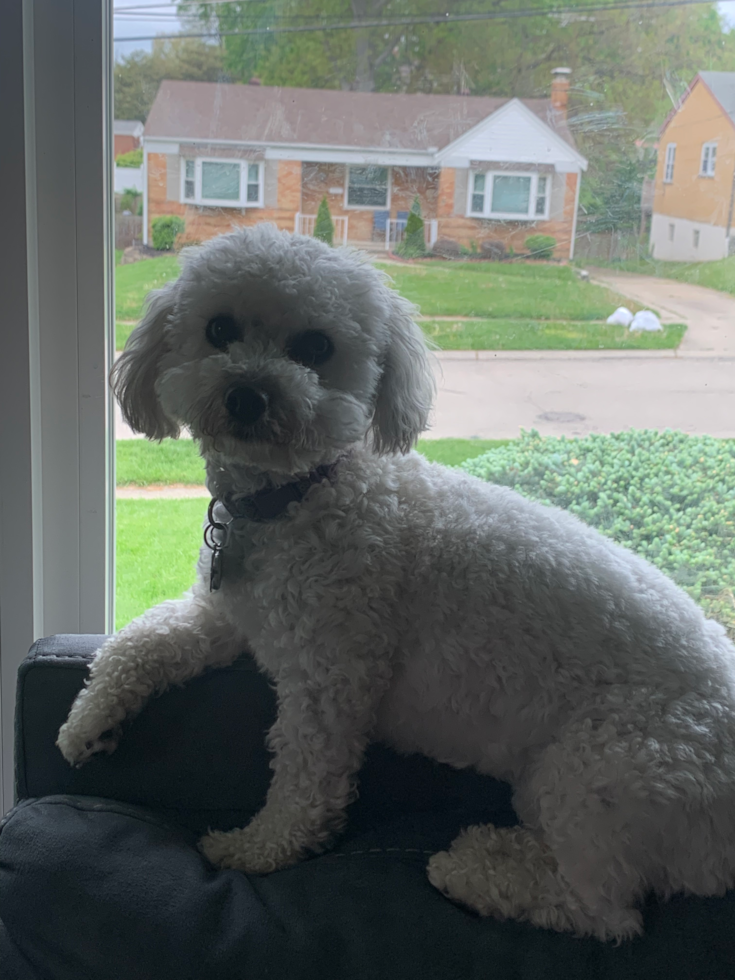
The Havachon combines two parent breeds that are remarkably close in height. Havanese stand 8.5 to 11.5 inches, while Bichon Frise stand 9.5 to 11.5 inches. That creates a narrower structural starting point than the Toy-or-Miniature-Poodle possibilities found in Havapoos.
Weight can still vary because the Bichon is heavier than the Havanese. Bichons commonly weigh 12 to 18 pounds, while Havanese weigh 7 to 13 pounds. A Havachon may therefore remain petite or develop a more substantial little body approaching the Bichon side of the range.
The overall build is usually compact and sturdy. Both parent breeds are small dogs with enough bone and physical resilience to feel more substantial than their fluffy appearance suggests.
Havachon Coat Type and Texture
Coat texture is one of the most interesting parts of the Havachon. The Havanese contributes long, soft waves, while the Bichon contributes a plush, curly double coat. The result commonly falls somewhere between the two. Some Havachons develop loose fluffy waves with plenty of body, while others inherit enough Bichon curl to look like soft little clouds after grooming.
Compared with the Havapoo, the Havachon coat may feel more plush and cottony rather than tightly curled. Bichon hair has enough volume to stand away from the body, which can create an especially round teddy bear appearance.
Texture matters for maintenance. Cottony coats can mat quickly because the soft hairs catch against one another, even when the outer surface still looks beautifully fluffy.
Havachon Colors and Markings
The Bichon Frise has a much narrower official palette than either the Havanese or Poodle. Bichons are primarily white, with cream, buff, or apricot shading also recognized. The Havanese broadens the Havachon's possibilities considerably. Havachons can therefore appear in white, cream, gold, apricot, tan, sable, brown, black, or combinations with white.
Lighter dogs are particularly common-looking because the Bichon side contributes so strongly toward white and cream. Darker or more dramatically patterned Havachons can occur when Havanese color genetics have greater influence.
Coat color may also change as the puppy grows. Dark shading can soften, while sable hairs may become lighter as the adult coat develops.
Havachon Eyes and Teddy Bear Expression
Dark brown eyes are common in both parent breeds, so the Havachon usually has the large dark-eyed expression associated with companion dogs. The Bichon's rounded head appearance can make the face look particularly plush. Add the Havanese's long facial hair and a rounded puppy cut, and the result can resemble a stuffed teddy bear remarkably closely.
The muzzle remains moderate rather than extremely short. Both parent breeds have enough nose length for balanced facial proportions, even when surrounding hair visually shortens the face.
Dropped ears blend into the coat and help complete the rounded look. When kept fluffy, the ear hair can make the entire head appear wider than it actually is.
Havachon Build and Size
The Havachon is usually compact and sturdy. Both parent breeds were developed as small companions, but neither should feel exceptionally fragile. The Bichon adds more average body weight than the Havanese, which can give the Havachon a solid little frame. Many feel surprisingly substantial when picked up despite standing less than a foot tall.
This can be useful in family life. A sturdy small dog can cope better with normal activity than an extremely delicate toy breed, though responsible handling is still important around young children and much larger dogs.
The narrower parent-height range can also make adult stature somewhat easier to estimate than with a Havapoo produced from an unknown Poodle size.
Havachon Shedding
Havachons are generally very low-shedding dogs. Havanese already release little visible hair, and the curly Bichon coat traps loose hairs rather than dropping them freely through the home. A curlier Havachon may therefore leave almost no obvious hair on furniture while still producing plenty during brushing and grooming.
As with the Havapoo, the low-shedding coat creates a maintenance tradeoff. Hair that remains trapped inside a plush coat contributes to matting if brushing is inconsistent. People with allergies should still evaluate their own reaction to the individual dog. Low shedding can reduce loose hair around the home, but it cannot guarantee an allergen-free pet.
Havachon Grooming Needs
The Havachon coat needs consistent maintenance. Plush waves and curls can knot behind the ears, around the neck, beneath the front legs, and anywhere friction occurs. Regular brushing and combing are necessary even when the dog is kept in a short teddy bear clip. Longer coats require substantially more work and can hide tight mats close to the skin.
Professional grooming every several weeks is a realistic part of ownership for many families. The exact schedule depends on hair length, texture, activity, and how much brushing happens at home.
The classic fluffy Havachon appearance is beautiful, but it is not self-maintaining. Low shedding and easy grooming are two very different things.
Havapoo vs Havachon Appearance Comparison: What Is the Difference?
The Havapoo usually offers more variation, especially in adult size, curl, and body shape. Toy versus Miniature Poodle parentage can noticeably change height and weight, while strong Poodle influence may create tighter curls, longer legs, and a squarer athletic outline.
The Havachon has a narrower structural starting point because Havanese and Bichon Frise are close in height. Bichon influence tends to add body weight, plush coat volume, and a rounder powder-puff appearance rather than extra height.
Their coats can overlap considerably. A loose-waved Havapoo may look almost identical to a Havachon, while a tightly curled Havapoo can look more distinctly Poodle-influenced. Havachons commonly lean toward a soft, cottony wave or curl that gives the coat plenty of volume.
Color also separates them slightly. Havapoos have the broader potential palette through the Poodle and Havanese combination, while Havachons may lean more heavily toward white, cream, apricot, and other lighter shades because of the Bichon.
If you want more possibilities in curl, build, and color, the Havapoo offers them. If you want a compact, plush little teddy bear dog with somewhat less variation in height, the Havachon may fit the picture more naturally.
Havapoo vs Havachon Temperament
Temperament is where this comparison becomes more subtle. Both dogs inherit the Havanese, an intelligent, playful, social breed with a strong attachment to people. The Poodle and Bichon are also affectionate and highly trainable, so there is no dramatic divide between a clever dog and a cuddly one.
The distinction is more about emphasis. The Poodle can add extra interest in structured learning and athletic activity to the Havapoo. The Bichon tends to reinforce the Havanese's existing companion traits while adding cheerful sociability and a playful performer streak. That makes both excellent family companions, but they can feel a little different in daily life. A Havapoo may be more likely to ask for another game or puzzle. A Havachon may be more interested in making sure everyone in the room has noticed how charming it is.
Havapoo Temperament
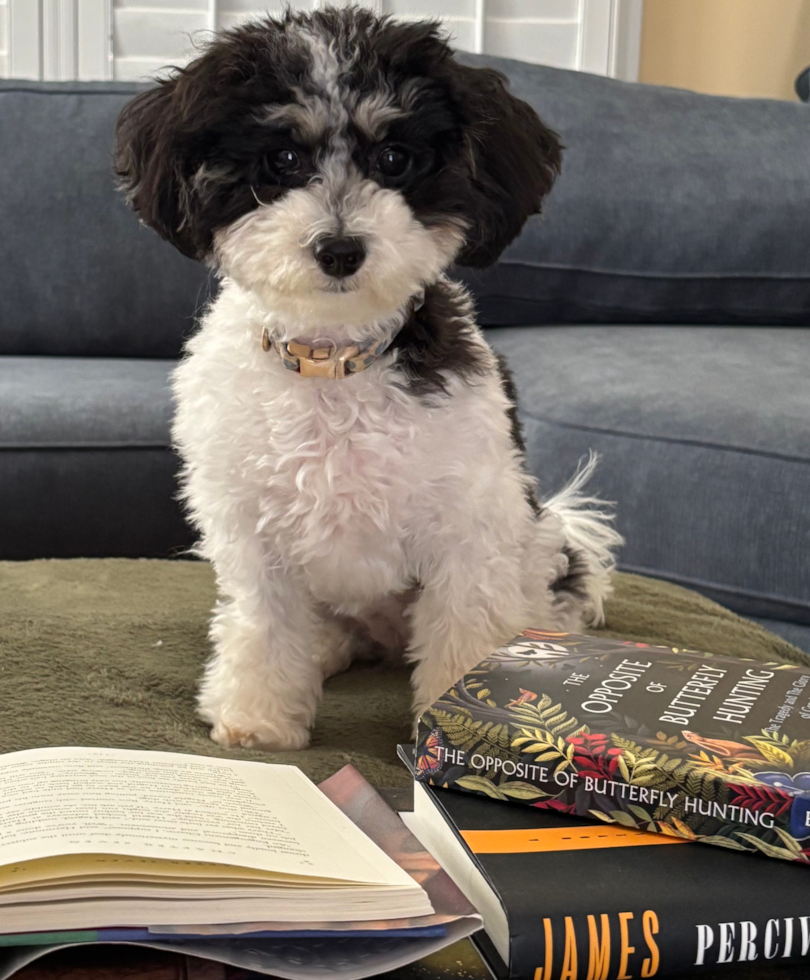
Havapoos are affectionate, playful dogs that usually enjoy a high level of interaction with their families. Both parent breeds are people-oriented, but the Poodle can add extra intensity to the dog's interest in learning and solving small problems.
Many Havapoos move comfortably between activity and companionship. They may enjoy a brisk walk, practice a few tricks, investigate a puzzle toy, and then settle beside someone while the household slows down.
The exact balance depends on which side comes through more strongly. A Havanese-like Havapoo may feel almost entirely like a cheerful companion dog, while stronger Poodle influence can create more appetite for activity and training.
Havapoo Intelligence and Training
Training is one of the Havapoo's strongest qualities. Havanese are intelligent and responsive, while Poodles are famously quick learners with a long history of working closely with people. A Havapoo may therefore learn household patterns before anyone intentionally teaches them. It notices which drawer contains treats, what time the leash usually appears, and which family member is most likely to reward a hopeful stare from underneath the dinner table.
That intelligence makes positive training enjoyable. Recall, leash manners, tricks, handling, polite greetings, and settling can all progress quickly when rewards are clear and expectations remain consistent.
The same quick mind notices loopholes. If jumping is forbidden when guests arrive but rewarded with attention when family members come home, the dog may decide the rule contains some interesting exceptions.
Havapoo Energy Level
Havapoos usually have moderate energy, with some dogs moving toward the more active side when Miniature Poodle influence is strong. They need proper daily movement but rarely require the kind of exercise schedule associated with herding or high-drive sporting breeds.
A satisfying day may include a walk, indoor or backyard play, a little training, and opportunities to sniff and explore. Mental activity can be particularly useful because Poodle influence may make repetition less satisfying than variety.
Young dogs are naturally busier. A six-month-old Havapoo racing through the house after dinner does not necessarily predict an adult that needs nonstop exercise. Most mature dogs develop a comfortable balance when owners provide enough activity and also teach calm settling from puppyhood.
Havapoo Affection and Attachment
The Havapoo is usually deeply connected to its people. Havanese thrive on companionship, and Poodles are also strongly human-focused dogs that enjoy close cooperation. This can produce an affectionate little shadow that follows family members around the home and prefers to be included in whatever is happening.
That closeness is lovely, but independence still needs practice. A puppy that is never alone has no opportunity to learn that separation is normal and temporary. Short calm absences, independent naps, and safe solo activities can help create a dog that enjoys human company without becoming distressed whenever a door closes.
Havapoos With Children
Havapoos can make excellent family companions. Their playful temperament and willingness to learn give children several ways to interact beyond simply petting the dog. Older children may particularly enjoy teaching tricks, playing fetch, setting up simple search games, or helping with walks. That kind of structured interaction can build a stronger relationship than constant excitement.
Very small Havapoos require careful handling. A dog produced from a Toy Poodle may be petite enough that falls, rough lifting, or rambunctious play can cause injury. Supervision remains important even with a sturdy dog. Children should learn to respect sleep, food, and the dog's choice to walk away when interaction has become too much.
Havapoos With Other Dogs and Pets
Havapoos generally have good potential with other dogs and cats. Neither parent brings strong modern herding or guarding instincts into the mix. Poodle ancestry can add interest in retrieving or chasing movement, but this is usually manageable through early socialization and normal training.
Another dog can make a fun playmate when size and energy levels match. A tiny Havapoo may need protection from large dogs that play physically even when everyone involved has friendly intentions.
Cats tend to be straightforward housemates when puppies learn calm behavior around them from the beginning.
Havapoo Barking and Alertness
Havapoos can be alert dogs because both parent breeds pay attention to what happens around them. Visitors, unfamiliar sounds, and activity outside a window may trigger a quick announcement. They are not destined to become excessive barkers, though. Much depends on what the puppy learns works.
If barking produces immediate attention every time, an intelligent dog can become very committed to the strategy. Rewarding quiet behavior and creating calm routines around the door can prevent normal alertness from becoming constant commentary.
Adequate exercise and mental stimulation help too. A dog with something useful to do has less reason to appoint itself neighborhood surveillance manager.
Havachon Temperament
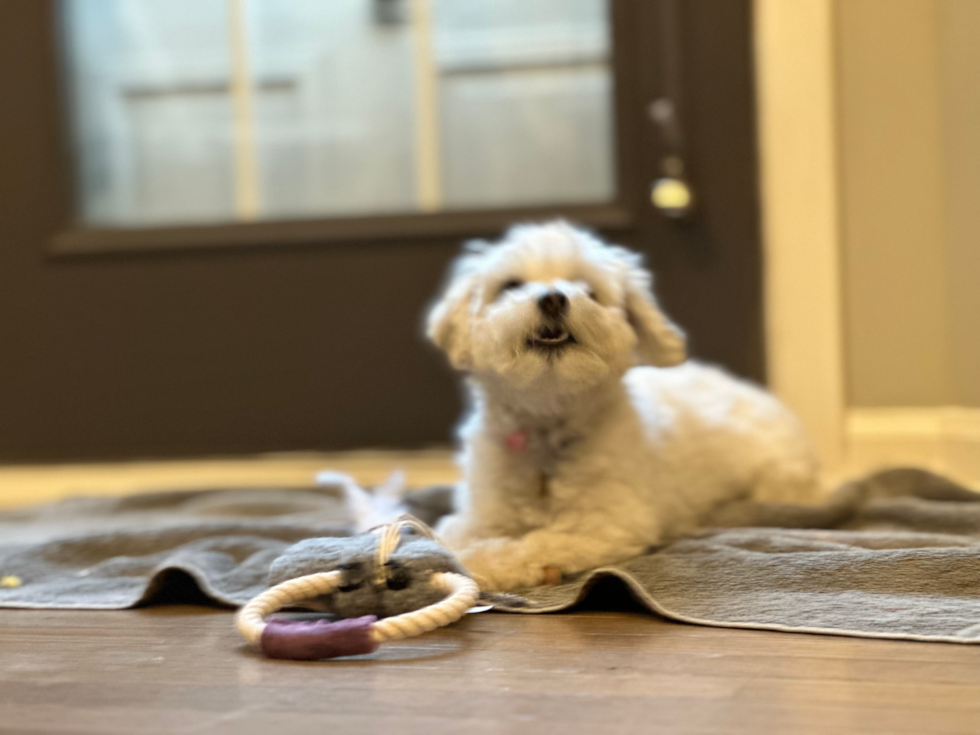
Havachons are affectionate, cheerful dogs whose ancestry sits almost entirely within the small companion world. Both Havanese and Bichons have long histories of living closely with people, and both are known for playful, social personalities.
The Bichon adds an especially outgoing quality. This is a breed that historically survived major changes in fortune through charm, adaptability, and even performance. That cheerful resilience remains part of the modern dog's appeal.
A Havachon can therefore feel highly social without being especially demanding. Many enjoy games, visitors, family activity, and learning tricks, then settle comfortably once the excitement is over.
Havachon Intelligence and Training
Havachons are intelligent dogs and can be excellent students. Havanese are eager learners, while Bichons have a long history of performance that required them to learn tricks and respond to human direction.
Positive reinforcement fits the cross particularly well. Food, praise, toys, and playful interaction can all turn training into something the dog actively enjoys. The Havachon may not seek mental challenges quite as intensely as a Poodle-influenced Havapoo, but that does not make it less capable. It may simply be satisfied with shorter sessions and less elaborate enrichment.
House training deserves patience and consistency with either cross. Small dogs have small bladders, and inconsistent schedules can make progress look much slower than the dog's actual learning ability.
Havachon Energy Level
The Havachon generally has moderate energy. Both parent breeds enjoy walks, games, and bursts of playful activity without requiring long hours of vigorous exercise. Bichons can be surprisingly energetic when the mood strikes. Their famous bursts of running reveal that the powder-puff exterior covers a sturdy little athlete.
The difference is duration. A Havachon may race around, play enthusiastically, and then be perfectly happy to settle beside the family. This balance makes the cross suitable for people who want a playful dog without planning their day around exercise.
Havachon Sociability and Affection
Social companionship is one of the Havachon's strongest qualities. Havanese are outgoing, and Bichons have a reputation for cheerful openness toward people and other dogs. A Havachon may therefore spread its affection widely. Some greet visitors as though they were expected all along and consider any available lap worth investigating.
That openness still depends on socialization. Puppies need positive experiences with different people, places, sounds, and environments before confidence can become a reliable adult trait.
At home, the cross usually remains strongly attached to family. It wants company and involvement, even when that involvement consists of sleeping beside someone who is working.
Havachons With Children
Havachons can fit especially well into family households because both parent breeds combine small size with useful physical sturdiness. The Bichon side can add a little more body weight than the average Havanese, which may make some Havachons feel less delicate than tiny Toy-Poodle Havapoos.
Their playful social temperament can also work nicely with children. Older kids may enjoy tricks, fetch, and short training sessions, while younger children can build a good relationship through calm supervised play.
Small size still matters. A sturdy 15-pound Havachon can be injured by rough handling, so children need the same boundaries they would around any small dog.
Havachons With Other Dogs and Pets
The Havachon has strong potential in multi-pet homes. Havanese and Bichons are social companion breeds rather than dogs developed for guarding livestock or pursuing prey. Many Havachons enjoy other dogs and may be especially happy with a compatible canine playmate. Their playful style can include chasing, bouncing, and short energetic bursts.
Cats can also be comfortable housemates when introductions are handled gradually. Teaching the puppy not to chase gives the cat a much better chance of viewing the newcomer as a roommate rather than a nuisance.
Individual temperament still matters more than breed labels. A quiet senior pet may prefer a calmer puppy, regardless of which cross you choose.
Havachon Barking and Alertness
Havachons can be alert to visitors and unusual sounds, but barking levels vary considerably from one dog to another. Both parent breeds are capable little watchdogs in the sense that they notice changes around the home. Neither was developed as a serious guard breed, so the alert generally ends with informing the family rather than confronting the source.
Barking can become habitual if it repeatedly earns attention. Calm door routines and rewarding quiet behavior help prevent one bark from turning into a lengthy announcement.
The cross usually responds well to this kind of training because both sides are attentive to people and motivated by social feedback.
Havapoo vs Havachon Temperament Comparison: What Is the Real Difference?
The temperament difference between these two dogs is real, but it should not be exaggerated. Both share the Havanese, and both other parents are intelligent, affectionate breeds that enjoy human interaction.
The Havapoo tends to lean more toward active learning and mental engagement. Poodle influence can create extra enthusiasm for training, puzzles, retrieving games, and activities that require the dog to figure something out.
The Havachon tends to lean more toward broad sociability and playful companionship. The Bichon does not remove intelligence from the equation. It simply adds another breed whose history centers heavily on charm, entertainment, and life alongside people.
For many households, both would fit comfortably. The distinction becomes most useful when deciding what you want to do with your dog. If training itself sounds like fun, the Havapoo may have the edge. If you mainly want an outgoing small companion that plays readily and settles into family life, the Havachon may feel especially natural.
Havapoo vs Havachon: Which One Should You Choose?
The Havapoo and Havachon are close enough that neither requires a dramatically different lifestyle. Both can live happily in apartments, both need regular grooming, both usually shed very little, and both thrive in households where people have plenty of time for companionship.
The differences lie in the details. Havapoos have more size and coat variation because of the Poodle parent, along with somewhat greater potential for athleticism and sustained interest in training.
Havachons have a narrower parent-size range and combine two related companion breeds, which may make their overall style slightly more consistent.
Choose a Havapoo if You Want a Clever, Interactive Small Dog
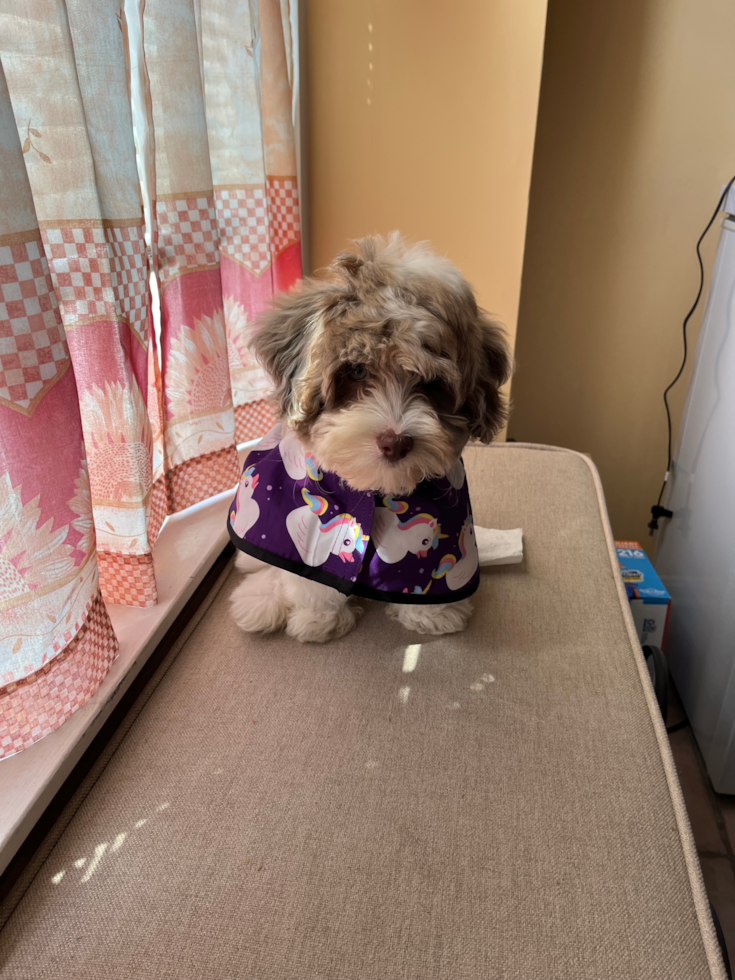
A Havapoo puppy may suit you better if training and enrichment are part of what attracts you to dog ownership. Poodle influence can create a little companion that genuinely enjoys figuring out new behaviors rather than learning only what is necessary for household life.
This does not make the Havapoo demanding. Most remain moderate-energy dogs that can fit comfortably into ordinary family routines. The difference is that they may appreciate more variety within those routines.
A new walking route, a short scent search, a puzzle feeder, or five minutes spent learning a trick can add a lot to the dog's day. For an owner who finds those activities enjoyable too, the relationship can become especially interactive.
The Havapoo also offers more possibilities in coat and build. If tighter curl or a slightly more athletic outline appeals to you, Poodle influence increases the chance of those traits.
Choose a Havachon if You Want a Cheerful, Social Companion
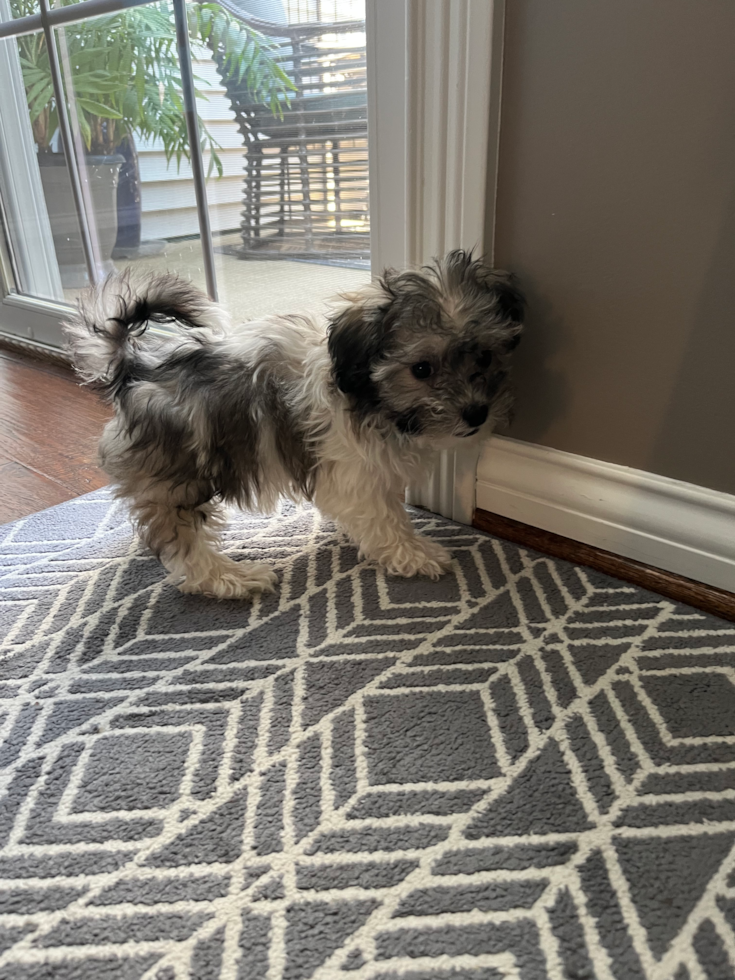
A Havachon puppy may suit you better if your priority is a friendly, playful little dog whose strongest talent is fitting naturally into family life.
Both sides of this cross come from closely related companion-dog backgrounds. The Havanese contributes intelligence and a lively social nature, while the Bichon adds its own cheerfulness, sturdiness, and history as a charming performer.
The result may be especially appealing to people who like the classic teddy bear look. A plush Havachon coat can hold a rounded trim beautifully, and lighter cream, white, or apricot coloring can strengthen the soft powder-puff appearance.
There may also be somewhat less uncertainty around adult height because the Havanese and Bichon are close in stature. Weight, coat, and individual temperament still vary, but the starting point is narrower than a Havapoo pairing that could involve either a Toy or Miniature Poodle.
Which Is Smaller: Havapoo or Havachon?
There is no universal winner because the Havapoo's size depends heavily on the Poodle parent. A Havapoo produced from a small Toy Poodle may be noticeably lighter than the average Havachon, while one produced from a larger Miniature Poodle can become taller.
The Havachon combines parents with similar heights. Havanese stand 8.5 to 11.5 inches, while Bichons stand 9.5 to 11.5 inches. The Bichon carries more body weight, so Havachons can feel heavier without necessarily standing much taller.
If you want the smallest possible dog, a carefully selected Toy-Poodle Havapoo may offer that possibility. If you value a somewhat narrower likely height range, the Havachon may be easier to estimate.
In either case, actual parent size is much more useful than choosing from a generic crossbreed chart.
Which Is Calmer: Havapoo or Havachon?
The Havachon may have a slight advantage for a calmer everyday rhythm, though the difference is modest. Bichons are playful dogs, but their activity tends to come in cheerful bursts followed by plenty of companion time.
Havapoos can settle well too. The Poodle may simply add more interest in games, training, or finding something else to do when the environment becomes quiet.
Neither cross belongs in a high-energy category. A normal routine of walking, play, interaction, and mental stimulation can satisfy either one.
For someone who enjoys a lively little dog but wants activity to remain moderate, both work. The Havachon may reach the couch slightly sooner.
Which Is Easier to Train?
Both are highly trainable, but the Havapoo may have a slight edge in advanced or continued training because of the Poodle.
Havanese already learn readily, and Bichons have their own history as performance dogs. A Havachon is therefore perfectly capable of learning excellent manners, obedience, tricks, and practical household skills.
The difference is more about appetite than ability. Some Havapoos actively seek the next puzzle and become excited by repeated learning, while a Havachon may be perfectly happy once it understands what the household expects.
For basic family training, there is little reason to choose one over the other. For someone who genuinely enjoys teaching new things throughout the dog's life, the Havapoo may provide more enthusiasm for the process.
Which Is Better for First-Time Dog Owners?
Both can make excellent first dogs. Their small size is manageable, their temperaments are strongly companion-oriented, and neither brings difficult guarding or herding instincts into the home.
The Havachon may have a small advantage for someone who wants a straightforward family companion without a strong interest in advanced training. Its exercise requirements are moderate, and the combination of Havanese and Bichon traits fits easily into many homes.
A Havapoo is equally realistic for a beginner who enjoys training and is comfortable with a little more variation in adult size and coat.
Grooming is the main area where either dog can surprise an inexperienced owner. Low shedding does not reduce the need for brushing, combing, bathing, professional trimming, ear care, nail care, and dental hygiene.
Which Is Better With Children?
Both can be excellent with children when the dog is well socialized and the children understand respectful handling.
The Havachon may have a slight physical advantage in active family homes because Bichon ancestry can add a sturdier little body. Many Havachons land in a comfortable middle ground where they remain easy to handle without feeling extremely fragile.
Havapoos can be wonderful family dogs too, particularly with older children who enjoy teaching tricks or playing interactive games. Very small Toy-Poodle-influenced Havapoos need greater protection from accidental rough handling.
The child's age and behavior matter more than the small temperament difference between these crosses. Calm, respectful children can develop excellent relationships with either dog.
Which Is Better With Other Dogs?
Both have strong potential in multi-dog households. Havanese are social, Poodles generally adapt well to canine companionship, and Bichons have a particularly outgoing social style.
The Havachon may have a slight advantage for people specifically seeking a highly social small dog. Bichon influence can add enthusiasm for meeting and playing with other friendly dogs.
Havapoos also tend to do well, although individual Poodle temperament can create anything from a social butterfly to a dog that simply prefers its familiar companions.
Matching energy and play style matters more than the cross name. A gentle adult may dislike living with a relentlessly playful puppy of either type.
Which Is Better With Cats?
Both are good candidates for cat households because neither cross introduces strong modern herding or hunting instincts.
A Havapoo may inherit some Poodle interest in retrieving or chasing movement, but this does not automatically translate into problematic prey behavior. Early boundaries can teach the puppy that household cats are companions rather than something to pursue.
Havachons have similarly favorable companion ancestry. A playful puppy can still annoy a cat, especially if the cat runs and accidentally turns the interaction into a game.
Gradual introductions, elevated escape areas, and rewards for calm behavior create better results than relying on breed tendencies alone.
Which Sheds Less: Havapoo or Havachon?
Both are excellent low-shedding choices, and the difference is too small to declare a reliable winner.
The Havapoo combines the low-shedding Havanese with a Poodle, whose curls trap loose hairs inside the coat. A strongly curly Havapoo may therefore release extremely little visible hair.
The Havachon combines that same Havanese with a Bichon, another breed whose curly coat retains loose hair rather than dropping it freely around the home. A curly Havachon can be equally impressive in this respect.
Individual coat texture matters more than the name. The dog that sheds less may simply be whichever puppy inherits the curlier, denser coat.
Which Needs More Grooming?
This is essentially a tie, though the grooming challenge may feel different.
A curly Havapoo can develop tight mats underneath the surface coat, particularly when Poodle influence is strong. The coat may look beautifully fluffy while knots are forming close to the skin.
A Havachon can develop a softer cottony coat that tangles quickly because the individual hairs catch together. Bichon-style fullness creates volume, but that volume needs regular brushing and combing to stay comfortable.
A short teddy bear cut makes either cross considerably easier to maintain. If you want several inches of fluffy coat, expect brushing to become a regular part of the week regardless of which dog you choose.
Which Is Better for Allergies?
Neither cross can be guaranteed safe for someone with dog allergies. Both usually shed very little, but shedding is only one part of the allergy picture.
People can react to proteins found in skin material and saliva as well as loose hair. A low-shedding dog may distribute less hair around the environment, yet an allergic person can still react.
There is no reliable reason to declare the Havapoo or Havachon universally better for allergies. Spending time around the individual dog provides much more useful information when allergies are a serious concern.
The terms low shedding and hypoallergenic should never be treated as interchangeable.
Which Is More Affectionate?
Both are deeply affectionate dogs, and there is no meaningful winner. Human companionship is central to the Havanese, Poodle, and Bichon alike.
The Havapoo may express some of that attachment through interaction. It may want to train, play, investigate what you are doing, and then settle beside you.
The Havachon may display a slightly broader social style through the Bichon side. Some are delighted to spread their attention among family members and visitors rather than focusing heavily on one person.
Individual personality will matter much more than this subtle distinction. If affection is one of your highest priorities, either cross belongs comfortably in that category.
Which Is Better for Apartment Living?
Both are exceptionally well suited to apartments when their exercise and social needs are met. Neither requires a large yard, and their compact size makes them easy to accommodate in smaller homes.
A Havachon may have a slight advantage for an especially relaxed household because of its moderate activity needs. The Havapoo may appreciate a few more training games or mentally interesting activities when most exercise happens indoors.
Barking deserves more attention than square footage. Both dogs can learn to react to hallway sounds, elevators, neighboring doors, or activity outside a window if alert barking becomes rewarding.
Daily walks, calm routines, and teaching the dog that not every sound requires an announcement make either cross easier to live with in shared buildings.
Which Is Better for Seniors?
Both can be excellent companions for older adults. Their small size makes handling manageable, and neither requires strenuous daily exercise.
The Havachon may suit someone who prioritizes social companionship and a moderate routine. Its sturdy body can also feel reassuring to an owner who does not want an extremely delicate toy-sized dog.
The Havapoo may appeal more to an active senior who enjoys walks, training, and little mental games. It remains a manageable companion while offering plenty of opportunities for interaction.
Grooming is worth considering honestly. A shorter professional haircut may make either dog far more practical than maintaining a long fluffy coat at home.
Which Is More Predictable in Size and Appearance?
The Havachon may be somewhat more predictable in height because its parents occupy very similar size ranges. Havanese stand 8.5 to 11.5 inches, while Bichons stand 9.5 to 11.5 inches.
The Havapoo introduces greater variation because the Poodle can be Toy or Miniature. That can affect both height and overall build, especially when the Poodle parent sits near the upper end of the Miniature range.
Coat remains variable in both crosses. A Havachon may inherit soft Havanese waves or much stronger Bichon curl, while a Havapoo can range from silky waves to dense Poodle curls.
If predictability is particularly important, looking at the actual parents and adult dogs from similar pairings is more useful than relying on the crossbreed name alone.
Havapoo vs Havachon: The Final Comparison
Choosing between a Havapoo vs Havachon is not a decision between two completely different kinds of dogs. Both begin with the Havanese, so affection, small size, sociability, intelligence, and a strong connection to family are already built into the comparison.
The Havapoo adds the Poodle. That can bring tighter curls, a somewhat more athletic build, greater variation in adult size, and extra enthusiasm for learning. It is an especially appealing combination for people who like small companion dogs but also enjoy trick training, puzzles, varied walks, and an interactive relationship.
The Havachon adds the Bichon Frise. Because the Havanese and Bichon share old family ties and similar companion backgrounds, the combination stays firmly rooted in social small-dog territory. The Bichon can add more coat volume, physical sturdiness, cheerful openness, and the plush teddy bear appearance many people love.
Neither has an important advantage in shedding. Both can release very little visible hair. Neither has an advantage in easy coat care either, because waves and curls require regular maintenance regardless of which parent supplied them.
The more useful difference is what you want from the relationship.
If training sounds like part of the fun, you enjoy giving a dog small problems to solve, and you like the possibility of a curlier or more athletic little companion, the Havapoo may be your better match.
If you picture an outgoing little teddy bear that loves people, enjoys a playful household, and brings together two closely related companion traditions, the Havachon may feel more natural.
Then look carefully at the individual puppy. A Havapoo from a small Toy Poodle will be different from one produced from a larger Miniature Poodle. A Havachon with strong Bichon influence may be heavier, curlier, and more outgoing than one that closely favors its Havanese parent.
The name gives you the family tree. The parents, puppy, and early development tell you what living with that particular dog is likely to be like.
Frequently Asked Questions
What is the main difference between a Havapoo and Havachon? Both have a Havanese parent. The Havapoo's other parent is a Toy or Miniature Poodle, while the Havachon's other parent is a Bichon Frise. Poodle influence can give the Havapoo more curl, athleticism, size variation, and enthusiasm for structured training, while Bichon influence tends to give the Havachon a plush coat, sturdy body, and especially cheerful social temperament. The distinction is not enormous because all three parent breeds are intelligent and affectionate. It becomes most useful when comparing activity style, coat, adult size, and how much structured training you want to do.
Which is smaller, a Havapoo or Havachon? A Havapoo has the greater potential to be very small when a Toy Poodle is used, but it also has the wider overall size range. Miniature-Poodle Havapoos can become taller than many Havachons. Havachons tend to have a narrower likely height because Havanese and Bichon Frise are close in stature. Bichon ancestry may still give them more body weight and a sturdier feel than a petite Havapoo.
Which is calmer, a Havapoo or Havachon? The Havachon may have a slight advantage for a calmer routine. Bichons are playful and lively, but their energy commonly comes in cheerful bursts rather than a constant desire for tasks. Havapoos remain moderate-energy dogs, although Poodle influence may increase interest in training, games, and mental activity. Parent temperament can easily outweigh the average difference in either direction.
Which is easier to train, a Havapoo or Havachon? Both are intelligent and trainable. The Havapoo may have a slight advantage for owners interested in continued trick training, puzzles, or more advanced learning because Poodles have an especially strong reputation for fast learning and task engagement. Havachons are capable students too. Bichons have their own history as performers, so a well-motivated Havachon can learn excellent household manners and an impressive collection of tricks.
Which sheds less, a Havapoo or Havachon? Both usually shed very little. Havanese already have low visible shedding, while both Poodles and Bichons contribute curly coats that retain loose hair rather than dropping large amounts throughout the home. Individual coat texture matters more than the cross name. A tightly curled Havachon may shed less visibly than a loose-waved Havapoo, or the reverse may be true.
Which needs more grooming, a Havapoo or Havachon? Neither is a low-maintenance grooming choice. Havapoo curls can form tight mats close to the skin, while the Havachon's plush Bichon-influenced coat can become cottony and tangle quickly. Short teddy bear trims make either dog easier to manage. Regular brushing, combing, facial care, ear checks, nail trims, and professional grooming should still be expected.
Is a Havapoo or Havachon better with children? Both can be excellent family dogs. Havapoos may especially appeal to older children who enjoy teaching tricks and playing interactive games, while Havachons can bring a sturdy little build and a highly social style into family life. Very small individuals of either cross need protection from rough handling. Supervision and respectful interaction matter much more than choosing one name over the other.
Is a Havapoo or Havachon better for apartment living? Both are excellent apartment dogs when they receive daily walks, play, companionship, and appropriate training. Their small size makes large amounts of indoor space unnecessary. The Havachon may fit a particularly relaxed routine a little more easily, while a Poodle-influenced Havapoo may appreciate extra puzzles or training games. Barking habits and ability to remain calmly alone matter more in an apartment than the small difference in energy.
Which looks more like a teddy bear, a Havapoo or Havachon? Both can have a strong teddy bear appearance, especially in rounded puppy cuts. The Havachon may have a slight advantage for the classic plush look because Bichon ancestry adds coat volume and a naturally rounded powder-puff effect. A curly Havapoo can look equally teddy bear-like, though stronger Poodle influence may create a more refined body and narrower underlying face. Grooming style has a huge effect on the final appearance of either dog.
Should I choose a Havapoo or Havachon? Choose a Havapoo if you want an affectionate small dog with strong training potential, moderate energy, broad color possibilities, and the chance of a curlier or slightly more athletic Poodle-influenced build. Choose a Havachon if you want a sturdy, cheerful, highly social little companion with a plush coat and a temperament rooted in two closely related companion breeds. Both need regular grooming and plenty of human interaction, so the best choice comes down to whether Poodle-style mental engagement or Bichon-style social companionship appeals to you more.