





Published Monday, October 12, 2026 by Pilesgrove Pups
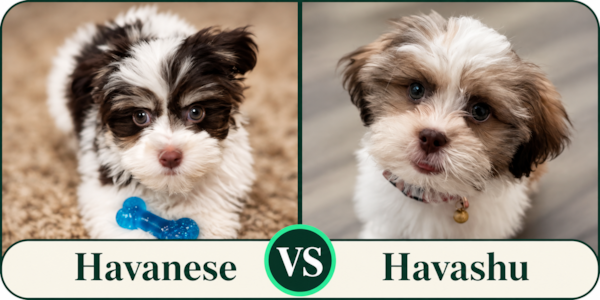
A Havanese vs Havashu comparison is a little different from comparing two unrelated breeds because the Havanese is already half of the Havashu. Both are small companion dogs with soft coats, expressive eyes, affectionate personalities, and a strong desire to stay involved in family life. Put them side by side in similar haircuts, and it may take a second look to tell which is which.
The difference comes from the other half of the Havashu. A Havashu combines the Havanese with the Shih Tzu, another ancient companion breed but one with a sturdier body, denser coat, shorter facial structure, and somewhat calmer approach to exercise. That Shih Tzu influence can make the Havashu feel more solid, more lapdog-like, and slightly less eager to turn every interaction into a training opportunity.
The Havanese already has plenty of personality. It is clever, social, playful, and known for a lively little spring in its step. It enjoys learning and can be wonderfully entertaining without needing the activity schedule of a working breed. The Havashu keeps much of that charm but may soften some of the Havanese bounce with the Shih Tzu's slower, deeply companion-focused style.
Predictability is another major difference. The Havanese is an established breed with a defined size, coat, structure, and temperament. The Havashu has no official breed standard, so one puppy may look strongly Havanese while another from the same broad type of pairing may inherit more Shih Tzu structure, coat density, or facial shape.
Neither is automatically the better dog. The real choice is between the more consistent, lively Havanese and the slightly sturdier, potentially calmer Havashu with added Shih Tzu influence.
Table of Contents
- Havanese vs Havashu at a Glance
- Havanese and Havashu Overview and History
- Havanese vs Havashu Appearance
- Havanese vs Havashu Temperament
- Havanese vs Havashu: Which One Should You Choose?
- Choose a Havanese if You Want Greater Predictability
- Choose a Havashu if You Want a Sturdier, More Relaxed Companion
- Which Is Smaller: Havanese or Havashu?
- Which Is Calmer: Havanese or Havashu?
- Which Is Easier to Train?
- Which Is Better for First-Time Dog Owners?
- Which Is Better With Children?
- Which Is Better With Other Dogs?
- Which Is Better With Cats?
- Which Sheds Less: Havanese or Havashu?
- Which Needs More Grooming?
- Which Is Better for Apartment Living?
- Which Is Better for Seniors?
- Which Handles Warm Weather Better?
- Which Is More Affectionate?
- Which Is More Predictable: Havanese or Havashu?
- Havanese vs Havashu: The Final Comparison
Havanese vs Havashu at a Glance
| Trait | Havanese | Havashu |
| Breed type | Purebred | Havanese × Shih Tzu |
| General size | Small | Small |
| Adult weight | 7–13 pounds | Commonly within or near the parent range, roughly 7–16 pounds |
| Height | 8.5–11.5 inches | Usually small and low to the ground, parent-dependent |
| Build | Small, sturdy, slightly longer than tall | Compact, often somewhat heavier and more substantial |
| Coat | Long, soft, silky, wavy double coat | Soft, dense, straight to wavy, sometimes very plush |
| Shedding | Low | Usually low |
| Grooming | High if kept long | Moderate to high |
| Colors | Wide variety of colors and patterns | Very broad range from both parents |
| Eye color | Usually dark brown | Usually dark brown |
| Muzzle | Moderate | Moderate to short, depending on inheritance |
| Energy | Moderate | Low to moderate or moderate |
| Trainability | High | Good, but may be a little more independent |
| Personality | Social, bright, playful, affectionate | Affectionate, cheerful, cuddly, companion-focused |
| Predictability | Higher | More variation in coat, build, muzzle, and temperament |
| Best fit | Someone wanting a lively, trainable small companion | Someone wanting a sturdy, relaxed, affectionate small companion |
The size ranges overlap heavily because the parent breeds are already close in stature. Havanese stand between 8.5 and 11.5 inches and usually weigh 7 to 13 pounds. Shih Tzu are similarly short but carry more substance, with adults commonly weighing 9 to 16 pounds. A Havashu can therefore remain quite petite or develop a noticeably heavier, more solid body than the average Havanese.
Havanese and Havashu Overview and History
The Havanese and Havashu share half of their ancestry, so understanding the comparison begins with the Havanese itself. This is not a situation where one parent contributes all the social charm and the other contributes all the intelligence. Both the Havanese and Shih Tzu have centuries of history as small companion dogs.
Their histories developed in different parts of the world, though. The Havanese became established in Cuba from small Bichon-type ancestors brought through European trade and settlement. The Shih Tzu developed from ancient Tibetan and Chinese companion-dog lines and became closely associated with Chinese imperial households.
That difference created two related but distinct approaches to companion life. The Havanese grew into a social, lively little dog with enough athleticism and trainability for tricks, obedience, and agility. The Shih Tzu became a compact palace companion whose greatest talent was staying close to people while carrying itself with remarkable confidence.
A Havashu brings those two histories back together in one small dog.
Havanese History and Popularity
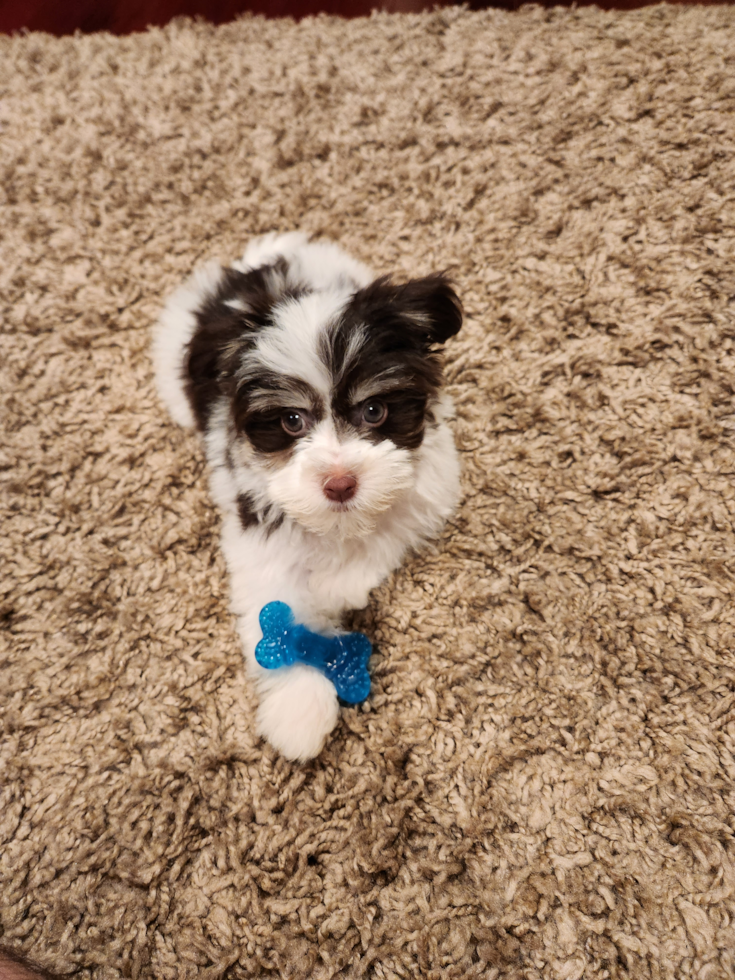
The Havanese is the national dog of Cuba and the country's only native dog breed. Its ancestry belongs to the wider Bichon family of small European and Mediterranean companion dogs. These dogs traveled with merchants, settlers, and wealthy families before developing into a distinct breed in Cuba.
Havanese became cherished companions in Cuban households, particularly among wealthy families. They were not designed around hunting, guarding, or demanding physical work. Their value came from sociability, intelligence, charm, and their ability to live closely with people.
Political upheaval in Cuba placed the breed's survival at risk during the twentieth century. Families leaving the country brought a small number of Havanese with them, and these dogs became critical to the breed's preservation outside Cuba. American breeder Dorothy Goodale later assembled several pedigreed dogs during the 1970s and helped rebuild the population in the United States.
The Havanese entered the AKC Stud Book in the 1990s and has since become a familiar companion breed in the United States. Its popularity makes sense when you look at how many practical qualities fit into such a small package. Havanese are portable, adaptable, highly social, relatively low shedding, and intelligent enough to make training genuinely enjoyable.
They also have more physical ability than their silky coat might suggest. Havanese have a sturdy structure, moderate exercise needs, and a natural enthusiasm for tricks and interactive play. They fit comfortably into city life while still being lively enough for families that want more than a dog that spends the entire day on a cushion.
Havashu History and Background
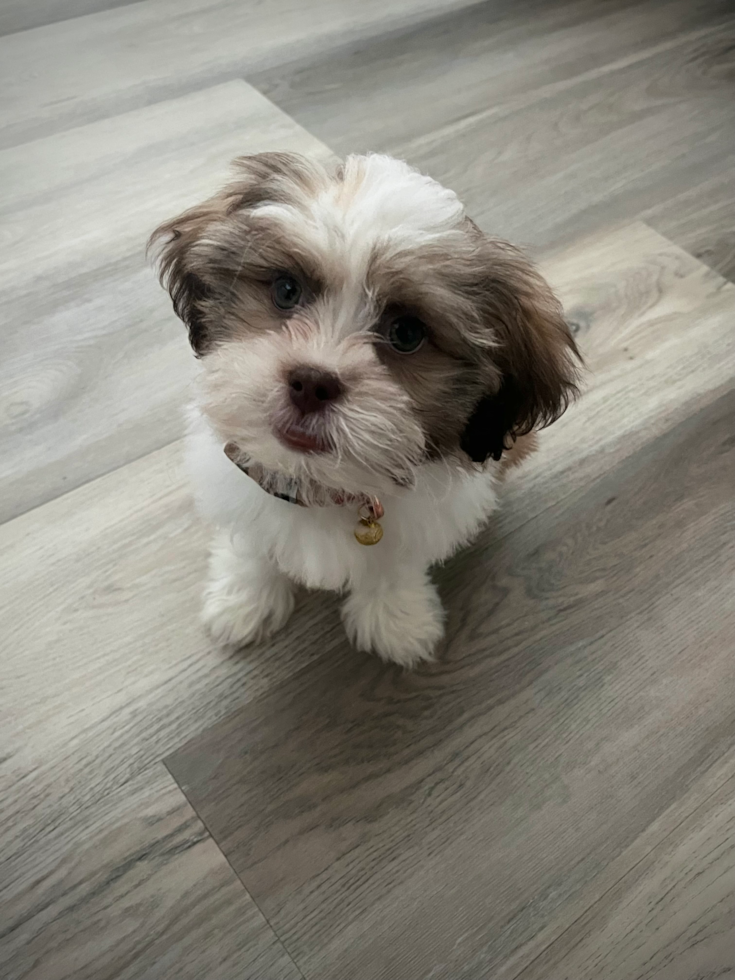
The Havashu, sometimes written Hava-Shu, is a cross between the Havanese and Shih Tzu. Unlike the Havanese, it is not an established purebred and does not have an official breed standard that defines one required size, coat type, body structure, or temperament.
There is no well-documented foundation story identifying one person or kennel as the creator of the Havashu. Small companion crosses became increasingly popular during the broader rise of intentional mixed-breed dogs in the late twentieth and early twenty-first centuries, and Havanese-Shih Tzu pairings fit naturally within that movement. Exact claims about a first Havashu breeder or precise year of origin should therefore be treated cautiously.
The Shih Tzu half brings a history every bit as companion-focused as the Havanese. Shih Tzu developed from small Tibetan dogs that became closely associated with Chinese imperial life. They were bred inside royal households, where their purpose was companionship rather than physical labor.
The breed survived major political change through a very small population preserved outside China. Shih Tzu later became established in Europe and North America, with the AKC recognizing the breed in 1969. Modern Shih Tzu remain sturdy little companion dogs known for an affectionate, outgoing personality and close attachment to people.
That makes the Havashu different from crosses that introduce herding, sporting, or working instincts. Both sides of its family tree point toward companionship. The question is not whether the Havashu will suddenly behave like a working dog. The question is how the Shih Tzu changes the existing Havanese combination of energy, structure, coat, and personality.
Havanese vs Havashu Appearance
The Havanese and Havashu can look remarkably similar, especially when both are kept in short puppy cuts. Soft hair, dark eyes, dropped ears, plumed tails, and compact bodies give both dogs the classic small-companion appearance.
The differences become clearer beneath the coat. A Havanese has a defined structure: slightly longer than tall, moderate in bone, light enough to move with a distinctive springy gait, yet sturdy enough to avoid looking fragile. A Havashu can inherit that structure or move toward the heavier, broader, more compact body of the Shih Tzu.
The face provides another clue. Havanese have a moderate muzzle. Shih Tzu have a broad, short muzzle and rounder head. A Havashu may land anywhere between those shapes, which gives the cross more variation in both appearance and warm-weather comfort.
Havanese Appearance
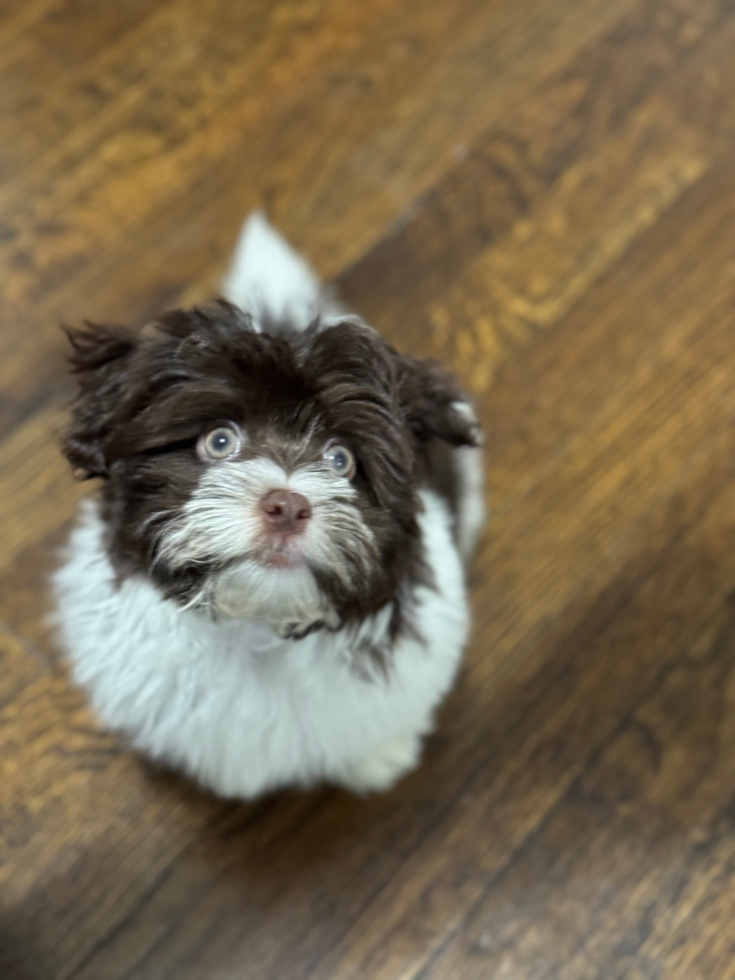
The Havanese is a small dog with a well-defined range. Adults stand between 8.5 and 11.5 inches and commonly weigh 7 to 13 pounds. The body is slightly longer than tall, giving the dog a subtle rectangular shape beneath the coat.
Although tiny by general dog standards, a Havanese should not look fragile. The breed has moderate bone and enough substance to move confidently. Its topline rises slightly toward the rear, and the plumed tail curves over the back.
Movement is part of the Havanese look. The breed is known for a characteristic springy gait that comes from its structure rather than exaggerated animation. Even at an ordinary trot, a well-built Havanese tends to look cheerful and light on its feet.
Havanese Coat Type and Texture
The natural Havanese coat is long, soft, light, and wavy. It is a double coat, but it should not feel heavy or woolly in the way some dense-coated small breeds do. The hair has enough movement to flow around the body rather than standing in a rigid puff.
A curly coat is not characteristic of a purebred Havanese. Loose waves are part of breed type, while individual dogs can range from relatively straight-looking sections to more pronounced waves. This gives the Havanese a distinctive look when the coat is allowed to grow naturally. Long facial hair frames the eyes, the ears disappear beneath silky strands, and the tail develops a flowing plume over the back.
Many pet owners choose a shorter haircut. That changes the silhouette considerably, but it can reduce daily grooming and may make the dog much easier to maintain during wet or muddy seasons.
Havanese Colors and Markings
Havanese come in an unusually broad range of colors and patterns. The breed is not restricted to the white or cream appearance people sometimes associate with Bichon-family dogs.
Black, white, cream, gold, chocolate, sable, silver-related shades, and numerous combinations can appear. Parti patterns, tan points, white markings, and other combinations add even more variety.
Coat color can change as a puppy matures. Sable dogs may lose much of their darker tipping, while other colors can lighten or shift in intensity over time.
That natural variety means choosing a Havanese does not require choosing a single classic color. Two dogs can look dramatically different while still fitting comfortably within the same breed.
Havanese Eyes and Facial Features
Havanese typically have large, expressive eyes that contribute heavily to their friendly expression. Dark brown eyes are expected in most colors, while chocolate dogs may carry lighter brown pigmentation.
The muzzle is moderate rather than extremely short. This gives the face a balanced appearance and leaves more visible nose length than you would expect from a Shih Tzu.
Dropped ears sit relatively high and blend into the surrounding coat. When the facial hair is kept long, the dog's actual head shape can be surprisingly difficult to see until the coat is moved aside.
The overall expression is bright and curious. Havanese tend to look engaged with whatever is happening around them, which suits their outgoing personality.
Havanese Build and Size
The Havanese combines toy size with useful sturdiness. At 7 to 13 pounds, the dog is easy to carry when necessary, yet the body is not meant to feel weak or excessively delicate.
The slightly longer body and moderate legs create a different silhouette from the more compact Shih Tzu. Under a short haircut, the Havanese can look almost sporty compared with some heavier toy breeds.
That structure suits the breed's playful temperament. Havanese enjoy proper walks, indoor games, trick training, and short bursts of energetic play without needing the physical workload of a larger athletic breed.
For someone who wants a very small dog but dislikes the feeling of extreme fragility, the Havanese offers a useful middle ground.
Havanese Shedding
Havanese are low-shedding dogs. Loose hair tends to remain caught within the long coat rather than falling constantly onto floors, furniture, and clothing.
The advantage is a cleaner-looking home. The tradeoff is that retained hair contributes to tangles if it is not removed through regular brushing and combing.
Low shedding does not make the breed allergy-proof. People can react to proteins in saliva and skin material regardless of how much visible hair the dog leaves around the house.
For someone whose concern is mainly vacuuming rather than allergies, the Havanese can be an attractive option.
Havanese Grooming Needs
A full Havanese coat requires real commitment. Long hair needs frequent, and commonly daily, brushing or combing to prevent mats from forming close to the skin.
Problem areas include behind the ears, beneath the legs, around the harness or collar, and anywhere two sections of coat rub together. A quick brush over the outside can leave hidden knots untouched.
Shorter pet trims reduce the workload substantially. A Havanese in a puppy cut still needs brushing and professional grooming, but the routine becomes more forgiving than maintaining a floor-length natural coat.
Eye and ear care belong in the schedule too. Long facial hair may show tear staining, and dropped ears need regular checking for excess wax, debris, or moisture.
Havashu Appearance
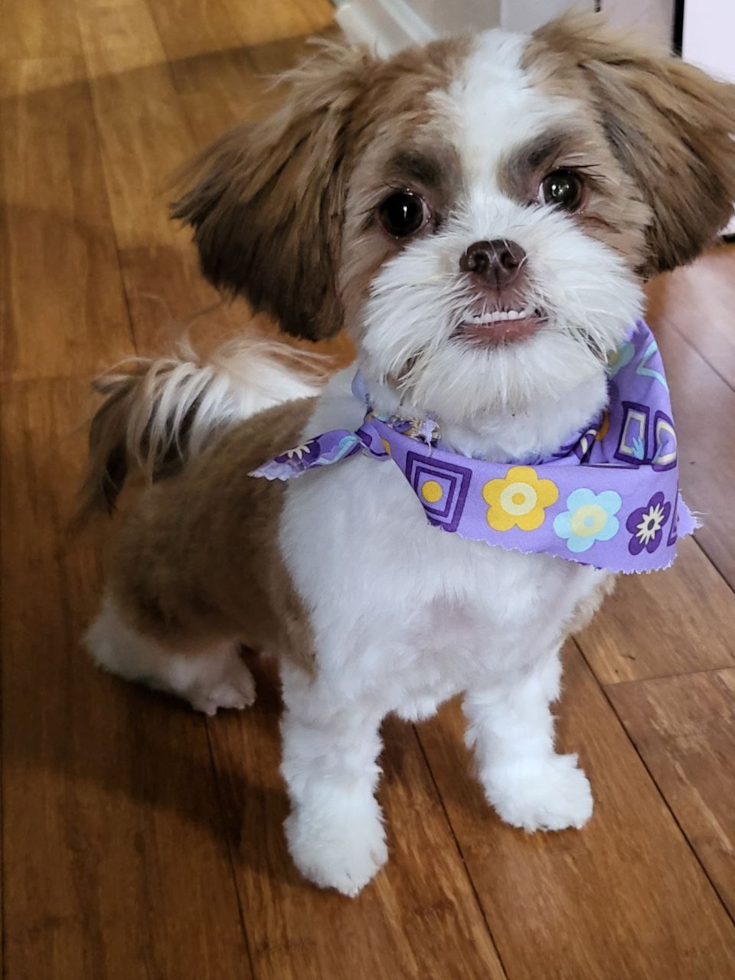
The Havashu remains a small dog, but the Shih Tzu can add more weight and substance to the frame. Havanese commonly weigh 7 to 13 pounds, while Shih Tzu fall around 9 to 16 pounds. Many Havashus therefore stay somewhere near the combined parent range, though no official standard requires them to do so.
The body can feel noticeably more solid than a purebred Havanese. A puppy that inherits strong Shih Tzu structure may have shorter legs, a broader chest, heavier bone, and a more compact overall outline.
Others look surprisingly Havanese. That variation is normal in a cross because each puppy can receive a different combination of genes from its two parents.
Havashu Coat Type and Texture
Both parent breeds have long double coats, so the Havashu has plenty of potential for a full, substantial coat. Texture is more likely to stay straight, softly wavy, or slightly tousled than tightly curled because neither parent is naturally curly.
The Shih Tzu side can add density. Its breed-standard coat is luxurious, long, flowing, and double-coated, with only a slight wave permitted. Combined with the softer Havanese wave, this can produce a Havashu coat that feels particularly plush.
Some puppies develop a silkier texture that falls close to the body. Others carry a softer, cottonier coat that holds a rounded teddy bear trim beautifully but tangles more quickly.
The adult coat may change as puppy hair is replaced. Texture and density can become much clearer during the first year, so an eight-week-old puppy does not provide a perfect preview of future maintenance.
Havashu Colors and Markings
Color variety is extensive because both parent breeds accept a broad range of shades and combinations. Havashus may be white, cream, gold, tan, sable, brown, chocolate, black, gray or silver-toned, red-toned, or combinations of several colors. White markings across the chest, face, feet, or body can create especially striking patterns.
Shih Tzu ancestry can contribute bold multicolor combinations, while Havanese lines add their own parti, sable, and point patterns.
Color may change as the dog grows. A darker puppy can lighten considerably, and sable or gold coats may look quite different once adult hair has replaced the puppy coat.
Havashu Eyes and Facial Structure
Most Havashus have dark, expressive eyes, since both parent breeds strongly favor dark eye color. The eyes may appear rounder and more widely set when the Shih Tzu side comes through strongly.
The muzzle is where the largest variation appears. Havanese have a moderate muzzle, while Shih Tzu are short-faced dogs with a broad, square muzzle and wide-set facial structure.
A Havashu may inherit a face that looks almost entirely Havanese, a noticeably shorter Shih Tzu-style muzzle, or something between those extremes. This matters beyond appearance because dogs with shorter faces may have less efficient heat tolerance.
A cute round teddy bear face can be appealing, but open nostrils and comfortable breathing matter considerably more than how short the muzzle looks in a photograph.
Havashu Build and Size
The Havashu often feels sturdier than its Havanese parent. Shih Tzu carry substantial bone and body weight for their height, with adults weighing between 9 and 16 pounds despite standing only around 8 to 11 inches.
That influence can create a small dog with a broad chest, compact body, and slightly shorter legs. The Havashu may therefore weigh more than a Havanese that appears similar in height.
This sturdiness can be useful in family life. A solid 13-pound Havashu may feel less delicate around older children than a particularly petite Havanese.
The dog is still small enough to require sensible handling. Sturdier does not mean immune to falls, rough play, or injuries caused by much larger animals.
Havashu Shedding
The Havashu usually falls into the low-shedding category because both parent breeds release relatively little visible hair compared with many conventional shedding breeds.
The long coat tends to hold loose hair until brushing removes it. This can mean less hair across the sofa but more responsibility for maintaining the coat itself.
Some individuals may shed slightly more than others as coat density and texture vary. There is no formal Havashu standard that guarantees one exact coat.
As with the Havanese, low visible shedding should not be presented as the same thing as being hypoallergenic.
Havashu Grooming Needs
The Havashu is not an easy-grooming alternative to the Havanese. In some dogs, the added Shih Tzu coat density can make maintenance every bit as demanding.
Long coats need frequent brushing down to the skin. Dense hair behind the ears, under the legs, around the neck, and along the underside can mat quickly if grooming is skipped.
A short puppy or teddy bear trim is a practical solution for many households. It preserves the soft companion-dog appearance without requiring the daily maintenance of a full flowing coat.
Facial care deserves extra attention when the muzzle is short and the eyes are prominent. Keeping hair clean around the eyes and mouth improves comfort and makes it easier to notice irritation early.
Havanese vs Havashu Appearance Comparison: What Is the Difference?
The Havanese has the more predictable structure and coat. It should remain between 8.5 and 11.5 inches tall, carry a slightly rectangular body, move with its characteristic spring, and develop a light, soft, wavy double coat.
The Havashu introduces more variation. Shih Tzu influence can add heavier bone, shorter legs, a broader chest, denser coat, rounder eyes, and a shorter muzzle. One Havashu may barely look different from a Havanese, while another may clearly show its Shih Tzu half.
Both offer enormous color variety, so color is not a useful way to separate them. Coat texture provides more information, with the Havanese tending toward a lighter wave and the Havashu potentially developing a fuller or more cottony coat.
Body feel may be the easiest difference to notice in person. Havanese are sturdy but relatively light and springy. Havashus can feel more compact and substantial, particularly when Shih Tzu structure comes through strongly.
Havanese vs Havashu Temperament
Temperament is another close comparison because the Havashu combines two breeds with deep companion-dog histories. There is no herding dog, terrier, or sporting breed hidden in the mix to create an entirely new behavioral direction.
Both Havanese and Shih Tzu were developed to live closely with people. Both value company, affection, and participation in home life. Their differences are found more in pace, training style, and social expression than in completely different instincts.
The Havanese tends to bring more bounce and eagerness to learn. The Shih Tzu contributes a calmer style of companionship and can add a slightly more independent attitude toward training. The Havashu commonly lands somewhere between those two personalities.
Havanese Temperament
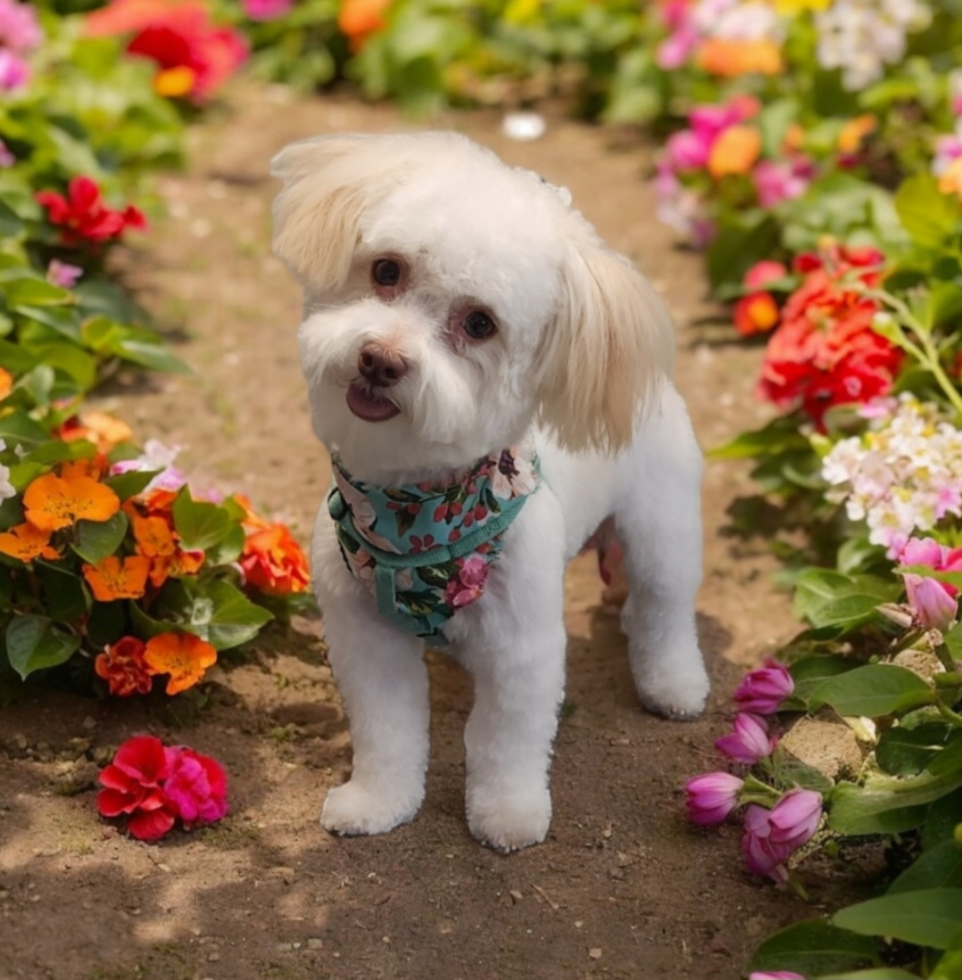
Havanese are bright, social, playful dogs with a strong attachment to people. The official breed description emphasizes intelligence, friendliness, and a cheerful temperament, and those qualities are central to the breed's appeal.
They tend to be curious about family activity and enjoy being involved. A Havanese may follow someone from room to room, investigate whatever is being unpacked from a shopping bag, then turn the entire situation into an invitation to play.
That social confidence makes the breed adaptable. A well-socialized Havanese can move comfortably between quiet home life, visitors, travel, and everyday outings without needing constant excitement.
Havanese Intelligence and Training
Training is one of the Havanese's strengths. These dogs learn quickly, enjoy interaction, and have a long reputation for tricks and performance.
Positive reinforcement works particularly well because the breed can be sensitive to harsh correction. Food, praise, toys, and the chance to interact with a favorite person usually provide plenty of motivation.
Their intelligence is useful without becoming overwhelming. A Havanese can learn impressive tricks and household routines, yet most do not demand the same constant mental workload associated with a high-drive working breed. That creates a comfortable middle ground for owners who enjoy training but do not necessarily want dog training to become a full-time hobby.
Havanese Energy Level
Havanese have moderate exercise needs. Daily walks, indoor games, backyard play, and short training sessions provide enough variety for many adults. They can certainly do more. The breed is surprisingly athletic for its size and can enjoy agility-style games, longer walks, tricks, and lively play sessions.
What makes the Havanese easy to live with is its ability to enjoy activity without requiring intense physical exercise every day. A busy morning does not prevent the dog from spending a relaxed afternoon near the family.
Puppies naturally have more energy, so an adolescent Havanese racing through the house should not automatically be taken as a prediction of the mature dog's activity level.
Havanese Affection and Alone Time
Havanese thrive on human companionship. They are happiest when they can participate in normal family life rather than spending long stretches isolated from the people they love. That affection is one of the breed's greatest strengths, but it makes independence training important. A puppy that is never left alone for even short periods has little opportunity to learn that separation is safe.
Calm naps in another room, short departures, food toys, and predictable routines can help build confidence. The goal is not to turn a social dog into an independent one. It is to make normal life easier when the family cannot be present every minute.
Havanese With Children
Havanese can be wonderful with children because they combine playfulness with a friendly companion temperament. Their sturdy little bodies also make them somewhat more substantial than their silky appearance suggests.
Size still deserves respect. A seven-pound dog can be injured by a toddler who falls on it, picks it up incorrectly, or turns an innocent game into something too rough.
Older children can become excellent partners for Havanese because the breed enjoys tricks and interactive games. Teaching a new cue or participating in a short walk gives the child a constructive role in the dog's life.
Supervision and respectful handling matter far more than assuming any small dog will automatically tolerate everything children do.
Havanese With Other Dogs and Pets
The Havanese has strong potential in multi-pet homes. It is a companion breed without strong modern herding, hunting, or guarding drives, so relationships with other dogs and cats can be relatively straightforward.
Early socialization still matters. A puppy that learns calm manners around cats and other dogs is easier to live with than one allowed to chase or pester every animal it meets.
Size matching deserves attention during play. A friendly large dog can still overwhelm a small Havanese accidentally.
A compatible canine companion can be welcome company, but another pet should not be expected to replace human interaction. Havanese are deeply people-oriented regardless of how many animals share the home.
Havanese Barking and Alertness
Havanese are alert enough to notice visitors and unusual sounds, but they are not automatically relentless barkers. Many will announce something interesting and settle once they understand that the situation is normal.
Barking can grow when it earns attention or when the dog is bored. Apartment hallways, front windows, and busy streets give a small alert dog many opportunities to practice. Teaching a calm response to knocking, visitors, and outdoor movement early can prevent normal watchfulness from becoming an exhausting habit.
Their alert side can actually be useful. The Havanese notices what is happening without needing to turn household security into a personal career.
Havashu Temperament
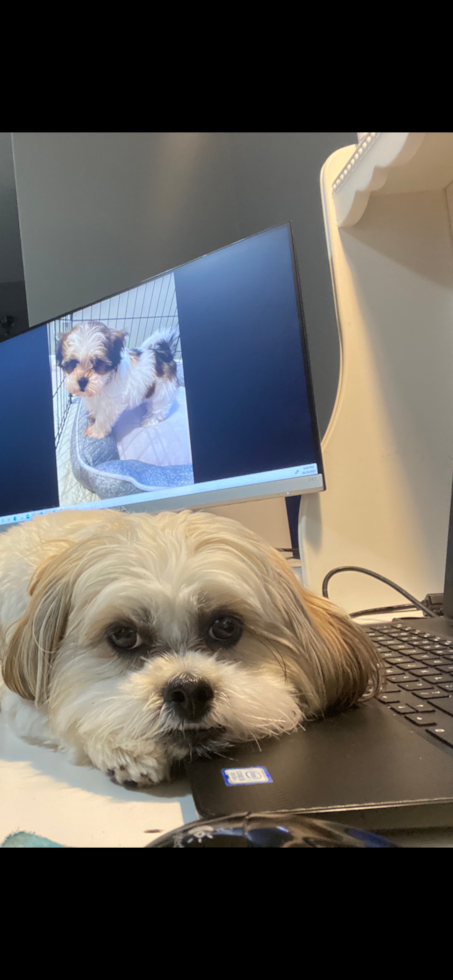
The Havashu usually keeps the Havanese's affection and social nature but may bring a calmer, more relaxed style from the Shih Tzu side. Shih Tzu were developed specifically as palace companions and remain deeply people-focused dogs.
This can create a dog that enjoys play and interaction without needing quite as much activity as a lively Havanese. A Havashu may be perfectly enthusiastic about a morning walk and indoor game, then decide that supervising the household from a comfortable cushion is an equally important responsibility.
There is still plenty of individual variation. A Havashu that strongly favors its Havanese parent may be every bit as bouncy and eager to train as a purebred Havanese.
Havashu Intelligence and Training
Havashus are intelligent dogs because both parent breeds are capable learners. The difference may appear in how willingly the dog participates when the lesson is no longer especially interesting.
Havanese are commonly eager to please and enjoy the interaction built into training. Shih Tzu can be more independent and have a reputation for occasionally persuading their owners that rules are negotiable. A Havashu may therefore require a little more patience than a Havanese, especially with repetitive exercises. Short sessions, meaningful rewards, and plenty of praise keep the experience cooperative.
House training deserves particular consistency. Small companion dogs have small bladders, and owners sometimes make progress harder by carrying the puppy too much rather than maintaining a predictable bathroom routine.
Havashu Energy Level
The Havashu usually sits in the low-to-moderate or moderate-energy range. The Havanese brings lively playfulness, while the Shih Tzu was developed as a house companion with modest exercise requirements.
Daily walks remain important. Small dogs benefit from movement, fresh air, sniffing, and exposure to the outside world just as larger dogs do.
The difference is that a Havashu may reach its comfortable level of activity sooner. A pleasant walk, a little play, and time with the family can be enough for many adults.
This makes the cross appealing to people who want a dog that participates in daily life without needing long exercise sessions.
Havashu Affection and Family Attachment
The Havashu has companionship coming from both sides of its family tree. Havanese want close relationships with people, and the Shih Tzu's entire historic purpose centers around being a house companion.
Many Havashus therefore enjoy physical closeness and settle comfortably beside family members. They may follow people around the house but can also be very content simply occupying the same room.
The Shih Tzu side does not guarantee greater independence. These are still dogs that value human company and may struggle if suddenly expected to spend long days alone.
Independence should be taught deliberately during puppyhood. A dog that learns to rest quietly on its own can remain deeply affectionate without becoming distressed every time someone leaves.
Havashus With Children
Havashus can make excellent family dogs. Shih Tzu are sturdy for their size and known for affectionate relationships with people, while the Havanese contributes playfulness and sociability.
The Havashu's potentially heavier build can be useful in a family with older children. A 13- or 15-pound dog feels less physically delicate than the smallest Havanese without becoming difficult to handle.
Young children still need supervision. Small dogs should never be treated like stuffed animals, and even a sturdy Havashu can be injured by falls or rough handling.
Older children may enjoy a Havashu's balance between play and cuddling. The dog can join games without necessarily demanding that play continue long after everyone else is ready to stop.
Havashus With Other Dogs and Pets
The Havashu is generally well positioned for multi-pet households because neither parent breed was developed around strong predatory or territorial work.
Other dogs can make good companions when energy levels and play styles match. A playful young Havashu may enjoy another small dog, while a calmer adult may prefer companionship that does not involve constant wrestling.
Cats are also realistic housemates, especially when introductions begin early. Calm behavior should be encouraged before chasing becomes a habit.
As always, individual temperament matters more than the label. A confident cat and polite Havashu can become easy roommates, while two animals with incompatible personalities may need more management.
Havashu Barking and Watchfulness
The Havashu can inherit alertness from both sides. Havanese notice changes in their environment, while Shih Tzu are lively little dogs that are well aware of what happens around the home.
Some Havashus will bark at visitors or unusual sounds, but excessive barking is not an inevitable part of the cross.
Training should begin before the dog has rehearsed the same behavior hundreds of times. Rewarding quiet after an initial alert teaches the puppy that noticing something is fine but carrying on indefinitely is unnecessary.
Mental stimulation and companionship help too. Dogs with enough to do are less likely to turn every hallway sound into the day's main event.
Havanese vs Havashu Temperament Comparison: What Is the Real Difference?
The temperament difference is best understood as a change in pace rather than personality. Both dogs are affectionate, social companions with a strong interest in people. Neither comes with the intense instincts of a herding or sporting breed.
The Havanese usually has more bounce. It is quick, playful, socially confident, and enthusiastic about learning. Its personality can feel bright and busy without crossing into high-energy territory.
The Havashu may bring a little more calm from the Shih Tzu. Some dogs are less interested in repeated training and more interested in simply staying close to the family. They can still be playful, but the balance may tip slightly further toward relaxation.
That difference should not be exaggerated into a promise. A lively Havashu can easily outpace a mellow Havanese. Parent temperament and the individual puppy remain more useful than assuming every cross will fall neatly between two breed descriptions.
Havanese vs Havashu: Which One Should You Choose?
The Havanese and Havashu occupy similar territory as small companion dogs, which makes this decision less dramatic than choosing between breeds with completely different working backgrounds. Both can thrive in apartments, both value family life, both shed relatively little, and both require regular coat maintenance.
The useful differences lie in predictability, body type, activity level, facial structure, and training style. The Havanese offers more consistency and a livelier, highly trainable personality. The Havashu adds the possibility of greater physical substance, a denser coat, a calmer routine, and more Shih Tzu-style independence.
Choose a Havanese if You Want Greater Predictability
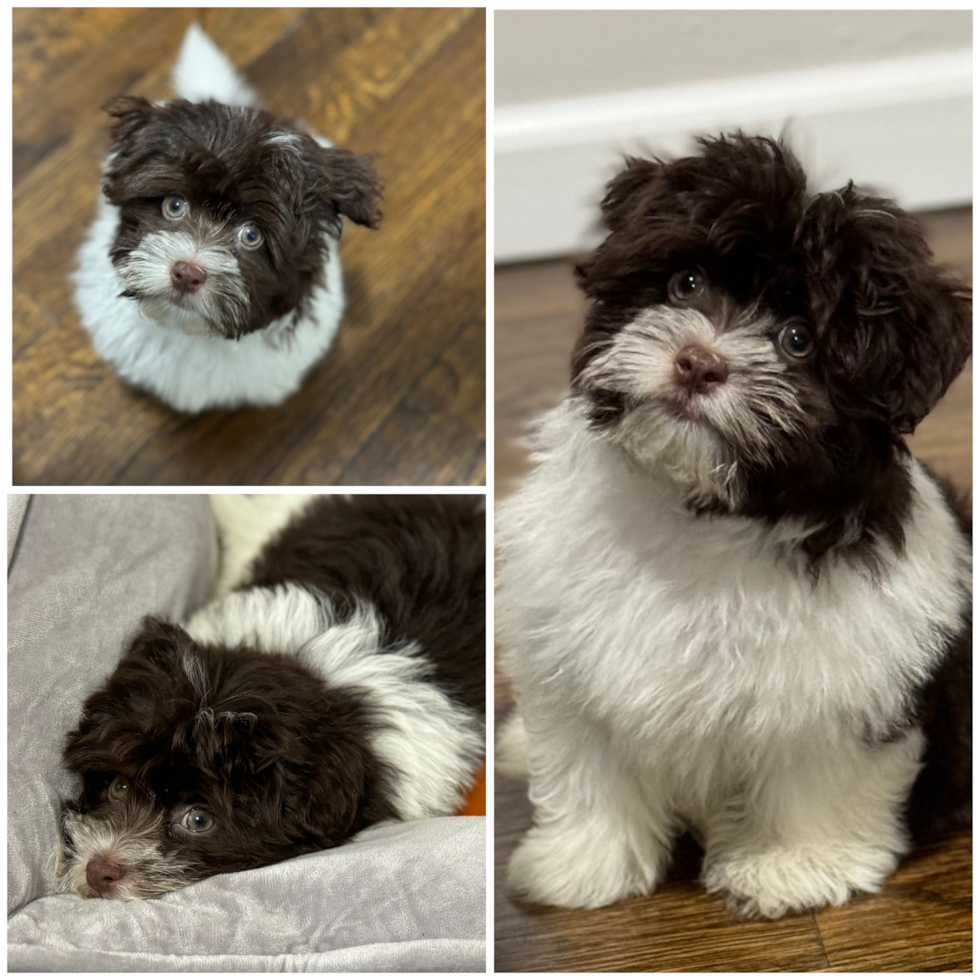
A Havanese puppy may suit you better if you want to know more clearly what the adult dog should become. Its height, body proportions, coat type, movement, and general temperament have all been defined through an established breed standard.
That predictability is useful when size matters. A Havanese should remain between 8.5 and 11.5 inches, while a Havashu has no formal boundaries and can inherit more size and substance from the Shih Tzu.
The Havanese also has an advantage if training is something you genuinely enjoy. These dogs are clever, responsive, and naturally inclined toward interaction, so tricks and household manners can become part of the fun rather than a chore.
For someone who wants a small companion with plenty of personality, moderate energy, and a lively little edge, the original Havanese formula is difficult to improve upon.
Choose a Havashu if You Want a Sturdier, More Relaxed Companion
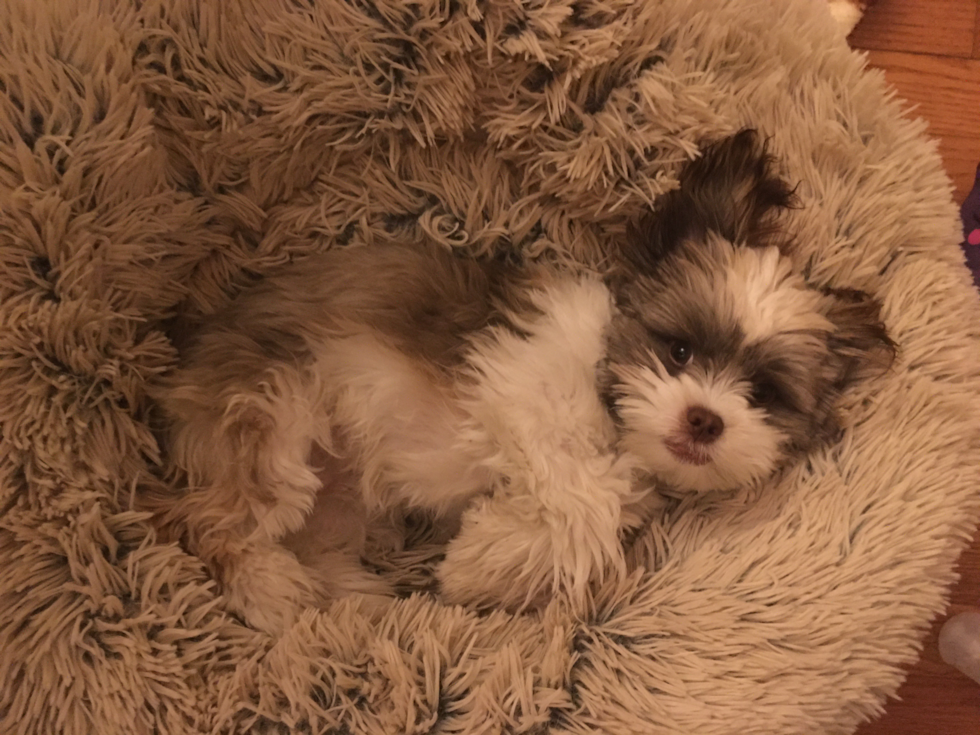
A Havashu puppy may suit you better if you like the Havanese personality but prefer a dog that may be a little more solid and slightly calmer. Shih Tzu influence can add heavier bone, a broader body, and a more leisurely approach to exercise.
This cross can be especially appealing to people who want companionship to be the main focus of dog ownership. Havashus still need walks, play, and training, but many can fit comfortably into a routine where activity happens in manageable portions throughout the day.
The teddy bear appearance may also appeal to some owners. A dense Havashu coat, large dark eyes, and rounder Shih Tzu-influenced face can create a particularly plush look in a short puppy trim.
The tradeoff is variation. You need to pay close attention to the actual puppy and both parents because the Havashu name alone cannot tell you how short the muzzle, how dense the coat, or how substantial the adult body will become.
Which Is Smaller: Havanese or Havashu?
The Havanese has the more predictable small size. Adults weigh 7 to 13 pounds and stand 8.5 to 11.5 inches.
The Havashu combines the Havanese with a Shih Tzu that may weigh 9 to 16 pounds. Some Havashus remain very close to Havanese size, while others inherit enough Shih Tzu substance to become noticeably heavier.
The difference may be more obvious on the scale than at the shoulder. Two dogs can stand at a similar height while the Havashu carries a broader chest and more bone.
If adult size is important, look at the parents rather than relying on an average range for the cross.
Which Is Calmer: Havanese or Havashu?
The Havashu may have a slight advantage for a calmer lifestyle because Shih Tzu ancestry adds a breed with lower exercise requirements and a strong history as an indoor companion.
Havanese are not high-energy dogs, but they tend to have more bounce and may seek play or training more actively. Their cheerful nature can keep them involved in whatever is happening around the house.
A Havashu may be just as social while reaching the relaxation stage a little sooner. That can suit quieter households, seniors, or owners who want a companion without a particularly busy daily schedule.
Individual temperament still matters enormously. A lively Havashu should not be expected to behave like a sleepy lapdog simply because one parent is a Shih Tzu.
Which Is Easier to Train?
The Havanese usually has the edge in straightforward trainability. It is intelligent, responsive, and commonly eager to please, which makes positive training enjoyable for both dog and owner.
The Havashu remains a capable learner, but the Shih Tzu can add a touch more independence. Some Havashus may understand a cue perfectly and still want confirmation that the reward justifies the effort.
This distinction matters more for owners interested in tricks and continued training than for basic household manners. Either dog can learn recall, leash skills, polite greetings, handling, and house rules.
Patience is useful with both. Gentle reward-based training suits these companion breeds far better than harsh corrections.
Which Is Better for First-Time Dog Owners?
Both can be good first dogs, but the Havanese may be slightly easier because its traits are more predictable. New owners know the expected adult size, exercise range, coat type, and general temperament before bringing the puppy home.
The Havashu is still beginner-friendly in many households. Neither parent contributes demanding working instincts, and both are strongly people-oriented.
The challenges are practical rather than extreme. Grooming needs commitment, house training requires consistency, and a very affectionate puppy still needs to learn independence.
For a first-time owner comfortable with more variation and willing to look carefully at the parent dogs, the Havashu can be just as successful.
Which Is Better With Children?
Both can make excellent family companions. The Havanese brings playfulness and social confidence, while the Havashu may gain a sturdier body from the Shih Tzu.
That extra substance can be useful around older children, but it does not remove the need for gentle handling. Both remain small dogs that can be injured by accidental falls or rough play.
The Havanese may be particularly appealing to children who enjoy teaching tricks and playing interactive games. A Havashu may suit families looking for a slightly calmer balance between play and cuddle time.
The child's behavior matters as much as the breed choice. Respectful children can develop wonderful relationships with either dog.
Which Is Better With Other Dogs?
There is no strong breed-wide winner. Havanese and Shih Tzu are both companion breeds, so the Havashu begins with two parent breeds accustomed to close social living.
A Havanese may have a little more enthusiasm for play, while a Havashu with strong Shih Tzu influence may prefer shorter bursts of interaction followed by rest.
The resident dog's personality should guide the choice. An energetic young dog may appreciate the Havanese's bounce, while an older relaxed dog may prefer a calmer Havashu.
Early socialization still matters. Good manners around other dogs are learned as well as inherited.
Which Is Better With Cats?
Both are strong candidates for homes with cats because neither cross brings significant modern hunting or herding drive into the household.
A young puppy can still discover that chasing a running cat is entertaining, so introductions should be calm and controlled. Rewarding quiet behavior before chasing becomes established makes coexistence much easier.
Cats should also have elevated areas or rooms where they can retreat without being followed.
For most households, the individual puppy's temperament and the cat's tolerance will matter more than choosing a Havanese over a Havashu.
Which Sheds Less: Havanese or Havashu?
Both are low-shedding choices. The Havanese coat tends to retain loose hair until brushing removes it, which keeps a large amount of hair off furniture and clothing.
The Havashu combines that coat behavior with the long dense Shih Tzu coat, so many individuals also shed very little visibly.
Coat density may make the Havashu feel more demanding despite the low shedding. Hair that remains within a dense coat can contribute to mats when brushing is inconsistent.
Neither should be promised as hypoallergenic. Low shedding is useful for housekeeping, but allergy reactions depend on more than loose hair.
Which Needs More Grooming?
This category is very close. A full Havanese coat needs frequent brushing, while a long Havashu coat can become equally demanding and may be even denser in some dogs.
The type of tangling can differ. Havanese hair is soft and wavy, while Havashus may develop a cottonier texture that grips neighboring hairs and forms mats surprisingly quickly.
A short trim changes the picture considerably. Either dog in a practical puppy cut becomes much easier to maintain between professional grooming appointments.
People choosing either breed because it sheds very little should understand the tradeoff. Less hair on the floor does not mean less time spent caring for the coat.
Which Is Better for Apartment Living?
Both are excellent apartment candidates because they are small and do not require large amounts of outdoor space.
The Havanese has moderate exercise needs and adapts well to city life when daily walks and companionship are provided. The Havashu may need even less sustained physical activity when the Shih Tzu side comes through strongly.
Barking and separation are more important apartment concerns than body size. A dog that reacts to every hallway sound or becomes distressed whenever the owner leaves can create problems regardless of how little space it occupies.
Good socialization, appropriate exercise, and calm independence training make either dog far easier to live with in a shared building.
Which Is Better for Seniors?
Both can make wonderful companions for older adults, but the Havashu may have a slight advantage for someone who prefers a quieter routine. Shih Tzu influence can reduce the amount of sustained activity the dog seeks while keeping companionship at the center of its personality.
The Havanese may suit a more active senior who enjoys daily walking, training, and playful interaction. Its small size remains easy to manage, and the breed adapts well to compact homes.
Grooming deserves serious consideration with both. A short professional trim may be much more practical than maintaining a long natural coat if daily brushing is difficult.
An adult dog can also be easier than a puppy for someone who wants companionship without house training, teething, and the unpredictable energy of the first year.
Which Handles Warm Weather Better?
The Havanese usually has the advantage in warm weather because it has a moderate muzzle and does not carry the shortened facial structure of the Shih Tzu.
Shih Tzu have short faces and heavy coats, which can make hot and humid conditions more difficult. A Havashu that inherits a noticeably shortened muzzle may share some of that limitation.
A longer-nosed Havashu may cope more comfortably, which is why individual facial structure matters more than the cross name alone.
Neither dog should exercise heavily during extreme heat. Cooler morning or evening walks, shade, fresh water, and air-conditioned indoor space are sensible precautions for both.
Which Is More Affectionate?
There is no meaningful winner because human companionship sits at the center of both choices.
Havanese are famously social and enjoy staying close to their people. Shih Tzu were developed almost entirely as companions, so adding one to the Havanese does not reduce the affectionate nature of the dog.
The style may differ slightly. A Havanese may seek more interactive attention through play or tricks, while a Havashu may be especially happy simply sharing physical space with its person.
If your main goal is a loving little dog that wants to be part of everyday family life, either can deliver that extremely well.
Which Is More Predictable: Havanese or Havashu?
The Havanese clearly wins on predictability. Its breed standard defines the expected height, proportions, coat type, movement, facial structure, and temperament. Individual Havanese still have their own personalities, but the range of likely outcomes is much narrower.
The Havashu can vary in body weight, leg length, coat density, facial shape, and temperament according to which parent exerts more influence.
That does not make variation bad. Some people enjoy the blend and are specifically drawn to the sturdier build or teddy bear expression a Shih Tzu can add.
It simply means the Havashu buyer should study the parents closely instead of assuming every puppy with the same crossbreed name will become the same adult dog.
Havanese vs Havashu: The Final Comparison
Choosing between a Havanese vs Havashu is not a choice between two dramatically different lifestyles. Both are small, affectionate companion dogs that thrive on human interaction, adapt well to smaller homes, and fit comfortably into families that want a dog involved in everyday life.
The Havanese gives you the more predictable package. You can expect a small, sturdy dog with a soft wavy coat, moderate exercise needs, a playful temperament, and strong trainability. Its lively personality makes it particularly appealing to people who enjoy tricks, games, and a little extra bounce in their companion.
The Havashu takes that Havanese foundation and adds the Shih Tzu's influence. The result may be slightly heavier, denser-coated, shorter-faced, calmer, and more inclined toward traditional lapdog life. Training can require a little more patience, but companionship remains one of the dog's strongest qualities.
The Shih Tzu side also creates the most important practical distinction. A Havashu with a short muzzle may need greater care during hot weather than the longer-muzzled Havanese. Facial structure should therefore be considered for comfort and health, not merely for how teddy bear-like the puppy looks.
Grooming will not make the decision easier because both coats need attention. Neither is a low-maintenance choice simply because loose hair around the house tends to be minimal.
Instead, think about the kind of personality you enjoy.
If you want a lively little dog that learns quickly, participates enthusiastically, and still settles comfortably into companion life, the Havanese may be the more natural fit.
If you want much of that same affection in a potentially sturdier dog with a calmer rhythm and a little more classic lapdog influence, the Havashu may suit you better.
Then look beyond the label. With a Havashu in particular, the parents can tell you a great deal about likely size, muzzle length, coat density, energy, and temperament.
The comparison narrows the choice. The individual dog finishes it.
Frequently Asked Questions
What is the main difference between a Havanese and a Havashu? The Havanese is a recognized purebred dog, while the Havashu combines a Havanese with a Shih Tzu. This gives the Havanese more predictable size, coat, structure, and temperament, while the Havashu can inherit a sturdier body, denser coat, shorter muzzle, and somewhat calmer companion style from the Shih Tzu. Both remain affectionate small dogs with strong companion backgrounds. The differences are more about degree than completely different personalities.
Is a Havanese smaller than a Havashu? The Havanese has the narrower and more predictable range at 7 to 13 pounds and 8.5 to 11.5 inches tall. Havashus may fall within a similar range, but Shih Tzu ancestry can add more substance because that parent breed commonly weighs 9 to 16 pounds. A Havashu may therefore stand at roughly the same height as a Havanese while feeling noticeably heavier and sturdier. Parent size provides the best estimate for an individual puppy.
Which is calmer, a Havanese or Havashu? The Havashu may be slightly calmer because the Shih Tzu is a lower-energy companion breed that is generally satisfied with short walks, indoor play, and plenty of time close to its people. Havanese have moderate exercise needs but tend to bring more bounce and enthusiasm for activity. The difference is not large enough to guarantee one temperament. Parent personality and the individual puppy still matter greatly.
Which is easier to train, a Havanese or Havashu? The Havanese usually has the edge because the breed is intelligent, eager to please, and known for responding well to positive training. Havashus are capable learners too, but Shih Tzu influence can add a slightly more independent approach. Short, rewarding sessions work well for either dog. The Havanese may be more enthusiastic about continuing the lesson, while a Havashu may need a little more persuasion once repetition stops being interesting.
Which sheds less, a Havanese or Havashu? Both are low-shedding dogs and commonly leave relatively little loose hair around the home. Their long coats tend to retain shed hair until brushing removes it. The practical difference is usually grooming rather than shedding. A dense Havashu coat may mat quickly, while the Havanese's long soft waves also require frequent maintenance. Neither dog should be guaranteed hypoallergenic simply because it sheds lightly.
Which needs more grooming, a Havanese or Havashu? Both require substantial grooming when the coat is kept long. Havanese need frequent brushing to keep their soft wavy coat free from mats, while Havashus can develop dense or cottony coats that tangle just as easily. A short puppy or teddy bear trim can make either dog much easier to maintain. Professional grooming should still be expected as part of normal ownership.
Is a Havanese or Havashu better with children? Both can be excellent family companions when children understand gentle handling. Havanese are playful and social, while Havashus may inherit a sturdier build from the Shih Tzu. Older children can enjoy either dog. The Havanese may be more enthusiastic about tricks and interactive games, while a Havashu may offer a slightly calmer balance between play and cuddling.
Is a Havanese or Havashu better for apartment living? Both adapt very well to apartments. Their small size and moderate exercise needs make large yards unnecessary when daily walks, play, and companionship are provided. The Havashu may have a slight advantage for a particularly quiet household because Shih Tzu influence can reduce activity needs. Barking habits and independence training matter far more than the small difference in exercise.
Does a Havashu handle heat as well as a Havanese? A Havanese will usually have the advantage in warm conditions because its muzzle is longer and more conventional in structure. Havashus that inherit a short Shih Tzu-style muzzle may have more difficulty cooling themselves during hot or humid weather. Individual facial structure matters greatly. Havashus with more moderate muzzles may cope better, but all small heavily coated dogs need sensible protection from extreme heat.
Should I choose a Havanese or Havashu? Choose a Havanese if you want a predictable, lively, highly trainable small companion with a soft wavy coat and moderate exercise needs. The breed suits people who enjoy interaction, tricks, walks, and a dog that brings plenty of cheerful personality into the home. Choose a Havashu if you prefer a potentially sturdier, calmer companion and like the added Shih Tzu influence in body type, coat, and temperament. Both thrive on human company, so the final decision should come down to how much predictability, activity, and Shih Tzu-style companion temperament you want in your dog.