





Published Tuesday, October 6, 2026 by Pilesgrove Pups
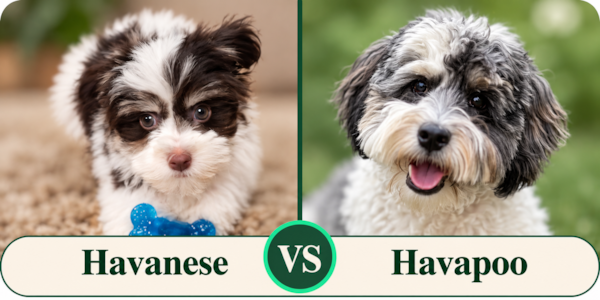
A Havanese vs Havapoo comparison is quite close because one of these dogs is quite literally half of the other. The Havanese is an established purebred companion dog from Cuba. The Havapoo combines that same Havanese with a Toy or Miniature Poodle, which means the two can share a similar size, affectionate personality, low-shedding coat, and strong interest in being around people.
The Poodle side still changes enough to matter. Havapoos can have tighter curls, a slightly more athletic build, greater variation in adult size, and a stronger appetite for training and mental activity. The Havanese has its own impressive intelligence, but its traits are more predictable because generations of purebred breeding have established a clear range for size, structure, coat, and temperament.
That predictability may actually be the most important difference between them. If you choose a well-bred Havanese, you have a fairly clear idea of what the adult dog should look and feel like. A Havapoo can lean strongly toward the Havanese, strongly toward the Poodle, or fall somewhere between them.
Neither choice requires an intensely active household. Both are small, people-focused companions that can thrive in apartments and family homes. The decision comes down to whether you prefer the consistency and silky charm of the Havanese or want to add a little more Poodle curl, athleticism, and variation to the mix.
Table of Contents
- Havanese vs Havapoo at a Glance
- Havanese and Havapoo Overview and History
- Havanese vs Havapoo Appearance
- Havanese vs Havapoo Temperament
- Havanese vs Havapoo: Which One Should You Choose?
- Choose a Havanese if Predictability Matters Most
- Choose a Havapoo if You Want More Poodle Influence
- Which Is Smaller: Havanese or Havapoo?
- Which Is Calmer: Havanese or Havapoo?
- Which Is Easier to Train?
- Which Is Better for First-Time Dog Owners?
- Which Is Better With Children?
- Which Is Better With Other Dogs and Cats?
- Which Sheds Less: Havanese or Havapoo?
- Which Needs More Grooming?
- Which Is More Affectionate?
- Which Is Better for Apartment Living?
- Which Is Better for Seniors?
- Which Is Better for an Active Household?
- Which Is More Predictable: Havanese or Havapoo?
- Havanese vs Havapoo: The Final Comparison
Havanese vs Havapoo at a Glance
| Trait | Havanese | Havapoo |
| Breed type | Purebred | Havanese × Toy or Miniature Poodle |
| General size | Small | Small |
| Adult weight | 7–13 pounds | Commonly about 8–20 pounds |
| Height | 8.5–11.5 inches | Commonly about 9–12 inches, with variation |
| Build | Small, sturdy, slightly longer than tall | Compact to slightly more athletic |
| Coat | Long, soft, silky, wavy double coat | Soft, wavy to curly, sometimes silkier |
| Shedding | Low | Usually low |
| Grooming | High if coat is kept long | Moderate to high |
| Colors | All colors and patterns permitted | Wide range inherited from both parents |
| Eyes | Usually dark brown | Usually brown or dark brown |
| Energy | Moderate | Moderate, sometimes somewhat higher |
| Trainability | High | High to very high |
| Personality | Cheerful, social, playful, affectionate | Affectionate, playful, clever, interactive |
| Predictability | Higher | More variation in coat, size, and temperament |
| Best fit | Someone wanting a consistent small companion breed | Someone wanting Havanese traits with added Poodle influence |
The AKC Havanese standard places the breed between 8.5 and 11.5 inches tall, with adult weights commonly around 7 to 13 pounds. Havapoos have no official breed standard, but small Toy and Miniature Poodle parentage keeps most within the small-dog range, with individual size depending heavily on the parents used.
Havanese and Havapoo Overview and History
The Havanese and Havapoo share more history than most dogs in a comparison article. To understand the Havapoo, you first have to understand the Havanese, because half of the cross comes directly from this old Cuban companion breed.
The other half comes from the Poodle, and that is where the family tree becomes more varied. Havanese were developed primarily around companionship, while Poodles have a strong working background as water retrievers. Those histories created two very intelligent breeds, but their intelligence developed around somewhat different jobs.
That distinction survives in the Havapoo. It remains very much a companion dog, but Poodle influence can add more athletic ability and enthusiasm for structured learning. The Havanese already enjoys tricks and games, so the difference is more a shift in emphasis than a complete change in personality.
Havanese History and Popularity
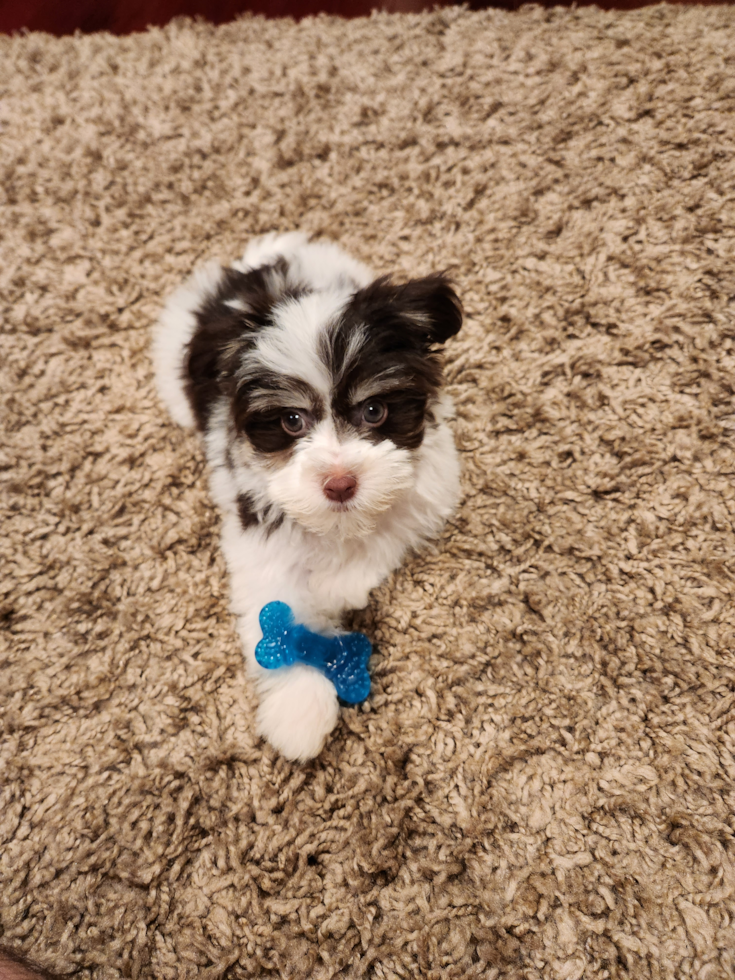
The Havanese is Cuba's national dog and its only native dog breed. Its ancestry belongs to the broader Bichon family of small Mediterranean companion dogs, which also includes relatives such as the Bichon Frise and Maltese. Dogs of this type traveled with European merchants and settlers before becoming established in Cuba, where the Havanese developed its own distinct identity.
In Cuba, these little dogs became prized companions among wealthy families. They were valued for their affectionate temperaments and close bonds with people rather than for hunting, guarding, or heavy physical work. That long history beside humans still makes sense when you look at the modern Havanese temperament.
The breed's story became more precarious during political upheaval in Cuba. Havanese brought out of the country by Cuban families helped preserve the breed, and American breeder Dorothy Goodale played an important role in rebuilding a breeding population in the United States during the 1970s.
Her program drew from several pedigreed Havanese and helped reestablish the breed beyond Cuba.
The Havanese eventually received AKC recognition in 1996. Despite being relatively new to the AKC compared with many European breeds, it is far from a newly created dog. Its companion history stretches much further back.
Modern Havanese have become popular because they manage to combine toy-dog size with a surprisingly sturdy body and outgoing personality. They are comfortable in smaller homes, enjoy learning, and tend to be happiest when they can participate in whatever the family is doing. The AKC describes them as intelligent, outgoing, funny, sociable dogs with moderate exercise requirements.
Havapoo History and Popularity
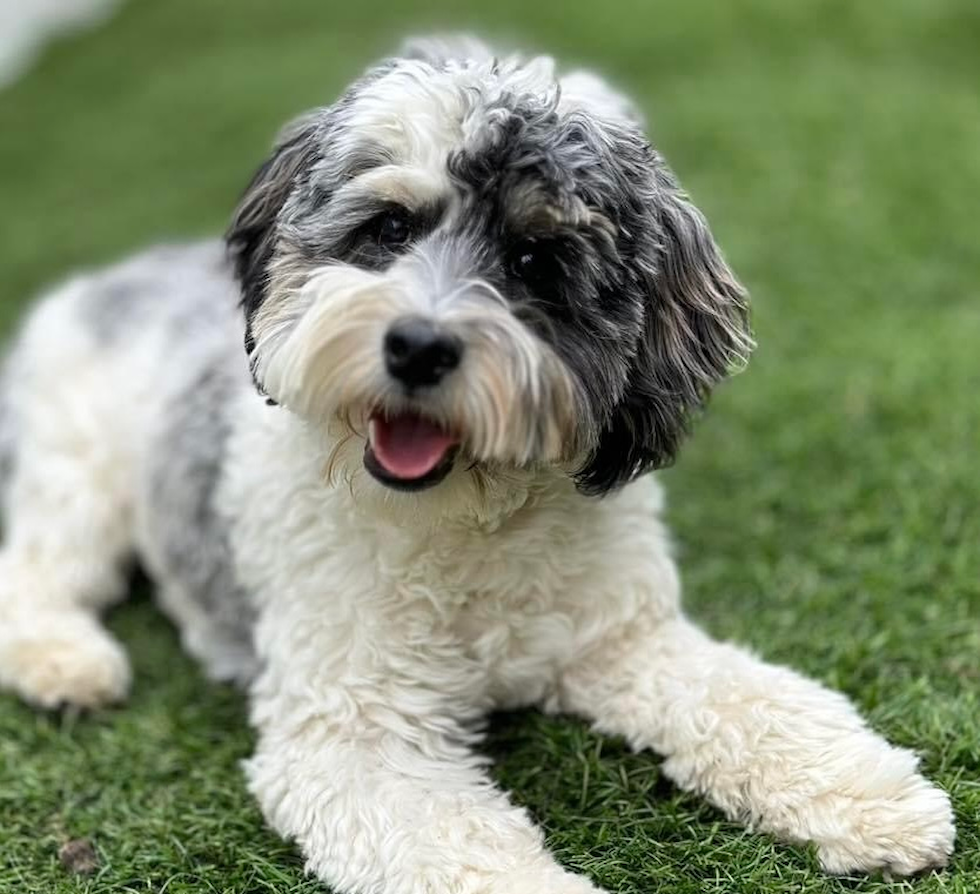
The Havapoo, also known as the Havadoodle, Poovanese, or Havanese Poodle mix, combines the Havanese with a Toy or Miniature Poodle. Unlike the Havanese, it does not have an official breed standard or a documented foundation population recognized by a major kennel club.
Modern Havapoo breeding became more visible during the rise of intentional Poodle crosses in the United States during the late twentieth century. The 1990s are commonly associated with the development and growing popularity of the cross, although there is no universally documented first breeder or single foundation date.
The idea behind the pairing is fairly easy to understand. Havanese already bring small size, affection, sociability, intelligence, and a relatively low-shedding coat. Adding the Poodle introduces stronger curl, another highly trainable temperament, and the athletic qualities associated with a breed originally developed as a water retriever.
Poodles have a much more work-oriented history than their modern show appearance sometimes suggests. They were developed around water retrieving and later became famous for versatility in performance, dog sports, and trick work. Toy and Miniature Poodles retain the same basic intelligence and athletic structure found across the breed's three size varieties.
This makes the Havapoo an interesting cross because its parents overlap in several important ways. Both are clever, trainable, affectionate dogs that want close relationships with humans. The Poodle does not completely reinvent the Havanese personality; it adds another layer of mental and physical energy.
That helps explain the Havapoo's appeal. Someone who loves the cheerful nature of the Havanese but prefers a curlier Doodle-style coat or enjoys training may naturally be drawn toward the cross.
Havanese vs Havapoo Appearance
At first glance, distinguishing a Havanese from a Havapoo can be surprisingly difficult. Both are small, fluffy dogs with dropped ears, expressive dark eyes, plumed tails, and abundant facial hair. A Havapoo that strongly favors its Havanese parent may look almost indistinguishable from a Havanese kept in a shorter puppy cut.
Coat texture usually provides the best clue. Havanese have a specific long, light, wavy coat defined by their breed standard. Havapoos can inherit that texture, but they can also develop stronger waves or Poodle-like curls.
Body shape can provide another clue. A Havanese has a distinctive slightly rectangular body and characteristic springy movement. A Havapoo may retain that structure or become squarer and slightly more athletic through the Poodle side.
Havanese Appearance
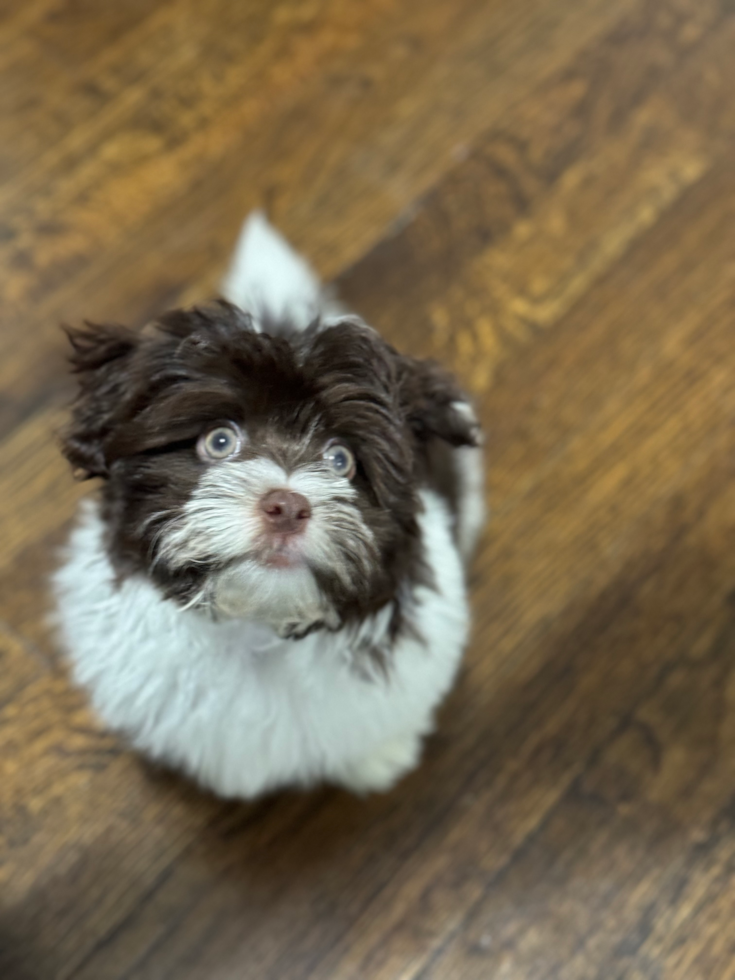
The Havanese is a true toy breed, but it should never look fragile. The official standard describes a small, sturdy dog with moderate bone and a body that is slightly longer than it is tall. Adults stand between 8.5 and 11.5 inches, with 9 to 10.5 inches considered ideal.
Its movement is also distinctive. Havanese have a springy gait created partly by their structure, and the breed carries its plumed tail arched over the back. These features give the dog a lively outline even when its long coat hides much of the body underneath.
The face is soft and expressive rather than exaggerated. Havanese have a moderately broad skull, a muzzle that remains long enough for normal facial proportions, dropped ears, and large almond-shaped eyes. Most have dark brown eyes, although chocolate dogs may have somewhat lighter brown coloring.
Havanese Coat Type and Texture
The natural Havanese coat is quite different from the dense curl associated with a Poodle. It is long, abundant, soft, light, and wavy, with both an outer coat and undercoat. The official breed standard specifically considers a curly coat incorrect for the breed.
That distinction matters in this comparison. A Havanese can look very fluffy after brushing, but its coat should still have movement and softness rather than holding tight curls around the body.
Some owners keep the coat long and flowing, which shows the breed's natural appearance beautifully. Others choose a shorter puppy trim because it is considerably easier to maintain in everyday family life.
Havanese coats can also be corded, although this style is much less common among typical pet owners. Cording allows sections of coat to form rope-like strands rather than remaining brushed out.
Havanese Colors and Markings
One of the Havanese's underrated features is how much color variety exists within the breed. The official AKC standard permits all colors and marking patterns, with no one color given greater merit than another.
You can therefore see white, black, cream, gold, chocolate, sable, silver-related shades, and numerous combinations. Parti coloring, tan points, and other markings can create dogs that look dramatically different from one another despite belonging to the same breed.
Coat color can also change as a Havanese matures. Some dark puppies lighten considerably, while sable coats may lose much of their darker tipping over time. That makes puppy color a useful description of the dog at that moment rather than a guarantee of the exact adult shade.
Havanese Eyes, Face, and Expression
The Havanese expression is one of the breed's defining traits. Large almond-shaped eyes, a broad little muzzle, and soft facial hair create an alert but gentle appearance.
Dark brown is the standard eye color for most dogs. Chocolate Havanese may have lighter brown eyes, accompanied by brown rather than black pigmentation around the nose and eye rims.
The face should not look extremely flat or shortened. The muzzle is moderately developed and broad enough to balance the skull, which gives the Havanese a more conventional facial structure than brachycephalic toy breeds.
Havanese Build and Size
Havanese have an unusual combination of very small size and surprising physical sturdiness. The body is slightly longer than tall, with a developed chest, moderate bone, and muscular hindquarters. The breed standard specifically notes that the Havanese should appear neither coarse nor fragile.
This can make the breed feel more substantial than its 7-to-13-pound weight suggests. A Havanese is still a toy dog that needs sensible handling, but it is capable of proper walks, play, trick training, and normal family adventures.
Its size is also highly predictable compared with the Havapoo. A purebred adult outside the established height range would fall outside the breed standard, whereas a Havapoo has no formal size limits.
Havanese Shedding
Havanese are known for shedding very little visible hair around the home. Their long coat catches much of the loose hair instead of dropping it freely onto furniture and clothing.
That is useful for people who dislike constant dog hair, but it does not turn the coat into a maintenance-free feature. Loose hair caught within a long coat can contribute to tangles if it is not removed through brushing.
Low shedding also does not make every Havanese safe for someone with allergies. Allergic reactions involve proteins found in dander, saliva, and other biological material as well as hair, so individual sensitivity still matters.
Havanese Grooming Needs
A natural long Havanese coat is high maintenance. The AKC recommends daily brushing or combing to keep the coat free from tangles and mats. Areas around the ears, legs, belly, and places where the coat rubs against a harness can become particularly troublesome.
Many pet owners solve the workload by keeping the coat shorter. A puppy trim sacrifices the full flowing show-dog look but makes brushing considerably easier and can be more practical for active households.
Eye and ear care also belong in the routine. Light-colored facial hair may show tear staining, while dropped ears need regular checking for wax, debris, or irritation.
The difference between a beautifully maintained Havanese and a matted one is rarely the type of coat. It is usually whether brushing actually happens.
Havapoo Appearance
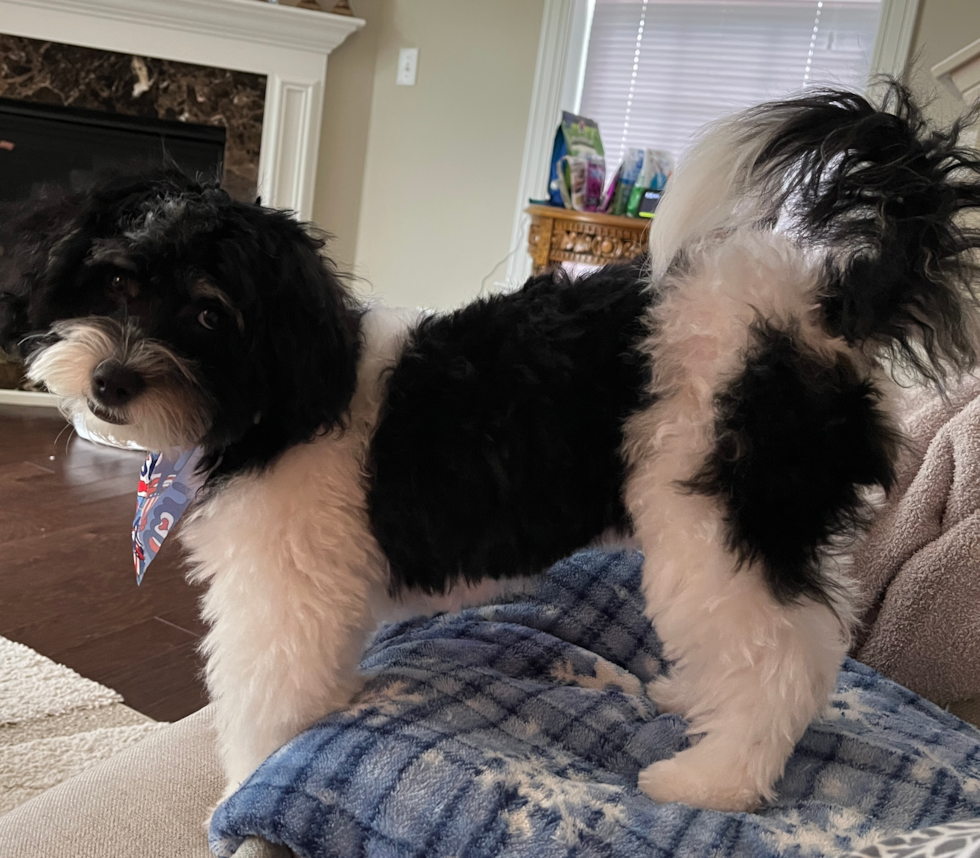
The Havapoo occupies the same general small-dog category, but its appearance is less standardized. Havapoos are produced from Havanese and Toy or Miniature Poodles, so the size and proportions of the Poodle parent can shift the result.
Many adults weigh somewhere around 8 to 20 pounds, although dogs produced from smaller parents may stay close to Havanese size. One established Havapoo profile places many dogs near 9 to 12 inches tall, which overlaps heavily with the Havanese.
The face usually remains soft and expressive. Dropped ears and dark eyes are common, while the Poodle can contribute a somewhat narrower muzzle and more refined outline.
Havapoo Coat Type and Texture
Coat texture is where Havapoos show the clearest Poodle influence. Hair can range from loose waves to substantial curls, with some dogs keeping a silkier Havanese-like texture.
A first-generation puppy may land almost anywhere between those two parents. One littermate can develop loose waves while another grows a denser curl that looks much more traditionally Doodle-like.
Backcrossing can change the odds further. A Havapoo bred back to a Poodle carries more Poodle ancestry and may be more likely to develop strong curl, though genetics never make the outcome completely predictable.
The practical tradeoff follows a familiar pattern. Curlier coats may release less visible hair but can mat more aggressively, while straighter coats may be easier to comb and shed slightly more.
Havapoo Colors and Markings
Havapoos can inherit the broad Havanese palette along with the Poodle's substantial range of colors. That creates plenty of possibilities without needing the unusual pattern genes seen in some other Doodle crosses.
Common shades can include white, cream, apricot, red, brown, chocolate, black, gray or silver-related tones, and combinations with white markings. Poodles themselves occur in colors including apricot, black, brown, cream, red, silver, white, blue, gray, and café au lait.
The Havanese parent adds further variation because the breed standard accepts all colors and patterns. As a result, two Havapoos can look noticeably different even when their coats have the same basic texture.
Color may also fade or change during adulthood. Poodle lines can carry genes that cause a rich puppy shade to become lighter with age, while Havanese can experience their own color changes.
Havapoo Eyes and Facial Features
Brown and dark brown eyes are the norm in Havapoos because both parent breeds strongly favor these shades. Chocolate or brown-coated dogs may have somewhat lighter pigmentation.
The Poodle side can alter eye shape and muzzle length slightly, which may give some Havapoos a more refined appearance than the rounder Havanese look.
Facial furnishings add another variable. A curlier Havapoo may develop thick hair around the muzzle and eyebrows, creating a particularly rounded teddy bear face after grooming.
This is a good example of why hairstyle can be misleading. Two dogs with very different underlying head structures can look almost identical after the same teddy bear trim.
Havapoo Build and Size
Havapoos can look slightly more athletic than Havanese, particularly when a Miniature Poodle is used. Poodles are squarely built, muscular little athletes, while the Havanese is somewhat longer than tall.
A Havapoo can inherit either outline. One adult may have the longer Havanese body and springy movement, while another stands taller on the leg and looks more Poodle-like.
This creates more size variation than you get with the purebred Havanese. Toy-Poodle Havapoos may stay very petite, while larger Miniature-Poodle lines can produce adults that noticeably outweigh a typical Havanese.
If mature size matters, the actual parents are far more informative than a generic online range.
Havapoo Shedding
Havapoos usually shed very little because both sides of the cross contribute coats known for low visible shedding. The Poodle adds a dense curl that traps loose hair, while the Havanese also releases relatively little hair into the home.
That gives the Havapoo good low-shedding potential, particularly when the coat is curly or strongly furnished.
There is still no reason to promise zero shedding. Individual dogs vary, and coat changes during maturity can alter how much loose hair an owner notices.
The same allergy caution applies here as with the Havanese. A low-shedding coat may be useful for some households, but it cannot guarantee that a person with dog allergies will not react.
Havapoo Grooming Needs
The Havapoo sometimes gets described as easier to groom than the Havanese, but the reality depends heavily on coat texture and length. A loose, short wavy coat may indeed be fairly manageable. A dense curly coat can require considerably more brushing than expected.
Curl creates a particular challenge because mats can form close to the skin while the outside still looks soft and fluffy. A brush alone may glide across the surface without reaching the tangles underneath, which is why combing after brushing is so useful.
Many Havapoo owners keep the coat in a shorter teddy bear style. Professional grooming every several weeks, combined with regular brushing at home, keeps the coat practical without losing the fluffy appearance.
The ears and teeth deserve the same attention as the coat. Small dogs can develop dental problems, while dropped hairy ears should be checked regularly for moisture and debris.
Havanese vs Havapoo Appearance Comparison: What Is the Difference?
The Havanese has the more predictable appearance. Adults stay within a defined height range, have a slightly rectangular body, carry a plumed tail over the back, and develop the long light wavy coat described in the breed standard. Color can vary dramatically, but the underlying structure remains recognizably Havanese.
The Havapoo has more variation, especially in coat and build. Poodle influence can add stronger curl, longer legs, a squarer body, and additional size at the upper end. A Havapoo with strong Havanese traits may look very similar to its purebred parent, while another can look much more obviously Doodle-like.
Neither has a major advantage in color variety. Havanese already occur in an unusually broad range, and the Poodle adds even more shades to the Havapoo.
Coat preference may be the deciding visual factor. If you love long, silky waves and the natural flowing appearance of the Havanese, the purebred gives you much greater certainty. If you prefer a plush wavy or curly teddy bear coat, the Havapoo increases the chance of getting that texture.
Havanese vs Havapoo Temperament
This is a closer comparison than most because Havanese are already intelligent, trainable, playful dogs. The Havapoo does not transform a laid-back lapdog by adding Poodle intelligence. It combines two breeds that are already quick learners and enthusiastic companions.
The difference is more subtle. Havanese intelligence developed largely within a companion role, although the breed has shown ability in obedience, agility, trick work, and other activities. Poodles have a stronger working background and may add more enthusiasm for structured mental activity.
For many households, the personalities will overlap considerably. Both dogs tend to want people nearby, both enjoy play, and neither is naturally suited to spending long days isolated from the family.
Havanese Temperament
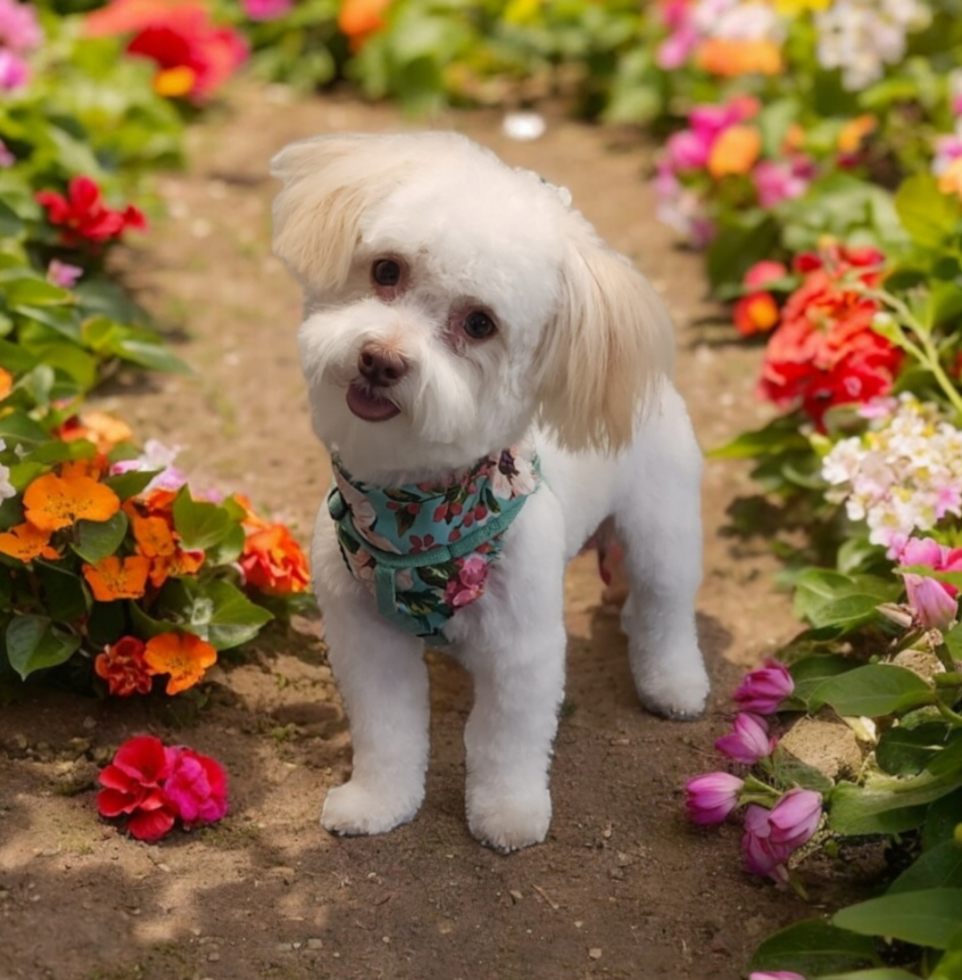
The official Havanese standard describes the breed as friendly, playful, alert, intelligent, sweet, and non-quarrelsome. That is a fairly accurate summary of why the breed has remained successful as a companion for so long.
Havanese generally enjoy people and can be highly sociable when raised with good early exposure. They have enough confidence to explore and interact without the intensity of a working breed, which makes them adaptable to a wide range of households.
Their personality also has a playful, slightly theatrical quality. Havanese have long been associated with tricks and performance, and many seem to enjoy discovering which behaviors make their humans laugh.
That clownish streak should not be confused with a lack of intelligence. These are quick little dogs that can learn household routines remarkably fast.
Havanese Affection and Attachment
Human companionship sits at the center of Havanese life. The breed was developed to live closely with people, and modern dogs still thrive when they feel involved in the household.
A Havanese may follow family members from room to room, settle under a desk during work, join everyone on the sofa, and become deeply interested in anything that suggests the family is about to leave the house.
The downside is that constant company can make independence harder if it is never taught. The AKC notes that Havanese do not do well when left alone for long periods, which makes gradual alone-time practice especially useful during puppyhood.
Teaching a Havanese to relax alone for short periods does not work against the breed's affectionate nature. It gives an intensely social little dog a useful coping skill.
Havanese Energy Level
Havanese have moderate exercise requirements. A brisk walk, play session, indoor games, and normal family activity can satisfy many adults without requiring a demanding fitness routine.
That does not mean they are lazy. The breed has a surprising amount of bounce and can enjoy agility, tricks, longer walks, and playful bursts of activity.
The difference is that most do not need those activities at high intensity every day. A Havanese can enjoy a lively morning and still adapt well when the afternoon becomes quiet.
This flexibility is especially useful for households where the routine changes from one day to the next.
Havanese Intelligence and Training
Havanese are genuinely trainable dogs, not merely agreeable companions. The AKC describes them as highly intelligent and eager to please, while also noting that they can be sensitive and respond best to positive methods.
Food, praise, toys, and play all make useful rewards. Harsh correction can make a sensitive little dog cautious rather than more cooperative, so patient consistency works much better.
Basic training should include recall, leash skills, grooming cooperation, polite greetings, house training, and learning to settle. Trick training can be especially fun because Havanese frequently enjoy performing for attention.
Their intelligence is usually easy to live with. They notice routines and can become clever about getting what they want, but they do not commonly have the constant work drive associated with herding or high-intensity sporting breeds.
Havanese With Children
Havanese can be excellent family companions when children interact with them appropriately. The breed is small but relatively sturdy, and its playful social temperament can fit well with children who enjoy games and gentle interaction.
Very young children still require supervision. Seven to thirteen pounds is not much dog when a toddler decides to hug too tightly, lift a puppy, or stumble during play.
Older children can become active participants in training and grooming. Teaching simple tricks, walking together, and helping with calm play gives the child and dog something useful to share beyond constant petting.
A Havanese should also have the freedom to walk away when it has had enough attention. Friendly dogs still need quiet time.
Havanese With Other Dogs and Pets
Havanese generally have good potential in multi-pet households. The AKC describes them as affectionate with people and able to get along with other nonaggressive pets when socialized appropriately.
Their companion background means they do not bring strong modern hunting or herding drive into the home. That can make relationships with cats fairly straightforward, particularly when introductions happen while the dog is young.
Another dog can also be welcome company, but size and play style deserve consideration. A gentle large dog may be perfectly compatible, while an extremely rough player can accidentally overwhelm a small Havanese.
Havanese Barking and Watchfulness
The Havanese is an alert little dog and can make a surprisingly competent household watchdog. It notices visitors and unusual sounds, but the AKC notes that well-adjusted Havanese tend to keep barking within reasonable limits rather than vocalizing endlessly.
Environment and learning still matter. An apartment hallway provides plenty of opportunities for a small dog to practice announcing footsteps, elevators, and neighboring doors.
Rewarding quiet behavior early can prevent alert barking from becoming a routine. The goal does not have to be silence; one brief announcement is considerably easier to live with than a five-minute commentary.
Havapoo Temperament
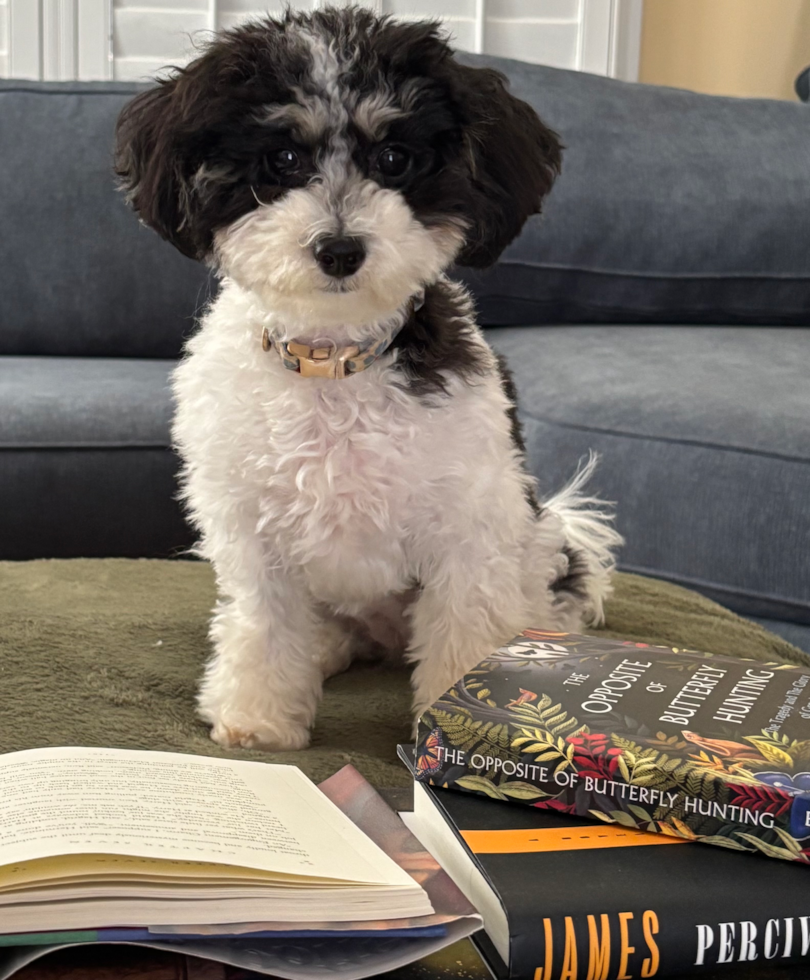
The Havapoo usually retains much of the Havanese's social and affectionate personality while adding another highly intelligent parent. This can create a dog that is cheerful and cuddly but also very interested in learning, games, and interaction.
Both sides of the cross are people-oriented. The difference is that Poodle influence may make some Havapoos more likely to seek structured mental activity rather than being satisfied with companionship and play alone.
This distinction should not be exaggerated. Plenty of Havanese love training, and plenty of Havapoos are perfectly relaxed family companions. Crossbreed genetics create overlap, not neat categories.
Havapoo Intelligence and Training
Training is one of the Havapoo's strongest qualities. Havanese are bright and eager to please, while Poodles have an exceptional reputation for learning speed and versatility. The combination gives the Havapoo strong potential for obedience, tricks, puzzles, and more advanced activities.
Some Havapoos may pick up patterns particularly quickly. They notice which cupboard contains treats, what time the walk normally happens, and exactly how many repetitions of a behavior are required before a human gives in.
That intelligence is enjoyable when the household is consistent. When rules change from day to day, the dog may become very good at choosing whichever version works in its favor.
Training sessions do not need to be long. Several short sessions spread through the day can satisfy a clever small dog while building genuinely useful skills.
Havapoo Energy Level
The Havapoo usually has moderate energy, though Poodle influence can move some individuals toward the more active side. Havapoo profiles commonly describe them as playful dogs that enjoy daily walks, games, and mental enrichment.
Compared with the Havanese, the difference may show up less in raw exercise requirements and more in the dog's interest in variety. A Havapoo may appreciate an extra game of fetch, short training session, puzzle toy, or different walking route.
This remains a small companion cross rather than an endurance athlete. Most families do not need to design their schedule around hours of daily exercise.
The better goal is a balanced day: movement, opportunities to use the brain, time with the family, and enough practice settling calmly afterward.
Havapoo Affection and Family Attachment
Havapoos tend to form strong relationships with their families because both parent breeds are highly people-oriented. They may follow their owners around the house, seek regular physical affection, and show considerable interest in family routines.
The Poodle side does not make the Havapoo noticeably more independent. Poodles themselves are closely connected to their people, so a Havapoo can be every bit as attached as a Havanese.
Independence training remains useful for exactly that reason. Short periods alone during puppyhood can prevent the dog from assuming that human company is available every minute of every day.
A dog that can nap comfortably in another room can still be wonderfully affectionate when everyone comes back together.
Havapoos With Children
Havapoos can fit very well into family households. Their playful nature gives children a willing companion, while their small size makes them manageable in the home.
The same size creates vulnerability, though. A very petite Havapoo produced from a Toy Poodle needs careful handling around toddlers and large, energetic dogs.
Older children can have a lot of fun with this cross because the Poodle side may add extra enthusiasm for tricks, fetch, and simple training games. That makes the relationship more interactive than one built entirely around cuddling.
Temperament of the actual parents remains important. A confident, well-socialized puppy from friendly parents has a much stronger foundation for family life than the mix name alone can provide.
Havapoos With Other Dogs and Pets
Havapoos usually have good potential with other dogs and cats. Neither parent breed carries strong herding behavior, and the smaller Poodle varieties are long-established companion dogs despite their working ancestry.
Some Havapoos may enjoy chasing toys or movement more than the average Havanese, but this is usually easy to manage with normal puppy training.
Cats tend to be straightforward housemates when the puppy learns early that chasing is not part of the arrangement. Calm introductions and places where the cat can retreat make the transition much easier.
Another dog can provide valuable social companionship, although human interaction remains important. A second dog should not be expected to replace the family.
Havapoo Barking and Alertness
Havapoos can be alert little dogs. Havanese already notice changes around the home, and Poodles are attentive to their environments as well. That combination can produce a dog that announces visitors or unusual sounds without necessarily becoming an excessive barker.
Training makes the difference. If barking gets the door opened, a person to appear, or a game to start, the dog has learned that the behavior works. A calm doorway routine and reinforcement for quiet responses can prevent normal alertness from becoming one of the household's defining sounds.
Havanese vs Havapoo Temperament Comparison: What Is the Real Difference?
The difference between these two temperaments is smaller than people sometimes expect. The Havanese is already intelligent, sociable, trainable, playful, and affectionate. Crossing it with a Poodle strengthens some of those traits rather than introducing an entirely different personality.
The Havanese offers greater consistency. Its breed standard describes a friendly, playful, alert, intelligent dog with a sweet disposition, and generations of selective breeding have created a relatively clear temperament range.
The Havapoo offers more variation. Poodle influence can produce a dog that is slightly more athletic, quicker to seek mental challenges, or more enthusiastic about structured training. Another Havapoo may inherit so much Havanese temperament that the distinction feels minimal.
This makes parent temperament particularly useful when choosing a Havapoo. If both parents are social, stable, and appropriately active, those traits tell you much more than a generic description of the cross.
Havanese vs Havapoo: Which One Should You Choose?
The Havanese and Havapoo occupy much of the same lifestyle territory. Both are small enough for apartments, affectionate enough for people who want close companionship, intelligent enough to enjoy training, and moderately active enough to fit into households that enjoy daily walks without turning every weekend into an endurance event.
The decision is less about choosing between two dramatically different personalities and more about deciding how much predictability you value. The Havanese offers a known breed standard and a more consistent adult result. The Havapoo introduces Poodle genetics, which can create extra curl, slightly more athleticism, and more variation from one puppy to another.
Choose a Havanese if Predictability Matters Most
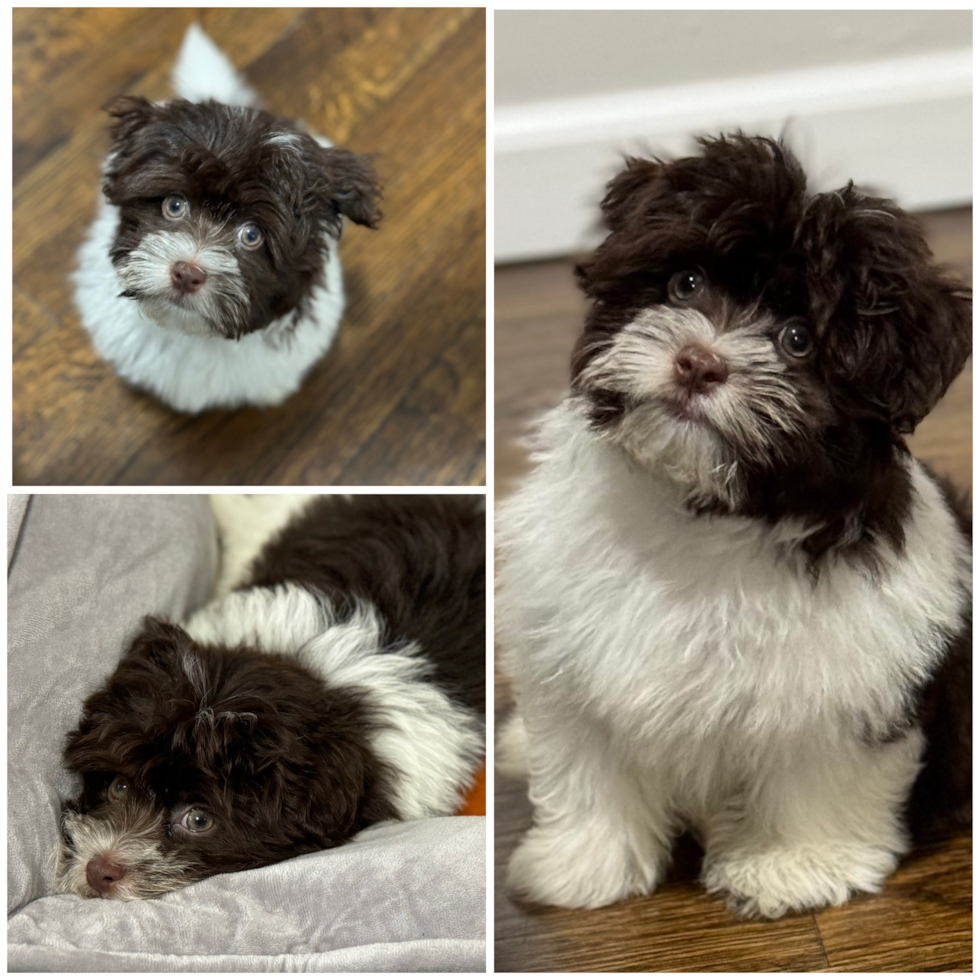
A Havanese puppy may suit you better if you know exactly what appeals to you about this little Cuban companion and see no reason to change the formula. The adult size falls within a well-established range, the coat has a defined texture, and the temperament has been shaped through generations of breeding within one recognized breed.
This predictability is particularly valuable when size matters. Someone who wants a genuinely small adult can choose a Havanese knowing that the breed standard caps height at 11.5 inches. With a Havapoo, a larger Miniature Poodle parent can widen the range.
The natural Havanese coat may also be the deciding factor. If long flowing waves appeal to you more than curls, the purebred offers a much better chance of getting exactly that appearance.
Temperament completes the picture. The Havanese gives you intelligence and playfulness without needing Poodle influence to make the dog trainable. For someone who wants a cheerful companion first and a training partner second, the breed already offers plenty.
Choose a Havapoo if You Want More Poodle Influence
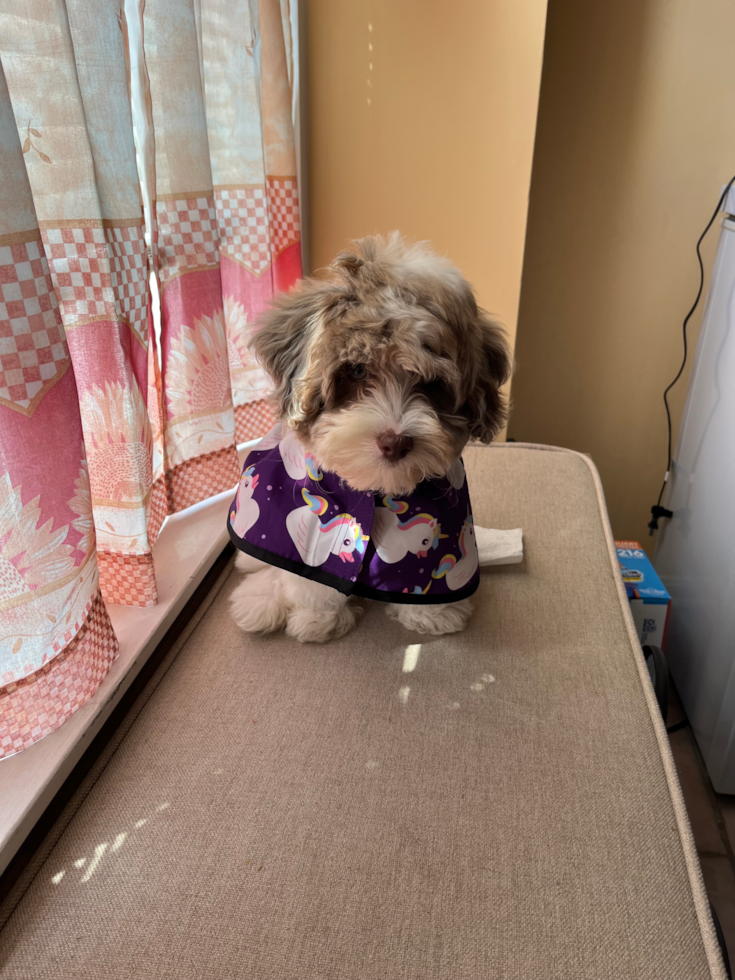
A Havapoo puppy may suit you better if you love the Havanese temperament but want stronger curl, a wider range of adult appearance, or a little more enthusiasm for training and active play.
The Poodle can add another level of mental engagement without pushing the dog into true working-breed intensity. For someone who enjoys teaching tricks, using puzzle toys, playing fetch, or giving a small dog regular challenges, that can be a very appealing combination.
Coat preference may play a role too. A curly Havapoo can have the plush teddy bear appearance many people associate with small Doodle breeds, while still retaining the affectionate and social qualities of the Havanese side.
The tradeoff is predictability. A crossbreed can inherit different amounts from each parent, so choosing a Havapoo means accepting more uncertainty around adult coat, exact size, and certain temperament details.
Which Is Smaller: Havanese or Havapoo?
The Havanese is usually more predictable in size, though it is not automatically smaller than every Havapoo. Purebred Havanese stand between 8.5 and 11.5 inches and commonly weigh around 7 to 13 pounds.
A Havapoo from a small Toy Poodle may fall squarely within that same range or even remain toward its lower end. A Havapoo produced from a larger Miniature Poodle can grow taller and heavier.
That makes parent size particularly important with the cross. If a few pounds or inches would meaningfully affect your decision, ask for the actual adult measurements of both parents.
For someone who simply wants a small dog, either works. For someone who needs the narrower and more predictable range, the Havanese has the advantage.
Which Is Calmer: Havanese or Havapoo?
The Havanese may have a slight advantage for a quieter routine, but the difference is modest. Havanese have moderate exercise requirements and are happy with daily walks, play, and plenty of time near their people.
Havapoos remain moderate-energy dogs, but some inherit more of the Poodle's drive for activity and mental stimulation. That dog may ask for another game or training session after the Havanese has decided the sofa looks pretty good.
Parent personality can easily override this average difference. A lively Havanese may be busier than a relaxed Havapoo.
If calmness is critical, the temperament of the parents and adult relatives is more useful than assuming the purebred or cross will always behave one particular way.
Which Is Easier to Train?
Both are excellent candidates for training. Havanese are intelligent and eager to please, while Poodles rank among the most trainable breeds, so there is plenty of learning ability on both sides of this comparison.
The Havapoo may have a slight edge for people who want to keep expanding training beyond basic manners. Poodle influence can increase interest in puzzles, retrieving, tricks, and more structured mental activities.
For ordinary family life, the difference is unlikely to matter very much. A Havanese can learn recall, leash skills, tricks, household rules, and obedience just as successfully.
The better distinction is motivation. A Havapoo may actively enjoy the training process a little more, while a Havanese may be especially motivated by the attention and interaction that come with it.
Which Is Better for First-Time Dog Owners?
Both can be very good first dogs, but the Havanese has the advantage of predictability. New owners know the general size, exercise requirements, coat type, and temperament range they are working with before the puppy arrives.
Havapoos can also be beginner-friendly. Their parent breeds are intelligent, social, and responsive, and neither introduces particularly difficult guarding, herding, or high-prey-drive behavior into the cross.
Grooming may be the biggest surprise with either dog. Small and low-shedding does not mean low maintenance, and both coats can mat when regular brushing is skipped.
First-time owners should also prioritize house training and independence. Tiny companion dogs are easy to carry and include everywhere, which can accidentally delay the development of skills they will need as adults.
Which Is Better With Children?
Both can fit beautifully into families with respectful children. Havanese are sturdy for their size and have a playful, social temperament, while Havapoos can add extra enthusiasm for interactive games.
The most important variable is the dog's actual size. A seven-pound Havanese or tiny Toy-Poodle Havapoo needs more protection from a rambunctious toddler than a larger twelve- or fifteen-pound dog.
Older children can enjoy either breed. The Havapoo may provide a little more interest for children who want to teach tricks and play training games, while the Havanese already has plenty of playful personality for normal family interaction.
Supervision remains important regardless of the label. Even a friendly, sturdy little dog can be injured by accidental rough handling.
Which Is Better With Other Dogs and Cats?
There is no meaningful breed-wide winner here. Havanese are social companion dogs, and the Havapoo adds a Poodle that is also strongly people-oriented and adaptable.
Both can live happily with other dogs when play styles are compatible. A very small dog still needs protection from much larger animals that play roughly, even when everyone involved is friendly.
Cats can also fit comfortably into either household. Neither cross brings strong modern herding instincts, and prey drive is usually manageable with early introductions and normal training.
The individual animals matter more than the small distinction between these two dogs.
Which Sheds Less: Havanese or Havapoo?
Both are low-shedding choices. The Havanese naturally releases relatively little hair around the home, while the Havapoo combines that coat with the Poodle's well-known minimal shedding.
A strongly curly Havapoo may leave even less visible hair on furniture and clothing because loose strands stay trapped within the coat. That advantage comes with a grooming cost, since trapped hair contributes to matting if it is not brushed out.
A purebred Havanese provides more predictable coat behavior. With a Havapoo, curl and shedding can differ from puppy to puppy.
For most households, the difference will be far less dramatic than the difference between either of these dogs and a heavy-shedding breed.
Which Needs More Grooming?
Neither is an easy-care choice when the coat is kept long. A natural Havanese requires very frequent brushing, and the AKC specifically recommends daily coat care to prevent mats and tangles.
A Havapoo with strong curl can need equally intensive brushing because knots may develop beneath the fluffy outer layer. A shorter wavy Havapoo coat may require less work than a full Havanese coat, but that depends entirely on haircut and texture.
For pet owners, keeping either dog in a practical short trim can narrow the difference substantially. Professional grooming plus regular home brushing is a realistic routine for both.
If you enjoy the full natural Havanese coat, prepare for more daily hands-on grooming. If you prefer a teddy bear haircut, either dog can accommodate that style.
Which Is More Affectionate?
This category is almost impossible to separate. Havanese were developed around human companionship, and Poodles also form strong relationships with their people.
The purebred Havanese may show a particularly consistent desire to remain close because companionship sits at the center of its breed history. Havapoos usually inherit the same attachment and may be just as cuddly.
The difference may show up in what the dog wants to do while spending time with you. A Havanese may be perfectly delighted to follow you around and settle nearby, while a Poodle-influenced Havapoo may occasionally suggest that the two of you could be learning something instead.
If affection is your main requirement, both belong high on the list.
Which Is Better for Apartment Living?
Both are excellent apartment candidates. Their small size makes them easy to accommodate, and neither needs a large yard when daily walks and interaction are provided.
The Havanese has an especially strong reputation as a city dog. AKC notes that the breed adapts well to both houses and apartments and requires only moderate daily exercise.
Havapoos can thrive in the same environment. A more Poodle-influenced individual may benefit from additional games, training, or puzzle toys when outdoor exercise is limited.
Barking and alone time matter more than floor space. Either dog can struggle in an apartment if every hallway sound becomes a reason to bark or if the dog never learns to relax when the owner leaves.
Which Is Better for Seniors?
Both can be excellent companions for older adults because they are small, affectionate, and reasonably easy to exercise.
The Havanese may have a slight advantage for someone who values predictability and moderate activity. Its adult size and general exercise needs fall within a narrow, established range.
A Havapoo can be equally suitable, especially for an active senior who enjoys training games and slightly more interactive play.
Grooming ability deserves consideration too. Someone who finds daily coat maintenance difficult may prefer either breed in a short professional trim rather than trying to maintain a long natural coat at home.
The individual dog's age may matter more than breed choice. A calm adult can be a very different experience from raising a lively ten-week-old puppy.
Which Is Better for an Active Household?
The Havapoo may have a small advantage for a moderately active household because the Poodle can add athleticism and a greater appetite for varied activity.
Poodles of every size are active dogs that enjoy exercise and mental challenges. The Havapoo can inherit that enthusiasm while remaining compact enough for ordinary family life.
The Havanese should not be underestimated, though. Its small sturdy body and playful temperament can handle much more than a quiet life indoors, and the breed has succeeded in activities such as obedience and agility.
Neither is an ideal long-distance running breed. For walking, light hiking, travel, games, and family adventures, both can keep up very well when healthy and conditioned appropriately.
Which Is More Predictable: Havanese or Havapoo?
The Havanese wins this category clearly, and this may be the most important difference in the entire comparison.
An established breed standard defines the Havanese's height, body proportions, coat texture, eye color, tail, gait, and general temperament. Individual dogs still vary, but there are boundaries around what a correctly bred Havanese should become.
The Havapoo has no comparable standard. Toy versus Miniature Poodle parentage, generation, coat inheritance, and the individual genetic contribution from each parent can all change the finished dog.
That variation is not automatically a disadvantage. Some people actively enjoy the greater range of coats and appearances.
Havanese vs Havapoo: The Final Comparison
Choosing between a Havanese vs Havapoo is less about deciding which dog has the better personality and more about deciding whether you want to preserve the Havanese formula or add Poodle influence to it.
The Havanese is already a remarkably complete small companion breed. It is intelligent, affectionate, playful, sociable, trainable, low shedding, and sturdy despite its toy size. Its moderate exercise needs make it adaptable, while an established breed standard gives owners a relatively clear picture of the adult dog they can expect.
The Havapoo keeps much of that appeal and adds another intelligent, athletic breed to the equation. Poodle influence can create tighter curls, more enthusiasm for structured training, slightly greater activity, and a broader range of adult builds. For someone who loves the Havanese personality but also loves the look and cleverness associated with small Poodle crosses, that combination can make excellent sense.
Grooming does not create an obvious winner. A long Havanese coat needs serious maintenance, while a curly Havapoo coat can mat just as readily. Short practical trims make life considerably easier with both.
Size is similar enough that both work well for apartments, travel, and households that specifically want a small dog. The Havanese simply provides more certainty about where the adult will land.
Temperament is similarly close. Both want people, both learn readily, and both can make excellent family companions. The Havapoo may bring a little more mental drive, while the Havanese offers a very consistent blend of playfulness and relaxed companionship.
So the deciding question is surprisingly simple.
If you love what the Havanese already is and want the greatest possible predictability in coat, size, structure, and temperament, there is little reason to look past the original.
If you love the Havanese but would enjoy more curl, a little extra Poodle-style trainability, and do not mind more variation from one puppy to another, the Havapoo may be the more interesting fit.
Neither choice needs an extreme lifestyle. Both are dogs built around close relationships with people, and both will care far more about being included in your day than whether your home has three bedrooms or ten acres.
Frequently Asked Questions
What is the main difference between a Havanese and a Havapoo? The Havanese is a recognized purebred dog, while the Havapoo is a cross between a Havanese and a Toy or Miniature Poodle. This gives the Havanese more predictable size, coat texture, structure, and temperament. Havapoos can inherit stronger Poodle traits such as tighter curls, a squarer or more athletic build, and greater enthusiasm for structured training. Both remain small, affectionate companion dogs, so the differences are much subtler than comparisons involving completely unrelated breeds.
Is a Havanese smaller than a Havapoo? Havanese have the more predictable size range at 8.5 to 11.5 inches tall and roughly 7 to 13 pounds. Havapoos can fall within a very similar range, particularly when a Toy Poodle is used, but Miniature Poodle ancestry can produce somewhat larger adults. If exact adult size matters, the purebred Havanese provides more certainty. With a Havapoo, looking at both parents gives the most useful estimate.
Which is calmer, a Havanese or Havapoo? The Havanese may be slightly calmer on average because its temperament has been developed primarily around companionship. Havapoos can inherit more of the Poodle's interest in exercise, games, and mental challenges, although they remain moderate-energy dogs. The difference is small enough that parent temperament can easily outweigh it. A playful Havanese may be busier than a relaxed Havapoo, especially during puppyhood.
Which is easier to train, a Havanese or Havapoo? Both are easy to train with positive methods. Havanese are highly intelligent and eager to please, while Havapoos add Poodle intelligence to those same traits. The Havapoo may have a slight advantage for owners interested in advanced tricks, puzzles, or continued training because some individuals inherit more mental drive from the Poodle. For normal household manners, either can be an excellent student.
Which sheds less, a Havanese or Havapoo? Both are low-shedding dogs. Havanese release relatively little visible hair, while Havapoos can inherit the same characteristic plus the Poodle's tightly curled, minimally shedding coat. A curly Havapoo may leave particularly little hair around the home, but coat genetics vary. Neither dog should be guaranteed as completely non-shedding or allergy-proof.
Which needs more grooming, a Havanese or Havapoo? A Havanese kept in its full natural coat needs frequent, often daily, brushing to prevent mats. A curly Havapoo can require equally serious coat care, especially when the hair is kept long. Short puppy or teddy bear trims make either easier to maintain. In practical pet homes, haircut and coat texture may matter more than whether the dog is a Havanese or Havapoo.
Is a Havanese or Havapoo better with children? Both can be wonderful family dogs. Havanese are playful, social, and sturdy for their small size, while Havapoos can add extra enthusiasm for interactive games and trick training. Very small dogs of either type need supervision around young children because accidental rough handling can cause injury. Older children who understand gentle interaction can have a rewarding relationship with either dog.
Is a Havanese or Havapoo better for apartment living? Both are excellent choices for apartment life. Havanese have moderate exercise needs and adapt especially well to city living, while Havapoos remain small enough for the same lifestyle when they receive daily walks and play. A more Poodle-influenced Havapoo may appreciate extra puzzles or training indoors. With both dogs, companionship and sensible barking habits matter more than square footage.
Is a Havapoo more active than a Havanese? A Havapoo may be somewhat more active when it inherits strong Poodle traits. Toy and Miniature Poodles are athletic little dogs that enjoy exercise, retrieving, training, and mental stimulation. Havanese are playful and capable too, so the difference should not be exaggerated. Both fit best with people who want daily walks and regular interaction rather than a dog that spends the entire day on a lap.
Should I choose a Havanese or Havapoo? Choose a Havanese if you want a small, affectionate, intelligent companion with a predictable adult size, defined silky-wavy coat, and established temperament. The breed already offers low shedding, trainability, sociability, and moderate exercise needs without introducing crossbreed variation.