





Published Monday, October 5, 2026 by Pilesgrove Pups
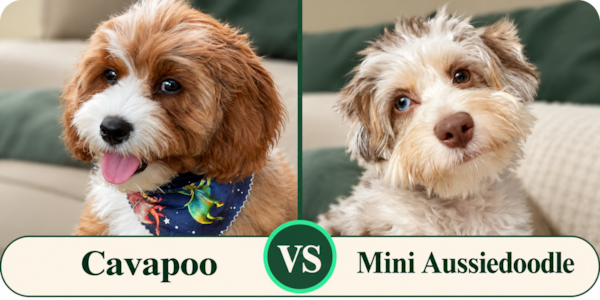
Choosing between a Cavapoo vs Mini Aussiedoodle is really a choice between two different versions of the small Doodle experience. Both have Poodle ancestry, both can have soft low-shedding coats, and both are intelligent dogs that form close relationships with their families. That shared Poodle side creates enough overlap that the comparison may seem straightforward at first.
The other half of each dog changes the picture considerably. A Cavapoo combines the Poodle with the Cavalier King Charles Spaniel, a gentle toy spaniel whose modern role centers heavily on companionship. A Mini Aussiedoodle combines the Poodle with a smaller Australian Shepherd-type dog, bringing genuine herding ancestry, more physical drive, and a stronger instinct to watch, learn, and stay involved in whatever is happening around it.
That difference reaches into almost every part of daily life. The Cavapoo tends to offer a softer balance between activity and relaxation. It can enjoy training, long walks, play, and outings, but many Cavapoos are equally satisfied once the day slows down. The Mini Aussiedoodle usually wants more to occupy both body and brain. Its ideal routine may include training, exploration, games, outdoor activities, and enough variety to make good use of an exceptionally quick mind.
Appearance separates them too. Cavapoos tend to have the rounder, softer expression associated with Cavaliers, along with warm reds, apricots, creams, browns, and parti patterns. Mini Aussiedoodles can inherit blue or red merle, striking tan points, blue or mismatched eyes, and a more athletic body beneath the Doodle coat.
Neither is the better dog in every home. The real question is whether you want your small companion to lean toward gentle and adaptable or toward active, intensely clever, and ready for the next thing.
Table of Contents
- Cavapoo vs Mini Aussiedoodle at a Glance
- Cavapoo and Mini Aussiedoodle Overview and History
- Cavapoo vs Mini Aussiedoodle Appearance
- Cavapoo vs Mini Aussiedoodle Temperament
- Cavapoo vs Mini Aussiedoodle: Which One Should You Choose?
- Choose a Cavapoo if You Want a Softer, More Adaptable Companion
- Choose a Mini Aussiedoodle if You Want an Active, Highly Interactive Dog
- Which Is Smaller: Cavapoo or Mini Aussiedoodle?
- Which Is Calmer: Cavapoo or Mini Aussiedoodle?
- Which Is More Energetic?
- Which Is Easier to Train?
- Which Is Better for First-Time Dog Owners?
- Which Is Better With Children?
- Which Is Better With Other Dogs?
- Which Is Better With Cats?
- Which Sheds Less: Cavapoo or Mini Aussiedoodle?
- Which Needs More Grooming?
- Which Is Cuddlier?
- Which Is Better for an Active Lifestyle?
- Which Is Better for Apartment Living?
- Which Is More Likely to Bark?
- Which Is Better for Seniors?
- Which Is Better for Someone Who Works From Home?
- Which Has the More Predictable Appearance?
- Cavapoo vs Mini Aussiedoodle: The Final Comparison
Cavapoo vs Mini Aussiedoodle at a Glance
| Trait | Cavapoo | Mini Aussiedoodle |
| Parent breeds | Cavalier King Charles Spaniel × Poodle | Mini Aussie-type dog × Miniature Poodle |
| General size | Small | Small to medium-small |
| Common adult weight | Around 8–20 pounds | Around 15–35 pounds, with smaller dogs possible |
| Common height | Around 9–14 inches | Around 12–18 inches |
| Build | Compact and relatively light | Sturdier and more athletic |
| Coat | Straight, wavy, or curly | Straight, wavy, or curly |
| Shedding | Usually low | Low to moderate depending on coat |
| Grooming | Moderate to high | Moderate to high |
| Color range | Red, apricot, cream, brown, black, white, parti, tricolor | Black, red, brown, blue merle, red merle, gray, white and multicolor |
| Eye colors | Primarily brown or dark brown | Brown, blue, amber, hazel, mixed, or mismatched |
| Energy | Moderate | Moderate to high |
| Trainability | High | Very high |
| General personality | Affectionate, gentle, social, playful | Intelligent, devoted, alert, energetic, playful |
| Best fit | Someone wanting an adaptable companion | Someone wanting an active, highly interactive dog |
Cavapoos commonly stand around 9 to 14 inches and weigh approximately 8 to 20 pounds. Mini Aussiedoodles cover a broader range, with many falling around 12 to 18 inches and 15 to 35 pounds, although parent size and generation can produce smaller adults. Those differences make the actual parents much more useful than the word “Mini” when adult size matters.
Cavapoo and Mini Aussiedoodle Overview and History
The Cavapoo and Mini Aussiedoodle belong to the modern family of Poodle crosses, but they bring together parent breeds with very different histories. The shared Poodle gives both crosses intelligence, athletic ability, people focus, and the potential for a curly low-shedding coat. The spaniel or shepherd parent then changes the emphasis.
Poodles themselves were not developed as decorative lapdogs. Their history centers on water retrieving, and their intelligence, athleticism, and responsiveness made them remarkably versatile working dogs. Miniature and Toy Poodles retain that learning ability and willingness to participate despite their smaller size.
A Cavapoo adds another highly people-oriented dog, but one with a gentler modern role. A Mini Aussiedoodle adds a compact herding dog whose ancestry revolves around movement, decision-making, livestock, and close cooperation with a handler. That distinction gives these crosses very different starting points even though half of the genetic equation may be similar.
Cavapoo History and Popularity
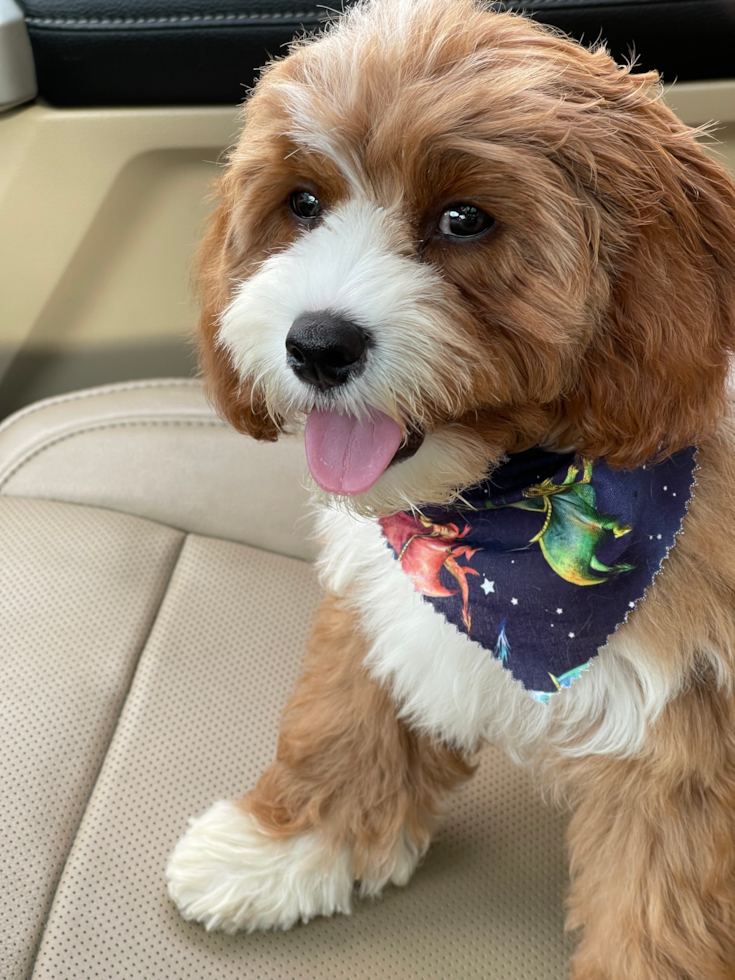
The Cavapoo combines a Cavalier King Charles Spaniel with a Toy or Miniature Poodle. The cross is also known as the Cavoodle, especially in Australia, and became increasingly familiar during the rise of intentional Poodle crosses in the late twentieth century.
There is no official Cavapoo foundation registry that identifies one universally documented first breeder. Modern Cavapoo breeding is strongly associated with Australia during the 1990s, although Cavalier-Poodle crosses almost certainly existed before the name became widely established. Rather than relying too heavily on one origin story, it is more useful to look at why these two breeds became such an appealing combination.
The Cavalier has a long history among European companion spaniels. Small toy spaniels appeared beside aristocratic families for centuries and became especially associated with King Charles I and Charles II of England. The modern Cavalier King Charles Spaniel was later developed to restore the longer-faced type seen in older paintings, and the breed received full AKC recognition in the 1990s.
Modern Cavaliers combine two qualities particularly well. They have the gentle, affectionate nature expected from a toy companion, yet they retain enough spaniel ancestry to enjoy walks, play, and outdoor activities. The AKC describes the Cavalier as blending the attentiveness of a toy breed with the athletic side of a sporting spaniel.
The Poodle brings another layer entirely. Beneath its carefully groomed coat is a water retriever with a long history of athletic work. Poodles are bright, active, trainable dogs that learn quickly and excel in activities ranging from obedience to agility and retrieving.
The appeal of the Cavapoo comes from how comfortably those traits can meet. You can get a dog with enough intelligence and energy to enjoy training while retaining the softer companion character associated with the Cavalier. The small size and low-shedding potential broaden the appeal further, especially for households that want an involved family dog without stepping into true working-breed territory.
Mini Aussiedoodle History and Popularity
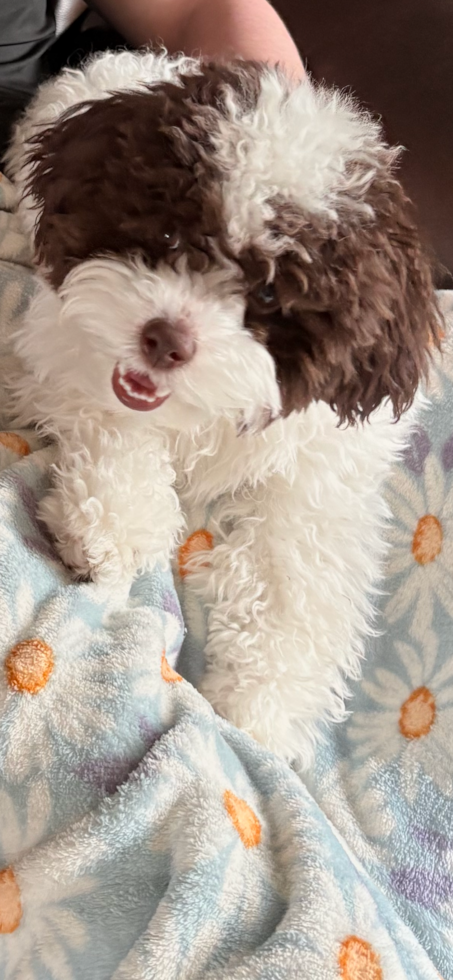
The Mini Aussiedoodle, also called a Mini Aussiepoo or Mini Aussiepoodle, combines a smaller Australian Shepherd dog with a Miniature Poodle. It is a newer designer cross than many of the established companion mixes and grew alongside increasing interest in smaller Doodles with distinctive merle coloring and high trainability.
The terminology behind the Aussie parent deserves a little explanation. Smaller Australian Shepherds were selectively bred in the United States beginning in the 1960s. These dogs became especially popular around rodeos and horse shows because they retained herding ability and intelligence in a more portable body. Their development eventually led to the Miniature American Shepherd, which the AKC accepted into the Herding Group in 2015.
The name Mini Australian Shepherd is still widely used outside the AKC breed framework, including in designer-dog breeding. For someone considering a Mini Aussiedoodle, this makes it worth asking exactly what the Aussie parent is rather than assuming every breeder uses the same lines.
Whichever terminology applies, the herding heritage matters. The Miniature American Shepherd is a genuine working dog despite its compact size. Adults stand around 13 to 18 inches depending on sex and weigh roughly 20 to 40 pounds. They are bright, agile, energetic dogs with enough stamina and intelligence for obedience, agility, tracking, and real herding work.
The Poodle is hardly a passive partner in this combination. Miniature Poodles are athletic, mentally quick, highly trainable dogs in their own right. Crossing these two backgrounds creates a dog with intelligence coming from both sides rather than one parent supplying all of the mental drive.
That is one reason the Mini Aussiedoodle has gained such a strong following. It packages striking colors, smaller size, trainability, affection, and athletic ability into one companion. The same traits also mean this is not automatically an easy little couch dog simply because “Mini” appears in the name.
Cavapoo vs Mini Aussiedoodle Appearance
A Cavapoo and Mini Aussiedoodle can share the familiar Doodle coat and floppy ears, yet they are usually easier to tell apart than many other Poodle crosses. Their non-Poodle parents look dramatically different, and those differences survive in the cross.
The Cavapoo typically has a softer, rounder look. The Mini Aussiedoodle may appear more athletic, with stronger markings, unusual eye colors, and a broader range of coat patterns.
There is still considerable variation within each cross. A curly Mini Aussiedoodle may resemble other Doodles until you notice its merle pattern or blue eye, while a straight-coated Cavapoo can look remarkably spaniel-like. Parent genetics and generation have a large say in the final appearance.
Cavapoo Appearance
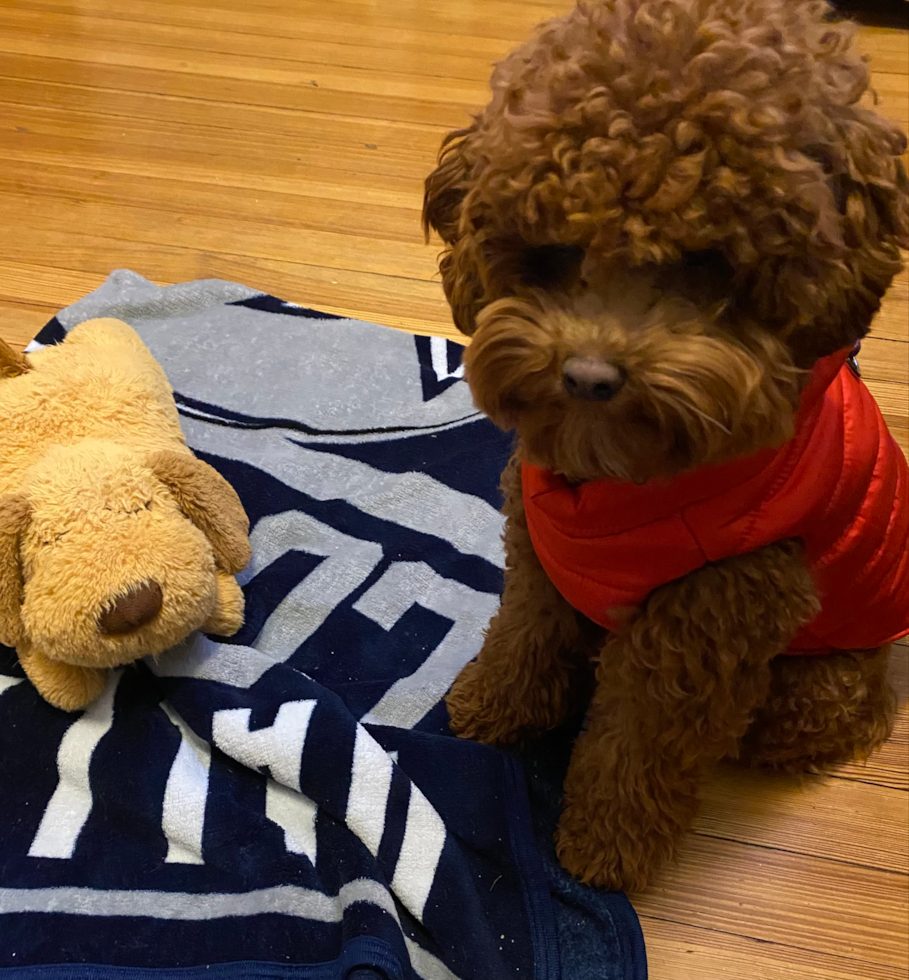
Cavapoos are small dogs with compact proportions and an expressive face. Adults commonly weigh around 8 to 20 pounds and stand approximately 9 to 14 inches, although Toy and Miniature Poodle parentage can shift the final size.
Many have large dark eyes, dropped ears, and a moderate muzzle. Stronger Cavalier influence creates a broad, soft expression and longer ear furnishings, while Poodle influence may narrow the muzzle or add more height through the legs.
The coat can make the body look rounder and heavier than it really is. Underneath the fluff, many Cavapoos have a fairly light and agile structure.
Cavapoo Coat Type and Texture
Cavapoo coats can be straight, loosely wavy, or curly. The Cavalier contributes smooth, silky hair with feathering, while the Poodle contributes dense curl.
The loose wave that sits between those two extremes is probably the coat most people associate with a Cavapoo. It creates the soft teddy bear look without forming the tighter ringlets of a Poodle.
Other dogs lean much further toward one parent. A spaniel-influenced Cavapoo can have straighter hair and obvious feathering around the ears and legs, while a Poodle-influenced coat may form dense curls across most of the body.
Generation may shift the odds, but it cannot promise one exact texture. An F1 Cavapoo has one parent of each breed, while backcrosses can contain a higher proportion of Poodle ancestry.
Cavapoo Colors and Markings
The Cavalier and Poodle give the Cavapoo a broad but fairly warm color palette.
Cavaliers come in Blenheim, ruby, black and tan, and tricolor. Poodles contribute shades such as apricot, cream, red, brown, black, white, and several additional colors. The result can include red, apricot, cream, gold, brown, chocolate, black, white, parti, Blenheim-style, and tricolor Cavapoos.
Red and apricot have become especially recognizable Cavapoo colors. Some coats lighten with age, however, so a dark red puppy may become considerably softer in shade as an adult.
White markings can be extensive or minimal. One Cavapoo may be almost solid red, while another has a white chest, blaze, paws, or broad patches across the body.
Cavapoo Eyes and Expression
Cavapoos usually have brown or dark brown eyes. Cavaliers are famous for their large, round, dark eyes, and Poodles also commonly contribute dark pigmentation.
The face is frequently one of the strongest Cavalier features in the cross. Large eyes combined with dropped ears and soft facial hair create the sweet expression Cavapoos are known for.
Blue or mismatched eyes are not a characteristic Cavapoo trait. That becomes an important visual difference when comparing them with Mini Aussiedoodles.
Cavapoo Build and Size
The Cavapoo is normally the smaller and lighter dog in this comparison.
Cavaliers stand 12 to 13 inches and weigh 13 to 18 pounds. Toy Poodles are no more than 10 inches tall and weigh roughly 4 to 6 pounds, while Miniature Poodles stand over 10 and up to 15 inches and commonly weigh 10 to 15 pounds.
Those parent sizes help explain why most Cavapoos remain comfortably small.
A Toy-Poodle Cavapoo can be particularly petite. Miniature-Poodle Cavapoos may have more leg and athletic substance while remaining much smaller than the average medium-sized dog.
Cavapoo Shedding
Many Cavapoos shed lightly, but the amount depends on which coat traits they inherit. The Poodle contributes a curly coat that releases relatively little visible hair. The Cavalier has a silky coat that sheds more conventionally. A curly Cavapoo may therefore leave very little hair around the home, while a straighter dog may shed more.
That difference makes coat type more informative than simply calling all Cavapoos non-shedding.
Low shedding also does not guarantee allergy compatibility. People can react to proteins found in saliva and dander regardless of how much hair reaches the floor.
Cavapoo Grooming Needs
The Cavapoo's soft coat needs consistent care. Wavy and curly hair can knot behind the ears, under the front legs, around the harness, and anywhere friction occurs.
Brushing several times each week is realistic for most pet coats. Longer curls may need attention much more frequently, while a shorter teddy bear trim can make home care considerably easier.
Professional grooming is part of normal Cavapoo ownership for many families. The coat continues to look soft and effortless in photographs because someone is putting in the work behind the scenes.
Ear care deserves attention too. Dropped ears combined with surrounding hair can hold moisture, so regular checks help catch irritation early.
Mini Aussiedoodle Appearance
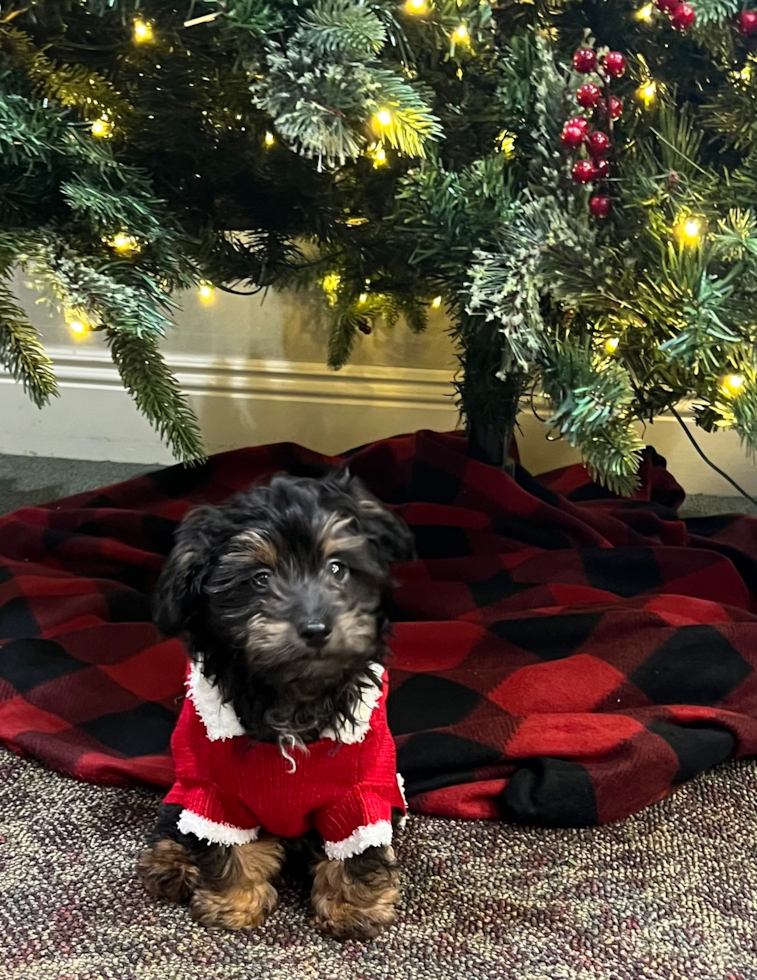
The Mini Aussiedoodle usually has a more athletic and substantial frame than the Cavapoo. Many stand around 12 to 18 inches and weigh approximately 15 to 35 pounds, although smaller adult weights can occur depending on generation and parent size.
The body can range from compact and Doodle-like to distinctly shepherd-influenced. Some dogs have longer legs, a deeper chest, and an agile outline that remains visible even through a full coat.
Facial structure varies as well. Poodle influence can produce a narrower muzzle, while the Aussie side may contribute almond-shaped eyes and a more alert expression. The visual range is much wider than the Cavapoo's, especially once color and eye variation enter the picture.
Mini Aussiedoodle Coat Type and Texture
Mini Aussiedoodle coats can be straight, wavy, or curly. The Poodle contributes dense curls, while the Mini Aussie side contributes a medium-length double coat. The Miniature American Shepherd, for example, has a longer outer coat over a woollier undercoat and naturally sheds, particularly during seasonal coat changes.
A Mini Aussiedoodle with strong Poodle influence may develop a thick curly coat that traps loose hair. Another may have loose waves with more of the shepherd texture. Straighter coats can show the Aussie ancestry even more clearly.
This variety has practical consequences. Curlier coats may shed less visibly but mat more easily, while straighter coats may require less intensive detangling yet release more hair.
The adult coat can also look different from the puppy coat, so a soft fluffy puppy does not necessarily tell you exactly how much curl or undercoat the mature dog will have.
Mini Aussiedoodle Colors and Patterns
Color is one of the Mini Aussiedoodle's most distinctive features. The Miniature American Shepherd occurs in black, blue merle, red, and red merle, with white markings and tan points also possible. The Poodle adds additional solid colors, so the resulting cross has a very broad palette.
Mini Aussiedoodles may appear in black, brown, chocolate, red, gray, cream, white, or combinations of these shades. Blue merle and red merle are especially recognizable, while black-and-white, tricolor, and parti-style patterns can also occur.
Merle creates irregular marbling or mottling rather than neat patches. Two merle dogs can therefore have completely different markings even when the base colors are similar.
This is one area where the Mini Aussiedoodle has substantially more visual variation than the Cavapoo.
Mini Aussiedoodle Eye Color
Eye color creates another obvious difference. Miniature American Shepherds can have brown, blue, amber, hazel, or combinations of those colors. Their two eyes may be different colors, and a single eye can contain more than one shade.
Mini Aussiedoodles can inherit some of that variation. Brown remains common, but blue eyes, amber shades, one blue and one brown eye, or partially blue eyes are all possible. Merle dogs are especially associated with unusual eye coloring, although coat pattern does not guarantee a particular eye color.
For someone drawn to distinctive appearance, the Mini Aussiedoodle offers possibilities the Cavapoo simply does not have.
Mini Aussiedoodle Build and Size
The Mini Aussiedoodle usually has more physical substance than the Cavapoo.
Miniature American Shepherds weigh around 20 to 40 pounds and stand 13 to 18 inches depending on gender. They are compact but genuine herding dogs, built for agility, stamina, and work across uneven terrain.
A Miniature Poodle can lighten and refine that build, yet many Mini Aussiedoodles still retain an athletic body beneath the coat.
The result is a dog that can remain relatively portable while feeling much sturdier than a petite Cavapoo. This difference matters for people who want a smallish dog capable of keeping up with an active outdoor routine.
Mini Aussiedoodle Shedding
The Mini Aussiedoodle has more potential for shedding variation than the Cavapoo. Poodles release very little visible hair. The Aussie side is quite different. Miniature American Shepherds have a true double coat and shed a fair amount, with heavier shedding periods once or twice each year.
A Mini Aussiedoodle with dense Poodle curls may shed very little around the house. A straighter-coated dog that inherits more undercoat may release noticeably more hair.
Generation can influence coat probabilities but cannot create complete certainty. Backcrosses with higher Poodle ancestry may have stronger low-shedding potential, though the individual puppy still matters.
If minimal shedding is one of the highest priorities in the household, ask about the parents, generation, and expected coat rather than relying solely on the Doodle name.
Mini Aussiedoodle Grooming Needs
Mini Aussiedoodles need regular grooming, but the exact workload depends heavily on coat.
Wavy and curly coats need thorough brushing to prevent mats. Hair behind the ears, around the legs, under harnesses, and close to the skin can knot even when the outer coat still looks perfectly fluffy.
Straighter coats may require less clipping but can shed more and may need extra brushing during seasonal coat changes.
Professional grooming is common for furnished Mini Aussiedoodles, particularly when owners prefer a shorter shaped coat. Dogs with more natural Aussie-style hair may need less frequent haircuts but still require consistent brushing.
There is no truly maintenance-free version of the coat. The maintenance simply changes according to what the dog inherits.
Cavapoo vs Mini Aussiedoodle Appearance Comparison: What Is the Difference?
The easiest physical distinction is that the Cavapoo usually looks smaller, softer, and more traditionally companion-like, while the Mini Aussiedoodle looks sturdier and more athletic.
Cavapoos commonly have warm red, apricot, cream, brown, or Cavalier-inspired coloring. Dark expressive eyes and floppy ears complete the gentle look.
Mini Aussiedoodles can introduce blue merle, red merle, copper points, dramatic patches, and several unusual eye colors. Their build may also show more leg, muscle, and physical presence.
The Mini Aussiedoodle has the broader size range at the upper end. A 25- or 30-pound Mini Aussiedoodle is completely plausible, while most Cavapoos remain considerably smaller.
Coat care is demanding with both, but shedding is somewhat easier to predict in a strongly Poodle-coated Cavapoo. The Mini Aussiedoodle has one naturally double-coated shedding parent, which leaves more room for variation.
If you want the classic soft, small Doodle look, the Cavapoo has the advantage. If color, unusual eyes, and an athletic outline appeal to you, the Mini Aussiedoodle offers much more visual variety.
Cavapoo vs Mini Aussiedoodle Temperament
The temperament comparison is where these dogs truly separate. Both have the Poodle, so intelligence does not belong exclusively to the Mini Aussiedoodle. Cavapoos can learn quickly, enjoy training, and become excellent little problem-solvers.
The difference is what accompanies that intelligence.
The Cavapoo adds the Cavalier, an affectionate toy spaniel with a gentle temperament and strong desire for human companionship. The Mini Aussiedoodle adds a compact herding dog that was deliberately developed to think, move, notice changes, and work with a handler.
A Cavapoo may ask, “What are we doing together?” A Mini Aussiedoodle is more likely to ask that question and already have three suggestions.
Cavapoo Temperament
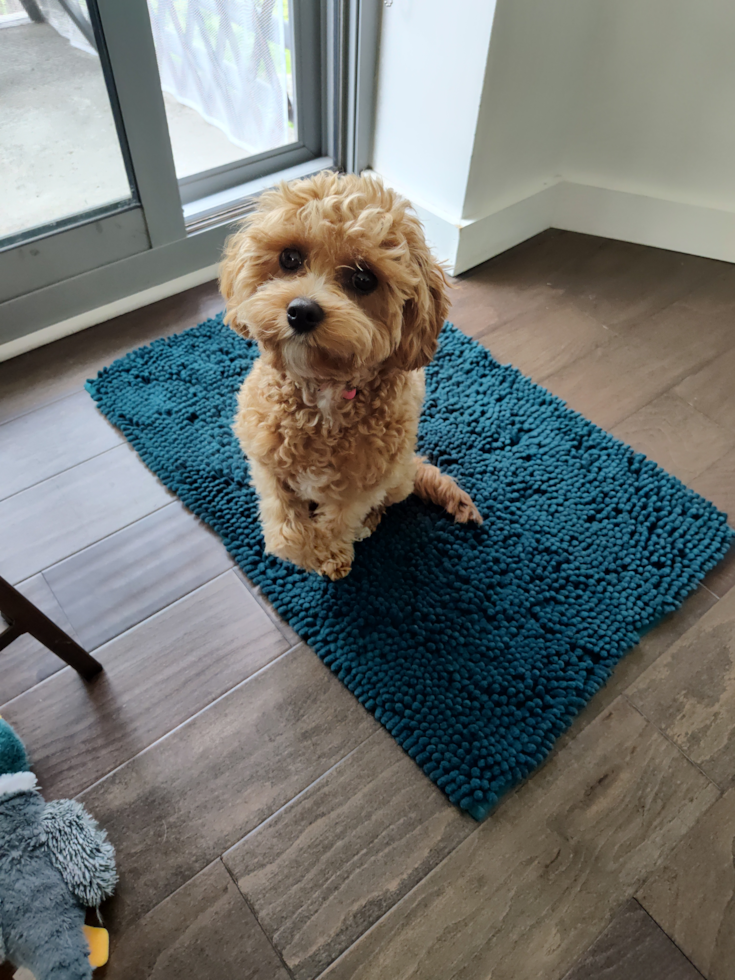
Cavapoos are affectionate, social dogs that tend to build strong relationships with their families. The Cavalier contributes warmth and gentleness, while the Poodle adds mental quickness and playfulness.
Many fit comfortably into the middle ground between active and relaxed. They can enjoy a busy morning, participate in training, follow the family on an outing, and settle happily once everyone returns home.
That adaptability is a major part of the Cavapoo's appeal. The dog wants involvement without necessarily needing every hour of the day to contain a new project.
Cavapoo Affection and Attachment
Cavapoos usually love close contact with their people. Cavaliers themselves are strongly affectionate dogs, and Poodles are highly people-oriented. Their cross can produce a dog that follows family members through the house, seeks physical affection, and prefers to spend much of the day near someone.
That closeness makes independence training important. A puppy that is held, followed, or entertained every minute never learns that brief separation is safe.
Short calm absences, independent naps, and solo enrichment can prevent a healthy attachment from becoming excessive dependence. The goal is still a cuddly dog. You simply want one that does not consider a closed bathroom door an emotional crisis.
Cavapoo Energy Level
Cavapoos usually have moderate energy. The Poodle contributes athleticism, and the Cavalier retains enough spaniel ancestry to enjoy proper exercise. Still, the Cavalier's modern companion temperament usually keeps the cross from reaching the activity demands associated with true herding dogs.
Daily walks, play, training, and opportunities to sniff and explore suit many adults.
Young Cavapoos can be wonderfully silly and energetic, especially during puppyhood and adolescence. That should not be confused with a permanent need for nonstop activity. Once mature and properly exercised, many become quite good at switching off indoors.
Cavapoo Intelligence and Training
Cavapoos can be excellent students. Poodles are exceptionally intelligent and highly responsive to positive training, while Cavaliers are eager to stay connected with people. The combination can create a dog that learns quickly without bringing the same degree of working intensity found in the Mini Aussiedoodle.
Short sessions work well. House manners, recall, leash skills, tricks, handling, and calm settling can all be introduced early. Cavapoos also benefit from puzzles and scent games, but most do not need elaborate enrichment schedules to function happily as family companions.
For many owners, this is a sweet spot: enough intelligence to make training rewarding without feeling as though the dog has applied for a full-time job.
Cavapoos With Children
Cavapoos can make excellent family dogs when children understand how to interact appropriately with a small animal. Their playful side allows them to participate in games, while the Cavalier influence can contribute a softer temperament. The dog's size is the main caution.
A very small Cavapoo can be injured by a toddler who falls on it, lifts it incorrectly, or plays too roughly. Adults should supervise interactions rather than assuming a friendly dog cannot be hurt.
Older children may enjoy training a Cavapoo because the dog is responsive without requiring sophisticated handling.
Cavapoos With Other Dogs and Pets
Cavapoos commonly fit well into multi-pet homes when properly socialized. Their parent breeds are people-focused and do not bring strong herding behavior into the cross. That can make relationships with cats and other dogs relatively straightforward. Individual personality still matters. A playful puppy can annoy an elderly cat regardless of breed.
Size matters too. A tiny Cavapoo should not be expected to handle rough play from a large dog simply because both animals are friendly.
Cavapoo Barking and Alertness
Cavapoos can be alert enough to announce visitors, hallway sounds, or something unexpected outside. Poodles notice their surroundings quickly, and Cavaliers are not completely silent dogs.
Still, barking is not normally the defining feature of a Cavapoo temperament.
Habits matter more. A puppy that barks once and immediately receives attention has learned an extremely useful lesson from its point of view.
Teaching a calm doorway routine and rewarding quiet observation can keep normal alertness at a manageable level.
Mini Aussiedoodle Temperament
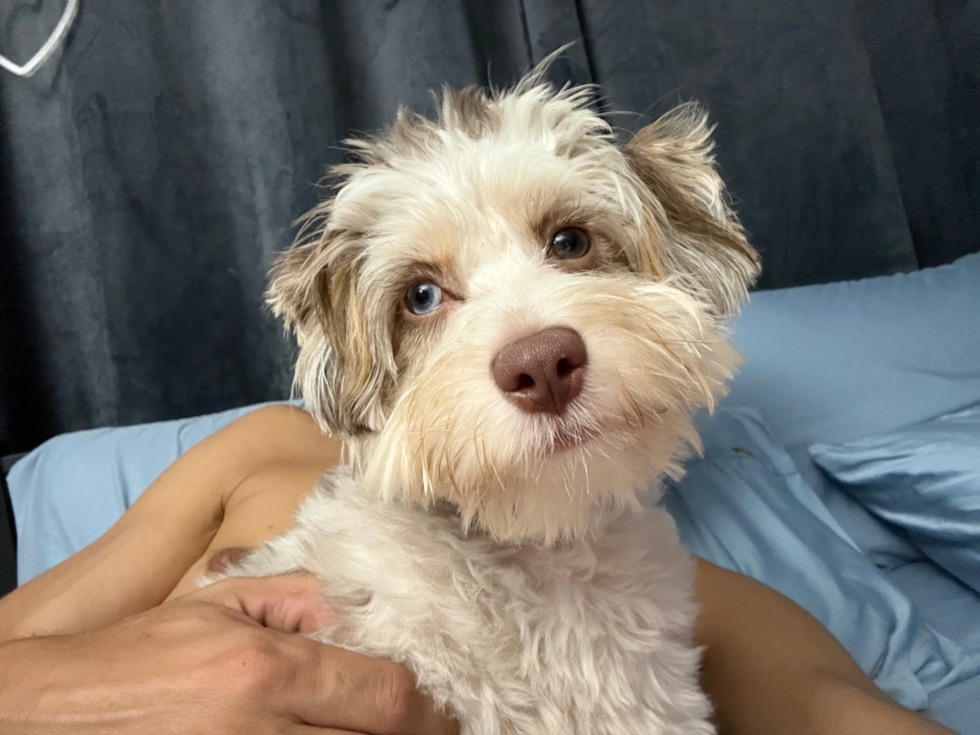
The Mini Aussiedoodle is where this comparison changes gear. Both sides of the cross are intelligent, athletic, and capable of complex learning. Miniature American Shepherds are described by the AKC as bright, self-motivated working dogs with strong herding ability, while Poodles are similarly active and highly trainable.
Put those traits together and you can get a dog that learns remarkably quickly, watches its environment closely, and genuinely enjoys having something useful to do.
The Mini Aussiedoodle can still be affectionate and cuddly. Working ancestry does not cancel that out. The difference is that affection may sit alongside a much stronger appetite for activity and engagement.
Mini Aussiedoodle Intelligence and Training
Training is one of the Mini Aussiedoodle's strongest areas. The Mini Aussie side contributes generations of selection for responsiveness, movement control, and independent decision-making. The Poodle contributes another highly trainable brain with excellent pattern recognition.
A Mini Aussiedoodle may learn basic cues quickly enough that the owner needs to think ahead about what to teach next.
That sounds wonderfully easy, and in many ways it is. Intelligent dogs make rewarding students.
There is another side to it. A dog capable of learning the rules quickly is equally capable of learning loopholes, routines, weak spots, and behaviors nobody planned to teach.
If stealing a sock reliably launches a five-minute chase around the living room, a Mini Aussiedoodle may conclude that sock retrieval is now an official household sport. Clear boundaries and consistent reinforcement make life much easier.
Mini Aussiedoodle Energy Level
The Mini Aussiedoodle is usually the more energetic dog in this comparison. Miniature American Shepherds are active, agile herding dogs that need both physical and mental stimulation. They excel in obedience, agility, tracking, and other activities that ask them to think while moving.
Poodles add athletic ability of their own.
This does not mean a Mini Aussiedoodle needs to run for hours every day. Quality matters as much as quantity. A brisk walk, sniffing, recall practice, training, fetch, and a puzzle can satisfy the dog more thoroughly than mindless laps around the same block.
A household that expects the dog to entertain itself after a five-minute bathroom break may have a very different experience.
Herding Instincts in Mini Aussiedoodles
Herding behavior is one of the most important differences between the Mini Aussiedoodle and Cavapoo. Miniature American Shepherds remain genuine herders. They may control livestock by watching movement, circling, chasing, and occasionally using heel-directed behavior. A Mini Aussiedoodle may inherit some of those instincts.
In a family setting, that can appear as close attention to running children, chasing movement, circling during excited play, or trying to keep everyone in one area. Some puppies may show interest in heels or moving pant legs.
Not every Mini Aussiedoodle will display obvious herding behavior. Crossbreed inheritance is variable. When it does appear, early redirection helps. Teaching the puppy to chase toys, respond to recall, settle on cue, and choose appropriate outlets prevents a clever instinct from turning into a frustrating household habit.
Mini Aussiedoodle Affection and Loyalty
Mini Aussiedoodles can form intense bonds with their families. Miniature American Shepherds are devoted to their people, and Poodles are similarly handler-focused. The cross can therefore be deeply affectionate while remaining highly attentive to what the owner is doing.
That attention may feel different from the softer Cavapoo attachment.
A Cavapoo may follow because being close feels good. A Mini Aussiedoodle may follow because being close feels good and because there is clearly something happening that requires supervision.
Many settle happily after their physical and mental needs are met. Meeting those needs first is the important part.
Mini Aussiedoodles With Children
Mini Aussiedoodles can make wonderful family dogs, especially in homes where children enjoy playing, training, and spending time outdoors.
Their sturdier size can make them less physically delicate than a very small Cavapoo. Older children may also appreciate a dog that enthusiastically participates in games and learns tricks quickly.
Herding behavior deserves attention with younger children. Running, shrieking, and fast changes of direction are exactly the kinds of movement that can interest a dog with herding ancestry. That does not make the breed unsafe with children. It means both puppy and children need guidance.
Teaching calm play, redirecting chasing, and preventing heel-nipping from becoming a habit creates a much better relationship.
Mini Aussiedoodles With Other Dogs and Pets
Mini Aussiedoodles can live successfully with other dogs and cats, especially when socialization begins early. Some may attempt to control the movement of other animals, particularly during play. A dog that repeatedly circles or chases another pet may not be aggressive at all, but the other pet may still find the behavior irritating.
Cats deserve calm introductions and escape spaces. A puppy should learn early that the cat is not an interactive herding exercise. The cross's intelligence can be an advantage here because appropriate boundaries are highly trainable when owners are consistent.
Mini Aussiedoodle Alertness and Barking
Mini Aussiedoodles may be more watchful than Cavapoos. Herding breeds need environmental awareness, and Miniature American Shepherds are naturally attentive dogs. A Mini Aussiedoodle may notice visitors, noises, movement outside, or changes in routine before its owners do. That awareness can turn into barking when not guided.
Teaching a quiet cue, rewarding calm behavior around windows and doors, and giving the dog sufficient stimulation can help.
A mentally bored dog may also become more interested in monitoring every leaf, neighbor, and delivery truck simply because nothing more interesting is happening.
Cavapoo vs Mini Aussiedoodle Temperament Comparison: The Main Difference
Both dogs are affectionate and intelligent, so saying that one is “smart” and the other is “loving” badly oversimplifies the comparison.
The real distinction is drive.
The Cavapoo has plenty of intelligence but usually carries less pressure to use it continuously. It can enjoy training and then happily transition into companion mode.
The Mini Aussiedoodle combines two highly trainable, active backgrounds. It may seek more interaction, notice more of its environment, and need more intentional outlets for its brain.
For someone who loves training, that can be incredibly rewarding. For someone who mostly wants a pleasant walk and a cuddly evening companion, it can feel like more dog than expected.
Cavapoo vs Mini Aussiedoodle: Which One Should You Choose?
The Cavapoo and Mini Aussiedoodle share enough good qualities that both can become excellent companions. They are affectionate, trainable, attractive Poodle crosses with strong relationships to their people.
Their ideal households can look quite different.
The Cavapoo leans toward adaptability and moderate energy. The Mini Aussiedoodle leans toward engagement, athleticism, and mental stimulation. Choosing between them becomes much easier when you picture an ordinary week rather than your most ambitious weekend.
Choose a Cavapoo if You Want a Softer, More Adaptable Companion
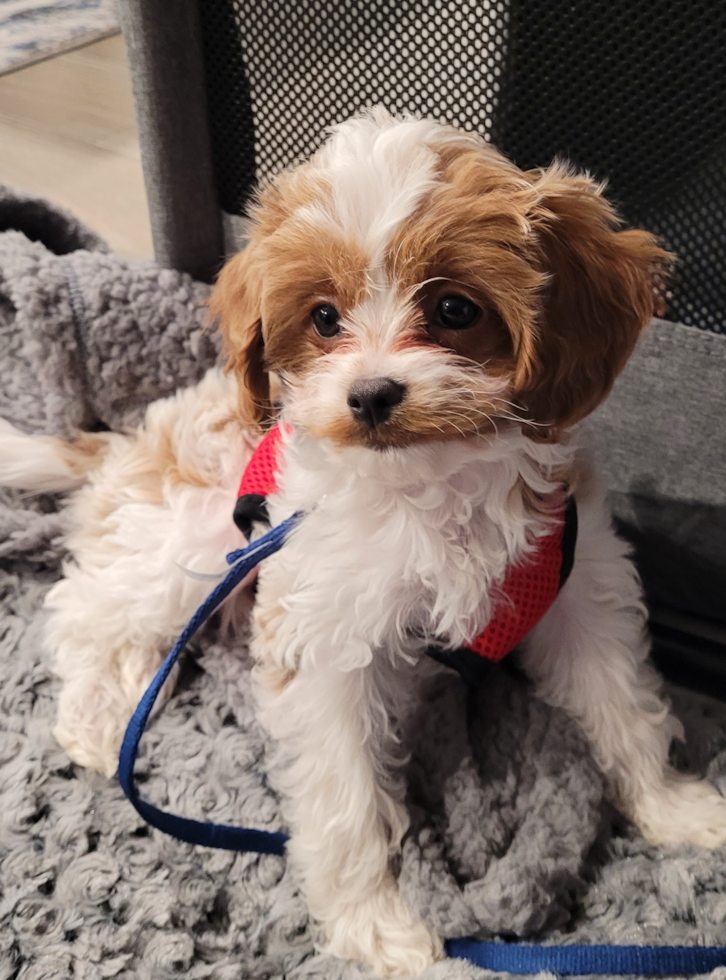
A Cavapoo puppy may suit you better if your ideal dog enjoys walks, games, and training without needing those activities to define the entire day.
Many Cavapoos can adapt comfortably when one day is busy and the next is quiet. They appreciate involvement but usually have an easier off switch once their basic needs are met.
Their smaller size can also make travel, apartment living, lifting, and everyday handling simpler.
This is especially useful for seniors, less active families, first-time dog owners, or anyone who likes intelligent dogs but does not specifically want working-breed intensity.
The Cavapoo still needs proper exercise and mental stimulation. The difference is that the threshold is usually more forgiving.
Choose a Mini Aussiedoodle if You Want an Active, Highly Interactive Dog
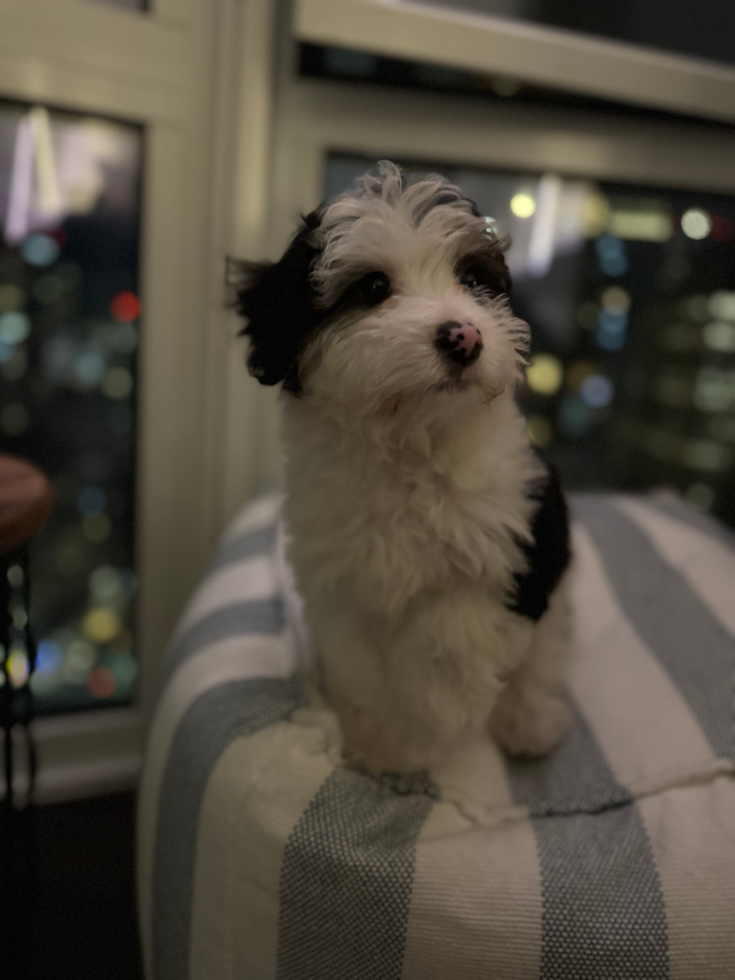
A Mini Aussiedoodle puppy may suit you better if training and activity are part of what excites you about getting a dog.
This cross can be tremendous fun for people who like long walks, hiking, trick training, fetch, scent work, agility-style games, or simply teaching their dog new things.
The Mini Aussiedoodle may also be the better fit for a family that wants a dog with more physical sturdiness than the average Cavapoo.
You do not need a ranch or flock of sheep. Miniature American Shepherds themselves can adapt successfully to city life when their exercise and mental needs are met.
What matters is participation. If you want a dog to be an active hobby as well as a companion, the Mini Aussiedoodle makes a lot of sense.
Which Is Smaller: Cavapoo or Mini Aussiedoodle?
The Cavapoo is usually smaller.
Most Cavapoos fall around 8 to 20 pounds and 9 to 14 inches, while Mini Aussiedoodles commonly reach around 15 to 35 pounds and 12 to 18 inches.
There is overlap. A large Cavapoo and a small Mini Aussiedoodle may be fairly similar in weight.
Generation and parent size can also create Mini Aussiedoodles below the common range.
If size matters enough that a difference of ten pounds would affect your decision, ask for actual parent weights rather than relying on labels such as mini, toy, or petite.
Which Is Calmer: Cavapoo or Mini Aussiedoodle?
The Cavapoo is usually calmer.
Cavaliers were developed heavily around companionship, while Mini Aussie-type dogs retain genuine working and herding drive.
That gives the Cavapoo a natural advantage in households that value a good indoor off switch and do not want to provide a large amount of structured enrichment.
Mini Aussiedoodles can relax beautifully too. The difference is that they may need more meaningful activity before relaxation arrives.
A satisfied Mini Aussiedoodle can be wonderfully calm. A bored one may begin developing its own agenda.
Which Is More Energetic?
The Mini Aussiedoodle is generally more energetic.
Both Miniature American Shepherds and Poodles are athletic dogs that enjoy work, training, and physical activity. The Miniature American Shepherd remains particularly strong in agility, obedience, tracking, and herding.
The Cavapoo still needs proper daily exercise. It is simply less likely to demand the same amount of sustained activity.
For regular hiking, dog sports, long outdoor days, or owners who love training, the Mini Aussiedoodle has the advantage. For moderate daily walks and family outings, the Cavapoo may fit more naturally.
Which Is Easier to Train?
Both are highly trainable, but the Mini Aussiedoodle may learn faster and have greater appetite for continued training.
That distinction is important. “Easier” does not always mean “less work.”
A Mini Aussiedoodle can grasp a new behavior remarkably quickly, yet the same intelligence may require more consistency from the owner. It learns both the rules and the exceptions.
The Cavapoo can be slightly more forgiving for someone whose goals are household manners, reliable recall, pleasant walks, and a selection of tricks.
For advanced obedience, agility foundations, complex tricks, scent work, or other mentally demanding activities, the Mini Aussiedoodle may offer more drive.
Which Is Better for First-Time Dog Owners?
The Cavapoo is usually the easier fit for a first-time owner.
Its moderate energy and companion-oriented temperament make the learning curve more manageable. Cavapoos still require training, grooming, socialization, and independence work, but mistakes are less likely to collide with strong herding drive.
A Mini Aussiedoodle can absolutely be a first dog for the right person.
The important question is whether that person actively wants to learn about training and canine enrichment.
A motivated beginner who thinks teaching, walking, exploring, and working with a dog sounds fun may adore the Mini Aussiedoodle. A beginner who wants an uncomplicated little companion may find the Cavapoo easier.
Which Is Better With Children?
Both can do very well with children, but they offer different strengths.
The Cavapoo brings a softer temperament and can fit beautifully with children who interact calmly and respectfully. Very small Cavapoos need protection from rough handling.
The Mini Aussiedoodle is usually sturdier and may be a fantastic partner for older children who want to play games, train tricks, and spend time outdoors.
The herding side creates one extra consideration. Running children can trigger chasing or heel-focused behavior in some Mini Aussiedoodles.
Early training matters. For calm younger children, either may work beautifully. For active older children who want a canine teammate, the Mini Aussiedoodle can be especially entertaining.
Which Is Better With Other Dogs?
Both can live happily with other dogs.
Cavapoos may have the easier social style because they do not bring herding instincts into the mix. Their interactions can be straightforwardly playful or companionable.
Mini Aussiedoodles may attempt to control movement during play, especially when the Aussie side comes through strongly. That can look like circling, chasing, blocking, or close monitoring.
Another active dog may think this is tremendous fun. A quiet older dog may disagree. Individual play style matters more than a generic breed label.
Which Is Better With Cats?
The Cavapoo may have a slight advantage for a quiet cat household because it is less likely to inherit herding behavior.
Mini Aussiedoodles can live perfectly well with cats, especially when raised around them. The extra challenge is movement. A running cat can be interesting to a dog whose ancestry includes controlling moving animals.
Training should begin early. Rewarding calm observation, interrupting chasing, and giving the cat dog-free escape areas can create a peaceful home.
Neither cross has to be excluded from cat households. The Cavapoo may simply require less management in some cases.
Which Sheds Less: Cavapoo or Mini Aussiedoodle?
The Cavapoo may offer somewhat more predictable low-shedding potential.
Both crosses have a Poodle parent, but their other parents differ. Cavaliers shed, yet their coat does not include the same substantial woolly undercoat found in the Miniature American Shepherd.
Miniature American Shepherds have double coats and can shed heavily during seasonal coat changes. A Mini Aussiedoodle that inherits more of those coat characteristics may therefore shed noticeably more than a strongly Poodle-coated dog.
Curl changes the equation considerably. A curly Mini Aussiedoodle may shed less than a straight Cavapoo, so this should never be reduced to a guarantee. Ask about the actual coats behind the puppy if shedding is important.
Which Needs More Grooming?
Both need considerable grooming, but the work can differ.
A curly Cavapoo may require frequent brushing and regular haircuts because the hair mats easily. A curly Mini Aussiedoodle can require the same routine. A straighter Mini Aussiedoodle may need fewer haircuts but more brushing to remove undercoat and loose hair.
Neither cross belongs in the easy-grooming category.
For people who love the fluffy Doodle appearance, professional grooming should be treated as a normal ownership expense rather than an occasional luxury.
Which Is Cuddlier?
Both can be extremely affectionate, but the Cavapoo has a slight advantage if cuddling is one of your main priorities.
The Cavalier has a deep companion history and a particularly gentle attachment style. Many Cavapoos naturally gravitate toward laps, couches, and physical closeness.
Mini Aussiedoodles can be wonderfully cuddly too. Their affection may simply exist beside a stronger desire for activity.
A Mini Aussiedoodle may happily spend the evening against your leg after a good walk, a training session, and one final check that nobody intends to throw the ball again.
Which Is Better for an Active Lifestyle?
The Mini Aussiedoodle is the clear fit for a consistently active home.
Its herding ancestry adds stamina, agility, and interest in sustained activity. Miniature American Shepherds enjoy work that uses mind and body together, and Miniature Poodles bring athletic ability of their own.
Cavapoos can still be excellent walking and adventure companions. A healthy adult may surprise people with how much activity it enjoys. The difference appears when activity becomes frequent and challenging.
If hiking, exploring, training, or dog sports are genuine weekly activities rather than things you hope to start someday, the Mini Aussiedoodle may be the more satisfying partner.
Which Is Better for Apartment Living?
The Cavapoo has the easier apartment profile, though both can succeed.
Its smaller average size and moderate energy make apartment routines relatively straightforward. Good walks, play, and interaction can meet its needs without enormous amounts of indoor space.
Mini Aussiedoodles do not need a farm, but they do need outlets.
An apartment Mini Aussiedoodle with daily walks, training, sniffing, and activity can be perfectly happy. A Mini Aussiedoodle with access to a huge backyard but no interaction can still be bored.
Mental space matters more than yard space with a dog this intelligent.
Noise is another consideration. The Mini Aussiedoodle's greater environmental awareness may make doorway and hallway training particularly important in shared buildings.
Which Is More Likely to Bark?
The Mini Aussiedoodle may be more alert and vocal about changes in the environment.
Herding dogs pay close attention to movement and unusual activity, which can translate into faster responses to people outside, deliveries, unfamiliar sounds, or visitors.
Cavapoos can certainly bark, especially when excited or when the behavior earns attention.
With either dog, barking habits are shaped heavily by learning. Calm exposure to everyday sounds and early reinforcement for quiet behavior can prevent alertness from becoming a household problem.
Which Is Better for Seniors?
The Cavapoo usually has the advantage for seniors seeking a companion dog.
Its smaller size, moderate activity level, affectionate personality, and easier off switch fit many quieter lifestyles.
A Mini Aussiedoodle may suit an active older adult who walks regularly and genuinely enjoys training. Age alone does not determine which dog is appropriate. The important issue is matching the dog's normal energy to the person's normal routine.
Someone who walks several miles every day may love a Mini Aussiedoodle. Someone seeking a cheerful companion for moderate walks and relaxed afternoons may find the Cavapoo more comfortable.
Which Is Better for Someone Who Works From Home?
Both love having their people nearby, but the answer depends on what “working from home” looks like.
A Cavapoo may fit smoothly into a routine where the dog walks before work, plays during breaks, and spends part of the day resting nearby.
A Mini Aussiedoodle may need more deliberate boundaries and activity. Simply being in the same room with someone is not necessarily stimulating enough for a highly intelligent herding-Poodle cross.
A lunchtime training session, sniff walk, food puzzle, or structured play can make a noticeable difference.
With either breed, working from home should not mean the puppy is never alone. Independence practice remains important so the dog can cope when the owner's schedule eventually changes.
Which Has the More Predictable Appearance?
The Cavapoo usually has the narrower visual range.
There is still meaningful variation in curl, size, color, and facial structure, but the Cavalier and small Poodle combination tends to stay within a recognizable companion-Doodle look.
The Mini Aussiedoodle can vary dramatically. Merle versus solid color, brown versus blue eyes, loose waves versus tight curls, strong Aussie markings versus a Poodle-like solid coat, and compact versus athletic body type can all make two Mini Aussiedoodles look surprisingly different.
For some people, that variety is part of the appeal. For someone who wants a very specific adult appearance, parent photos and adult dogs from previous similar pairings become especially valuable.
Cavapoo vs Mini Aussiedoodle: The Final Comparison
The choice between a Cavapoo vs Mini Aussiedoodle becomes much clearer once you stop treating them as two small Doodles and look at what sits behind the Poodle half.
The Cavapoo brings together Poodle intelligence and Cavalier companionship. It is usually smaller, softer in temperament, moderately active, and highly adaptable. Cavapoos can enjoy training and adventures without requiring their owners to make those activities the center of every day.
The Mini Aussiedoodle combines Poodle intelligence with genuine herding ancestry. That creates more potential for stamina, environmental awareness, advanced trainability, and a need for mental engagement. It is usually the sturdier and more athletic dog, with a much broader range of colors, patterns, and eye colors.
For a quieter household, apartment lifestyle, senior owner, or someone who wants an affectionate companion first and an activity partner second, the Cavapoo is likely to feel more natural.
For an outdoorsy household, training enthusiast, active family, or owner who genuinely enjoys giving a clever dog things to do, the Mini Aussiedoodle may offer exactly the extra spark they are looking for.
Grooming should not decide the comparison because both need regular coat care. Low shedding should not decide it either, since individual genetics create enough variation that neither label guarantees one exact outcome.
Energy and mental drive are much better dividing lines.
Think about a normal Wednesday. After work, are you looking forward to a pleasant walk followed by a dog curled beside you while the house quiets down? The Cavapoo fits that picture beautifully.
Or does the idea of a walk, five minutes of recall practice, a puzzle at home, and teaching a new trick sound like part of the fun? The Mini Aussiedoodle may be much closer to your kind of dog.
The individual puppy still matters enormously. Parent temperament, exact parent breeds, size, generation, coat, early socialization, and upbringing can move a dog away from the average description in either direction.
Frequently Asked Questions
What is the main difference between a Cavapoo and Mini Aussiedoodle? Both have Poodle ancestry, but the other parent changes the overall temperament. A Cavapoo has a Cavalier King Charles Spaniel parent, which usually brings a gentler and more companion-focused influence. A Mini Aussiedoodle has Mini Aussie-type ancestry, which adds herding instincts, greater athleticism, alertness, and a stronger need for mental activity.
Is a Cavapoo smaller than a Mini Aussiedoodle? Yes, in most cases. Cavapoos commonly weigh around 8 to 20 pounds and stand 9 to 14 inches, while Mini Aussiedoodles frequently reach around 15 to 35 pounds and 12 to 18 inches. Smaller Mini Aussiedoodles do exist, so the sizes of both parents provide the best estimate for an individual puppy.
Which is calmer, a Cavapoo or Mini Aussiedoodle? The Cavapoo usually has the calmer temperament. Cavaliers are companion-oriented dogs, while Mini Aussie-type dogs have genuine herding ancestry and greater working drive. Mini Aussiedoodles can relax very well once their needs are met, but they generally benefit from more physical activity and mental engagement across the day.
Are Mini Aussiedoodles more energetic than Cavapoos? Mini Aussiedoodles are usually more energetic. The Miniature American Shepherd is an active herding dog with the stamina and intelligence for agility, obedience, tracking, and other demanding activities. The Cavapoo still needs daily exercise, but its Cavalier influence usually makes a moderate routine more satisfying.
Which is easier to train, a Cavapoo or Mini Aussiedoodle? Both are highly trainable. Mini Aussiedoodles may learn faster and show more enthusiasm for continued training because both sides of their ancestry are highly intelligent and work-oriented. Cavapoos are responsive learners too and may be somewhat easier for owners whose goals center on household manners, recall, leash skills, and basic tricks.
Which sheds less, a Cavapoo or Mini Aussiedoodle? Both can shed very little when they inherit a strongly Poodle-like coat. The Mini Aussiedoodle has greater potential for shedding variation because the Mini Aussie side contributes a natural double coat that sheds seasonally. A curly Mini Aussiedoodle can still shed less than a straighter Cavapoo, so individual coat genetics matter more than the cross name alone.
Is a Cavapoo or Mini Aussiedoodle better with children? Both can be excellent with children. Cavapoos may suit households that want a softer, gentler little companion, while Mini Aussiedoodles can be great partners for active older children who enjoy games, training, and outdoor activities. Families with a Mini Aussiedoodle should watch for chasing or heel-directed behavior if herding instincts appear around running children.
Is a Cavapoo or Mini Aussiedoodle better for apartment living? The Cavapoo is usually easier in an apartment because of its smaller average size and moderate activity needs. Mini Aussiedoodles can also live successfully in apartments when owners provide enough walking, training, and mental stimulation. Access to a backyard matters less than whether the dog's daily physical and mental needs are actually met.
Do Mini Aussiedoodles have blue eyes more often than Cavapoos? Yes. The Mini Aussie side can contribute blue, brown, amber, hazel, mixed, or differently colored eyes. Miniature American Shepherds can even have multiple colors within the same eye. Cavapoos usually have brown or dark brown eyes because those colors predominate in both the Cavalier and Poodle sides.
Should I choose a Cavapoo or Mini Aussiedoodle? Choose a Cavapoo if you want a smaller, affectionate companion with moderate energy, strong trainability, and an easier balance between activity and relaxation. Choose a Mini Aussiedoodle if you want a sturdier, highly intelligent and athletic dog that enjoys training, games, outdoor adventures, and regular mental challenges. Both need grooming and close family involvement, but their daily activity and mental needs are where the difference becomes most important.