





Published Monday, October 5, 2026 by Pilesgrove Pups
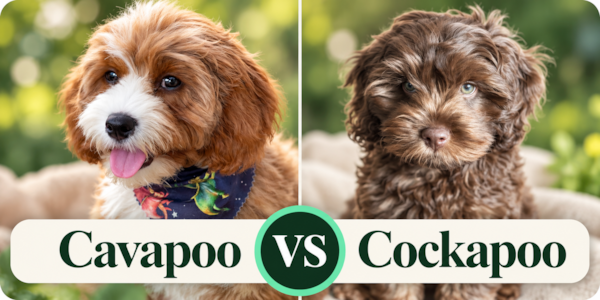
The Cavapoo vs Cockapoo comparison looks simple until you actually start researching the two dogs. Both are Poodle mixes. Both are known for soft coats, affectionate personalities, intelligence, and close relationships with their families. Even their faces can look remarkably similar, especially when both dogs have loose waves, floppy ears, and the same teddy bear haircut.
Their differences begin with the spaniel side. A Cavapoo combines a Toy or Miniature Poodle with a Cavalier King Charles Spaniel. A Cockapoo pairs a Poodle with a Cocker Spaniel, and that Cocker may be an American Cocker Spaniel or, in some breeding programs, an English Cocker Spaniel. The distinction matters because Cockers are sporting dogs with more size, stamina, hunting history, and physical drive than the Cavalier.
That does not make every Cockapoo dramatically more energetic than every Cavapoo. Both crosses have considerable variation, and the size and temperament of the parents play a major role. Still, the Cockapoo usually has a little more dog behind the fluff: a sturdier frame, stronger sporting ancestry, and greater potential for an active, busy personality.
The Cavapoo tends to stay closer to the small companion end of the spectrum. Cavaliers bring gentleness, adaptability, and a softer style of interaction, while the Poodle contributes intelligence and enthusiasm for learning. Put those traits together and you get a dog that can enjoy training and adventures without necessarily needing the same amount of activity as a more spaniel-driven Cockapoo.
If you are choosing between them, appearance alone will not tell you enough. The better question is what kind of daily life you want with your dog.
Table of Contents
- Cavapoo vs Cockapoo at a Glance
- Cavapoo and Cockapoo Overview and History
- Cavapoo vs Cockapoo Appearance
- Cavapoo vs Cockapoo Temperament
- Cavapoo vs Cockapoo: Which One Should You Choose?
- Choose a Cavapoo if You Want a Smaller, Softer Companion
- Choose a Cockapoo if You Want a Sportier Small Companion
- Which Is Smaller: Cavapoo or Cockapoo?
- Which Is Calmer: Cavapoo or Cockapoo?
- Which Is More Energetic?
- Which Is Easier to Train?
- Which Is Better for First-Time Dog Owners?
- Which Is Better With Children?
- Which Is Better With Other Dogs?
- Which Is Better With Cats and Small Pets?
- Which Sheds Less: Cavapoo or Cockapoo?
- Which Is Better for Allergies?
- Which Needs More Grooming?
- Which Is More Affectionate?
- Which Can Handle Longer Walks and Adventures Better?
- Which Is Better for Apartment Living?
- Which Is More Independent?
- Which Has the More Predictable Size?
- Cavapoo vs Cockapoo: The Final Comparison
Cavapoo vs Cockapoo at a Glance
| Trait | Cavapoo | Cockapoo |
| Parent breeds | Cavalier King Charles Spaniel × Toy or Miniature Poodle | Cocker Spaniel × Toy or Miniature Poodle |
| General size | Small | Small to medium |
| Typical adult weight | About 8–25 pounds | Varies widely, commonly around 12–25+ pounds |
| Height | About 9–14 inches | Roughly 10–15+ inches depending on parents |
| Build | Compact, soft, sometimes fine-boned | Usually sturdier and more athletic |
| Coat | Wavy to curly, sometimes straighter | Wavy to curly, with considerable variation |
| Shedding | Usually low | Usually low |
| Grooming | Moderate to high | Moderate to high |
| Energy | Moderate | Moderate to fairly active |
| Trainability | High | High |
| Personality | Affectionate, gentle, playful, attentive | Affectionate, merry, outgoing, lively |
| Spaniel influence | Companion-oriented toy spaniel | Sporting and hunting spaniel |
| Best fit | Someone wanting a smaller, adaptable companion | Someone wanting a slightly sportier, more active companion |
These ranges need context because neither cross has one official breed standard. Cavapoo size changes depending on whether a Toy or Miniature Poodle is used, while Cockapoo size can change according to both the Poodle and the type of Cocker Spaniel in the pairing. Cavapoos are roughly 8 to 25 pounds, while Cockapoos can range from very small dogs to dogs over 15 inches tall depending on their parents.
Cavapoo and Cockapoo Overview and History
At first glance, the Cavapoo and Cockapoo seem to belong to the same modern designer-dog story. The Cockapoo, however, has been around much longer. It appeared decades before the explosion of Poodle crosses that made names ending in “-poo” or “-doodle” familiar to almost everyone.
Both crosses use the Poodle for similar reasons. Poodles are intelligent, athletic, highly trainable dogs with curly coats that release relatively little hair. Their adaptability and three different size varieties also make them unusually flexible partners for companion breeding programs. Beneath the fancy show coat is a genuine working dog with a history as a water retriever.
Where the Cavapoo and Cockapoo separate is the spaniel half. Cavaliers were shaped heavily around companionship, despite retaining some sporting ability. Cocker Spaniels were developed to work with hunters and flush game, and modern Cockers still carry much more of that active sporting background.
That difference is the foundation for much of what follows.
Cavapoo History and Popularity
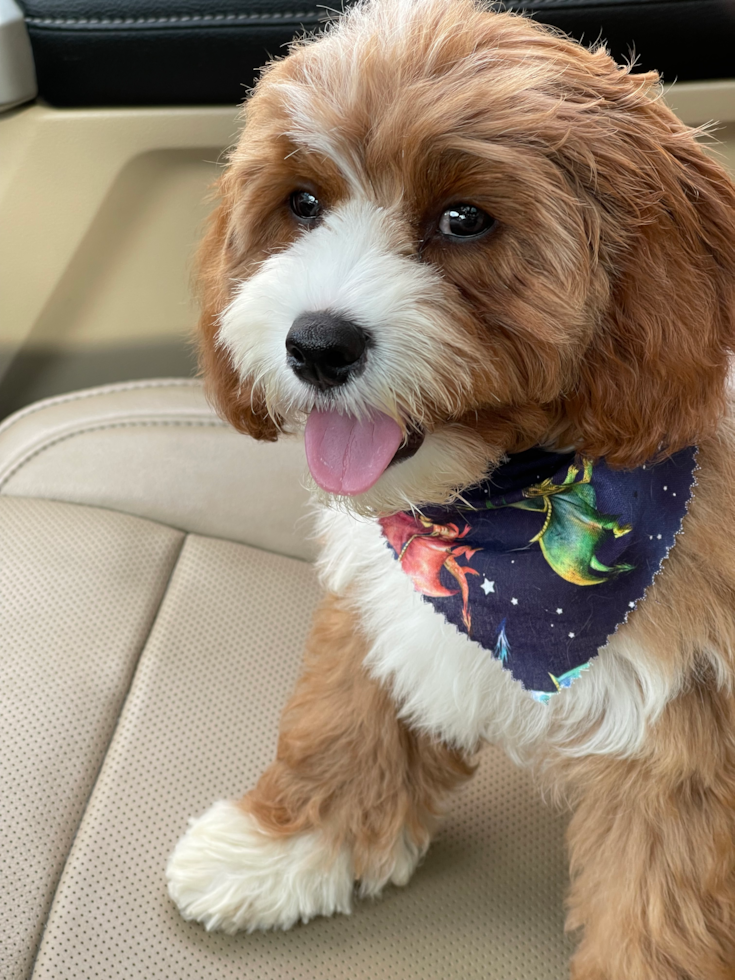
The Cavapoo combines a Cavalier King Charles Spaniel with a Toy or Miniature Poodle. You may also see the cross called a Cavoodle, particularly in Australia. Unlike an established purebred with a documented foundation record, the Cavapoo does not have one universally agreed-upon origin story.
Australia is closely associated with the development and popularization of the modern Cavapoo during the 1990s, although some sources report earlier Cavalier-Poodle crosses in the United States. Purina notes claims of Cavapoos in the U.S. during the 1950s, followed by more deliberate popularity in Australia and the UK during the 1990s. What is clear is that the Cavapoo became part of the broader interest in smaller Poodle crosses that combined companion temperaments with lower-shedding coats.
The Cavalier side brings a history that reaches back much further. Small toy spaniels were favorites among European nobility for centuries and became especially associated with Britain's King Charles I and Charles II. The modern Cavalier was later revived to resemble the longer-muzzled spaniels shown in historical paintings and received recognition from the British Kennel Club in 1945.
Today's Cavalier is a true companion breed, but it has not completely lost its spaniel character. The AKC describes it as a combination of gentle toy-breed attentiveness and sporting athleticism. At 12 to 13 inches and 13 to 18 pounds, the Cavalier also contributes a manageable small size to the Cavapoo.
The Poodle adds another layer. Toy and Miniature Poodles retain the intelligence, trainability, athleticism, and people focus associated with the larger Standard Poodle, just in smaller packages. That combination helps explain why the Cavapoo became so popular with people who wanted a little companion that could cuddle on the couch but still had enough brain and energy to enjoy training, walks, and everyday adventures.
Today, Cavapoos are among the most recognizable small Poodle crosses. Their appeal comes from more than the teddy bear appearance. They fit into a wide range of homes, usually enjoy people, and offer enough activity to be fun without automatically requiring the lifestyle of a serious working dog.
Cockapoo History and Popularity
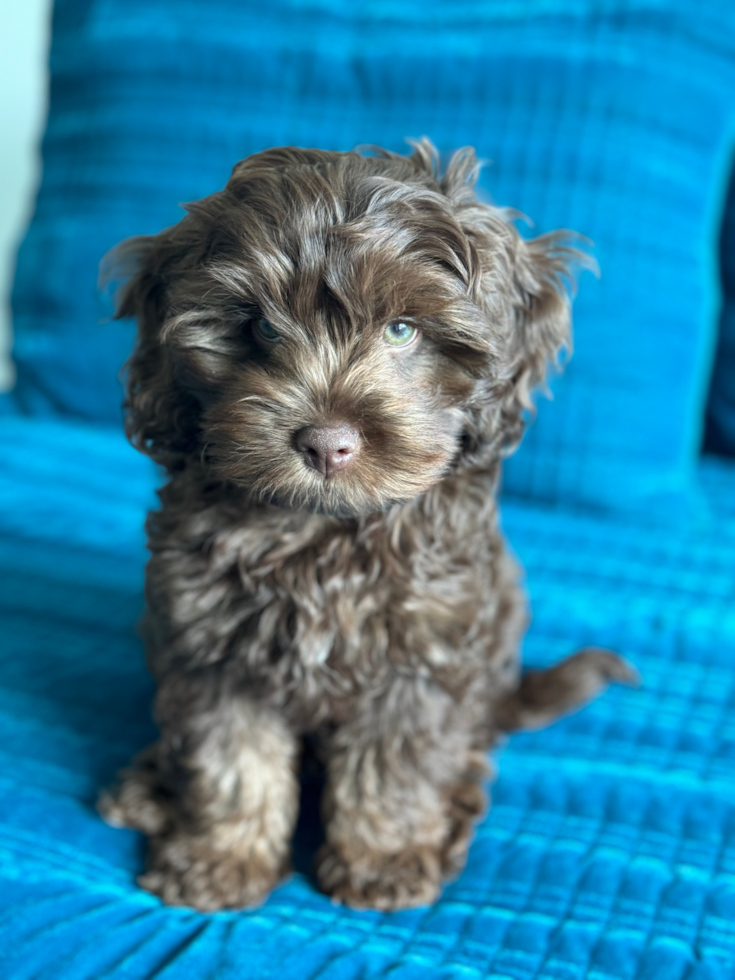
The Cockapoo is considerably older as an intentional cross. Cocker Spaniel and Poodle crosses were recorded in the United States by the 1950s, and Cockapoos had developed a recognizable following by the 1960s.
That history gives the Cockapoo several decades of development before the modern Poodle-cross boom. The Cockapoo Club of Great Britain notes that the name itself appeared in an Oxford English Dictionary citation from 1960. Although Cockapoos remain crossbreeds rather than an AKC-recognized breed, they have a longer modern history than many dogs now grouped under the designer-dog label.
The Cocker Spaniel contributes centuries of sporting history. Spaniels worked alongside hunters long before modern firearms, and smaller spaniels became particularly useful for flushing birds from dense cover. The word “Cocker” is associated with the dogs' skill at hunting woodcock.
In the United States, the Cocker Spaniel eventually developed into a different type from the English Cocker Spaniel. The American dog became smaller and somewhat more compact, while the English Cocker retained a longer head and a different overall structure. The AKC recognized the English Cocker as a separate breed in the 1940s.
This is important when researching Cockapoos because the word Cockapoo does not always describe exactly the same cross. In the United States, an American Cocker Spaniel is commonly used. In other breeding programs, especially outside the U.S., an English Cocker Spaniel may be part of the pairing. Working and show Cocker lines can also differ in energy and build.
The Poodle parent introduces another variable because Toy and Miniature Poodles can both be used. Put all of this together and the Cockapoo has a wider possible range than one tidy online breed profile can capture.
Its popularity makes sense, though. Cockers are famously cheerful, people-oriented dogs, and Poodles are intelligent and highly trainable. The resulting cross can combine the happy enthusiasm of a sporting spaniel with the trainability and low-shedding influence of the Poodle.
Cavapoo vs Cockapoo Appearance
The Cavapoo and Cockapoo share enough physical traits to confuse even people who know dogs fairly well. Both can have loose curls, floppy ears, dark expressive eyes, and shaggy facial hair. Give them the same haircut and similar coloring, and distinguishing one from the other in a photograph can become surprisingly difficult.
The differences become easier to see when you look at body structure and size. Cavaliers are smaller and more lightly built than Cocker Spaniels. Cockers have a sturdy sporting-dog body, greater substance, and more physical power for their size. That can give the Cockapoo a broader, more athletic appearance than the average Cavapoo.
Cavapoo Appearance
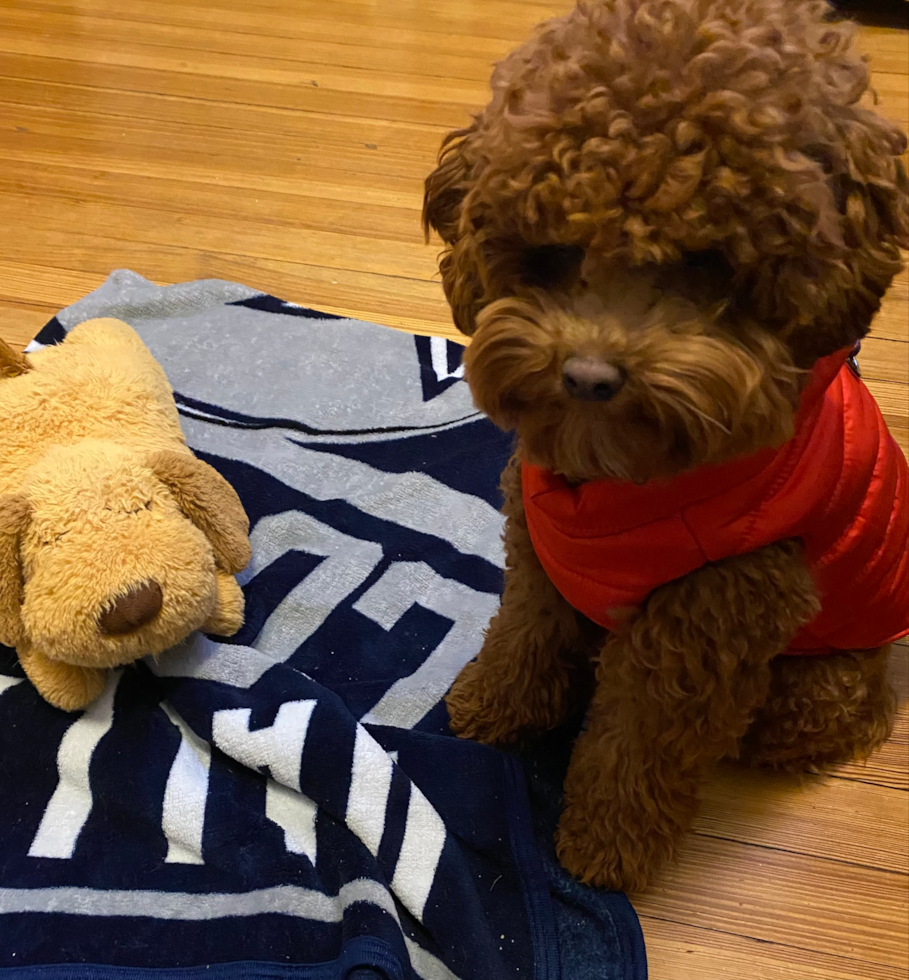
Cavapoos are small dogs, but their exact size depends heavily on the Poodle parent. Some place adults around 8 to 25 pounds, while others give a range of roughly 9 to 22 pounds. Toy-Poodle pairings usually stay toward the smaller end, while Miniature-Poodle Cavapoos can be taller and more substantial.
The overall build is usually compact and balanced. Dogs that favor the Cavalier may have a slightly longer body, broad expressive face, and substantial floppy ears. Stronger Poodle influence can produce longer legs, a narrower muzzle, and a more refined shape.
Many Cavapoos fall somewhere in the middle. Beneath the fluffy coat is a small but capable dog rather than an especially delicate one.
Cavapoo Coat Type and Texture
Cavapoo coats can be straight, wavy, or curly. The Cavalier contributes a silky medium-length coat with feathering, while the Poodle contributes dense curls. A puppy can inherit characteristics anywhere along that spectrum.
The loose, fleece-like wave many people associate with Cavapoos sits between the two parent coats. It creates a soft, tousled appearance without the tighter curl of a Poodle. Other Cavapoos develop thick curls, while some retain a much straighter spaniel-style coat.
This variation matters for much more than appearance. Coat texture affects shedding, matting, brushing frequency, and how frequently the dog may need professional grooming.
Generation can influence coat traits as well. An F1 Cavapoo has one Cavalier and one Poodle parent, while an F1b Cavapoo is commonly produced by crossing a Cavapoo back to a Poodle. Later-generation pairings add further combinations, which is why labels alone cannot guarantee one exact coat.
Cavapoo Colors and Markings
Cavapoos come in a broad color range because both parent breeds contribute several possibilities. Common shades include red, apricot, cream, gold, chocolate, black, tan, and white. Parti, tricolor, black-and-tan, and Cavalier-style Blenheim coloring can also occur.
Red and apricot Cavapoos have become especially recognizable, but those colors may change over time. Some Poodle lines carry genes that cause coat color to fade as the dog matures. A puppy that starts with deep red hair may become considerably lighter during adulthood.
White markings can range from a small chest patch to extensive areas across the face and body. Cavapoos with stronger Cavalier-style coloring may show clearly defined patches, while solid-colored dogs can look much more Poodle-like.
Cavapoo Eyes, Face, and Ears
Most Cavapoos have brown or dark brown eyes. Cavaliers are famous for their large, round eyes and soft expression, while Poodles usually contribute a more oval eye shape. The resulting face may lean clearly toward one parent or blend the two.
The ears are dropped and can become quite fluffy as the coat grows. Cavapoo ears may look shorter and rounder in a teddy bear trim or longer and more spaniel-like when the hair is left natural.
The combination of dark eyes, floppy ears, and facial furnishings is a major reason adult Cavapoos retain a puppy-like appearance. It is charming, but the hair around the eyes and ears also needs routine maintenance.
Cavapoo Shedding
Cavapoos are commonly described as low-shedding dogs, but coat genetics make that description more accurate than saying they do not shed. Poodles release relatively little visible hair, while Cavaliers shed more conventionally. A Cavapoo may inherit either influence or a blend of the two.
Curlier dogs may hold shed hairs within the coat, which reduces the amount that reaches furniture and clothing. That trapped hair still has to go somewhere, though. Without regular brushing, it can contribute to knots and mats.
Straighter Cavapoos may drop more visible hair. If low shedding is a high priority, the coat and parents of the individual puppy are more informative than the Cavapoo name by itself.
Cavapoo Grooming Needs
The Cavapoo's grooming needs are substantial enough that they should be part of the buying decision, not an afterthought. Regular brushing and professional grooming is commonly needed around every six weeks. Curlier and longer coats may require even more attention.
Mats commonly develop behind the ears, under the front legs, around the collar or harness area, and anywhere soft hair rubs together. A dog can look fluffy from the outside while tight knots form underneath, close to the skin.
Owners who prefer a shorter teddy bear trim can make daily maintenance easier, but no Cavapoo coat is truly wash-and-go. Ear care, nail trimming, dental care, bathing, brushing, and haircuts all belong in the normal routine.
Cockapoo Appearance
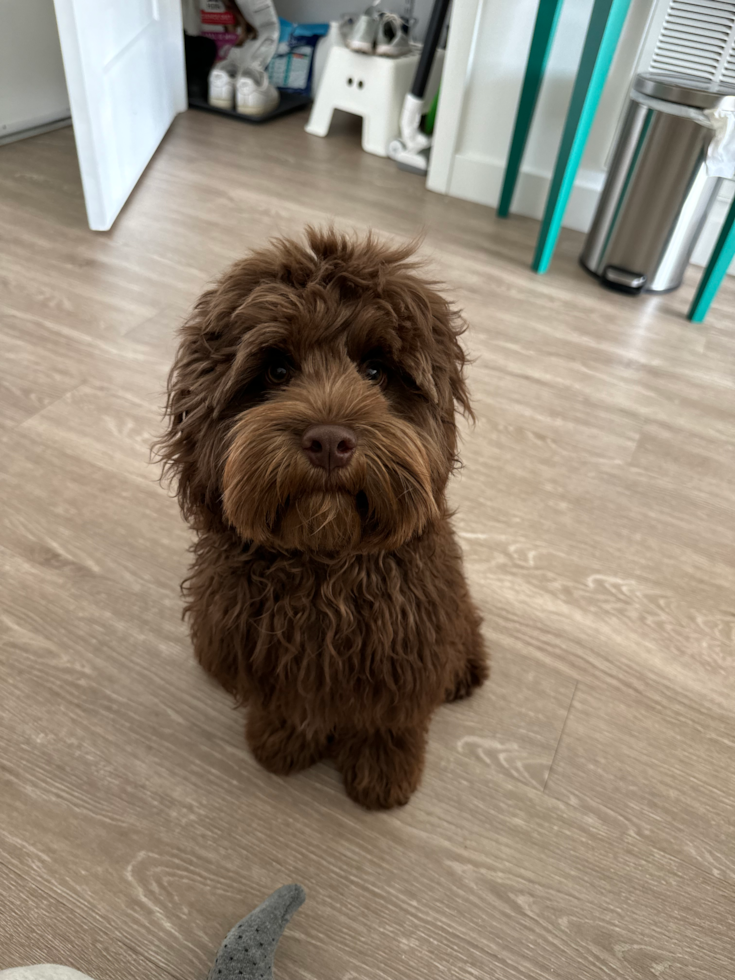
Cockapoos usually look a little more substantial than Cavapoos, though the range is wide. Cockapoos may stand below 10 inches or above 15 inches depending on the Poodle parent.
The Cocker parent also changes the picture. An American Cocker Spaniel stands roughly 13.5 to 15.5 inches and weighs about 20 to 30 pounds according to sex. A Cockapoo produced from those lines may inherit more bone, chest, and overall substance than a Cavapoo.
English Cocker-based Cockapoos can be different again, and working lines may produce a leaner, sportier outline. This is why Cockapoo size estimates online can seem inconsistent. They may be describing dogs from genuinely different parent combinations.
Cockapoo Coat Type and Texture
Cockapoo coats range from loose waves to curls, with some straighter coats appearing as well. The coat type varies according to the parent breeds and generation.
The Cocker Spaniel contributes a coat that is silky, substantial, and heavily feathered around the ears, chest, legs, and underside. The Poodle adds density and curl. Together, those traits can create a very full coat.
Some Cockapoos develop a shaggy wave that looks quite different from a tightly curled Poodle coat. Others become curlier as their adult hair replaces the puppy coat.
The amount of coat around the muzzle also varies. A heavily furnished Cockapoo can have the classic teddy bear face, while a dog with less facial furnishing may show more of the Cocker profile.
Cockapoo Colors and Markings
Cockapoos have an exceptionally broad color palette. Poodles already contribute black, white, cream, brown, apricot, red, gray-related shades, and other recognized colors. Cocker Spaniels add their own extensive range of solids, parti colors, tan points, and roan patterns.
Possible Cockapoo colors include black, chocolate, brown, red, apricot, buff, cream, white, and combinations of these shades. Black and white, red and white, liver and white, parti, tricolor, and roan-influenced patterns may also appear depending on the Cocker parent.
That last category is particularly interesting because roan comes from the spaniel side. Blue roan, orange roan, and other roan patterns are associated with Cocker lines and can produce a look that is much less common in Cavapoos.
Like Cavapoos, Cockapoos may also lighten with age when Poodle fading genes are present. Puppy color should therefore be treated as a starting point rather than a promise of the exact adult shade.
Cockapoo Eyes, Face, and Ears
Cockapoos usually have brown or dark eyes, although exact shade can vary with coat color. The Cocker contributes large, expressive eyes and long dropped ears, while the Poodle can narrow the overall face and change eye shape.
Cockapoo ears are frequently one of their most noticeable features. Cocker Spaniels are known for long, lush ears, and even a moderate amount of Poodle curl can make those ears look especially full.
That beauty comes with maintenance. Thick hair around floppy ears can reduce airflow and trap moisture, so routine ear checks and cleaning deserve attention in both Cockapoos and Cavapoos.
Cockapoo Build and Size
The average Cockapoo usually has more substance than the average Cavapoo. The Cocker Spaniel is the smallest sporting spaniel recognized by the AKC, but it is still built as a working dog. Its body is sturdy, muscular, and capable of sustained activity.
That background can give the Cockapoo a deeper chest, stronger legs, and a more athletic frame. The difference may be modest in a very small Toy-Poodle Cockapoo or more obvious in a larger Miniature-Poodle pairing.
This is one reason the parents matter so much. Someone hoping for a 10-pound Cockapoo should not rely on the cross name if the actual parents suggest a much larger adult dog.
Cockapoo Shedding
Cockapoos are widely considered low-shedding dogs, particularly when the coat inherits more of the Poodle texture.
The Cocker Spaniel does shed, though, and the degree of Poodle influence varies. A loose, spaniel-like Cockapoo can release more visible hair than a tightly curled individual.
Generation can affect the odds but does not create certainty. An F1b Cockapoo with greater Poodle ancestry may be more likely to develop a curly low-shedding coat, yet genetics can still produce surprises.
Neither Cavapoos nor Cockapoos should be marketed as guaranteed hypoallergenic dogs. Allergic reactions can involve proteins in saliva and dander, not simply shed hair. Purina makes the same point when discussing Poodle crosses and allergies.
Cockapoo Grooming Needs
A Cockapoo can require every bit as much grooming as a Cavapoo, and sometimes more. Professional grooming every four to six weeks is ideal for many Cockapoos because mats can form in wavy and curly coats.
Long Cocker-style ears add another area to maintain. Hair behind and beneath the ears can knot easily, and food or water may collect on longer ear hair. Owners who keep the ears shorter for practicality may find everyday care much easier.
Regular brushing is essential whether the dog sheds visibly or not. The fuller the coat, the more important it becomes to brush all the way to the skin rather than only smoothing the top layer.
Cavapoo vs Cockapoo Appearance Comparison: What Is the Difference?
Put a Cavapoo and Cockapoo side by side and the Cockapoo will frequently look like the larger, sturdier dog. The Cavapoo is usually smaller and somewhat lighter through the body because the Cavalier itself weighs only around 13 to 18 pounds. An American Cocker Spaniel can reach around 30 pounds, which gives the Cockapoo greater potential for size and substance.
The faces can be harder to separate. Both crosses can have dark round eyes, floppy ears, a broad muzzle, and soft wavy hair. Cockapoo ears may appear longer and heavier, while Cavapoos can retain more of the Cavalier's round-eyed, gentle expression.
Coat color gives the Cockapoo a few additional possibilities. Both crosses can be red, apricot, cream, chocolate, black, parti, or multicolored, but Cocker ancestry introduces roan patterns and a wider variety of traditional sporting-spaniel markings.
Neither has a clear grooming advantage. Both need regular brushing, both can mat, and both commonly require professional haircuts. If you want a Poodle mix specifically because you dislike vacuuming dog hair, remember that less shedding usually means more coat maintenance, not less.
Cavapoo vs Cockapoo Temperament
Temperament is where the comparison becomes much more useful than appearance. Both dogs share Poodle intelligence and a strong interest in people. Both can be affectionate, playful, responsive, and eager to participate in family life.
The difference comes from the spaniels. Cavaliers were refined heavily as companion dogs. Cocker Spaniels remained genuine sporting dogs, even as they became popular family pets. That gives the Cockapoo more potential for stamina, hunting-related interests, and an enthusiastic “let's do something” quality.
Cavapoo Temperament
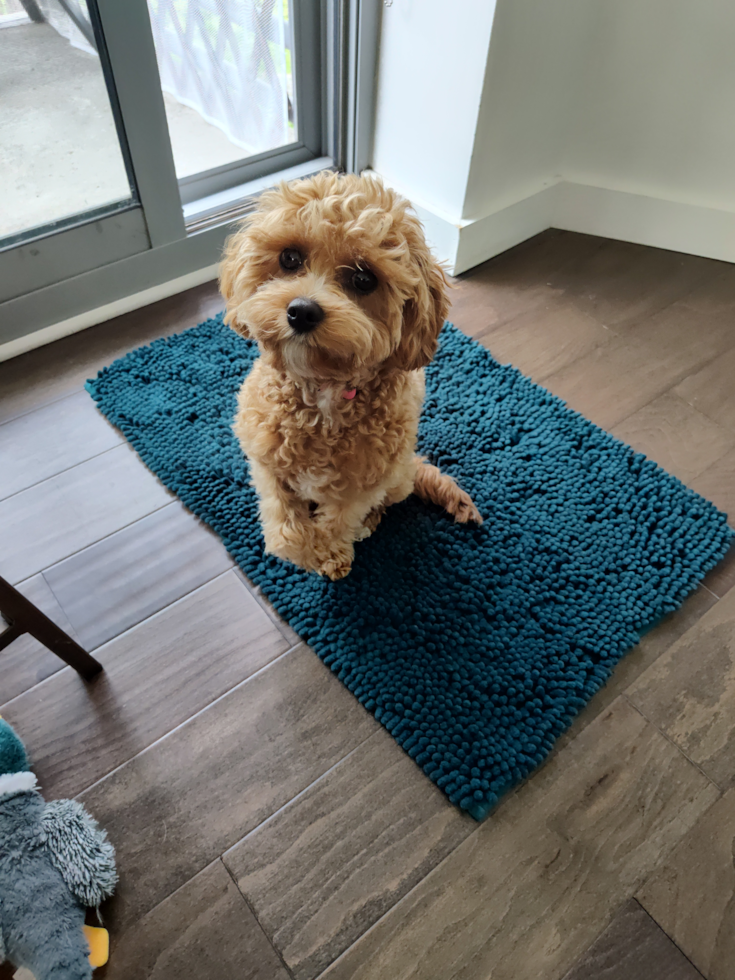
Cavapoos are known for being affectionate, social, playful, and closely attached to their people. They are gentle and adaptable companions that can work well for first-time owners and many family situations.
The Cavalier softens some of the more energetic Poodle traits without removing the intelligence. That creates a dog that can be quick to learn and enthusiastic about games while still fitting comfortably into a home where every day is not packed with activities.
Many Cavapoos seem happiest when they can participate in whatever the household is doing. A walk, a trip in the car, ten minutes of training, and then a nap close to someone can make for a very satisfying day.
Affection and Attachment
Cavapoos usually build strong bonds with their people. Some follow one favorite person through the house, while others spread their affection across the whole family. Either way, being included matters to them.
That closeness has a downside if a puppy never learns independence. Separation-related problems can develop in Cavapoos, which makes gradual alone-time training useful from the beginning.
This does not mean a Cavapoo can never be left alone. It means independence should be treated as a skill rather than something the puppy will automatically understand.
Cavapoo Energy Level
Cavapoos have moderate energy. They need real exercise, not just bathroom trips into the yard, but most do not require the intense routine of a high-drive sporting or herding breed.
Daily walks, games, sniffing, and short training sessions work well for many adults. A more Poodle-influenced dog may ask for extra activity, while one with stronger Cavalier traits can be very content with a gentler pace.
Puppies and adolescents are naturally busier. A six-month-old Cavapoo tearing around the house does not necessarily predict an adult dog with endless exercise requirements. Age matters when evaluating temperament.
Cavapoo Intelligence and Training
Cavapoos can be excellent students. Poodles are highly trainable dogs, and Cavaliers respond well to gentle, positive methods. Food, praise, toys, and play can all motivate the cross.
Training does not need to become formal or complicated. Teaching recall, leash manners, settling, handling, polite greetings, and a few tricks gives the dog useful mental work while strengthening communication with the owner.
The Poodle side can also make Cavapoos quick to notice patterns. If jumping onto your lap at dinner earns one bite of chicken, do not be surprised if the lesson sticks faster than the one about staying on the floor.
Cavapoos With Children
Cavapoos can be very good family dogs, especially when children know how to interact gently with a small animal. Their playful side makes them willing participants in games, while the Cavalier influence can bring patience and a softer temperament.
Size deserves attention around young children. A small Cavapoo can be injured by accidental falls, rough handling, or being picked up incorrectly. Adult supervision protects the dog as much as it protects the child.
Older children can take part in training, walking, and games. Cavapoos usually appreciate that kind of direct interaction.
Cavapoos With Other Dogs and Pets
Cavapoos are usually social with other dogs when introduced and socialized appropriately. Their parent breeds are strongly people-oriented, and neither side brings a pronounced guarding background into the cross.
They can also live successfully with cats. Individual prey drive varies, but the Cavalier side is generally softer than the sporting background found in the Cocker Spaniel.
Early experience still matters. A puppy that learns from the beginning that the household cat is a roommate rather than something to chase has a much easier path.
Cavapoo Barking and Alertness
Cavapoos are not usually considered extreme barkers, but they are capable of becoming vocal. Poodles can be alert, and a Cavapoo may bark when someone approaches the door, when excitement builds, or when it has learned that barking produces attention.
Early training helps here. Rewarding calm behavior and avoiding accidental reinforcement can prevent normal alert barking from becoming the soundtrack of the household.
Individual personality matters more than the cross name. Some Cavapoos barely comment on visitors, while others consider themselves unpaid front-desk staff.
Cockapoo Temperament
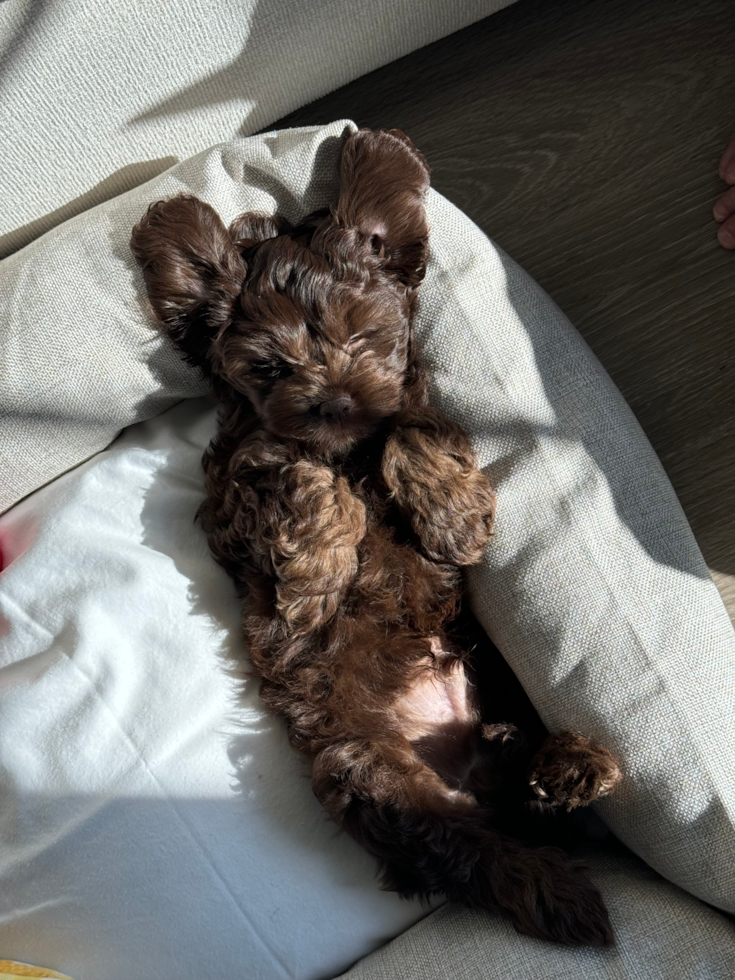
Cockapoos are affectionate, outgoing, intelligent dogs with a cheerful personality. The Cocker Spaniel has long been described as a merry breed, while the Poodle contributes quick learning and strong responsiveness to people. Cockapoos are curious, eager to please, sociable, intelligent, and highly trainable.
There is usually a little more sporting energy underneath the Cockapoo personality. The Cocker was bred to work through cover, use its nose, flush birds, and cooperate with a hunter. Even when no one in the family has ever held a hunting license, some of those instincts can survive in modern companion dogs.
That may show up as enthusiasm for fetch, fascination with scent, love of water, a desire to carry objects, or simply more stamina on walks. Not every Cockapoo will display these traits strongly, but they are worth understanding before choosing between the two crosses.
Cockapoo Energy Level
Cockapoos usually fall between moderate and fairly active. PetMD describes them as having moderate energy, while Purina emphasizes that some Cockapoos need more exercise and input than new owners expect. Those descriptions are not really contradictory. They reflect the wide range created by different Cocker and Poodle lines.
A Cockapoo from calm show-bred American Cocker parents may be happy with a very manageable routine. A dog with strong English or working Cocker influence can have considerably more stamina and desire for activity.
This is one area where asking about the parents matters enormously. “Cockapoo” tells you the recipe. The parents tell you much more about how energetic that particular recipe may turn out.
Cockapoo Intelligence and Training
Cockapoos usually take very well to training. Poodles bring problem-solving ability and responsiveness, while Cocker Spaniels have spent generations working in cooperation with people. Both sides have a good reason to pay attention to the person holding the treats.
Positive reinforcement is the best fit. Cockapoos can be sensitive dogs, and harsh methods are unnecessary when food, toys, praise, and games work so well.
Training can extend beyond basic manners if the owner enjoys it. Scent games, retrieving, trick training, and more advanced obedience can also make excellent outlets.
One practical advantage of training a Cockapoo is that mental work can take some of the pressure off physical exercise. Fifteen focused minutes of searching, problem-solving, or learning can leave a bright dog surprisingly satisfied.
Sporting and Hunting Instincts
The Cockapoo's Cocker side is the biggest temperament difference from the Cavapoo. American Cocker Spaniels were developed as hunting dogs, and the breed retains energy, eagerness, and sporting ability despite its modern popularity as a companion.
A Cockapoo may therefore become fascinated by birds, moving animals, interesting scents, or anything worth retrieving. Some dogs carry toys everywhere. Others approach every patch of grass as though it contains a mystery that must be solved immediately.
These behaviors are not problems in themselves. They simply need outlets and training. Recall deserves particular attention because a great smell can be very persuasive to a spaniel brain.
Cockapoos With Children
Cockapoos can make excellent family dogs. Their cheerful nature and sturdy build suit active households, and many enjoy games with children. Cockapoos can thrive in families with children when interactions are supervised appropriately.
Their slightly larger size can be useful in a busy household. A 20-pound Cockapoo may be less physically delicate than an 8-pound Cavapoo, though respectful handling is still essential.
Older children may particularly enjoy Cockapoos because these dogs can participate enthusiastically in fetch, training, walks, and outdoor play. The relationship becomes more interesting when the child has something to do with the dog rather than merely petting it.
Cockapoos With Other Dogs and Pets
Cockapoos are usually sociable with other dogs, and many thrive in multi-dog households. Proper introductions and early socialization still matter, but neither parent breed is known for being naturally antisocial.
Cats can also live successfully with Cockapoos. The greater consideration is prey interest. Purina recommends thoughtful socialization with cats and more caution around small animals and birds because of the sporting background.
A household rabbit, guinea pig, or pet bird therefore deserves more consideration than another dog would. Individual Cockapoos vary, but instincts should not be dismissed simply because the dog looks like a teddy bear.
Cockapoo Barking and Alertness
Cockapoo barking varies significantly. Some are fairly quiet, while others inherit a more alert or vocal personality. They are relatively quiet overall but notes that barking can appear in response to visitors or separation stress.
Both can be true because the parent lines differ. A Cockapoo from one family may barely react to the mail carrier, while another announces every delivery with great enthusiasm.
Early reinforcement matters. Dogs repeat behaviors that work, and barking that reliably produces attention can become a very successful strategy from the dog's point of view.
Affection and Independence
Cockapoos are deeply affectionate dogs and usually want to participate in family life. Their sporting ancestry does not make them distant. In fact, Cockers were developed to work closely with people, and Poodles are similarly handler-focused.
Some Cockapoos may be slightly more confident entertaining themselves than a very people-dependent Cavapoo, but this is not a dependable breed-wide rule. Both crosses can struggle if they are suddenly expected to spend long periods alone without preparation.
Independence should be taught gradually with either dog. A puppy that learns to nap alone, entertain itself with a safe toy, and remain relaxed during brief absences is much better prepared for normal adult life.
Cavapoo vs Cockapoo: Which One Should You Choose?
The Cavapoo and Cockapoo have enough in common that both can work in many of the same homes. They are intelligent, affectionate, trainable Poodle mixes that enjoy being close to people. Both need grooming, exercise, training, socialization, and more companionship than someone looking for an extremely independent dog may want to provide.
The choice becomes easier when you stop comparing generic labels and start comparing the lives these dogs are most likely to enjoy. The Cavapoo leans smaller, softer, and more companion-oriented. The Cockapoo leans sturdier, sportier, and somewhat more active.
Choose a Cavapoo if You Want a Smaller, Softer Companion
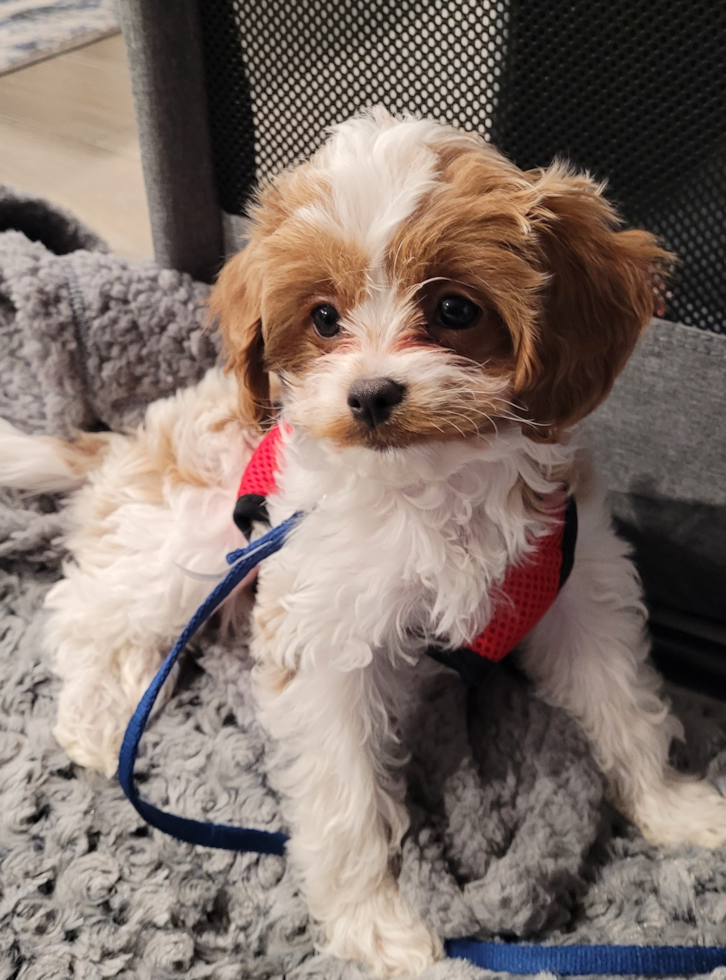
A Cavapoo puppy may suit you better if the ideal dog in your head is affectionate, playful, clever, and happy with a moderate routine. Cavapoos enjoy walks and training, but many settle comfortably into a household where life includes plenty of downtime.
Their smaller average size can also make them easier for apartment living, travel, and people who simply prefer a dog that is easy to lift and handle. A Toy-Poodle-based Cavapoo may stay considerably smaller than the average Cockapoo.
The Cavalier influence matters most in personality. It can soften the Poodle's intensity and create a dog that enjoys learning without needing a constant project.
If your normal weekday involves a good walk, some play, a little training, and then a peaceful evening at home, that rhythm may suit a Cavapoo beautifully.
Choose a Cockapoo if You Want a Sportier Small Companion
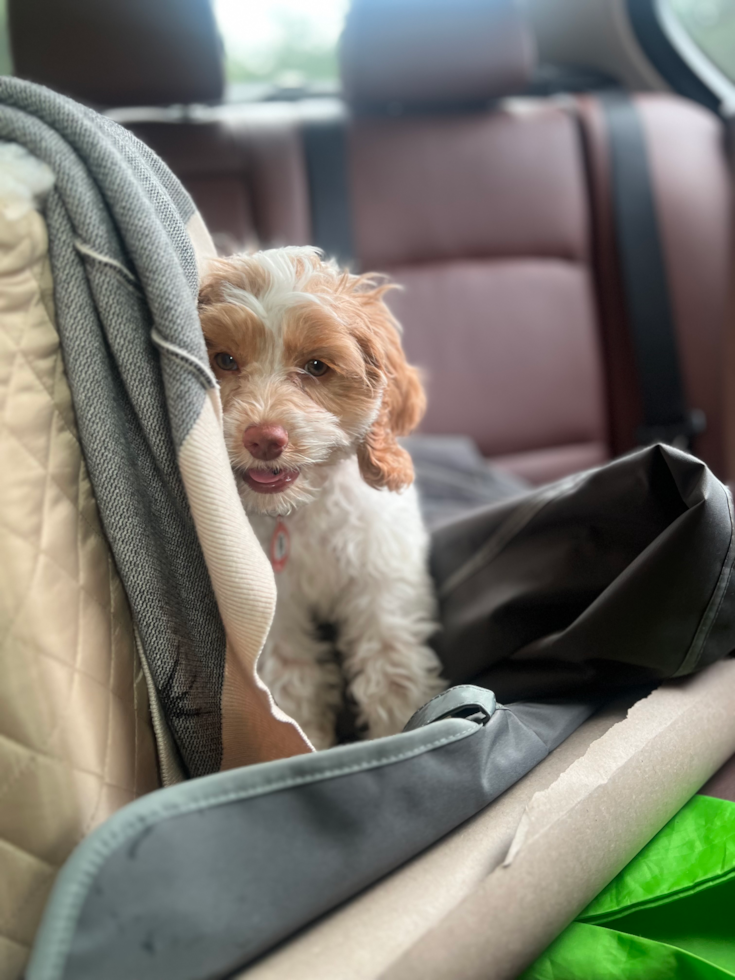
A Cockapoo puppy may suit you better if you want a dog that can keep up with a more active family. The Cocker Spaniel side adds sporting heritage, sturdiness, and potential stamina. Walks, fetch, swimming, scent games, outdoor adventures, and training can all fit naturally into the relationship. Cockapoos are still very affectionate dogs. Choosing one does not mean trading cuddles for exercise. It means those cuddles may come after a more energetic day.
They can be especially appealing to people who like the idea of a Poodle mix but want a little more physical dog than the average Cavapoo. A larger Cockapoo can feel sturdy without becoming difficult to handle.
Which Is Smaller: Cavapoo or Cockapoo?
The Cavapoo is usually smaller, although the ranges overlap. Cavapoos commonly weigh around 8 to 25 pounds. Cockapoo size varies more widely because both the Cocker type and Poodle size influence the result.
A Toy-Poodle Cavapoo may remain very petite, while a Cockapoo from a larger Cocker and Miniature Poodle pairing can move comfortably into the mid-20-pound range or beyond.
If adult size matters, do not rely on the name alone. Ask for the height and weight of both parents and, when possible, look at adult dogs from previous litters.
Which Is Calmer: Cavapoo or Cockapoo?
The Cavapoo usually has the advantage for a calmer lifestyle. Cavaliers are companion-oriented dogs with moderate exercise needs, which can balance the Poodle's active mind.
Cockapoos are not hyperactive by definition. Many are perfectly manageable family dogs. Their Cocker ancestry simply creates more potential for sporting energy and sustained activity.
Age makes a difference too. A young Cockapoo may seem dramatically busier than a mature Cavapoo, but both crosses usually become easier to settle as they move beyond puppyhood and adolescence.
Which Is More Energetic?
The Cockapoo generally has the edge in energy and stamina. Cocker Spaniels are sporting dogs developed for active work, and modern Cockers still enjoy brisk exercise and play.
Cavapoos still require real daily activity. They are not decorative dogs, and Poodle ancestry can produce a lively, athletic individual.
The difference is more about endurance and drive than whether one dog likes to move. A Cavapoo may happily join a long walk. A Cockapoo may be more likely to wake up the next morning ready to do it again.
Which Is Easier to Train?
This one is remarkably close because both share the Poodle, and both spaniel parents are responsive to people. Cavapoos can be very quick learners, while Cockapoos combine Poodle intelligence with a Cocker's history of cooperative field work.
For ordinary household training, there is little reason to expect a major difference. Either can learn recall, loose-leash walking, house manners, tricks, and obedience very well with consistent positive reinforcement.
The Cockapoo may have an advantage if you want to explore retrieving, scent games, agility, or activities that tap into sporting instincts. The Cavapoo may feel slightly easier for an owner whose training goals end at good manners and a handful of useful tricks.
Which Is Better for First-Time Dog Owners?
Both can make excellent first dogs. Cavapoos and Cockapoos are suitable for many first-time owners because they are sociable, intelligent, and responsive to positive training.
The Cavapoo may be somewhat easier for a beginner who wants a smaller companion and a moderate exercise routine. The Cockapoo may be the more satisfying choice for a first-time owner who actively wants walks, training, games, and outdoor activities to become part of daily life.
Grooming is probably the biggest surprise awaiting inexperienced owners of either cross. The pretty coat requires work, and postponing brushing until the next groomer appointment is not a good strategy.
Which Is Better With Children?
Both crosses can be excellent with children. Cavapoos bring a gentle, affectionate style, while Cockapoos add a little more sturdiness and enthusiasm for active games.
For very young children, a larger Cockapoo may have a practical advantage simply because the dog is less physically fragile than a tiny Cavapoo. That does not remove the need for supervision. Small and medium dogs can still be frightened or injured by rough handling.
Older children may enjoy either breed. The Cockapoo may be especially appealing to kids who want to throw a ball, explore outdoors, or teach the dog new activities. A Cavapoo may suit a household that wants a softer balance between play and cuddling.
Which Is Better With Other Dogs?
There is no strong reason to choose one over the other solely for another-dog compatibility. Both parent combinations are social enough that well-raised Cavapoos and Cockapoos can live happily with canine companions.
Temperament matching matters much more. An elderly quiet dog may appreciate a mellow Cavapoo more than an exuberant adolescent Cockapoo, while an active resident dog may enjoy the extra playfulness a Cockapoo brings.
Introductions should still be gradual. Friendly genetics are helpful, but good social skills are learned through experience.
Which Is Better With Cats and Small Pets?
The Cavapoo may have a slight advantage in homes with small pets because the Cavalier side has less modern working drive than the Cocker. Cockers were developed to flush and pursue birds, and some Cockapoos inherit stronger interest in fast-moving animals.
This distinction matters less with cats when puppies grow up around them and learn appropriate boundaries. Plenty of Cockapoos live peacefully with cats.
Birds, rabbits, hamsters, and other small pets deserve greater caution. No breed label can guarantee that a dog will ignore prey-like movement.
Which Sheds Less: Cavapoo or Cockapoo?
Both are usually low-shedding Poodle crosses, and neither has a reliable universal advantage. A curly Cavapoo may shed less than a loose-coated Cockapoo, while a heavily Poodle-influenced Cockapoo may shed less than a straighter Cavapoo.
The parent coats are similar enough in this respect that individual genetics matter more than the name. Cavaliers and Cockers both shed, while Poodles release far less visible hair.
If shedding matters greatly, ask about the coat types of the parents and adult dogs from similar pairings. A puppy's coat can also change as it matures, so absolute guarantees should be treated cautiously.
Which Is Better for Allergies?
Neither the Cavapoo nor Cockapoo is truly hypoallergenic. Low shedding may reduce the amount of hair moving through the house, but dog allergens are also present in dander and saliva. Purina specifically warns against assuming that Poodle crosses cannot trigger allergies.
A person with dog allergies may react less to one individual than another, but the breed name cannot predict that reaction reliably.
If allergies are important to the decision, spending meaningful time around the actual dog is far more useful than relying on a “hypoallergenic” label.
Which Needs More Grooming?
Both need enough grooming that there is no meaningful low-maintenance winner. Wavy and curly coats can mat, ears need routine care, and professional grooming every four to eight weeks is common depending on coat length and style. Cockapoo need professional grooming around every four to six weeks and Cavapoo grooming needs are extensive as well.
Cockapoos may require slightly more ear and feathering care when they inherit the fuller Cocker coat. Cavapoos with dense Poodle curls can be equally demanding.
The easiest coat to live with is usually the one an owner actually maintains. A shorter practical haircut can make either cross much simpler between appointments.
Which Is More Affectionate?
This category is almost impossible to separate because both crosses are deeply people-oriented. Cavaliers are famously affectionate, Cockers are devoted companions, and Poodles form strong relationships with their families.
The style may differ. Cavapoos can have a softer “stay close to me” quality, while Cockapoos may combine affection with a stronger desire to play and participate in activities.
Someone who wants a lap-sized shadow may lean Cavapoo. Someone who wants a dog that spends an hour exploring outside and then occupies the same couch cushion may lean Cockapoo.
Which Can Handle Longer Walks and Adventures Better?
The Cockapoo has the natural advantage for a consistently active lifestyle. The Cocker's sporting background contributes stamina and physical robustness, and Poodle ancestry adds another athletic influence.
A healthy Cavapoo can absolutely hike, explore, and enjoy longer walks. Size becomes relevant, though. A very small Toy-Poodle Cavapoo has shorter legs and less physical capacity than a sturdy 25-pound Cockapoo.
Think about what “active” actually means in your household. If it means a two-mile neighborhood walk several times a week, either dog can fit. If weekends regularly involve long hikes, outdoor exploration, or dog sports, the Cockapoo's extra sporting influence may become valuable.
Which Is Better for Apartment Living?
Both can live happily in apartments when exercise, training, and companionship are provided. The Cavapoo may have a slight advantage because of its smaller average size and somewhat softer activity profile.
A Cockapoo does not need a large yard, though. A yard is convenient, not a replacement for walks or engagement. An apartment Cockapoo with two good outings and some training may be far more content than a suburban Cockapoo left alone in a backyard.
Noise matters more than square footage in some buildings. Either cross can develop alert barking, so calm-doorway training is worth starting before the puppy decides that every hallway noise deserves a formal announcement.
Which Is More Independent?
Neither is an ideal choice for someone who wants a dog that is perfectly content to spend long days alone. Poodles, Cavaliers, and Cockers all have strong histories of working with or living closely beside people.
Cockapoos may occasionally show a little more confidence and independence because of their sporting ancestry, but that is not reliable enough to use as a deciding factor. Separation-related problems can occur in either cross.
The better approach is to teach independence deliberately. Short absences, relaxed crate or pen time, solo chewing activities, and predictable routines give puppies the skills they need before owners expect them to cope with longer periods alone.
Which Has the More Predictable Size?
The Cavapoo can be somewhat easier to estimate when the exact Poodle parent is known, but neither cross has the predictability of an established purebred with a narrow breed standard.
Cockapoos introduce another variable because Cocker Spaniel type can differ. American Cocker, English Cocker, show lines, working lines, Toy Poodles, and Miniature Poodles can create meaningfully different adult dogs.
For either cross, actual parent size beats a generic internet chart. If both parents are standing in front of you at 14 and 17 pounds, that information tells you far more than a website claiming every dog of that cross reaches one exact adult weight.
Cavapoo vs Cockapoo: The Final Comparison
The choice between a Cavapoo vs Cockapoo is not really a contest between two nearly identical teddy bear dogs. They share the Poodle, and that gives them plenty in common, but their spaniel ancestry pushes them in different directions.
The Cavapoo combines Poodle intelligence with the gentle, companion-focused nature of the Cavalier King Charles Spaniel. It is usually the smaller and somewhat softer of the two crosses. A Cavapoo can enjoy walks, training, games, and family outings without necessarily asking for a highly active lifestyle every day.
The Cockapoo combines the same Poodle intelligence with a sturdier sporting spaniel. That can mean more stamina, more enthusiasm for outdoor activity, a stronger interest in scents or retrieving, and a slightly bigger physical presence. For families that want a cheerful companion who can keep up with an active routine, those differences can be meaningful.
Appearance probably should not make the final decision because both dogs offer so much variety. Either can have curls or waves, rich reds or pale creams, solid coats or multiple colors. Both can shed lightly, and both can require serious grooming.
Lifestyle is the better dividing line.
If you want a small dog that can join your day but is equally happy when the pace slows down, the Cavapoo may fit naturally. If you like the idea of a dog that brings a little more sporting enthusiasm to walks, games, adventures, and training, the Cockapoo may be closer to what you are looking for.
There is one final piece that matters more with these crosses than any comparison table can show: look at the parents. A calm Cavalier and Toy Poodle can produce a very different dog from an athletic Cocker and Miniature Poodle. Parent size, temperament, coat, energy, and breeding generation can shift the result considerably.
The name narrows the possibilities. The actual puppy tells you what you are really bringing home.
Frequently Asked Questions
What is the main difference between a Cavapoo and a Cockapoo? The main difference is the spaniel parent. A Cavapoo combines a Poodle with a Cavalier King Charles Spaniel, while a Cockapoo combines a Poodle with a Cocker Spaniel. Cavaliers lean heavily toward companionship, while Cocker Spaniels have stronger sporting and hunting ancestry, so Cockapoos may be sturdier, more energetic, and more interested in active games or scent-driven activities.
Is a Cavapoo smaller than a Cockapoo? Cavapoos are usually smaller on average, although the ranges overlap. Cavapoos commonly weigh around 8 to 25 pounds, while Cockapoo size varies considerably according to the Cocker and Poodle parents. A small Toy-Poodle Cockapoo can overlap with a Cavapoo, while a Miniature-Poodle Cockapoo from larger Cocker lines can be noticeably bigger.
Which is calmer, a Cavapoo or Cockapoo? The Cavapoo usually leans calmer because the Cavalier side contributes a strong companion temperament. Cockapoos can settle very well indoors too, but their Cocker ancestry gives them greater potential for sporting energy and stamina. Individual temperament, age, exercise, and parent lines still make a large difference.
Which needs more exercise, a Cavapoo or Cockapoo? Cockapoos generally benefit from more exercise, especially when they inherit a strong Cocker Spaniel temperament. Their sporting ancestry can translate into more enthusiasm for brisk walks, fetch, swimming, scent games, and outdoor activity. Cavapoos need daily exercise as well, but many are satisfied with a somewhat more moderate routine.
Which is easier to train, a Cavapoo or Cockapoo? Both are highly trainable because they share an intelligent Poodle parent and both spaniel breeds have histories of working closely with people. Cavapoos may be slightly easier for straightforward companion training, while Cockapoos can excel when training includes retrieving, scent work, agility, or other active challenges. Positive reinforcement suits both crosses.
Which sheds less, Cavapoo or Cockapoo? There is no guaranteed winner because shedding depends heavily on the coat an individual dog inherits. Both can have low-shedding Poodle-style coats, while straighter spaniel-influenced coats may release more visible hair. Looking at the parents, generation, and developing puppy coat gives a better clue than choosing one cross solely by name.
Is a Cavapoo or Cockapoo better for allergies? Neither is guaranteed to be hypoallergenic. Poodle influence can reduce visible shedding, but people may react to proteins in dander and saliva as well as material carried on the coat. Anyone with significant allergies should spend time around the individual dog before deciding.
Which is better for children, Cavapoo or Cockapoo? Both can make excellent family companions when properly socialized and when children interact with them respectfully. Cavapoos may suit families looking for a smaller, gentler companion, while Cockapoos can be a particularly good match for children who want an active dog for games and outdoor play. A larger Cockapoo may also be less physically fragile around young children than a very small Cavapoo.
Are Cockapoos more active than Cavapoos? Cockapoos are usually somewhat more active because Cocker Spaniels are sporting dogs developed for field work. The difference is not absolute, though. A lively Miniature-Poodle Cavapoo can have more energy than a relaxed Cockapoo, which is why the temperament and activity level of the parents should always be considered.
Should I choose a Cavapoo or Cockapoo? Choose a Cavapoo if you want a smaller, affectionate companion with moderate energy and a good balance between activity and relaxation. Choose a Cockapoo if you want a sturdier, slightly sportier dog that may enjoy longer walks, retrieving, training, and outdoor activities. Both need regular grooming, companionship, and training, so the best choice comes down to the pace of life you genuinely plan to share with your dog.