





Published Monday, October 5, 2026 by Pilesgrove Pups
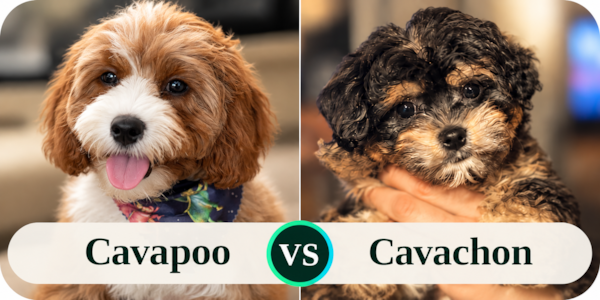
A Cavapoo vs Cavachon comparison can feel quite close because these dogs share half of the same family tree. Both have a Cavalier King Charles Spaniel parent, and that common influence shows in their affectionate nature, expressive faces, floppy ears, and strong attachment to people. Both are also small companion dogs that can fit comfortably into many family lifestyles.
The difference comes from the other half. A Cavapoo pairs the Cavalier with a Toy or Miniature Poodle, while a Cavachon combines the Cavalier with a Bichon Frise. The Poodle can add more athleticism, problem-solving ability, curl, and coat-color variety. The Bichon brings its own intelligence and playfulness, but it is rooted more firmly in companion life and has a different coat, build, and overall character.
That distinction is more important than it may sound. A Cavapoo may feel a little more mentally active and training-focused, especially when the Poodle influence is strong. A Cavachon usually leans toward a softer, cheerful companion personality, with enough energy to enjoy the day but less need for constant mental challenges.
There is plenty of overlap, of course. Individual dogs inherit different combinations from their parents, so this is not a choice between two completely opposite breeds. It is a choice between two similar small companions with a few meaningful differences that become clearer once you look closely at appearance, activity, grooming, and temperament.
Table of Contents
- Cavapoo vs Cavachon at a Glance
- Cavapoo and Cavachon Overview and History
- Cavapoo vs Cavachon Appearance
- Cavapoo vs Cavachon Temperament
- Cavapoo vs Cavachon: Which One Should You Choose?
- Choose a Cavapoo if You Enjoy Training and Mental Engagement
- Choose a Cavachon if You Want an Easygoing Companion
- Which Is Calmer: Cavapoo or Cavachon?
- Which Is Easier to Train?
- Which Is Better for First-Time Dog Owners?
- Which Sheds Less: Cavapoo or Cavachon?
- Which Is More Hypoallergenic?
- Which Needs More Grooming?
- Which Is Better With Children?
- Which Is Better for Apartments?
- Which Is More Affectionate?
- Cavapoo vs Cavachon: The Final Comparison
Cavapoo vs Cavachon at a Glance
| Trait | Cavapoo | Cavachon |
| Parent Breeds | Cavalier King Charles Spaniel × Toy or Miniature Poodle | Cavalier King Charles Spaniel × Bichon Frise |
| Typical adult weight | About 8–25 pounds | About 10–20 pounds |
| Typical height | About 9–14 inches | About 9–13 inches |
| Coat | Wavy to curly, sometimes straighter | Wavy, silky, fluffy, or curly |
| Shedding | Usually low | Usually low |
| Grooming | Moderate to high | Moderate to high |
| Common colors | Red, apricot, cream, black, brown, white, parti, tricolor | White, cream, apricot, chestnut, red, black and white, tricolor |
| Eye color | Usually brown or dark brown | Usually brown or dark brown |
| Energy | Moderate, sometimes moderately high | Moderate |
| Training | Very responsive and quick to learn | Responsive and people-focused |
| General personality | Affectionate, bright, playful, social | Gentle, cheerful, affectionate, social |
| Best fit | Someone who enjoys training and interaction | Someone wanting an easygoing companion |
The size ranges overlap quite a bit. Cavapoos can have the wider spread because the Poodle parent may be Toy or Miniature, which changes the expected adult size. The Cavapoo sits at roughly 8 to 25 pounds and 9 to 14 inches, while the Cavachon sits at about 10 to 20 pounds and 9.5 to 13.5 inches.
Cavapoo and Cavachon Overview and History
The easiest way to understand these two crosses is to start with what they share. The Cavalier King Charles Spaniel is a small British toy spaniel known for a gentle temperament, large dark eyes, and an unusual balance of lapdog affection and sporting ancestry. Cavaliers stand around 12 to 13 inches and weigh 13 to 18 pounds, so they also help keep both the Cavapoo and Cavachon comfortably within the small-dog range.
From there, the family trees separate. The Cavapoo adds a Poodle, usually Toy or Miniature. Poodles are active, highly intelligent dogs with a curly, minimally shedding coat and a strong history of working closely with people. The Cavachon adds the Bichon Frise, another intelligent breed, but one whose long history centers much more heavily on companionship, entertainment, and social life.
Those different backgrounds help explain why two dogs with the same Cavalier parent can still develop into noticeably different companions. The Cavapoo may carry more of the Poodle's eagerness for learning and mental work. The Cavachon may carry more of the Bichon's merry, adaptable companion character.
Cavapoo History and Popularity
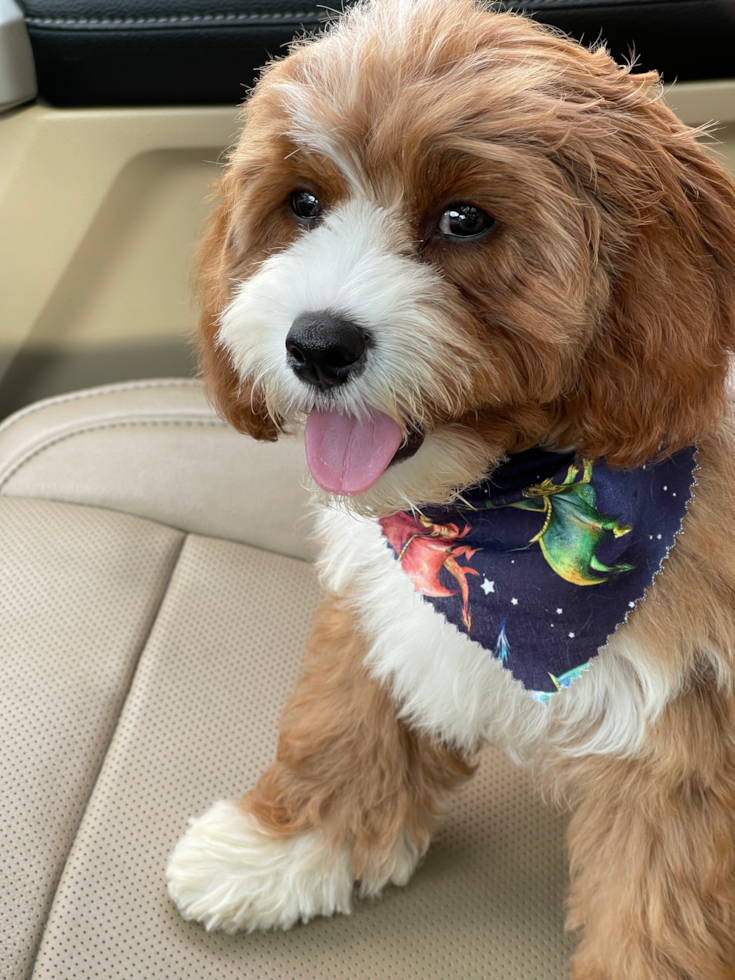
The Cavapoo, also called the Cavoodle in Australia, is a cross between a Cavalier King Charles Spaniel and a Toy or Miniature Poodle. Deliberate Cavapoo breeding is widely associated with Australia during the 1990s, when Poodle crosses were gaining attention as family companions with lower-shedding coats. The exact first breeder is not well documented, so broad claims about one specific origin should be treated cautiously.
The Poodle brings a surprisingly athletic background to the pairing. Despite the elaborate show trims people may picture first, Poodles were developed as water retrievers and remain active, trainable dogs. Modern Poodles come in Standard, Miniature, and Toy sizes, with Miniature and Toy Poodles commonly used in Cavapoo breeding. AKC describes the breed as highly intelligent, active, adaptable, and strongly connected to its people.
The Cavalier contributes a softer companion temperament. Cavaliers were developed from British toy spaniels and became closely associated with the royal courts of Charles I and Charles II. Today's breed remains affectionate and gentle, but its spaniel heritage means it still enjoys walks, play, and outdoor activity rather than living entirely as a lapdog.
The pairing became popular because those traits work well together. Cavapoos can combine the Cavalier's sweetness and adaptability with the Poodle's intelligence and low-shedding coat. Their small size has also made them practical for people living in apartments, suburban homes, or larger family houses.
Popularity has grown far beyond Australia. Cavapoos are now well established among modern companion crosses in the United States, United Kingdom, and other countries. Their combination of manageable size, affectionate personality, and recognizable wavy coat has made them one of the more familiar Poodle mixes.
Cavachon History and Popularity
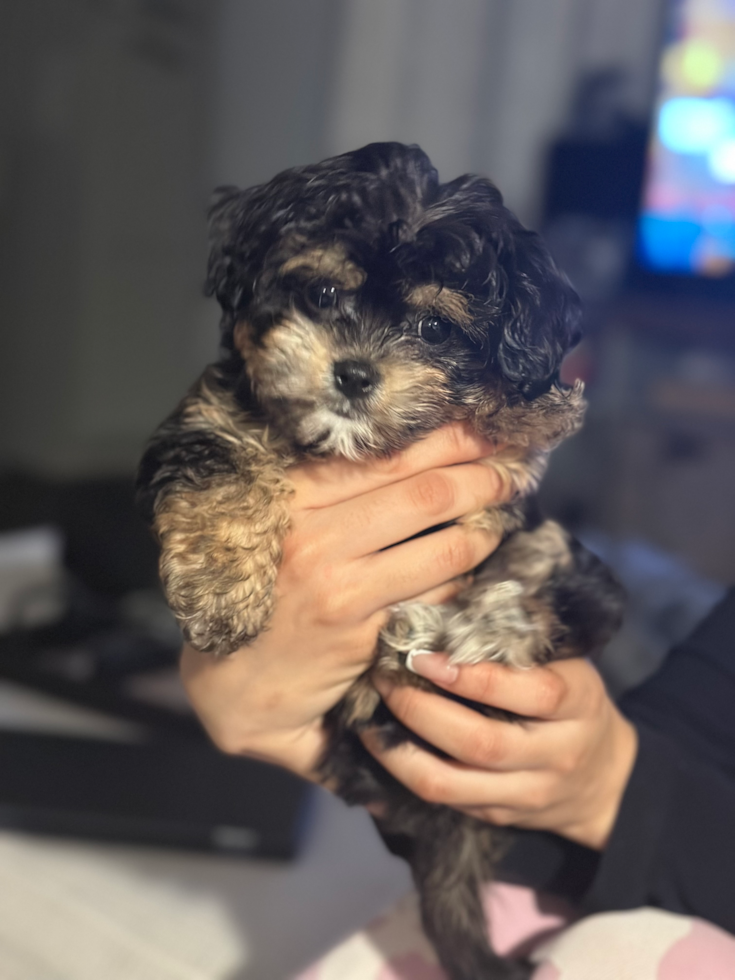
The Cavachon combines the Cavalier King Charles Spaniel with the Bichon Frise. Modern intentional breeding is commonly traced to North America in the 1990s, with 1996 frequently cited as an early point in the cross's development. As with the Cavapoo, the absence of a formal foundation registry means it is better to treat that period as the beginning of widespread intentional breeding rather than assume one exact date tells the entire story.
The Bichon Frise has a much older history. Small Barbichon-type dogs traveled through the Mediterranean for centuries and later became favorites among European nobility. When their popularity in royal courts faded, Bichons found another role as street and circus performers, where intelligence, charm, and trainability helped them succeed.
That background still makes sense when you meet a modern Bichon. These are sociable, curious, playful dogs that enjoy attention and learn readily, but they were not shaped around demanding physical work. AKC describes them as adaptable companions that can live happily in many types of homes, including smaller spaces.
Combining those traits with the Cavalier created a small dog with companion ancestry on both sides. The Cavachon became attractive to families looking for a friendly, affectionate dog with a soft coat, manageable exercise needs, and a cheerful disposition.
Its popularity has remained strong because the formula is fairly easy to understand. Cavachons are small enough for many living situations, playful enough to be fun family dogs, and relaxed enough that ownership does not usually need to revolve around intense physical activity.
Cavapoo vs Cavachon Appearance
This is where the comparison gets interesting because the shared Cavalier parent creates several obvious similarities. Both dogs usually have floppy ears, dark expressive eyes, soft facial features, and a compact build. Either one can also have the rounded teddy bear trim that makes small companion crosses difficult to tell apart in photographs.
The Poodle and Bichon sides create the differences. Cavapoos tend to have more variation in height, coat color, and curl because Poodles contribute a broader color palette and come in multiple sizes. Cavachons usually stay within a somewhat narrower range and may retain more of the silky spaniel texture in the coat.
Cavapoo Appearance
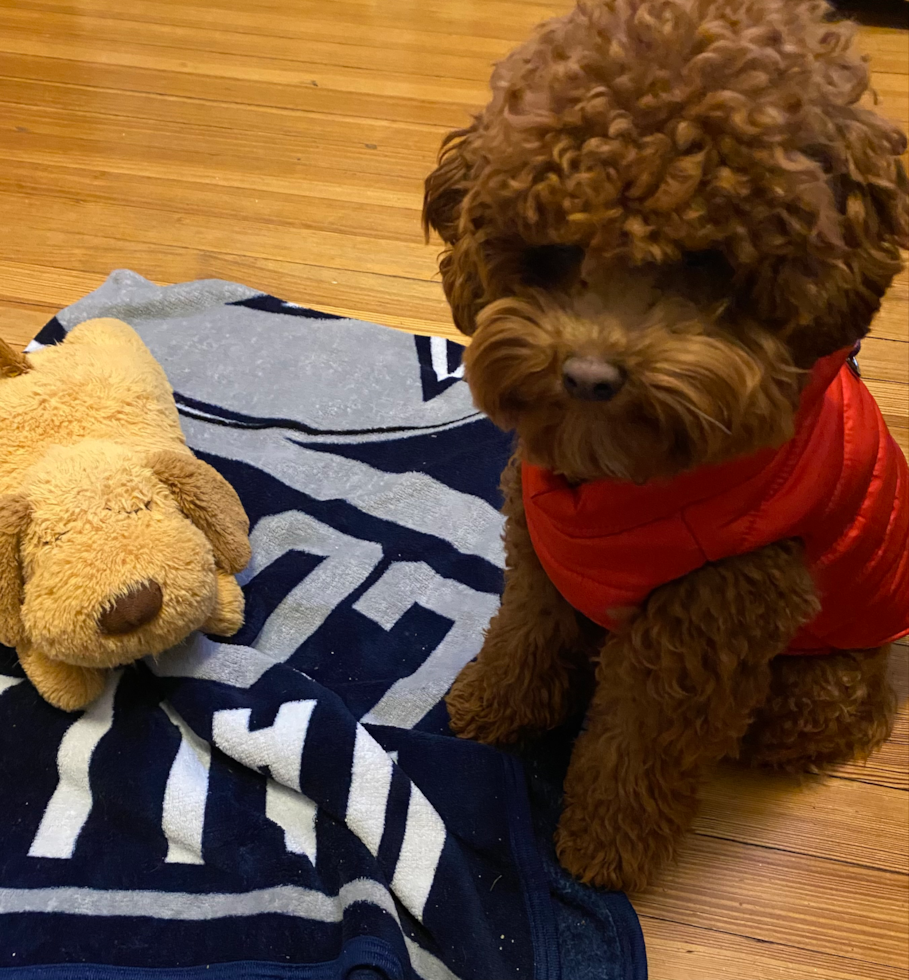
A Cavapoo is a small dog, but adult size can vary noticeably. PetMD gives a broad range of about 8 to 25 pounds and 9 to 14 inches tall, which reflects the fact that Cavapoos can have either a Toy or Miniature Poodle parent. A Toy Poodle pairing usually produces smaller puppies than one involving a Miniature Poodle, although genetics do not work like a perfect averaging calculator.
Many Cavapoos have a compact body with moderate bone, floppy ears, a rounded or gently tapered muzzle, and large dark eyes. Dogs with stronger Poodle influence may appear slightly leggier or more refined through the body. Those that favor the Cavalier side can have a broader spaniel-like expression and somewhat longer ears.
Cavapoo Coat Type
The classic Cavapoo coat falls somewhere between the Cavalier's silky hair and the Poodle's dense curls. Loose waves are common, but coats can range from fairly straight to distinctly curly. The amount of furnishing around the muzzle and eyebrows also changes the finished look.
A curlier coat can make a Cavapoo appear rounder and more plush, especially with a teddy bear trim. Looser waves create a softer, flowing look and may reveal more of the Cavalier influence around the ears and face.
Generation matters too. An F1 Cavapoo has one Cavalier parent and one Poodle parent, while later generations or backcrosses may contain different proportions of Poodle ancestry. That can affect coat texture and shedding, although individual genetics still prevent perfect prediction.
Cavapoo Colors
Cavapoos have one of the broader color ranges among small companion crosses. Poodles come in colors that include apricot, black, blue, brown, cream, red, silver, white, gray, and several related shades. Cavaliers contribute Blenheim, ruby, black and tan, and tricolor patterns.
As a result, Cavapoos may be red, apricot, cream, gold, brown, chocolate, black, white, black and tan, chestnut and white, parti, or tricolor. Some puppies have a solid coat while others carry large white areas or smaller markings inherited through the Cavalier side.
Color can also change with age. Red and apricot coats may soften as the dog matures, particularly when Poodle fading genes are present. A very rich puppy coat is therefore not always the exact shade the dog will have at three or four years old.
Cavapoo Eye Color and Expression
Most Cavapoos have brown or dark brown eyes. Both parent breeds commonly have dark eyes, so blue or mismatched eyes are not considered a normal feature of the cross. The exact shape can vary from the rounder Cavalier look to a slightly more oval Poodle influence.
Expression is one reason Cavapoos have become so recognizable. The dark eyes, floppy ears, and facial furnishings can create a soft puppy-like appearance that lasts well into adulthood.
Cavapoo Build and Size
Build depends partly on which Poodle size is involved. Toy Poodle Cavapoos can be very petite, while Miniature Poodle lines may produce taller and more substantial adults. This is why parent size is far more useful than relying on a single generic Cavapoo weight chart.
The Poodle influence can add a little more leg and athletic shape. Cavaliers themselves are not fragile dogs, though. They have sporting-spaniel ancestry beneath the elegant coat, so even a Cavapoo with stronger Cavalier traits can be active and capable.
Cavapoo Shedding and Grooming
Cavapoos are usually low shedders, particularly when they inherit more of the Poodle coat. Poodles shed minimally because loose hair becomes trapped within the curls rather than falling freely around the home. The Cavalier has a silky coat that does shed, so individual Cavapoos can fall anywhere between those two parents.
The catch is grooming. Low shedding does not equal low maintenance. Cavapoo hair can mat quickly when soft waves or curls rub together, especially behind the ears, under the legs, around the collar, and near the tail.
PetMD recommends brushing a Cavapoo roughly three times per week and scheduling professional grooming around every six weeks, although actual frequency depends on coat length and texture. A longer coat will require more work than a short practical trim.
Anyone choosing a Cavapoo mainly because they want less loose hair around the house should understand that the tradeoff is time spent brushing and grooming.
Cavachon Appearance
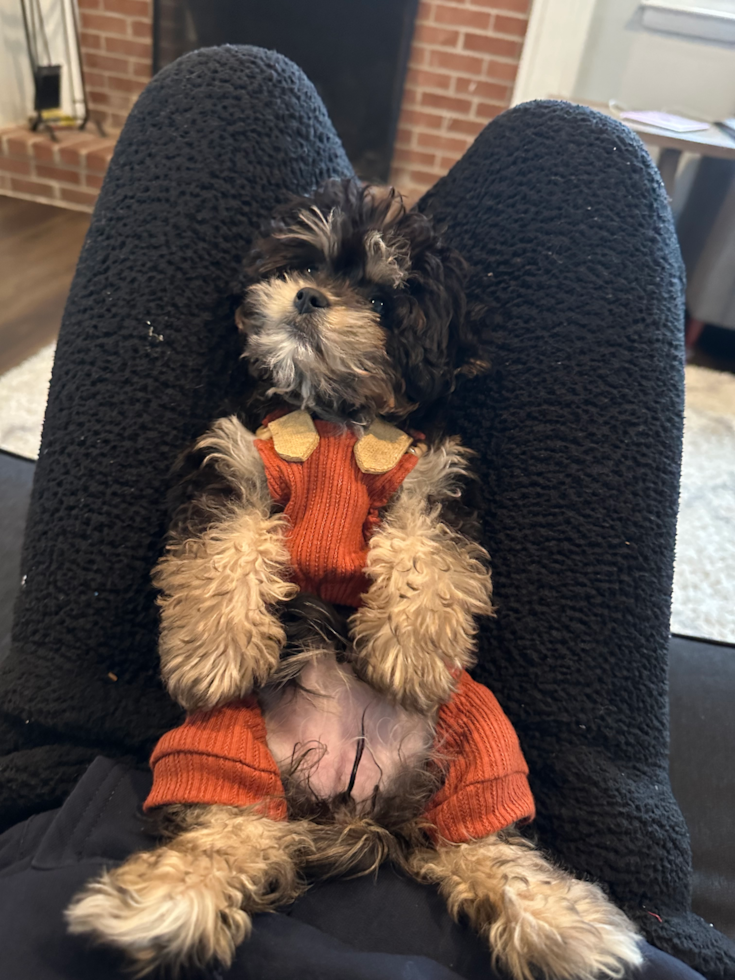
Cavachons occupy a similar size range but usually have less variation at the extremes. Most list the cross at roughly 10 to 20 pounds and 9.5 to 13.5 inches tall. Both parent breeds are naturally small, so there is less potential for a large swing based on parent variety.
The face usually looks soft and rounded, with dark eyes, floppy ears, and a moderately short muzzle. Some Cavachons strongly resemble Cavaliers with a fluffier coat, while others inherit enough Bichon texture to look rounder and more teddy-bear-like.
Cavachon Coat Type
Cavachon coats can be silky, wavy, fluffy, or curly. The Cavalier contributes smooth, feathered hair, while the Bichon has a soft, dense, curly double coat. A puppy can land anywhere between those two textures.
Many Cavachons develop loose waves rather than tight curls. That can give the coat a slightly softer and more natural fall than the curlier Cavapoo look. Others show much stronger Bichon influence and may become quite plush once the adult coat fills in.
Coat texture affects both appearance and maintenance. A loose silky coat may brush out relatively easily but can release more hair. A dense curlier coat may shed less visibly but trap loose hair close to the skin and mat faster.
Cavachon Colors
Cavachon colors come from a narrower palette than Cavapoo colors, though there is still plenty of variety. Cavaliers contribute Blenheim, ruby, black and tan, and tricolor, while the Bichon is primarily white with cream, buff, or apricot shading.
Common Cavachon colors include white, cream, apricot, chestnut, tan, red, black and white, Blenheim-style markings, and tricolor. White coats with chestnut, tan, or apricot patches are particularly recognizable.
Some puppies become lighter as they mature, especially around the face and body. Markings can also appear less sharp once the coat grows longer and colors blend through the hair.
Cavachon Eye Color and Expression
Dark brown eyes are standard for both Cavalier King Charles Spaniels and Bichons, so Cavachons nearly always stay within that range. Blue or partially blue eyes would be unusual and should not be expected as part of the normal Cavachon look.
The shared dark eyes may be one reason Cavapoos and Cavachons are so easy to confuse in pictures. Both can have the same gentle expression from the Cavalier side, especially when the coat around the face is trimmed in a similar style.
Cavachon Build and Size
Cavachons usually have a compact, sturdy little body rather than a particularly fine or leggy one. Bichons stand around 9.5 to 11.5 inches and weigh approximately 12 to 18 pounds, while Cavaliers are 12 to 13 inches and 13 to 18 pounds. Those parent ranges overlap substantially.
That similarity helps make Cavachon size more predictable than Cavapoo size. There will still be individual variation, but there is no Toy-versus-Miniature parent difference pulling the expected range in different directions.
Cavachon Shedding and Grooming
Cavachons usually shed lightly, though the exact amount depends on coat type. Bichons release very little visible hair, while Cavaliers shed more conventionally. A Cavachon with a dense Bichon-style coat may leave very little hair around the home, while one with a silkier spaniel coat can shed somewhat more.
Grooming still requires commitment. The Bichon's coat needs frequent brushing because shed hair becomes caught within the surrounding coat, and that same tendency can appear in Cavachons. Soft hair around the ears, chest, legs, and belly can knot surprisingly quickly.
Most Cavachons benefit from brushing several times each week, with more frequent attention for longer or curlier coats. Professional trims keep maintenance easier, especially for owners who prefer the shorter teddy bear style.
Cavapoo vs Cavachon Appearance: What Is the Difference?
The two dogs can look remarkably alike, especially when both have wavy apricot-and-white coats and the same haircut. Their shared Cavalier ancestry creates many of the similarities people notice first: floppy ears, dark eyes, soft expressions, and a compact companion-dog build.
The Cavapoo usually offers more variety. Poodle genetics widen the possible size range and add colors such as chocolate, black, deeper red, silver-related shades, and additional solid-color possibilities. Cavapoos may also have tighter curls and a slightly leggier build.
The Cavachon usually stays closer to a soft spaniel-and-Bichon look. Cream, white, apricot, chestnut, and Cavalier-style markings are common, and the body tends to stay compact. Coat texture can still vary, but very tight Poodle-style curls are less characteristic.
If low shedding is a major priority, the Cavapoo may have an advantage when it inherits a strongly Poodle-like coat. If more predictable adult size matters, the Cavachon may be easier to estimate because its two parent breeds are closer together in size.
Neither coat is easy care. That point is worth repeating because fluffy low-shedding dogs can look deceptively effortless in photographs. In real life, both require regular brushing and professional grooming if the coat is kept long.
Cavapoo vs Cavachon Temperament
Temperament is where the shared Cavalier influence becomes especially obvious. Both Cavapoos and Cavachons are strongly people-focused dogs. They usually enjoy physical affection, want to participate in family life, and respond well to positive interaction.
The difference is subtle rather than dramatic. Poodles bring more working-dog intensity and problem-solving ability to the Cavapoo. Bichons are intelligent too, but their personality has been shaped more around companionship and entertainment. The Cavachon may therefore feel a little more easygoing, while the Cavapoo may be more interested in learning what comes next.
Cavapoo Temperament
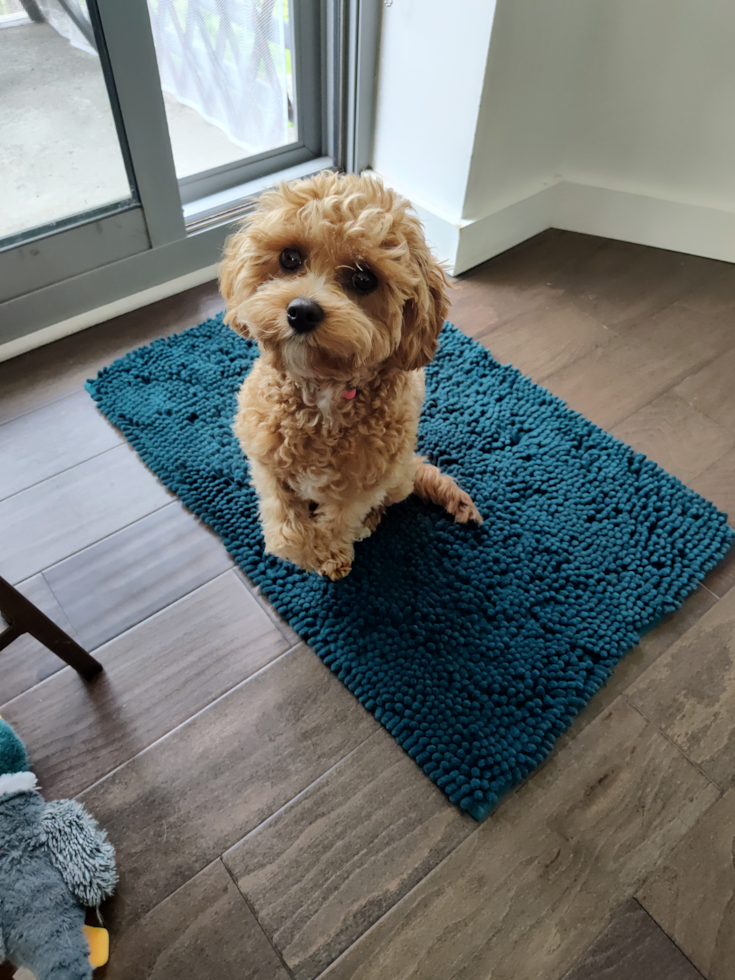
Cavapoos are affectionate, social dogs that usually form close bonds with their families. The Cavalier contributes a gentle, adaptable temperament, while the Poodle adds intelligence, responsiveness, and an active mind. Most owners describe Cavapoos as friendly, playful, people-oriented dogs that can fit well into many family settings when they receive enough attention and interaction.
They are not usually intense in the way a true high-drive working breed can be. At the same time, dismissing them as quiet lapdogs misses an important part of the Poodle influence. Many Cavapoos enjoy learning tricks, playing fetch, solving food puzzles, and participating in whatever their owners are doing.
Affection and Attachment
Cavapoos tend to bond closely with people. That may mean following someone from room to room, settling beside them during the evening, or becoming visibly excited whenever a family member starts preparing for a walk or outing.
The same attachment can create difficulty when dogs never learn to spend time alone. Separation-related problems can occur in Cavapoos because of how strongly they connect with their families. Independence training from puppyhood can help prevent normal attachment from becoming distress whenever the front door closes.
Short periods alone, calm departures, enrichment toys, and a predictable routine can all make independence feel ordinary rather than alarming.
Cavapoo Intelligence and Training
This is one area where the Cavapoo has a clear influence from the Poodle. Poodles are exceptionally trainable and highly responsive to their handlers. They also need mental stimulation, which can show up in a Cavapoo as enthusiasm for tricks, games, and learning household routines.
Positive reinforcement usually works very well. Food, toys, praise, and play can all become useful rewards, and the Cavalier side contributes its own desire to stay close to people.
A Cavapoo does not need a complicated training schedule, but it benefits from variety. A few minutes spent practicing recall, teaching a trick, or working through a food puzzle can provide more value than repeatedly drilling the same command.
Cavapoo Energy Level
Cavapoos usually fall into the moderate-energy range, although some individuals are noticeably livelier than others. The Cavalier can adapt well to both active and quieter households, while Poodles are athletic dogs that enjoy exercise and mental work.
For most adult Cavapoos, daily walks, play, training, and opportunities to explore provide a good balance. They are not usually the first choice for someone seeking a serious running partner, but they are far from sedentary.
The exact energy level also depends on size and personality. A lively Miniature Poodle-based Cavapoo may have more stamina than a very small dog with stronger Cavalier traits.
Cavapoos With Children
Cavapoos can do very well with children when the dog is properly socialized and the children understand how to interact with a small pet. Their playful nature suits family games, while the Cavalier side can add patience and gentleness.
Small size still creates a responsibility for adults. A puppy can be injured if a young child falls on it, picks it up incorrectly, or treats it like a stuffed animal. Supervision protects both sides of the relationship.
Older children may particularly enjoy a Cavapoo because training can become part of the fun. Teaching tricks, playing fetch, and practicing simple agility exercises can give the dog and child something constructive to do together.
Cavapoos With Other Pets
Cavapoos are generally sociable dogs and can live comfortably with other dogs and cats when introductions are handled well. Both parent breeds are highly people-oriented, and neither was developed primarily for guarding or territorial work.
The Poodle has a retrieving background, so an individual Cavapoo may show more interest in chasing moving objects than a very relaxed companion dog would. That does not usually create a major problem in a household, but personality always matters more than assumptions based on the cross alone.
Cavachon Temperament
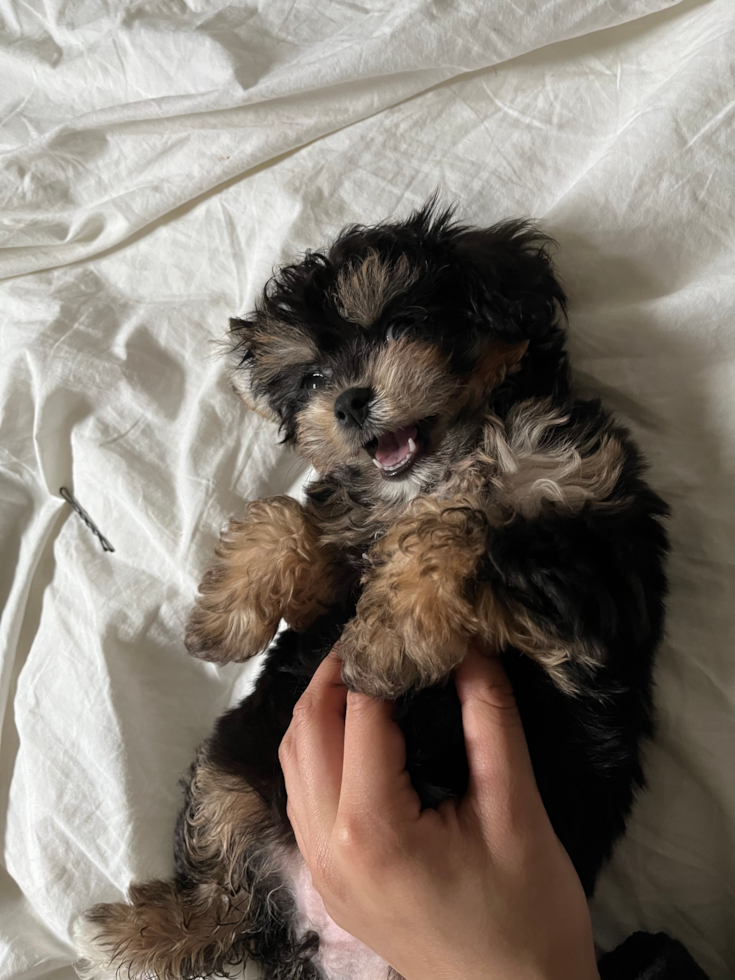
Cavachons are cheerful, affectionate companions with a strong interest in being around people. Both parent breeds have long histories beside humans, and that shared background gives the Cavachon a temperament that usually feels very natural in family life. Most describe the cross as outgoing, happy, confident, and closely bonded to its owners.
They enjoy activity, but they are not usually dogs that need a project every hour. Play, walks, family interaction, and a little training provide enough variety for many adults. Once those needs are met, settling near their people tends to come easily.
Affection and Family Life
Affection is central to the Cavachon's personality. Cavaliers are famous for their gentle attachment to people, and Bichons have spent centuries succeeding largely because humans enjoy having them around. That can produce a dog that actively seeks company without necessarily needing constant structured entertainment.
A Cavachon may follow its person through the house, curl up nearby while someone works, or happily join whatever social activity is happening. They can be wonderfully cuddly without spending the entire day asleep.
Their closeness to family means alone-time training matters here too. Companion breeds do not automatically know how to relax when nobody is home. That skill needs to be taught gradually.
Cavachon Intelligence and Training
Bichons sometimes get underestimated because their fluffy appearance hides a surprisingly quick mind. The breed has a history as a circus performer, and AKC notes that Bichons learn readily and can succeed in obedience and Rally. Cavaliers are also intelligent, responsive dogs.
Cavachons therefore have no shortage of ability when it comes to normal household training. They can learn obedience, manners, tricks, and routines without difficulty when training is consistent and rewarding.
The distinction from the Cavapoo is less about whether the Cavachon can learn and more about how much mental work the dog may actively seek. Many Cavachons enjoy training because it means interaction with their person, then move on happily once the session ends.
Cavachon Energy Level
Cavachons usually have moderate exercise needs. The Cavalier contributes a sporting side, while the Bichon can be surprisingly energetic in short bursts. Bichon owners are quite familiar with the sudden sprint around the room that seems to appear from nowhere and disappear just as quickly.
Daily walks, play sessions, and time to explore are important, but most Cavachons do not require an intensely active lifestyle. They can adapt well to families whose weeks include both outings and quiet days.
This makes them appealing to people who want a dog that participates in life without setting the schedule for everyone else.
Cavachons With Children
A well-socialized Cavachon can make a lovely family companion. Both parents are small, social breeds, and the cross usually has enough playfulness to enjoy interacting with children without the higher physical intensity seen in some working dogs.
Supervision remains essential with younger children. Cavachons are sturdy for their size, but they are still small animals that can be hurt by rough handling.
Older children can take part in walks, training, and games. That shared activity can also help prevent the dog from becoming overly dependent on one adult family member.
Cavachons With Other Pets
Cavachons usually adapt well to multi-pet households. Cavaliers are sociable spaniels, and Bichons have a reputation for friendliness toward people and other animals. Proper introductions still matter, especially when adding a puppy to a home with an older dog or a cat that values personal space.
The Cavachon's moderate drive can make coexisting with other pets relatively straightforward. Individual temperament, previous experience, and socialization will matter more than the name of the cross.
Cavapoo vs Cavachon: Which One Should You Choose?
The Cavapoo and Cavachon are close enough that neither choice requires a completely different lifestyle. Both need grooming, daily activity, companionship, training, and early socialization. Both can work for first-time dog owners, families, couples, singles, and people living in smaller homes.
The decision comes down to where you want the personality to lean. The Cavapoo usually brings a little more mental energy and trainability from the Poodle. The Cavachon usually keeps the emphasis on easygoing companionship.
Choose a Cavapoo if You Enjoy Training and Mental Engagement
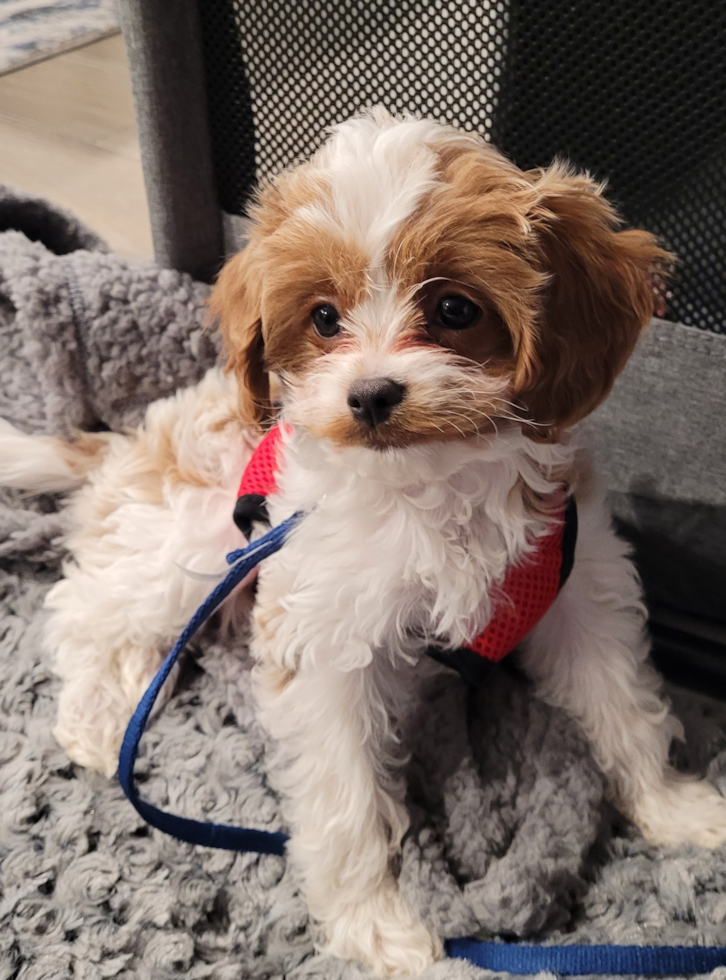
A Cavapoo puppy may fit better if you genuinely enjoy interacting with your dog through games and training. The Poodle side can produce a dog that pays close attention, learns quickly, and likes having something new to work out.
This does not mean you need to sign up for dog sports or spend hours teaching advanced obedience. Simple trick sessions, puzzle toys, scent games, fetch, and new walking routes can provide enough variety for many Cavapoos.
The Cavapoo may also appeal more if coat color matters to you. Reds, apricots, chocolates, blacks, creams, partis, and several other combinations give the cross a wider visual range than the Cavachon.
Choose a Cavachon if You Want an Easygoing Companion
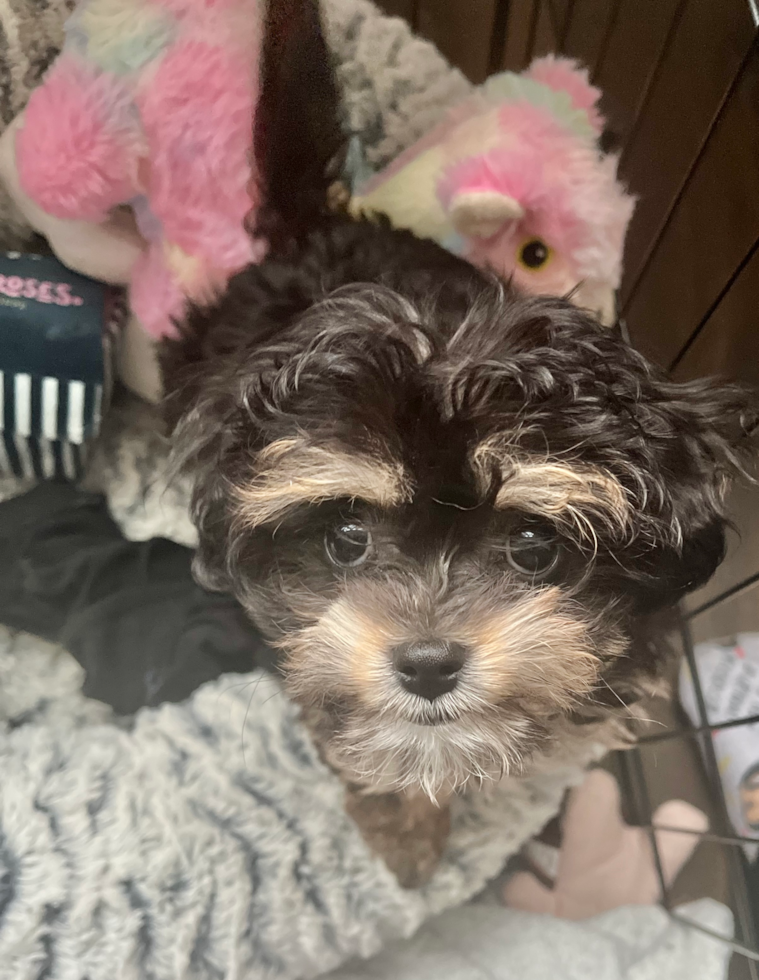
A Cavachon puppy may be the stronger match if you want affection, playfulness, and moderate activity without as much emphasis on keeping a clever Poodle-influenced mind occupied. Cavachons enjoy training and games, but companionship itself is a large part of what makes them happy.
That balance can suit a broad range of homes. A walk in the morning, some play during the day, time with family, and a relaxed evening can be a perfectly satisfying routine.
Their adult size is also somewhat easier to estimate because the Bichon and Cavalier are similar in size. That can matter if you have a firm preference for a small dog and want less variation between possible adult outcomes.
Which Is Calmer: Cavapoo or Cavachon?
The Cavachon has a slight advantage if calmness is the priority. Both breeds can be relaxed indoors, but the Poodle influence may give some Cavapoos more mental and physical energy.
That difference should not be exaggerated. A well-exercised Cavapoo can settle beautifully, and an energetic young Cavachon can certainly turn a living room into a racetrack for five minutes.
The more useful distinction is how much engagement each dog may want across the day. Cavapoos are somewhat more likely to seek an extra game, trick session, or puzzle. Cavachons may be satisfied sooner and move into companion mode.
Which Is Easier to Train?
The Cavapoo may have a small edge in advanced trainability because of the Poodle. Poodles are among the most responsive and mentally capable companion breeds, and many Cavapoos inherit that quickness.
Cavachons are far from difficult to train. Bichons are clever performers, and Cavaliers respond well to gentle positive methods. For house manners, recall, leash walking, and basic obedience, either cross can do extremely well.
The difference becomes more relevant for owners who see training as a hobby. If learning new tasks is something you want to keep doing throughout the dog's life, the Cavapoo may offer more enthusiasm for the process itself.
Which Is Better for First-Time Dog Owners?
Both are sensible choices for first-time owners. Some describe the Cavapoo as a cross that can work well for new dog owners, while others consider the Cavachon suitable for inexperienced owners too.
The Cavachon may feel slightly simpler for someone whose main goal is a family companion. The Cavapoo is equally manageable if the owner is happy to include regular training and enrichment in the routine.
Grooming is the area first-time owners should take most seriously with either dog. Soft low-shedding coats require more maintenance than their fluffy appearance suggests.
Which Sheds Less: Cavapoo or Cavachon?
Both can be low-shedding dogs, but the Cavapoo may have the advantage when it inherits a strong Poodle coat. Poodles shed minimally, while Bichons also release very little visible hair. The difference comes from the shared Cavalier parent, which can contribute more conventional shedding to either cross.
There is no guarantee that every Cavapoo will shed less than every Cavachon. Coat genetics vary, and a curly Cavachon may shed less than a straighter Cavapoo.
If shedding is a major concern, look at the parents and the puppy's developing coat rather than relying on the cross name alone.
Which Is More Hypoallergenic?
Neither dog is truly hypoallergenic. All dogs produce proteins that can trigger allergies, and those allergens can come from saliva and dander as well as hair. Cavapoos can still cause reactions despite their low-shedding coats.
A curlier, lower-shedding Cavapoo or Cavachon may work better for some allergy-sensitive households than a heavily shedding breed, but individual reactions vary.
Someone with significant dog allergies should spend time around the specific dog before making a decision rather than relying on a breeder label or coat description.
Which Needs More Grooming?
Both require substantial coat care, and the answer depends more on texture than breed name. A tightly curled Cavapoo can mat quickly and may need very regular brushing. A dense Bichon-style Cavachon can be equally demanding.
Cavapoos may have a slight tendency toward more intensive grooming when the coat is strongly Poodle-like because curls continue to grow and need regular trimming. Cavachons with loose waves may be easier to maintain, though that is far from guaranteed.
Either way, expect brushing several times per week and routine professional grooming if you keep the coat fluffy.
Which Is Better With Children?
Both can make excellent family dogs. The shared Cavalier parent gives both crosses a strong companion foundation, and Poodles and Bichons can also do well in family settings when properly raised.
A Cavapoo may be especially fun for older children who want to teach tricks and play interactive games. A Cavachon may appeal more to families looking for a slightly softer and more relaxed companion.
Age and handling matter more than the fine difference between these crosses. Young children should always be supervised with small dogs.
Which Is Better for Apartments?
Both can adapt very well to apartment living when their exercise and social needs are met. Their small size is an obvious advantage, and neither breed requires a large yard as a substitute for daily walks and interaction.
The Cavachon may be somewhat easier in a quieter apartment household because of its moderate energy. A Cavapoo can be just as successful, but a lively individual may benefit from more training games and purposeful exercise.
Barking habits depend heavily on the individual dog, early socialization, and what behavior owners accidentally reward. Small size alone does not make either breed automatically quiet.
Which Is More Affectionate?
This may be the hardest category to separate because both crosses are highly affectionate. They share the Cavalier, one of the strongest companion influences you could put into either mix, while both Poodles and Bichons are deeply people-oriented in their own ways.
The Cavachon may express affection in a more straightforward companion style, with plenty of cuddling and following family members around. The Cavapoo may combine that affection with a stronger desire to interact through games and learning.
If you mainly want a dog curled beside you, the Cavachon may lean slightly closer to that picture. If you want the cuddles plus a dog that gets visibly excited when you bring out the training treats, the Cavapoo may have the edge.
Cavapoo vs Cavachon: The Final Comparison
Choosing between a Cavapoo vs Cavachon is less about finding major differences and more about deciding which small differences matter most in your home. Both are affectionate, social companion dogs with strong Cavalier influence. Both can suit families and first-time owners, and both need regular grooming despite their low-shedding reputation.
The Cavapoo is likely to appeal more if you want a clever, interactive dog that enjoys learning and mental activity. Poodle ancestry can add extra trainability, athleticism, curl, and color variety. It can also create a somewhat wider range of adult sizes, especially when different Poodle varieties are used.
The Cavachon may be the better fit if you prefer a gentle, cheerful companion whose daily needs lean toward walks, play, family interaction, and plenty of downtime. Its Bichon side adds intelligence and playfulness without bringing quite the same working-dog edge as the Poodle.
If you picture yourself enjoying trick training, puzzles, games, and a dog that pays close attention to everything you do, the Cavapoo may feel more natural. If what you really want is a sweet little companion that joins the family for the day and then settles comfortably beside you when things slow down, the Cavachon may be closer to your ideal.
There is no dramatic divide between them, and that is worth remembering. A mellow Cavapoo can be calmer than an energetic Cavachon, and a curly Cavachon can shed less than a loose-coated Cavapoo. Temperament, coat type, early development, socialization, and training all shape the dog you ultimately live with.
Frequently Asked Questions
What is the main difference between a Cavapoo and a Cavachon? Both crosses have a Cavalier King Charles Spaniel parent, but the Cavapoo's other parent is a Toy or Miniature Poodle, while the Cavachon's is a Bichon Frise. That gives the Cavapoo more Poodle influence in areas such as trainability, coat curl, color variety, and mental activity. The Cavachon usually leans more heavily toward a traditional companion temperament.
Is a Cavapoo bigger than a Cavachon? They are similar in size, but the Cavapoo has the wider range. Cavapoos are commonly around 8 to 25 pounds, while Cavachons are closer to 10 to 20 pounds. The size of the Cavapoo's Poodle parent makes a noticeable difference, so parent size is the best clue when estimating how large a puppy may become.
Which is calmer, a Cavapoo or Cavachon? The Cavachon may be slightly calmer on average because both sides of the cross have a strong companion background. Cavapoos are still adaptable family dogs, but Poodle influence can add more activity and interest in mental stimulation. Individual personality can easily outweigh that general difference.
Which is easier to train, a Cavapoo or Cavachon? Both are trainable, but the Cavapoo may have an advantage for owners interested in more advanced tricks or activities. Poodles are highly intelligent and responsive, while Bichons and Cavaliers are also capable learners that respond well to positive reinforcement. For normal household manners, either cross should be very manageable.
Which sheds less, Cavapoo or Cavachon? Both usually shed lightly. A Cavapoo with a curlier Poodle-style coat may shed less than average, while a Cavachon with strong Bichon coat traits can also release very little visible hair. There is enough variation within both crosses that coat type and parent genetics matter more than the name alone.
Is a Cavapoo or Cavachon better for allergies? Neither can be guaranteed hypoallergenic. Dogs produce allergens through dander and saliva as well as hair, so even a very low-shedding dog can cause a reaction. People with allergies should spend time around the individual dog before deciding.
Which needs more grooming, a Cavapoo or Cavachon? Both need regular brushing and professional grooming when the coat is kept long. Cavapoos with tight curls may mat quickly, while Cavachons with dense Bichon-like coats can require just as much attention. Coat length and texture are more useful predictors of grooming workload than the cross itself.
Are Cavapoos more energetic than Cavachons? Cavapoos may have slightly more physical and mental energy because of the Poodle influence. Cavachons are playful and need proper exercise too, but they may settle into a quieter household routine more easily. Neither should be treated as a dog that only needs a few minutes outside each day.
Which is better with children, a Cavapoo or Cavachon? Both can do very well with children when socialized properly and treated gently. Cavapoos may appeal to older children who enjoy training and games, while Cavachons can suit families looking for a softer companion personality. Because both are small dogs, adults should supervise interactions with young children.
Should I choose a Cavapoo or Cavachon? Choose a Cavapoo if you want a small, affectionate dog with extra enthusiasm for learning, games, and mental activity. Choose a Cavachon if you prefer a gentle companion with moderate energy and an easy balance between play and relaxation. Both require grooming, companionship, and training, so the deciding factor should be the personality and daily routine you want to live with.